Monday, May 4, 2026
Home Blog Page 393

Nazara’s subsidiary acquires 73% stake in Pro Football Network for $1.8mn

0

Nazara Technologies Ltd., a listed gaming startup, announced that its subsidiary Sportskeeda has officially acquired a 73.27% stake in Pro Football Network Inc.

Sportskeeda Inc is a wholly owned subsidiary of Absolute Sports Private Limited, a material subsidiary of Nazara Technologies.

Sportskeeda Inc has acquired the 73.27 percent stake in Pro Football Network Inc. by a mix of primary infusion in preferred stocks and secondary purchase of common stock from its existing stockholders at a cash consideration of $1,817,090.67.

“Sportskeeda Inc., a wholly-owned subsidiary of Absolute Sports Private Limited, a material subsidiary of the Company, has completed the acquisition of 73.27% of the Capital Stocks of Pro Football Network Inc., by way of primary infusion in preferred stocks and secondary purchase of common stock from its existing stockholders and subsequent exchange of such common stock into preferred stock, at a consideration of USD 1,817,090.67 (One Million Eight Hundred Seventeen Thousand Ninety US Dollars and Sixty Seven Cents), paid in Cash to the Sellers.,” said Nazara Technologies in its regulatory filing.

According to the filing, Sportskeeda owns 73.27 percent of Pro Football Network Inc. Pro Football Network Inc. is now a step-down subsidiary of Absolute Sports Private Limited and a subsidiary of Sportskeeda Inc. 

On Tuesday, Nazara Technologies Ltd announced its subsidiary Nodwin International Pte. Ltd has signed definitive agreements to acquire 51 percent of the share capital of Branded Pte. Ltd for $1.3 million.

With this acquisition, Nodwin International Pte. Ltd. will own IPs of Branded such as Gaming Matters, Sports Matters, Music Matters, and others. Branded also owns and executes a few women-centric IPs, such as It’s a Girl Thing, and produces She Loves Tech in Singapore.

Godrej Consumer Products to invest Rs 100-Cr in Early Spring

0

Godrej Consumer Products Ltd., a major FMCG company, will invest Rs 100 crores in Early Spring, a new early consumer fund set up by Spring Marketing Capital (Spring).

Spring Marketing Capital’s brand-first investment franchise aims to help founders who are building the brands of tomorrow.

In addition to offering its expertise and experience to help founders build solid and sustainable companies, the FMCG arm of the Godrej group, Godrej Consumer Products, will anchor a new Rs 300 crore early-stage consumer fund being formed by Spring.

“Enabling companies to leverage marketing expertise along with capital, Spring’s first fund of Rs 150 crore continues to invest in companies at Series A and beyond. The Early Spring Fund will be investing Rs 5 crore to Rs 20 crore in each company, from seed to pre-Series A stage,” it said.

Omar Momin, Head M&A at Godrej Consumer Products, commented on the development and said it aligns with the company’s mission to provide consumers with health and beauty benefits.

“We intend to leverage our understanding of consumer space and learnings over the last decades to enable early-stage founders focused on building strong offline as well as online presence by offering differentiated products in India,” he said.

In the emerging markets of India, Indonesia, and Africa, Godrej Consumer Products is one of the major suppliers of household insecticides, air care products, and hair care products.

Google introduces next-generation gaming with WebGPU technology in Chrome

0

Google has announced that WebGPU, a powerful API that allows web apps more access to a computer’s graphics card, will be enabled by default in Chrome 113, which is an exciting development for gamers. This update will allow the use of WebGPU on devices running Windows with Direct3D 12 support, macOS, and ChromeOS systems that support Vulkan and is expected to be launched in about three weeks.

WebGPU can allow developers to get advanced graphics without having to write extensive code, according to a recent blog post. The API also claims a remarkable “more than three times” improvement in machine learning model inferences, which is especially exciting given the popularity of generative AIs and large language models.

Although services like Google’s Bard and Microsoft’s Bing do not use local hardware, there is a significant potential for innovative machine learning applications that can take advantage of the improved performance enabled by WebGPU.

Google claims this month’s WebGPU release will be the beginning point for all upcoming updates and enhancements. The company has promised to expand access to shader cores, introduce even more advanced graphics features, and streamline the development of WebGPU-enabled content. These upcoming updates will allow developers to build advanced graphics-capable, immersive web applications.

The API has been updated over time to expand the capabilities of WebGPU, which has been under development since 2017. While it will soon be turned on by default in Chrome, Firefox and Safari are also expected to support WebGPU. Beyond Windows, macOS, and ChromeOS, Google plans to expand its implementation to other operating systems.

Google has announced plans to accelerate the release of upcoming Chrome browser versions. Google will “feature freeze” them later in the development process, but the schedule for stable releases will remain the same, and there are no plans to release them any earlier. As a result, it will take less time for users to access the build when developers stop adding new features. These changes aim to speed up the delivery of the latest features and enhancements to users while enhancing Chrome’s development process.

Cloud kitchen operator Curefoods raises Rs 300-Cr to diversify offline

0

Curefoods, a cloud kitchen startup, has raised Rs 300 crore ($36 million) in a funding round led by Binny Bansal, the co-founder of Flipkart. ASK Finance, Winter Capital, IronPillar, and Chiratae Ventures also participated in the round.

Three State Capital contributes Rs 240 crore (~$29 million) to the fundraising effort, which is made up of a mix of primary, secondary equity, and debt.

From Iron Pillar, Chiratae Ventures, Seventeenth Street Capital, Accel Partners, Binny Bansal, Alteria Capital, BlackSoil Capital, Winter Capital, and Trifecta Capital, Curefoods raised around Rs 800 crore ($97 million) last year. It has so far began receiving funds totaling more than Rs 950 crore ($115 million).

The Ankit Nagori-led company plans to expand its presence in Tier I and II cities in the northern and western regions of India by using the fresh capital to diversify its brands into offline formats.

“This funding will allow us to reach new customers and markets while also targeting our offline model expansion,” said Ankit Nagori, Founder of Curefoods. 

Curefoods was founded in 2020, runs a house of brands that includes EatFit, CakeZone, Nomad Pizza, and Frozen Bottle. The cloud kitchen operator manages over 150 kitchens in 15 Indian cities, serving more than 10 different cuisines.

In FY22, the company’s first year of operations, it reported revenue of Rs 88.4 crore and total expenses of Rs 165 crore. According to the company, its business grew 300% year-on-year in FY23.

The company said in a statement that as of December of last year, Curefoods had reached 1.1 million monthly orders and generated Rs 550 crore in annual recurring revenue.

Small & medium IT companies face high attrition rate after lockdown, says survey

0

Small and medium IT companies are yet to recover from the effects of the Covid-19 induced lockdown because of the high attrition rate of their employees after upskilling, according to a survey. After the lockdown, small and medium sector technology companies had a 35% attrition rate, according to a Micro Small and Medium Companies-Export Promotion Council (MSME-EPC) survey, as skilled workers leave their companies in search of higher pay.

After this, the services sector attrition rate is 27%. As a result, these areas’ hopes for returning to normalcy following the epidemic have been dashed. 

While releasing the report of this survey of 700 IT units on Wednesday, D S Rawat, Chairman, MSME-EPC, stated that many employees in MSME sector companies are leaving for higher salaries at other companies after learning the work.

As a result, many companies have yet to recover from the lockdown’s shock fully. Technology companies invest a lot of time and resources in training their employees, yet afterward, those employees move to other companies for higher salaries.

To overcome the high attrition rate, he said it is necessary to develop more and more capacity-building centres in both the public and private sectors. This will result in more efficient workers, decreasing the number of people switching jobs from one organization to another.

According to Rawat, the rate of attrition in the industrial sector is low, but companies in the technology sector still have trouble keeping their employees. In addition, the attrition rate in the manufacturing sector is 20%. In the service sector, particularly the financial sector, it is 27%. In the e-commerce sector, it is 26%, and in the pharmaceutical sector, it is 25%.

According to the survey, large and multinational companies face a serious threat to the survival of tech firms in the MSME sector. Losing a trained employee in such a circumstance puts them under more stress, ultimately, a threat to their company. The people under the most pressure are those that “outsource” their labour or make it their livelihood to finish projects by a certain deadline. 

According to the survey, many MSME industries are adopting digitalization to increase their domestic and global market share. Due to the high employee attrition rate, the entire business plan for this industry is collapsing.

Espire Hospitality launches ‘Country Inn’ resorts in Chail and Mussoorie

0

Espire Hospitality Group, one of India’s fastest-growing hospitality companies, has opened its first property in Himachal Pradesh, ‘Country Inn Maple Resort, Chail’. The group recently announced the opening of the Country Inn Premier-Pacific, Mussoorie, its first “Country Inn Premier” resort.

With a tasteful blend of contemporary aesthetics and enriching experiences, this new brand has been designed to enhance the Country Inn experience further.

Speaking on these two important openings, Akhil Arora, Chief Operating Officer, Espire Hospitality Group, said, “Marking an incredible beginning of FY 2023-24, we are thrilled to open these two resorts in high-demand markets of Mussoorie and Chail. Our new brand, ‘Country Inn Premier’ has been designed to further elevate the Country Inn experience. While maintaining the brand’s core DNA of extending hospitality that is heartfelt and intuitive, Country Inn Premier branded hotels and resorts will feature spacious interiors and premium amenities for an inspiring stay.”

He further added, “Last one year has been quite eventful and encouraging for us from the growth perspective. We launched a new brand, ‘ZANA – Luxury Escapes’ with the opening of ZANA Lake Resort, Udaipur, opened six new hotels under Country Inn Hotels and Resorts brand in Goa, Amritsar, Vrindavan, Udaipur, Mussoorie, and Chail, and signed new hotels in Raipur, Dehradun, Rishikesh, Patkot (Jim Corbett) and Ranthambore. With our steady growth strategy, we aim to become among the leading domestic hospitality chains in the country soon.”

“Uttarakhand is an important leisure destination that attracts nature lovers and adventure enthusiasts from across the country. With the addition of this new resort, our presence in Uttarakhand is further strengthened, complementing our existing resorts in Jim Corbett and Bhimtal. On another hand, we are delighted to open our first resort in Himachal Pradesh. Known for its exquisite beauty and exclusive site, Chail is an ideal destination for those who love to take the road less travelled. With this opening, we want to elevate the level of comfort and facilities in the region through our exceptional offerings and renowned heartfelt hospitality,” said Sushil Amlani, Head of Business Development, Espire Hospitality Group.

He added, “These openings mark a milestone in our journey and a strategic move to steadily expand our footprint across the country. We are in active discussions with property owners in Jaipur, North Goa, and Dharamshala, and these should be added to our portfolio soon.”

Video telematic startup LightMetrics bags $8.5mn in Series A round

0

Telematics startup Lightmetrics has raised $8.5 million in a Series A round led by Sequoia Capital India, announced on Wednesday. LightMetrics is a cloud-based Software-as-a-Solutions (SaaS) platform that offers a layer of AI to dashcam recordings. Currently, it supports commercial vehicles.

Their solution uses cutting-edge AI to analyze video feeds from the cameras installed in cars to understand driver behavior better, prevent accidents, and improve safety. 

With this fundraise, LightMetrics will focus on strengthening various teams to prepare for future growth. Engineering, customer success, product, marketing, sales, and analytics are all included in this.

The company will continue to invest in cutting-edge AI technologies, new products, and solutions to improve its offerings and provide fleets more value across all of its operations. The funds raised will also be used to explore similar opportunities, such as auto insurance.

Soumik Ukil, Ravi Shenoy, Mithun Uliyar, Gururaj Putraya, Pushkar Patwardhan, and Krishna A.G. founded LightMetrics in 2015. The founding team’s six members had previously worked on computer vision and machine learning for cameras at Nokia Research. While advancing smartphone photography technology was exciting, they wanted to use their computer vision and AI expertise for something more significant.

“This investment by Sequoia Capital India is a testament to the fact that we are building the preeminent video-based fleet safety platform globally. We will invest deeply in building the most advanced and efficient edge AI, empowering our customer base to deliver this critical technology across the entire fleet ecosystem, and expanding our international footprint,” said Soumik Ukil, CEO & Co-founder, LightMetrics.

Besides, LightMetrics has implemented a different go-to-market strategy. Instead of selling directly to fleets, it partners with telematics service providers and fleet management firms to upsell and incorporate the solution into its services for fleets. This prevents fragmentation and increases value by ensuring fleets receive a highly integrated offering with all the information they require about their business in one place. Partners who work with LightMetrics can either utilize the rebranded portal or use APIs to build their UI.

The company is hardware agnostic and does not sell cameras. It collaborates with camera manufacturers to provide clients and partners with a range of cameras in terms of capabilities and pricing points.

Due to a common backend, fleet customers have the same UI/UX irrespective of the hardware. As a result, with no engineering or product complexity on their end, LightMetrics’ customers and partners can customize solutions for particular customer segments and geographic regions.

Around 2500 fleets across India, the Middle East, the United States, Canada, Mexico, Brazil, Australia, and South Africa use LightMetrics. Fleets using the LightMetrics’ powered video telematics have seen risky driving, such as speeding and distracted driving, drop by up to 80% and 70% in just a few months of onboarding. This highlights how a combination of in-cab coaching and offline coaching can significantly reduce the risk for fleets.

“Video telematics is the fastest growing segment of the telematics industry. Lightmetrics’ ability to deploy advanced computer vision models on the edge, across a range of dash cameras, enables it to serve all vehicle types in this large market. At Sequoia Capital India, we expect advancements in AI to transform several industries and are excited to partner with Lightmetrics on their quest to improve road safety,” said Ashish Agrawal, MD, Sequoia India.

InsuranceDekho buys Verak to expand footprint in SME insurance space

0

Ankit Agrawal, the founder, and CEO of InsuranceDekho, announced that his company had acquired Verak, a Mumbai-based SME insurance distribution startup.

InsuranceDekho’s founder and CEO took to LinkedIn to share the acquisition of Verak. “Since its inception, Verak has had a solid foundation and ventured into the untapped micro-business insurance scheme, bringing small shopkeepers under the insurance umbrella for the first time and registering 30 percent MoM premium growth every month,” Agrawal said.

“With this acqui-hire, InsuranceDekho will have a stronger foothold in this rapidly growing market and a stronger presence in the SME insurance vertical and micro-business insurance schemes,” Agrawal added.

According to media reports, the leading insurtech firm in India will join the Verak team, including its founder Rahul Mathur, who previously held positions at Laka Insurance and Accenture in the UK before launching his startup.

Speaking of Mathur, the InsuranceDekho CEO said, “Rahul holds a strong pedigree in the insurance sector, carrying work experience in the Indian and Global landscape. Both Ish and I are convinced of the sheet of passion he brings to the table.”

“Moving forward, we will explore ways to expand our business operations and provide a wide range of services to our customers to improve their life even further,” Agrawal added further.

The leading insurtech Indian company raised a remarkable $150 million in February of this year in a funding round that included a mix of debt and equity. This was an Indian insurtech company’s largest series A round ever. TVS Capital Funds and Goldman Sachs Asset Management jointly led the equity round. LeapFrog Investments, Investcorp, and Avataar Ventures also participated in the investment round.

In 2016, Ankit Agrawal and Ish Babbar founded InsuranceDekho, the insurance arm of car-selling unicorn CarDekho. The insurtech startup has seen a significant increase in premiums since its inception. By March 2023, the startup aims to achieve ₹3,500 crores in annualized premium run rate.

Currently, the company is in more than 1,300 towns, encompassing 98% of India’s pin codes. About 2 lakh insurance advisors should be engaged on the platform by the end of 2023, according to the insurtech player. Also, the startup’s objective is to achieve 100% penetration across the country.

Spendflo bags $11mn in a Series A funding

0

Spendflo —which provides a SaaS buying and management platform—has raised $11 million in a Series A fundraising round led by Prosus Ventures and Accel.

The company plans to use the capital to speed up global expansion and fuel product growth. It aims to increase the size of its North American footprint by hiring employees and conducting on-ground marketing activities.

Investors, including Prosus Ventures, Accel, Together Fund, Signal Peak Ventures, and Boldcap Ventures, have invested Spendflo a total of $15.4 million.

According to Ashutosh Sharma, Head of Investments, India at Prosus Ventures, outsourced SaaS procurement and management is becoming a significant area of interest for organisations due to a complex SaaS stack and the need to rationalise cost bases.

“We’ve tracked Spendflo’s journey since their initial days and are extremely impressed with the team and its pedigree, the evolution of the product platform and features, and a roster of marquee logos across the globe. We are thrilled to partner with and support Spendflo in their ambition to become a global SaaS buying and management platform,” he said.

Spendflo is an all-in-one platform to buy, manage, and secure SaaS, and it was founded in 2021 by Siddharth Sridharan, Ajay Vardhan, and Rajiv Ramanan.

“Spendflo helps businesses at every stage of their SaaS buying and management journey while saving them countless hours and millions in both time and money, respectively. Their continuous upward growth has shown us they’re the right team to tackle and solve this challenge,” said Dinesh Katiyar, Partner at Accel.

Spendflo serves customers across North America, Europe, APAC, and the Middle East. Its customers include Mindtickle, Hasura, Drip, 4G Clinical, and Wodify.

Since the start of 2022, the company claims that it has grown 30% monthly, multiplied revenue by 15 times, increased the number of customers by 5X, and expanded the team by 4X.

“As cost optimisation becomes a priority, Spendflo is becoming the go-to, tailor-made solution for buying, managing, securing, and saving on SaaS from one place. It fits like a glove for growth-hungry businesses and helps them unlock maximum ROI on their SaaS stack,” said Spendflo’s co-founder and CEO Sidddharth Sridharan.

Dozee secures $6mn to strengthen its ambition of ‘HarBedDozeeBed’

0

Dozee, a contactless remote patient monitoring & AI-based early warning system firm, has raised $6 million in a Series A2 funding round. New and existing investors contributed to the investment, including the State Bank of India, J&A Partners Family office, and Dinesh Mody Ventures.

Bengaluru-based Dozee plans to use the funds to strengthen its R&D capabilities, expand in the Indian market, and explore global opportunities. The Contactless Vital Signs Measurement system, the flagship product of Dozee, recently received US FDA 510(k) clearance and complied with all applicable global standards for medical devices and algorithms.

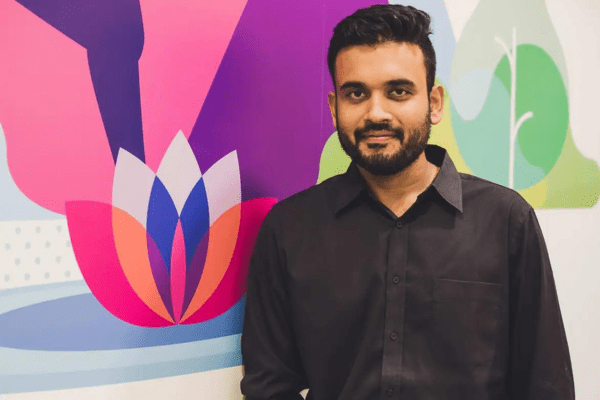
“We plan to tap over 2,000 hospitals in more than 100 districts in the next two years to improve the quality of critical care facilities in India,” Mudit Dandwate, CEO & Co-founder of Dozee, said. “The current Series A2 fundraise is a part of the company’s plan to further its reach to every nook and corner of the country and to begin the era of ‘Made in India’ products in the global market.”

“Our growth momentum demonstrates accelerating progress toward our goal of making ‘HarBedDozeeBed’ the future of Indian healthcare Infrastructure,” he added. 

Dozee already has a presence in more than 380 hospitals across 50 districts. It most recently worked with British International Investment, a development finance institution and impact investor with headquarters in the UK, to connect 6,000 hospital beds in around 140 public hospitals across India and other regions with its technology.

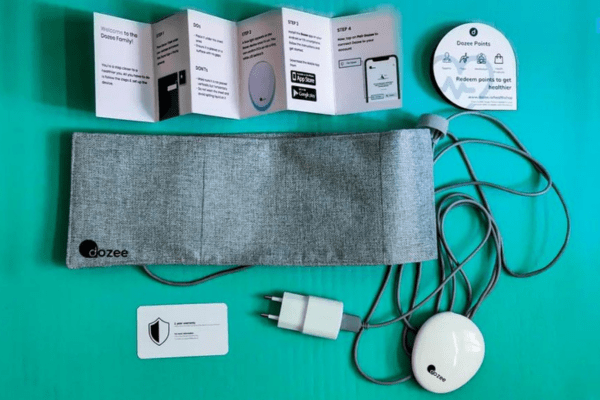
With Dozee’s technology, healthcare professionals can remotely monitor patients’ vital parameters and identify trends through its early warning system, enabling timely medical intervention. It integrates sensors under the mattress to capture, without physical contact, the minute vibrations caused by every heartbeat, respiration cycle, tremor, seizure, and change in posture.

Dozee makes technology that automates patient monitoring. It was founded in 2015 by IIT graduates Mudit Dandwate and Gaurav Parchani. It claims to save nearly 2.5 hours of nursing time every day per patient.