

Monday, June 29, 2026
Home Blog Page 229

Sarovar Hotels announces the grand opening of Golden Tulip, Vagator 

0

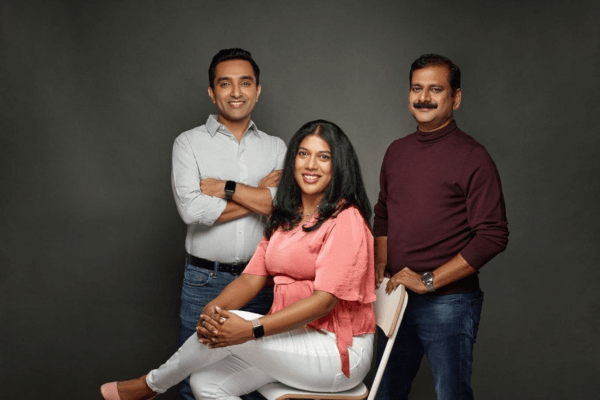
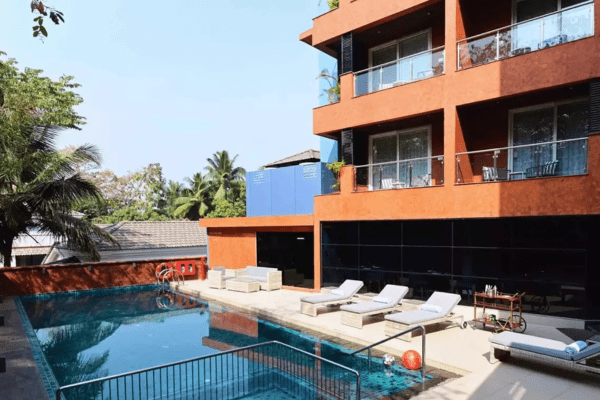
Sarovar Hotels has launched the Golden Tulip Vagator, a stylish retreat in the heart of North Goa. Vagator, famous for its golden sands, red cliffs, and vibrant nightlife, is one of the most scenic spots in Goa. With this new addition, Sarovar expands its upscale Golden Tulip portfolio, offering a perfect mix of relaxation and adventure for both business and leisure travelers.

Golden Tulip Vagator features 30 beautifully designed rooms, available in two categories: superior and deluxe. Guests can enjoy modern amenities and stunning views of the greenery or pool. The hotel offers a refreshing escape with facilities like an outdoor swimming pool, a fitness center, and two dining options. Tulipe, the all-day dining restaurant, seats 60 guests, while Chill, a tropical bar and lounge, accommodates 25. Its convenient location near Vagator Beach, Chapora Fort, and other attractions makes it an ideal choice for exploring the beauty and culture of Goa.

Ajay K. Bakaya, managing director, Sarovar Hotels and director, Louvre Hotels India, commented, “We are thrilled to announce the launch of Golden Tulip Vagator in partnership with Prime Avia Consultants. Located in the heart of North Goa, Vagator is truly a hidden gem, and we believe our guests will be captivated by its stunning landscapes, exceptional service, and modern design. Our vision is to create an unforgettable experience that harmoniously blends Goa’s unique charm with world-class hospitality, establishing it as the go-to destination for travelers in search of both adventure and serenity. Recognizing Goa as a vital market for Sarovar Hotels, we are dedicated to expanding our footprint in this dynamic region to meet the rising demand for quality accommodations.”

Navin Luther, managing director, Prime Avia Consultants, added: “We are excited to collaborate with Sarovar Hotels on the opening of Golden Tulip Vagator. The property is a true reflection of the spirit of Goa, with a focus on comfort, style and authentic experiences. We look forward to welcoming travelers from across the globe to this picturesque destination, where they can enjoy the best of Goan hospitality and culture.”
No-code app builder Tablesprint bags $1M in angel funding 

0
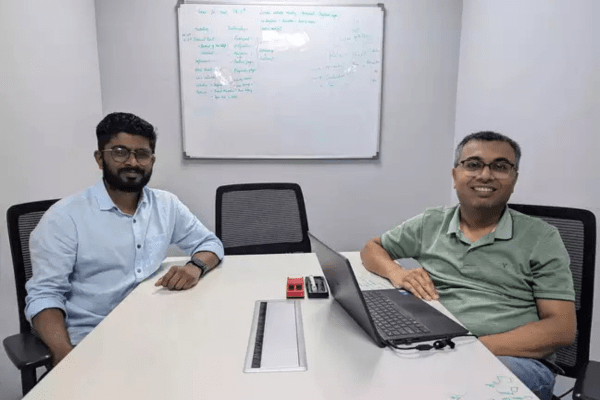
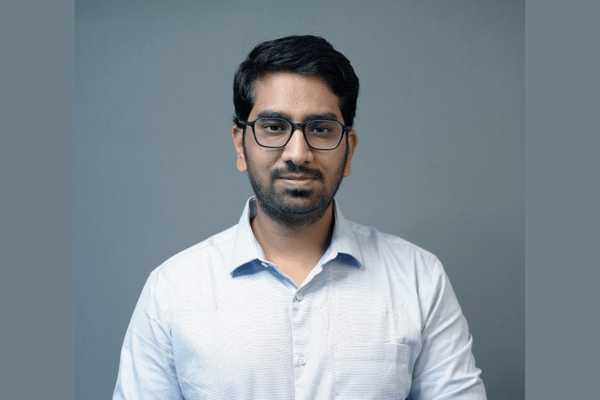
Chirag Jadhav and Abhijeet Kumar, confounders, Tablesprint

Tablesprint, a no-code app builder, recently secured about $1 million in a funding round led by angel investors, including Ankit Bhati (cofounder of Ola), Ajeet Khurana (founder of Reflexical), and Sunil Sharma (CEO of Coingape). Other backers include BlueLotus Ventures, TDV Partners, and DGC Ventures. 

The startup plans to use the funds to enhance its offerings, grow its team, and speed up product development.

“We are building an AI-powered platform that helps enterprises go live in minutes, not months. By delivering a consumer app-like experience for enterprise use cases, we enable simple workflows to scale into complex, enterprise-grade systems, allowing businesses to adapt and grow seamlessly,” said Abhijeet Kumar, cofounder and chief executive of Tablesprint. 

Kumar, one of the founders, had cofounded RainCan, a B2C subscription startup. Tata Digital’s BigBasket later acquired it and rebranded it as BBdaily.

Tablesprint’s clients include big names like Walmart-owned Flipkart and startups in the wealth management sector, such as Elever.

Launched in 2024 by Kumar and Chirag Jadhav, the company helps businesses build AI-powered apps for HR, operations, sales, vendor management, performance tracking, projects, and subscription billing. 

The Bengaluru-based startup also tests its solutions with medium and large global enterprises in the manufacturing, distribution, and investment management industries.

Currently, Tablesprint is working to onboard creators, influencers, and partners to help guide clients, improve user experience, and strengthen its presence in the growing no-code app development market.

Commenting on the investment, Uday Arya, cofounder and partner at BlueLotus Ventures, said, “We see enormous opportunities for companies enabling SMBs in a thoughtful way. This fundraise marks the first milestone in creating what we believe will be an exceptional global product company from India.” 

Cashfree receives NPCI certification for its own UPI switch 

0
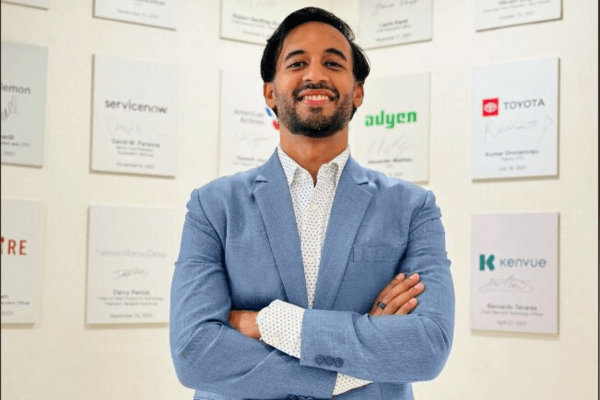
Aakash Sinha, cofounder of Cashfree

Cashfree Payments recently earned certification from the National Payments Corporation of India for its UPI Switch service. This certification enables Cashfree to connect directly with any bank’s core banking software, boosting transaction success rates for its merchants.

With this certification, Cashfree can now process around 12,000 transactions per second. The company developed this switch in collaboration with NSDL Payments Bank, the sponsor bank.

This achievement is expected to increase the company’s transaction success rate by 5%. It will also speed up merchant onboarding, provide instant access to new UPI features, and give better control over the entire payment process.

“Our advanced UPI Switch significantly elevates Cashfree Payments’ payment processing value proposition. This solution transforms the UPI payment experience with faster onboarding, customizable account statements, immediate access to new UPI features, and enhanced visibility of payment failure reasons,” said Aakash Sinha, cofounder of the company.

Cashfree Payments processes $80 billion of transactions annually, making it a trusted payment aggregator for over 6 lakh businesses. The company also received its Payment Aggregator (PA) license from the RBI in December 2023.

Footwear startup Yoho raises Rs 27-Cr, eyes offline and international expansion 

0
L-R, Prateek Singhal and Ahmad Hushsam, cofounders, Yoho

Yoho, a direct-to-consumer (D2C) footwear startup, raised Rs 27 crore in a funding round led by Gulf Islamic Investments (GII), which manages over $4.5 billion in assets. 

Rukam Capital and angel investors, including Rajeev Misra (CEO of SoftBank Investment Advisers), Vijay Shekhar Sharma (CEO of Paytm), and Pankaj Chaddah (founder of Shyft), also participated.

The funds will fuel growth, research and development, marketing, hiring, and offline expansion. Yoho previously secured Rs 20 crore in October 2022.

“Our core target audience is 28 to 40 years old, who like colour and style, value comfort, and don’t just go for fashion,” cofounder Prateek Singhal said.

Founded in 2021 by Ahmad Hushsam and Singhal, Yoho offers a variety of footwear, including casual and formal options for men and women.

Yoho competes with startups like Solethreads and Neeman’s, aiming to increase its offline footprint in India. The company targets 2,000 partnerships with multi-brand outlets (MBOs) in tier I and II cities. It also plans to expand its product range to 300 styles by 2025.

“Year-on-year, we are growing at almost 300%, and this year, we are aiming to close at an overall revenue of around 90 crores,” Singhal said. “The shoe segment has grown by almost 400%, and the slipper segment has grown by around 180%, which is driving most of the growth.” 

Yoho generates around 80% of its revenue through online channels, with 26-27% coming from its website and the rest from various marketplaces. The remaining 20% comes from offline sales, reflecting its balanced approach. 

As the company eyes growth, it plans to expand into international markets, targeting regions such as the Middle East, Africa, and the US by early next year. 

Commenting on the investment, Mohammed Al-Hassan, cofounder and co-CEO of GII, said, “GII provides innovative growth funding solutions that address evolving consumer preferences. Yoho’s approach of combining biomechanical expertise with affordability targets a critical gap in the market that GII’s investment can address.”

“We see a significant void in the consumer market for scientifically designed, affordable footwear that caters to the discerning Indian consumer. Yoho’s innovative approach, which combines biomechanical expertise with accessibility, is precisely positioned to fill this gap,” said Misra at SoftBank.

GCC consultant ANSR acquires majority stake in Summit Consulting Services

0
Vikram Ahuja, cofounder, ANSR

ANSR, a consultancy that supports multinational companies in setting up global capability centers (GCCs) in India, has acquired a majority stake in Bengaluru-based Summit Consulting Services. 

The deal, valued between Rs 45-65 crore ($5-8 million), involves cash and stock. According to co-founder Vikram Ahuja, this acquisition allows ANSR to extend its solutions to mid-sized GCCs as they expand.

Summit Consulting will continue to operate independently with its 45-50 employees team while founder and CEO Sandeep Sharma joins ANSR’s leadership team. Summit Consulting, established in 2020, focuses on building global centers for mid-sized, growth-stage, and private equity-backed firms. It offers various operating models, including Basecamp, India’s first GCC incubator at T-Hub, Hyderabad.

Mid-sized firms are significantly contributing to India’s post-Covid GCC boom, with over 240 new centers accounting for 60% of recent GCC launches, according to ANSR data. “This rapid expansion underscores the strong confidence business leaders and investors have in the strategic value these centers offer,” Ahuja said.

India now hosts more than 1,700 GCCs, employing 1.9 million professionals. Nasscom estimates these centers contributed $64.6 billion to India’s IT services industry revenue, which surpassed $250 billion in fiscal 2024.

India is the global leader in GCCs, holding 17% of the market. According to a Nasscom-Zinnov report, by 2030, the country is expected to have 2,100-2,200 GCCs, employing 2.5-2.8 million people and generating $99-105 billion in revenue.

ANSR is backed by global IT giant Accenture and venture capital firm Accel Partners. 

The company has facilitated the creation of 135 GCCs, bringing in around $2 billion in investments. In July, Accenture invested an estimated $170 million in ANSR to further expand its offerings.

Robotics startup Perceptyne raises $3M in seed funding 

0
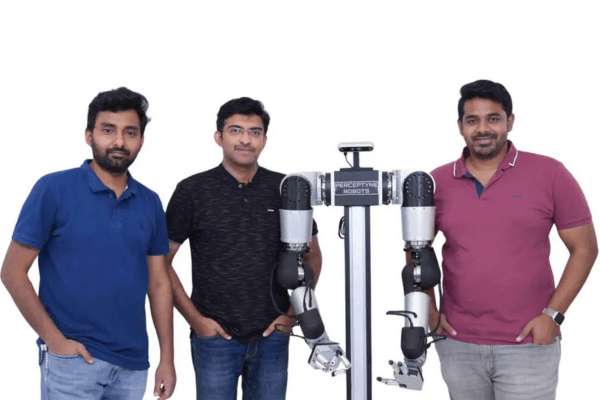
Perceptyne founders Raviteja Chivukula, Mrutyunjaya Nadiminti and Jagga Raju Nadimpalli

Robotics startup Perceptyne has secured $3 million in seed funding. Endiya Partners and Yali Capital co-led the round, with additional support from Whiteboard Capital and other angel investors. The company plans to use the funds to speed up product development, attract new customers, and drive growth.

In March, Perceptyne, based in Hyderabad, had a valuation of $3.73 million. This came after a previous pre-seed funding round of $550,000, led by Venture Catalysts, according to Tracxn.

Raviteja Chivukula, Jagga Raju Nadimpalli, and Mrutyunjaya Nadiminti together founded Perceptyne. The company is building an AI-powered robotics platform designed for tasks like product assembly and packaging requiring human-like precision. Their flagship products, PR-34D and PR-9D, are dual-arm and single-arm robots equipped with integrated computer vision, AI, multi-modal sensing, and flexible end-effectors, making them ideal for manufacturing and assembly line work.

Perceptyne operates on a business-to-business model. It offers a capex option for customers to buy the robots and an opex model where Perceptyne installs the robots and earns revenue based on usage. The company is currently collaborating with major players in the automotive and electronics industries.

“We are seeing strong growth for robotics, both domestically and globally. In India, because of initiatives like Make in India, a lot of companies want to build here and our domestic consumption for a lot of high-tech electronic products is growing. Also, the availability of skilled labour is also not keeping pace, because of a lot of alternative career options. This is where AI-driven robotics companies like us will play a key role,” Chivukula, CEO and co-founder of Perceptyne, said.

He mentioned that the global industrial robotics market is expected to grow to $41 billion annually by 2030, with a 12.3% compound annual growth rate (CAGR).

This funding arrives as demand for AI and robotics in manufacturing, logistics, and healthcare increases. Last week, Pune-based robotics startup Haber secured Rs 317.2 crore in funding, led by private equity firm Creaegis, with support from Accel India and BeeNext Capital.

“The time has come for an AI-first robotics company which is building for manufacturing automation. Perceptyne is addressing the critical need for a drop-in, generic automation solution that learns through AI-led tele-operation,” said Raghav Gupta, vice president, Endiya Partners. 

Perceptyne faces competition from companies like Tokyo-based Telexistence and California-based Figure.

Gaming firm Jetapult acquires stake in Saudi Arabia-based UMX Studio for $4.5M

0
Jetapult cofounders Sharan Tulsiani (left) and Yash Baid with UMX Studio CEO Ali Alharbi (middle)

Jetapult, a Bengaluru-based gaming investment company backed by Accel and Fireside Ventures, has acquired a significant stake in Saudi Arabia-based game developer UMX Studio through a $4.5 million all-cash deal (about Rs 37.8 crore). This is Jetapult’s first investment in the Middle East and North Africa (MENA) region. 

Along with equity, Jetapult will provide funds to grow UMX Studio’s portfolio, expand its audience across various markets, and develop games in new genres. Jetapult’s gaming experts will also help UMX Studio boost user acquisition, scale monetization, and adopt advanced analytics and AI tools.

Launched in 2022 by Sharan Tulsiani and Yash Baid under JetSynthesys, Jetapult supports game development studios using an invest-and-operate model. The company targets Southeast Asia, MENA, Eastern Europe, and South America.

The company has committed to invest $100 million over the next five years.

“This is part of Jetapult’s broader plan to invest in a diverse portfolio of gaming studios in emerging markets, and that is where the growth continues to be, especially in the gaming industry,” Tulsiani, who previously led gaming at Google Play Asia – India and ANZ markets, said.

Prior to this, Jetapult invested in Mumbai-based Holy Cow Studio and plans to invest in four to five companies annually.

“Our focus is to have a portfolio of companies targeting high average revenue per user markets globally, and the Middle East is an upcoming hub. UMX is one of the first players to come out of that market and to build very strong culturally resonating games for that particular audience. We believe that adding more titles and genres under a cohesive umbrella of companies will make sense for the next five to seven years,” said Baid. 

This investment trend follows a rise in international acquisitions by gaming companies. For instance, Mumbai-based Nazara Technologies recently allocated around Rs 830 crore for mergers and acquisitions in markets like India, Europe, and North America. Noteworthy acquisitions by Nazara include Comic Con India, West Asia-focused marketing firm Publishme, Singapore-based events firm Branded, and Turkish esports company Ninja Global.

Furniture rental startup Rentomojo nears Rs 200-Cr FY24 operating revenue

0
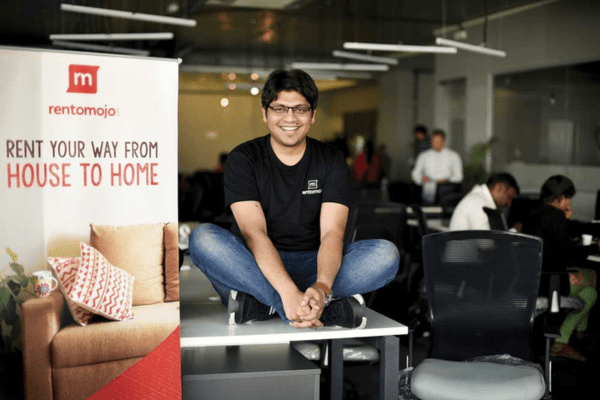
Geetansh Bamania, Founder and CEO of Rentomojo

Rentomojo, a furniture and electronics rental platform, recorded almost Rs 200 crore in operating revenue last fiscal year. The Bengaluru-based company grew as more people returned to workplaces after the pandemic.

According to its financial filings with the Registrar of Companies, the company’s operating revenue increased by 60%, reaching Rs 193 crore in FY24.

Rentomojo’s net profit jumped over threefold to Rs 22 crore last fiscal, up from Rs 6 crore in FY23, due to controlled expense growth. The company also posted Rs 65 crore in earnings before interest, taxes, depreciation, and amortization (EBITDA) for the year.

Founder and CEO Geetansh Bamania said Rentomojo focused on automation in FY24, leading to significant cost savings. The company is now preparing to file for an initial public offering (IPO) within the next 18 months.

“We’ve scaled rapidly by leveraging automation in a very high operationally intensive business and disciplined cost management, enabling sustainable growth and increased profitability,” he said. 

“The first thing that we dabbled on was there used to be a manual team that used to sit and verify these consumers. Slowly and gradually, that’s now completely automated and happens in a minute,” Bamania added.  

Founded in 2015 by Bamania and Ajay Nain, Rentomojo operates in 19 cities with around 30 offline stores. Nain left the company in 2018. For FY25, Rentomojo aims for a 40-50% profit growth, according to Bamania.

“We are actually on a very good momentum this year. It should continue on the same lines as last year itself; our Ebitda and net profit should very much grow by about 40-50%,” he said.  

On February 21, Bengaluru-based Rentomojo secured Rs 210 crore in a late-stage funding round. Edelweiss Discovery led this investment.

By March 31, the company reported an 84% occupancy rate. This means that 84 out of every 100 products were rented out to customers. As of the end of FY24, Rentomojo had nearly 400,000 items available, up from 291,000 the previous year.

In July 2023, Rentomojo’s top competitor, Furlenco, was acquired by Sheela Foam. Sheela Foam is well-known for owning the popular mattress brand Sleepwell.

Sukoon Wellness Resort expands with new aromatic executive cottages 

0

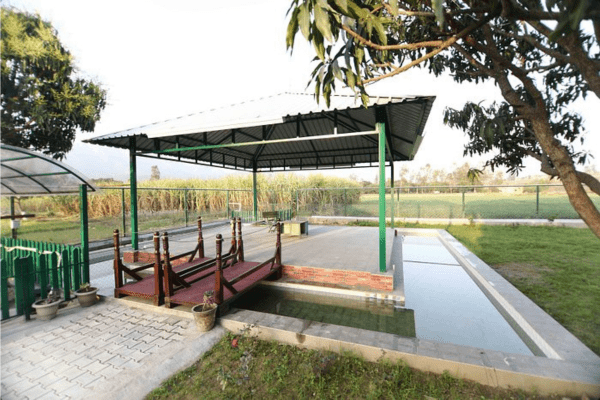
Stotrak Hotels, a unique experiential hotel chain operating in Uttarakhand, Himachal Pradesh, and Rajasthan, has announced a major expansion at Sukoon – Wellness Resort in Dakpathar, Uttarakhand. The resort is adding six new executive cottages with a sugandh theme, doubling its capacity to 12 cottages. This expansion will allow the resort to host more than 40 guests comfortably.

Bani Sharma, Founder of Sukoon Resort, commented, “These new cottages expand not just our capacity but also our commitment to offering an immersive, personalized experience. The Sugandh theme brings a new sensory element to the Sukoon experience, engaging guests in a journey toward wellness.”

Sukoon Resort has upgraded its facilities to include an all-weather indoor swimming pool with chromotherapy, a dedicated kids’ pool, and steam and infrared sauna options. Guests can also indulge in a variety of outdoor activities. The resort features farm-to-table dining, with highlights like the Chef’s special Garhwali Thali and live Chullah cooking at Ras Rasoi. Other dining experiences include high tea under a rainfall canopy, poolside brunches, and starlit dinners. According to a release, unique activities such as bird watching with over 300 species, scenic river walks, and guided nature trails further enhance the guest experience.

Manish Goyal, founder of Stotrak Hospitality Group, said, “At the heart of Sukoon Resort is a focus on guest-centric, sustainable hospitality. These enhancements reflect our continued commitment to meeting the evolving preferences of our guests while upholding our core values of wellness, sustainability, and immersive natural experiences.”

Sukoon Resort is committed to sustainability and eco-friendly practices by supporting local communities. Women from nearby villages produce natural, handmade soaps for the resort. Additional green initiatives include composting kitchen waste for the on-site vegetable garden and reducing single-use plastics by offering bamboo toothbrushes and reusable slippers. According to the release, the resort reuses pool water in the lotus pond, harnesses solar power for heating and outdoor lighting, and provides fresh RO water in guest rooms to minimize plastic waste.

Haber raises INR 317-Cr in Series C Funding 

0

Pune-based AI robotics startup Haber secured INR 317.2 Cr (around $38 Mn) in fresh funding, as per a Ministry of Corporate Affairs filing. The round included contributions from new and existing investors, such as Accel India, Beenext Capital, and Creaegis, through Series C compulsorily convertible preference shares (CCPS).

The filing showed that Accel India invested INR 33.4 Cr, Beenext Capital added INR 83.5 Cr, and Creaegis likely contributed the remaining INR 200 Cr. This funding will fuel Haber’s growth, expansion, and capital expenditure needs.

Founded in 2017 by Vipin Raghavan, Priya Venkat, and Arjunan PN, Haber creates AI-powered industrial robots. These robots automate labor-intensive tasks like sample collection, measurement, analysis, and intervention in industries such as food & beverages and pulp & paper. Their technology has significantly boosted efficiency, helping clients save 24 Bn liters of water and reducing carbon emissions by 75,000 tonnes.

In 2021, Haber raised $20 Mn in a Series B round led by Ascent Capital. Competing with startups like Prosus-backed Detech Technologies, Altizon, and Fero Labs, Haber continues to lead in AI-driven robotics innovation.

While Haber has not yet submitted its FY24 financials, it reported a net loss of INR 36.7 Cr on revenues of INR 82 Cr for FY23.

This funding comes as AI-based automation grows rapidly across multiple sectors in India. Industries like healthcare, logistics, warehousing, and retail are increasingly adopting AI and robotics to meet rising demands. For instance, Reliance Retail uses AI automation in its grocery and lifestyle divisions. Startups like OYO and Unacademy are also utilizing AI to streamline operations.

India’s AI ecosystem is expanding, with over 100 GenAI startups raising over $600 Mn since 2019. Krutrim, India’s first AI unicorn, emerged earlier this year, highlighting the nation’s progress in the AI space.