

Monday, June 29, 2026
Home Blog Page 230

Sukoon Wellness Resort expands with new aromatic executive cottages 

0

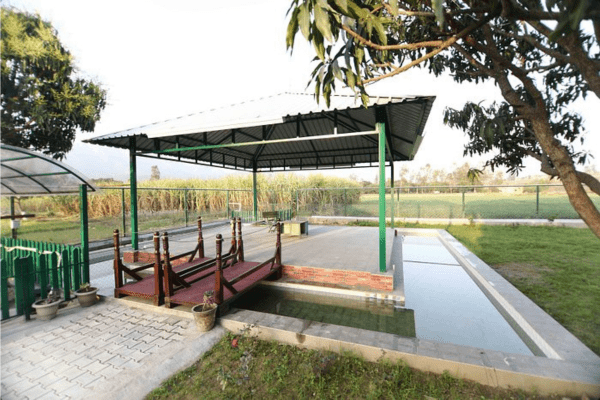
Stotrak Hotels, a unique experiential hotel chain operating in Uttarakhand, Himachal Pradesh, and Rajasthan, has announced a major expansion at Sukoon – Wellness Resort in Dakpathar, Uttarakhand. The resort is adding six new executive cottages with a sugandh theme, doubling its capacity to 12 cottages. This expansion will allow the resort to host more than 40 guests comfortably.

Bani Sharma, Founder of Sukoon Resort, commented, “These new cottages expand not just our capacity but also our commitment to offering an immersive, personalized experience. The Sugandh theme brings a new sensory element to the Sukoon experience, engaging guests in a journey toward wellness.”

Sukoon Resort has upgraded its facilities to include an all-weather indoor swimming pool with chromotherapy, a dedicated kids’ pool, and steam and infrared sauna options. Guests can also indulge in a variety of outdoor activities. The resort features farm-to-table dining, with highlights like the Chef’s special Garhwali Thali and live Chullah cooking at Ras Rasoi. Other dining experiences include high tea under a rainfall canopy, poolside brunches, and starlit dinners. According to a release, unique activities such as bird watching with over 300 species, scenic river walks, and guided nature trails further enhance the guest experience.

Manish Goyal, founder of Stotrak Hospitality Group, said, “At the heart of Sukoon Resort is a focus on guest-centric, sustainable hospitality. These enhancements reflect our continued commitment to meeting the evolving preferences of our guests while upholding our core values of wellness, sustainability, and immersive natural experiences.”

Sukoon Resort is committed to sustainability and eco-friendly practices by supporting local communities. Women from nearby villages produce natural, handmade soaps for the resort. Additional green initiatives include composting kitchen waste for the on-site vegetable garden and reducing single-use plastics by offering bamboo toothbrushes and reusable slippers. According to the release, the resort reuses pool water in the lotus pond, harnesses solar power for heating and outdoor lighting, and provides fresh RO water in guest rooms to minimize plastic waste.
Haber raises INR 317-Cr in Series C Funding 

0

Pune-based AI robotics startup Haber secured INR 317.2 Cr (around $38 Mn) in fresh funding, as per a Ministry of Corporate Affairs filing. The round included contributions from new and existing investors, such as Accel India, Beenext Capital, and Creaegis, through Series C compulsorily convertible preference shares (CCPS).

The filing showed that Accel India invested INR 33.4 Cr, Beenext Capital added INR 83.5 Cr, and Creaegis likely contributed the remaining INR 200 Cr. This funding will fuel Haber’s growth, expansion, and capital expenditure needs.

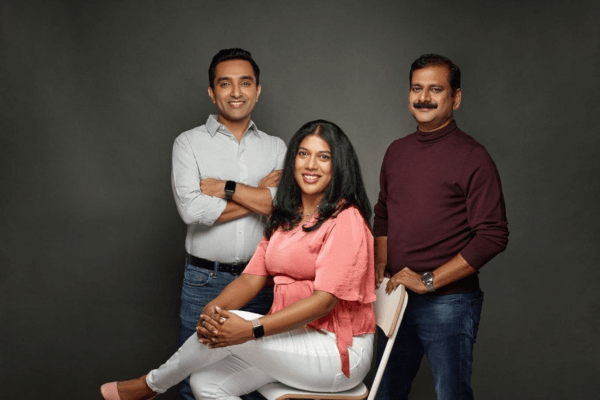
Founded in 2017 by Vipin Raghavan, Priya Venkat, and Arjunan PN, Haber creates AI-powered industrial robots. These robots automate labor-intensive tasks like sample collection, measurement, analysis, and intervention in industries such as food & beverages and pulp & paper. Their technology has significantly boosted efficiency, helping clients save 24 Bn liters of water and reducing carbon emissions by 75,000 tonnes.

In 2021, Haber raised $20 Mn in a Series B round led by Ascent Capital. Competing with startups like Prosus-backed Detech Technologies, Altizon, and Fero Labs, Haber continues to lead in AI-driven robotics innovation.

While Haber has not yet submitted its FY24 financials, it reported a net loss of INR 36.7 Cr on revenues of INR 82 Cr for FY23.

This funding comes as AI-based automation grows rapidly across multiple sectors in India. Industries like healthcare, logistics, warehousing, and retail are increasingly adopting AI and robotics to meet rising demands. For instance, Reliance Retail uses AI automation in its grocery and lifestyle divisions. Startups like OYO and Unacademy are also utilizing AI to streamline operations.

India’s AI ecosystem is expanding, with over 100 GenAI startups raising over $600 Mn since 2019. Krutrim, India’s first AI unicorn, emerged earlier this year, highlighting the nation’s progress in the AI space.

Bosch, Tenstorrent to collaborate on standardising automotive chips 

0
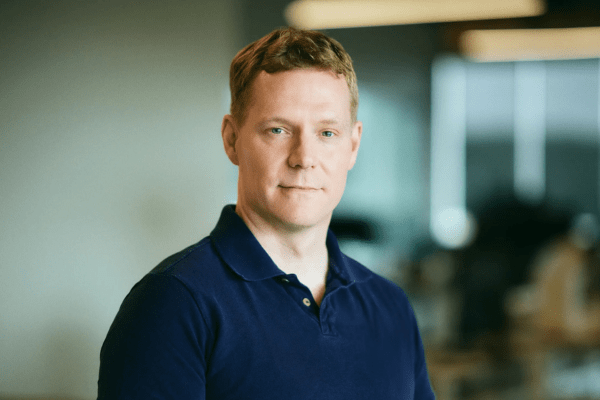
David Bennett, CCO at Tenstorrent Inc

Bosch, the German industrial giant, is partnering with U.S. chip startup Tenstorrent to develop a platform aimed at standardizing automotive chip building blocks, according to Tenstorrent executives. 

The collaboration focuses on creating a standard method for using chiplets, the building blocks of modern chips, to design systems that meet the diverse needs of vehicles, said David Bennett, Tenstorrent’s chief customer officer.

By combining different types and quantities of chiplets, Bosch and Tenstorrent aim to cut costs and accelerate the development of new silicon products for the automotive sector.

“(Bosch is) collaborating with us to essentially redefine how automakers look at silicon – purchasing silicon and building silicon,” Bennett said. 

With the rise of electric vehicles, cars are evolving into advanced computer systems powered by batteries on wheels. The shift to electrification and integration of automated driving technologies have introduced complex technical challenges. As a result, automakers are exploring new methods to develop or acquire the specialized chips needed to power these next-generation vehicles.

Chip giants like Nvidia, Qualcomm, and Intel-owned Mobileye develop various driver assistance chips and software. The goal of Bosch’s collaboration with Tenstorrent is to standardize the chiplet building blocks, which could help lower costs, said Tenstorrent’s chief customer officer, David Bennett.

Automakers would save money by producing a standard chiplet in large quantities, which can be added or removed based on each application. It would also provide them with more customization options than buying ready-made parts, noted Tenstorrent’s automotive VP, Thaddeus Fortenberry.

Currently, the collaboration does not involve specific products or sales to automakers. Tenstorrent, led by Jim Keller—who previously headed Tesla’s autonomous driving chip design—has a strong chip design legacy, with Keller having worked on chips for AMD and Apple.

Economy Process Solutions raises Rs 100-Cr in Series A funding 

0
Rajesh Ahuja, Founder and CEO of Economy Process Solutions

Economy Process Solutions (Economy), a leading provider of vacuum and continuous process equipment, has raised Rs 100 crore in Series A funding from Stakeboat Capital Fund II.

Rajesh Ahuja, Founder and Chief Executive Officer, Economy, expressed, “We are delighted to have Stakeboat Capital join us as a significant shareholder. We plan to use this capital to accelerate our growth, broaden our range of in-house manufactured products, expand our global footprint, and foray into new categories such as F&B solutions. We are honoured to collaborate with Stakeboat in our vision to take Economy to greater heights.”

Founded in 2015 and based in Mumbai, with manufacturing facilities in Chakan (Pune), Economy delivers custom vacuum and process solutions. Recently, the company expanded its offerings to include solutions for the beverage industry.

Srinivas Baratam, Managing Director at Stakeboat Capital, noted that the growing competitiveness of “Made in India” products will drive Indian and global companies to consider India-manufactured alternatives in the capital equipment sector. He added, “Indian capital equipment manufacturing provides a suitable combination of customized designs and sizes at highly competitive prices. We believe that global companies can greatly benefit from Indian ingenuity, especially when it comes to certain sizes and volumes. Economy is differentiated by its ability to turnaround enquiries and implement solutions quickly, often beating customer expectations.”

Economy aims to expand its domestic and export businesses in the next 4-5 years, with industries like waste management, pharmaceuticals, and chemicals driving most of its revenue. Several large companies in these sectors are planning significant capital expenditures soon, fueling growth in the capital equipment industry.

Additionally, exports to the resource-rich Middle East and Africa will grow, supported by major investments in these regions to boost industrial capabilities and add local value to resources.

Chandrasekar Kandasamy, Managing Partner, Stakeboat Capital, said, “We are thrilled to join Economy in its transformative journey. While continued growth of the Indian economy is expected to support the manufacturing industry in India, incentivization by the Indian government will further benefit the ecosystem. We believe in Economy’s vision and dedication to generating substantial value for its customers and are eagerly looking forward to the opportunities that lie ahead.”

With over 600 customers across 30+ countries, Economy continues to customize its solutions based on customer requirements, ensuring timely product deliveries and high customer satisfaction.

Assistive technology startup Social Hardware bags Rs 3.2-Cr in seed round

0
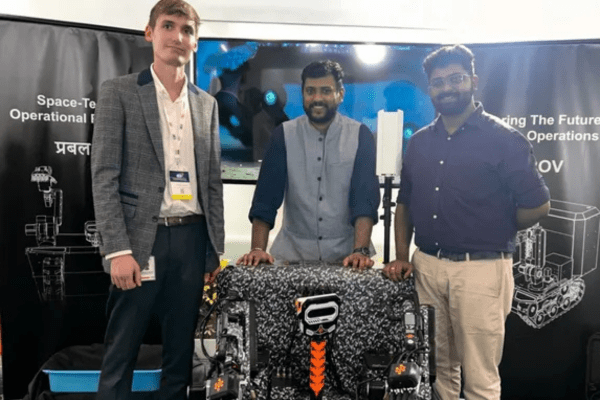
L-R, Cameron Norris (Chief Marketing Management Officer), Abhit Kumar (CEO), Raghavendran Arunachalam (CTO), Social Hardware

Social Hardware, an innovation startup focused on designing assistive devices, bionics, and field robotics, has secured Rs 3.2 crore in its seed funding round. Inflection Point Ventures led the round, with participation from Ivyleague Ventures and Soonicorn Ventures.

The funds will be used for growth and go-to-market strategies. The company plans to build a strong marketing and sales team, establish an advanced R&D facility, expand in-house manufacturing, and strengthen its research efforts.

Abhit Kumar, Cameron Norris, and Raghavendran Arunachalam founded Social Hardware, which creates teleoperated robotic systems for hazardous environments. It serves manufacturing, infrastructure, defense, and aerospace industries, offering solutions that improve safety and efficiency in tough conditions.

Vikram Ramasubramanian, Partner, Inflection Point Ventures says, “Technology went far and beyond in many sectors but remained untouched in some like manufacturing, defense, and aerospace where it still needs human intervention. The challenge of hazardous operations in these sectors has posed a long threat to safety, often limiting innovation and progress. Social Hardware, with its teleoperated robotic system, addresses this critical issue by offering safer alternatives like robots that can be controlled remotely, removing the physical need of a human in a dangerous environment. With innovation that brings inclusivity to both sectors and society, Social Hardware is a pioneer that will bring out positive change in manufacturing, defense, and aerospace sectors.”

Abhit Kumar, Co-founder & CEO, Social Hardware, says, “At Social Hardware, we are transforming how industries manage hazardous environments with teleoperated robots engineered to perform high-risk tasks with precision and safety, reducing the need for direct human involvement. Our technology doesn’t replace workers but enhances their capabilities—enabling them to control robots remotely and apply their expertise while staying safe. Over the past two years, we’ve advanced telerobotics to help industries operate more efficiently and safely. Many companies still rely on outdated methods, exposing workers to unnecessary risks. Our cutting-edge solutions, including augmented reality and gesture-based controls, are designed to minimize these dangers while keeping human expertise at the heart of operations.”

The startup has a team of 17, working across two locations in Bengaluru: a corporate office in Hebbal and an R&D facility in Rajajinagar. Social Hardware’s current production capacity is 12 units for FY 2024-25, which will triple to 36 units by FY26, targeting a revenue of Rs 24.76 crore.

Unisys expands in India, investing in AI and quantum computing 

0
Peter Altabef, chief executive, Unisys

Despite global supply chain disruptions in the technology sector, India plays a key role by offering a steady and reliable talent pipeline, said Peter Altabef, CEO of Unisys, a multinational technology solutions company.

“When you think of India as part of the supply chain, its potential and its consistency are enormous,” Altabef said. “If you’re like us, a technology company, our inventory is really the talent of our people.” 

Altabef, during his visit to India in September, emphasized that the country offers a rare mix of scale, quality, and energy. He also mentioned that around 40% of Unisys’ work is done in India.

Blue Bell, a Pennsylvania-based company, provides cloud, data, AI, digital workplace, logistics, and enterprise computing solutions. The company has been operating in India for nearly 25 years, with a quarter of its global workforce based here.

The company plans to open a new office in Gurugram by next year, expanding its presence alongside its five existing offices in Bengaluru, Hyderabad, and Gurugram.

“India is very important to Unisys. Our goal was to do everything we do as a company in India, and I think we’re there now,” he said, adding that many of its leading research and products are coming out of India.

“I would expect that as far as the company continues to grow, the footprint in India will grow at least as fast as that – probably faster.” 

In the financial year 2023, Unisys reported around $2 billion in revenue, achieving 1.8% year-on-year growth. Like many companies, it is heavily investing in AI.

Unisys currently has 125 AI projects in progress, integrating AI into its offerings, resulting in a 50% productivity increase in application development.

Altabef emphasized that true advancement lies in combining AI with quantum computing. Unisys is exploring quantum annealing for post-quantum cryptography to protect assets better. It has also used quantum computing to optimize air traffic logistics, which traditional computing struggled to handle efficiently. By early next year, this optimization will extend to trains and trucks.

Unisys leverages India’s AI and quantum computing expertise to develop these solutions. Altabef pointed out that a higher percentage of Indian employees have completed advanced AI courses than in other regions globally.

On challenges, Altabef noted the fierce competition for top talent and the significant energy demands of running AI programs, a challenge faced worldwide.

Altabef also highlighted challenges related to long commute times and internet bandwidth for employees working in hybrid modes.

He mentioned that Unisys is dedicated to recruiting talent from about 200 universities it has built relationships with over the years. The company’s annual ten-month Unisys Innovation Programme, which bridges industry and academia, has created numerous internship and job opportunities for students.

Last year, Altabef noted that around 50% of submissions from participating universities were focused on AI.

SaaS startup Spry Therapeutics raises $15M in funding

0
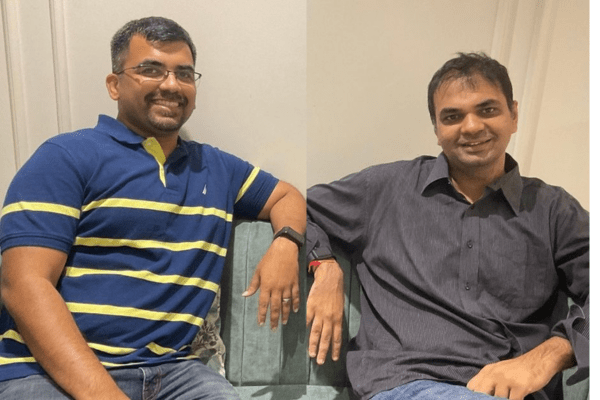
L-R, Riyaz Rehman, Brijraj Bhuptani, cofounders, Spry Therapeutics

Pune-based SaaS company Spry Therapeutics has raised $15 million in funding. Flourish Ventures led the round, with participation from existing investors Together Fund, Fidelity’s Eight Roads Ventures, and F Prime Capital, according to co-founder Brijraj Bhuptani.

Co-founder Brijraj Bhuptani mentioned that existing investors Together Fund, Fidelity’s Eight Roads Ventures, and F Prime Capital also participated in the funding round.

Spry Therapeutics, a company that develops software for physical healthcare centers, aims to capitalize on the growing trend of software products targeting the global market. Bhuptani, who previously served as the chief technology officer at Ola, stated that his goal is to target the largest market in the world first.

“U.S. healthcare is not just one big $4 trillion monolith. It is, in fact, thousand $4 billion opportunities,” Bhuptani said. “Anyone who wants to make a meaningful impact cannot do so by going wide and operating on the fringes. Spry is changing how PTs will manage their practice by enabling them to go deep.” 

Spry Therapeutics has a team of around 130 employees in India. The company supports processing insurance claims and provides integrated software for clinical management and administrative tasks at healthcare centers. Additionally, it offers financial services like payments and billing.

With the latest equity round, the company’s total funding has reached $25 million.

Within 18 months of its launch, Spry Therapeutics has partnered with 105 clinics in the US. With the new funds, the startup plans to establish a sales and service team in the US and focus on growing its client base, said Bhuptani.

The physical therapy market is expanding due to the increasing demand for rehabilitation after surgery and preventive care, which helps patients maintain long-term health.

“Spry is targeting the large market of small businesses which provide physical therapy but they lack the means to make insurance claims digitally. It will help solve a real need in the market,” said Kabir Kumar, partner at Flourish Ventures. 

Kumar highlighted India’s backend IT expertise, noting that a vast local talent pool is skilled in filing insurance claims for healthcare in the US. Spry is utilizing this talent to develop software tailored to that market.

Riyaz Rehman, the other co-founder, previously led the business at Ridlr until its acquisition by Ola in 2018.

Courtyard by Marriott Aravali Resort presents authentic Bengali Flavors at The Aravali Kitchen

0

Delhi NCR, October 2024- Courtyard by Marriott Aravali Resort invites guests to embark on a culinary journey through the heart of Bengal with its exclusive Bengali Food Promotion. From October 6th to October 13th, the resort will showcase the rich and diverse flavors of Bengali cuisine, known for its unique blend of spices, mustard oil, and a perfect harmony of sweet and savory.

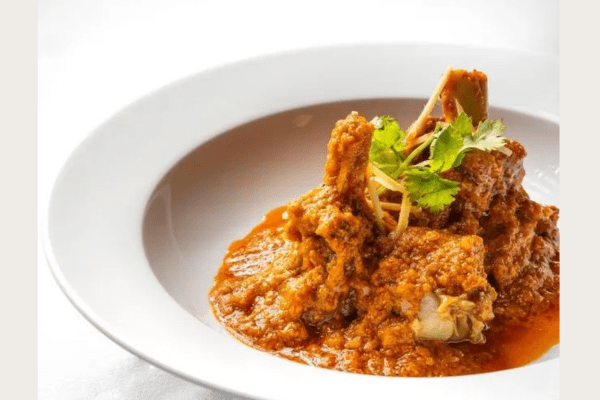
The special buffet will feature a delectable array of traditional Bengali dishes, including the iconic Katla Macher Kalia, the slow-cooked Kasa Mangsho, and the flavorful Roi Macher Jhol. For vegetarian enthusiasts, the festival offers Aloo Posto, Shukto, Macher Matha Diye Moong Dal, and Basanti Pulao. To complete the culinary experience, guests can indulge in Dhokar Dalna and Potoler Dalna.

Seafood lovers will be delighted by a dedicated seafood delicacy counter offering a variety of fresh and flavorful seafood dishes. To enhance the ambiance, live performances by a singer will take place on weekends, creating a soothing backdrop for a memorable dining experience.

Date: 6th October 2024 to 13th October

Time: 7:00 PM to 11:00 PM

Venue: The Aravali Kitchen, Courtyard by Marriott Aravali Resort

Buffet Price: INR 2149 + taxes

The festival will also feature a selection of Kolkata-inspired mocktails, providing a refreshing complement to the meal. Whether you’re a food enthusiast or simply looking to explore the authentic flavors of Bengal, the Bengali Food Promotion offers a unique and unforgettable experience for expats, corporates, in-house guests, and locals alike.

About Courtyard by Marriott Aravali Resort

Courtyard by Marriott Aravali Resort offers a tranquil escape amidst the natural beauty of Aravali, India. The resort offers guests comfort and relaxation in the heart of serene surroundings. Whether it’s a leisurely retreat or a celebratory occasion, Courtyard by Marriott Aravali Resort caters to every guest’s needs with world-class amenities and impeccable service.

Address: 1 Village Pakhal, Gotha Mohbtabad, Faridabad, Haryana- 121001

Website: https://www.marriott.com/en-us/hotels/delca-courtyard-aravali-resort

Product design startup Figr bags $2.25M in funding 

0
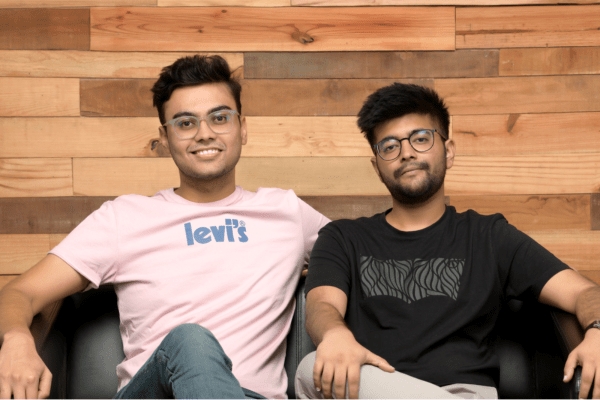
Moksh Garg and Chirag Singla, Co-founders, Figr

Product design startup Figr has secured $2.25 million in funding, with Kalaari Capital, a venture capital firm focused on early-stage technology, leading the round.

Antler, Golden Sparrow, and several angel investors also contributed to the funding.

Figr plans to use the funds to improve its AI models and grow its product and team. The company aims to reach $1 million in annual recurring revenue (ARR) within the next year, though it hasn’t revealed its current ARR.

Launched in 2023 by Moksh Garg and Chirag Singla, the Bengaluru-based startup helps design teams create UI designs, wireframes, user flows, and design systems based on user feedback.

“Now we want to double down on the technology that we’re building…You will see many AI models related to graphic design, text, and code, but UI/UX design is a very nuanced and specific problem. Currently, we are fine-tuning different models and testing them with a lot of data, but we want to make this technology much more robust,” Garg said.

The platform speeds up design timelines and cuts costs by automating repetitive tasks and allowing rapid prototyping. It boasts over 75,000 users, with 80% located outside India.

“Our vision is to empower every design team to create beautiful and functional interfaces without being bogged down by tedious, repetitive work. This funding gives us the momentum we need to continue refining our AI technology and to expand our offerings globally,” said Singla. 

So far, Figr has raised a total of $2.5 million.

Commenting on the investment, Sampath P, partner, Kalaari Capital, said, “The potential of GenAI to revolutionise product development, particularly in design, is truly exciting. With its ability to blend collective human feedback and deep personalization, AI will transform design into a more dynamic and iterative process.”

Evenflow strengthens leadership with four key hires, aims at ten-fold revenue jump by 2027 

0
Utsav Agarwal, CEO & Co-founder at Evenflow

Evenflow, a company that owns multiple brands, has strengthened its leadership team. They hired four new leaders for important areas like business, product categories, supply chain, and sourcing.

Evenflow hired Priyesh Singh from Decathlon to expand its supplier network and improve its supply chain in India. Aparajitha Vijayaraghavan from Dunzo will lead the company’s quick commerce business. Prashant Agarwal will head Evenflow’s marketplace and direct-to-consumer (D2C) business. Prashant has experience in both offline and online businesses, having worked at companies like Hopscotch, ABFRL, and Titan.

The startup hired Ruchi Shaikh to oversee the growth of BabyPro and CRED. Ruchi has experience as a project manager at HP and as a direct-to-consumer entrepreneur. She will focus on growing these brands and using them as important channels for the company.

“We have made significant progress in the past 24 months. We have gone from losing $200k per month to becoming profitable, which has been quite a journey. As we examine our business today with a perspective of 4 years into the future, it is crucial to focus on building for scale and prioritizing the 3Ps – people, process and product. Their diverse experiences adds a new dimension of thought, process and execution – and I look forward to working closely with them,” said Utsav Agarwal, CEO & Co-founder at Evenflow.

Evenflow aims to increase their revenue tenfold and profits sixfold by 2027. To achieve this, they plan to build a strong team, expand their business, and maintain a healthy financial position.

Evenflow, a Bengaluru-based startup, has been making significant strides in its growth strategy. The company recently promoted Shashank Ranjan to co-founder. Ranjan joined Evenflow in 2022 and previously held the position of head of sourcing. He has also worked with well-known brands like Udaan and Decathlon.

Founded in 2021 by Utsav Agarwal, a former executive at Uber and Glovo, Evenflow has secured funding from several notable investors, including 100unicorns, Village Global, Equanimity, Kunal Shah, Vijay Shekhar Sharma, Emil Michael, Sandeep Varaganti, Srinath Rajam, and others.

Evenflow has actively expanded its brand portfolio through acquisitions. The company has acquired seven brands: Xtrim, Yogarise, Rusabl, BabyPro, Trendy Homes, Cinagro, and Frenchware. These brands cover various categories, including home, kitchen, sports, fitness, and baby care.

With a strong online presence, Evenflow’s brands are available on popular platforms like Amazon, Flipkart, CRED, Zepto, Instamart, and more. This omnichannel approach has contributed to a healthy 350% growth for the company.