Monday, June 29, 2026
Home Blog Page 228

Diageo India, SCPwD train and place over 300 students in F&B sector

0

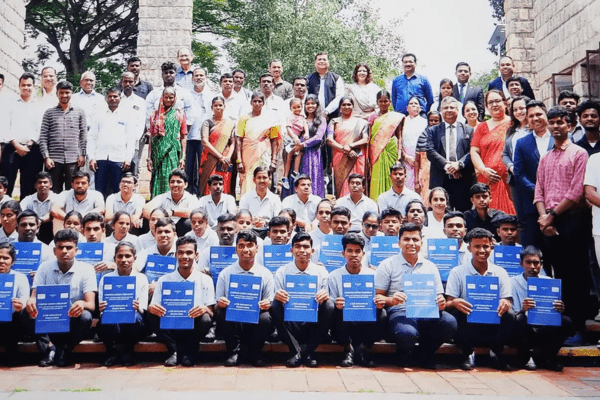
Diageo India (United Spirits Ltd.) partnered with the Skill Council for Persons with Disabilities (SCPwD) to train and place over 300 students in food and beverage services through the ‘Learning for Life’ program. The first batch of 22 students from the Bengaluru center celebrated their convocation with key attendees, including Shilpa Vaid, Chief Human Resource Officer at Diageo India, Ravindra Singh, CEO of SCPwD, Lizanne Pinto, Area Director of Human Resources at Marriott International, and Amlan Kumar Dasgupta, Vice President of Skill Development at Royal Orchid and Regenta Hotels.

In 2023, Diageo India expanded the ‘Learning for Life’ program to include individuals with disabilities, equipping them for roles in the business and hospitality sectors. The three-month residential training, conducted at SCPwD-affiliated centers in Noida and Bengaluru, is led by certified trainers and assessors. 

After completing the program, students secure jobs with SCPwD’s placement partners, such as Accor Hotel, Lemon Tree Hotel, Marriott Hotels India, Hotel Royal Orchid, Regenta, La Pino’z Pizza, and Compass Office Cafeterias, all working together to create a more inclusive hospitality industry.

Shilpa Vaid, chief human resources officer, Diageo India, said, “We’re proud to strengthen our partnership with SCPwD, advancing inclusion in line with our Spirit of Progress ESG action plan. Our ‘Learning for Life’ program seeks to support Persons with Disabilities, equipping them with vital skills and resources while opening doors to employment and opportunity. We’re keen to work collaboratively, shaping a hospitality sector that works for all”.  

Ravindra Singh, CEO of SCPwD, added, “Diageo India’s leadership in driving inclusion and diversity sets an example for others to follow. Together, we are not just creating job opportunities but breaking down barriers that have previously limited Persons with Disabilities from gaining mainstream employment.”

One of the program’s beneficiaries, Ramya S, shared, “For the longest time, I wasn’t sure if someone like me could ever land a regular job. I worried about whether I had the right skills and how people would treat me at work. But the ‘Learning for Life’ program changed everything. It gave me the platform and the training I needed, and now I’m ready to join the hospitality industry with confidence and hopes for a bright future.”

Space startup GalaxEye to launch ‘Drishti satellite’ through Elon Musk’s SpaceX 

0
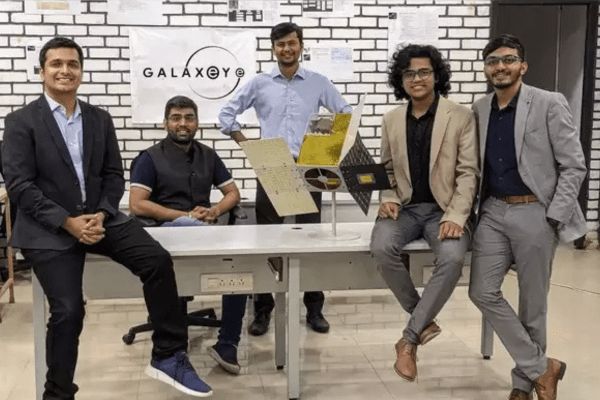
L-R: Rakshit Bhatt, Suyash Singh, Denil Chawda, Kishan Thakkar, Pranit Mehta, cofounders, GalaxEye

GalaxEye, a space startup, will launch the first-ever multi-sensor Earth observation satellite called ‘Drishiti’ in partnership with SpaceX. Pranit Mehta, one of the five co-founders and an IIT-Madras alumnus, shared this exciting news. The launch is planned for mid-2025. The company, incubated at IIT-Madras, is based in Bengaluru.

“This will be a 150-kg high-resolution indigenously-developed satellite, and we plan to launch a constellation of five satellites, with Drishiti being the first. By this time next year, we will already be in space. We aim to position ourselves as a key provider of data across various altitudes,” he said, adding that the ready-to-launch satellite will be transported to the US.

“Earlier, we considered the ISRO spaceport, but there were some timeline challenges. While discussions with them are still ongoing, we have finalized SpaceX for this launch, being the first startup to do so,” Mehta said, adding that this marks a full circle for the team, who were the Asian Finalists at the SpaceX Hyperloop Competition in 2019. 

In September, Infosys, a major Indian IT firm, acquired a minority stake in GalaxEye for Rs 17 crore. Speaking about the partnership, Mehta highlighted its strategic importance. “Infosys coming on board is crucial for us because once the satellite is in orbit, there will be a massive amount of data to manage,” the IIT-M alumni explained.

By partnering with Infosys, GalaxEye can leverage the company’s vast expertise and global market reach. “Infosys has a wide range of use cases, and instead of reinventing the wheel and going the IT way, we plan to do data processing and signal management. This collaboration will enable us to develop downstream applications that can serve a variety of industries, effectively harnessing the satellite’s capabilities,” Mehta added. 

Another insight he shared is that standalone satellite imagery won’t be sufficient for industries. “Companies typically rely on multiple sources of intelligence—whether from partners, the industry itself, or other channels—when making decisions. Collaborating with companies like Infosys helps us tap into that broader ecosystem, bringing diverse insights together,” the co-founder said. 

The indigenously built Drishti satellite will operate in space for five years. It will use both Synthetic Aperture Radar (SAR) and Multi-Spectral Instrument (MSI) sensors to capture high-resolution images of Earth. This technology is a first in the industry, and the company has already applied for a global patent.

Projected to cost only about 50-60% of what similar satellites previously launched for Mehta believes, “This cost efficiency is not only significant from a financial perspective but also in terms of use cases, as we are integrating two sensors at that price point. Such frugality is ingrained in India’s DNA.”

He added that the work took three years, starting at the IIT-Madras lab with proof-of-concept. “This innovative approach demonstrates that the two sensors can coexist and effectively capture data.”

Mehta said the goal has always been to make satellite imagery more accessible, not just to treat it as another data source. “We are currently focusing on a wide range of software applications. While we could just become a data player, we want industries across various sectors to recognize the inherent value that satellite data can provide,” the co-founder expressed.  

Febi.ai raises $2M to strengthen AI-powered accounting solutions

0
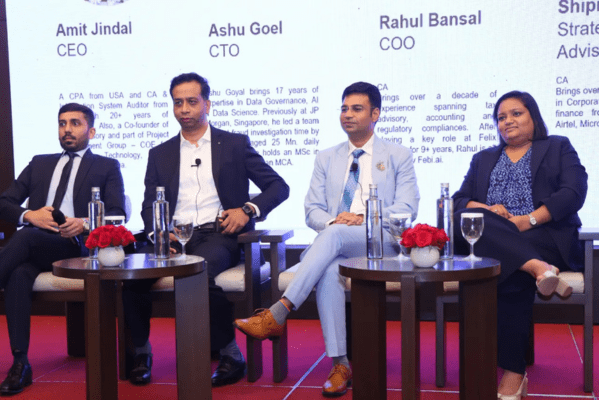
Senior leadership team of Febi.ai

Febi.ai, created by experts in their fields, has raised USD 2 million in Pre-Series A funding. The investment came from Lumis Partners and notable individuals like Virender Rana (JP Morgan, Ex-Managing Director-Payments), Amit Chaudhary (Co-founder—Lenskart), Padmaja Ruparel (Co-founder—IAN), Rohan Bhargava (Co-founder—Cashkaro), and Rajat Jain (Chairman Fino Payments Bank), among others.

Launched in 2022, Febi.ai combines the expertise of chartered accountants and technology professionals. The platform leverages AI to eliminate manual data entry and reduce accounting and invoice verification errors. It also automates documentation management and tax compliance, giving founders and entrepreneurs real-time business insights to make informed decisions confidently.

Febi.ai stands for Founders Entrepreneur Books Innovation. The name highlights the company’s commitment to innovation in finance and its entrepreneurial drive. With the new funds, Febi.ai plans to enhance its AI capabilities, automate accounting and tax compliance platforms, grow its customer base, and expand its team.

Founded by CA Amit Jindal, CA Saurabh Jain, Ashu Goel, and CA Rahul Bansal, Febi.ai is led by experts in finance. Amit Jindal and Saurabh Jain, both former Ernst & Young employees, have successfully grown Felix Advisory, a financial advisory firm with over 350 members.

Amit Jindal, a chartered accountant from India and certified public accountant from the USA, brings over 20 years of experience in accounting and tax compliance. He recognized the challenges finance professionals face with manual accounting and tax platforms through his past roles. He founded Febi.ai to address these real-time problems for teams and end users.

Amit Jindal, CEO, said, “It’s been built by the Chartered Accountant community and will empower entrepreneurs and the CA community with real-time insights and effective ways to manage accounting and tax compliance functions.

Sandeep Sinha, Partner at Lumis Partners, said, “Startups and MSMEs are the heart of the Indian economy. While handling business operations in competitive industries, taking care of finance and staying tax compliant can be a lot to manage for them. I believe Febi.ai can transform this as it takes the burden from their shoulders so they focus on high-priority work.”

Padmaja Ruparel, Co-founder of Indian Angel Network, shared her thoughts, “Febi.ai is an innovative software and has the full potential to be the industry leader in its space. As someone who has connected so closely with the Indian entrepreneurial ecosystem, it’s a great platform for businesses trying to stay on top of their tax compliance and financial management.” 

Amit Chaudhary, Co-founder of Lenskart, said, “When entrepreneurs are building their business, investing time in doing accounting and finance is the last thing they want. Febi.ai helps them reduce manual work and use their time better.”

To strengthen Febi.ai’s technological expertise, Ashu Goel joined as the Chief Technology Officer (CTO). After spending 17 years at JP Morgan in Singapore, Ashu returned to India with his family to support Febi.ai’s mission. He aims to leverage AI to revolutionize startups, SMEs, and enterprises. This move highlights his strong dedication to solving real-world challenges in accounting and finance through innovation and cutting-edge technology.

Eruditus raises $150Mn led by TPG Rise

0
Ashwin Damera, Founder , Eruditus

Eruditus, an executive education startup, has secured $150 million in new funding, maintaining its valuation at $3.2 billion post-money. TPG Rise, an impact investment fund from the US-based private equity firm, led the round.

Current investors, including SoftBank Vision Fund 2, Leeds Illuminate, Accel, CPP Investments, and the Chan Zuckerberg Initiative, participated in this funding.

TPG Rise invested $100 million in Eruditus, while SoftBank contributed an additional $20 million. Eruditus has become the top Indian edtech firm by revenue, reaching Rs 3,800 crore in FY24. According to founder Ashwin Damera, the company is expected to surpass Rs 5,000 crore in revenue this fiscal year.

Damera also mentioned that the firm will begin shifting its domicile from Singapore to India.

Eruditus plans to move its domicile to India and join other Indian startups with holding companies in the US and Singapore.

Founder Ashwin Damera noted that this funding round took the longest to close. Global investors remain cautious about India’s edtech sector due to ongoing issues with Byju’s.

“Fiscal 25 – from July to June – will be nearly Rs 5,000 crore in revenue and we should do about Rs 300 crore in Ebitda,” he said. 

“We just turned profitable in FY24 at an Ebitda level. A company of our size, I think we should keep some cash in hand—cash for M&A.”

Talking about key metrics like topline, Ebitda and growth, Damera said, “We are better today… We are talking about a company that will list maybe two years from now, whenever the timeline is set, but when we do, it will be at a way higher multiple.”

Following PhysicsWallah’s $210 million raise last month, this is the second significant deal in the edtech space. Meanwhile, Eruditus’ smaller competitor, Upgrad, is finalizing a $50-60 million round from existing investors.

Many edtech companies have shut down and returned capital to investors, while Byju’s continues to face challenges.

“This has been a longer fundraise than I expected,” Damera said. 

“Also in this process, we learned a few things. One is that some of the guys who we thought were very keen have decided that they were either not investing in education or they will not invest in India for some time,” he said, indicating the broader concerns on investors’ minds around the sector.

“The second thing also from our perspective is that a lot of these are global investors. So, they also look at the comparables in the US… We had to spend a lot of time telling them that corporate governance here is very different from what you have experienced in other Indian companies,” he added.

Eruditus plans to use most of the latest funding for expansion. “Today, we are very much playing in what we call executive education,” Damera said. “What we are planning to do as we go along…is going to a level below, which will be post-grad, like at a master’s level, and then go one level below that, which is undergrad,” he said on expansion plans. 

The company plans to invest in and expand its study-abroad business, launch more courses, and increase its university partnerships. It has around 80 university partners and aims to grow that number to 150 in the coming years.

“We will grow about 25 -30% year on year. Even at a conservative growth rate of 25%, we will be Rs 15,000 crore topline,” Damera said, adding this scale would be key for its IPO plans given it would also play a key role on the multiples it can get on revenue and Ebitda. 

“Do you take 50x, which is where the market is today, or do you take 40 or 35, which is perhaps more reasonable?” he said. 

Eruditus might use part of the new funding to manage some of its debt, though payments are scheduled over the next two years. 

“We don’t need to repay our debt. Our debt is at the end of next year. So, there is no need to pay the debt as of today… Some amount of debt for a company our size is not bad,” Damera said.

AI-Driven Innovations by LimeChat Redefine Customer Experience, Says Aniket Bajpai, Co-Founder of LimeChat

0
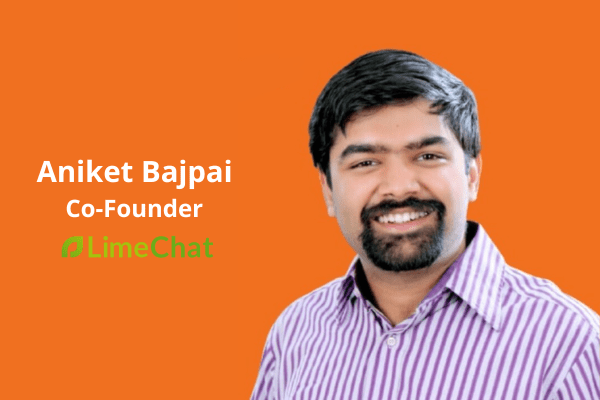
Aniket Bajpai, Co-founder, LimeChat

The World CX Summit, a prestigious gathering organized by Trescon in Bengaluru, transformed into a powerhouse of innovation and collaboration, uniting over 200 C-level executives. This dynamic event fostered groundbreaking discussions and unveiled the latest trends in customer experience, celebrating excellence across the industry. As a proud media partner, Business Review Live had the honour of participating in this influential summit, where we engaged with Mr Aniket Bajpai, Co-Founder of LimeChat. 

LimeChat, co-founded by Nikhil Gupta and Aniket Bajpai, IIT Delhi and MIT graduates, emerged from a passion for leveraging AI to solve real-world challenges. With a strong background in AI and computer science, the founders previously launched a successful news and social media analytics company, exiting in 2019. 

The onset of the pandemic in 2020 opened the door to new opportunities. Observing the difficulties brands faced in managing customer contact centres remotely, the founders recognized the potential for AI to enhance support experiences. Their insights aligned with the rapid advancements in AI technology, including innovations that eventually led to the development of ChatGPT. This convergence inspired the creation of an AI agent capable of delivering exceptional support around the clock.

LimeChat focuses exclusively on the Indian market, concentrating on a few industries. Committed to sustainable growth, the company has raised nearly $6 million in funding and is nearing break-even with a vision to grow profitably. The goal is to empower large enterprises across India to provide outstanding customer experiences without incurring excessive backend costs. As the future of AI continues to evolve, LimeChat envisions technology that can understand customer issues more effectively, integrating seamlessly with various systems to resolve problems efficiently. This commitment to innovation positions LimeChat at the forefront of the AI landscape, ready to transform customer support in India.

Join us as we delve into his compelling insights and perspectives from this remarkable event.

What motivated you to start LimeChat AI, and how has your vision for the company evolved since its early days?

My previous experience in building AI solutions, including running an AI company before LimeChat, was a key motivation. We launched during the pandemic when businesses were scaling rapidly. I had terrible customer support experiences during that time, from transferring my phone number to ordering products online. After talking to various brands, I realized their biggest challenge was scaling customer support as they grew. At the same time, innovations in AI, such as the rise of GPT technologies, were gaining momentum. So, we decided to leverage this technology to create AI-powered support agents that could help brands scale their customer service.

How do you ensure that LimeChat’s AI provides personalized customer interactions without sacrificing automation or efficiency?

I strongly believe that personalization is crucial. Without it, interactions can become very limited. For instance, a click-based interaction may automate processes, but it can significantly lower the customer experience. We aim to deliver a human-like output from our AI, similar to what ChatGPT offers. It should feel like a real conversation. The AI can understand your free text and respond in kind. This approach ensures that customers engage in a dialogue rather than simply clicking buttons and following a rigid process.

How do you continuously identify and adapt to real-world customer needs through your AI solutions?

Our solution acts like an agent on WhatsApp. During conversations, the AI often asks questions like, “Are you satisfied with this chat?” or “Did you like this response?” This approach makes it easy for customers to provide feedback instantly. We use it to enhance and train the model as we gather more feedback. Over time, this process allows the AI to improve continuously, ensuring it better meets customer needs.

How does LimeChat stand out in providing unique value to its audience? 

Many companies are trying to create AI chatbots, but most are still in the demo phase. Unlike them, we focus on delivering live examples of our technology in action. Our chatbots don’t just exist for show; they actively impact business metrics and enhance customer experience. As pioneers in this field, we have successfully deployed Gen AI technology in over 10 live projects. Our partnership with Microsoft also enables us to advance quickly in this area. This real-world experience in developing and deploying Gen AI solutions in production truly sets us apart.

How do you envision integrating emotional intelligence into transactions? 

There is ongoing innovation in AI every month. For AI to truly understand customers, it needs to recognize their tone and sentiment. This understanding allows the AI to use the customer’s emotions to tailor its responses. For instance, detecting whether a customer is happy, sad, or angry helps the AI respond appropriately. Currently, AI has already made significant progress in this area. Our focus is on incorporating these advancements into our customer experience. Ultimately, we aim to create an emotionally intelligent system, enhancing interactions and making them more relatable. 

How does LimeChat tackle the challenges of maintaining transparency and trust in AI interactions, ensuring users feel confident in managing their interactions?

From the very beginning of the conversation, we prioritize transparency. When customers start interacting with our system, the brand discloses that they are speaking with an AI agent and provides the agent’s name. We never set the expectation that customers are chatting with a human, which maintains clarity throughout the interaction. Additionally, if the AI encounters something it cannot understand, it promptly hands the conversation to a human agent. This seamless transition ensures that customers receive the assistance they need, reinforcing their trust in the system. 

What are the biggest challenges you have encountered while implementing LimeChat’s AI solutions in various industries, and how have you addressed these challenges?

One major challenge is adapting AI to work effectively across multiple industries. To tackle this, we have chosen to focus our efforts strategically. Until now, we have primarily concentrated on e-commerce and retail use cases. Recently, we have begun expanding into consumer tech applications. We focus on a few specific sectors rather than spreading ourselves too thin by trying to serve many industries at once. This focused approach allows us to develop solutions tailored to each industry’s unique needs.

Can you share a case study demonstrating how LimeChat’s technology significantly improved a client’s operations? 

Certainly! We have partnered with a large Ayurvedic brand based in Bangalore called Kapiva, which offers a wide range of Ayurvedic products nationwide. They have achieved an impressive annual revenue of 500 crores and have been scaling at a rate of 2-3 times each year. We’ve been working with them for nearly four years, and during this period, they have successfully scaled their operations by 20 times.

One significant benefit of our collaboration is that Kapiva does not need to hire 20 times more customer support staff as it grows. Instead, they utilized our AI agent capabilities to automate many support tasks. This automation ensures that responses are sent quickly, significantly improving their first response and resolution times. 

For example, during a major sales event like Diwali, when they might receive double the usual number of queries, they do not need to double their staff. Our AI allows them to maintain consistent response and resolution times with the same number of agents. The AI assists if a customer reaches out at night and no agents are available. This capability enables Kapiva to provide exceptional customer service across all channels, regardless of the time or sales period, while effectively managing its support team as it scales.

How can we ensure AI is used safely while taking advantage of its benefits?

The past year has witnessed a rapid evolution in AI technology, and this trend is set to continue. AI may surpass human capabilities in various areas in time, which is an exciting prospect for many. This evolution parallels the history of innovation; just as writing, steam engines, and airplanes transformed human activities, AI represents a powerful tool with vast potential.

Like any tool, the impact of AI depends on how it is used. For example, airplanes can transport people or be weaponized. The responsibility lies with users to determine their application of the technology. As AI advances, establishing laws and guidelines will be essential to define appropriate and inappropriate uses. Ultimately, the benefits unlocked by AI have the potential to bring about significant advancements across multiple sectors.


Slice raises $8.5Mn from founder Rajan Bajaj 

0
Rajan Bajaj, Founder & CEO of Slice

Fintech unicorn Slice has raised Rs 71.7 crore (about $8.53 million) from its founder and CEO, Rajan Bajaj. This was done through the issuance of partly paid-up shares. Regulatory filings from the Registrar of Companies (RoC) show that Slice’s board approved up to 22,000 partly paid-up equity shares. Each share is priced at Rs 32,606 and will be issued in one or more stages.

This comes after Slice, based in Bengaluru, secured Rs 300 crore in debt funding. The round was led by the Taneja Family Trust, Anju Family Personal Trust, UK2 Family Trust, and MN Family Trust, along with participation from Blume Ventures, 8i Ventures, and others.

Slice provides prepaid accounts, UPI payments, and consumer credit, mainly targeting young users. The company is well-known for offering no-fee credit services and a rewards program. Additionally, Slice has entered the buy-now-pay-later (BNPL) market, giving millennials and Gen Z more control over their spending.

In 2021, the company reached unicorn status by raising $220 million in a round led by US investors Tiger Global and Insight Partners. As of March 2023, Tracxn valued Slice at $1.3 billion.

In August, Slice’s merger with North East Small Finance Bank, based in Guwahati, received approval from the National Company Law Tribunal (NCLT). The Reserve Bank of India (RBI) had cleared the merger in October 2023. This will allow Slice to deliver tech-driven financial services to North East Small Finance Bank’s customers.

The funding aligns with a growing trend where founders and executives invest in their startups. For example, in August, Ritesh Agarwal, founder of Oyo, invested Rs 830 crore in his company, while Gaurav Kumar, founder and CEO of fintech unicorn Yubi, put Rs 250 crore into Yubi.

In fiscal year 2023, the firm’s operating revenue jumped to Rs 846.7 crore, three times higher than the Rs 283 crore of the previous year. However, its net loss increased by 60% to Rs 405.7 crore from Rs 253.6 crore.

Aditya Birla Digital Fashion invests Rs 75-Cr in Virat Kohli-backed Wrogn 

0

Aditya Birla Digital Fashion Ventures Ltd, a subsidiary of Aditya Birla Fashion and Retail Ltd, has invested Rs 75 crore in Wrogn, the men’s wear brand supported by Accel and cricketer Virat Kohli.

“ABDFVL, a wholly owned subsidiary of the company, has infused Rs 75 crore of the final remaining portion of the stated primary investments into Wrogn, thereby increasing its shareholding in Wrogn, from existing 17.10% to 32.84% on a fully diluted basis,” the firm said in a stock exchange filing. 

TMRW House of Brands, an e-commerce venture of Aditya Birla Group, previously invested Rs 125 crore in Wrogn.

According to the firm, the investment aims to expand ABDFVL’s portfolio of digital-first brands. “This infusion is in continuation of its earlier investment on certain milestone based valuations,” it added.

Founded in 2014 by Anjana and Vikram Reddy, Wrogn targets men aged 18-30 with casual clothing, footwear, and accessories featuring bold prints, bright colors, and streetwear styles. The brand operates through both online and offline channels.

Wrogn’s revenue dropped by 29% to Rs 243 crore in the fiscal year ending March 31, 2024, compared to Rs 344 crore the previous year.

According to the filing, the investment will give the venture 12,225 compulsory convertible preference shares (CCPS), representing a 32.84% stake in Wrogn on a fully diluted basis.

TMRW has invested in eight Indian fashion brands, including The Indian Garage Co, Bewakoof, Nobero, Nauti Nati, Urbano, JuneBerry, and Veirdo.

Several fashion startups have raised funds recently. Ethnic wear brand Fashor secured $5 million in a funding round led by Blume Ventures through primary and secondary transactions.

The Pant Project, a brand specializing in custom-made and ready-to-wear pants, raised $4.25 million in its first funding round, led by Sorin Investments.

Men’s fashion brand Rare Rabbit is finalizing its first institutional funding round of Rs 500 crore, led by A91 Partners.

AI firm Budy raises $4.2Mn in funding

0
GreyOrange cofounder Samay Kohli

California-based Budy, a platform that simplifies sales and marketing software management, has raised $4.2 million (around Rs 35.29 crore) in funding. RTP Global, an early-stage investor, led the funding round.

Investors such as Beenext, The Neon Fund, and angels like Abhinav Asthana (Postman cofounder and CEO), Raju Reddy (Sierra Atlantic founder), and John Hayes (Pure Storage cofounder) also participated.

Budy plans to use the funds to enhance its AI training and development. The company was founded by Samay Kohli, cofounder of robotics firm GreyOrange.

“Budy is an AI agent. We are trying to give it more and more capabilities to use different sales and marketing software packages,” Kohli said.

Launched in 2024, Budy aims to help businesses streamline their sales and marketing processes while minimizing operational challenges.

“The goal for the year is more about building out the platform with paying customers. We are solving a really big pain problem for the customer. As a result, it’s really valuable for customers to essentially pay for it,” said Kohli. “The idea is to augment work along with human beings and do work rather than being an assistant or a chatbot.”

The company is collaborating with select enterprise customers through its design partnership program.

“We’re looking for primarily large companies, specifically early-stage companies with annual revenues between $25 million and $200 million. These are companies which are essentially looking to use sales and marketing software for their selling motion,” said Kohli, highlighting that the startup will initially target North America.

Commenting on the investment, Nishit Garg, partner at RTP Global, said, “This investment aligns perfectly with RTP Global’s focus on backing visionary founders in transformative sectors like AI. We believe founders with bold ideas can redefine industries, and supporting them early is crucial for driving innovation.”

Reddy of Sierra Atlantic said, “Having worked with Samay during his journey at GreyOrange, I’ve seen firsthand his ability to scale innovative technologies. I’m confident in his vision for Budy and the potential of AI to revolutionize enterprise software management.”

Zerodha launches $1-million annual fund to support open source software projects 

0

Zerodha has launched a $1-million annual fund to support Free/Libre and Open Source Software (FOSS/FLOSS) projects globally. 

In a blog post, Kailash Nadh, Zerodha’s Chief Technology Officer, shared that the company has built its financial technology tools using a FOSS stack. This approach has played a key role in Zerodha’s success. It includes many tools such as programming languages, operating systems, databases, web servers, and front-end frameworks.

“We are excited to announce the launch of a dedicated fund aimed at providing financial assistance to Free/Libre and Open Source Software (FOSS/FLOSS) projects globally, with an annual commitment of $1 million,” he wrote.

Zerodha will invest between $10,000 and $100,000 in individual FOSS projects, with $1 million allocated annually. This amount could increase as the company gains more insight into how to run the fund.

FOSS software is free to use, modify, and distribute, with the source code open for anyone to improve. This model encourages collaboration and transparency. Well-known examples include Linux, Mozilla Firefox, and LibreOffice.

Zerodha will set up a small team to manage the fund and ensure smooth operations. This team will run the initiative in a structured way, similar to an Open Source Program Office (OSPO), but focused solely on funding projects. Kailash Nadh described it as an Open Source Funding Office (OSFO).

Sarovar Hotels announces the grand opening of Golden Tulip, Vagator 

0

Sarovar Hotels has launched the Golden Tulip Vagator, a stylish retreat in the heart of North Goa. Vagator, famous for its golden sands, red cliffs, and vibrant nightlife, is one of the most scenic spots in Goa. With this new addition, Sarovar expands its upscale Golden Tulip portfolio, offering a perfect mix of relaxation and adventure for both business and leisure travelers.

Golden Tulip Vagator features 30 beautifully designed rooms, available in two categories: superior and deluxe. Guests can enjoy modern amenities and stunning views of the greenery or pool. The hotel offers a refreshing escape with facilities like an outdoor swimming pool, a fitness center, and two dining options. Tulipe, the all-day dining restaurant, seats 60 guests, while Chill, a tropical bar and lounge, accommodates 25. Its convenient location near Vagator Beach, Chapora Fort, and other attractions makes it an ideal choice for exploring the beauty and culture of Goa.

Ajay K. Bakaya, managing director, Sarovar Hotels and director, Louvre Hotels India, commented, “We are thrilled to announce the launch of Golden Tulip Vagator in partnership with Prime Avia Consultants. Located in the heart of North Goa, Vagator is truly a hidden gem, and we believe our guests will be captivated by its stunning landscapes, exceptional service, and modern design. Our vision is to create an unforgettable experience that harmoniously blends Goa’s unique charm with world-class hospitality, establishing it as the go-to destination for travelers in search of both adventure and serenity. Recognizing Goa as a vital market for Sarovar Hotels, we are dedicated to expanding our footprint in this dynamic region to meet the rising demand for quality accommodations.”

Navin Luther, managing director, Prime Avia Consultants, added: “We are excited to collaborate with Sarovar Hotels on the opening of Golden Tulip Vagator. The property is a true reflection of the spirit of Goa, with a focus on comfort, style and authentic experiences. We look forward to welcoming travelers from across the globe to this picturesque destination, where they can enjoy the best of Goan hospitality and culture.”