
Wednesday, April 29, 2026
Home Blog Page 58

India’s Retail Boom to Attract USD 3.5 Bn in Next 3 Years, US Malls Crumble

0
Anuj Kejriwal, CEO - Retail Leasing and Industrial & Logistics, ANAROCK Group

Mumbai, 17 December 2025: As malls in western countries of the world brace for an existential crisis, global capital is pivoting toward a market that seems to defy every global retail trend—India. While the U.S. has witnessed a net closure of nearly 1,200 mall stores since 2020—with rising vacancies forcing almost 40% of empty malls to undergo rezoning or repurposing—India is experiencing a retail resurgence driven by strong consumer demand and growing institutional investor confidence.

Anuj Kejriwal, CEO – Retail Leasing and Industrial & Logistics, ANAROCK Group, says, “Latest ANAROCK data shows that in the next 3 years, Indian malls are set to see over USD 3.5 Bn of capital inflows. Meanwhile, 88+ foreign brands have entered the Indian retail market and are seeking to expand aggressively. Several more global brands are in the pipeline, seeking space in the severely restricted Grade-A assets currently available.”

As a sharp counterpoint to Western countries’ markets, India’s massive unmet demand from a young consumer base and limited organized retail competition, backed by supportive FDI policies, are exactly what foreign brands and investors now seek.

A major confidence driver is the extreme undersupply of quality retail space in the country. India’s per capita retail stock remains one of the lowest in the world—Tier 1 cities operate with just 4 to 6 sq. ft. per person, Tier 2 and 3 cities with 2 to 3 sq. ft., and Grade A mall space alone sits at barely 0.6 sq. ft. per capita. In contrast, the US averages close to 23 sq. ft., while China exceeds 6 sq. ft.

“This gap, combined with India’s per capita income nearly doubling in the last decade, has created a demand–supply mismatch virtually unheard of in global retail,” says Kejriwal. “Grade-A malls are running near-full occupancy, reporting 95-100% occupancy with long waitlists for key zones. Rental growth has consistently surpassed pre-pandemic levels, and developers now find leasing cycles outpacing construction cycles—a rarity anywhere in the world.”

For investors seeking predictable, inflation-hedged cash flows, this imbalance is a compelling long-term opportunity.

Consumption Gravitates to Quality Malls

With its rare combination of demographic demand drivers, India’s consumption story is creating new headlines. The country is on track to become a USD 6 trillion consumption economy by 2030. Unlike their Western counterparts, Indian malls are lifestyle destinations anchored in entertainment, dining, and social experiences. Daily footfalls in major malls routinely exceed 20,000 on weekdays and surge beyond 40,000 on weekends. F&B and entertainment now account for 30–35% of footfalls, resulting in a resilient retail mix almost completely immune to the online retail disruptions that are defeating Western malls.

Sharpened Investor Appetite

India has over 600 operational malls, but less than 100 meet the institutional benchmarks that attract global funds – triggering aggressive competition for top-tier assets.

“With its 19 malls’ portfolio housing 1,000+ brands and generating INR 1,600 Cr in annual NOI, Blackstone’s Nexus Select Trust REIT listing in 2023 kick-started retail-led REITs in India,” adds Kejriwal. “It established the sector’s credentials as a transparent, scalable, and professionally managed asset class. By 2030, at least two more retail REITs are expected to enter the Indian market.”

E-commerce Not a Spoilsport

Among the most attractive dynamics for global investors is that Indian malls have not capitulated to e-commerce—they are, in fact, benefiting from it. India’s e-commerce penetration remains around 8%, far below the 20%-plus levels seen in China and the US. Brands here are increasingly going ‘phygital,’ with offline stores now experiencing and trust-building centers while online platforms drive scale.

Many leading D2C brands report that offline conversions are 2-3 times higher than online. In India, physical retail has retained its relevance in a digital age.

Peerless Value Proposition for Global Investors

Indian Grade-A malls typically deliver 14-18% IRRs, almost twice the yields seen in many Western markets. Rental escalation cycles, consumption growth-linked revenue-sharing arrangements, and consistently low vacancies signal stability and upside for global capital seeking both yield and long-term growth.

“This renders India unique among the world’s leading retail markets,” Kejriwal sums up. “In the US and Europe, malls are contending with oversupply, declining footfalls, online cannibalization—and the looming specter of repurposing into other formats. In contrast, the Indian retail market has limited quality supply, rising incomes, heavy footfalls, and rapid brand expansion. In the first half of 2025, retail leasing in India rose almost 70% Y-o-Y, and new mall supply grew by over 160%.”

MoEngage raises additional $180 Mn in Series F funding

0
Raviteja Dodda & Yashwanth Kumar, co-founders, MoEngage

MoEngage, a customer engagement platform for consumer brands, has raised an additional $180 million as part of its Series F round. Previously, the company secured $100 million in November 2025, thereby taking the total Series F funding to $280 million. ChrysCapital and Dragon Funds led the latest tranche as new investors, while Schroders Capital joined the round alongside existing backers TR Capital and B Capital.

The company will deploy the fresh capital to accelerate innovation within its Merlin AI suite, expand go-to-market teams across North America and EMEA, and evaluate strategic acquisitions that enhance the platform’s capabilities. At the same time, the startup continues to strengthen its footprint in Australia, New Zealand, and Southeast Asia, where enterprise brands are upgrading customer engagement stacks and integrating marketing and product workflows.

Alongside these growth initiatives, MoEngage has completed its second employee tender offer worth approximately $15 million. Through this initiative, the company enabled liquidity for 259 current and former employees, supporting long-term wealth creation. Additionally, the round included select secondary transactions for early investors, including Eight Roads, Helion Venture Partners, Matrix Partners, and Ventureast.

“At MoEngage, we believe our success is a collective effort, built on a culture of ownership and innovation. It is vital that we recognize the people who brought us to this stage,” said Raviteja Dodda, CEO & co-founder of MoEngage. “This liquidity program reflects that commitment by ensuring that the builders of MoEngage, our employees, and early investors have the opportunity to directly share in the milestones we achieve together. We are grateful for the partnership of ChrysCapital, Dragon Funds, Schroders Capital, TR Capital, and B Capital as we continue to scale globally.”

Meanwhile, Southeast Asia and ANZ remain core growth markets for MoEngage, as enterprises across Singapore, Indonesia, the Philippines, Australia, and New Zealand rapidly adopt AI-powered, insights-driven engagement platforms. In response, MoEngage continues to invest in regional expansion to meet rising enterprise demand.

The company works closely with leading regional brands such as Kredivo, Alfamart, Blibli, XL Axiata, Trust Bank, Stan Entertainment, 13Cabs, Canstar, and TFE Hotels. In addition, it partners with global enterprises including 7-Eleven, Coca-Cola, Starbucks, Samsung, Domino’s, KFC, and Nestlé to unify customer data and deliver personalized, omnichannel experiences.

Furthermore, the startup is expanding beyond marketing teams by strengthening its offerings for product teams through MoEngage Analytics and MoEngage Inform. As customer engagement increasingly requires cross-functional alignment, the platform enables marketing and product teams to operate on shared data and deliver cohesive customer experiences.

MoEngage Inform centralizes critical transactional messaging, including OTPs, account notifications, and service updates, through a single API across multiple channels and providers, ensuring reliability separate from marketing campaigns. At the same time, enhanced product analytics capabilities within MoEngage Analytics connect behavioral insights directly to action. By unifying user data with real-time engagement, the platform allows product managers to understand user behavior and immediately trigger experiences that improve retention and lifetime value.

“Customer engagement has never belonged to just one team. Customers move through many moments, and those moments should feel connected and supportive,” added Dodda. “When product, engineering, and marketing work from the same data and tools, they can show up more naturally for their audiences. That’s the experience we want to help companies deliver so they can grow their brands.”

Rishabh Iyer, Vice President at ChrysCapital, said, “ChrysCapital is excited to partner with MoEngage for its next phase of AI-led growth. This investment aligns with our strategy to back technology platforms built in India for global enterprises, leveraging deep talent, capital efficiency, and a sophisticated understanding of enterprise needs. We are impressed by MoEngage’s disciplined operating model, sustained US execution, and broad product capabilities. We look forward to helping the team become the world’s leading marketing technology platform.”

Ridhi Chaudhary, CIO of Dragon Funds, stated, “We are pleased to partner with MoEngage, impressed by its strong management, continuous product innovation, and durable growth. We believe MoEngage’s best-in-class product and AI capabilities position it well to lead the martech category.” Aakash Tulsani, Managing Director at Dragon Funds, added, “MoEngage sets the bar for innovation by leveraging AI on first-party data, making it essential for marketers. It is a privilege to partner with MoEngage again, having invested previously.”

“At Zeta, we are building the modern banking stack for the world’s leading financial institutions. As a data-driven company, we rely on deep customer insights to drive our product strategy,” said Bhavin Turakhia, co-founder & CEO, Zeta. “MoEngage Analytics has helped us optimize critical journeys like onboarding, activation, and cross-sell, while their messaging capabilities allow us to instantly nudge customers. Effectively bridging the gap between insight and action. As a user of the product, I am impressed by the constant innovation. Additionally, MoEngage Inform has become essential for powering our mission-critical communications, delivering account and transaction updates with high reliability and speed.”

“MoEngage Inform has become a core part of how we run our e-commerce experience at Loblaw across our lines of business,” said Charu Pujari, SVP, AI and Engineering at Loblaw Digital. “It keeps customers updated on their delivery and pickup orders with the speed and reliability they expect, which has made a meaningful difference in how engaged and confident they feel throughout the process.”

Visa startup Atlys in talks to raise about $40 Million from SIG, MakeMyTrip

0
Mohak Nahta, CEO and founder at Atlys

Atlys, an online visa facilitation platform backed by a16z, is close to finalizing a $35–40 million funding round as more travelers turn to digital platforms to plan international trips, according to people familiar with the matter. As global travel demand accelerates, the company is drawing strong investor interest amid a broader travel boom.

Moreover, Susquehanna International Group (SIG), travel technology major MakeMyTrip, and Belgian investment firm Sofina are expected to lead the funding round. Together, these investors are likely to contribute roughly $30 million of the total $35–40 million raised, sources said. In addition, Atlys’ existing investors will invest the remaining $5–10 million, with Peak XV Partners, Elevation Capital, and other current backers participating.

However, Atlys has rejected these claims and stated that it is not raising capital at this time. “We firmly deny the claims being made. The information being quoted is inaccurate and does not reflect the facts,” a company spokesperson said.

Meanwhile, the funding discussions come at a time when international travel and visa demand are rising sharply. Notably, December flight bookings have increased by 20–25 percent year-on-year, while travelers are extending the duration of their holidays. As a result, Indian consumers are preparing for one of the strongest year-end travel seasons in recent years.

Additionally, Indians have spent a record $50 billion on overseas travel over the past three years. During this period, travelers have also increased their average trip budgets by 20–30 percent, highlighting a clear shift toward higher-value international travel experiences.

During the ongoing talks, Atlys is reportedly seeking a valuation of around $200 million, according to sources familiar with the negotiations.

Founded in the US in 2021, Atlys focuses on reducing the time and complexity involved in visa applications for Indian travellers. The company aims to capitalize on the expanding travel market by streamlining documentation, lowering rejection rates, and reducing visa processing times to as little as 55 seconds across more than 150 destinations.

Previously, the company raised a $5 million seed round in 2021 from a16z and other investors. Subsequently, it secured $12 million in a round led by Peak XV Partners and Elevation Capital, with participation from Mantis VC, South Park Commons, the Pinterest founders, and others. Later, Atlys raised $20 million in a Series B round led by existing investors Peak XV Partners and Elevation Capital.

DoorDash launches Zesty, an AI-powered social app for restaurant discovery

0
Andy Fang, co-founder, DoorDash

DoorDash is launching a new AI-powered social app designed to help users quickly discover local restaurants. The app, called Zesty, is currently available in the San Francisco Bay Area and New York.

With this launch, DoorDash is expanding beyond food delivery and moving into the social discovery space. Essentially, the app aims to eliminate the hassle of reading countless reviews, browsing menus across platforms, or scrolling through TikTok to decide where to eat.

Once users open the app and sign in using their DoorDash accounts, they can ask an AI chatbot for personalized dining recommendations based on their preferences. For instance, in an Instagram promotional post, the company highlighted that users can enter prompts such as “A low-key dinner in Williamsburg that’s actually good for introverts” to receive tailored suggestions. Additionally, the app offers pre-filled prompts like “Brunch spots good for groups” and “Romantic dinner with a vintage feel” to guide users.

Meanwhile, DoorDash co-founder Andy Fang wrote in an X post that the app pulls information from DoorDash, Google Maps, TikTok, and other sources to “curate the best suggestions from the web.” Over time, the app learns individual tastes to better understand what users enjoy and what they prefer to avoid. After finding a recommendation of interest, users can save it or share it with others.

Beyond AI-driven search, users can view and share photos and comments about restaurants they have visited, discover content created by others, and follow people—similar to features found on traditional social networks.

“At DoorDash, we’re always looking for new ways to help people connect with the best of their communities,” a DoorDash spokesperson said. “We’re piloting an app called Zesty to make it easier to discover great nearby restaurants, coffee shops, bars, and more through personalized search and social sharing. We’re excited to learn from early testers as we keep shaping what local discovery can look like.”

Overall, the launch of Zesty represents DoorDash’s latest step toward diversifying beyond delivery services. Earlier this year, the company also introduced features that allow customers to make reservations for in-person dining and earn rewards for in-store purchases.

How Real estate has performed in 2025 – Vestian

0
Shrinivas Rao, FRICS, CEO, Vestian

Shrinivas Rao, FRICS, CEO, Vestian, said: “Despite widespread uncertainty, India’s real estate sector demonstrated resilience in 2025. Policy reform, infrastructure growth, and rising income supported stable demand across asset classes. Strong office absorption, steady warehousing activity, and renewed investment flows highlight the sector’s long-term growth trajectory and its expanding role in India’s economic development.”

Real Estate Sector Sustains Upward Momentum in 2025

Despite heightened geopolitical tensions, global macroeconomic headwinds, and shifting trade dynamics, India maintained steady economic progress in 2025. Strong domestic consumption, structural reforms, and continued investment in large-scale infrastructure kept economic fundamentals stable. In this environment, the Indian real estate sector sustained its growth trajectory across office, retail, warehousing, and residential segments.

Union Budget 2025–26 Reinforces Long-Term Vision

The Union Budget 2025–26 advanced the government’s Viksit Bharat objectives, placing real estate and infrastructure at the centre of national development. Total expenditure increased 7.4% to INR 50.65 lakh crore, underscoring support for infrastructure-led growth.

Revised income tax slabs improved disposable incomes, aiding housing demand across price segments. The allocation of INR 15,000 crore under SWAMIH Fund II for completing one lakh stressed housing units strengthened liquidity in the affordable housing segment.

The newly launched INR 1 lakh crore Urban Challenge Fund is expected to accelerate institutional-grade city development. Meanwhile, the National Geospatial Mission aims to modernize planning, digitize land records, and enhance transparency. A national framework encouraging states to promote Global Capability Centers (GCCs) in emerging Tier II cities is also expected to broaden the geographic distribution of office demand.

GCCs Continue to Drive Office Demand

The office sector outperformed expectations in 2025, with absorption in the first nine months rising 15% over the same period in 2024. Each quarter registered higher leasing than the previous year, and Q4 is expected to deliver strong momentum for the second consecutive year. Annual gross absorption is set to touch a record 75 million sq ft—the highest ever in a calendar year.

GCCs remained the dominant demand driver, accounting for 42% of pan-India absorption in 9M 2025. Bengaluru, Hyderabad, Pune, and NCR led activity. The IT-ITeS sector contributed 39%, while flex operators expanded their footprint to 12% as enterprises diversified workplace strategies. BFSI moderated to 14%.

Bengaluru, NCR, and Pune contributed nearly two-thirds of new supply additions, while Bengaluru, NCR, and Mumbai accounted for 85% of the total absorption. ESG priorities remained central, with green-certified assets forming 82% of the total leasing—reflecting occupiers’ focus on compliance, brand positioning, and employee well-being.

Warehousing & Logistics Stable Despite Temporary Softening

India’s warehousing and logistics sector recorded 28.1 million sq ft of absorption in 9M 2025, a modest 9% YoY decline. Bhiwandi alone accounted for nearly one-fourth of the national absorption, reinforcing its role as a premier logistics hub.

3PL players led demand with a 35% share, followed by Engineering & Manufacturing at 19%. After subdued activity in H1, e-commerce rebounded in Q3, contributing 23% to quarterly demand.

Rentals strengthened across NCR, Bengaluru, Hyderabad, and Mumbai, with annual growth between 17%–47%. Chennai, Pune, and Kolkata, however, saw quarterly decline due to localised factors.

Government initiatives—400+ multimodal projects under PM Gati Shakti, the UIDF’s INR 100 billion annual outlay for Tier II/III infrastructure, and GST rationalization—continued to reinforce long-term market resilience.

Retail Leasing Strengthens as Demand Outpaces Supply

Retail leasing sustained strong activity through 9M 2025 and is on track to exceed 2024 levels. Stable occupier interest, rising discretionary spending, and evolving consumer preferences supported demand for quality retail space. Fashion and apparel led leasing, followed by F&B and entertainment, highlighting the shift towards experience-led retail formats.

However, new supply remained limited, tightening vacancy levels further. Mall rentals remained largely stable, while high streets saw marginal appreciation amid constrained supply. Domestic retailers continued to dominate leasing, while international brands focused primarily on top-tier malls for visibility and operational efficiency.

Housing Market Softens in 2025 Amid Affordability Challenges

Housing demand moderated through 2025 as elevated prices affected affordability and global uncertainties softened sentiment. Sales and new launches crossed three lakh units each in 9M 2025, but unsold inventory climbed to nearly six lakh units due to tempered absorption.

Despite lower volumes, the overall value of sales increased, driven by strong traction in premium housing. Affluent buyers remained focused on well-located, amenity-rich developments, prompting developers to shift launch pipelines toward higher-value products. Prices rose across major cities due to elevated input costs and resilient premium demand.

The RBI maintained the repo rate at 5.50% across two policy cycles, leading to marginal reductions in mortgage rates and offering slight relief to homebuyers.

Domestic Capital Anchors Institutional Investments

Institutional investments totalled USD 4.37 billion in 9M 2025, down 5.5% YoY, owing largely to a subdued Q1. Inflows picked up in Q2 and Q3, which together contributed USD 3.55 billion.

Commercial real estate dominated with a 79% share, supported by strong office leasing from GCCs and domestic corporates. Residential assets accounted for 11%. Co-investment structures gained traction among foreign investors seeking local expertise amid global volatility. Domestic investors remained active, helping maintain overall market momentum. Institutional inflows are expected to cross USD 6 billion by year-end.

Bharat Hospitality announces 50+ outlets with ₹50-Cr expansion strategy

0

Bharat Hospitality has unveiled an aggressive expansion roadmap supported by planned investments exceeding ₹50 crore. Through this strategy, the company aims to scale its portfolio to more than 50 outlets over the next three years across key Indian markets such as Delhi-NCR, Goa, Hyderabad, and Bengaluru, while also entering international destinations including Dubai and Thailand. Consequently, this move represents one of the most significant post-pandemic expansion efforts within India’s food and beverage sector.

Building on the strong performance of existing brands such as Baraamda, Albert Pinto, and Social Cues, Bharat Hospitality has outlined a clearly defined next phase of growth. Specifically, the company plans to launch 20 new Baraamda outlets, 10 Albert Pinto outlets, and 20 outlets under its upcoming QSR brand, Shuddham. As a result, these additions are projected to generate nearly ₹300 crore in annual revenue, further reinforcing the company’s ambition to establish a globally scalable Indian hospitality ecosystem.

Moreover, Baraamda, inspired by Portuguese-Goan storytelling, has already set a benchmark as a 3,300 sq. ft. experience-led destination known for innovative restaurant design, premium service, and narrative-driven dining.

The brand will continue to expand using a combination of FOCO and COCO models. In parallel, Albert Pinto continues to reinterpret Goan and Goan-Portuguese culinary heritage with authenticity, respect, and contemporary craftsmanship. Meanwhile, with the launch of Shuddham, Bharat Hospitality extends its vision to revive and scale the often-overlooked nuances of South Indian cuisine through a QSR-led approach.

Commenting on the expansion, Manish Khattar, Founder, Bharat Hospitality, said, “Hospitality is one of the few industries where culture becomes commerce, and experiences become equity. At Bharat Hospitality, we are building emotional touchpoints that stay with people long after the meal is over. Our next phase of growth is about proving that India can create world-class hospitality brands that compete globally without losing their soul. With a ₹50 crore+ expansion planned and multiple brands ready for scale, our mission is to take Indian storytelling, service precision, and design innovation to new markets, from Delhi-NCR to Dubai and Southeast Asia.”

Bharat Hospitality’s ₹50 crore-plus expansion strategy underscores its confidence in the long-term potential of experience-led dining and culturally rooted brands. By scaling proven concepts while launching new formats across India and global markets, the company positions itself to emerge as a leading force in shaping India’s next generation of hospitality brands.

Table Space unveils DESYN to transform enterprise design and build solutions

0
Karan Chopra, Chairman & Co-CEO, Table Space

Table Space, one of India’s leading full-lifecycle workspace operators, has announced the launch of DESYN, an intelligent and modular design & build ecosystem aimed at enterprises seeking rapid, flexible workspace fit-outs without committing to full-scale managed operations.

Positioned as a modular offering within Table Space’s integrated lease–design–build–operate portfolio, DESYN enables enterprises to pursue project-based design-and-build engagements while still benefiting from the scale, expertise, and infrastructure of a comprehensive workspace operator.

Derived from the phrase “Design in Sync,” DESYN introduces a new Design–Build–Deliver & Evolve framework. Unlike traditional deliver-and-transfer models, this approach actively responds to the rising demand for premium-quality, cost-efficient, and quickly deployable modular workspaces. Furthermore, the framework establishes a continuous, AI-powered, technology-led partnership that eliminates fragmented vendor execution and replaces it with integrated agility, ensuring that workspaces evolve in step with organizational growth.

“We are constantly evolving our portfolio to capture market opportunities, and DESYN is a major strategic addition—filling the critical gap for intelligent, modular design-and-build solutions that enterprises demand without full operations,” said Karan Chopra, Chairman & Co-CEO, Table Space. “Leveraging our ecosystem built over eight years, DESYN delivers unprecedented speed, precision, and scalability—modular today, enterprise-ready tomorrow, and perpetually evolving with our clients’ ambitions.”

Backed by more than 9.9 million sq. ft. of enterprise workspace under management, DESYN draws on Table Space’s proprietary technology platform and its nationwide partner network. Consequently, enterprises gain seamless access to the full ecosystem, including approximately 500,000 sq. ft. of shared amenities such as meeting rooms, training areas, lounges, and event spaces across India. In addition, clients benefit from large-scale procurement efficiencies, cost-optimized solutions, and a suite of proprietary tools covering workspace management, facility operations, and a white-labeled enterprise application.

Powered by the same intelligence platform that manages Table Space’s broader portfolio, DESYN integrates AI-driven design tools, digital twin visualization, and modular construction technologies to reduce delivery timelines and minimize cost variability. As a result, DESYN converts one-time design-and-build projects into long-term enterprise capabilities by combining design accuracy, execution control, and sustained operational performance.

Moreover, enterprises can start with DESYN’s modular workspace solutions and later transition seamlessly into ready-to-move-in Suites by Table Space or fully customized managed offices. All of these offerings operate within a single, connected platform specifically designed to support continuity, flexibility, and scalable growth.

Wyndham strengthens India footprint with Ramada Hotel & Suites in Kochi

0

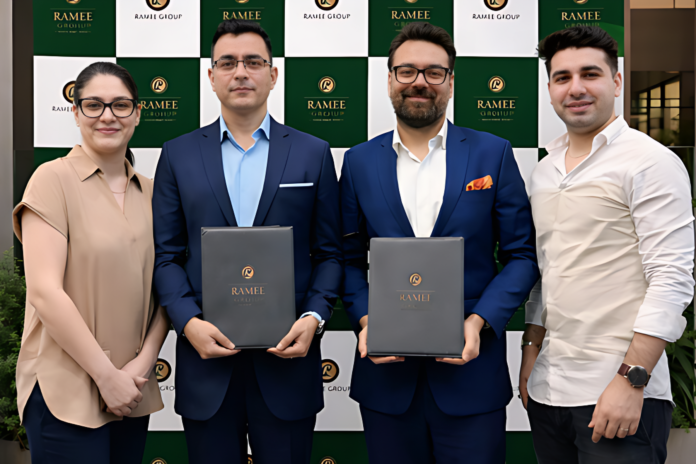
Wyndham Hotels & Resorts has announced the signing of Ramada Hotel & Suites by Wyndham Kochi Infopark, thereby marking the official entry of the Ramada Hotel & Suites brand into India. The company plans to open the 69-room property by mid-2026 and is developing the project in partnership with AGA Hotels and Apartments Pvt. Ltd.

Moreover, Ramada Hotel & Suites by Wyndham Kochi Infopark will offer a well-balanced combination of guestrooms and suites. The property will also include an all-day dining restaurant, modern meeting and business facilities, a fully equipped fitness centre, and a range of amenities specifically designed to support long-term and extended-stay guests. As a result, the hotel aims to cater to both business and leisure travellers visiting Kochi’s growing Infopark corridor.

Commenting on the signing, Rahool Macarius, Market Managing Director, Eurasia, Wyndham Hotels & Resorts, said, “AGA Hotels and Apartments brings strong local market expertise and a clear commitment to quality development. Kochi’s expanding IT and corporate landscape makes it an ideal location for the Ramada portfolio, particularly for a hotel designed to serve business and longer-stay guests. We are pleased to collaborate with AGA on this project and further strengthen Wyndham’s presence in key commercial markets across India.”

Askar Gulabali, Managing Director, AGA Hotels and Apartments Pvt. Ltd., said, “We are proud to introduce India’s first Ramada Hotel & Suites at Kochi Infopark. As Kochi continues to evolve as a major IT and commercial hub, there is a clear demand for high-quality, business-friendly, and extended-stay accommodation. Partnering with Wyndham Hotels & Resorts allows us to combine our strong local expertise with a globally trusted brand to deliver a hotel that meets international standards while addressing local market needs.”

The signing underscores Wyndham’s continued expansion strategy in India. By introducing the Ramada Hotel & Suites format in Kochi, the group strengthens its presence in key commercial hubs while addressing rising demand for high-quality, extended-stay hospitality solutions.

Chai Discovery raises $130M Series B at $1.3B valuation

0
Joshua Meier, co-founder and CEO, Chai Discovery

Chai Discovery, a biotech startup backed by OpenAI, announced a $130 million Series B funding round at a $1.3 billion valuation on Monday. The round was led by General Catalyst and Oak HC/FT, the company confirmed in its statement.

In addition, existing and new investors, including Menlo Ventures, OpenAI, Dimension, Thrive Capital, Neo, Yosemite Venture Fund, Lachy Groom, SV Angel, Glade Brook, and Emerson Collective, participated in the raise. As a result, Chai Discovery’s total funding has now crossed $225 million.

Notably, Chai operates within a rapidly expanding biotech segment that leverages artificial intelligence to accelerate drug discovery timelines. Earlier, in August, Menlo Ventures led the company’s $70 million Series A round and highlighted Chai’s focus on building foundation models purpose-built for drug discovery. Specifically, the startup develops AI systems that predict interactions between biochemical molecules, enabling researchers to reprogram them for potential cures.

Moreover, Chai has articulated a clear long-term vision to “build the ‘computer-aided design suite’ for molecules.” In line with this ambition, the company unveiled its first AI model, Chai 1, last year. It has since introduced Chai 2, its latest and more advanced model. According to the company, Chai 2 delivers significantly higher success rates than existing approaches for de novo antibody design, which involves creating entirely new antibodies rather than modifying existing ones.

“Our latest models can design molecules that have properties we’d want from actual drugs and tackle challenging targets that have been out of reach,” Joshua Meier, Chai’s co-founder and CEO, said in a prepared statement.

Meanwhile, Meier brings a strong technical background to the venture. He previously worked in research and engineering roles at Facebook and earlier contributed to OpenAI, according to his LinkedIn profile. The company profile further notes that Chai Discovery was founded in 2024, positioning it as a relatively young but fast-scaling player in the AI-driven biotech space.

Chai Discovery’s latest funding round underscores growing investor confidence in AI-first approaches to drug development. By advancing foundation models for molecular design and antibody discovery, the company continues to strengthen its position as a category-defining biotech startup at the intersection of artificial intelligence and life sciences.

Haircare brand Moxie Beauty raises $15 Mn in Series A funding

0
Nikita Khanna and Anmol Ahlawat, co-founders, Moxie Beauty

Moxie Beauty, a direct-to-consumer haircare brand, has secured $15 million in Series A funding led by Bessemer Venture Partners. Additionally, existing investor Fireside Ventures participated in the round, alongside angel investors Navin Parwal, Sangeet Agarwal, and Arjun Purkayastha. Earlier angels, including Shantanu Deshpande, Suhasini Sampath, and Rohit Kapoor, continue to back the company.

The company will deploy the fresh capital toward accelerating product innovation and research, strengthening its talent pool, and expanding its distribution footprint across channels. Consequently, Moxie aims to sharpen its competitive edge in India’s fast-growing beauty and personal care market.

Founded in November 2023 by Nikita Khanna and Anmol Ahlawat, Moxie Beauty develops haircare products specifically designed for Indian hair textures and climatic conditions. Its portfolio includes shampoos, conditioners, leave-in treatments, and styling solutions that effectively address concerns such as dryness and frizz. As a result, the brand continues to resonate strongly with Indian consumers seeking targeted, high-performance haircare.

Notably, Moxie has crossed ₹100 crore in annual recurring revenue within two years of launch, underscoring its rapid scale and market traction. Moreover, the brand has quadrupled its monthly revenue over the past year since November 2023, driven by robust demand across leading online marketplaces. At present, ten Moxie products feature on bestseller lists across multiple categories on Nykaa and Amazon, highlighting sustained consumer trust and strong repeat purchases.

Commenting on the milestone, Nikita, co-founder of the company, said, “We started Moxie to create something that still didn’t exist—clean, salon-grade haircare that’s made specifically for Indian hair textures and weather, which are very unique. With this raise, we are excited to deepen our R&D capabilities and continue to innovate the next generation of high-performance hair care and styling products for our community.”

Anant Vidur Puri, Partner at Bessemer Venture Partners, said, “Our partnership with Moxie lies squarely on our consumer brands roadmap, where we believe that aspirational and discerning consumers will fuel the rise of iconic India-first brands. The team’s laser-sharp focus on innovation and formulation excellence is evident in the customer love they have. We wish them all the best for the journey ahead.”

Moxie Beauty’s Series A funding marks a significant step in its growth journey. The brand combines deep consumer insight, formulation-led innovation, and strong investor confidence to position itself strongly as it builds a scalable, India-first haircare powerhouse in an increasingly competitive D2C ecosystem.