

Wednesday, April 29, 2026
Home Blog Page 57

Elan Group strengthens Gurugram presence through ₹1,600-Cr luxury housing plan

0

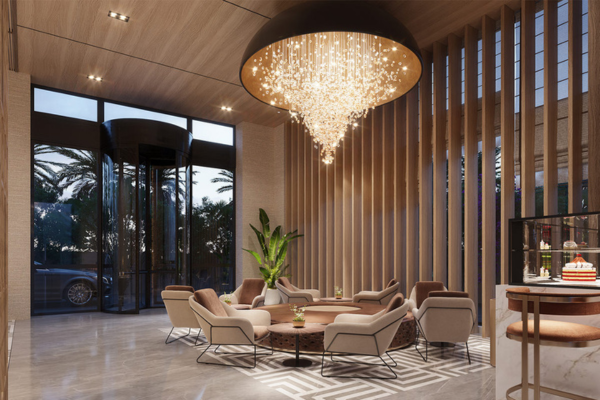
NCR-based developer Elan Group announced that it will invest ₹1,600 crore to develop an ultra-luxury residential project in Gurugram.

Located in Sector 49, Gurugram, the project will span six acres. In the first phase, the development will feature 230 four-bedroom residences across five towers, with unit sizes ranging between approximately 4,300 and 4,500 square feet.

However, the developer has not yet disclosed the project’s expected sales potential or completion timeline.

“The firm is in the process of finalizing a construction partner for the contract,” they added. Elan confirmed that London-based architectural firm Benoy has designed the project. While the company has not clarified the targeted price points, it stated that the high-value residences will deliver design-led and experience-driven living.

The project sits along Sohna Road and offers connectivity to Golf Course Extension Road and Southern Peripheral Road, both of which rank among Gurugram’s premium real estate micro-markets.

“Over the last three years, property values in the region have risen by nearly 74 percent, while rental values have grown close to 50 percent, highlighting rising demand and strong long-term appreciation potential,” the developer said.

Additionally, Elan stated that upcoming metro expansion and improved road infrastructure will further enhance the area’s appeal for luxury homebuyers. Commenting on the location, Vineet Dawar, President – Sales and Strategy at Elan Group, said Sector 49 is emerging as one of Gurugram’s most promising and well-developed growth corridors, supported by strong infrastructure readiness, thriving commercial hubs, and evolving lifestyle preferences.

“The potential of this location is undeniable, and a development of this stature is precisely what the market here is ready for,” he added.

With this project, Elan Group aims to deepen its presence in the Gurugram real estate market. This announcement follows the company’s earlier plan to invest nearly ₹3,000 crore in another ultra-luxury housing project along the Dwarka Expressway in Gurugram. Currently, Elan Group holds a portfolio of 15 projects across Gurugram and New Delhi, with a cumulative built-up area of around 25 million square feet.

ALIVAA Hotels & Resorts strengthens Gurugram presence with The Hoften Enkay Residency

0
Mr. Vikramjit Singh, Founder of ALIVAA Hotels & Resorts

ALIVAA Hotels & Resorts has announced the strategic addition of The Hoften–Enkay Residency at DLF Galleria, Gurugram, thereby further strengthening its expanding footprint in one of India’s most prominent corporate and financial hubs. With this development, the company now operates four properties under The Hoften brand in Gurugram, in addition to its flagship ALIVAA hotel in the city.

Gurugram, widely known as the Millennium City, continues to function as the financial and technology engine of the National Capital Region. The city houses the headquarters of multiple Fortune 500 companies, a thriving startup ecosystem, and large convention and exhibition centres, which together drive sustained demand for high-quality business and extended-stay accommodation. Consequently, this strong corporate concentration positions Gurugram as a core market within ALIVAA Hotels & Resorts’ long-term expansion strategy.

The newly inducted property will operate under The Hoften brand, which specifically caters to corporate travellers and extended-stay guests through contemporary design, efficient room layouts, and strategic business-centric locations. Moreover, the brand emphasises essential comforts, smart functionality, and seamless service delivery, ensuring a convenient and stress-free stay for professionals travelling to high-demand urban destinations.

Commenting on the expansion, Akash Bhatia, CEO of ALIVAA Hotels & Resorts (Managed & Franchise Business), said, “The Hoften-Enkay Residency is a perfect fit for our expanding mid-market portfolio and our deep commitment to the Gurugram market. With this property, we will now operate four successful The Hoften hotels, along with an ALIVAA flagship, in this critical hub. This growth reflects our ability to meet strong corporate demand through consistent quality and value under The Hoften brand.”

Highlighting the group’s long-term vision, Vikramjit Singh, Founder of ALIVAA Hotels & Resorts, stated, “Our strategy is to build market leadership in high-demand urban centres, and Gurugram remains central to that plan. This partnership marks the beginning of our relationship with the Enkay Group, and we look forward to developing many more properties together. This expansion further strengthens ALIVAA’s position in the National Capital Region and reinforces our role as a preferred hospitality partner for property owners.”

Expressing confidence in the collaboration, Pavan Kohli, owner of Enkay Residency, said, “We are delighted to partner with ALIVAA Hotels & Resorts for their Hoften brand. We strongly believe that their distribution strength and operational expertise will help unlock the full potential of Enkay Residency and deliver strong returns.”

With this latest addition, ALIVAA Hotels & Resorts continues to sharpen its focus on corporate-driven destinations while offering scalable, brand-led hospitality solutions aligned with the evolving needs of India’s business travel market.

Nothing raises over $8 Mn in community investment round

0
Carl Pei, CEO, Nothing

Consumer technology company Nothing has concluded its latest community investment round, raising over USD 8 million and adding more than 5,000 new investors from across 80+ countries.

Through this round, the company enabled community members to invest at a valuation of USD 1.3 billion.

According to the company, investor participation surpassed internal expectations, especially after early access opened on December 10. Subsequently, public access began a day later via crowdfunding platforms Crowdcube and Wefunder.

As a result of this raise, Nothing’s global community now comprises nearly 13,000 investors. Collectively, these backers have invested more than USD 16 million in the company since the launch of its community funding initiative.

Moreover, the company stated that it will deploy the fresh capital to accelerate the development of hardware built to support AI-native operating systems and devices, which it plans to launch in 2026.

Carl Pei, CEO and founder of Nothing, said, “From the very beginning, we set out to build a global tech company rooted in openness, creativity, and collaboration. This investment round wasn’t just about raising money; it was driven by our commitment to our community and bringing them on this journey with us.”

Notably, the community-led round follows a significantly larger institutional fundraising effort earlier in the year. In September 2025, Nothing raised USD 200 million in a Series C round backed by investors including Tiger Global, GV, Highland Europe, EQT, and Qualcomm Ventures.

Founded in 2020, Nothing has steadily built a product portfolio spanning smartphones and wireless earbuds. The company entered the smartphone segment in 2022 and is now gearing up to unveil its first AI-native devices next year.

India’s Leading Healthcare, Pharma & Biotech Organisations Recognised as Most Preferred Workplaces 2025–26

0

Team Marksmen Network successfully hosted the Most Preferred Workplaces 2025–26 – Healthcare, Pharma & Biotech on December 11 at Novotel Mumbai International Airport. Themed “Redefining Workplaces, Reigniting India’s Growth Story,” the day-long conference and awards ceremony brought together over 200+ senior leaders from across the pharmaceutical and healthcare ecosystem to deliberate on the evolving dynamics of workplace culture, talent, and leadership in India.

The summit commenced with a welcome address by Rajesh Khubchandani, Co-Founder & Managing Director, Team Marksmen Network, who emphasized, “As we start this journey, we have seen a lot of narratives and stories being told. The way a select few organisations manage them is truly remarkable. Today, we celebrate the success of every organisation and hope they become harbingers of something even greater.”

The agenda featured a high-impact panel discussion on “Humanizing Healthcare Workplaces: Empathy Meets Innovation,” moderated by Mandar Dani, Director – People & Organization (Health Industries), PwC. The panel brought together eminent HR leaders including Namita Patwari, CHRO, Alembic Pharmaceuticals Limited; Dr. Jagmohan Singh Rishi, Global Head – Learning & Digital Business Excellence, Wockhardt Ltd; Rajan B. Saawant, VP Corporate HR, Indoco Remedies Ltd; Rashma Nathani, Head – Human Resources, Kokilaben Dhirubhai Ambani Hospital; Vishnupriya Manoharan, Vice President – Human Resources, Kauvery Hospital; and Vamsi Garimella, AVP – People & Culture, Matrix PharmaCorp. The discussion explored how healthcare organizations can balance technological advancement with empathy, well-being, and inclusive people practices.

Following the panel, the summit featured an engaging fireside chat titled “From Pressure to Purpose: Crafting Healthcare Workplaces That Thrive.” The conversation brought together Gautam Khanna, CEO, P. D. Hinduja Hospital & Medical Research Centre, and Dr. Sujit Paul, Group CEO, Zota Healthcare Limited, and was chaired by Karan Karayi, Editor-in-Chief, Team Marksmen Network. The session offered candid leadership perspectives on navigating workforce pressures, fostering purpose-driven cultures, and building resilient healthcare organizations that empower talent while enhancing patient outcomes.

The summit also celebrated excellence by recognising a select group of organisations as the Most Preferred Workplaces 2025–26 in the pharmaceutical and healthcare sector, honouring those driving innovation, inclusive culture, and talent-first practices.

Dr. Anuj Gupte, Vice President – Government Projects, MDIndia Health Insurance TPA Pvt. Ltd., heading the State and Central Health Scheme of Maharashtra, joined the forum as Guest of Honour. In his address, Dr. Gupte emphasized, “As India expands its state and central health schemes, the success of these programmes depends on organisations that combine operational excellence with a people-first mindset. Celebrating such workplaces reinforces the importance of collaboration, accountability, and empathy in healthcare delivery.”

The brands felicitated at the gala ceremony included: Abbott India

• Alembic Pharmaceuticals Ltd.

• Apollo Hospitals Enterprise Limited

• CADILA PHARMACEUTICALS LIMITED

• Dr. Reddy’s and Nestlé Health Science Limited

• INDOCO REMEDIES LIMITED

• Kauvery Hospital

• Kokilaben Dhirubhai Ambani Hospital

• Matrix Pharmacorp

• Medtronic

• P. D. Hinduja Hospital & Medical Research Centre

• WOCKHARDT LTD

• Zota Healthcare Limited

This one-of-a-kind platform served as a powerful crucible where vision met courage—bringing together leaders committed to shaping purpose-led, people-first workplaces that inspire excellence and resilience across India’s healthcare ecosystem.

For media queries or partnership opportunities, please write to contact@teammarksmen.com.

India’s Manufacturing Talent Leaders Unite at Team Marksmen Network’s Most Preferred Workplace 2025-26

0

Celebrating transformation in manufacturing sector into future-ready workplaces through trust, talent and technology, Team Marksmen Network’s Most Preferred Workplaces manufacturing organisations driving transformation through trust, talent and tech-enablement.

With the rapid advancement of India’s manufacturing sector towards global competitiveness and the nation’s adoption of Industry 4.0, Team Marksmen Network successfully hosted the Most Preferred Workplaces – Manufacturing 2025–26, bringing together the nation’s foremost manufacturing talent leaders to celebrate organisations that are redefining industrial growth through people-first leadership.

The day-long conference and award program recognised manufacturing organisations that have demonstrated exceptional commitment towards workforce empowerment, leadership trust, digital readiness and operational excellence, reinforcing the belief that sustainable industrial growth is built on strong workplace cultures.

The summit kicked off with a welcome address by Rajesh Khubchandani, Co-Founder & MD, Team Marksmen Network, emphasizing the need for organizations to balance purpose, technology, and people strategy. “Today, workplaces are not just about processes; they’re about people, purpose, and performance,” he noted.

The agenda featured a high-impact Panel Discussion on Tackling the Toughest Workforce Challenges in Manufacturing, which was moderated by Purushottam Kaushik, Head, Centre for Fourth Industrial Revolution, The World Economic Forum India Liaison Office, World Economic Forum. Eminent panellists included Nishad Mehta, General Manager and Head – Corporate Learning and Development, Larsen & Toubro; Sarika Gore, Head HR & GM, Artsons Limited, A Tata Enterprise; Sheetal Arora, Head Human Resources & IR, Mobility Group India, Eaton; Tapan Bagwe, Head HR- India & South Asia, Barry Callebaut Group; and Nidhi Mer, Human Resources Director- APAC, Septodont.

The elite platform of thought-leadership and recognition was graced by Shri Subhash Desai, Former Minister of Industry & Mining, Government of Maharashtra as a Guest of Honour. During his address at the platform, Shri Desai highlighted, “India today has the youngest population in the world, with over 60 per cent of our people below the age of 40. This demographic advantage is our greatest strength, but it also places a significant responsibility on industry and leadership. Manufacturing, in particular. The challenge before us is not just to merely create jobs, but to build future-ready factories and workplaces that can continuously upskill, engage and empower this young workforce.”

The summit also featured insightful keynotes and high-impact panel discussions on critical themes including smart factories, IT-OT convergence, future skills for manufacturing, ESG-led operations and building workforce loyalty on the shopfloor, offering leaders actionable insights to navigate a rapidly evolving industrial landscape.

The summit also celebrated excellence with a clutch of select organisations recognised as the Most Preferred Workplace 2025-26 in Manufacturing for driving innovation, inclusive culture, and talent-first practices.

The brands celebrated in a gala ceremony included:

* Artsons Limited, A Tata Enterprise
* Barry Callebaut Group
* CMR Green Technologies Limited
* CROMPTON GREAVES
* Eaton
* Larsen & Toubro
* PI Industries Ltd
* NRB Bearings Limited
* PharmaZell (India) Private Limited, An Axplora Company
* Rotork
* RSWM Limited
* Schindler India Pvt. Ltd.
* Septodont
* TCPL PACKAGING LIMITED

This landmark event marked a defining moment for manufacturing leadership—where intent translated into action. It brought organisations together to strengthen leadership resolve and set new standards of excellence across manufacturing workplaces, reinforcing the need to leverage India’s industrial and technological capabilities for long-term, purpose-led growth. The future of manufacturing calls for decisive, collective action to build workplaces that engage talent, drive performance and are truly preferred.

For media queries or partnership opportunities, please write to contact@teammarksmen.com

Home services startup Pronto targets $25 Mn in funding round

0
Anjali Sardana, Founder & CEO, Pronto

Home services startup Pronto is holding advanced talks to raise $25 million in equity funding from a group of investors, including Epiq Capital, along with existing backers Glade Brook Capital, General Catalyst, and Bain Capital, according to sources familiar with the discussions.

The company is negotiating the round at a valuation of nearly $100 million. Meanwhile, the fundraising is unfolding as the 10-minute house-help segment gains momentum, with venture capital firms steadily increasing capital deployment into the category.

Earlier, Pronto raised $11 million in August in a round co-led by General Catalyst and Glade Brook Capital, which valued the startup at approximately $45 million.

Anjali Sardana founded Pronto in April 2025. The company connects households in Gurugram with trained professionals who deliver services such as cleaning, laundry, utensil washing, and basic meal preparation. Although the startup was initially domiciled in Delaware, it has recently shifted its base back to India.

Currently, Pronto operates across New Delhi, Mumbai, and Bengaluru. In addition, the company has recently launched services in Pune. However, queries sent to Pronto, Epiq Capital, Glade Brook Capital, General Catalyst, and Bain Capital did not receive immediate responses.

Notably, Pronto’s fundraising efforts follow closely after rival Snabbit announced a $30 million funding round led by Bertelsmann India Investments. At the same time, both companies are competing with InstaHelp, the on-demand house-help service from Urban Company, which listed in September.

Over the past few months, the 10-minute house-help segment has recorded a sharp surge in order volumes and has emerged as one of the most active consumer internet categories in India. In August, Urban Company fulfilled around 2.09 lakh InstaHelp orders, while Snabbit completed about 1 lakh orders and Pronto delivered between 25,000 and 30,000 orders. By October, these figures increased significantly to 4.68 lakh orders for Urban Company, 3.1 lakh for Snabbit, and 66,000 for Pronto.

By early December, the startup generated nearly 6,000 bookings per day and onboarded about 1,300 professionals onto its platform.

Previously, Sardana shared insights on the company’s unit economics and said, “Pronto’s pre-discount average order value (AOV) stood at around Rs 250 in August,” while noting that discounts typically ranged between 15% and 20%.

Speciale Invest launches Rs 1,400-Cr fund for deeptech startups

0
Vishesh Rajaram, Managing Partner & Arjun Rao, General Partner - Speciale Invest

Venture capital firm Speciale Invest is launching a new investment vehicle that will focus on Series A and later-stage rounds, thereby marking a strategic shift from its long-standing emphasis on pre-seed and seed-stage investments. The deep-tech-focused firm is targeting a corpus of Rs 1,400 crore for this vehicle.

Under the new strategy, Speciale Invest will write cheques ranging between $5 million and $8 million. Additionally, the firm will allocate nearly 30%–40% of the total corpus toward follow-on investments.

According to Vishesh Rajaram, Managing Partner at Speciale Invest, the firm launched this vehicle to address the growing shortage of growth-stage capital in a rapidly expanding sector. “We have discovered that deep-tech is not an experiment. It is becoming mainstream,” he said.

Furthermore, Rajaram explained that increasing sector visibility will naturally draw more investors. “As the sector gains prominence, more investors will come and invest in the sector, which is good for the sector. Our most educated guess is that many of them will invest small amounts of money very early. Therefore, more companies will get started, and more companies will have deep tech capital. Our belief is that many of these companies will also need growth capital support. Given that this segment is now taking off, growth capital support may not be adequately available. And this is something that we relate to quite heavily among the 30+ companies that we have invested in across the last eight years,” he added.

Meanwhile, the announcement comes at a time when investor attention toward deep-tech is rising even as growth-stage funding into the sector continues to thin.

Notably, this development follows Speciale Invest’s recent close of its Rs 600 crore Fund III, which doubled the size of its previous fund. Over the past eight years, the firm has built a strong track record in deep tech and has acted as the first institutional investor in companies such as Agnikul Cosmos and Metastable Materials.

To support the new phase of investments, Speciale Invest has promoted Venture Partner Vijay Jacob to the role of General Partner—Growth.

Importantly, Jacob clarified that the firm will retain its sectoral focus. “There is no change in the sectors that we’ll be looking at,” he said. Speciale Invest will continue backing startups across space-tech, energy, artificial intelligence, advanced manufacturing, and biosciences. “The key insight is that technical difficulty that translates into a competitive advantage is something that does not change when we move from seed-stage to growth-stage,” he noted.

Going forward, the firm expects the new vehicle’s portfolio to include both existing portfolio companies and fresh investments. “We will look to invest in the best companies, whether it’s part of our portfolio or not,” Jacob said.

In addition, the shift toward later-stage investments is likely to draw stronger interest from institutional investors as limited partners. Rajaram pointed out that because the fund will support Series A and later-stage companies where technology risks are largely addressed, institutional capital is expected to engage more actively.

Finally, General Partner Arjun Rao stated that the firm is closely tracking emerging opportunities in quantum energy, defence technology, and semiconductors.

MRG and Lodha Group unveil ₹3,600+ Cr real estate projects in Gurugram

0
Rajjath Goel, Managing Director, MRG Group

MRG Group has announced a strategic collaboration with Lodha Group, marking Lodha’s formal entry into the Delhi-NCR real estate market. Through this partnership, the two developers will jointly develop two marquee projects located in premium corridors of Gurugram.

Moreover, the alliance focuses on delivering high-end commercial and residential developments aimed at redefining quality benchmarks in the region. Together, the two projects carry a combined revenue potential exceeding ₹3,600 crore, underscoring the scale and ambition of the collaboration. Meanwhile, Cushman & Wakefield served as the advisor to MRG Group for this transaction.

Additionally, the leadership teams expressed strong confidence in Gurugram’s long-term real estate prospects. Commenting on the partnership, Rajjath Goel, Managing Director, MRG Group, said, “We are excited to join hands with Lodha Group. Lodha brings a legacy of trust, design excellence, and an unwavering commitment to quality and is poised to address a significant gap in NCR for high-quality living. This also showcases our confidence in Gurugram’s continued strength as India’s most aspirational real estate market.”

Overall, the collaboration reflects growing institutional confidence in Gurugram as a key growth hub within Delhi-NCR. As demand for premium residential and commercial spaces continues to rise, the MRG–Lodha partnership positions both groups to capitalize on evolving consumer preferences and strengthen their footprint in one of India’s most competitive real estate markets.

Bare Anatomy parent Innovist crosses Rs 300-Cr revenue in FY25

0
L-R: Rohit Chawla, Sifat Khurana and Vimal Bhola, co-founders, Innovist

Innovist, the parent company of Bare Anatomy, Chemist at Play, Sunscoop, and Vinci, delivered a strong financial performance in the fiscal year ended March 2025, as total revenue crossed Rs 300 crore and the company achieved profitability during the year.

During FY25, Innovist recorded more than 2.8X year-on-year growth in operating revenue, reaching Rs 299 crore compared to Rs 105.8 crore in FY24, as reflected in its consolidated filings with the Registrar of Companies. Founded in 2018 by Rohit Chawla, Sifat Khurana, and Vimal Bhola, Innovist—earlier known as Onesto Labs—builds hair and skin care products across four brands: Bare Anatomy, Chemist at Play, Sunscoop, and Vinci Botanicals.

Moreover, product sales remained the company’s primary revenue driver, contributing 97.5% of total revenue, or Rs 291.5 crore, while shipping receipts added another Rs 7.6 crore during the year. In addition, Innovist earned Rs 2.34 crore from interest on current investments and other non-operating sources, which lifted its total income to Rs 301.4 crore.

On the cost side, advertising continued to be the largest expense, rising 2.5X year-on-year to Rs 136.5 crore and accounting for more than 45% of total expenditure. Meanwhile, material costs also climbed sharply, increasing 2.6X to Rs 78.5 crore over the same period.

Furthermore, warehousing expenses nearly tripled to Rs 24 crore in FY25. Employee benefit expenses stood at Rs 15 crore and accounted for around 5% of total costs. At the same time, commissions paid to sole buying agents for sourcing raw materials surged over 19X to Rs 15.5 crore.

Additionally, other overheads—including transportation, rent, IT costs, and legal and professional fees—pushed total expenses to Rs 301 crore for the year.

As a result of nearly threefold revenue growth and the recognition of Rs 11.8 crore in deferred tax income, the D2C house of brands swung to profitability. Innovist reported a net profit of Rs 12 crore in FY25, compared with a loss of Rs 12.5 crore in FY24. Consequently, its ROCE improved to -1.46%, while the EBITDA margin turned positive at 0.42%, supported by an EBITDA of Rs 1 crore.

At the unit level, the company improved its expense-to-earning ratio to Rs 1.01 during the year. As of March 2025, the Gurugram-based firm reported current assets worth Rs 116 crore, including cash and bank balances of Rs 46 crore.

According to startup data intelligence platform TheKredible, Innovist has raised $30 million in funding to date. Most recently, the company secured $16 million in April through a mix of primary and secondary transactions led by ICICI Venture, which also enabled an exit for its existing investor, Accel.

India’s Retail Boom to Attract USD 3.5 Bn in Next 3 Years, US Malls Crumble

0
Anuj Kejriwal, CEO - Retail Leasing and Industrial & Logistics, ANAROCK Group

Mumbai, 17 December 2025: As malls in western countries of the world brace for an existential crisis, global capital is pivoting toward a market that seems to defy every global retail trend—India. While the U.S. has witnessed a net closure of nearly 1,200 mall stores since 2020—with rising vacancies forcing almost 40% of empty malls to undergo rezoning or repurposing—India is experiencing a retail resurgence driven by strong consumer demand and growing institutional investor confidence.

Anuj Kejriwal, CEO – Retail Leasing and Industrial & Logistics, ANAROCK Group, says, “Latest ANAROCK data shows that in the next 3 years, Indian malls are set to see over USD 3.5 Bn of capital inflows. Meanwhile, 88+ foreign brands have entered the Indian retail market and are seeking to expand aggressively. Several more global brands are in the pipeline, seeking space in the severely restricted Grade-A assets currently available.”

As a sharp counterpoint to Western countries’ markets, India’s massive unmet demand from a young consumer base and limited organized retail competition, backed by supportive FDI policies, are exactly what foreign brands and investors now seek.

A major confidence driver is the extreme undersupply of quality retail space in the country. India’s per capita retail stock remains one of the lowest in the world—Tier 1 cities operate with just 4 to 6 sq. ft. per person, Tier 2 and 3 cities with 2 to 3 sq. ft., and Grade A mall space alone sits at barely 0.6 sq. ft. per capita. In contrast, the US averages close to 23 sq. ft., while China exceeds 6 sq. ft.

“This gap, combined with India’s per capita income nearly doubling in the last decade, has created a demand–supply mismatch virtually unheard of in global retail,” says Kejriwal. “Grade-A malls are running near-full occupancy, reporting 95-100% occupancy with long waitlists for key zones. Rental growth has consistently surpassed pre-pandemic levels, and developers now find leasing cycles outpacing construction cycles—a rarity anywhere in the world.”

For investors seeking predictable, inflation-hedged cash flows, this imbalance is a compelling long-term opportunity.

Consumption Gravitates to Quality Malls

With its rare combination of demographic demand drivers, India’s consumption story is creating new headlines. The country is on track to become a USD 6 trillion consumption economy by 2030. Unlike their Western counterparts, Indian malls are lifestyle destinations anchored in entertainment, dining, and social experiences. Daily footfalls in major malls routinely exceed 20,000 on weekdays and surge beyond 40,000 on weekends. F&B and entertainment now account for 30–35% of footfalls, resulting in a resilient retail mix almost completely immune to the online retail disruptions that are defeating Western malls.

Sharpened Investor Appetite

India has over 600 operational malls, but less than 100 meet the institutional benchmarks that attract global funds – triggering aggressive competition for top-tier assets.

“With its 19 malls’ portfolio housing 1,000+ brands and generating INR 1,600 Cr in annual NOI, Blackstone’s Nexus Select Trust REIT listing in 2023 kick-started retail-led REITs in India,” adds Kejriwal. “It established the sector’s credentials as a transparent, scalable, and professionally managed asset class. By 2030, at least two more retail REITs are expected to enter the Indian market.”

E-commerce Not a Spoilsport

Among the most attractive dynamics for global investors is that Indian malls have not capitulated to e-commerce—they are, in fact, benefiting from it. India’s e-commerce penetration remains around 8%, far below the 20%-plus levels seen in China and the US. Brands here are increasingly going ‘phygital,’ with offline stores now experiencing and trust-building centers while online platforms drive scale.

Many leading D2C brands report that offline conversions are 2-3 times higher than online. In India, physical retail has retained its relevance in a digital age.

Peerless Value Proposition for Global Investors

Indian Grade-A malls typically deliver 14-18% IRRs, almost twice the yields seen in many Western markets. Rental escalation cycles, consumption growth-linked revenue-sharing arrangements, and consistently low vacancies signal stability and upside for global capital seeking both yield and long-term growth.

“This renders India unique among the world’s leading retail markets,” Kejriwal sums up. “In the US and Europe, malls are contending with oversupply, declining footfalls, online cannibalization—and the looming specter of repurposing into other formats. In contrast, the Indian retail market has limited quality supply, rising incomes, heavy footfalls, and rapid brand expansion. In the first half of 2025, retail leasing in India rose almost 70% Y-o-Y, and new mall supply grew by over 160%.”