


Sunday, October 25, 2026
Home Blog Page 543

Good Creator Co. is set to buy video commerce startup Bulbul 

0

According to the persons familiar with the situation, Good Creator Co (GCC), an offshoot of the Good Glamm company, is acquiring video commerce platform Bulbul in a cash and equity deal, marking yet another major consolidation move in the creator and influencer economy field. 

According to insiders, Bulbul’s creator Sachin Bhatia would take over as GCC’s CEO as part of the agreement. 

GCC expects to employ Bulbul’s software stack to assist creators in creating digital stores due to the acquisition.

“Bulbul is being merged into GCC,” said another person with knowledge of the development. “Some early backers will cash out while others will get an equity swap in GCC,” said another person.

When Good Creator Co was split off in January, the Good Glamm Group, armed with funds collected from investors, committed Rs 200 crore as startup capital.

“Our current revenue run rate for GCC is around Rs 75 crore and we expect it to grow to Rs 250 crore by the end of the current calendar year,” Darpan Sanghvi, founder, and CEO, Good Glamm Group, said.

Bulbul was one of the first startups to explore live commerce, having launched in 2018. After that failed to catch on, it shifted its focus last year to digitizing storefronts for creators, stores, and sellers, as well as influencer-led sales via pre-recorded video. 

It last received $8.7 million in 2020, and its backers include Sequoia’s Surge, Info Edge, and Leo Capital.

Bulbul focuses on tier 2 and tier 3 influencers and markets in the fashion, home and kitchen, and electronics categories. It also developed its brands, Myfav (for men’s grooming), Noor (for women’s ethnic wear), and Aro (for men’s footwear), which were promoted and pushed by influencers.

ABFRL teams up with Accenture for digital transformation

0

Aditya Birla Fashion and Retail Limited (ABFRL) announced a partnership with Accenture for a digital transformation programme to help the fashion retailer develop and enhance operational efficiency. 

ABFRL has chosen Accenture to design, build, and deploy an enterprise resource planning (ERP) system in its digital transformation strategy.

“The new ERP system will support ABFRL which owns brands such as Louis Philippe, Van Heusen, Allen Solly and Peter England across stores in India to efficiently manage multiple fulfilment channels and consolidate disparate technology systems. It will be designed to enhance customer service by combining ABFRL’s manufacturing and retail functions into a digital core using SAP S/4HANA for fashion and vertical business,” it said in a statement on Tuesday.

It’s critical to spot and react quickly to changes in consumer tastes in today’s fast-changing fashion sector, according to Praveen Shrikhande, ABFRL’s chief digital and information officer. 

Even as ABFRL develops its operations and integrates new businesses, Shrikhande believes that consolidating and digitizing its main ERP system would help it increase agility and responsiveness in a digital-first world.

According to Manish Gupta, lead for Accenture’s products industry group in India, the collaboration with ABRFL will not only help them build an integrated digital core across manufacturing, wholesale, and retail functions to drive operational efficiencies but will also unlock new value for future disruptions and growth.

Earlier this year, the BSE-listed firm also announced a strategic alliance with Algonomy, an artificial intelligence services provider, to deploy its hyper-personalization solutions across ABFRL’s brands. ABFRL claimed at the time that it would employ Algonomy’s main products to customize end-to-end omnichannel experiences for shoppers across all consumer channels, leveraging real-time shopper behaviour as well as store data.

Accenture myConcerto, an insight-driven platform, will also be used by ABFRL to establish a vision that will guide its manufacturing, delivery, and change management operations.

Fleetx.io bags $19.4mn in funding headed by Indiamart, IndiaQuotient

0

Indiamart led a USD19.4 million fundraising round for fleet management platform Fleetx.io, with existing investors IndiaQuotient and Beenext also participating. 

According to the company, the funds will be used to hire people, improve the product, and scale its business. 

Vineet Sharma, Abhay Jeet Gupta, Udbhav Rai, Parveen Kataria, and Vishal Mishra founded the company in 2017. Fleetx develops internet-of-things and software-based tools to assist fleet operators and businesses digitize their logistical operations.

According to the company, clients may increase the safety, efficiency, and sustainability of their vehicles and operations by using the firm’s products. Real-time visibility, greater asset utilization, theft prevention, fuel savings, and improved vendor performance are just a few of the benefits Fleetx’s platform can provide, the company said. 

According to the company’s website, Adani, Delhivery, Mondelez International, Tata Steel, and Suzuki are among the company’s clients. The firm is involved in the fast-moving consumer goods (FMCG), automotive, cement, iron, and steel industries, and e-commerce. The company claims that mid-to-large-sized businesses account for 70% of its revenue and grow 100% year over year.

“Supply chain visibility is a critical yet underserved problem faced by Indian enterprises and fleet owners. Fleetx has been able to validate and scale an innovative IoT and Saas-based solution to this problem, and hundreds of enterprises and SMEs across various sectors are currently using their product,” said Dinesh Agarwal, founder and managing director of Indiamart.

“We are thrilled to onboard Indiamart in our mission to digitize fleet and logistics operations to improve efficiency, safety, and reduce cost. We also want to thank our existing investors for their continuous belief and support of our mission,” said Vineet Sharma, co-founder and CEO of Fleetx.io.

The company’s most recent big round was a USD2.8 million fundraising round from Beenext and IndiaQuotient in February 2019.

Paytm Payments Bank joins e-RUPI service as an acquiring partner

0

Paytm Payments Bank announced that it had joined the government’s e-RUPI vouchers initiative as an official acquiring partner. 

The bank has teamed with One97 Communications Ltd (OCL), the parent company of Paytm, to make use of the latter’s merchant base. 

Paytm merchants will be allowed to accept payments via e-RUPI due to this. Paytm claims to have a merchant base of around 25 million people. 

Through SMS or QR code, beneficiaries can offer e-RUPI as a cashless prepaid voucher. Paytm’s merchant partners can scan, enter the payment amount, and receive the funds in their bank accounts.

The scheme was started in August of last year to assist people without formal banking services or smartphones in taking advantage of the simplicity of digital payments.

“With the acceptance of e-RUPI vouchers, merchants across the country will be able to promote cashless payments, which will further drive the government’s mission of introducing more Indians to the digital economy,” Satish Gupta, managing director and chief executive of Paytm Payments Bank, said.

Wego buys Cleartrip’s Middle East business from Flipkart Group

0

Wego, an online travel platform, announced that it would purchase Cleartrip’s Middle East division from Flipkart Group for an undisclosed amount. 

In addition to the sale of Flyin.com, Wego and Flipkart have agreed to collaborate on technology. 

In 2010, Cleartrip expanded into the Middle East region, and in 2018, it purchased Flyin.com, a Riyadh-based company that served a similar role in the early days of online travel in Saudi Arabia.

The regional headquarters of both Wego and Cleartrip are in Dubai.

“This acquisition will significantly increase our scale and capabilities and will strengthen our ability to partner and collaborate across our region,” said Ross Veitch, CEO and Co-Founder of Wego.

The deal is set to finalize in the second half of this year.

“Given our strategic priorities and focus on the Indian market, the acquisition of Cleartrip’s Middle East business by Wego provides continuity to its business, and we believe that they are the right partners to boost its next phase of growth,” said Ravi Iyer, Senior Vice President and Head-Corporate Development, Flipkart.

Wego is the Middle East and North Africa’s (MENA) region’s largest online travel marketplace, having been founded in 2005.

“Our focus is clear, building a world-class online travel business emanating from the Middle East but with global ambitions,” said Stuart Crighton, Co-Founder and Head of Cleartrip’s International Business.

Tata Power joins RWE to develop offshore wind projects

0

RWE and Tata Power have teamed up to develop offshore wind projects in the country. Tata Power Renewable Energy Limited, a wholly-owned subsidiary of Tata Power, has signed a corresponding MoU. 

RWE and Tata Power Renewable Energy Limited will conduct technical and commercial site assessments to help India create an offshore wind industry. In addition, the firms are conducting a review of the Indian offshore wind supply chain and supporting infrastructure, including ports and grid connections, to determine the country’s strengths and future potential.

On the collaboration, Dr Praveer Sinha, CEO and Managing Director of Tata Power said, “RWE is our ideal partner to support Tata Power’s plans to enhance and grow offshore wind business based on its global expertise in running and operating offshore wind projects”.

The RWE Group, founded in Germany, has more than 120 years of experience in the energy-producing industry. Tata Power has a long and illustrious history dating back over a century. With a total capacity of 4,909 MW, the company has a strong portfolio in India’s renewables environment, with close to 1,854 MW under construction.

“India has excellent wind resources, which can help to meet the country’s increasing energy demands. If clear regulations and an effective tender scheme are in place, we expect India’s offshore wind industry will gain real momentum. RWE wants to be part of this development,” Sven Utermöhlen, CEO Wind Offshore of RWE Renewables, said.

India rises as third-best country for creative industry jobs

0

According to data analyzed by Sortlist, India has risen to third place in the world for creative industry jobs, with the country best renowned for its involvement in the media and entertainment industries. 

On Sortlist, there are over 700 Indian creative agencies, with over 0.2 for every 100,000 population. Website design is the most commonly advertised service. 

On Sortlist, the average top budget of agencies in India is above €900,000 (Rs 7.6 crore), with an average team size of more than 100.

The following parameters were examined while determining the best locations for creatives: the number of live agencies in the area, the number of searches for agencies headquartered in the area, the average budget of agencies, the average team size, and the average star rating. Each factor was given a normalized score out of 10 to arrive at the final score. Each city, country, and industry received an overall score out of ten by averaging each of these scores. 

Belgium has the most creative agencies per capita of any country in the world, according to advertising industry experts, with 22.9 creative firms per 100,000 people.

The UK has only 2.4 creative agencies per 100,000 people, lagging behind European competitors such as the Netherlands (8.8), Spain (8.3), France (7.0), Switzerland (4.9), and Denmark. With only 0.7 creative companies per 100,000 individuals, the United States ranked towards the bottom, while Japan, Russia, and South Korea all scored poorly, with only 0.1 creative agencies per 100,000 people.

The United States topped the list of greatest incomes for creative professionals, with an average monthly pay of €5,495 and an average cost of living of €827. Before housing expenditures are taken into consideration, this leaves 84.95% of pay. India was absent from the list entirely. Salary information for the poll was derived from Glassdoor averages. The average monthly cost of living for a single individual in each area, excluding rent and mortgage charges, was then compared. Finland was ranked second, followed by Denmark.

According to the study, the most in-demand digital business right now is mobile app development, followed by website development and public relations. Gaming is the ninth most popular digital activity. In reality, game firms and app creators have the highest average budgets. 

Website building is the most popular service advertised on Sortlist. Website building was listed as the most prevalent digital service by nearly half of all countries.

In more than 12% of countries, advertising is the most popular creative service. 

The study also discovered that professionals with analytics, user experience (UX), and user interface (UI) skills are in high demand among tech skills.

KSUM joins with Google for startups to create worldwide connections

0

Kerala Startup Mission (KSUM) has partnered with Google to link-local startups with the global startup ecosystem. 

Local startups can use Google’s programme, which includes mentorship and training for startup teams, to help scale up their ideas. Mr Paul Ravindranath, Head of Google for Startups Accelerator, India, announced the agreement at the KSUM’s ‘Huddle Global’ colloquium, which began on Saturday. 

According to an official release, the relationship will allow Kerala’s startups to join a larger network and take advantage of Google’s programme, including mentorship and startup teams training for scaled-up solutions.

In the future, areas outside of Silicon Valley are projected to have a greater impact on the global startup and technology ecosystem. While starting a business is easier than ever, access to proven processes, skilled mentors, and best practices for building businesses is still unevenly dispersed. 

Ravindranath, who is also Google’s Programme Manager (Developer Relations), explained that the company’s ground-breaking programme is all about enabling startup communities throughout the world and assisting them in leveraging one another for insights and resource sharing.

“We are excited about bringing this to startups under the KSUM umbrella. We are thrilled to expand our collaboration with KSUM and its exceptional startup portfolio,” he said. 

Commenting on the tie-up, John M Thomas, CEO, KSUM, said, “Partnering with Google for Startups will help our startups experience new technology arenas and global standard. KSUM is looking forward to imbibing the best practices from global arena that would bolster our ecosystem.” 

This year, KSUM will formalize its collaboration with Google for Startups to continue assisting India’s booming startup industry as an enabler of the state’s startup ecosystem and a catalyst for the tech ecosystem’s growth and development.

KSUM will be connected to an elite club of the world’s top accelerators through the ‘Kerala Startup Mission Google for Startups’ project, allowing it to share knowledge and leverage resources, according to the statement.

Google’s global network, insights from the company’s Silicon Valley-based startup programmes, and 20 years of Google research and best practice insights on growing businesses, products, and teams at a vast scale would also be available to the state-run agency. 

These resources will assist KSUM’s startup portfolio, which already includes some of the fastest-growing companies, in scale tremendously.

ibis Vikhroli associates with Magenta for EV charging facilities 

0

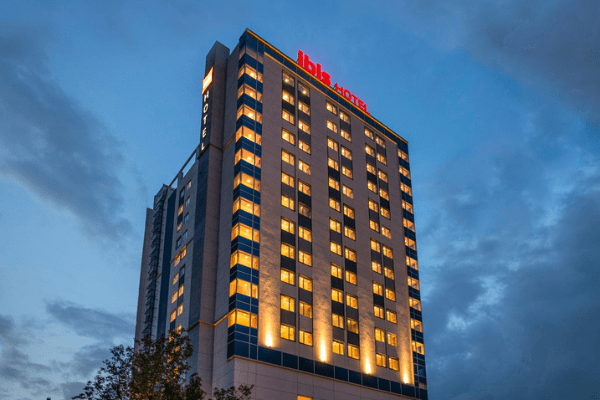
ibis, a smart economy hospitality brand owned by Accor Hotels and InterGlobe Enterprises, has partnered with Magenta to install electric vehicle charging stations (EVCS) at their recently opened hotel ibis Vikhroli. The new hotel is located on Lal Bahadur Shastri Marg, a strategically significant corporate area in Mumbai, and represents the ‘Aamchi Mumbai’ culture for the new-age tourist. With the growing popularity of electric vehicles in the country, such an endeavour will help drive the expansion of the EV industry while also decreasing carbon emissions. Magenta will first construct, operate, and manage DC fast chargers at ibis Vikhroli and then additional hotels around India.

These charging solutions are mobile-enabled (OCCP-based) and include many other user-friendly features. EV drivers can utilise the ChargeGrid system to access these chargers. From purchasing a charger to completing an online charging session, the ChargeGrid app gives seamless information. 

All charging channels that will be used as part of this cooperation will be managed and administered by Charge Grid’s Magenta software, which will allow EV customers to follow the depletion of their wallet value while charging.

Sebi to impose stricter disclosure standards for new-age companies’ IPOs 

0

The Securities and Exchange Board of India (Sebi), the market regulator, has recommended tightening disclosure criteria for new-age companies planning initial public offerings (IPOs). 

According to a discussion paper released by Sebi on Friday, such companies will be required to give more information about how they arrived at their IPO offer price. This plan attempts to cover only those businesses that do not have a three-year track record of profitability, while the standards for the rest of the industry remain unaltered. 

The news comes as the stock prices of several newly-listed technology businesses have fallen in recent months following their first public offerings.

According to Sebi’s discussion paper, the present IPO regulations only compel companies to disclose “traditional parameters” such as key accounting ratios. However, because new-age businesses are typically loss-making, the regulator felt more disclosures were necessary. 

During IPOs, the Sebi proposed that such companies disclose their key performance indicators (KPIs). Most start-ups employ statistical models such as gross merchandise value (GMV) to forecast income. Private equity and venture capital investors commonly use such KPIs to purchase holdings in unlisted start-ups.

“The issuer company shall disclose all material KPIs that have been shared with any pre-IPO investor at any point of time during the three years prior to the IPO,” said Sebi’s discussion paper adding that the companies shall also make disclosure of “Valuation of Issuer Company based on secondary sale / acquisition of shares (equity/convertible securities) excluding gifts, in the 18 months prior to the date of filing of the DRHP / RHP where either acquisition or sale is equal to or more than 5% of the fully diluted paid-up share capital of the issuer.”

To be clear, these new suggestions will only apply to enterprises that have not been profitable in the previous three years and are seeking an initial public offering.

Since mid-2021, Indian markets have seen a surge of IPOs by technology companies. Zomato, the food delivery service, was the first to go public, followed by Policy Bazaar, Paytm, and Nykaa. However, all of these firms’ stock prices have fallen since their initial public offerings, prompting market participants to complain that the IPOs were overpriced, leaving little money on the table for both IPO and post-IPO investors.

“The new-age technology companies generally remain loss making for a longer period before achieving break-even as these companies in their growth phase opt for gaining scale over profits,” Sebi said. “Investors are on boarded on these companies on the premise of future potential and accordingly the company strives for long-term market leadership rather than short-term profitability considerations.”