Thursday, April 23, 2026
Home Blog Page 471

Oracle launches data center across Africa

0

For the first time, Oracle established a data center in South Africa on Wednesday to offer local cloud services across Africa, following the likes of Microsoft and Amazon in establishing facilities in the continent’s southernmost country. 

Africa will be the company’s 37th “cloud region,” or a geographic area where users may have speedier access to data from a local data center, in this case in Johannesburg. 

Oracle aims to create at least 44 cloud regions this year to catch up to cloud computing competitors like Microsoft, Amazon, and Google.

Though Oracle has no plans to build further data centers in Africa this year, the company is exploring places such as West Africa and may do so next year. Reuters spoke with Cherian Varghese, regional managing director for the Middle East and Africa. 

Increased demand for faster computing from African banks and telecom companies has enticed multinational cloud operators to enter the mostly untouched market. Microsoft was the first to set up data centers in South Africa, followed by Amazon and Huawei. 

With over 50 data centers in the country, particularly near Cape Town and Johannesburg, and fast connection supplied by a submarine communication cable, South Africa has become an important site for cloud operators.

On the other hand, South Africa faces infrastructure concerns such as high electricity bills and frequent power outages, necessitating additional costs for backup power. Smaller cloud providers are also vying for a slice of the fast-growing data localization industry. 

Digital Realty, based in the United States, pays $3.5 billion for a majority stake in a Johannesburg-based data center operator. At the same time, Vantage Data Centres has declared plans to invest up to a billion dollars in a data center in South Africa.

Why are employee referrals the best source of hire for Startups?

0

Is employee referral the best hiring strategy for startups to build a strong team? Employee referrals continue to be a reliable source of qualified candidates. According to LinkedIn research, 35% of employees refer to supporting friends who are right for the role, 32% refer to assisting their company, 26% refer to being perceived as a reliable employee, and 6% do it for rewards and recognition. Startups are now interested in finding exceptional talent within their employee network.

The quality of hiring has a direct impact on employee retention. As a startup, a business must build an effective team in a short period, and employee retention is exceptionally crucial. In India, an employee attrition rate is rising, with 61% more job transitions in March 2021 than in pre-pandemic March 2019, according to LinkedIn data. If employees continuously exit the company, it will be difficult for startups to establish a solid core team.

Employee referral programs are incredibly productive because referred employees are more likely to stay longer and perform better. Every startup should establish referral programs as a hiring strategy in its early stages in the same way marketing strategies are valued.

Before entering the recruitment process, new hires are pre-screened through employee references. Existing employees refer to a candidate who is a better fit for the company’s position, culture, and vision to retain their reputation within the organization. They take less time to train and onboard. When they already know people in the organization, they will quickly get along with other employees, strengthening employee bonding. Referrals reflect employee satisfaction, as employees dissatisfied with their jobs are reluctant to recommend the company to their friends.

Work-force-related expenses account for 50-60% of total operating costs. The hiring, training, and equipping new employees cost more than half of that expenditure. Employee referrals cut down on the cost and time of hiring. Referrals have the highest rate of retention (almost 46%), followed by career sites (33%) and job boards (22%). Internal expenditures like referral bonuses, recruiter wages, interview expenses, and external costs such as advertising, recruiting software and events, agency charges are all part of the recruiting costs.

According to data obtained in 2020 by Employee Referral Invitation Network (ERIN), the United States’ premier referral software provider, traditional recruitment procedures take 45 to 60 days to fill a vacancy, whereas employee referrals take 30 to 45 days. Employee referrals have a 5x better chance of being hired, and 82% of employees placed employee referrals top among all sourcing options.

A Bangalore-based startup, Whistletalk, is a social hiring application that allows employees and hiring managers to find the right talent at the earliest. It offers a monthly subscription-based program to companies, with fees based on the number of employees and job vacancies at the organization. 

Zomato just made all of their hiring processes based entirely on referrals. It demands the presence of a reliable and productive team at all times. Employee referral technique was used by the tech startup Zomato to create a streamlined hiring approach and to focus more on business performance with a strong team. 

Both the employer and the referring employee benefit from employee referral programs. A startup’s HR framework must be stable to regulate referrals successfully. This referral should not be forced on employees as it will not work. It’s best to keep your referral program up to date with evolving business standards. Human resources must be recognized as a profitability center by every startup to make employee referrals viable.

Awfis hopes to expand its workspace portfolio

0

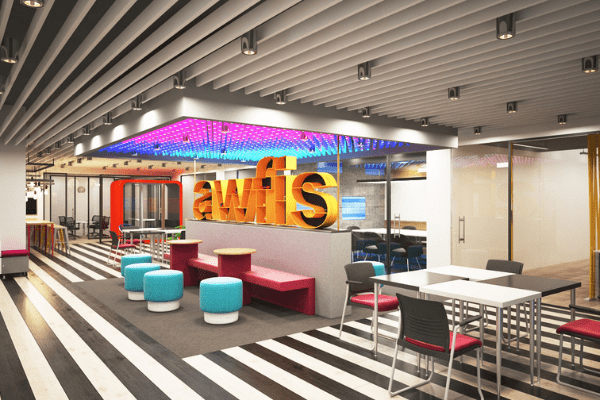
Awfis, a homegrown flexi-workspace provider, expects to double its portfolio this year by adding over 60,000 seats across 100 locations, according to Amit Ramani, the company’s founder, and CEO. 

In addition to enhancing operations in cities where it is already present, the company plans to join four new Tier 2 cities in 2022.

“Demand for flexible workspace has increased by five times post Covid. Half of the demand is coming from SMEs and startups, and most of them prefer an organized player like us,” Ramani said.

Awfis has achieved the 100-center milestone, and by the end of 2022, it hopes to have 100,000 operating seats. The company now spans 4 million square feet across 14 locations, with 62,000+ seats, making it India’s largest flexi workspace provider.

“Companies have started coming back to offices, and working from home is not a long-term solution. This is going to be a year for tier 2 cities, and we will enter Cochin, Lucknow, Nagpur, and Jaipur,” Ramani said.

Awfis’ 100th center, named “Awfis One,” is located in Bengaluru’s Lido Mall and spans 70,000 square feet with 15,000 seats to meet the growing need for flexible workspaces.

“Amidst the dynamic work transition that took place almost overnight, Awfis emerged as the partner of choice in supporting organisations towards reimagining their future of work, through their own business evolution,” Ramani said. “Over the course of the pandemic, Awfis has grown from being a coworking player to an integrated end-to-end workspace solutions provider that is changing the way India works.”

The company has added 30,000 seats across 59 locations in the 15 months after the first lockdown.

“We are optimistic about the growth of the flex workspace industry this year and, in line with that, our aim is to double our capacity further in 2022 by launching our next 100 centres and entering new markets to establish a strong presence across 18 cities in India,” he said.

MobiKwik, Bharat BillPay collaborate to offer ClickPay

0

MobiKwik, a fintech firm, announced that it has partnered with NPCI’s Bharat BillPay to offer ClickPay to its consumers. MobiKwik clients can use ClickPay to pay recurring online bills like mobile, gas, water, electricity, DTH, insurance, and loan EMIs without having to recall individual bill details and due dates. 

Billers generate a unique payment link within the bill-pay message and deliver it to the customer, allowing them to make payments immediately on the payment page.

Many bill payment firms and utility service providers have partnered with NPCI BharatPay to offer ClickPay to their customers after the Reserve Bank of India’s (RBI) regulation on obligatory two-factor authentication for recurring payment mandates disrupted auto-debit payments.

“We are glad to launch the ClickPay facility with MobiKwik. This facility has been providing an all-new dimension to regular bill payments for millions of customers in India. We believe this initiative will offer a memorable transaction experience to MobiKwik customers for all their bill payments backed up by enhanced convenience and safety. Our association with MobiKwik is a step ahead to provide a wider reach to ‘ClickPay’ in the country and empower customers to pay all their bills seamlessly without having to worry about the amount and due dates via this unique functionality,” said Noopur Chaturvedi, CEO, NPCI Bharat BillPay Ltd.

MobiKwik uses the Bharat Bill Payment Services platform. According to the company, the RBI granted the company permission to function as a Bharat Bill Payment Operating Unit in 2019.

Country Inn parent firm intends to capitalize ₹50 crore

0

Over the next two years, Espire Group expects to invest over 50 crores in its mid-market brand Country Inn Hotels & Resorts. Six Senses Fort Barwara, a high-end resort near Ranthambore, Rajasthan, is also owned and operated by the firm. 

The intended investments will go into leasing resorts, hiring people, renovating and modernizing existing owned resorts, launching a new five-star elite boutique brand, and marketing. 

According to Akhil Arora, the company’s chief operating officer, internal accruals would be used to support the growth, 

“We’ve decided to revamp all our existing hotels as well as expand the brand which earlier was predominantly restricted to the Uttarakhand region. We will take the brand to more parts of India where the leisure markets are very strong,” said Arora.

Wherever possible, the company is still considering other expansion options, such as acquiring hotels or buying them. They will also consider leasing and then operating hotel buildings. While expanding through hotel management contracts, there are aspirations to have an asset-light approach. 

In 2022, the company will expand to 12 new locations, including Goa, Dehradun, Mussoorie, Varanasi, and Vrindavan, among others. Country Inn now owns four facilities in Uttarakhand’s Jim Corbett, Bhimtal, Haridwar, and Kosi, all located on the Agra route.

According to Arora, ₹50 crores will be spent on new hotel properties as they are taken over, with an average of ₹3 crore to ₹4 crore expenditure on each property to refurbish or build. By August of this year, eight of their forthcoming 12 hotels are expected to open. By the end of FY23, it hopes to have a total of 20 hotels in its portfolio. One hotel in Jim Corbett, its second resort in the area, was the most recent addition to its portfolio. 

Espire is owned by Amit Rai, who also owns Espire Infrastructure and Radcliffe, a private school group. Country Inn, a resort brand, was founded in the early 1990s.

Nazara Tech garners majority stake in Datawrkz

0

Nazara Technologies, a gaming and sports media firm, announced on Tuesday that it has agreed to buy a 55% share in Datawrkz, programmatic advertising and monetization company, for up to 225 crores based on CY 22 EBITDA performance. 

By April 22, Nazara will have acquired a 33% interest in the first tranche. In the second tranche, which is slated to close in Q4 FY23, the corporation has the option to purchase an additional 22%.

“Datawrkz tech offerings will enhance in-house capabilities of Nazara for optimizing its customer acquisition spends as well as enhance yields on ad monetization of its large consumer base. This ad revenue monetization is expected to assist many of the companies in the ‘Friends of Nazara’ network,” the company informed in an exchange filing today.

Datawrkz hopes to establish itself as a prominent player in gaming with this deal, covering both demand and supply side offerings for the gaming ecosystem in the United States and India, according to the company. 

With locations in the United States, Singapore, and India, Datawrkz is a worldwide advertising technology firm focused on accelerating user and revenue growth for clients through highly efficient digital advertising.

According to BSE shareholding data, as of September 2021, ace investor Rakesh Jhunjhunwala owns a 10.82% stake in the company.

Vivo alliances with Protean

0

Vivo announced that it has teamed up with Protean (formerly NSDL) to offer smartphones and a cash scholarship to underprivileged students as part of a new phase of the ‘Vivo for Education’ programme.

“As part of this phase, Vivo will provide 100 Vivo smartphones worth INR 10 lakhs and a cash scholarship worth INR 1.5 lakhs to support education of 100 underprivileged kids,” the company said in a statement.

“Driven by the purpose to create a world of joy through superior yet simplified technology and experiences, the brand’s offerings help users capture joyful moments and have made it a leader in the Indian market,” the statement added.

The programme, according to Vivo, strives to overcome the social and financial barrier by assisting students from low-income families in continuing their studies.

Students will continue their online distance learning during these difficult situations due to this partnership.

“In this time of distance learning, smartphones are a lifeline to students. As a brand, we strongly believe that technology can simplify work, help education and knowledge acquisition, support passions and beyond. We are delighted to find ways to help more and more students realize their dreams,” said Yogendra Sriramula, Director, Brand Strategy, Vivo India.

Students in class 11 will receive a Vivo smartphone and a cash scholarship as part of this phase of the campaign. Previously, Vivo sponsored the online education of 100 needy children by offering them Vivo smartphones. As part of the ‘Vivo For Education’ programme, the company also donated monetary scholarships worth INR 8 lakh to over 65 students.

ZingHR hits up $10 mn from Tata Capital Fund

0

According to its founder, the Mumbai-based HR-tech startup ZingHR has raised $10 million (Rs 74.3 crore) from Tata Capital Growth Fund. Tata Capital’s private equity arm will own a 33% ownership in the company due to this investment. 

Prasad Rajappan, the company’s chief executive, stated that the funds would be used to expand into new worldwide markets, modernize technology, and expand its talent pool. 

Accel Partners, serial entrepreneur Bhavin Turakhia, Mumbai Angels Network, and an investment firm Triton are ZingHR’s other investors. The business has now raised a total of $12 million in this round. 

According to Rajappan, the Microsoft-accelerated startup has been profitable for 12 months and has a $10 million annualized revenue run rate. “Our target is to grow the revenues 10x over the next 12-18 months,” he said.

He added that the company now operates in regions such as Australia, Southeast Asia, and the Middle East and will now attempt to expand to Europe, more Middle Eastern countries, North Africa, and the United States. “We just have to now scale up our efforts in global markets and with the new fund raise, we are going to aggressively pursue these markets,” said Rajappan.

ZingHR, which Rajappan founded in 2014, provides tech-driven HR solutions that assist organizations in integrating their automation transitions with business outcomes while optimizing employee experience. According to Rajappan, the company offers vertical-specific solutions for BFSI, retail, services, IT-ITeS, staffing, pharma & healthcare, and manufacturing to over 700 companies with over a million employee data. It provides solutions using artificial intelligence, machine learning, and deep learning algorithms.

“We believe adoption of SaaS-based processes will decide future winners as businesses go digital. Zing HR’s SaaS solution is robust, nimble and adopted by marquee customers,” said Akhil Awasthi, managing partner – Tata Capital Growth Fund.

“This funding will be critical in taking further our expansion plans,” said Rajappan.

IOC to capitalize Rs 7,000 cr in new projects

0

The Indian Oil Corporation (IOC), the country’s largest oil company, announced on Sunday that it would invest over Rs 7,000 crore in establishing city gasoline distribution networks in cities. It has secured a licence in the most recent bidding round.

“IndianOil plans to invest over Rs 7,000 Crore in these new CGD Projects, over and above the Rs 20,000 crore already planned for its CGD Vertical,” according to the company statement. 

According to the agency, IOC won 33% of the demand potential available in the recently ended 11th round of CGD bidding, which included cities from Jammu to Madurai to Haldia.

IOC purchased 9 licences to retail CNG to cars and piped cooking fuel to households out of the 61 geographical regions (GAs) that received bids in the 11th round of city fuel distribution (CGD) bidding. Although it received less GAs than Megha Engineering and Infrastructures Ltd (15) and Adani Total Gas Ltd (14), it purchased the most significant demand potential.

“IndianOil has a proud legacy of always aligning its growth agenda with the national priorities. And our concerted efforts to expand the Gas business across the length and breadth of the country reflects our commitment to realize the Government’s vision of raising the share of Natural Gas to 15%. Gas will play a significant role in India’s march towards a low carbon future as part of its Panchamrit pledge during COP-26 summit to reduce total carbon emissions by one billion tonnes from now till 2030,” said Chairman Indian Oil Mr Shrikant Madhav Vaidya.

Indian Oil, along with its two joint venture companies, is now present in 49 GAs and 105 districts across 21 states and UTs. In terms of independent operations, Indian Oil will now operate in 26 GAs and 68 districts across 11 states and UTs, accounting for roughly 20% of the overall CGD market potential.

ONDC started talks to e-tailers

0

The government-backed Open Network for Digital Commerce (ONDC) has initiated talks to private players, including some large e-tailers, about developing a platform similar to UPI.

“The idea is to give more choice to consumers, who will be able to access a wider pool of sellers through ONDC. It will help in democratising the world,” Anurag Jain, secretary in the department for the promotion of industry and internal trade, said.

According to him, the open framework will let companies build on the architecture in the same way that UPI is used by companies like Google Pay, Paytm, and PhonePe. At the Startup Innovation Week on Friday, the ONDC architecture was revealed. Comprising the broad architecture, the government is considering forming a non-profit corporation with a dozen banks, depositories, exchanges, and the National Payments Corporation of India (NPCI) as initial shareholders. Consumers can log on to an app that supports UPI and order anything they want, with ONDC integrating them with vendors and logistical providers while also providing payment choices.

Those working on the ONDC have begun making presentations to e-commerce and logistics corporations, who would be the primary players.

The appeal is that e-commerce businesses can concentrate on buyers or consumers rather than sellers. The e-tailers who have been enrolling entities will use the platform to expand options, transparency, and credibility of consumers as more sellers, from kiranas to other retailers and service providers, join the platform. Sellers can also strike deals with delivery partners and logistics companies to sell directly to customers through the platform rather than through platforms like Amazon or Flipkart.