Wednesday, April 29, 2026
Home Blog Page 440

Wipro Consumer Care announces its entry into packaged food business 

0

The FMCG company Wipro Consumer Care & Lighting announced changes to its senior management and its entry into the packaged food business in India. In a statement, the Fast Moving Consumer Goods (FMCG) company, a division of Rishad Premji-led Wipro Enterprises, stated that it aimed to be a “significant player” in snack food, spices and ready-to-eat market.”

Wipro Consumer Care & Lighting CEO Vineet Agrawal said, “Our decision to enter packaged food business would complement our existing categories in personal care, thus building a complete offering in the FMCG space in India.” 

The company has appointed Anil Chugh, India & SAARC head of the Wipro Consumer Care business, to head the foods business.

Consequently, Neeraj Khatri, head of Wipro Consumer Care’s unit in the Philippines, has moved as India & SAARC head of Wipro Consumer Care business, it added. 

Both Chugh and Khatri have spent over 25 years at Wipro, starting their careers with the company from their respective B-school campuses.

“Our leadership changes align with our ambitions of being a significant and leading player in FMCG space in all the markets we operate in,” said Agrawal. 

Wipro Consumer Care & Lighting had recorded a revenue of Rs 8,634 crore for the financial year ended on March 31, 2022.

It operates in personal care products, hygiene products, cosmetics, wellness, home care, electrical wire devices, domestic and commercial lighting, and seating solutions.

It also has a presence in the Middle East and Southeast Asian markets besides India.  Santoor, Yardley, Enchanteur, Hygienix, Chandrika, Glucovita, Safewash, Softouch, Giffy Maxkleen, as well as Wipro Garnet, a manufacturer of LED lights, and Aramusk, a company known for its high-end male grooming products, are just a few of the well-known brands that it owns.

Dabur acquires entire stake in Asian Consumer Care 

0

Dabur India, a manufacturer of packaged consumer goods, said in a stock exchange filing that it had paid around 51 crores to buy Advanced Chemical Industries’ whole stake in Asian Consumer Care, a joint venture company headquartered in Bangladesh. 

Before purchasing the remaining 24% held by Advanced Chemical Industries through Dabur International, Dabur held 76% of the company. According to the present exchange rate, the purchase price of 24%, or Rs 60 crore Bangladeshi taka, is approximately Rs 51 crore.

“We would like to inform you that Dabur International and Dabur (UK) Limited, both wholly-owned subsidiaries of Dabur India Limited, have decided to purchase 84,79,187 equity shares and 1,000 equity shares, respectively, of Asian Consumer Care Private Limited (subsidiary company of Dabur India limited) from JV partner Advanced Chemical Industries Limited as per the JVA termination and share purchase agreement to be executed,” the filing said.

Indian women seeking more entrepreneurship opportunities than men: LinkedIn

0

Even though only 18% of Indian women hold leadership positions in the workforce, new LinkedIn data released on Wednesday shows that they are now more interested in entrepreneurship opportunities than men. 

Data from the World Economic Forum’s 2022 Global Gender Gap Report showed that between 2016 and 2021, the proportion of female founders increased by 2.68 times, compared to 1.79 times for men. In 2020 and 2021, the pandemic’s fastest-growing years for female entrepreneurship, this growth rate was seen.

The data also showed that women are not promoted internally to leadership positions in businesses at the same rate as men, which is another factor contributing to their underrepresentation in leadership positions. Men are 42% more likely than women to be promoted into leadership roles. 

This may help to explain why, as women’s employment rates decline along the corporate ladder, they fall more behind their male counterparts in senior career stages and in leadership positions. 

In India, the proportion of women in leadership positions has dropped from 29% at the senior level to a startling 18% at the managerial level.

“Our new data is indicative of one thing: working women in India are being held back by more barriers in the workplace when compared to men. But despite the adversity, many women remain undeterred and continue to chart their own path by pivoting to entrepreneurship and building careers that allow them to work on their own terms with greater flexibility,” said Ruchee Anand, Senior Director, India Talent & Learning Solutions at LinkedIn, in a statement.

“We saw this especially in the years of the pandemic (2020 and 2021), when women sheltered from a shrinking job market by starting their own businesses that also created opportunities for other women,” Anand added.

The new data also demonstrates that progress is being made. Since 2015, the percentage of women hired into leadership positions has increased by 1.36 times, from 12% to 24% this year. Still, more work needs to be done.

“As employers navigate this challenge of making work ‘work’ for women, they must remember that factors like internal mobility, fair hiring practices with a focus on skills, and flexibility are going to prove key in not just levelling the playing field for women, but also improving efficiency through balanced representation, diversity of perspectives and inclusive leadership at the workplace,” Anand said.

Furthermore, LinkedIn has made certain of its courses accessible for free until August 22 in an effort to support female entrepreneurs and women in the workforce. Gender in Negotiation, Getting to Yes: Advice for Female Founders on How to Get Funded, Leadership Strategies for Women, and Success Strategies for Women in the Workplace are a few of them.

Microsoft announces job layoffs, Google to slow hiring

0

Microsoft Corp. cut some jobs on Monday as it realigned business groups and roles after the close of its fiscal year on June 30. It stated that it intended to continue hiring for additional positions and end the current fiscal year with more people employed. 

Less than 1% of the 180,000-person workforce was affected by the layoffs, which were spread out geographically and affected a number of groups including consulting and customer and partner solutions, according to the Redmond, Washington-based company.

“Today we had a small number of role eliminations. Like all companies, we evaluate our business priorities on a regular basis, and make structural adjustments accordingly,” Microsoft said in an emailed statement. “We will continue to invest in our business and grow headcount overall in the year ahead.”

In light of a potential economic recession, Alphabet Inc.’s Google plans to reduce hiring for the rest of the year, Chief Executive Officer Sundar Pichai announced in an email to staff on Tuesday.

“Moving forward, we need to be more entrepreneurial, working with greater urgency, sharper focus, and more hunger than we’ve shown on sunnier days,” Pichai wrote. “In some cases, that means consolidating where investments overlap and streamlining processes.”

As it makes changes for the new fiscal year, Microsoft has recently announced job layoffs just after the US holiday of July 4. The business said that the worsening economic situation was not the cause of the layoffs, but in May it also delayed hiring in the Windows and Office groups. 

Google has historically remained mostly unaffected by the downturns in the technology industry’s economy. After the financial crisis more than ten years ago, the internet giant stopped hiring, but it has subsequently hired waves of new workers for its primary advertising business and for industries like cellphones, self-driving vehicles, and wearable technology that aren’t yet profitable.

In recent years, Google parent Alphabet, which had roughly 164,000 employees as of March 31, has hired mostly for Google’s cloud division and new fields like hardware. 

The move by Google is similar to those of other tech firms. Both Snap Inc. and Lyft Inc. announced hiring restrictions in May. A few weeks later, Tesla Inc. announced a 10% cut for its paid personnel, while Instacart Inc. announced it would slow job growth. Microsoft Corp., a competitor of Google, declared earlier this week that it would be laying off a few employees. Because of concerns over the economy, Meta Platforms Inc. also scaled back its hiring plans.

Pichai said in the email that Google hired 10,000 new employees in the second quarter and has “strong commitments” to continue doing so in the coming months.

Zoho to launch offices in 100 rural districts to tap into local talent 

0

Sridhar Vembu, the founder and CEO of Zoho Corporation, announced on Tuesday that he plans to transform 100 rural districts around India by opening offices, following the model of the Tenkasi district in Tamil Nadu.

“It is better to invest in people than investing in real estate…my goal is to do what we are doing in Tenkasi in around 100 rural districts (in India). The 1,000-2,000 jobs will transform the entire district,” Vembu said while speaking at the Karnataka government’s Department of Personnel and Administrative Reforms event.

With only six employees when it first began, Zoho’s office in Tenkasi, a small town in Tamil Nadu, now employs 500 people. According to Vembu, the presence of the software company has contributed to a 50–60% increase in overall real incomes over seven years and has aided in the construction of new highways, shopping centres, movie theatres, and schools in rural areas. According to him, the business recruited a third-party consulting firm last year to assess the impact. In 2019, Tenkasi has now been named the state’s new district’s administrative centre.

“It is very easy to find talent in the hinterlands. In Bengaluru, companies complain about not having talent. But if I go to Tirunelveli and put out a requisition, around 1,000 people will show up,” he said at a conference on bringing entrepreneurs and government closer for good governance organised by both the central and state government of Karnataka.

According to the company, it now operates three of these rural hubs and is looking for areas to open offices in Uttar Pradesh’s Tier III and IV towns. 

According to ROC filings, Zoho’s operating revenue increased by more than 22.3% to finish at Rs 5,230 crore for FY21, and the company recorded a net profit of Rs 1,917.7 crore for the year, more than doubling year over year. This makes Zoho perhaps India’s most lucrative unicorn. 10,800 people worked for it worldwide. 

Additionally, Vembu pushed for India to “master” the art of producing capital goods to lessen dependence on imports from countries like Japan, Germany, and New Zealand.

“The next project I’m on is to make capital goods that go into factories. It is mastery of those capital goods that are very essential for our economic future,” Vembu said.

Arohan launches digital lending app, plans to raise loan portfolio by ₹600cr

0

NBFC-MFI Arohan Financial Services introduced a digital lending app for its current clients with good repayment records to give them a banking experience on par with privilege banking, an official said. He added that another goal of launching the lending app is to “raise collection efficiency ratio.” 

The COVID pandemic has changed the fundamental business dynamics across sectors. The ApnaArohan app will help its customers make repayments and other transactions through the digital mode and reduce physical interaction with the MFI’s loan officers, according to Arohan Managing Director Manoj Kumar Nambiar.

The AI-powered app will provide the microlending company with the “first mover advantage” and assist raise the outstanding portfolio from Rs 4,500 crore as of June 2022 to roughly Rs 5,100 crore by the end of the current fiscal year, he said. 

According to Nambiar, this will also assist in completing the MFI’s digitalization of its disbursement and collection processes. 

He said the collection efficiency ratio dropped during the pandemic from pre-COVID levels of about 95% to about 60–70%.

“Now, this has stabilized at around 95 per cent,” the company official said.

He added that a credit scoring model developed by the MFI, supported by the Aavishkaar Group, is currently “under beta testing.” 

Since 2017, the MFI has been using the core banking platform. 

The MFI’s key investors are the Michael and Susan Dell Foundation, Aavishkaar Goodwell Fund II, and Tano Capital. It intends to raise Rs 1,800 crore from the market.

Bosch to invest over ₹200-cr in next 5 years in India: Soumitra Bhattacharya

0

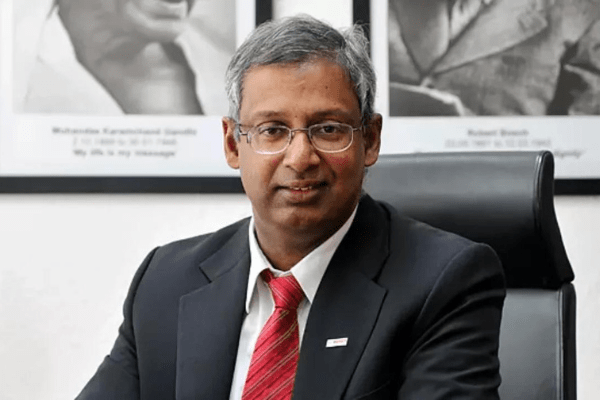
Auto components major Bosch Ltd will invest over Rs 200 crore in India in the next five years in advanced automotive technologies and digital mobility space, Managing Director Soumitra Bhattacharya said.

The company is also “quietly and cautiously optimistic about having a double-digit growth in FY2022-23 over the previous fiscal year,” Bhattacharya, who is also the President of Bosch Group India, wrote to the company’s shareholders in the annual report for FY22. 

He noted that the world is facing “unprecedented” difficulties, such as the chip shortages and supply chain crisis, the China lockdown, particularly in Shanghai, the conflict between Russia and Ukraine, and geopolitical changes.

“…this has resulted in one of the highest inflations we have seen in the world with impacts on interest rates and slowing down of the economy with a looming and possible recession,” Bhattacharya said. 

In 2021-22, the company recorded a total revenue from operations of Rs 11,104.7 crore, with profit after tax at Rs 1,217 crore. 

On the future plans, he said, “We are invested in the future…Bosch Ltd will invest more than Rs 200 crore in India in the next five years in advanced automotive technologies and in the digital mobility space”.

Markus Bamberger, chairman of Bosch Ltd, claims that “climate action, electrification, automation, and connectivity” are causing shifts in the company’s markets.

“Bosch global is prepared to tackle tough situations and has a strong product portfolio in electromobility with strong order books. We are also focusing our efforts on the promising field of fuel cells,” he added. 

In India, Bamberger said, “Bosch Ltd will support OEMs through system expertise and participate in ecosystem partnerships to become a major player in the electrification ecosystem”. 

“We will also be involved in the hydrogen ecosystem with complete powertrain modules already present in our portfolio. Our target is to continue the transformation of India’s mobility into clean, convenient, and congestion-free,” he added.

While electric vehicles will make inroads into India, Bamberger said Bosch still sees the “dominance of Internal Combustion Engine (ICE) with a share of 70 per cent to 75 per cent till 2030”.

Swedish fintech Klarna bags $800 million, valuation plunges 85% 

0

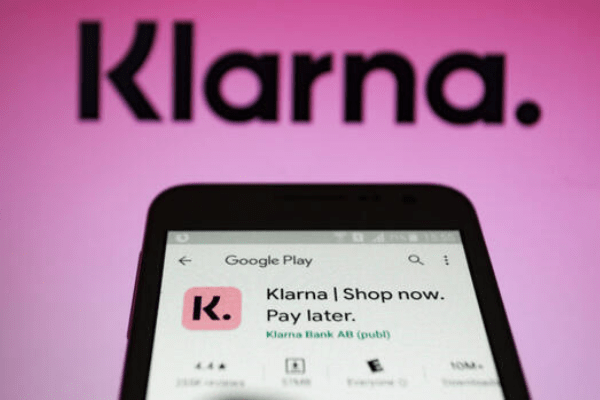
Swedish payment solutions provider Klarna reported raising $800 million in new financing, but its market valuation has dropped by 85% from the $46 billion it demanded a year ago. 

As investor interest in rapidly expanding tech ventures that have not yet achieved profitability diminishes substantially, Klarna said that the most recent round of fundraising valued the company at $6.7 billion, or 85% less than a year earlier. 

According to the Swedish group, there had been a significant market sell-off, and Klarna’s competitors’ valuations had fallen by 80 to 90%.

“Klarna has not been immune to the significant downdrafts of fintech stock in public markets,” it said. 

The $800 million raised in fresh funding will “primarily be used to expand Klarna’s leading market position in the United States,” it said.

Klarna blamed its falling valuation on “the worst set of circumstances to afflict stock markets since World War II,” pointing to high inflation, rising interest rates, lingering effects of the pandemic, supply chain disruptions and “the dislocations caused by the war in Ukraine.”

The business had already been affected by the economy’s deterioration when Klarna revealed in late May that it was laying off roughly 10% of its 7,000-strong workforce. 

Since its 2005 launch, Klarna has become one of Sweden’s most well-known startups, providing consumers and businesses with simple online payment choices.

According to Klarna, it has 147 million active consumers across more than 400,000 merchants in 45 countries.

Thomas Cook India, Vistara team up to launch international getaways programme

0

Travel services company Thomas Cook India and its group company SOTC Travel have launched Vistara Getaways – International.

Its partnership with Vistara Airlines, which was first signed in 2021, is being extended by this. The first phase of the international launch of Vistara Getaways – International offers appealing air-inclusive holidays across Thailand, Singapore, Dubai, and the Maldives. Vistara Getaways – International seeks to capitalise on the convenience of no-visa/easy visa short-haul destinations and the easing of international restrictions.

The Thomas Cook India Group created “Vistara Getaways,” which includes airline-operated flights, transfers, hotel stays, sightseeing/experiences, visas, and a dedicated concierge service. Premium international hotel brands including Dusit Thani in Thailand, Armani Hotel in Dubai, Angsana Ihuru and Banyan Tree Vabbinfaru in the Maldives, etc. will be available on Vistara’s customers’ digital interface. 

Similar packages are also offered domestically through its Getaways portfolio in Kashmir, Himachal Pradesh, Leh-Ladakh, Uttarakhand, Rajasthan, Goa, Andamans, Kerala, and the North East.

Mahesh Iyer, executive director and CEO, Thomas Cook (India) Ltd., said, “Post the successful launch of our domestic range last year, we are delighted to extend our partnership to international short-haul destinations. We intend to leverage the strong pent up demand and convenience of no visa/easy visa destinations to introduce these for South-East Asia, UAE and Maldives. We have ensured great care in the selection of hotels and our product range extends from affordable luxury to premium holidays.”

Mfine ties up with Lifecell International, raises $80 million 

0

Healthcare startup Mfine will merge with the diagnostics arm of genetic testing services provider Lifecell International in what is considered a distress deal.

OrbiMed, a healthcare investment company with over $18 billion in assets under management, has invested $80 million in the combined company, which is now known as LifeWell. Additionally, as part of a $350 million fundraising round in October last year, OrbiMed invested in PharmEasy. 

Lifewell’s digital division, Mfine, will establish a network of laboratories across the country.

For digital healthcare services, including tele-consultations, care plans, diagnostic testing, IP concierge, e-pharmacies, and corporate subscriptions, Mfine will continue to be the app and consumer brand. 

According to the company, the new funds will be invested strategically in insurance-tech companies and other partners.

“We created a technology platform and high-quality provider network that pretty much set the standards of care experience in digital health in India,” said Prasad Kompalli and Ashutosh Lawania, cofounders of MFine. “With this joint venture, we see immense possibilities of delivering on-demand healthcare with outstanding consumer experience.”

Mfine was founded in December 2017 by former Myntra executives Lawania and Kompalli, who Ajit Narayanan and Arjun Choudhary later joined.

As a seed investor in MFine, I’ve known Ashutosh & Prasad for a long time and have witnessed the development and growth of MFine as one of the leading digital health platforms,” said Mayur Abhaya, managing director and chief executive of LifeCell International. “Overall healthcare delivery is transforming worldwide with the rapid adoption of new technologies such as genomics and digital health. This combination paves the way to create a new market leader that meets the emerging customer expectations.”

Doctor consultations, diagnostic testing, e-pharmacy, and in-patient procedures are among Mfine’s digital offerings. The business competes with rivals such as Practo, Portea, and Apollo. 

To allow customers to monitor their blood oxygen saturation levels without using a separate device, Mfine released an app-based SPO2 monitoring tool last year. This year, the company added resources to the app that make checking blood pressure and glucose levels more accessible.