Wednesday, April 29, 2026
Home Blog Page 432

Here are the FinTechs that suspend service amid RBI’s scrutiny

0

After the Reserve Bank of India issued guidelines on digital lending, fintech startup Uni temporarily suspended its card services. This decision would have an impact on a significant number of users. 

The company has suspended services for the Uni Pay 1/3rd Card and the Uni Pay 1/2 Card in response to the latest RBI notification on digital lending. 

This action follows the suspension of Buy Now Pay Later (BNPL) services by several fintech companies, including Slice, LazyPay, Jupiter, EarlySalary, and Kredit Bee, after the RBI set tough limits on PPI models.

The Reserve Bank of India (RBI) has instituted a framework to regulate digital lending. Its new rules are based on recommendations made by a working group on ‘Digital Lending, including Lending through Online Platforms and Mobile App’ (WGDL) that was set up in January 2021. 

The central bank has taken a stand on key issues and provided clarity regarding things like direct loan disbursal to borrower accounts and borrower approval before the increasing credit limit, among other things.

“We are working with our banking partners to resume the card services as soon as possible and will keep you posted. However, there will be no change to your billing and repayments. This process will begin in phases for our customers starting today and will be concluded by Monday, August 22, 2022,” Uni said in a statement.

According to the RBI, NBFCs cannot engage in activities that go by the name of innovation yet call for licences. Most NBFCs have received warnings for using PPI models to load customers’ wallets and credit cards for ‘Buy Now Pay Later’ schemes. The BPNL model is, to put it lightly, lacking in integrity because it offers no consumer protection. 

The action by the central bank comes in the wake of growing anxiety around card-based credit services and PPIs loaded through credit lines. 

The RBI fears that because interest-free borrowing has increased recently, there is a risk of falling into a cycle of overspending.

Tata Capital hires 100 management trainees in FY23

0

Under its Management Trainee Programme 2022, Tata Capital, the Tata Group’s financial services arm, has hired over 100 management trainees.

Trainees were hired from IIMs and top business schools in India. According to a statement, members of this fresh batch have been employed for positions in credit and collections, sales and marketing, data science, and technology.

Fresh MBAs have the opportunity to work across a wide range of financial products and functions over two to three years as part of the Tata Capital Management Trainee programme, which will help them develop a deep understanding and appreciation of the financial services sector.

This year, 40 per cent of the management trainees were women, as per the statement.

Avijit Bhattacharya, Chief Human Resources Officer, Tata Capital, said, “Every year, we seek to onboard a diversified pool of students from premier institutes with computational, analytical and strategic thinking skills to augment our talent pipeline and we hope to see them emerge as leaders in the future.”

OTSI to hire 500 lateral and fresh IT Talent

0

Leading IT services and consulting firm Object Technology Solutions India (OTSI) plans to hire 500 fresh and lateral IT talent in India in 2022 to accelerate its expansion. 

Approximately 1500 people work for OTSI at the moment. Last year, the company hired about 300 people.

Chandra Talluri, Chief Executive Officer, OTSI, said, “OTSI is a place that ensures employee growth, making it align with the organisation’s growth. Innovation is always at the core of our work culture.”

Pradeep Boiri, Senior Director – Human Resources, OTSI, said, “At OTSI, we have a perfect balance of work and fun life. We provide ample opportunities to every employee to explore their better side.”

“We organise corporate events, tournaments like cricket, badminton, chess, carroms and many more. To explore the colourful side of every employee, we organise family events and annual day which form the perfect platform to collaborate with each other across all the functions,” added Boiri.

Holistic healthcare is the future of employee benefits: Plum

0

The future of a comprehensive benefits programme for employees lies in providing holistic healthcare, according to the health insurance platform Plum.

According to the company, young millennial employees are increasingly using telehealth consultations. In the past year, employees between the ages of 21 and 40 made most of the reservations for Plum’s customers. General medicine, dermatology, and mental wellness were the top three specialities consulted. Additionally, consultations for treatments relating to obstetrics and gynaecology, dieting, internal medicine, orthopaedics, and veterinary medicine, among others, were made available. Millennials who are tech savvy find teleconsultations efficient and practical for handling urgent medical needs.

India has one of the highest levels of out-of-pocket healthcare expenditures, which, according to the Economic Survey released in 2021, directly contributes to the high incidence of catastrophic costs and poverty. 

The company offers telehealth consultations, wellness programmes, access to mental health support, and group health insurance as part of its holistic healthcare package.

“Popularity of online doctor consultations, which had gained tremendous traction during the pandemic years, has sustained over the last one year. This clearly showcases the growing preference for such treatments among the workforce. Healthcare inflation is a reality and it is no longer limited to hospitalization expenses. Therefore offering an all-inclusive preventive and curative healthcare facility for employees has become a social responsibility for all the corporates who care for their employees. At Plum, we always advise our clients to provide holistic healthcare for all the employees and take a stance in ensuring their complete well-being,” said Abhishek Poddar, co-founder and CEO of Plum.

Top hospitality cos show interest in ITDC’s Ashok Hotel

0

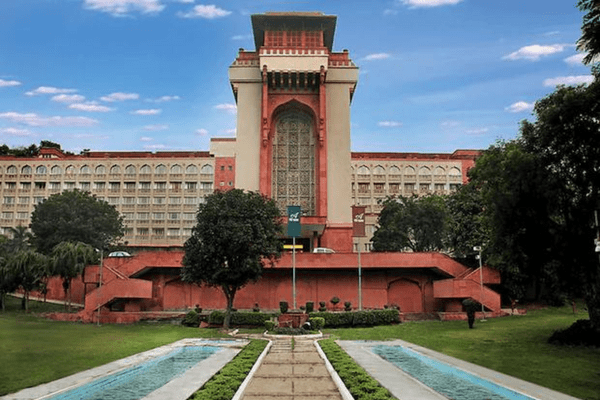
The top real estate and hospitality firms in India were present at the India Tourism Development Corporation’s (ITDC) initial feedback session regarding the Ashok Hotel’s potential asset monetization and use of its vast land in Chanakyapuri, the centre of Delhi’s diplomatic district. The marquee names were present, including Taj Hotels, Hilton, DLF, JLL, Brookfield-backed HLV Ltd, and Wyndham Hotels. Some of these players confirmed their participation. 

Like the Delhi airport, which has been leased to a private party for 30 years while the state retains ownership of the property, the first Modi-led government likewise intended to hand over the administration of the Ashok Hotel to a private operator while maintaining ownership of the hotel and land. The plan, which did not materialize then, will be implemented when the second Modi-led government completes its third year in office. 

The only feasible option to attract private players is by providing Ashok Hotel with a long-term management contract. The Ashok Hotel features 550 rooms, including a presidential suite, 161 suites, and 389 rooms. The Ashok Hotel (11.5 acres) will reportedly be leased for 30 years with an option for another 30. A 1.8-acre parcel may be made available for commercial development to the winning bidder. A hotel or serviced apartments could be built on an additional 6.3 acres.

India Blockchain Forum launched in Hyderabad with key influencers 

0

Telangana Principal Secretary (IR and Industries) Jayesh Ranjan officially launched the India Blockchain Forum (IBF), which had been initially an informal organisation of the top key influencers in the Indian blockchain ecosystem.

IBF was established to turn India into a hub for Blockchain and Web 3.0 on a global scale. According to a statement, India IBF plans to engage with governments, regulators, businesses, and academia to provide a comprehensive framework for the proper adoption of blockchain and web 3.0.

It would also establish community chapters across the country to raise awareness and provide access to global best practices. The forum has developed a comprehensive ten-point agenda to act as a unified platform for: building India’s blockchain stack; policy advocacy; Accelerate startups ecosystems; supporting blockchain technology companies; creating a talent pool for sustainable growth of the blockchain ecosystem; collaborating with academic institutions and research centres; creating India’s blockchain use case repository and supporting the adoption of web 3.0 technologies by corporates; promoting global collaboration and communities.

The founding members of the India Blockchain Forum are Prasanna Lohar, CEO, Block Stack; Pankaj Diwan, Founder & CEO, Idealabs FutureTech Ventures; Col Inderjit Singh, Chief Cyber Security Officer, Vara Technologies; Sharat Chandra, Blockchain Evangelist and Srinivas Mahankali, Chief Business Officer, Secure Kloud Technologies.

The National Blockchain Strategy document, released by MEITY in 2021, is one of many blockchain-related initiatives to which the founding members have contributed.

The forum has more than 40 influencers and is developing Special Interest Groups (SIGs) to effectively adopt blockchain in areas like CBDC, Metaverse, policy framework, etc. Experts in policy drafting, upcoming frontiers like NFTs, Metaverse, and CBDC, cybersecurity, technological architects, world influencers, and leaders in enterprise adoption of Blockchain and Web 3.0 are among the current members. All stakeholders will be able to join the India Blockchain Forum, which aims to become the world’s largest web 3.0 community.

Ford cuts 3,000 jobs as it shifts to a software future

0

As it restructures to keep up with Tesla Inc. in the race to develop software-driven electric vehicles, Ford Motor Co. announced it would cut 3,000 salaried and contract jobs, mostly in North America and India. 

Jim Farley, the CEO of Ford, has been indicating for months that he believed the Dearborn, Michigan-based carmaker had too many employees and that not enough of them have the skills required to succeed as the auto industry shifts to electric vehicles and digital services.

“We are eliminating work, as well as reorganizing and simplifying functions throughout the business. You will hear more specifics from the leaders of your area of the business later this week,” Farley and Ford Chairman Bill Ford wrote in a joint email.

Indian banks find a way to raise cheap funding

0

As funding in the banking system continues to decline, Indian banks have expanded their fundraising activity through the issuance of certificates of deposits, according to analysts.

“Banks are not raising deposit rates, as they are able to get funds easily from money market by issuing CDs, and that too cheaply, and they may continue to opt for this route of fundraising for next few weeks,” said Raju Sharma, head of fixed income at IDBI Mutual Fund.

Indian private and state-run banks have raised around 300 billion rupees ($3.76 billion) through two-month to one-year CDs in the two weeks to Aug. 19, sharply higher than the roughly 50 billion rupees in the previous two weeks, data compiled by Reuters showed.

Larger lenders have also jumped on board and are aggressively borrowing money through three-month and one-year notes, including Punjab National Bank and Bank of Baroda. These lenders are willing to lock up money for a year at a rate of 6.60% to 6.74% in anticipation of impending policy tightening.

The Reserve Bank of India’s repo rate stands at 5.40%.

Having averaged around 1.40 trillion rupees in August, India’s banking system’s liquidity surplus has now fallen below one trillion rupees, down from 1.90 trillion rupees in July and 2.92 trillion rupees in June.

“With liquidity getting drained out of the banking system, we expect banks to continue to raise funds through CDs as well as bonds,” said Venkatakrishnan Srinivasan, founder and managing partner at debt advisory firm Rockfort Fincap.

Market participants also said that banks would require a consistent supply of capital as credit expansion picks up when the economy recovers. Mutual funds have been delighted to park funds in CDs simultaneously, making it advantageous for investors and issuers.

“Debt funds that are mandated to invest in shorter duration are always on the lookout for investment opportunities, and that is the major reason, banks are able to get large quantums without any major difference on rates,” IDBI Mutual Fund’s Sharma said.

“We expect the liquidity tightness to lead to an effective policy rate hike of 60-75 bps,” Upasna Bhardwaj, chief economist at Kotak Mahindra Bank, said.

Vodafone to sell Hungarian business for $1.8 billion

0

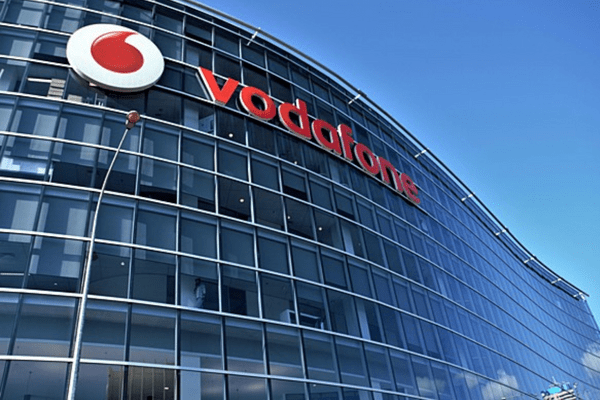
British Vodafone announced on Monday that it would sell its Hungarian business for 715 billion forints ($1.8 billion) in cash, resulting in the creation of a locally-owned telecoms industry leader in the country of central Europe. 

The Hungarian 4iG and state-run Corvinus Zrt, the buyers, and the British mobile phone and broadband group claimed to have reached non-binding terms. 

The transaction, which excludes Vodafone’s shared services company VOIS, is expected to establish Hungary’s second-largest telecom operator.

“The Hungarian Government has a clear strategy to build a Hungarian owned national champion in the (Information and Communications Technology) sector,” Vodafone Chief Executive Nick Read said in a statement.

The sale is expected to be completed by the end of 2022.

Kochi to organize 2-day FSSAI meet from tomorrow

0

The Food Safety and Standards Authority of India (FSSAI) will hold its 37th edition of the central advisory committee meeting in Kochi on Tuesday and Wednesday. The advisory committee meeting of FSSAI is hosted in the state for the first time. 

The 37th edition meeting’s objective is to develop policy-related recommendations and submit them to the FSSAI. The food industry and the administrative community will create these proposals jointly. The meeting, which is being held at the Kerala Food Safety Commission, is being organised by the CEO, the Chairperson of FSSAI, the respective state food safety commissioners, and specialists on the scientific panel and scientific committee.

On Monday at 7 p.m., St. Teresa’s College will assist a flash mob at a mall in Edapally to promote the message about food safety. On Wednesday morning, a rally to raise awareness of food safety will take place from Rajendra Maidan to Marine Drive. 

The rally will include cycling, walking, skating, and a traditional percussion extravaganza. It will be sponsored by St. Teresa’s College, Maharaja’s College, and the Ernakulam Roller skating club. 

On Wednesday night, Eat Right Fest will be organized with the assistance of Kudumbashree and two other private businesses.