


Tuesday, June 30, 2026
Home Blog Page 249

Cloud resources biggest targets for cyberattacks in India, says study 

0

A new study by a multinational firm reveals a worrying trend for Indian businesses. Cloud resources are emerging as the primary targets for cyberattacks in the country. This information comes from the 2024 Thales Cloud Security Study, a report released by Thales. The study surveyed nearly 3,000 IT and security professionals across 18 countries and 37 industries, providing a broad assessment of current cloud security threats.

“The study was based on a global survey of 2,961 respondents, aimed at professionals in security and IT management,” it said.  

The study “identifies cloud resources as the biggest targets for cyberattacks in India.”  

Cloud security spending now “tops all other security spending categories,” it added.  

The study also delves into the specific situation in India. A concerning statistic is that nearly half (46%) of Indian respondents believe all their cloud-stored data is sensitive. This highlights the high stakes for businesses in protecting their cloud resources. Furthermore, 37% of Indian organizations surveyed admitted to experiencing a cloud data breach, with 14% facing one within the last year. These numbers paint a clear picture of the growing threat landscape for cyberattacks in Indian businesses using cloud technologies.

The study explores additional trends specific to India. Interestingly, 35% of Indian organizations recognize the importance of “digital sovereignty initiatives” for protecting their cloud data in the long term. This concept refers to a country’s ability to control its data and limit reliance on foreign cloud providers.

However, the report also highlights a global challenge: managing compliance and privacy regulations in the cloud. Nearly half of all organizations surveyed worldwide found this to be more difficult compared to traditional on-premises data storage.

Finally, the study identifies the most common causes of cloud data breaches. Human error and misconfiguration were the biggest culprits, accounting for 34% of breaches. This emphasizes the importance of proper training and security protocols for cloud users. 

Exploiting previously unknown vulnerabilities (32%) and known vulnerabilities (21%) also pose significant threats. Additionally, failing to use multi-factor authentication, a security measure requiring two or more verification steps, contributed to 11% of breaches. These findings highlight the need for a multi-layered approach to cloud security.

“As the use of the cloud continues to be strategically vital to many organizations, cloud resources have become the biggest targets for cyber attacks, with cloud storage (30 percent), SaaS applications (30 percent), and Cloud Management Infrastructure (28 percent) cited as the leading categories of attack in India. 

“As a result, protecting cloud environments has risen as the top security priority ahead of all other security disciplines,” the statement said.


Cygnett Hotels & Resorts launches comprehensive leadership program 

0
Sarbendra Sarkar, founder and chairman of Cygnett Hotels & Resorts

Cygnett Hotels & Resorts is launching a new program to train future hospitality leaders. This Comprehensive Cygnett Leadership Development Program (CLDP) shows the company’s commitment to developing its staff, driving innovation, and achieving long-term success.

The program is designed to address a critical need in the hospitality industry: a lack of skilled leaders. These leaders are essential for adapting to changing markets, keeping guests happy, and managing teams effectively. Without them, hotels struggle to operate efficiently, innovate, and maintain high service standards.

The CLDP is an intensive nine-month program divided into three phases. This comprehensive training will equip participants with the skills they need to become successful hospitality leaders.

“We recognise the importance of nurturing and empowering future leaders at Cygnett Hotels & Resorts. Today’s competitive market requires a pipeline of visionary leaders who can help build and secure an edge over the rest. CLDP provides insight into real life examples so hospitality leaders understand how the right mindset, attitude, and communication directly impacts team performance,” said Sarbendra Sarkar, founder and chairman of Cygnett Hotels & Resorts.

Cygnett Hotels & Resorts designed the CLDP to be well-rounded and provide a clear structure for learning. The program covers a wide range of topics, including essential people and leadership skills, the latest digital tools, strategic approaches for key hotel departments, and even areas like HR, accounting basics, finance, marketing, and auditing. Cultural transformation is another key focus area.

To ensure a well-rounded learning experience, the CLDP incorporates various methods. Participants will have access to reference materials, tackle daily operational tasks to apply their learnings, and participate in interactive virtual sessions. Assignments will test their knowledge, and one-on-one interactions with industry experts offer valuable mentorship. This comprehensive approach ensures participants gain practical skills alongside theoretical knowledge.

Finally, the CLDP aligns with international standards and even offers an internationally recognized certification upon completion. This program positions graduates as highly qualified and competitive leaders in the hospitality industry.

“The leadership development program offers an exceptional opportunity for our team members to develop advanced leadership skills, rethink strategies, and adapt to ensure the organisation remains at the forefront of progress. This comprehensive program will empower our key leaders to foresee future trends and unlock new avenues for business growth,” said Sachin Gaur, associate director of learning & development and quality assurance at Cygnett Hotels & Resorts.

Cygnett Hotels & Resorts takes another step towards building a solid talent pool with the launch of the Comprehensive Cygnett Leadership Development Program (CLDP). This intensive program complements the existing Cygnett Learning Academy, known for its diverse training programs. From job-specific skills to brand immersion and soft skills development, the Academy caters to both internal staff and external participants. This commitment to continuous learning has been instrumental in empowering Cygnett’s team throughout their careers.

Persistent Systems buys US software firm Starfish Associates for Rs 173-Cr

0
Sandeep Kalra, CEO, Persistent Systems

In a move to strengthen its communication technology offerings, Indian IT company Persistent Systems (Persistent) announced today that it will acquire Starfish Associates, a U.S. software firm. The deal, valued at $20.7 million (approximately Rs 173 crore), will see Persistent acquire a 100% stake in Starfish Associates. This acquisition will allow Persistent to leverage Starfish Associates’ expertise and expand its existing capabilities in the field of Contact Center and Unified Communications.

The total cost of acquiring Starfish Associates is $20.7 million. Persistent will pay an upfront amount of $15.4 million (approximately Rs 130 crore) to the shareholders. This initial payment amount may be adjusted based on Starfish Associates’ financial situation at closing, such as their working capital, debt, and cash balance.

The agreement includes some performance-based incentives for the sellers. If Starfish Associates meets specific targets over the next two years, the sellers can earn an additional $5.1 million. Additionally, to encourage key employees to stay on board, Persistent has offered them a total retention bonus of $0.2 million over the next two years.

“Known for its cutting-edge Enterprise Communications automation platform, Starfish Associates caters to the world’s largest enterprises including many Fortune 500 companies. Starfish Associates’ automation platform excels as an intelligent integration hub and workflow engine, facilitating seamless connections across a myriad of business applications and communication systems,” Persistent said in a statement. 

The acquisition will also improve Persistent communication management capabilities. Starfish Associates’ platform automates communication across various platforms, including popular ones like Amazon Connect, Avaya, Cisco, Genesys, and Microsoft Teams. This will allow Persistent to support clients better using a variety of communication tools. Furthermore, Starfish integrates with critical business applications like ServiceNow, Workday, and Microsoft Active Directory. This integration will streamline workflows and operations for Persistent clients.

The acquisition is expected to close within 4-6 weeks, subject to standard approval processes. Once finalized, Persistent Systems Inc., USA, will become the sole owner of Starfish Associates.

“The integration of Starfish Associates’ platform greatly enhances our unified communications and contact center management offerings as this industry undergoes significant disruption on the back of AI-led innovations. This acquisition paves the way for us to support our global clients to unlock the full potential of these innovations in their contact centers,” said Sandeep Kalra, chief executive officer and executive director of Persistent

Starfish had LTM (last twelve months) revenue of $8.2 million as of March 31, 2024. In the previous two calendar years 2022 and 2023, it reported a revenue of $7 million each. 

Founded in 2005 with headquarters in New Jersey, Starfish offers solutions in the Unified Communications and Contact Center ecosystem, building an automation platform to help enterprises streamline the management of communication systems. It allows enterprises with automated provisioning, self-service, resource management, and migration tools, the filing further said. 

Robert Hankin, co-founder and partner of Starfish Associates, said, “Since our inception, Starfish Associates has been dedicated to enhancing enterprise management of unified communications and contact centers, always aiming to elevate customer and employee experiences. Joining forces with Persistent presents a new chapter for us, on one hand augmenting our capabilities in integration, automation, and AI-driven contact center transformation, and on the other hand, giving us access to Persistent’s strong customer base.”

Following the acquisition announcement on Wednesday morning, Persistent stock hit a 52-week high of 4,596 apiece, rising over 2% on the BSE. 

AI coding startup Magic seeks $1.5-billion valuation in new funding round 

0

U.S.-based AI coding startup Magic, which creates AI models that write software code, is looking to raise more than $200 million in funding. This new round of funding would value Magic at $1.5 billion. This comes just a few months after Magic’s last fundraising effort, three sources told Reuters.

Some big investors, including Jane Street, are reportedly interested in joining Magic’s funding round. This could be a massive boost for the company, potentially tripling its valuation from the last fundraising. However, it’s important to note that Magic doesn’t have any products for sale yet and isn’t generating any revenue, according to sources requesting anonymity to discuss private matters. 

Magic is a young company founded in 2022 with only around 20 employees. Despite its small size, it has already impressed investors. Magic was valued at $500 million in its previous funding round in February. This new round could triple that valuation. PitchBook data shows Magic has raised $140 million so far. Some of its backers include well-known names like Nat Friedman and Daniel Gross’ NFDG Ventures, along with Alphabet’s investment arm, CapitalG.

Magic declined to comment. Jane Street did not respond to a request for comment.  

Magic’s fundraising efforts highlight the promising applications of generative AI, particularly in the software development space. Developers are expensive for tech companies, so any tool that can automate code generation or make programmers more efficient is incredibly attractive. This explains the excitement surrounding Magic’s funding round.

Investors are even more bullish on Magic due to the recent success of similar AI coding tools. In April, Augment, another startup creating coding assistants, raised a whopping $252 million. Similarly, Cognition, the company behind the AI assistant Devin, secured $175 million in a funding round, valuing them at $2 billion.

Investors point to the phenomenal success of Microsoft’s GitHub Copilot. GitHub reported a significant 40% increase in revenue, largely thanks to Copilot’s popularity. With over 1.3 million paid subscribers, Copilot is a hit. 

“The success of Microsoft has validated the commercial market for AI code assistants, leading everyone to believe there is clear market demand and a customer willingness to pay for the right product. The opportunity is enormous, with likely multiple winners in this category,” said Brian Dudley, partner at Adams Street Partners.

Existing AI assistants like Copilot or OpenAI’s ChatGPT can help developers complete lines of code, but the future is even brighter. Companies like Magic aim to develop assistants that can write entire applications without human intervention. This ambitious vision is what’s attracting significant investments in this space.

Like other ambitious startups, Magic is building its large language models specifically designed for coding tasks. However, training these AI systems requires a significant investment. The cost of data, powerful computer chips, and the electricity to run them all add up quickly.

Magic plans to use its new funding to address this challenge. The company intends to improve its models’ ability to handle long-context windows. This means building AI systems that simultaneously process more information, leading to more sophisticated code generation.

While many large language models, like OpenAI’s GPT, rely on a traditional “transformer model,” Magic has developed a system that can understand and process much more significant amounts of context at once, according to a source familiar with the company. This allows Magic’s AI to tackle more complex coding challenges.

Poolside AI, a French startup with a similar approach, is also making waves. In June, TechCrunch reported that Poolside is in talks to raise a staggering $450 million, with a valuation of $2 billion. Just like Magic, Poolside has no products available for purchase yet. This highlights the immense investor interest in this revolutionary technology, even at its early stages.

CAMS, Google Cloud to build cloud-native platform

0

Computer Age Management Services Ltd (CAMS) joined forces with Google Cloud in a significant move. Together, they’re building a next-generation platform to revolutionize the asset management industry in India. This cutting-edge platform will offer a wide range of business services to modernize the current system. 

The development process is expected to take five years, with different platform parts being rolled out gradually.

Commenting on the development, CAMS Managing Director Anuj Kumar said, “Our technology platform has been the financial infrastructure for the Indian Mutual Fund industry, serving investors and the complex ecosystem diligently, while scaling up to build a market share of about 68 per cent in this arena. While the current platform continues to stand the test of time, the company is gearing up for the industry’s growth momentum with a modernised platform that will adopt a distributed, service-oriented cloud native architecture.” 

“We are excited to traverse this modernisation agenda with Google Cloud who amply demonstrated their domain expertise and brought to the table a robust solution that is best-in breed and compliment to the laws and regulatory standards,” Kumar added.

Zerodha sees end of zero brokerage model after new fee rules 

0
Nithin Kamath, cofounder and CEO, Zerodha

India’s largest discount broker, Zerodha, announced a potential change to its pricing structure. This comes after the market regulator, SEBI, introduced new rules. These new rules require brokers to charge standard fees regardless of trading volume. 

Previously, exchanges offered brokers lower fees for higher trade volumes. In turn, brokers could provide clients with commission-free trades. SEBI’s new regulation limits trading in certain areas, like derivatives. To comply with the new rules, Zerodha may have to ditch its zero-commission model and increase fees for derivative trades.

The new fee structure, which kicks in October, significantly impacts brokers, traders and investors, Nithin Kamath, CEO and co-founder of Zerodha, said on social media platform X. 

“With the new circular, we will, in all likelihood, have to let go of the zero brokerage structure and/or increase brokerage for F&O trades,” he said, referring to futures and options, derivative products in the stock market.

“Brokers across the industry will also have to tweak their pricing.” 

The new fee structure announced by SEBI sent shockwaves through the stock market, particularly impacting brokerage firms. Shares of several listed brokerages, including Angel One, SMC Global Securities, Motilal Oswal, Geojit Financial and Dolat Algotech, tumbled between 3% and 8% on Tuesday. 

This comes after a year of significant growth for these brokerage firms, with some stocks rising between 50% and 124%. The bullish trend coincided with a surge in trading activity and all-time high indexes. Interestingly, not all brokerages felt the immediate heat. 5Paisa Capital’s shares remained stable, and exchange operator BSE saw a moderate drop of 3.5%.

The exchange transaction charge, which constitutes 15%-30% of large brokers’ revenues and more than 50% of discount brokers’, is crucial for sustainability, said Tejas Khoday, founder of discount broking firm FYERS. 

“A 100% pass-through of exchange transaction charges threatens to destabilise the discount brokerage business model,” Khoday said. 

Zerodha’s CEO, Kamath, predicted a potential revenue hit of 10% for his company while estimating the industry could face a broader range of 10% to 50% impact. 

This news comes after SEBI raised concerns about the increasing popularity of derivative trading and hinted at taking measures to curb this trend.

Healthtech startup Cloudphysician appoints Oyo’s Mandar Vaidya as India CEO 

0
Dr Mandar Vaidya, CEO-India

AI health startup Cloudphysician, a full-stack tech and operations company that partners with hospitals to manage patients in their ICU and Emergency departments, announced the appointment of Dr. Mandar Vaidya as CEO-India, effective June 2024. 

Mandar brings a wealth of experience to the role, having spent over 20 years leading successful businesses around the world. At McKinsey & Co., Dr. Vaidya used his expertise to develop growth strategies for hospitals and pharmaceutical companies in Asia. This experience will be invaluable for Cloudphysician as they work to better serve their partner hospitals and expand their reach across India.

Mandar served as a regional CEO at OYO for four years. During this time, he oversaw growth in several regions outside India, including Europe, Southeast Asia, the Middle East, and Japan. He achieved this success by leveraging technology to drive profitable and significant expansion. In other words, he helped OYO scale globally from its Indian roots. Additionally, Mandar currently serves as an independent director on the board of Cipla Limited.

Mandar brings over 20 years of experience in fostering growth and innovation for global companies. This expertise will be valuable for Cloudphysician, a company that recently secured $10.5 million in funding (Series A) led by Peak XV Partners. Other investors included Elevar Equity and Panthera Peak. With this funding, Cloudphysician aims to make high-quality intensive care accessible, scalable, and affordable for hospitals worldwide. Essentially, Mandar’s leadership and 

Speaking on the appointment, Dr Dhruv Joshi and Dr Dileep Raman, co-founders at Cloudphysician, said, “With Mandar joining our team, we are entering an exciting new phase in our growth journey. The healthcare landscape in India is evolving and there is a significant opportunity for tech-enabled solutions to establish sustainable models of care delivery. His industry expertise, insights, and laser-like execution focus will help drive our mission forward, enabling us to reach more patients and hospitals. His rich experience and strategic approach to business development will help establish Cloudphysician as the preferred critical care partner, helping us expand our tech-driven solutions to over 5,000 hospitals. We believe his leadership will accelerate our vision of transforming critical care delivery and setting new standards in healthcare, ultimately improving outcomes and saving lives on a larger scale.” 

Mandar who has also extended an investment in Cloudphysician in addition to joining as CEO commented, “It has been inspiring to witness Cloudphysician’s remarkable journey. The fact that they have achieved a 40% reduction in their ICU mortality rates was what stood out to me. I am excited to take this kind of impact to every hospital across India. I am thrilled to join hands with Dhruv and Dileep who have led the movement of building a streamlined approach to high-acuity care. This is a career-defining opportunity for me to further build and lead a transformative team. By leveraging advanced technology for more precise diagnosis and treatment, we will deliver the best possible outcomes for patients. Together, we will strive to set new benchmarks in healthcare and transform care delivery in hospitals.”

Cloudphysician is making a big difference in critical care. It’s building a large network of virtual critical care experts, with the latest technology and top-notch medical teams. This innovative approach is helping hospitals improve patient outcomes. Over 1 lakh critically ill patients across 200 hospitals have benefited from Cloudphysician’s support. Hospitals have seen up to a 40% reduction in ICU mortality rates thanks to Cloudphysician’s 24/7 AI-enabled clinical support. The ultimate goal is to make sure everyone has access to high-quality critical care.

Sebi clears FirstCry and Unicommerce IPO

0

The Securities and Exchange Board of India (Sebi) has approved initial public offering (IPO) plans for two companies backed by SoftBank. These companies are FirstCry, an omnichannel retailer of baby products, and Unicommerce, a software developer for e-commerce businesses.

FirstCry, based in Pune, also offers mother care products. After the regulator requested clarification on some key performance indicators (KPIs), they had to resubmit their draft IPO application to Sebi in April.

This baby and mother care retailer, backed by Premji Invest, aims to raise $218 million (approximately Rs 1,815 crore) in fresh funding. This will involve issuing new shares and selling existing shares (around 54 million) held by current investors.

While they filed for an IPO in January, their strategy focused on existing shares. Investors in the Gurugram-based company plan to sell shares worth around Rs 480-490 crore through the public offering. This means there won’t be any fresh funding by issuing new shares.

Unicommerce also clarified its ownership structure. An addendum to their draft IPO prospectus recently listed SoftBank, which holds a nearly 30% stake, and Snapdeal co-founders Kunal Bahl and Rohit Bansal as the company’s promoters.

SoftBank signed an indemnity agreement with Unicommerce’s co-founders, Kunal Bahl and Rohit Bansal. This protects SoftBank and its executives from potential legal issues related to Unicommerce’s promoter responsibilities.

For the nine months ending December 2023, FirstCry reported operating revenue of Rs 4,814 crore. However, they also incurred a net loss of Rs 278 crore. Despite the loss, their gross sales were strong at Rs 5,650 crore. Interestingly, nearly 77% of their sales come from online channels, with the remaining 23% from offline retail stores.

Visual telematics startup Cautio raises Rs 6.5-Cr in pre-seed funding

0

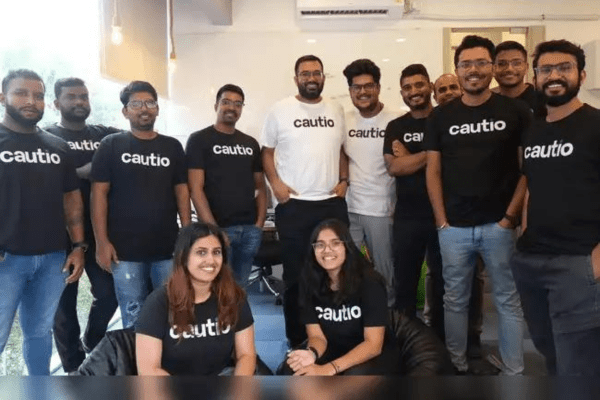
Visual telematics startup Cautio has secured Rs 6.5 crore in a pre-seed funding round. Antler, 8i Ventures, and AU Small Finance Bank led this pre-seed round. 

The funding itself combines equity investment with debt financing. In addition to these major players, Cautio also received contributions from both early customers and angel investors.

Cautio offers video-based telematics products at competitive prices. These products are designed to be customized solutions that tackle specific road safety problems. The company itself was founded by two tech veterans: Ankit Acharya, previously a senior executive at ride-hailing company Namma Yatri, and Pranjal Nadhani, a former senior engineer with Dream11 and Urban Company.

Cautio equips vehicles with customizable dash cams and an AI-powered operating system. This technology helps improve driver behavior and accountability on the road, the company says.

“Telematics in India has rapidly advanced from GPS, Bluetooth and portable navigation to embedded connectivity,” Acharya said.

“Initially focused on passive road safety measures, the emphasis is now shifting towards active real-time responsiveness due to high accident rates.” 

Cautio targets the commercial passenger sector, providing its solutions to mobility and logistics companies as well as institutions. The company is also involved in pilot projects throughout India.

“As investors, we are excited to back founders like Ankit (Acharya) and Pranjal (Nadhani). Their ability to integrate cutting-edge technology into accessible and cost-effective solutions positions them uniquely to redefine road safety,” Nitin Sharma, partner at Antler India, said. 

Lightmetrics, Samsara, Fleetmatics and Lytx are some of the big companies in this space. 

Cyber insurance rates fall as businesses improve security, report says 

0

Cyber insurance costs are going down globally, even though cyberattacks are on the rise, according to a recent report by broker Howden. The report says businesses are getting better at protecting themselves from cybercrime, leading to fewer insurance claims. This trend follows a sharp increase in cyber insurance premiums in 2021 and 2022, likely due to the rise in cyber incidents during the COVID-19 pandemic. 

Howden’s report highlights that the cyber insurance market saw significant price reductions (double-digits) in 2023/24. 

Stronger security measures, like multifactor authentication, are helping companies keep their data safe, ultimately reducing the need for insurance payouts.

“MFA is the most basic thing you can do, it’s like locking the door when you leave the house,” said Sarah Neild, head of UK cyber retail at Howden.  

“Cyber security is a many-layered beast,” Neild added, pointing also to greater investment in IT security, including staff training.  

“On the whole, clients are more robust.”

More insurance companies are now willing to offer cyber insurance, which is also driving down prices, according to Neilson from Howden, despite the continued rise in cyberattacks

Interestingly, the report also found that global ransomware attacks decreased after Russia’s invasion of Ukraine in February 2022. This suggests that hackers in those countries may have shifted their focus to supporting the military effort.

However, the report also reveals a concerning trend. Recorded ransomware incidents actually rose 18% in the first five months of 2024 compared to the same period last year. This highlights the ongoing threat of cyberattacks despite the price decrease. 

The report explains how ransomware works by encrypting a victim’s data and demanding a ransom (usually in cryptocurrency) for decryption. Business interruption is typically the most expensive consequence of a cyberattack. Still, the report finds that businesses can mitigate these costs with better backup systems, like those offered by cloud providers. 

Finally, the report points out that while most cyber insurance business is currently in the United States, Europe is expected to see the fastest growth in this $15 billion global market due to lower existing insurance penetration.

The report also identified a gap in awareness, with smaller firms less likely to purchase cyber insurance, possibly due to a lack of understanding of the cyber risk they face.