


Wednesday, April 29, 2026
Home Blog Page 52

FreshToHome raises ₹75-Cr in venture debt to fuel quick commerce push

0
L-R: Jayesh Jose, Shan Kadavil & Mathew Joseph, co-founders, FreshToHome

FreshToHome, a Bengaluru-based meat and seafood delivery platform, has secured ₹75 crore ($8.5 million) through a fresh debt round from Trifecta Venture as it accelerates expansion in the competitive quick commerce and fresh produce segments.

According to filings with the Registrar of Companies (RoC), the company’s board approved the issuance of 750 Non-Convertible Debentures (NCDs) to Trifecta Venture, with each debenture carrying a face value of ₹10 lakh. Through this structured financing, FreshToHome plans to deploy the capital toward two primary objectives.

First, the company will strengthen its working capital to ensure uninterrupted day-to-day operations across its extensive supply chain. Second, it will allocate funds for general corporate purposes, thereby supporting wider strategic initiatives and ongoing technology enhancements.

By choosing NCDs as the funding instrument, FreshToHome is actively preserving liquidity while avoiding immediate equity dilution, especially after closing its large Series D funding round last year. Founded in 2015 by Shan Kadavil and Matthew Joseph, the company has steadily transformed from a niche delivery service into a prominent regional player in the fresh food ecosystem.

At present, FreshToHome operates in nearly 160 cities across India and maintains a strong presence in the UAE. Moreover, in February 2024, the company strategically entered the ultra-fast delivery segment by launching 10–15 minute delivery services, positioning itself directly against quick commerce rivals such as Zepto and Blinkit.

In parallel, the startup continues to benefit from robust equity backing. So far, FreshToHome has raised more than $320 million in equity funding, including a $104 million Series D round led by the Amazon Smbhav Venture Fund.

Meanwhile, the company’s latest financial disclosures indicate gradual progress toward sustainability. For FY25, FreshToHome reported a 14% year-on-year increase in revenue, which rose to ₹421.33 crore from ₹369.55 crore in FY24. Additionally, the company narrowed its net losses to ₹146.32 crore, marking a 2.3% improvement compared to the ₹149.73 crore loss recorded in the previous year.

“The proceeds will be utilized to meet the company’s working capital requirements and for general corporate purposes,” the filing noted, clearly highlighting the firm’s emphasis on operational efficiency.

Overall, this debt infusion underscores FreshToHome’s disciplined capital strategy as it balances aggressive growth with financial prudence. As competition intensifies in quick commerce and fresh food delivery, the company’s focus on liquidity management, operational efficiency, and market expansion positions it to strengthen its standing in both India and international markets.

Agritech startup Arya.ag secures Rs 725-Cr in Series D round to scale climate-smart agri solutions

0
(L-R): Anand Chandra, Prasanna Rao, and D Chattanathan, co-founders, Arya.ag

New Delhi-based agritech firm Arya.ag has raised Rs 725 crore (approximately $80.3 million) in its Series D funding round led by GEF Capital Partners. Earlier, GEF Capital Partners had emerged as the lead investor in the round, as reported last month.

Over the past year, Arya.ag has completed two major fundraises. In July 2025, the company secured $29 million through an equity funding round. Meanwhile, its agri-commerce arm, Aryatech, obtained a $19.8 million commitment from the US International Development Finance Corporation to guarantee a debt facility.

With the fresh capital, Arya.ag plans to deepen its engagement with farmers and farmer producer organisations. Additionally, the company aims to expand its climate-smart agriculture initiatives while strengthening technology-led solutions across the post-harvest supply chain.

Furthermore, Arya.ag intends to deploy the funds to reduce farm-gate and supply-chain losses. At the same time, the company seeks to improve access to finance and strengthen market linkages for smallholder farmers.

Founded in 2013 by Prasanna Rao, Anand Chandra, and Chattanathan Devarajan, Arya.ag operates an integrated grain commerce platform. Through this platform, the company spans pre-harvest advisory services, storage solutions, financing, and trade operations. Moreover, its model empowers farmers to decide when and where to sell their produce, supported by farm-level data, warehousing infrastructure, and credit access.

The startup operates a widespread network of Smart Farm Centres and delivers services such as agri storage, instant financing, and transparent market access. Currently, the platform operates across nearly 60% of Indian districts. In addition, the company manages a network of 12,000 agri-warehouses, handles close to $3 billion worth of grain annually, and enables more than $1.5 billion in agricultural loans.

For the fiscal year ended March 2025, Arya.ag reported revenue of Rs 447 crore. During the same period, the company expanded its profits by 70% on a year-on-year basis. Subsequently, the company also reported a profit of Rs 32 crore in the first half of FY26.

Migsun Group signs Clubhouse for 200-Key hotel at Migsun Janpath, Lucknow

0
Yash Miglani, Managing Director, Migsun Group

Migsun Group has signed hospitality brand Clubhouse to develop and operate a 200-key hotel at its mixed-use project, Migsun Janpath, in Lucknow. Under this agreement, the parties have structured the partnership as a 28-year long-term revenue share lease.

Through this addition, Migsun Group continues to integrate income-generating hospitality assets into its large-format developments. Meanwhile, Lucknow continues to witness consistent demand across corporate travel, social functions, and leisure tourism. Moreover, improving infrastructure and sustained urban expansion continue to support this demand.

Commenting on the signing, Yash Miglani, Managing Director, Migsun Group, said, “The signing of Clubhouse is aligned with our strategy of adding stabilised, income-generating assets to our mixed-use developments. Lucknow has been witnessing consistent demand across business, social, and leisure travel, which creates a strong quality case for well-located hotels. The 28-year revenue share structure ensures long-term alignment between developer and operator while allowing the asset to respond to market changes over time. We believe this addition will strengthen the overall project ecosystem and contribute meaningfully to the city’s evolving hospitality landscape.”

The hotel forms a key part of the planned development mix at Migsun Janpath. Additionally, the project combines retail, commercial, and lifestyle components within a single integrated destination. Consequently, the upcoming hotel will cater to business travellers, social events, and leisure demand, in line with Lucknow’s steady growth in organised hospitality and mixed-use real estate developments.

EV charging startup Kazam posts Rs 40-Cr in FY25, sets sights on Rs 100-Cr

0
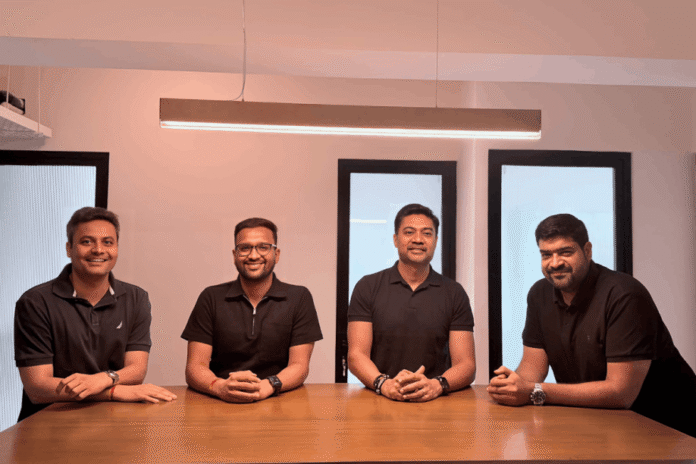
L-R: Paras Shah, Vaibhav Tyagi, Akshay Shekhar, co-founders, Kazam

IFC-backed electric mobility infrastructure startup Kazam recorded Rs 40 crore in revenue in FY25, which ended in March 2025. At the same time, the company remains on track to reach Rs 100 crore in annual revenue and expects to turn profitable by early 2026, supported by higher charger utilisation across markets, according to chief operating officer Akshay Shekhar.

Based in Bengaluru, Kazam operates an EV charging and energy management platform that provides both software and hardware solutions. Through this platform, the company supports electric vehicle charging and battery swapping operators across two-wheelers, three-wheelers, and four-wheelers.

Currently, the platform manages more than 9,000 MWh of energy transactions every month. Notably, this figure marks an increase of nearly 60% compared to June 2025, as stated by the company.

According to Claight Corporation’s expert market research, India’s EV charging market reached a volume of approximately 1.56 million units in 2025. Furthermore, the market is expected to grow at a compound annual growth rate of 22.2% between 2026 and 2035, ultimately reaching 11.58 million units by 2035.

For Kazam, tier 2 and tier 3 cities generate the largest share of revenue, particularly within the three-wheeler segment. “Cities such as Siliguri, Bareilly, Lucknow, and Agra are among our top markets. Each of these cities has around 2,000 to 3,000 charging points running on our platform,” Shekhar said.

In addition, Shekhar highlighted home charging for three-wheelers as the company’s biggest revenue driver. Currently, nearly 150,000 three-wheeler drivers use Kazam’s charging infrastructure.

Meanwhile, quick commerce and fleet charging continue to emerge as fast-growing categories for the company. As a result, companies such as BigBasket, Zepto, and Swiggy use charging points at dark stores to power vehicles between delivery trips.

Another strong growth segment for Kazam is public charging, Shekhar noted. In this segment, oil marketing companies and other operators set up large charging stations along highways, primarily catering to four-wheelers and electric buses.

Kazam raised $6.2 million in funding from the International Finance Corporation, the private sector investment arm of the World Bank Group, in June last year. Consequently, the funding round took the company’s total capital raised to $19.2 million. Other investors backing Kazam include Vertex Ventures Southeast Asia & India, Avaana Capital Advisors, Inflection Point Ventures, and Alteria Capital.

Shekhar emphasised that EV charging businesses currently generate Rs 150–200 crore in revenue despite single-digit market penetration, signalling significant headroom for growth. “Over the next two to three years, we will see Rs 1,000 crore revenue businesses emerge in India purely from EV infrastructure. This is something the industry should watch closely,” he said.

Royal Orchid & Regenta Hotels strengthen Rajasthan presence with Jodhpur signing

0

Royal Orchid & Regenta Hotels Ltd. (ROHL) has announced the signing of a new leisure property in Jodhpur, Rajasthan. Through this move, the company will operate the upcoming Regenta Hotel, Jodhpur, under a hotel management agreement. As a result, ROHL continues to reinforce its asset-light expansion strategy while strengthening its presence in culturally significant leisure destinations across India.

The upcoming 200-key all-suite property is located near the Jodhpur High Court at Shatabdi Circle on New Pali Road. Consequently, the hotel offers seamless access to the city’s key commercial districts and heritage attractions. Spread across 3,623 sq. m., the development positions the hotel as a leisure-focused destination that caters to travelers seeking enhanced comfort, longer stays, and immersive experiences in the Blue City.

Furthermore, Regenta Hotel, Jodhpur, will feature expansive conference and banquet facilities, a lobby bar, an all-day dining restaurant, and a rooftop pool bar. Therefore, the property positions itself as a preferred venue for leisure stays, destination weddings, celebrations, and premium social and corporate events.

The company is developing the property in partnership with Jodhana Real Home Private Limited & Shreeyukt. In addition, the hotel will offer spacious suite accommodations, curated dining experiences, comprehensive banqueting and event spaces, and wellness-oriented amenities. As a result, the property will remain well suited for leisure travelers, weddings, destination events, and high-end social gatherings.

Commenting on the signing, Chander K. Baljee, Chairman & Managing Director, Royal Orchid & Regenta Hotels Ltd., said, “Jodhpur continues to be a key market for us, driven by strong tourism demand and an evolving hospitality landscape. The signing of Regenta Hotel, Jodhpur, aligns seamlessly with our vision of expanding high-quality leisure offerings in heritage cities through an asset-light model. We are confident this property will further strengthen our portfolio in Rajasthan and deliver a distinctive hospitality experience.”

Speaking on the association, Suresh Bharti, Owner, Jodhana Real Home Private Limited, said, “We are delighted to partner with Royal Orchid & Regenta Hotels for the Regenta Hotel project. Their proven operational expertise and strong brand credentials make them the ideal partner to introduce a premium all-suite leisure hotel in Jodhpur. Together, we aim to create a destination that blends comfort, elegance, and world-class service.”

The signing of Regenta Hotel, Jodhpur underscores Royal Orchid & Regenta Hotels Ltd.’s continued focus on asset-light growth and strategic expansion in heritage and leisure destinations. Through this partnership, the company strengthens its footprint in Rajasthan while enhancing its portfolio with a premium all-suite offering that caters to evolving traveller preferences. Consequently, the development positions ROHL to capitalise on Jodhpur’s growing tourism demand while delivering a distinctive, experience-led hospitality proposition.

Knight FinTech raises $23.6 Mn in Series A funding to scale AI-led lending

0
Kushal Rastogi, co-founder, Knight FinTech

Knight FinTech, an Indian banking and digital lending infrastructure provider, has raised $23.6 million in a Series A funding round led by Accel. Additionally, IIFL and Rocket Capital participated in the round, while existing investors Prime Venture Partners, 3one4 Capital, Commerce VC, and Trifecta Capital also backed the company. Notably, the company completed the fundraise through multiple tranches.

Based in Mumbai, Knight FinTech provides technology platforms that enable co-lending, digital lending, embedded finance, and treasury management for banks and non-bank lenders. Currently, the company works with more than 150 partners across 85 lenders. Moreover, it has facilitated over $7 billion in cumulative loan disbursements and manages more than $5 billion in assets under management. Meanwhile, its treasury platform manages assets worth over $125 billion.

With the fresh capital, Knight FinTech plans to expand its AI-driven product offerings. Specifically, the company will strengthen capabilities across risk intelligence, automated credit underwriting, fraud detection, portfolio monitoring, and debt recovery systems. At the same time, the firm intends to expand into the Middle East and Asia-Pacific markets.

As part of this international push, Knight FinTech has appointed former Infosys Finacle global chief executive officer Sanat Rao as an investor and board adviser. Through this appointment, the company aims to benefit from deep global banking and technology expertise.

Kushal Rastogi and Parthesh Shah founded Knight FinTech. Previously, Rastogi built AI-driven trading systems, while Shah worked in financial services roles at Bloomberg Singapore and Deloitte.

“We chose to keep innovation and client obsession at the centrepiece, while building business with strong unit economics, market resilience, reliable systems, and long-term valued partnerships,” Kushal Rastogi said in a statement. “Knight FinTech is a multi-engine platform. Co-lending and treasury are already operating at a meaningful scale, while embedded finance and digital lending are accelerating rapidly.”

Knight FinTech generates revenue through software licensing, implementation fees, and recurring charges linked to assets under management. Currently, the company employs more than 350 people.

Property tech startup Fracspace bets ₹120-Cr on Sri Lanka project “Altaira”

0
Unnath Reddy, Founder, Fracspace

Hyderabad-based proptech startup Fracspace is gearing up to launch its “Altaira” project in Sri Lanka, with a planned investment commitment of ₹120 crore.

The Hyderabad-based real estate participation and hospitality startup Fracspace currently operates across Hyderabad, Munnar, Goa, Varanasi, Kabini, and Bengaluru (launching soon) in India, while also maintaining an international footprint in Bali (Indonesia), Bangkok (Thailand), Miami (USA), and Colombo (Sri Lanka).

“Through this growing network, we have served over 2,500 customers, positioning ourselves at the intersection of real estate, hospitality, and managed experiences,” said the founder of Fracspace. Building on this operational base, the company is now gearing up for the soft launch of Altaira—Above the Clouds, which it positions as its most ambitious and strategically important project so far.

Set atop a hilltop location in Sri Lanka, Altaira takes shape as a destination-led ecosystem that brings together premium residences, hospitality assets, and lifestyle-oriented spaces under a single, professionally managed vision. Importantly, Altaira moves beyond conventional real estate concepts and does not focus merely on square footage.

“It solves things people rarely admit. The exhaustion of always being ‘on.’ The fear of growing older in places that don’t respect ageing. The guilt of not being present with family. The craving for silence without isolation,” added founder of Fracspace, Unnath Reddy. Altaira feels appealing because it does not compete with everyday life; instead, it actively supports it.

Altaira does not target individuals chasing a better life. Rather, it speaks to those who have already built one and are quietly questioning why it still feels overwhelming. In the same vein, Altaira does not attempt to change people; instead, it offers the space for individuals to finally feel like themselves again.

Unlike traditional real estate developments that depend largely on one-time sales, Altaira operates as a long-term value platform. Consequently, the project aims to generate sustained income through hospitality operations, curated experiences, and continuous asset management.

Moreover, the development reflects Fracspace’s broader philosophy of building real estate as an operating ecosystem rather than a static asset. The project will feature amenities such as an infinity pool, a 24/7 world-cuisine restaurant, a comprehensive spa and wellness centre, cloudpaths, waterfalls and streams, a helipad, 270-degree panoramic views of hills and valleys, natural pools and plunge pools, and a dedicated sundowner deck. Commenting on the scale of the project, the founder of Fracspace said, “With Altaira, we are projecting investment inflows of approximately ₹120 crore, marking a major step in the startup’s global expansion strategy.”

Looking ahead, the development is expected to contribute meaningfully to future revenues through a blend of participation-led investments, hospitality-driven cash flows, and long-term management income as the destination matures. Meanwhile, the Altaira Soft Launch, scheduled for 14 February 2026, is being positioned as a curated, invite-only unveiling for early participants, global investors, and long-term stakeholders. Registrations are currently open, with the company shortlisting profiles to ensure alignment with the project’s long-term vision and scale.

For the Hyderabad-based startup Fracspace, Altaira represents far more than an entry into a new geography. Instead, it marks a clear transition into large-format, cross-border destination development, supported by a proven operating track record, an expanding investor base, and a well-defined growth roadmap.

Altaira is shaping up as a defining milestone—not only in Fracspace’s global journey but also in the way Indian-born real estate platforms are establishing their presence on the international stage.

Snacking startup Let’s Try targets Rs 1,000-Cr revenue by FY28

0
Nitin Kalra, Founder, Let's Try

Homegrown snacking brand Let’s Try is targeting Rs 1,000 crore in revenue next year, up from an estimated Rs 230 crore in the current fiscal year, as the company intensifies its manufacturing expansion and pushes deeper market penetration, founder Nitin Kalra said.

At the same time, the four-year-old startup is preparing for an IPO and plans to transition into a public limited company by 2028.

Commenting on the company’s financial trajectory, Kalra said, “Last year we clocked Rs 65 crore, and this year we are planning to clock around Rs 230 crore in revenue as the brand has been growing exponentially,” adding, “Next year we aim to be around Rs 1,000 crore while planning an IPO or pre-IPO things.”

Importantly, this target implies nearly fourfold growth within a single year, positioning Let’s Try among the most aggressive expansion stories in India’s snacking industry.

To support this growth, the Delhi-based company plans to invest Rs 100 crore over the next year to establish four new manufacturing units across the country, building on its existing capital expenditure of Rs 15–20 crore. Specifically, the expansion roadmap includes a facility in Bangalore by March, another unit between Mumbai and Pune, and a western India plant focused on exports by the end of the year.

Explaining the strategy, Kalra said, “The whole idea is how we can give products as fresh as possible to the consumers.” Currently, the company handles all manufacturing in-house at its Delhi facility. Moreover, Kalra noted that this model enables strict quality control, allowing Let’s Try to claim 100 percent use of premium ingredients such as groundnut oil instead of palm oil.

Meanwhile, Let’s Try currently generates around 80 percent of its revenue from online channels and 20 percent from offline sales. However, the company plans to rebalance this mix to 60:40 by strengthening its presence in general trade, modern trade, railways, and airlines.

Emphasizing wider accessibility, Kalra said, “The better product should not just be in the hands of those who can use a phone and who can do shopping on a phone. It should be available in case someone is going out to some Paanwala shop.”

In addition, the company has launched its first cloud kitchen offering Indian snacks prepared with groundnut oil and ghee. Going forward, Let’s Try plans to open more branded outlets next year as part of its offline expansion strategy.

With ambitious revenue goals, significant manufacturing investments, and a clear roadmap toward an IPO, Let’s Try is positioning itself to scale rapidly while maintaining product quality and expanding its reach across both digital and physical retail channels.

Kraken surges to $8.65 Bn valuation, boosting Origin Energy’s portfolio

0
Frank Calabria, CEO, Origin Energy

Origin Energy Ltd. said that Kraken Technologies Ltd., a software platform that enables utilities to manage the shift toward cleaner energy, has achieved a valuation of $8.65 billion following its first standalone capital raise.

Notably, the software platform has played a central role in Octopus Energy Group Ltd.’s rise to become the UK’s largest electricity supplier, as the company surpassed traditional incumbents and expanded its customer base to more than 7 million households. Meanwhile, Sydney-listed Origin Energy holds roughly a 20% stake in Octopus Energy.

According to a statement released on Tuesday, Kraken will raise $1 billion in equity through its first independent share sale involving both new and existing investors. As a result, the transaction will set the stage for a formal separation of the company from Octopus, which the company has targeted for the middle of next year.

“Origin has always held a deep conviction in the potential of Kraken, and we have been able to maintain our highly valuable equity stake in Kraken while supporting the continued expansion of Octopus Energy,” Origin Chief Executive Officer Frank Calabria said in the statement. Additionally, Origin confirmed that D1 Capital Partners will join as a new investor, alongside a “leading energy retailer” with more than 10 million customers that will also adopt Kraken as a client. Furthermore, Origin said it will invest $140 million as part of the overall process.

Earlier, in September, Octopus announced its plans to spin off the software platform. Since then, energy providers have licensed Kraken’s software to help balance electricity flows to households, particularly as energy-transition technologies such as electric vehicles, home batteries, solar panels, and heat pumps become more widespread.

At the same time, Origin agreed to waive its exclusivity to the software platform in Australia in exchange for an additional 1.5% equity stake, thereby offsetting dilution from the share sale. Consequently, following the equity raise and the separation of the software platform from Octopus, Origin will hold a direct ownership interest of 22.7% in Kraken as well as a 22.7% stake in Octopus.

Overall, suppliers that deploy Kraken’s software can offer more competitive pricing and targeted incentives to customers, encouraging flexible energy usage. These capabilities help utilities manage the volatility in power flows associated with a grid increasingly dominated by renewable energy sources, reinforcing Kraken’s strategic value in the global energy transition.

Lemon Tree Hotels expands portfolio with new hotel signing in Tirupati

0

Lemon Tree Hotels Limited has announced that it has executed a Hotel Operation Agreement for a forthcoming property in Tirupati, Andhra Pradesh. Notably, the company signed the agreement through Carnation Hotels Private Limited, its wholly owned subsidiary.

Under this arrangement, Carnation Hotels Private Limited will operate the hotel under the Lemon Tree Suites brand, subject to Lemon Tree Hotels Limited executing a separate licence agreement.

The upcoming property, will brand itself as Lemon Tree Suites, Tirupati and will feature 228 rooms and suites. Additionally, the hotel will offer a restaurant, a banquet hall, and a meeting room, along with recreational facilities such as a swimming pool and a spa. Strategically, the property sits approximately 10 km from Tirupati International Airport and about 6.3 km from Tirupati Railway Station, while remaining well connected via both public and private transport networks.

Commenting on the signing, Vilas Pawar, Chief Executive Officer – Managed and Franchise Business at Lemon Tree Hotels, said, “With this signing, we are pleased to extend our pilgrimage portfolio in a place that holds deep spiritual resonance. Moreover, the vibrant tourism, rich cuisine, and growing hotel infrastructure make Andhra Pradesh a magnet for tourism travellers seeking unforgettable experiences. The state has six operational and three upcoming hotels.”

Overall, the signing reinforces Lemon Tree Hotels’ strategy of expanding its managed and franchise portfolio in high-demand destinations. Consequently, the Tirupati project strengthens the group’s presence in pilgrimage and leisure-led markets while also supporting its broader growth ambitions across Andhra Pradesh.