Thursday, April 23, 2026
Home Blog Page 466

Lords Automative partners with Kerala Automobiles Ltd 

0

Lord’s Mark Industries Pvt Ltd, a Mumbai-based manufacturer of renewable energy products, is creating a joint venture with Kerala state-owned Kerala Automobiles Ltd to expand its electric vehicle business and enter the EV infrastructure market. 

Lords Automative, a Lords Mark Industries subsidiary, would own 74% of the joint venture business that will build a 1.5 million electric vehicle manufacturing facility in Kannur, with Kerala Automobiles retaining the remaining 26%. 

According to Sachidanand Upadhyay, founder of Lord’s Mark Industries, the joint venture, KAL Lords Automative Vehicles Pvt Ltd, plans to create electric motorcycles, three-wheelers, as well as swappable battery stations and charging infrastructure.

“Over the next two years, the JV company will be investing Rs 200 crore in development of products and ecosystem,” he said. “Initially we need about Rs 20-30 crore… As we scale the business up, the business would demand about Rs 200 crore.”

By the end of 2022, the manufacturing facility should be operational. 

In the following years, KAL Lords will introduce e-bikes, e-scooters, and e-three wheelers for both cargo and passenger use. These products will have a range of speeds from low to high, with a range of 80-130 km per charge. 

The immediate goal is to meet the growing demand for electric vehicles in Kerala, with plans to extend across India and subsequently internationally, according to officials. It intends to export to Eastern Europe and Africa in the future. 

They claim that KAL Lords can create and sell 40,000-50,000 electric vehicles in the next two years. It will perform R&D to produce technologically sophisticated and energy-efficient electric vehicles.

Lords Automative, which was founded in February 2019, had a revenue of Rs 22 crore at the end of FY-21. Around 4,500 electric vehicles were sold. 

With the launch of the new JV, the company’s existing network of 300 dealers around the country will be expanded to 150-200 outlets. According to Upadhyay, these bases will be used as a swapping station for the company’s customers.

Kitchens@ to collaborate ITC Foods’ online foray

0

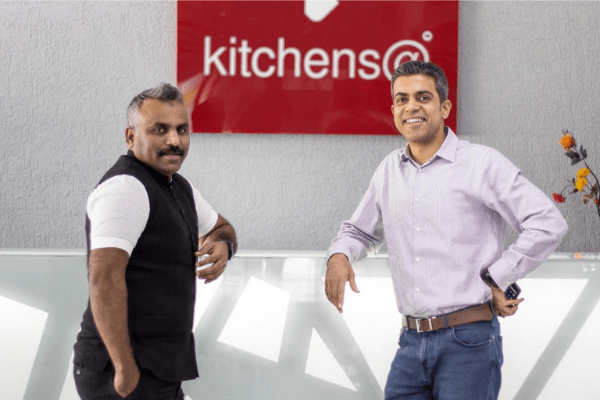
ITC Sunfeast Baked Creations and ITC Master Chef Creations have established a cooperation with Kitchens@, an Indian cloud kitchen firm. This is ITC’s first foray into the online food service industry. Kitchens@ is a digital accelerator for power food brands that offers end-to-end F&B solutions, from asset light-cloud kitchens to highly efficient last-mile delivery readiness.

ITC Foods will focus on brand building, marketing, product development, and quality processes because Kitchens@ will handle the day-to-day operations. Kitchens@ will provide comprehensive and efficient last-mile readiness through its infrastructure, technology and procurement assistance, workforce and culinary operations support, and marketing aids, all of which will be aided and guided by ITC chefs.

Kitchens@ is a food brand digital accelerator that provides infrastructure, technological integration, ingredient sourcing, culinary operations, and demand management. It enables food brands to scale quickly and achieve scale success. Mainland China, Empire, Chai Point, A2B, Domino’s, Taco Bell, and Barbeque Nation are among the 80 local and international brands linked with Kitchens@, with 12 high-demand locations in Bengaluru.

Speaking about the partnership, Saurabh Jha, CEO of Kitchens@, said, “We are proud to partner with one of the biggest conglomerates in the world. We started working with ITC on a pilot project and were successful in helping it achieve significant growth in a short period. We are thrilled that they entrusted us to support their new age online play.”

Platform 65, train theme restaurant, plans to expand its business 

0

With locations in Telangana and Andhra Pradesh, Platform 65, a train theme restaurant chain, which opened its first location in November 2019, now wants to expand across the country, starting in the south gradually. 

Though the restaurant serves standard multi-cuisine fare, the delivery technique to the table is distinctive and popular. After being ordered, the meal is made in the kitchen and then delivered on a miniature train. Perhaps in memory of pandemic times, the food arrives at your table undisturbed by anyone outside the kitchen—even the order is taken from a central place, thereby isolating guests.

Over six months, the company, led by co-founder Sarvesh Kumar, studied several concepts before arriving at the formula they now seek to spread across India as Platform 65, according to co-founder and managing director Sadgun Patha. “We opened our first branch at KPHB Hyderabad on November 27, 2019 and over the next two years, we opened five more branches across Telangana and Andhra Pradesh,” he said. 

Franchisee-owned and company-operated or franchisee-owned and operated are the two models offered by the company. He went on to say that the company currently operates all of the restaurants that are currently open.

Patha said that his company had optimized every process and had a well-developed training programme for its 1,000-strong workforce. “At the end of the current financial year, we have six branches across Telangana and Andhra Pradesh and the plan is to expand to five or six more restaurants by the end of 2022-23,” he said, adding that they were considering Bengaluru and Rajahmundry as two potential new locations.

Platform 65 Mini and the larger Platform 65 are the two concepts. Patha explained that the mini version requires 4000 to 5000 square feet of area and can seat 100 people, while the larger version requires 7000 square feet and can seat 170 to 180 people.

Bhartiya Group aims to develop its hotel portfolio

0

Bhartiya Group founder and chairman, Snehdeep Aggarwal, addressed the company’s foray into hospitality, beginning with the recently opened Leela Bhartiya City, Hotel Convention & Residences, Bengaluru.

“In some places in the world where developers had a view, they would partner with a brand and develop hospitality hotels and resorts. We were creating a city which is much more than an amalgamation of different buildings,” said Snehdeep Aggarwal.

“I really want an Indian luxury brand and there are only two actual luxury brands from India. I met Captain Nair and then Vivek Nair and they came on board without any conditions,” he said on the subject of the brand he chose to associate with.

Bhartiya Group and Aggarwal are deeply involved in the hotel’s design and beyond. The product was influenced by the fashion side of the Bhartiya Group (they work with some of the world’s top designers) and Aggarwal’s passion for the simple things in life. 

Moving on to the future of urban development in India, Aggarwal believes that changing the urban design of cities will be extremely challenging. The only option was to divide larger cities into townships and create self-contained centres; one such experiment was Bhartiya City.

The entry into hospitality began with the planning of the massive 3,000-person capacity convention centre within Bhartiya City, which brought about the need for a place for delegates to stay. He said a convention centre of that size would need 700 to 1000 rooms.

Because of the convention centre, there would be a need for more hotels—at least two more, he hinted—and though he hadn’t yet decided who to partner with for his other properties, he didn’t mind staying with Leela Hotels.

“I can do five (hotels) with Leela if my relationship is good, I can leverage the teams. bring in more efficiencies,” he said, adding that he was also seriously considering co-branding a hotel going forward. “I am not making any commitments, but we are already looking at more hotels,” he added.

DailyObjects raises $2mn in funding to expand its operation

0

DailyObjects, a global lifestyle direct-to-consumer (D2C) brand, announced that it had raised $2 million in funding from Roots Ventures, an early-stage venture capital firm. 

The Gurugram-based firm intends to use the new funds to expand its design team and improve client experiences. 

DailyObjects, founded by Pankaj Garg and Saurav Adlakha, employs more than 500 artisans to meet the requirements of more than 2 million customers and users worldwide.

“As we look forward to scaling up the lifestyle products/accessories in India, we will be utilizing the incoming funding to strengthen the team that has constantly innovated ahead of the curve. We are delighted with the trust and faith that Roots Ventures showed in us and are focused on taking the brand to the next level,” co-founder and CEO Garg said.

In 2022, the company claims to have grown by 300%, and it expects to reach a revenue run rate of Rs 100 crore in the next 9-12 months.

“With multiple product offerings under a single umbrella and its expansion across the world, we believe in the excitement that DailyObjects has brought in the D2C space. We are excited to be a part of their journey,” Japan Vyas, managing partner, Roots Ventures, said.

‘Care Now, Pay Later’ program revolutionizes India’s healthcare sector

0

Buy Now Pay Later (BNPL) programs have taken the credit sector by storm, with the business anticipated to expand to $50 billion in India by 2028. BNPL offers have previously been limited to financing online purchases in impulse-driven categories such as apparel, cosmetics, gadgets, food, and so on. Still, now a new fintech company called SaveIN has launched an offline BNPL product for financing need-based healthcare expenses at physical points of care, termed ‘Care Now Pay Later’ (CNPL).

SaveIN has partnered with over 200 healthcare providers in Delhi, Gurgaon, and Noida to make healthcare more accessible and affordable. Dental, Eye Care, Veterinary, Diagnostics, Dermatology, Hair Clinics, Fertility, Physiotherapy, and Fertility are among the key health segments addressed. 

SaveIN’s growth plans include making excellent treatment more affordable by enabling millions of individual healthcare providers from various segments to offer fast, point-of-care flexible payment solutions, resulting in India’s most integrated healthcare financing ecosystem.

Over 70% of Indians prefer private healthcare, so it’s no wonder that healthcare costs account for $40 billion in out-of-pocket spending each year. It also doesn’t help that insurance penetration is less than 1% of GDP. This places a great deal of financial hardship on many people, especially in the case of emergency or unanticipated demands. Buy Now Pay Later (BNPL) services offer a substantial opportunity and a much-needed solution for both customers and medical providers in the healthcare industry.

Jitin Bhasin, Founder & CEO, SaveIN, said, “Indians across demographic profiles are becoming increasingly sensitive to their physical and mental well-being. We at SaveIN are committed to deliver on-demand credit and flexible payment options to Indians, thereby facilitating timely and quality healthcare for all, no matter the circumstance. SaveIN, with a reliable, verified and fast- growing partner network, would offer 100% digital, flexible deferred repayment options at points of care across the country. With CNPL, one can avail zero cost payment options while availing healthcare products and services at providers near them. We have seen tremendous initial feedback from our healthcare partners and customers alike.”

Renault, partners, join forces to make new-gen automotive electric motor 

0

Renault and its partners Valeo and Valeo Siemens eAutomotive announced plans to develop and manufacture a next-generation automotive electric motor vehicle in France. 

Starting in 2027, the businesses claim they will be the first to mass-produce a 200kW electric motor without the need for rare earths. The Renault Group’s Cleon facility in Normandy, France, will produce the motor for the automaker’s purposes.

The three partners will combine their knowledge and know-how to create a one-of-a-kind electric powertrain system that is unmatched globally, delivering more power with less energy and avoiding the use of rare earths. 

Each of the three partners will contribute to developing and manufacturing the rotor and stator, which are the two most important components of an electric motor.

Luca de Meo, Renault Group’s Chief Executive Officer, commented: “We are delighted to be partnering with Valeo, whose know-how is recognized the world over. Together, we will design and develop a new generation of high-tech electric motors, produced at our Cléon plant. This partnership is further demonstration of our capacity to be at the forefront of the electric revolution taking place in the automotive industry and to anchor the new automotive value chain in France”.

Christophe Périllat, Valeo’s Chief Executive Officer, commented: “This strategic partnership will result in a major step forward for electric mobility. Alongside Renault Group, we are creating a new-generation automotive electric motor that eliminates the use of rare earths. This new motor will meet the most stringent environmental requirements and the highest performance standards.”

ShareChat to own MX TakaTak in $700 million deal

0

Two sources familiar with the matter said that the parent firm of India’s ShareChat would acquire local rival MX’s short-video platform for roughly $700 million, as competition heats up in a market where foreign investors have made big bets. 

Following an India-China border clash in 2020, New Delhi banned ByteDance’s TikTok and a few other Chinese apps, resulting in a surge in popularity for Indian short-video apps.

Following the ban on TikTok, ShareChat’s parent company, Mohalla Tech, launched Moj. This similar short-video sharing app has grown to 160 million users and competes with Meta Platforms Inc’s Instagram Reels. 

ShareChat’s parent company will buy MX’s TakaTak short-video platform in a cash-and-stock deal, according to persons familiar with the matter. 

According to one of the sources, the deal, which is valued at roughly $700 million, might be disclosed within days. 

ShareChat’s parent company now has two short-video apps in its portfolio, owing to the MX TakaTak acquisition. 

According to one of the individuals, the company aims to expand its use of artificial intelligence techniques and reach a much larger audience. Moj has around 160 million users in India and MX has roughly 100 million.

How can businesses make consistent profit through relationship marketing?

0

Long-term customer relationships are important for every organization, and they demand a commitment as well as time and space to develop. According to a survey conducted by SuperOffice, the leading European modern CRM provider, 85% of businesses agreed that long-term customer relationships were extremely crucial to their growth. 

Today, most businesses are still mainly concerned with transactional marketing, which focuses on maximizing individual sales rather than building long-term relationships. Few companies invest in customer relationships, and relationship marketing helps them accomplish their strategic goals.

Relationship marketing aims to build long-term customer engagements and develop customer loyalty by providing exceptional products and services rather than driving a one-time sale. A lack of strategy is why many businesses do not invest in relationship marketing. Businesses commonly claim to be leveraging relationship marketing methodologies such as discount coupons, customized services, reward programs, etc. These are tactics; they are much more concrete and usually geared toward smaller phases and a shorter time frame.

To build a strong relationship with customers, businesses must form bonds with them, create relationships, and create feelings that no price changes, advertising campaign, or deal can match. Relationship marketing empowers organizations to bond with their customers’ minds through emotional connection and purpose-driven connection.

Let’s look at how to develop an effective relationship marketing strategy for businesses.

Emotional connection: Regardless of the nature of the business or the products/services offered, every customer has feelings. Businesses must delve into those feelings to develop an emotional connection with customers to spend more money with them. Trust is fundamental for business growth, and keeping promises made on every purchase significantly increases brand trust. Moreover, customers will naturally connect to the brand when the companies share posts on social media that feature the company’s employees or valuable customer feedback.

Valuable content: Regardless of their purchase purpose, loyal customers expect value from the business in addition to the products/services given. To boost customer loyalty, content marketing has become the most popular strategy globally. Instead of focusing on sales and promotions, curated content in any form should address customers’ concerns. Offering expert-level content, which includes data-driven insights that help customers succeed, is the recent trend that motivates customers to keep in touch with the business. To put it another way, being purpose-driven is a corporate growth engine.

Customized services: When a startup or well-grown business adopts a relationship marketing strategy, it should focus on the customers rather than the products or services. Everyone wants a brand that cares about them as individuals and truly knows their needs. A firm may captivate customers and make them loyal to their brand by providing personalized services.

Customer engagement: Consistently interacting with customers will strengthen the emotional connection between a customer and a brand. It encourages customers to return and spread the word about the brand’s product or service. Offering a high-quality customer experience is a key element of the customer engagement strategy. Engaging with customers in this digital world is a prerequisite by reaching out to them through their favorite platforms.

Integrate technology: Customers will inevitably come to the business through an organic relationship built on personalized products or services. It is impossible to connect with every customer as the firm grows. By using technology to automate the processes, every customer will receive communications from the company and chances to interact. For instance, firms can use automated marketing systems to streamline their workflow and generate more leads and email automation to send the appropriate message to the right people at the right time.

Domino’s pizza invested in voice-based solutions to connect with customers to increase customer loyalty. The company has also invested in various solutions, including mobile apps, a new loyalty program, and even self-driving delivery vehicles, in addition to voice-based technology. The management believed that having a diverse technology portfolio and loyalty program allows it to focus on “meeting customers where they are and where they feel comfortable.”

An organization must ask for feedback when it has created a devoted customer base through meaningful connections with customers. Working with their feedback and addressing buyer pain points can help them tailor the relationship marketing strategy to their target market’s needs. 

Relationship marketing is a key component of corporate growth in today’s competitive world. Building, nurturing, and growing customer connections over time are the responsibility of the business. Organizations can employ relationship marketing strategies to appeal to customer emotions and stand for a good cause rather than just profit to build a loyal customer base.


ITC Hotels launches new app for all bookings

0

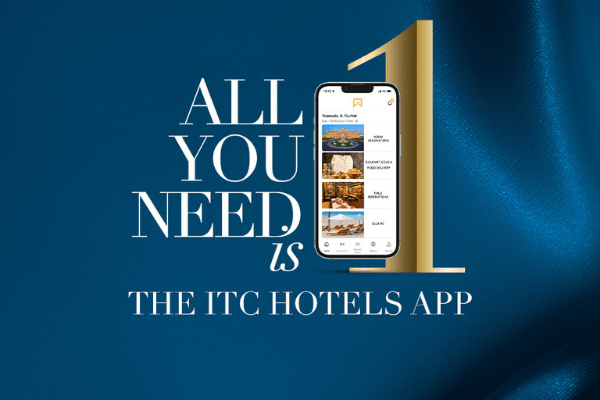
ITC Hotels, a Cigarettes-to-hotels conglomerate, has launched an app for room and restaurant reservations, food delivery and takeaway, and loyalty membership across its hotels and subsidiary Welcomhotels and Fortune Hotels in some locations. 

The company said that customers would book stays at about 55 of the business’s hotels and resorts using the app. According to the company, business travellers can also book stays at their firms’ negotiated corporate rates through the app.

Anil Chadha, divisional chief executive, ITC Hotels, said, “The mobile app is a natural progression for the brand that prides itself on moving with the times and serving its customers in the most modern and efficient way possible. We are living in a digital world and want our guests to enjoy the experience with the convenience, efficacy, innovative and interactive interface that it offers, along with benefits and privileges.”

Food delivery and takeaway will be available in 14 cities, including Delhi NCR, Mumbai, Kolkata, Chennai, Bengaluru, Hyderabad, Goa, Agra, Jaipur, Vadodara, Amritsar, and Coimbatore. He stated that two more cities, Bhubaneswar and Guntur, would be included soon. 

These would be clubbed together under the umbrella of ‘Gourmet Couch,’ the company’s pan-India food delivery initiative. Table reservations will be available through the app at around 75 of the company’s restaurants.

ITC Hotels launched Mementos, a new luxury hotel brand, last year. According to the company, the hotel division’s asset-right strategy, in which the company is rapidly growing its footprint across the country through management contracts with standalone properties, will be strengthened by this new brand.