Wednesday, January 21, 2026
Home Blog Page 3

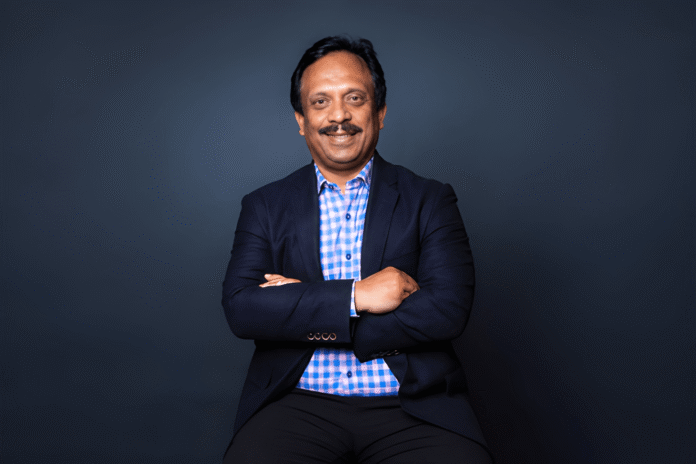
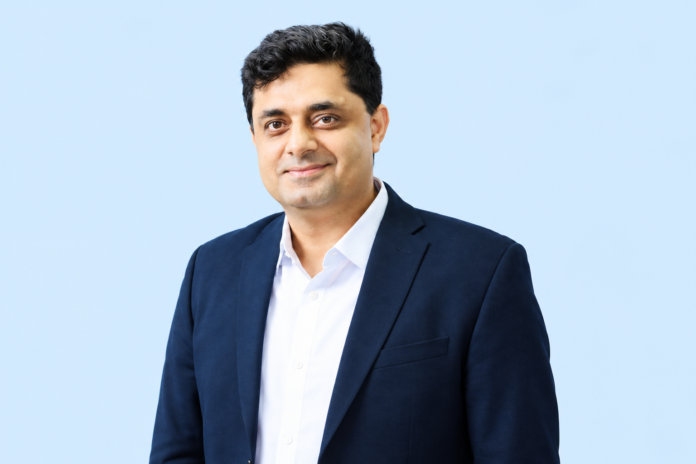
Lords Hotels & Resorts appoints Swaroop George to lead National Sales

0

In this strategic leadership role, Swaroop will oversee the group’s sales division, with a core focus on accelerating revenue growth, optimizing market share, and fortifying corporate partnerships across the brand’s expansive portfolio.

With a distinguished career spanning over a decade, Swaroop brings a wealth of expertise in high-level account management and market penetration. Prior to joining Lords Hotels & Resorts, he held pivotal leadership roles with leading hospitality chains, where he was instrumental in scaling sales operations and elevating brand visibility within competitive markets.

His appointment aligns with Lords Hotels & Resorts’ aggressive growth trajectory as the brand continues to penetrate Tier II and Tier III cities.

Commenting on the appointment, Mr. Pushpendra Bansal, COO of Lords Hotels & Resorts, stated:

“We are delighted to welcome Swaroop George to our leadership team. His profound understanding of the hospitality landscape and his results-oriented approach will be instrumental as we pursue our ambitious vision of reaching 100+ properties. We are confident that his expertise will drive significant value for our stakeholders and guests alike.”

Sharing his vision for the role, Swaroop George commented:

“I am honoured to join the Lords family during such a dynamic phase of growth. My focus will be on driving strategic sales initiatives, strengthening client relationships, and unlocking untapped market opportunities. By fostering a culture of excellence and innovation, I look forward to contributing to the brand’s continued success and achieving new milestones together.”

Runpod hits $120 Mn annual revenue run rate as developer-focused AI hosting scales globally

0
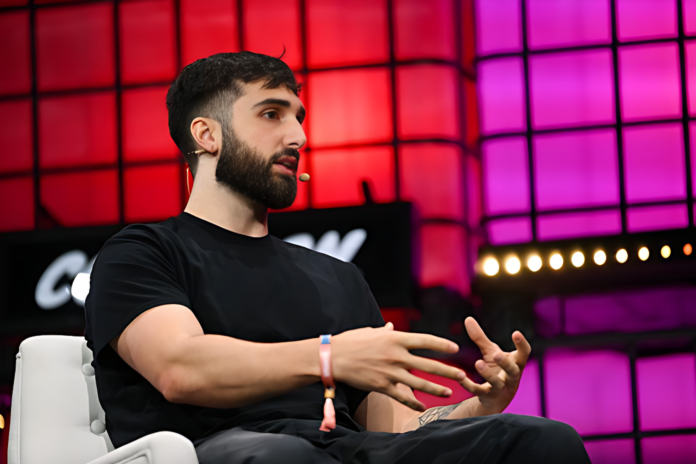
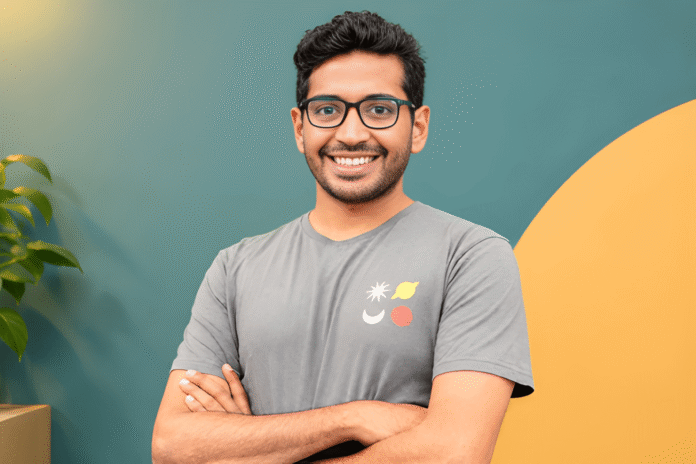
Pardeep Singh & Zhen Lu, founders, Runpod

Runpod, an AI application hosting platform launched four years ago, has reached a $120 million annual revenue run rate, according to founders Zhen Lu and Pardeep Singh.

Overall, their startup journey demonstrates how strong execution combined with favorable timing can drive outsized outcomes.

Notably, the story spans several inflection points: bootstrapping to more than $1 million in revenue; securing a $20 million seed round after VC Radhika Malik, a partner at Dell Technologies Capital, discovered the company through Reddit posts; and attracting a key angel investor, Hugging Face co-founder Julien Chaumond, who reached out after using the product and contacting support. Importantly, the journey began in late 2021 when the two friends, then corporate developers at Comcast, decided their side hobby no longer excited them.

Initially, they had built specialized computer setups in their New Jersey basements to mine Ethereum. Although they generated some cryptocurrency, the returns failed to justify the investment. Moreover, mining faced an impending end following the much-publicized network upgrade known as “The Merge.”

Beyond that, the activity quickly became monotonous. “On top of that, it was ‘boring’ after a couple of months,” Lu said.

However, Lu and Singh had already convinced their spouses to let them spend nearly $50,000 on the hobby between them. Consequently, they knew that maintaining domestic peace required finding a productive use for those GPUs.

At the same time, both developers were working on machine learning projects professionally, so they decided to repurpose their mining rigs into AI servers. This shift occurred well before ChatGPT and even before DALL-E 2. As they rebuilt the systems, they uncovered a major issue. “We were seeing how really god-awful the software stack was for dealing with these GPUs,” Lu said. From a developer’s perspective, they had found a problem worth solving.

As a result, Runpod emerged. The company was born, as Lu put it, “because we felt that the actual experience of developing software on top of GPUs was just hot garbage.”

A few months later, in early 2022, the founders felt ready to share their product. Runpod positions itself as a platform for hosting AI applications, with a strong emphasis on speed, easily configurable hardware—including a serverless option that automates setup—and developer tools such as APIs, command-line interfaces, and integrations.

At that stage, the platform supported only a handful of integrations, including Jupyter notebooks. Next, the founders faced a new challenge: finding beta users. “As first-time founders, we didn’t really know how to market or how to do anything,” Lu recalled. “So I’m like, all right, let’s just post on Reddit.”

Accordingly, they posted in several AI-focused subreddits, offering free access to their AI servers in exchange for feedback. That strategy succeeded. They attracted beta users, converted them into paying customers, and within nine months quit their jobs after reaching $1 million in revenue.

Nevertheless, success created new pressure. “Six months in, business users were like, ‘Hey, I want to actually run real business stuff on your platform. But I cannot run it on servers that are in people’s basements,’” Lu said.

Up to that point, the founders had not considered raising venture capital. Instead, they formed revenue-sharing partnerships with data centers to expand capacity. Still, the approach proved stressful. The team had to stay well ahead of demand. “If we don’t have the GPUs, the market sentiment, the user sentiment changes. Because when they don’t see capacity from you, they go somewhere else,” Singh explained.

Meanwhile, the community around Runpod grew rapidly on Reddit and Discord, especially after the launch of ChatGPT. At the same time, investors began actively scouting for AI infrastructure opportunities.

Eventually, Malik noticed Runpod on Reddit and initiated contact, marking the company’s first VC conversation. At that moment, Lu lacked experience pitching investors. “Radhika was super helpful, even at the first conversation,” he said. She explained how venture capitalists think and committed to staying in touch.

Despite that interest, Lu remained focused on operating a self-sustaining business. “It was almost two years where we really didn’t have any funding,” he said. Consequently, Runpod never introduced a free tier. The platform had to cover its own costs, even if profits remained modest. Unlike other AI cloud services that originated from crypto mining, the founders deliberately avoided taking on debt.

By May 2024, as enthusiasm for AI applications surged, their early decision to build an AI hosting platform for developers began to pay off. The company had grown to 100,000 developers and closed a $20 million seed round co-led by the venture arms of Dell and Intel, with participation from prominent investors such as Nat Friedman and Chaumond.

Since then, the company has not raised additional capital. However, the founders now plan to pursue a new round, confident that their traction supports a strong Series A.

Today, Runpod serves approximately 500,000 developers, ranging from individual users to Fortune 500 enterprise teams spending millions annually, according to the founders.

Furthermore, the company operates cloud infrastructure across 31 global regions and counts customers such as Replit, Cursor, OpenAI, Perplexity, Wix, and Zillow among its users.

Even so, competition remains intense. Developers can choose from hyperscalers like AWS, Microsoft, and Google, as well as specialized providers such as CoreWeave and Core Scientific.

Nevertheless, Lu and Singh view Runpod differently—as a developer-first platform built for the future. They believe coding will not disappear but will evolve, with programmers increasingly acting as creators and operators of AI agents.

Ultimately, Lu summarized their ambition clearly: “Our goal is to be what this next generation of software developers grows up on.”

BWH Hotels signs Best Western Hotel in Almora, marks Kumaon debut

0
Atul Jain, Chief Operating Officer, BWH Hotels South Asia

BWH Hotels has announced the signing of a new Best Western® hotel in Almora, Uttarakhand, thereby marking the brand’s entry into the culturally rich Kumaon region and reinforcing its commitment to sustainable growth across emerging leisure destinations.

Situated at an elevation of approximately 5,400 feet above sea level, Almora offers sweeping Himalayan views and showcases colonial-era heritage, spiritual significance, and enduring traditions in art, literature, and craftsmanship.

Consequently, the destination attracts leisure travellers, pilgrims, and nature enthusiasts who seek meaningful and authentic mountain experiences deeply rooted in local culture. To address this demand, the upcoming Best Western hotel will occupy a strategic location on Mall Road, Almora’s primary commercial and social hub, thus offering guests convenient access to key attractions while minimising travel impact within the town.

Moreover, the hotel will open by the end of 2027 and will feature guestrooms, an all-day dining restaurant, a bar, meeting and banqueting facilities, and a fitness centre. In line with BWH Hotels’ global commitment to responsible hospitality, the property will embed sustainability at its core by prioritising energy-efficient operations, water conservation practices, responsible waste management, and the use of locally sourced materials and services wherever feasible. In addition, the hotel aims to support the local economy through employment generation and active community engagement.

Commenting on the development, Atul Jain, Chief Operating Officer, BWH Hotels South Asia, said, “We are proud to bring the Best Western brand to Almora in a way that respects the destination’s natural beauty and cultural heritage. Sustainable development is integral to our growth strategy, particularly in ecologically sensitive regions like the Himalayas. This hotel will offer guests the comfort and reliability they expect from Best Western, while operating responsibly and contributing positively to the local community.”

Sharing a similar perspective, Inderpreet Singh Sidhu, Owner, said, “Partnering with BWH Hotels allows us to introduce globally recognised hospitality standards to Almora with a strong focus on sustainability. Our vision is to create a hotel that blends modern comfort with environmentally conscious practices and local character, ensuring long-term value for both guests and the destination.”

Kairon Capital nears first close milestone for ₹150-Cr consumer venture fund

0
Deepankur Malhotra, founder, Kairon Capital

Kairon Capital, founded by former Amazon executive Deepankur Malhotra, announced on Friday that it has raised over 60 percent of its target corpus for the first close of its maiden consumer-focused fund. The new fund targets a corpus of ₹150 crore and includes an additional green shoe option of ₹50 crore.

Notably, Kairon Capital has built an investor base comprising founders from India’s consumer ecosystem, along with family offices and strategic corporate capital. The investor roster includes Rohit Chawla of Innovist, Rishubh Satiya of Plix, Saurabh Jain of Livspace, Yogesh Kabra of XYXX, and Emami Limited, among others.

Commenting on the composition of the limited partner base, Malhotra said, “This is a very intentional LP base. These are people who have built, scaled, or enabled consumer businesses firsthand, along with family offices and strategic corporate capital that deeply understand brands, distribution, and scale. Their participation reflects alignment with how we want to partner with founders.”

Furthermore, the fund plans to back approximately 14–15 companies, investing from seed to early Series A stages, with cheque sizes ranging between ₹2 crore and ₹14 crore. In addition, Kairon Capital will allocate a portion of the fund toward follow-on investments in high-performing portfolio companies.

Elaborating on the firm’s investment focus, Malhotra said, “The segment we’re focused on sits between early experimentation and scaled institutional capital.” He added, “There are many consumer businesses that have figured out what works but are still underserved when it comes to thoughtful, founder-aligned capital at the right stage.”

Meanwhile, Kairon Capital has already initiated active capital deployment and is currently evaluating opportunities across multiple consumer categories. Consequently, the firm expects to announce its first set of investments in the coming months.

Kairon Capital’s strong first close underscores growing investor confidence in a focused, founder-aligned approach to building consumer businesses in India. By backing companies at the critical intersection between early validation and institutional scale, and by drawing on an LP base with deep operating and brand-building expertise, the fund positions itself to deliver both strategic value and long-term returns.

Seclude Hotels debuts Seclude Hampi 1800, bringing royal heritage hospitality to Hampi

0

Seclude Hotels has announced the launch of Seclude Hampi 1800, a six-bedroom royal heritage residence in Sandur that offers an intimate and immersive way to experience one of India’s most historically significant regions.

Located near the UNESCO World Heritage Site of Hampi, the property marks Seclude Hotels’ entry into a destination celebrated worldwide for its monuments yet often underserved when it comes to authentic and meaningful accommodation options.

Notably, Seclude Hampi 1800 served as one of the residences of the Royal family of Sandur and has undergone a careful restoration with a strong focus on preserving its original character. In addition, the residence continues to house original carved artifacts, paintings, and brass pieces belonging to the royal family. These elements have been thoughtfully conserved and seamlessly integrated into the restored spaces, thereby ensuring that the home’s history remains visible throughout the property.

Moreover, set amid palm-lined gardens and designed in the region’s traditional architectural style, the residence provides a serene retreat from conventional hotel environments while remaining conveniently close to Hampi’s temples, bazaars, and historic ruins. As a result, guests can enjoy both tranquillity and easy access to the cultural heart of the region.

Furthermore, each of the six rooms at Seclude Hampi 1800 carries an individual name inspired by local history and the area’s cultural vocabulary. For instance, the Bazaar Yellow room draws inspiration from the historic Hampi Bazaar, once the centre of daily life and trade, while the Lotus Pink room takes its name from the sacred lotus associated with Lord Vishnu, reflecting Hampi’s deep spiritual legacy.

Commenting on the launch, Ramit Sethi, Founder of Seclude Hotels, said, “We chose Sandur because it reflects what Seclude stands for—offbeat destinations with a strong sense of story. Being so close to the rich, timeless heritage of Hampi gives this home a soul that you simply cannot recreate. It’s a place with character, shaped by its own story.”

Adding to this, Rohit Sethi, Founder of Seclude Hotels, said, “This home holds deep historical and emotional value. Our vision was not to convert it into a hotel but to allow guests to experience it as a living heritage space—where stories, architecture, and hospitality come together naturally.”

IHCL acquires controlling stake in Brij Hotels, strengthens leisure portfolio

0

Indian Hotels Company (IHCL) has signed definitive agreements to acquire a 51 percent stake in Brij Hospitality, the owning company of the boutique experiential leisure brand ‘Brij.’ Through this acquisition, IHCL will secure ownership of the Brij brand and, in collaboration with the founding promoters, aims to scale and strengthen the boutique leisure segment across India.

Speaking on the occasion, Puneet Chhatwal, Managing Director and Chief Executive Officer, IHCL, said, “India’s hospitality sector is witnessing sustained demand growth led by rising disposable income and discretionary spending with a growing preference for experiential leisure. We are delighted to extend our partnership with the Clarks Group by furthering the marketing and distribution alliance to a majority shareholding in Brij Hotels, one of the country’s early entrants in the boutique leisure segment.” He added, “With this acquisition, IHCL, through its diverse brandscape, consolidates its position as a frontrunner in India’s leisure tourism with market leadership in key cultural, spiritual, and wildlife destinations.”

Furthermore, Brij’s presence in offbeat destinations adds meaningful diversity to IHCL’s portfolio, with properties across Jaipur, Varanasi, Ranthambore, the northern hills, the Northeast region, and Goa, among others. Consequently, this transaction expands IHCL’s overall portfolio to 610 hotels, with 253 properties in the pipeline, keeping the company firmly on track to achieve its stated guidance of 700 hotels under the Accelerate 2030 strategy.

Meanwhile, Brij Hotels operates a curated collection of boutique luxury hotels and resorts across India, distinguished by immersive and locally inspired experiences. Currently, the brand has a presence in destinations such as Varanasi, Jawai, Dalhousie, and Jaipur, among others. Notably, the heritage BrijRama Palace, the group’s first hotel, stands as an architectural landmark in Varanasi and reflects the city’s rich cultural tapestry.

Commenting on the partnership, Udit Kumar and Anant Apurv Kumar, Co-founders of Brij Hospitality, said in a joint statement, “We are excited to partner with IHCL to shape the future of boutique hospitality. Brij Hotels, one of India’s leading boutique hotel chain, is recognised for creating immersive, locally rooted experiences that celebrate the country’s cultural diversity. IHCL’s enduring legacy of presenting Indian hospitality to the world aligns deeply with our purpose at Brij. Together, we will bring IHCL’s tradition of excellence with Brij’s experiential, design-led approach to craft meaningful journeys and build the first truly global Indian boutique hospitality brand.”

At present, Brij Hotels operates a portfolio of 22 hotels and has 11 additional properties in the pipeline, while continuing to offer luxury stays defined by personalised service and distinctive settings.

iThink Logistics bets on AI to redefine scalable e-commerce fulfilment in India

0

iThink Logistics is emerging as a leading force in the next phase of intelligent fulfilment, driven by AI-led innovation, sustained profitability, and long-term growth. In contrast to a market long characterised by well-funded platforms prioritising rapid volume expansion, iThink Logistics has charted a differentiated path as a bootstrapped, profitable, and homegrown logistics technology company that has scaled steadily without external capital.

Today, the company processes millions of shipments annually for D2C brands, MSMEs, and enterprise sellers, while reporting strong double-digit growth over the past year, fuelled by repeat usage and high merchant retention.

From the outset, iThink Logistics set out to address structural inefficiencies in last-mile delivery and fulfilment. Accordingly, the company prioritised sustainable unit economics over discount-led expansion. As a result, it has consistently reinvested profits into in-house technology, automation, and product innovation, enabling it to scale efficiently while preserving service quality and operational control.

More recently, the company strengthened its technology stack by launching a proprietary AI-powered logistics intelligence platform that enables merchants to make real-time, data-backed decisions across shipping, returns, and customer experience. By analysing courier performance, optimising routing, and reducing return-to-origin rates, the platform actively helps sellers improve margins while maintaining delivery reliability.

Commenting on the company’s long-term approach, Zaiba Sarang, Co-founder, iThink Logistics, said, “We believe the future of e-commerce fulfilment lies in intelligence, not just infrastructure. Our focus has been on building AI-led capabilities that help merchants take better decisions, improve efficiency, and create long-term value, while remaining profitable and disciplined in how we scale.”

Moreover, this emphasis on applied AI mirrors a broader shift across the logistics sector, where data-driven decision-making is increasingly central to profitability and predictability. By embedding intelligence directly into fulfilment workflows, iThink Logistics positions itself as a strategic technology partner rather than a purely transactional service provider.

At the same time, as a homegrown platform built for India’s diverse logistics landscape, iThink Logistics has expanded its footprint across Tier II and Tier III markets, where delivery predictability continues to pose significant challenges. Looking ahead, the company plans to deepen investments in AI-led capabilities, expand carrier partnerships, and enhance its analytics offerings, while remaining firmly committed to its bootstrapped and profitable growth model.

Ultimately, as India’s e-commerce market matures, iThink Logistics’ trajectory signals a clear transition in the sector—from capital-fuelled scale to intelligence-led, sustainable fulfilment—positioning the company at the forefront of the next phase of logistics innovation.

GrowthPal raises $2.6M in funding led by Ideaspring Capital to accelerate its AI-powered M&A copilot for deal sourcing and execution

0
Maneesh Bhandari, Shalu Mitruka, and Amaresh Shirsat, co-founders, GrowthPal

National, January 15, 2026: GrowthPal, co-founded by Maneesh Bhandari, Shalu Mitruka, and Amaresh Shirsat, today announced a $2.6 million funding round to accelerate its AI-powered M&A copilot for deal sourcing and execution. The round was led by Ideaspring Capital with participation from prominent angel investors globally. The new capital will support product development and expand GrowthPal’s presence across international markets as demand grows for faster, more programmatic approaches to inorganic growth.

The announcement comes as M&A teams face increasing pressure to do more with less. For most companies, inorganic growth depends on timing, context, and access. Yet M&A deal origination from mid-market and early-stage companies has changed little in decades, still driven by banker networks, static databases, and fragmented research workflows. Buyers often see only what is already on the market, while high-quality, off-market opportunities remain hidden.

Corporate development teams are leaner, timelines are compressed, and competition for quality assets is intensifying. While platforms like PitchBook, D&B, Datasite, and Tracxn have made company data more accessible, they largely stop at aggregation. GrowthPal addresses a different need by applying AI-driven reasoning to help teams identify which companies actually matter, based on strategic intent, sector context, and readiness to transact.

“M&A sourcing is where most time and effort is wasted, especially for smaller and mid-market deals,” said Maneesh Bhandari, co-founder and CEO of GrowthPal. “Teams spend weeks researching, filtering, and chasing opportunities that never go anywhere. We built GrowthPal to help buyers focus only on high-intent, high-fit targets and move from mandate to meaningful conversations far faster.”

GrowthPal’s platform acts as an intelligent M&A copilot. When a buyer defines a growth objective—like acquiring a specific capability or entering a new geography—the system translates that goal into a structured acquisition thesis. Its AI agents then scan an enriched database of more than four million technology companies using signals from public filings, web activity, hiring trends, funding history, and other indicators. The result is a short list of precision-fit, often off-market targets that align closely with the buyer’s mandate, rather than broad lists of loosely relevant companies.

The company was founded to address a structural gap in the market. While more than a million meaningful startups exist globally, fewer than one percent scale successfully, often due to lack of timely exits or strategic partnerships. At the same time, many acquirers struggle to find the right targets efficiently, particularly for transactions under $70 million that fall below the focus of traditional investment banks. GrowthPal was created to connect these two sides by making deal sourcing proactive, discreet, and data-driven.

GrowthPal has already supported more than 42 completed M&A transactions and facilitated over 210 LOI-stage conversations across North America, Europe, Asia, and Latin America. Clients include large and mid-market enterprises, fast-growing startups, private equity-backed firms, and corporate development teams across sectors such as IT services, SaaS, fintech, and vertical software. In one case, a single client closed seven acquisitions within 18 months using the platform.

The broader M&A landscape is increasingly shaped by data abundance and decision scarcity. Teams have more information than ever, yet struggle to turn it into conviction. As acquisitions become a core growth lever for companies of all sizes, the ability to reason across signals, context, and intent is becoming a competitive advantage.

“GrowthPal is solving one of the most under-optimised parts of the M&A lifecycle,” said Naganand Doraswamy, Managing Partner at Ideaspring Capital. “By focusing on qualified deal discovery and using AI to compress timelines, the team is enabling a more systematic approach to inorganic growth that traditional tools cannot offer.”

Looking ahead, GrowthPal plans to extend its intelligence deeper into the transaction lifecycle, supporting valuation reasoning, deal structuring, and preparation for negotiations. The company’s long-term vision is to become the system of intelligence that helps teams make better M&A decisions earlier, with greater confidence and clarity, starting from discovery and extending through execution.

About GrowthPal

GrowthPal’s AI-powered M&A copilot helps users identify off-market targets, validate fit, and accelerate deal execution, turning strategy into action within days, not weeks.

Its data- and intelligence-driven digital investment banking platform helps corporates acquire small- to mid-sized targets globally to add to their revenues, markets, geographies, customers, products, and teams. We specialize in add-ons, tuck-ins, and bolt-ons and cover global markets, including the US, LATAM, the UK, Europe, and Asia, and specialize in business services and software. The experienced team has helped 100+ clients and closed 40+ deals.

The platform combines data, machine learning algorithms, and human expertise to deliver the most relevant opportunities for any given mandate. The team uses sophisticated matching and scoring algorithms, then our in-house banking team reaches out, gauges interest, and facilitates introductions. For more information, please visit https://www.growthpal.com/

Google launches market access program to help Indian AI startups expand globally

0

Google on Thursday introduced its Market Access Program, a new initiative aimed at helping Indian startups overcome entry barriers to global markets, while simultaneously announcing new additions to its Gemma open model family.

Notably, the announcement follows Google’s record USD 15 billion investment unveiled last year to develop a large-scale AI infrastructure hub in Andhra Pradesh. According to the company, these latest initiatives reinforce its sustained commitment to strengthening India’s physical AI infrastructure, including the Global AI Hub in Visakhapatnam. The facility delivers a 1-gigawatt foundational capacity powered by green energy and Google’s advanced AI chips, and it ensures that Indian startups gain access to high-performance computing resources at scale.

Through the Market Access Program, Google aims to help Indian startups refine their go-to-market strategies and significantly shorten the path from local pilots to global deployment.  Highlighting one such addition, the company said, “MedGemma 1.5 addresses the growing demand for advanced healthcare AI, enabling startups to work with high-dimensional medical imaging at scale.”

In parallel, Google introduced FunctionGemma, a lightweight model optimised for function calling that supports the next generation of on-device, agent-based systems, thereby enabling AI applications to take secure and reliable action locally. Google stated that together these models expand the core building blocks available to developers who are creating real-world, deployable AI solutions. At the same time, the company unveiled new members of its Gemma open model family and specifically tuned them to help startups build population-scale, production-ready AI applications.

With regard to the Market Access Program, Google clarified that the initiative specifically targets AI-first startups that have progressed beyond the prototype stage and are ready to scale responsibly. Moreover, the program delivers transformative outcomes for founders by enabling enterprise readiness through a specialised curriculum that covers global enterprise selling, complex pricing models, and international buyer psychology.

In addition, the initiative offers access to Google’s global network through direct and facilitated introductions to CIOs and CXOs worldwide. Furthermore, the program includes global immersion experiences in collaboration with ecosystem partners such as TiE Silicon Valley and Alteus, which are designed to help founders build in-person relationships across key buyer markets and international technology hubs. Google also confirmed that “Applications for the Google Market Access Program are now open for eligible startups.”

At the launch event, Preeti Lobana, Country Manager for India at Google, said that AI is rapidly moving beyond research laboratories into classrooms, healthcare settings, agriculture, factories, and enterprises of every scale.“AI startups are no longer experimenting at the edges; they are turning their capability into products that people use, trust, and pay for. This is the point at which models turn into businesses,” she said.

Through the launch of the Market Access Program and the expansion of its Gemma open model family, Google is positioning India as a critical hub for globally scalable AI innovation. By combining infrastructure investment, advanced models, and structured market access support, the company aims to help Indian AI startups transition from local success stories into globally competitive enterprises.

Radisson Hotel Group expands India presence with Radisson RED Indore opening

0

Radisson Hotel Group has strengthened its footprint in India by opening Radisson RED Indore, thereby continuing its expansion across high-growth Tier-II cities. The hotel targets both business and leisure travellers and delivers facilities aligned with modern hospitality expectations.

Strategically, the property sits on MR-10 Road and offers seamless access to Indore’s key business districts, retail hubs, and prominent landmarks such as Rajwada Palace and Khajrana Temple. The hotel features 115 rooms and suites, all equipped with contemporary amenities and advanced in-room technology to enhance guest comfort.

In terms of dining, the property houses The Red Table, an all-day restaurant that serves a curated mix of global favourites and local specialties with a creative twist, while Off The Clock functions as a vibrant bar and social hub for guests. In addition, the hotel offers RED Fit, a fully equipped fitness centre; RED Splash, a rooftop infinity pool overlooking the city skyline; and RED Conclave, a dedicated boardroom designed for corporate meetings. Furthermore, the hotel provides a combination of indoor and outdoor event venues, making it suitable for weddings, celebrations, parties, and a wide range of social gatherings.

Commenting on the launch, Nikhil Sharma, Managing Director and COO, South Asia, Radisson Hotel Group, said, “We are delighted to introduce Radisson RED to Indore, furthering our vision of building a strong presence in India’s high-potential Tier II and III markets. Indore represents the new face of urban India, which is energetic, aspirational, and deeply connected, and Radisson RED’s bold, lifestyle-driven personality fits seamlessly into this environment. Our strategy continues to focus on creating differentiated experiences that resonate with modern travellers who seek more than just accommodation; they seek spaces that inspire interaction, creativity, and community. With this launch, we are reinforcing Radisson Hotel Group’s commitment to offering dynamic, design-led hospitality across India’s evolving cityscapes.”

Highlighting the partnership, Sunil Satija, Managing Director, Bestech India Pvt Ltd, added, “Partnering with Radisson Hotel Group is a significant milestone for us. Our association spans over 20 years, and we are proud to strengthen this relationship with our second hotel in partnership with RHG. We are confident that Radisson RED Indore will become a destination for the city’s new-age travellers and social connectors.”

Meanwhile, Indore continues to record strong economic momentum, which is driving demand for hospitality offerings. Against this backdrop, Radisson Hotel Group currently operates more than 200 hotels across India, with over half of its portfolio located in Tier-II and Tier-III markets, further underlining its long-term commitment to emerging urban centres.