




Cashew Research operates in the $90 billion market research industry and aims to transform it using AI. The company identifies how brands can present themselves effectively to potential customers, yet traditional market insight remains costly and slow. Therefore, Cashew Research intends to change this by applying AI to the entire workflow.
Based in Calgary, Alberta, Cashew develops AI-driven market research plans and surveys for brands depending on the insights they need—such as measuring brand recognition among a defined group or determining how a marketing tagline resonates with consumers. Furthermore, the platform distributes surveys to real respondents and uses AI to summarize and interpret the results.
Cashew Research earned recognition as one of 200 startups selected for a major global startup competition and won the Enterprise Stage pitch track in 2025.
“You can use an LLM to try to do deep research and get answers to your questions, or you could use a firm that’s going to be really expensive,” Addy Graves, co-founder and CEO of Cashew, said while describing the current market research landscape. “Now there’s Cashew that exists in the middle. It creates custom, fresh data to answer your question instead of you just using an LLM that’s surfacing the same recycled pool of data that everybody’s finding on the internet.”
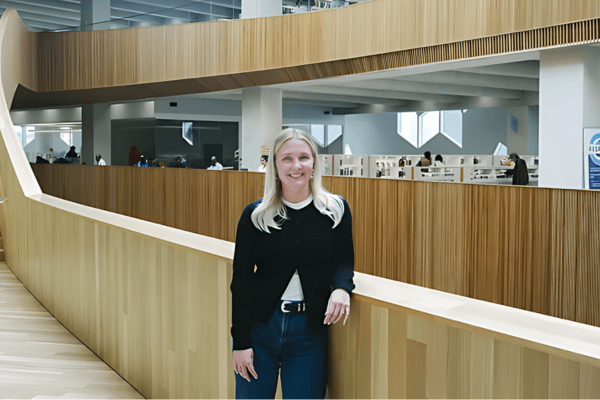
Graves brings more than a decade of market research experience, and she developed the idea for Cashew after facing a recurring challenge: Clients repeatedly asked her to deliver full research projects—complete with real human data—within just a few days.
For years, Graves considered that timeline impossible to meet while preserving research quality because the supporting technology simply did not exist. “That was definitely the aha moment,” Graves said. “And it wasn’t until the onset of AI that we were actually able to automate these processes that we use as researchers, best practices, these data science-backed methodologies, as well as the formatting of reports that we know that everybody wants.” Moreover, she noted that automation reduces cost, making Cashew accessible to small and medium-size brands that previously could not afford traditional market research services.
Graves founded Cashew in 2023 with Rose Wong, chief operating officer, initially focusing on consumer packaged goods, particularly food and beverage.
She believes Cashew will differentiate itself within the crowded AI marketing tools category because the platform does not rely on full automation. Cashew delivers fresh human data for each project, and that approach demands genuine market research expertise, Graves said.
Cashew’s competitive advantage may strengthen further as the company grows. The team anonymizes all collected real-world data and stores it in a proprietary database, which can add deeper insights to future research work.
The company has raised C$1.5 million in pre-seed funding and now prepares to launch a seed round in early 2026, targeting up to $5 million. Cashew will invest that capital in advancing its technology platform.
Heading into next year, Graves said the company will prioritize strengthening its U.S. presence and expanding its B2B customer base. “The people who are already buying research—that’s already a massive category—but that doesn’t even include all the people that could be buying research but just can’t afford it or can’t do it right now because they don’t have the timelines,” Graves said. “We’re actually creating this new category for marketers to gain access to answers to these questions that they’ve had.”