


Wednesday, July 1, 2026
Home Blog Page 254

Elections 2024 – Real Estate looks forward to policy continuity

0

The early trends and the exit polls for the recently concluded elections for the 18th Lok Sabha elections anticipated the continuity of ongoing policies by the incumbent government. The real estate sector also seeks an assurance of predictability for this reason.

The current government has, over the last two terms, made significant strides on the policy front and in the development of the nation. The economy grew with major investments in developing the country. The real estate industry always looks towards a stable government that will ensure no interruptions in the ongoing schemes and investments into infrastructure development. This, above everything else, unleashes the real estate potential of current and developing geographies.

The interim budget indicated that with the government’s policies unchanged, the mid-segment housing sector would witness targeted action and policy alignment that would lead to further growth of India’s housing sector. The mid-end (homes priced INR 40 lakhs to INR 80 lakhs) and high-end (homes priced INR 80 lakhs to INR 1.5 Crore) segments together recorded sales of 76,555 units in Q1 2024, which accounts for a share of nearly 59% of the total. The cumulative share supply for these segments in Q1 2019 was 47%.

With government continuity, we can look forward to a major boost for the affordable housing sector, this being a flagship scheme that had not fared well over the last term. Affordable housing (homes priced under INR 40 lakhs) sales in Q1 2024 recorded 26,545 units, which is just 20% of the total sales. Concurrently, supply in this critical segment had also dropped from 44% in Q1 2019 to 18% in Q1 2024.

Industrial and logistics parks, along with warehousing, will also look forward to further support for growth, with a massive potential for increased demand to be met in this sector thanks to an increased focus on manufacturing and improved connectivity.

Tourism and hospitality had also emerged as a bigger focus area for the government, as strongly indicated by the preliminary announcements in the interim budget earlier this year. This industry, too, looks forward to these plans being implemented as planned.

A stable government with a strong focus on development and increased expenditure to build assets reinforces the confidence of global investors who are hoping for a wider spread of options in India. Simultaneously, a strong opposition is always supportive of a vibrant democracy.
Infosys campus hires drop 76% to less than 12,000 in FY24 

0

Infosys hired only 11,900 campus recruits in FY24, which is a 76% drop compared to the 50,000 freshers hired the previous year.

Engineering graduates are facing a tough job market as major IT companies predict slow growth for this fiscal year. Infosys, for the first time in over 20 years, saw a significant headcount drop, reducing by 25,994 employees during FY24. By the end of this March, the combined headcount of TCS, Infosys, and Wipro decreased by nearly 64,000.

“We recruited nearly 11,900 college graduates in the year and ended the period with over 317,000 employees,” Infosys CEO Salil Parekh wrote in the company’s annual report. The IT firm has already skipped campus placements for four quarters in a row.

In his letter to shareholders, Infosys chairman Nandan Nilekani mentioned that the initial panic about AI doomerism and the risk of human extinction due to advances like artificial general intelligence (AGI) has calmed down.

“People have accepted that, like any other general-purpose technology, be it electricity, nuclear energy, the internet, or even a discovery like fire, GenAI has enormous potential for good when explored and advanced within the guardrails of responsibility,” he said. Even as AI has become mainstream, Nilekani said enterprise AI will be markedly different from consumer AI. “Besides, many of the doomsday prophets pleading for extensive AI regulation have revealed themselves to be just protectionists who want to limit the fruits of GenAI to a few companies and investors,” he added. Nilekani is seeking reappointment as director.

Infosys CEO Salil Parekh earned Rs 66.3 crore in compensation for FY24, marking a 17.3% increase from the previous year. His remuneration included Rs 39 crore from RSUs exercised during FY24. In FY23, Parekh received Rs 56 crore as compensation. In comparison, TCS CEO K Krithivasan earned a more modest Rs 25.3 crore, making him one of the lowest-paid CEOs in the Indian IT sector. Wipro’s new CEO Srini Pallia will receive Rs 50 crore in compensation. Meanwhile, the median employee remuneration was Rs 9.7 lakh in FY24, up from Rs 9 lakh in FY23.

Climate tech firm LogicLadder secures $2.5M in funding 

0
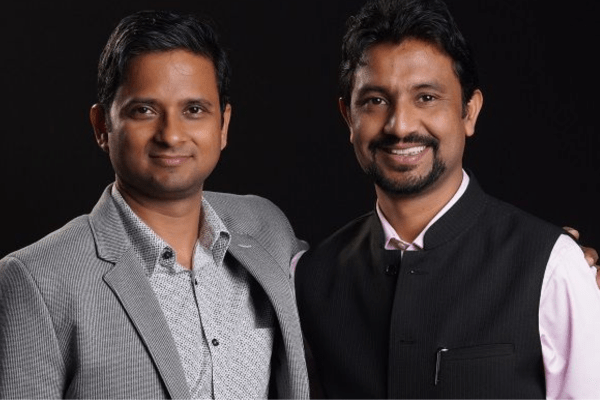
LogicLadder founders (L-R) Atindra Chandel and Mayank Chauhan

LogicLadder, a provider of sustainability and climate management solutions, has raised $2.5 million. Big Capital led this funding round from Singapore and Rainmatter, a venture fund backed by Zerodha.

According to a statement, the company plans to use the funds to expand its presence in South Asia and North America.

“By the next financial year, we are expecting our global revenue to contribute 40% and India revenue 60%, and then moving forward, we expect the global revenue to surpass India revenue,” cofounder and chief executive Mayank Chauhan said.  

“A significant portion of the new funding will be dedicated to new product augmentations and capacity expansion, ensuring our solutions remain in sync with the ever-evolving landscape of environmental compliances,” he said.  

Chauhan and Atindra Chandel founded LogicLadder in 2011. The Gurugram-based firm helps businesses worldwide measure, report, and reduce their environmental impact.

Over 950 companies use its software platform, The Sustainability Cloud. This includes big names like Reliance, Adani Power, BHEL, Nestle, and Maruti Suzuki. The platform helps these companies minimize environmental impact, improve operational efficiency, and meet sustainability goals.

“By continuously innovating and expanding our product suite, we aim to provide our clients worldwide with the most advanced tools and resources to address their sustainability challenges effectively and confidently across regions and industries,” Chauhan added.

Commenting on the investment, Dinesh Pai, head of investments, Rainmatter, said, “Measuring and tracking climate data is a complex and nuanced act. Most organizations depend on independent third-party software services to help them through this journey. LogicLadder offers a key sustainability solution for enterprises.”

“Climate change is now one of the biggest challenges facing us. Its scale and impact call for urgent innovative solutions to mitigate its progress and drive sustainable growth,” said Preetinder Panjarath, chief financial officer at Big Capital.

PV Sindhu invests in biofortified staples brand Better Nutrition

0

PV Sindhu, the Indian badminton player, has invested an unknown amount in Better Nutrition. This brand from Greenday focuses on biofortified staples. Additionally, it provides agri-input services like biofortified seeds, fertilizers, and agronomic practices.

Biofortification enriches crops with micronutrients to produce a premium yield.

Greenday aims to boost the nutritional value of staple crops. This way, consumers can get essential vitamins and minerals through their everyday meals, said Prateek Rastogi, the founder and an IIM-Ahmedabad alumnus.

Founded in 2017, Greenday collaborates with farmers. They educate and incentivize them to grow nutrient-dense crop varieties. These biofortified crops are rich in micronutrients like iron, zinc, pro-vitamin A, calcium, and protein, according to the company.

“With PV Sindhu on board, we strive to raise awareness about the importance of nutrition-dense staples and make them affordable and accessible to everyone across the country, while also improving the livelihoods of our farmers and their families who are an intrinsic part of our supply chain,” Rastogi said. 

Sindhu’s investment is part of a Rs 4 crore round, which also includes contributions from other angel investors.

The company plans to raise another Rs 4 crore. “Post that, we will look at raising a venture capital round in the range of $3 million that will let us expand further,” Rastogi said. 

In 2022, it raised Rs 3.2 crore from investors led by IIMA Ventures, previously known as CIIE.CO.

The startup runs around 75 agri-input stores and procurement centers nationwide under its Greenday “kisan ki dukan” brand.

Better Nutrition offers a range of products including biofortified wheat, rice, pearl millet, finger millet, and maize. Currently, the company partners with 15,000 farmers and plans to expand its operations.

Better Nutrition’s products are currently sold exclusively online. They are priced about 160% higher than generic alternatives. Over time, the company aims to reduce this premium to 40%, according to Rastogi.

“With our revenue already surpassing Rs 10 crore, we project the nutrition-dense farming and staples market to grow to about Rs 2,000 crore by 2030, and Greenday to be at the forefront of this growth,” Rastogi added.

“I deeply appreciate the dedication and innovation that Prateek and his team have put into Better Nutrition products, the positive impact they have on our health… to educate and support the farmers who are an integral part of this initiative,” PV Sindhu said.

Trend Micro taps Nvidia software tools for AI cybersecurity offering 

0

Trend Micro announced on Sunday that it is collaborating with Nvidia to create new cybersecurity tools using artificial intelligence. These tools aim to protect data centers where AI work occurs.

Trend Micro plans to showcase these tools at the Computex conference in Taiwan. Designed to run on Nvidia’s chips, the tools can detect intruders and ensure that only authorized users can access the data.

Many businesses train AI systems to help employees with tasks like answering HR questions or assisting customer service agents. However, gathering data from across the business into one place makes these systems attractive targets for hackers.

“They work their way into the enterprise and they find this massive honeypot of information,” Trend Micro Chief Operating Officer Kevin Simzer told Reuters. 

In addition to detecting intruders, Trend Micro will also focus on ensuring that data fed into AI systems remains secure from hackers. For most modern chatbots, users interact by asking questions, which often contain sensitive information, such as undisclosed corporate secrets or private customer data.

“They’re often narrowing the scope of (a chatbot’s responses) by giving some very, very specific information,” Simzer said of the use of AI prompts. “That’s what we’re going to be looking for and making sure that we see it first and we can make sure that it doesn’t go any further” than the people and applications authorized to see it, Simzer said. 

Mumbai’s first sip and vault concept, QEY launches in Lower Parel 

0

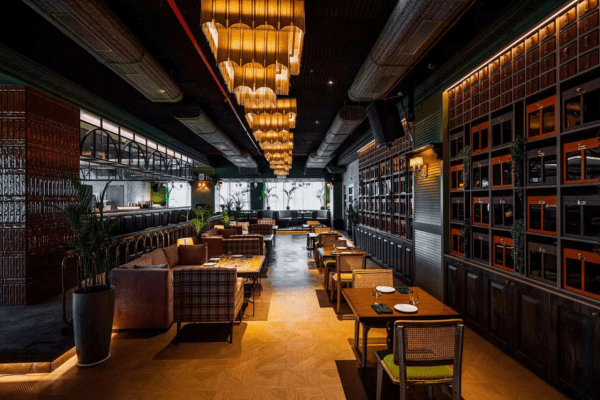
Located in Kamala Mills, Lower Parel, QEY offers more than just dining; it introduces the sip and vault concept to the city. It provides exclusive memberships, granting access to a world of sophistication. The QEY Membership Card allows patrons to store treasured collections in a personalized vault.

Divyesh Thakkar, Kaushik Mehta, and Vijay Aagarwal created QEY, seeking a space where people can belong and unwind in a busy city. With this venture, the founders of Amicis Hospitality Pvt Ltd aim to redefine premium dining and create a haven where each visit feels personalized. The restaurant’s unique loyalty memberships and exclusive access make it a compelling choice.

Umesh Desai and Associates designed the interiors, blending sophistication and contemporary aesthetics to create a stylish and inviting atmosphere for patrons to relax.

Talking about the space, Umesh Desai says, “At QEY, our vision was to craft an environment that embodies both modern sophistication and timeless elegance. By carefully selecting every detail, we have created a seamless blend of contemporary design with a touch of opulence. We aimed to create a welcoming space where patrons can unwind and indulge in an extraordinary journey of flavours and be transported into a different realm of luxury as soon as they set foot inside.”   

“At QEY, we transcend the ordinary to create a haven where culinary artistry meets personalised luxury. It’s not just a restaurant; it’s your corner of indulgence. With our exclusive Loyalty Card and Memberships, we invite you to not just dine but to become a part of an elite community, unlocking a realm of sophistication, extraordinary perks, and a culinary journey that lingers in your memories long after you leave,” adds owner and co-founder Divyesh Thakkar.

QEY aims to redefine the dining experience with its European cuisine, blending traditional recipes with modern twists.

“We’ve crafted a menu that celebrates the rich and diverse flavours of Europe while infusing a modern, global twist. Our specially curated European menu allows us to take guests on a culinary journey that explores beloved traditional dishes and reimagines them with fresh, innovative flair. Every plate is a symphony of taste and presentation, designed to leave a lasting impression,” says Mayank Chitalia, executive chef at QEY.

Insight Cosmetics, India’s safest toxin-free brand, expands its footprints into the skincare market

0

Mumbai, 30th May 2024 || Insight Cosmetics, a renowned cosmetics company, is now set to launch into the skincare segment with its unique range of 11 serums. The brand is launching this range of products after four years of meticulous research and development. These serums are 100% vegan, toxin-free, dermatologically tested, and designed to show effective results over 14 days. This exclusive new range is available in online and offline stores.

The new range of unique serums, curated for Indian skin types, aims to bridge the gap by providing high-quality, safe, and effective skincare products. These serums brighten skin, reduce dark circles, and eliminate spots and dullness, ensuring accessible, sustainable skincare. Featuring ultra-hydrating, vitamin C, and anti-aging formulas, they provide a radiant glow, youthful skin, and acne prevention. With #SkinScienceRedefined, the brand focuses on hydration, brightening, moisturizing, and correcting skin concerns, all at budget-friendly prices. 

Mihir Jain, the Sales & Marketing Director of Insight Cosmetics, says, “We are excited to take the next step of our journey by expanding into the skincare market. Through the new line of high-quality, toxin-free serums designed for Indian skin types, we aim to bridge the gap between affordability and quality.”

The brand has already revolutionized itself in cosmetics with over 350 SKUs, including nail polish, lipsticks, mascaras, eyeliners, eyeshadows, foundations, concealers, lip gloss and makeup brushes. With the brand launching itself in the skincare segment, Insight Cosmetics is set to reinforce its position as a leader in the clean beauty movement. 

About Insight Cosmetics

Established in 2012, Insight Cosmetics has become a revolutionary brand with over 350 SKUs, including nail polish, lipstick, mascara, eyeliners, eyeshadows, foundations, concealers, lip gloss and makeup brushes. The brand believes in investing in the next generation of cosmetics.

Agritech startup Fyllo bags $4M in funding 

0
Fyllo founders Sudhanshu Rai and Sumit Sheoran

Agri firm Fyllo announced it raised $4 million in a new funding round led by IndiaQuotient and SIDBI Ventures.

Existing investors Triveni Trusts, IAN, and KIAORA also participated. Fyllo plans to use the funds to expand into new regions and crops and develop more precision agriculture products.

“We are seeing a surge in the adoption of precision agriculture. Farmers are using mobile phones to make 90% of their decisions. With this funding, we would like to work even more closely with farmers, build new and better products, and expand our reach to farmers and other geographies,” said Sudhanshu Rai, cofounder of Fyllo. 

India’s agriculture sector supports about 58% of the population and contributes 14% of the GDP. Most technology-led players in Indian agriculture operate in the business-to-business (B2B) space. Still, some business-to-consumer (B2C) outcomes cover the entire chain from farm to fork and generate significant profits.

B2B players like Absolute Foods, Arya.Ag, Dehaat, Farmart, Captain Fresh, Vegrow, Bighaat, Agnext, and Bijak, and B2C players like Country Delight and Licious, are creating value in their respective niches in agritech, according to an Avendus report.

Fyllo’s precision agriculture platform uses AI-based prediction models to suggest efficient agri processes to farmers, ensuring consistent farm produce and quality.

Over 8,000 farmers use Fyllo’s services on more than 50,000 acres, achieving 25% more yield, 80% export-quality produce, and 30% more income.

“The Indian agricultural sector has long grappled with the uncertainties of erratic weather and crop wastage, causing farmers to fall short of meeting global benchmarks for productivity, efficiency, and output quality. However, a new generation of farmers is emerging, equipped with technological know-how and a willingness to adopt innovative practices to drive improvement,” said Sahil Makkar, vice-president at IndiaQuotient. 

Farmers using the Fyllo platform have also cut chemical usage by 35% and reduced irrigation needs by about 50%, leading to significant environmental benefits.

59% Indians opting vocal approach for budgeting summer getaways; seeking best deals: Skyscanner

0

Skyscanner, a global travel marketplace, released new research findings yesterday. The study shows that budget-conscious travelers in India eagerly prepare for summer adventures and search for great value deals.

With #loudbudgeting gaining popularity worldwide, 59% of Indian travelers are now more vocal about their budgeting plans for summer getaways. 

According to Skyscanner’s research, conducted with OnePoll, over 78% of Indian travelers plan to travel this summer, but 39% have not booked yet. The main reasons for this delay are indecision about dates (51%) and destinations (50%). Indian travelers are focused on finding the best bargains, with 47% actively looking for deals and 20% waiting for last-minute offers.

To help travelers save, Skyscanner has launched the ‘Savings Generator,’ a money-saving tool for Indian travelers planning their summer trips. Given the current trends, the Savings Generator can assist travelers in finding the best deals on flights and maximizing their travel budgets.

Skyscanner’s data experts analyzed thousands of data points to help travelers stretch their money further this year. The Savings Generator shows the average monthly prices and highlights the best times to book for popular destinations. It also suggests cheaper alternative destinations.

Skyscanner has identified the best weeks for budget-friendly travel to top destinations this summer. Abu Dhabi, UAE leads the list, with flights averaging INR 22,878 during the week of July 13. London, UK, is a close second, with flights averaging INR 63,555 during July 20. Almaty, Kazakhstan, and Ho Chi Minh, Vietnam, offer affordable options the same week, with flights averaging INR 18,007 and INR 15,783, respectively. Frankfurt, Germany, offers a great deal during the week of July 6, with flights costing around INR 54,025.

The ideal booking window varies for travelers seeking the best value deals this summer. Generally, booking about 16 weeks (around three and a half months) in advance for flights departing from India in July is recommended. However, Skyscanner’s Savings Generator offers tailored analysis based on specific destinations and departure months.

Drawing insights from millions of flight bookings over the past 18 months, Skyscanner’s Savings Generator highlights that the best booking time depends on the route and the month of travel. For instance, those planning a trip from Mumbai to London in August should book about three weeks ahead, securing flights at an average price of INR 68,122. Similarly, travelers from Mumbai to Denpasar in August can find the best deals by booking around three weeks in advance, with flights averaging INR 33,849.

The insights also reveal that 20% of Indian travelers wait for last-minute deals before booking summer trips. Only 44% of Indian travelers believe they can find a deal for less than INR 25,000 this year. Skyscanner’s Savings Generator provides a handy snapshot of how prices vary around the best booking times for popular routes this summer, helping travelers quickly identify the lowest prices.

“Forget travel myths and outdated advice – there are hidden savings just waiting to be discovered that most people are not aware about. At Skyscanner, we‘ve crunched massive amounts of data to uncover these secrets – not based on rumours but on real travel behaviour and demand. That’s why we created the Skyscanner Savings Generator. This tool empowers you to see average monthly prices and pinpoint the cheapest times to book for top summer destinations,” said Mohit Joshi, Travel and Destination Expert at Skyscanner.

“When searching for the right price, we know how powerful being informed is, so Skyscanner’s tools are designed to enable travellers to feel confident when they book. Beyond the Savings Generator, signing up for Skyscanner Price Alerts also keeps you informed about any price fluctuations for your dream destinations. This way, you’ll be the first to snag those amazing deals!” added Joshi.

EV marketplace-financing startup Turno raises $6M from BII, others 

0
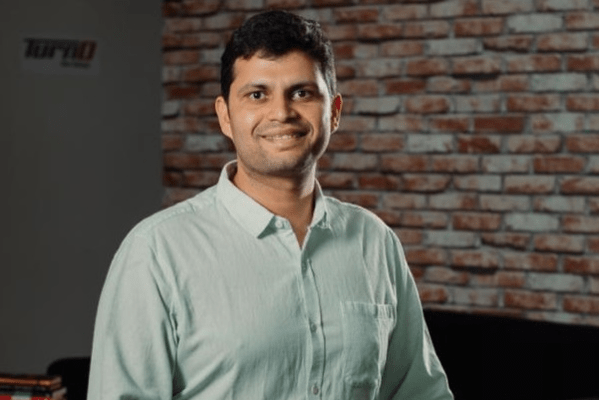
Hemanth Aluru, cofounder and CEO, Turno

Turno, an electric vehicle distribution and financing startup, has raised $6 million from British International Investment (BII) and venture capital firms Quona Capital, Stellaris Venture Partners, and B Capital.

Founded in April 2022 by former Zoomcar executives Hemanth Aluru and Sudhindra Reddy, the Bengaluru-based startup provides financing solutions for small and mid-size enterprises and individuals planning to buy commercial three-wheeler (3W) electric vehicles.

CEO Hemanth Aluru stated that the funding will help Turno expand its offerings to more cities and enter a newer and larger form factor category.

Turno plans to collaborate with energy storage companies to repurpose batteries from 3W vehicles sold on its platform after years of use. To support this aspect of its business, Turno’s proprietary battery technology platform offers customers a guaranteed buyback value on used EV batteries.

The company entered the 3W cargo category in 2022 and the 3W passenger category in 2023. Turno works with seven manufacturers, including Euler Motors, Montra Electric, Mahindra Electric, Piaggio, Greaves, Altigreen, and Bajaj.

“We are committed to democratizing EV technology through innovative business models that drive down ownership costs. This approach is critical for the success of India’s EV mission. With this funding, we aim to accelerate the adoption of EVs for a wider audience,” Aluru said.

“Turno’s innovative business model, lower cost offering, and novel efforts at repurposing EV batteries will help attract more people and businesses to adopt commercial EVs. This aligns with our approach to invest in climate-related innovations that tackle bottlenecks for EV adoption and achieve the de-carbonisation goals of India,” Abhinav Sinha, managing director and head of technology and telecoms at BII, said.

With the latest round, Turno has pulled $22.9 million in funding.