Tuesday, June 30, 2026
Home Blog Page 241

Spiritual services provider Vama joins ONDC

0
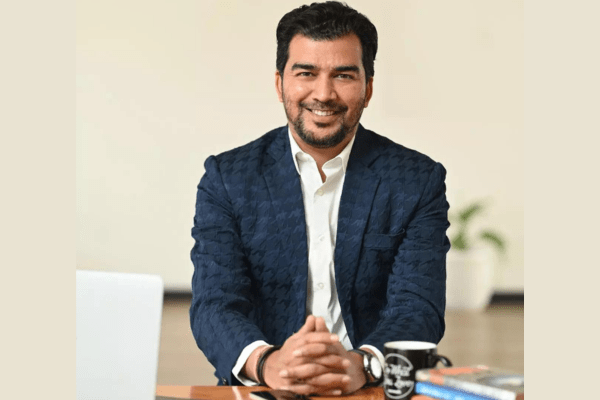
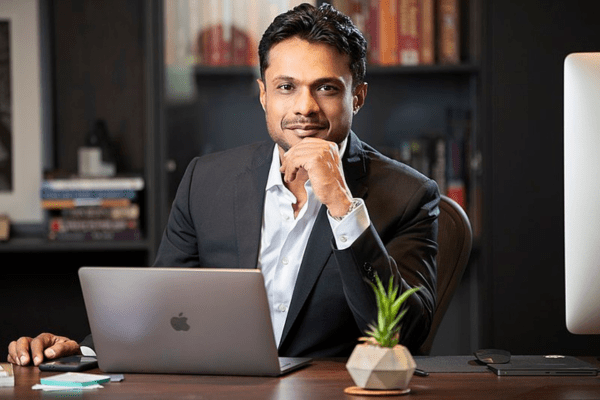
Vama founder Manu Jain

The government-backed online marketplace, Open Network for Digital Commerce (ONDC), is adding spiritual services to its offerings. Vama.app, which offers virtual pujas, temple darshans, rituals, and astrology consultations, is joining ONDC. This expands the range of spiritual services available on the platform.

Spiritual service providers like Iskcon and Hari Bol are already available on ONDC. 

Vama.app, backed by Wavemaker Partners, joins ONDC as both a buyer and seller. This allows them to reach a wider audience by offering their services through ONDC’s network.

Manu Jain, co-founder of the New Delhi-based startup, says they currently have 400,000 monthly users. Jain aims to double this number using the ONDC platform.

“ONDC has a reach across 3,000 odd apps where Vama’s services can be sold,” Jain said. “The roll out is in a phased manner… We will go live with a few apps first and then move on to other apps,” he said. 

Vama.app, launched in 2020, boasts partnerships with over 250 temples. The platform also boasts a network of more than 300 astrologers for consultations.

Interest in spiritual and religious apps has skyrocketed recently. Consumers and investors alike are taking notice of this booming market. The pandemic accelerated a shift towards online services, and with a growing population seeking spiritual fulfillment, apps offering spiritual and devotional services have flourished.

T Koshy, managing director and chief executive of ONDC, said the network aims to become “a one-stop shop where users can avail services for everyday needs right from commerce to spiritual.” 

The Open Network for Digital Commerce (ONDC) has reported a significant surge in orders for July. The platform processed 12 million orders, peaking at approximately 430,000 daily transactions. Notably, the mobility sector accounted for 4.4 million of these orders.

ONDC’s network has expanded rapidly, encompassing 630,000 sellers and service providers across 600 cities. The platform’s delivery reach extends to 1,200 cities nationwide.

Visit Health announces Rs 250-Cr fundraise, second Esop buyback 

0
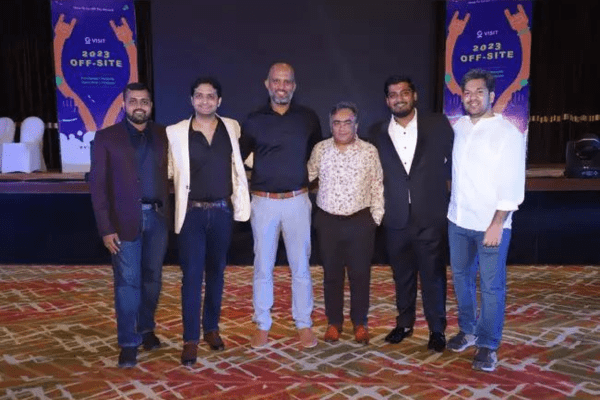
(L-R) Visit Health founders Chetan Anand, Vaibhav Singh, Manoj Balaji (Tatva CEO), Sunil Srivastava, Anurag Prasad & Shashvat Tripathi

Healthtech platform Visit Health has secured more than Rs 250 crore in a combination of primary capital infusion and secondary purchase of shares from Docprime Technologies, a wholly owned subsidiary of PB Fintech, and other promoters and employees.

Visit Health plans to use the new funds for business growth. The company announced a new partnership with TatvaCare on Tuesday. TatvaCare specializes in health and wellness. This partnership aims to combine the strengths of both companies. Visit Health hopes to reach more people in the healthcare industry through this collaboration.

“The company’s primary capital requirement was not much because we have been Ebitda positive for the past few years. The remaining acquisition of shares can only happen through secondary transactions, involving existing entities such as Docprime, promoters, and we did a good chunk of Esop buyback as well,” said Vaibhav Singh, co-founder and managing director of Visit Health. 

A secondary purchase is when existing company shares are bought and sold among investors rather than issuing new shares to raise fresh capital for the company. A primary purchase refers to the buying of newly issued shares of a company.

Visit Health, founded in 2016 by Singh, Anurag Prasad, Shashvat Tripathi, and Chetan Anand, offers various healthcare services. These services include health management, mental health support, diet planning, and annual check-ups.

Visit Health has a network of medical service providers that allows for cashless payments. This network supports over 400 large companies, 4,500 small businesses, and 15 insurance companies.

Companies and insurance providers can create custom health benefit packages to fit their needs. This flexibility helps them provide better healthcare options for their employees and customers.

“The health benefits ecosystem in India was structured only to offer a hospitalization benefit system. Now, people have realised the importance of primary health care services, which is your day-to-day wellness, OPD benefits, as these are more frequent use cases,” said Singh.

The company reported a compounded annual growth rate (CAGR) of 110% over the last eight years.

“By working closely together, we can leverage our combined strengths to offer innovative solutions that meet the evolving needs of patients,” said Manoj Balaji, CEO of TatvaCare. “We look forward to the incredible impact this collaboration will have on the healthcare landscape.”

PB Fintech is the parent company of Policybazaar. 

abCoffee expands its footprint to Bengaluru

0

abCoffee, India’s leading tech-enabled specialty coffee chain, is thrilled to expand into Bengaluru. The company aims to bring specialty coffee to a wider audience using advanced technology tailored to Bengaluru’s tech-savvy and fast-paced lifestyle.

The specialty coffee chain has revolutionized coffee culture with its grab-and-go concept. This approach blends technology with artisanal craftsmanship, catering to office workers, millennials, and coffee lovers. The brand is committed to enhancing daily coffee routines by offering a premium experience at affordable prices.

With prices starting at just INR 77, the company makes specialty coffee accessible to more people. Coffee enthusiasts can visit the new outlets or order online via Zomato and Swiggy. Customers can also pre-order their coffee for pickup using the brand’s web app.

Speaking on the launch occasion, Abhijeet Anand, Founder of abCoffee, shared, “We are thrilled to bring the abCoffee experience to the tech city of Bengaluru with the launch of seven new outlets. Our focus on delivering affordable, specialty coffee in a grab-and-go format has resonated strongly with guests across India. All abCoffee locations will offer quick, friendly service with an inviting vibe, perfect for grabbing your favourite coffee and savouries on the go. Bengaluru, with its vibrant IT and start-up crowd, provides the perfect backdrop for abCoffee’s model for “to-go” specialty coffee beverages and quick eats enabled by efficient and technology-powered interfaces.”

Stock-broking platform Punch raises $7M in seed funding 

0
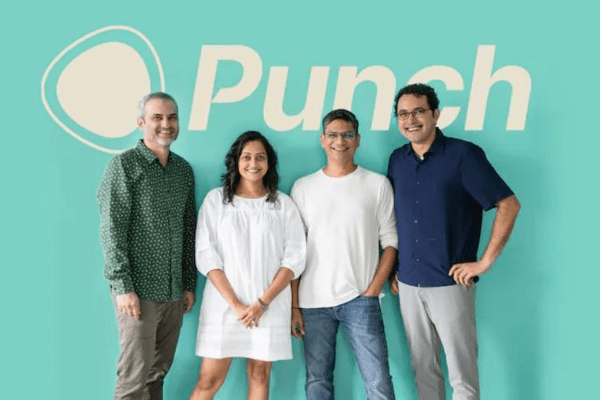
Ajit Dandekar, Hiral Jain, Amit Dhakad, Arshad Fahoum, cofounders of Punch

Stock-broking platform Punch has secured $7 million in seed funding. Stellaris Venture Partners, Susquehanna Asia VC, Prime Venture Partners, and Innoven Capital led the round. Angel investors such as Cred founder Kunal Shah, Ultrahuman cofounder Vatsal Singhal, and Nazara Technologies founder Nitish Mittersain also participated.

The startup will use the funds mainly for research and development (R&D) to improve user experience and marketing efforts.

“Over the next year, a chunk of the funds we have raised will be spent on innovating our products, understanding the problems by seeing what the regulator wants and what the customer wants. We will see how we can inculcate responsible trading without really giving education to customers,” said Amit Dhakad, cofounder and CEO of Punch. 

Founded in 2022 by Dhakad, Hiral Jain, Arshad Fahoum, and Ajit Dandekar, Punch is a trading platform from Market Pulse Securities, a Sebi-registered broker. The platform offers index, stock options trading, and direct stock trading.

Dhakad noted that 60-70% of Punch’s users are young, part-time traders with less than a year of experience. Although the company focuses on options trading now, it plans to add cash trading next month.

Punch completed its beta testing phase over the past 18 months and has about 18,000 trading accounts.

The Securities and Exchange Board of India (Sebi) has increased scrutiny on derivative trading, including futures and options (F&O). On July 30, Sebi released a consultation paper proposing measures to limit high-risk derivative trading. These measures include raising the minimum contract size for F&O to Rs 20 lakh and imposing limits on weekly options contracts.

Despite these new regulations, Punch observes that young traders continue to engage in derivative trading, often underestimating the risks.

Assembly: Reimagining Travel, One Suitcase at a Time

0
Assembly Founders, Mohit Garg and Aditya Khanna

Imagine a world where your luggage isn’t just a container but a trusted companion on your journey. A world where every trip, whether a quick business excursion or an extended beach getaway, begins with the simple act of packing – a moment that sets the tone for your entire adventure. This is the vision that Assembly, an innovative travel gear startup, brings to life.

Founded in 2019 by avid travellers Mohit Garg and Aditya Khanna, Assembly is reimagining the essence of travel accessories. With a keen eye for aesthetics and functionality, this young company is crafting luggage that extends the traveller’s personality, not just a means to transport belongings. In a market dominated by established giants, Assembly is carving out its niche by addressing the pain points that every wanderer knows all too well.

From their virtually indestructible German polycarbonate use to thoughtful additions like built-in packing cubes and USB charging ports, Assembly’s products are designed to make your journey as seamless as possible. But what truly sets them apart is their philosophy – that a great trip starts long before you step out the door. Are you curious about this rising star in the travel gear industry? Here’s a detailed interview with Assembly, delving into their origins, design philosophy, and vision for the future of travel:

BRL: Can you provide an overview of Assembly, highlight what sets you apart from competitors, and explain how you’ve established a unique brand identity in a market with prominent, established brands?

Assembly reimagines elegant yet functional luggage and travel accessories to give travellers an effortless journey. The main aim of establishing this brand was to cater to every traveller’s pain points and provide them with a seamless trip. We understand that travelling is not merely an activity but a lifestyle, and therefore, all our products are carefully crafted to imbibe the perfect blend of aesthetics and functionality. Our motive is to elevate our customers’ travel experience and instil confidence and a sense of ease in their travel story, no matter how big or small.

Every brand has its own space and story to tell, whether big or small. At Assembly, journeys start before you’re on the road, right from when you start packing. The idea led us to create seamless journeys for travellers no matter where they’re headed, whether a few days by the beach or a business trip. We understand that your luggage isn’t a box with wheels but your wardrobe on the go. We don’t perceive it as a trend but an innate extension of the traveller’s persona. To ensure hassle-free and effortless travel, we strongly emphasise even smaller components and crafting experiences that last a lifetime.

BRL: What inspired the design and features of your products, and how do they cater to the needs of modern travellers?

Assembly’s journey began when two avid travellers, Mohit and Aditya, got together. While Aditya travels to gain knowledge and learn about new places and their history, Mohit travels to explore the beauty of the unexplored and grow through cultural exchanges. Despite their different motivations for travel, they both have spent many years in the luggage industry to create minimal and functional travel pieces for every traveller, paving the way for Assembly. Having spent significant time on the road, they understand travellers’ pain points and desires.

This insight motivated us to create a product line that seamlessly integrates functionality with aesthetics. Think of a companion that travels with you everywhere or an innate extension of your personality and style notes. We’ve reworked all details of the classic silhouettes and reimagined them with thoughtful features like packing cubes, a sturdy trolley for manoeuvrability, smooth wheels and charging on the go and easy access front pocket for essentials like laptops, books, tablets and more for hassle-free transit at security checks. Ultimately, we aim to empower travellers with tools that blend seamlessly into their lifestyle, offering style and substance to enhance every travel experience.

BRL: What inspired the design of your products, how do they meet modern travellers’ needs, and how do you ensure their quality and durability compared to major industry players?

We are a very customer-centric brand; all our designs have been made for the problems consumers face in their day-to-day travel. Unlike some other brands, we use a German polycarbonate outer shell which makes luggage practically indestructible; when adding the wheels, we re-engineered them to be screwed inside for better performance on all surfaces. To ensure effective space organisation inside luggage, we add three complimentary packing cubes with a breathable mesh top panel that lets you easily see what’s inside without unpacking or opening it. Further, we’ve added USB ports for charging and Keyless TSA-approved locks for security.

BRL: What sustainability practices or materials do you incorporate into your manufacturing process?

We prioritise sustainability by utilising 50% recyclable polycarbonate materials. This ensures that if our products need to be discarded, they can be effectively recycled into new products, minimising waste and promoting a circular economy.

BRL: How do you engage with customer feedback and incorporate it into product development?

As mentioned earlier, Assembly is a customer-centric brand. We’ve maintained an active customer experience team that takes valuable customer feedback. We also conduct frequent market research to understand what the consumers and our target market want. With strategic partnerships with Indian manufacturing units, we are quick to reiterate based on feedback. Not only this, we conduct regular quality checks and tests to ensure we are living up to our promise of delivering quality products to our customers.

BRL: How do you approach pricing strategies to remain competitive while maintaining quality standards?

Competition is inevitable in our category; our pricing strategies are essentially based on understanding the Cost of Goods once they are manufactured and conducting thorough market research to match the prices of our products with the affordability of our target market; this is how we come up with prices which are the most feasible for us as well as accessible to the customers. Product quality is an aspect that we continuously strive to enhance product by product, thus investing a considerable amount in conducting regular tests. QC checks to verify the quality of our various products per industry standards and their features, ensuring the standard quality for all our products.

BRL: What distribution channels do you utilize to reach your target audience and expand your market presence?

Currently, we utilize three distribution channels to reach our target audience and expand our market presence. These are the websites that are essentially our website, and then we have marketplaces where we partner with platforms such as Amazon, Flipkart, Nykaa, etc. We also have a third channel of institutional sales, through which we have signed up with various channels for employee gifting programs and B2B sales. These channels help us reach our target audience and expand our market presence. Additionally, we’ve onboarded Zepto as our quick commerce partner to get our customers swiftly.

BRL: Can you share any upcoming product innovations or collaborations customers can look forward to?

Something that has been on our minds since our inception is offline travel stores to meet the end-to-end demands of our customers. After being held back by the pandemic, we are now venturing into this prospect and will soon expand on this collateral. Further, we are also branching into other quick commerce platforms.

BRL: How do you envision your travel baggage company’s future growth and success in the face of intense competition and industry trends?

According to the data available, the travel industry is estimated at 100 bn and is growing at 8.87 CAGR after the recovery from COVID-19. It has only become fierce in our category, but we want to keep doing what we do best: providing a seamless travel experience to our customers. Looking ahead, we’re thrilled to be a part of this sector with our offerings encompassing all aspects of travel. Even with all the competition, we’ll be able to make a mark with all the love, support and encouragement. By continuously innovating, diversifying and focusing on customer satisfaction, we aim to differentiate ourselves in the market and become the go-to brand for all travel-related needs.


CURRYiT raises Rs 4.5-Cr in seed round

0
Richa Sharma & Nischal Kandula, Founders of CURRYiT

D2C brand CURRYiT raised  Rs 4.5 crore in a seed funding round.

The round attracted notable investors such as RK Family Trust (Apollo Group), Tangent Advisors, Freeflow Ventures, and prominent angel investors, including Ramesh Damani (DMart group), Ajaya Jain, and others.

The company’s pre-money valuation was Rs 40 crore.

Founded by IIM alumni Richa Sharma and Nischal Kandula, CURRYiT offers India’s largest selection of cooking pastes. Their range includes curry pastes like Kashmiri Rogan Josh and Butter Masala, biryani pastes, ginger garlic paste, tomato purees, and instant tadka.

CURRYiT serves over 25,000 pin codes daily and has experienced more than 50% month-on-month growth on Q-commerce platforms.

“Clean delicious food is not merely a USP for us, it is a choice we would like consumers to make for tastier and healthier home cooked food. Current range of products available in the market are loaded with chemicals, preservatives, dehydrated vegetables, palm oil, hence compromised on both taste and quality,” the founders said.

With the new funds, CURRYiT plans to scale operations, boost brand marketing, and enhance distribution. They aim to quadruple their monthly revenue within the next six months.

“We aim to change this for the consumer. With this recent funding, we will double down on our production and marketing efforts to make CURRYiT the go-to brand for every Indian’s daily cooking need,” they added.

CURRYiT also prides itself on its world-class FDA and ISO-certified in-house manufacturing facility, which includes over 40 quality checks. This facility helps accelerate product launches while keeping costs low and benefiting from economies of scale.

Existing investors in CURRYiT include RPSG Capital Ventures, IIM Udaipur, and LBB. The Indian ready-to-cook and spices market is expected to grow at a compound annual growth rate (CAGR) of 15.7%, from $9.81 billion in 2022 to $42.17 billion by 2032.

Agritech startup Agrizy raises $9.8 million in funding 

0
Saket Chirania (left) and Vicky Dodani, founders, Agrizy

Agritech startup Agrizy has secured $9.8 million (approximately ₹82 crore) in a funding round co-led by Accion and Omnivore.

Capria Ventures, Thai Wah Ventures, and existing investor Ankur Capital also participated in this round, according to Agrizy’s statement on Monday. The company has not disclosed its valuation for this round.

Agrizy plans to use the funds to expand into new product areas and markets. They will also launch contract development and manufacturing organizations (CDMO) and value-added advisory services and provide financial support to MSME processors and farmer-producer organizations (FPOs).

Previously, Agrizy raised $4 million in April 2022, led by Ankur Capital.

Founded in 2021 by Vicky Dodani and Saket Chirania, the Bengaluru-based platform connects agricultural suppliers, processors, and buyers of farm products in both food and non-food categories. This connection helps optimize transactions and fulfil needs effectively.

“Agrizy aims to transform India into a global food processing hub by helping FPOs and MSME agri-processors access export markets and comply with global quality standards while offering these underserved stakeholders working capital from formal financial institutions,” said co-founder and chief executive Dodani. 

The startup supports agrifood processing MSMEs by offering digital services that enhance long-term revenue, improve operating margins, and streamline procurement and sales processes.

Agrizy serves over 100 institutional clients in India and internationally, including regions like Europe, North America, and Asia.

John Fischer, chief investment officer at Accion, said, “Agrizy is seeking to reshape traditional agri-processing by providing a robust marketplace and support to improve production. The company aims to also address the lack of quality financing for small processors and the Farmer Producer Organizations that supply them, helping to increase incomes in rural communities.”

“The company’s foray into contract manufacturing is critical for streamlining intricate, export-oriented supply chains,” said Mark Kahn, managing partner at Omnivore.

Neuralink implanted second trial patient with brain chip, Elon Musk says

0

Neuralink has implanted its device in a second patient, allowing paralyzed patients to use digital devices by thinking alone, as reported by Elon Musk, the startup’s owner.

Neuralink is currently testing this device to assist people with spinal cord injuries. The first patient has already used the device to play video games, browse the internet, post on social media, and control a laptop cursor.

In a lengthy podcast released on Friday, Musk shared that the second patient has a spinal cord injury similar to the first patient, who was paralyzed in a diving accident. He mentioned that 400 of the device’s 1,024 electrodes are functioning well. However, he did not reveal the exact timing of the second surgery.

“I don’t want to jinx it but it seems to have gone extremely well with the second implant,” Musk told podcast host Lex Fridman. “There’s a lot of signal, a lot of electrodes. It’s working very well.” 

Musk anticipates that Neuralink will implant its device in eight more patients this year as part of its clinical trials.

The podcast also featured Noland Arbaugh, the first patient, and three Neuralink executives who explained the implant and robot-led surgery process. Before his implant in January, Arbaugh used a stick in his mouth to interact with a tablet. Now, he can control his computer just by thinking, which has given him greater independence and reduced his need for caregivers.

Arbaugh initially experienced problems when the tiny wires of his implant retracted, reducing the number of functional electrodes. Neuralink had identified this issue in animal trials. The company has since restored the implant’s functionality by adjusting its algorithm to detect brain signals better. Despite only about 10-15% of the electrodes working, Arbaugh has improved his cursor control speed, surpassing his previous world record, Musk noted on the podcast.

Additionally, Musk mentioned his discussions with Republican presidential candidate Donald Trump about forming a commission to enhance “government efficiency” by reducing business regulations. Musk expressed his belief that U.S. regulations hinder innovation.

Fintech startup Navi looks to launch new products and explore UPI credit opportunities

0
Navi Technologies founder Sachin Bansal

Sachin Bansal’s fintech startup, Navi, is updating its Unified Payments Interface (UPI) payments system. The company is also exploring credit opportunities through UPI. This move aims to enhance their payment solutions and capitalize on new credit possibilities.

On Friday, Bansal took to social media platform X (formerly Twitter) to talk about the potential for small-value credit distribution through the UPI network. He mentioned his desire to transform how users interact with UPI by introducing new products on Navi.

The National Payments Corporation of India (NPCI) supports two types of credit transactions via UPI. The first involves linking a RuPay credit card to a consumer’s UPI handle. The second allows for a pre-approved credit limit through UPI.

Founded by Bansal in 2018, Navi started as a consumer lending platform. It has since expanded into larger personal loans, secured credit options like home loans, and additional financial services, including insurance broking and asset management.

Navi processed 35.7 million UPI transactions in June, totalling around Rs 1,769 crore. Navi completed its NPCI integrations in August of the previous year to launch UPI payments.

Over the past two years, other consumer-facing apps like Flipkart, Cred, Groww, and Slice have adopted UPI payments. Despite over 70 apps using UPI, Google Pay and PhonePe still dominate, holding over 80% of the UPI payments market.

Meesho appoints four new independent directors 

0

Ecommerce company Meesho announced on Friday that it has appointed four new independent directors to its board.

The new members include Hari S. Bhartia, founder and co-chairman of Jubilant Bhartia Group; Kalpana Morparia, former chairman for South and Southeast Asia at JP Morgan; Rohit Bhagat, former chairman for Asia Pacific at BlackRock; and Surojit Chatterjee, founder and CEO of generative AI firm Ema.

Morparia also serves as an independent non-executive director on the boards of HSBC Holdings, Hindustan Unilever Limited, and Philip Morris International Inc. Bhagat is the non-executive chairman at PhonePe, an independent director at AssetMark, and the lead independent trustee of the Franklin Templeton ETF Trust. Chatterjee was previously the chief product officer at Coinbase.

“We are confident that their collective wisdom and diverse perspectives will play a pivotal role in steering the company towards new milestones and sustained success in revolutionising the ecommerce landscape in India,” cofounder and chief executive Vidit Aatrey said in a statement. 

The current board includes co-founders Aatrey and Sanjeev Barnwal; Ashutosh Sharma, head of investments and M&A at Prosus Ventures; Mohit Bhatnagar, managing director at Peak XV Partners; Mukul Arora, managing partner at Elevation Capital; and Sarthak Misra, partner at SoftBank Investment Advisers.

Meesho closed a $275 million funding round, which was part of a larger $600 million financing effort. Since 2015, Meesho has raised a total of $1.36 billion, including secondary funding.

The company is also exploring the possibility of relocating its headquarters from the US back to India as it prepares for a potential initial public offering (IPO).