Monday, June 29, 2026
Home Blog Page 224

MMAD Communications unveils RBI-approved Payment Aggregator Services under new brand “Mpay”

0
Pankaj Gambhir, Director, MMAD Communications

New Delhi, November 12, 2024: MMAD Communications, a leading technology solutions provider in digital payments, announced that it is launching a new payment aggregator brand, ‘Mpay’, after receiving final authorization to this effect from the Reserve Bank of India (RBI). Mpay will enable businesses and consumers to access a suite of secure, scalable, and innovative payment solutions that adhere to the highest regulatory standards set by the RBI and ensure the highest and most trusted service standards of MMAD.

Since 2018, MMAD has leveraged its experience managing high-volume transactions, particularly for the Indian Railway Catering and Tourism Corporation (IRCTC), to bring trusted, high-performance payment solutions to the rapidly growing digital payments market. In 2021, MMAD Communications applied for an RBI ‘Payment Aggregator’ license, marking a significant step toward expanding its footprint in digital payments. On October 25, 2023, the RBI granted final authorization, allowing MMAD to launch and market its payment solutions under the Mpay brand.

We are delighted to introduce Mpay as a comprehensive digital payment solution which is backed by our years of technical expertise and a commitment to excellence and reliability,” said Pankaj Gambhir, Director, MMAD Communications. “With RBI’s authorization, Mpay will help drive forward our mission to deliver streamlined, user-centric payment experiences, building on the success we’ve demonstrated earlier. We hope to actively build the payments market in India and be an active partner in leading the country’s march to be a global digital payments leader.”

Mpay aims to redefine digital transactions, offering a suite of services tailored to meet the growing demands of businesses and consumers across various sectors. With the new authorization, MMAD Communications is well-positioned to lead the digital payments landscape in India, combining regulatory compliance with technological excellence.

About MMAD Communications Pvt Ltd

MMAD Communications Pvt Ltd is a premier technology solutions provider known for its expertise in high-volume payment processing. Since 2018, it has served as the Technical Service Partner for IRCTC’s IPay payment gateway, managing transit transactions with one of the highest success rates in the industry. With the launch of its new brand, Mpay, MMAD is set to bring reliable, innovative payment solutions to a wider market as an RBI-authorized Payment Aggregator.

Baidu strengthens AI lineup with text-to-image generator, no-code app builder 

0

China’s Baidu Inc revealed a series of new AI-powered tools on Tuesday, including a text-to-image generator and a no-code software development tool. These tools empower users to create software applications even if they lack coding skills.

As a top search engine company, Baidu has joined other tech firms in shifting focus towards commercializing large language model (LLM) applications. This move follows nearly two years of intensive research and development on models they promote as alternatives to OpenAI‘s GPT.

During the annual Baidu World Conference, CEO Robin Li introduced I-RAG, a text-to-image tool designed to address the “hallucination” problem in AI-generated images. This tool, leveraging Baidu’s search capabilities, aims to ensure that generated images stay faithful to the input text without adding non-existent elements.

Li shared that Baidu’s Ernie platform now processes 1.5 billion user interactions daily, up from 200 million in May. These interactions include text generation, question-answering, and support for various AI-driven applications.

Baidu has focused on commercializing its AI agents, which allow users to build customized applications. The company has also integrated this technology into its existing product suite, making it available to external users via cloud services.

Additionally, Baidu introduced a smart glasses device from its hardware division, Xiaodu, featuring a built-in AI assistant. These glasses include cameras for photos and videos and support voice commands through Ernie.

Unlike competitors, Baidu is not pursuing an AI-based “super app.” This strategy marks a departure from ByteDance, which has recently launched multiple standalone AI apps.

Lastly, Baidu presented Miaoda, a tool that uses its LLM to assist users in generating code, enabling software development without deep coding knowledge.

Flipspaces rolls out Esop; sets aside 5% total equity for permanent employees 

0
Kunal Sharma, founder and CEO of Flipspaces

Flipspaces, a leading commercial interior design technology company, has introduced an employee stock ownership plan (ESOP), reserving 5% of its total shares for its employees.

Eligible employees include those with more than 1.5 years of service who have made impactful contributions, according to the company, which achieved Rs 300 crore in revenue in FY24.

“The new Esop initiative underscores Flipspaces’ commitment to empowering its employees while driving forward its ambitious expansion plans in India and the US,” the company said. 

“The leadership and critical roles are prioritized,” it said, adding that the Esops are structured with a four-year vesting period and a one-year cliff.  

So far, Flipspaces has secured $7.5 million in equity funding from investors like Carpediem Capital, Prashasta Seth, and the MGA Family Group.

“Implementing an Esop is not just about sharing ownership; it’s about creating a shared vision for our future. We believe that when our employees have a stake in the company, they are more motivated to contribute to its success. This initiative reflects our belief in investing in our people and our gratitude for their role in shaping the Flipspaces journey,” said Kunal Sharma, founder and CEO of Flipspaces.

The company is also accelerating its acquisition efforts to expand further in both India and the United States.

B2C commerce startup Wheelocity secures $15M in funding

0
Selvam VMS, founder and CEO, Wheelocity

Business-to-consumer (B2C) startup Wheelocity recently secured $15 million in funding, with Lightspeed India Partners leading the round. Investors Alteria Capital, Anicut Capital, and founder Selvam VMS also contributed.

With this new funding, Wheelocity plans to expand its services to 20,000 towns and villages in southern India within the following year. Founder Selvam shared that the goal is to grow the user base to 10 million.

Previously, this Chennai-based company focused on supplying fresh fruits and vegetables to business-to-business (B2B) clients, such as quick-commerce companies. Last year, it shifted to a hybrid model, targeting semi-urban and rural customers through both online and offline channels.

“For people living in semi-urban and rural areas, to get access to products as basic as fresh produce, they have to wait for as long as seven days. That’s how broken the supply chain is. We are trying to build near urban level convenience for semi urban and rural consumers by building a very high frequency, direct access network,” said Selvam. 

Wheelocity’s B2C platform allows users to place orders digitally or buy products directly from a fleet of three-wheeled electric carts, which deliver fresh produce right to their doorsteps. The fleet includes 1,500 electric vehicles and over 2,000 delivery partners. The company sources produce directly from farmers and stores it in 60 micro-warehouses, called “pit stops,” to streamline delivery.

In 2022, Wheelocity raised $12 million from Lightspeed, reaching a post-money valuation of $63.3 million, as reported by Tracxn. Anicut Capital also joined that funding round.

“The next wave of India’s commerce growth will come from beyond the top 200 cities,” said Rahul Taneja, partner at Lightspeed. “Wheelocity’s deep understanding of semi-urban markets, combined with their technology-first approach, positions them uniquely to capture this massive opportunity.” 

Lightspeed, which has invested in over 500 startups like Razorpay, Zepto, Oyo, and Darwinbox over the past two decades, manages $25 billion in assets worldwide.

Novamax Appliances strengthens global reach with shipments to international markets

0

November 11, 2024: Novamax, a leading innovator in the air cooling industry, has successfully shipped over 8,000 units of its premium air coolers to major global markets, including Dubai, Kuwait, Nepal, Sri Lanka, the USA, Africa, and Bangladesh, during the last season. This milestone reflects the company’s commitment to addressing the demand for efficient and affordable cooling solutions worldwide.

As Novamax continues to enhance its product offerings, the company’s success in international markets underscores its reputation for durability, superior cooling, and energy efficiency in extreme climates. This latest achievement aligns with Novamax’s vision of meeting the needs of diverse climates and regions through sustainable and high-performance technology.

Expressing his enthusiasm about the expansion, Harshit Aggarwal, the CEO and Founder of Novamax Appliances stated, “We are excited to see our air coolers gaining widespread acceptance across diverse international markets. This major accomplishment not only underscores the trust our customers place in our products but also reflects our commitment to providing reliable, eco-friendly cooling solutions tailored to varying climates around the world. Our mission is to enhance comfort and quality of life by delivering high-performance air coolers that combine affordability with advanced technology. We look forward to building on this momentum and expanding our reach to even more regions globally.”

The company looks forward to continuing its expansion by providing world-class air coolers, building on this momentum to reach more households and businesses worldwide. The company remains committed to elevating living standards globally by prioritizing both quality and affordability in its product lineup.

About Novamax Appliances: 

Founded in 2019, Novamax Appliances is one of India’s top air cooler manufacturing brands. With a dedicated team strength of approximately 250 professionals, Novamax aims to meet the demands of today’s consumers by ensuring world-class manufacturing and innovation.

Edtech platform Bhanzu raises $16.5M in Series B funding 

0
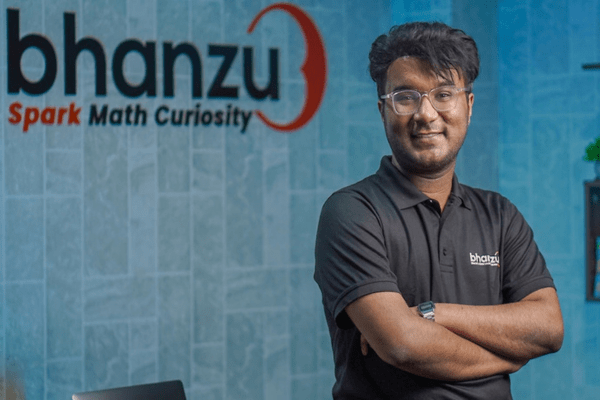
Neelakantha Bhanu, Founder and Chief Executive Officer, Bhanzu

Edtech startup Bhanzu recently secured $16.5 million (about Rs 139 crore) in funding, led by venture capital firm Epiq Capital, valuing the company at around $120-122 million. 

Additional investors included Mumbai-based venture fund Z3Partners, alongside existing supporters Lightspeed Ventures and Eight Roads.

With this funding, Bhanzu plans to expand in the US and invest in generative artificial intelligence (Gen AI).

“We’ll be spending the majority of our capital on exploring the US market because I think we’ve gone deeper into it. We’ve found our product-market fit (PMF). I think expanding there and building a slightly larger leadership team is one priority,” founder and chief executive Neelakantha Bhanu said.

“Secondly, we have been at the forefront of Gen AI innovation for the last two years or so. We have launched quite a lot of products. I think we’ll be doubling down on that and building more elaborate asynchronous products,” he said. 

The startup reports eightfold growth since its 2022 funding round, as well as positive cash flow and increasing traction in markets like India, the US, the UK, and the Middle East. 

Notably, India and the US each contribute about one-third of Bhanzu’s revenue, with the remaining revenue coming from other global markets, according to Bhanu.

Launched in 2020, the Hyderabad-based startup provides a math curriculum through online courses for students from kindergarten to Grade 9. Bhanzu aims to achieve a revenue target of Rs 100-120 crore this financial year.

“Our incremental spends will go into expansion in global geographies instead of funding customer acquisition costs, which I think, unfortunately, a lot of other companies have done,” he added. 

To date, Bhanzu has raised a total of $33.5 million in funding.

In recent months, other edtech companies such as PhysicsWallah, Eruditus, and Upgrad have also raised new capital.

Commenting on the investment, Chinmay Katdare, partner, Epiq Capital said, “Bhanzu has evolved into a global math education platform using its unique pedagogical approach combined with the use of advanced AI to shape learning outcomes across geographies. Additionally, Bhanu has built a solid team and a robust business model, which continues to have a strong growth trajectory while being cash flow positive.”

“This investment fits into our thesis of outcome-driven education where the strength of the product drives growth. This is evident in the positive unit economics and global growth being witnessed by the company. We believe the company is currently at an inflection point to turbocharge growth in a profitable and sustainable manner,” said Rishi Maheshwari, managing partner, Z3Partners. 

Shvetal Desai: Pioneering Innovation at Nividous and the Future of AI

0
Shvetal Desai, Co-Founder at Nividous Software Solutions

In the rapidly evolving landscape of artificial intelligence, few voices resonate as powerfully as that of Shvetal Desai, co-founder of Nividous. Recently featured as one of the key speakers at the well-organized World AI Show in Mumbai, hosted by Trescon, Shvetal brings a wealth of knowledge and experience in AI automation. Business Review Live had the distinct privilege of engaging in a thought-provoking conversation with him, exploring not only the innovative strides Nividous is making but also delving into the deeper implications of AI technology in today’s business world. Join us as we uncover Shvetal’s insights on harnessing automation to drive efficiency and transform industries, shedding light on the future of AI.

As a co-founder of Nividous, how do you see the role of intelligent automation evolving over the next 5 years, especially with the growing integration of AI and machine learning in traditional business processes? 

It’s insightful that you mentioned traditional business processes because processes are constantly changing. What we consider “traditional” today may evolve within a year, driven by businesses’ desire to stay competitive. Companies continuously enhance their processes to keep up, and automation plays a critical role here.

When companies automate their processes, they achieve automation across the entire enterprise. Embracing intelligent automation across an organization will be essential. This area is receiving significant attention and investment, as many companies now recognize that without intelligent automation, they risk falling behind their competitors and losing relevance.

Nividous focus is on hyper-automation. Can you share a specific use case where hyper-automation transformed an industry or a company, and what critical lessons were learned from the implementation? 

In fact, we have several use cases. One relevant example is a large-scale transformation for India’s most significant automotive company. This company successfully scaled automation across its operations, including a nationwide rollout involving 5,000 dealerships. Through this initiative, loyal customers could receive cashback bonuses when they traded in an old vehicle for a new one. Previously, this process was manual and time-consuming; documentation had to be submitted to the back-end team, who verified each claim manually. This approach often took weeks or even months to complete.

Our solution introduced efficiency by allowing dealers to upload information directly through a portal. This move enabled extended enterprise involvement, where dealerships could now validate customer data upfront, eliminating manual checks by the company’s internal team. In addition to streamlining in-house processes, we automated data extraction with AI, even for older documents, enhancing speed and accuracy.

Robotic Process Automation (RPA) bots played a key role in accessing various sites and databases to verify insurance and identity information. They conducted intelligent “fuzzy matching” to handle variations in customer data across documents—such as different name formats on IDs. Finally, a minimal human review confirmed the data, significantly reducing the time and resources needed.

The success of this transformation for one division led to further adoption across other divisions, including rural, institutional, and commercial areas. This use case highlights how automating a single process can lay the groundwork for enterprise-wide automation on a unified platform.

AI and automation often raise concerns about workplace displacement. How does Nividous help companies balance automation while fostering a collaborative environment that upskills employees? 

In manufacturing, especially, change management is often challenging. When employees hear about new automation initiatives, they may worry about job security, fearing that their roles could become obsolete. 

To address these concerns, managers and those introducing the technology must clearly communicate the growth vision. It’s essential to convey that these changes aim to upskill employees, enabling them to take on more fulfilling work. This message highlights that automation isn’t about job cuts but about creating opportunities for employees to leverage their skills in more impactful ways.

Setting the stage with these positive messages can lead to cooperation rather than resistance. For expanding companies, automation and technology are crucial for handling increased demand and customer volume. In such cases, automation allows the business to grow while maintaining the same team size, which can reduce costs without risking job losses.

When employees understand this strategy, they recognize that automation supports the company’s growth—and their role within it. This shared understanding strengthens their connection to the company’s goals, fostering a sense of inclusion in the company’s forward movement.

Nividous emphasizes the holistic approach to process automation. Could you elaborate on the role of AI in not just automating repetitive tasks but also enhancing overall business decision-making and strategy?

Nividous offers a platform with RPA (Robotic Process Automation) bots that go beyond simply automating repetitive tasks; it actively drives better decision-making and strategic outcomes for businesses. Traditionally, RPA has been seen as a “band-aid” solution—a way to move data between systems without much critical impact. If an error occurs, it can easily be corrected in the backend.

However, Nividous engages in RPA applications that focus on the front-end, revenue-generating activities. Here, bots perform essential tasks that directly impact business success. These bots are further enhanced with artificial intelligence to increase their efficiency and reliability.

With AI, these bots function more like humans, adding cognitive abilities that enable deeper understanding rather than just basic data transfer. When combined with human oversight, the process becomes highly robust and error-free. This comprehensive approach lowers operational costs, reduces SLA (Service Level Agreement) times, and delivers consistent accuracy in performance.

With AI solutions being customized for different industries, how does Nividous ensure its platform remains adaptable and scalable across sectors with diverse needs, from finance to manufacturing? 

That’s an excellent question. Today, many people view AI as a single tool that can handle everything. For instance, ChatGPT and OpenAI are widely recognized. However, these tools are trained on vast amounts of information from around the world, which may not be specific to your organization.

When you ask a question, these models relate their responses to the general knowledge they possess. Currently, many enterprises need tailored solutions. For example, consider your organization’s policy documents. When you inquire about them, you want a co-pilot who can analyze these specific documents and provide relevant information.

Unfortunately, a generic OpenAI model cannot fulfill this need. Instead, you require a custom-built model designed for your specific requirements. Whether you have sufficient in-house data to create this model or opt for generative AI, you can develop a solution that works for you. With proper prompt engineering, you can build effective solutions internally. Ultimately, every industry will need specialized models.

This is where native large language models (LLMs) demonstrate their actual value. We have developed our own LLM, customized for particular use cases that align closely with our customers’ needs.

As AI governance and ethics become increasingly crucial nowadays, how does Nividous ensure responsible AI practices are embedded within its hyper-automation solutions, especially regarding data, privacy, and decision transparency? 

This focus is essential because personally identifiable information (PII) is under significant scrutiny from governments. While this has been a long-standing issue in other countries, it is gaining traction here as well. Relying on third-party services like OpenAI for public cloud solutions poses a risk because it exposes sensitive data externally.

Regardless of existing contracts, sending data outside your organization always presents a risk. Therefore, adopting native private cloud-based or on-premises large language models is crucial for all businesses. Customized deployments are now essential.

For instance, we recently automated an interactive voice response (IVR) system for a major company in North America. This company had agents who made payments to insurers on behalf of customers. Agents navigated complex IVR systems, often going through each insurer’s process to produce a credit card and complete payments for customers.

We streamlined this process by implementing a robotic process automation (RPA) bot on a private cloud. As a result, all data remained secure, and no PII left the system.

Achieving over 80% accuracy in straight-through processing was a significant accomplishment. This automation significantly transformed the enterprise, fundamentally changing how it conducted its operations. This use case demonstrates how automation can revolutionize business practices and enhance efficiency.


Zostel launches its first property in Andaman Islands

0

Zostel has launched its first property in the Andaman and Nicobar Islands, offering budget-friendly, high-quality accommodations in Port Blair. According to a recent release, Zostel is the only hostel chain currently operating in the Andaman & Nicobar Islands. With stunning sea views, a rooftop café, and immersive local experiences, this new Zostel location aims to redefine hospitality and travel in the region.

Located in the heart of Port Blair, this Zostel property includes five private rooms and three dorm rooms, giving travelers a range of accommodation options. Guests will enjoy easy access to the area’s pristine beaches, historic sites, and natural beauty. The property, situated at Phoenix Bay on Foreshore Road, is also conveniently just 3 km from the airport.

Port Blair, the lively capital of the Andaman and Nicobar Islands, is becoming a favorite destination for travelers eager to experience its unique ecosystem, beautiful islands, and rich culture. Zostel’s new presence in Port Blair offers backpackers and budget travelers a trusted, affordable place to stay while providing easier access to nearby islands like Havelock, Neil, and Ross, which are famous for their scenic beauty, water sports, and island-hopping adventures.

“We are thrilled to bring Zostel’s unique blend of community-driven travel and immersive experiences to the pristine Andaman Islands. Zostel Port Blair is more than just a place to stay; it’s a gateway to exploring the islands’ natural wonders and vibrant culture. We’re excited to offer travellers a fresh perspective on island life while fostering connections and unforgettable memories. This launch reinforces our commitment to creating spaces where travellers can experience the essence of each destination authentically. With the addition of the Port Blair property, Zostel has opened 10 new properties in 2023 alone, expanding in regions like Himachal Pradesh, Goa, and now the Andamans. Looking ahead, Zostel plans to add 25 new properties across India by 2025, further solidifying its position as the leader in the new age travel & accommodation segment for backpackers,” said Deep Banka, COO, Zostel.

Spree Hospitality signs new property in Kolhapur 

0

Spree Hospitality, a subsidiary of the travel tech platform EaseMyTrip.com, has signed a new property in Kolhapur, set to open on December 1, 2024. According to the company, this latest addition showcases Spree Hospitality’s continued growth, offering travelers a blend of modern amenities and local charm in Maharashtra’s culturally rich city.

Located on Rajaram Road, the property offers convenient access—just a 5-minute drive from both the bus stand and railway station. It caters to various guest needs, from residential conferences and corporate stays to transit and leisure travel, especially for those heading to the famous Mahalakshmi Temple.

This Kolhapur property features 42 well-designed rooms with modern comforts, creating an ideal setting for different types of travelers. For events, the spacious banquet hall, Celebrate, can host up to 150 guests—perfect for conferences, weddings, and other gatherings. Guests can also enjoy Treat, the in-house restaurant with a multi-cuisine menu, seating 60 people for a delightful dining experience. For a more relaxed vibe, Elevate, the restro bar with an open area, accommodates up to 80 guests and provides a space to unwind.

Commenting on the new property, Sagar Khurana, COO of Spree Hospitality, said, “We are excited to expand our footprint in Kolhapur, a city known for its rich culture and heritage. This new property is a testament to our commitment to providing exceptional hospitality experiences in strategic locations across India. We are confident that our guests will enjoy the blend of comfort, convenience, and modern amenities that we have curated for this property.”

The property also includes a gym, an indoor games room, and a library, offering recreational options for a well-rounded stay. This new Kolhapur addition highlights Spree Hospitality’s dedication to delivering high-quality experiences across India. Whether for business, leisure, or pilgrimage, this property ensures comfort and convenience for all guests.

UnifyApps bags $20M in round led by Iconiq Growth 

0

UnifyApps, a San Francisco-based enterprise integration company, has raised $20 million in a recent funding round led by Iconiq Growth, known for its investments in top companies like Airbnb, Uber, and Snowflake.

Existing investors, including early-stage venture capital firm Elevation Capital, also contributed to the round.

With this funding, UnifyApps plans to expand its unified enterprise AI agent platform. This expansion aims to enable more in-depth integrations across software-as-a-service (SaaS) applications.

“UnifyApps is deeply grateful for the opportunity to work with Iconiq Growth, a team that is unrivalled in its ability to uplift the next big players in SaaS. Their deep network and partnership will be instrumental in our next stage of growth as we bring our AI agent platform to enterprises everywhere,” said cofounder and chief executive Pavitar Singh.

Founded in 2023 by Singh, Abhishek Khurana, Rachit Mittal, Sumeet Nandal, Haitham Elkhatib, Abhinav Singi, Rahul Anishetty, Kavish Manubolu, Shivam Satrawal, and Rohan Vijay, UnifyApps’ platform supports client businesses in connecting and streamlining their various software tools. It helps companies build custom apps faster.

The startup recently appointed Elkhatib as a new cofounder and chief revenue officer. Before joining UnifyApps, Elkhatib held the role of senior vice president of sales for growth markets at Sprinklr, a New York-based enterprise software company.

Previously, the startup raised $11 million in a funding round led by Elevation Capital, bringing its total funding to $31 million.

Commenting on the investment, Matt Jacobson, general partner, Iconiq Growth, said, “By aligning every data source and application to an enterprise use, they are enabling AI to understand and orchestrate work.” 

Jacobson will now join UnifyApps’ board of directors.