


Thursday, October 22, 2026
Home Blog Page 19

Piston Raises $15 Million to Scale the Infrastructure Layer for Logistics Commerce

0
Vikram Sekhon & Shivam Shah, co-founders, Piston

FPV Ventures leads Series A following 8x annual payment volume growth and 40x merchant network expansion.

India, September 10, 2026 — Piston, a cardless payments platform that connects commercial fleets and gas stations, today announced it has raised $15 million in Series A funding. FPV Ventures led the round, with participation from existing investors Spark Capital and Pear VC. The financing brings Piston’s total capital raised to $22.5 million.

The round follows a year of rapid growth for Piston. Payment volume increased 8x year over year, while its merchant network grew 40x and customer retention remained at 98%. Piston is now deployed at more than 2,000 stations across 48 states. Its point-of-sale integrations are also certified and live across systems covering more than 95% of U.S. merchant fuel sites.

“Commercial fuel still runs on payment technology built for another era,” said Vikram Sekhon, co-founder and CEO of Piston. “Fleet fuel fraud is a physical card problem, disguised as a detection issue. We removed the card and built a network that authorizes every purchase for a specific driver and vehicle at the point of sale. This round lets us expand that infrastructure until no commercial driver has to ask whether a station accepts Piston.”

The more than $900 billion trucking industry still relies heavily on payment infrastructure built around physical cards. For fleets, that can mean persistent fraud, limited visibility into spending, and time-consuming reconciliation. Now, Piston offers fleet owners real-time visibility into fuel spending as it happens, without issuing or managing physical cards. And merchants gain direct access to commercial fuel demand, lower transaction costs, and the opportunity to capture the in-store purchases that come with repeat fleet traffic.

The two-sided network was built from firsthand experience. Vikram and co-founder Shivam Shah previously operated fleets and dealt directly with fuel-card fraud, hidden costs, and administrative burden. Sekhon’s fleet remains the first environment in which Piston validates and tests new features.

Piston’s India presence has also grown alongside the company’s expansion in the U.S. Its Kolkata office, which was launched in April 2023 with a team of five, has since grown into a 25+ member hub and is home to the company’s entire engineering team. The Kolkata team plays a central role in building and scaling the technology infrastructure that powers Piston’s payments network across the U.S.

“Fuel is one of the largest B2B spend categories in America, and every transaction still runs through decades-old card infrastructure,” said Nikunj Kothari, Partner at FPV Ventures. “Piston moves that money over its own rails, with no card networks or intermediaries in between. Vikram ran hundreds of trucks and felt this pain every day, and Shivam recruited thousands of drivers before they wrote a line of code. This is a new payment network in a massive market, built by the people who actually lived the problem.”

Piston is also extending its real-time controls with two AI products. Piston Guard evaluates each transaction for anomalies and can flag or block suspected fraudulent spending before it is completed. The Piston Analytics Agent allows fleet owners to better understand their spending data and uncover patterns without spending hours on manual analysis.

“Vikram and Shivam understood this market from the operator’s seat before they ever approached it as founders,” said Shravan Reddy, Partner at Pear VC. “Piston has translated that insight into exceptional growth, strong retention, and a network that creates value for both fleets and merchants. We are proud to continue backing the company in its next growth phase.”

Piston will use the new capital to accelerate the national build-out of its payments network, advance product development, and add senior leaders across key areas of the business. Over the next 18 months, the company aims to establish coverage across every U.S. region. The expansion will also lay the groundwork for Piston to move beyond fuel into broader logistics payments infrastructure.

The Series A also marks the next phase of Piston’s India story: a company serving a highly specialized U.S. logistics market while building its core technology from Kolkata. As Piston scales its payments network nationally, its Kolkata engineering team will continue to be central to the product and technology roadmap.

ABOUT PISTON:

Piston is a fully cardless payments network connecting commercial fleets with gas stations and convenience stores. Its secure mobile authorization technology is built directly into the point of sale, eliminating skimming fraud and lowering transaction costs on both sides of the pump. Merchants gain access to high-margin commercial fuel volume and increased in-store sales, while fleet owners receive real-time visibility into every gallon purchased, tied to a specific driver and vehicle. Piston is live at more than 2,000 stations across 48 states and is backed by FPV Ventures, Spark Capital, and Pear VC. The company is headquartered in Cupertino, California. Learn more at https://www.piston.com/.

Essentia Hotels & Resorts enters Andhra Pradesh with Tirupati Residency

0

Essentia Hotels & Resorts has opened Essentia Residency Tirupati, marking its entry into Andhra Pradesh and expanding its presence in India’s growing pilgrimage and leisure hospitality market.

Located in Ramachandra Nagar, Mangalam, Tirupati, the property caters to the evolving accommodation requirements of pilgrims, families, leisure travellers and extended-stay guests. Moreover, the hotel combines contemporary design with spacious, residential-style accommodation and Essentia’s personalised hospitality approach.

Essentia Residency Tirupati offers Deluxe Rooms, 1-Bedroom Residences, 2-Bedroom Residences, and 3-Bedroom Residences. Therefore, the property provides suitable options for solo travellers, couples, and larger families. The residences also feature dedicated living areas and practical layouts, giving guests greater flexibility and privacy throughout their stay.

Commenting on the launch, Mohammed Parvez, CEO, Essentia Hotels & Resorts, said, “Tirupati is a place of deep devotion, but a meaningful journey also requires restful comfort. We created Essentia Residency to give guests a peaceful home to return to after their sacred visits — a space where warm hospitality meets genuine comfort and where families can feel cared for, restored, and truly at ease.”

Tirupati’s importance as a major pilgrimage destination, along with its expanding connectivity and tourism infrastructure, makes the city a strategic market for Essentia Hotels & Resorts. In addition, the property offers convenient access to major transport hubs, including Tirupati International Airport, Tirupati Railway Station, and the APSRTC Bus Stand.

The property also provides connectivity to several prominent religious and tourist destinations, including the Sri Venkateswara Swamy Temple at Tirumala, Sri Padmavathi Ammavari Temple at Tiruchanoor, Sri Kapileswaraswamy Temple at Kapilatheertham, Srikalahasti Temple, and Talakona Waterfalls.

Furthermore, Essentia has designed the accommodation around the requirements of modern travellers. Deluxe Rooms serve solo travellers and couples, while the 1-Bedroom Residences provide additional space with dedicated living areas. Meanwhile, the 2-Bedroom Residences combine shared and private spaces for families, and the spacious 3-Bedroom Residences can accommodate up to six guests.

Premium furnishings, warm interiors, and functional layouts complement Essentia’s focus on attentive and personalised service. As a result, the property aims to serve both short pilgrimage trips and longer family stays.

The launch of Essentia Residency Tirupati forms part of Essentia Hotels & Resorts’ broader expansion strategy. In particular, the group is targeting Tier II and Tier III cities as well as emerging tourism destinations across India.

Established in 2018 under the aegis of Aaverina Hospitality Private Limited and headquartered in Bengaluru, Essentia Hotels & Resorts operates as a contemporary Indian hospitality company built around its “Affordable Luxury” philosophy. The brand combines thoughtful design, sincere service, and genuine human connections across its properties.

Under the leadership of CEO Mr. Mohammed Parvez, Essentia Hotels & Resorts is accelerating its expansion across emerging hospitality markets in India. At the same time, Chairman Mr. Xavier Furtado and Managing Director Ms. Savita Da Silva provide strategic direction for the group’s growth.

The group’s existing portfolio includes Essentia Luxury Hotel Indore, Essentia Premier Hotel Pune, Essentia Premier Hotel Chennai, Essentia Luxury Hotel & Convention Nagpur, and Essentia Luxury Resort & Spa Udaipur. Additionally, Essentia has a growing development pipeline across markets such as Tirupati, Wayanad, Gujarat, Indore, and Bhopal.

The expansion into Tirupati reflects Essentia’s strategy of identifying high-potential destinations where rising pilgrimage, leisure, and business travel continues to drive demand for quality accommodation.

With the launch of Essentia Residency Tirupati, the group adds a residential-style hospitality option to the city’s accommodation landscape. Consequently, the property combines contemporary comfort, flexible living spaces, and personalised Indian hospitality for travellers visiting one of India’s most important spiritual destinations.

Nexus Select Trust to acquire Guwahati mall-hotel project for ₹1,600-Crore

0
Dalip Sehgal, executive director and CEO, Nexus Select Trust

Nexus Select Trust will acquire a 100% stake in the upcoming Galaxy Complex in Beharbari, Guwahati, for ₹1,600 crore. The project will feature Nexus Galaxy Mall, a 0.5 million sq ft Grade-A urban consumption centre, along with a 164-key Hyatt Regency hotel.

The seller will develop both assets according to specifications mutually agreed with Nexus Select Trust. Following construction completion and receipt of the required approvals, Nexus Select Trust will take over the operational responsibility for the project.

Meanwhile, the trust plans to fund the acquisition through a combination of debt and equity. It expects to raise approximately 40% of the required funds through debt, while it will finance the remaining amount through a fresh issuance of units and a unit swap.

The transaction implies an acquisition cap rate of 8.25%-8.50% for the mall. Additionally, the hotel component carries an implied EBITDA multiple of 11.5-12.5 times.

Nexus Select Trust expects the transaction to increase both its net asset value and distribution per unit upon acquisition. Furthermore, the trust expects its loan-to-value ratio to remain below 20% after the transaction, leaving approximately $1 billion in pro forma debt headroom for future inorganic growth opportunities.

Dalip Sehgal, executive director and CEO of the real estate company, said, “This acquisition translates our stated ambition for East and Northeast India into action. It marks our strategic entry into Northeast India, our second under-construction development transaction since listing and the first step towards building a scaled presence across one of the country’s most promising consumption corridors.”

The acquisition also supports Nexus Select Trust’s broader expansion strategy across eastern India. Currently, its East India pipeline includes six Grade-A retail assets spanning approximately 3.6 million square feet across four cities.

Going forward, the trust aims to build an East India portfolio capable of generating more than ₹600 crore in net operating income. As a result, the portfolio could contribute over 25% of the existing portfolio’s NOI and strengthen Nexus Select Trust’s presence across the region.

Safebox raises $1.11 Million seed round to protect family wealth

0
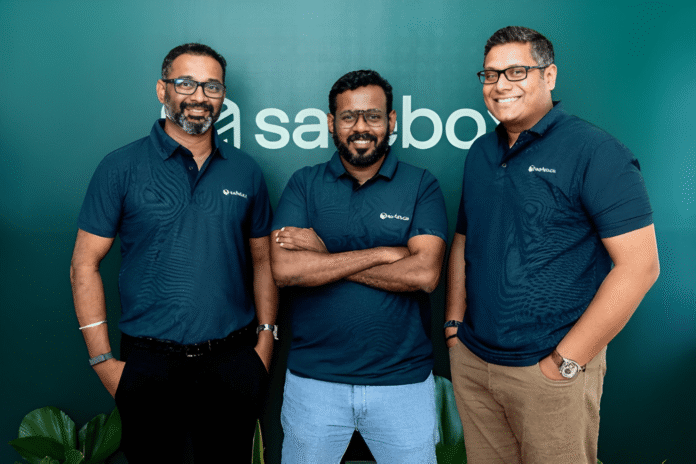
Vijay Veera, Vignesh Rengasamy, Rajesh Sankarappan, co-founders, Safebox

Safebox, a wealth protection platform designed to help Indian families track and safeguard their financial assets, has raised $1.11 million (₹10.5 crore) in a seed funding round. A family office led the round, while several angel investors also participated, including Sekhar Garisa, Managing Director, Claypond Capital, who invested in his personal capacity.

The idea for Safebox emerged after a near-fatal accident prompted two of its founders to ask a critical question: if they had not survived, would their families have known what they owned? Following that experience, three childhood friends and serial entrepreneurs came together to build a solution aimed at helping families protect and manage their wealth.

India currently has ₹86,917 crore in unclaimed bank deposits. However, the founders argue that the figure represents a symptom of a much larger problem rather than the problem itself.

According to a written reply in the Rajya Sabha in August 2026, unclaimed deposits transferred to the Reserve Bank of India’s Depositor Education and Awareness Fund reached ₹86,917 crore as of June 30, 2026. State Bank of India alone accounts for approximately one-quarter of this amount.

However, the banking figure covers only deposits. Insurance and mutual fund data follow separate reporting frameworks maintained by IRDAI and SEBI, with different reference dates and definitions. As a result, India currently lacks a single consolidated view of household assets across financial institutions.

That gap creates a significant challenge for families. If government systems cannot combine household asset information across three financial regulators, individual families face an even greater challenge when they try to track assets spread across banks, insurers, brokers, EPFO, and other institutions.

Meanwhile, the government and financial regulators have taken several steps to help people recover unclaimed assets. In June 2026, the Department of Financial Services launched the Common Landing Portal for Unclaimed Financial Assets, adding to platforms such as the RBI’s UDGAM, IRDAI’s Bima Bharosa, and SEBI’s MITRA.

These platforms help families search for financial assets they already suspect exist. However, Safebox approaches the issue from a different direction by helping families create a complete record of their financial assets before an emergency occurs.

The platform enables families to build and maintain this financial map while they are together, reducing the need to reconstruct their wealth information during periods of stress, uncertainty, or transition.

Safebox is positioning itself in the emerging Family Wealth Protection category. The platform allows Indian families to track their financial lives across multiple phone numbers, bank accounts, PANs, investment portfolios, stocks, ETFs, EPFs across multiple employers, NPS holdings, and other assets through a single platform.

Additionally, Safebox tracks assets, liabilities, insurance policies, and family information across 55 categories. It also maps nominees to individual holdings and helps spouses or family members locate and access important financial information during emergencies or major life transitions.

The platform also integrates with India’s regulated financial infrastructure, including the Account Aggregator framework. Therefore, Safebox aims to address the growing complexity of household finances through a unified approach to financial record-keeping.

For Indian households between the ages of 35 and 55, managing multiple investments, dependents, and ageing parents can create an increasingly complex financial footprint. Their wealth often spans dozens of institutions, digital accounts, and financial identities. Consequently, Safebox views financial preparedness as a data-management challenge rather than simply a matter of maintaining financial discipline.

The platform has also grown largely through referrals and family invitations. Since June 2026, families using Safebox have recorded more than ₹6,000 crore in assets on the platform, covering cross-asset family holdings with nominee mapping.

“Families in India spend thirty years building wealth and about thirty minutes thinking about whether loved ones could find it. There is ₹86,917 crore lying unclaimed in bank deposits alone, and nobody in this country can tell you about the full number across every asset class. That is not a recovery problem. It is a record-keeping problem. We are not building a way to find lost money. We are building a way to never lose it,” Vijay Veera, Co-Founder and CEO, Safebox.

“India has built excellent infrastructure for creating wealth and almost none for carrying it across a generation. Safebox is one of the few teams approaching this as a data and trust problem rather than a product feature. The founders have built and scaled companies before, and they are building this one with the same discipline,” Sekhar Garisa, Angel Investor (MD, Claypond Capital).

Indian EV startup Ultraviolette plans $82 Mn EV Plant as demand surges

0
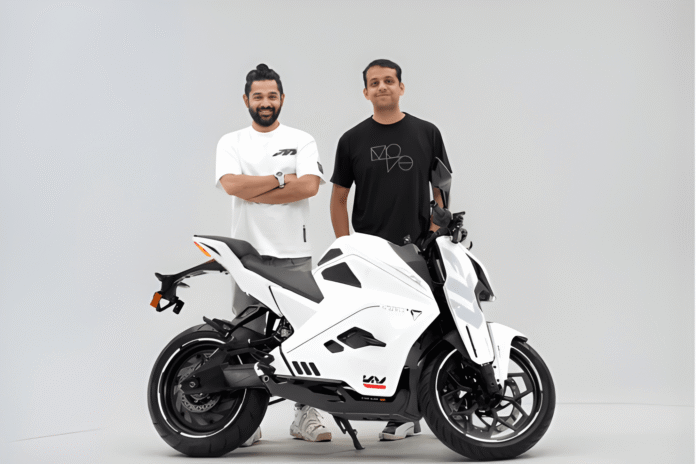
Narayan Subramaniam & Niraj Rajmohan, co-founders, Ultraviolette

Indian electric motorcycle manufacturer Ultraviolette Automotive plans to invest ₹7.79 billion ($81.93 million) over the next five years to establish a new manufacturing facility in Hosur, Tamil Nadu. The company aims to increase production capacity and strengthen its entry into the mass-market electric two-wheeler segment.

Meanwhile, concerns about the compatibility of older petrol vehicles with E20 fuel are contributing to rising demand for electric two-wheelers in India. Government data shows that electric two-wheeler sales crossed 1.03 million units during the first eight months of 2026.

The new Hosur facility will initially produce 250,000 vehicles annually. Moreover, Ultraviolette can expand the plant’s capacity to 500,000 units as market demand increases. The company, which counts Qualcomm and TVS Motor among its backers, will use the facility to complement its existing manufacturing plant near Bengaluru, which has an annual capacity of up to 50,000 units.

According to consulting firm McKinsey, electric two-wheelers could account for 40% to 45% of the segment by fiscal 2030. In addition, their share of India’s overall two-wheeler sales crossed 10% for the first time in August 2026.

“The demand we have for our products, including what is coming up next with the Tesseract and the Shockwave, is far more than the current facility can cater to,” Ultraviolette co-founder and CEO Narayan Subramaniam said.

The company currently focuses on premium electric motorcycles, including the F77 and X47. However, Ultraviolette plans to broaden its market reach with the upcoming Shockwave motorcycle, priced below ₹200,000, and the Tesseract scooter, which will cost less than ₹150,000.

Furthermore, Subramaniam said the company expects domestic demand for its scooters to reach at least 10,000 units per month. This level of demand could position Ultraviolette to compete more closely with established electric two-wheeler manufacturers such as Ola Electric and Ather Energy.

The company will fund the ₹7.79 billion investment through internal reserves, equity, and future cash flows. At the same time, it plans to keep its reliance on debt limited, according to CTO Niraj Rajmohan.

Ultraviolette selected Hosur partly because of its proximity to the company’s Bengaluru research and development centre. Additionally, the location provides access to a well-established automotive supply chain, Rajmohan said.

Ultraviolette sold more than 3,000 electric motorcycles globally during the first half of 2026. By comparison, Zero Motorcycles sold around 1,756 units, while Harley-Davidson’s LiveWire sold approximately 300 units during the same period, according to the company.

Meanwhile, exports to Europe and Latin America currently contribute around 15% of Ultraviolette’s sales. Subramaniam expects the international markets’ contribution to rise to 25% within the next five years.

Salesforce in talks to acquire AI startup Listen Labs for around $2 Billion

0
Florian Jüngermann & Alfred Wahlforss, co-founders, Listen Labs

Listen Labs, a market research startup that uses voice AI to conduct customer interviews, recently signed a term sheet for a $125 million Series C round at a $1.5 billion valuation. Menlo Ventures was set to lead the round, according to several people familiar with the matter.

However, the funding round did not close. Instead, Listen Labs walked away from the signed term sheet, a rare move in the venture capital industry that investors generally view unfavourably.

The financing may have fallen through because of acquisition discussions with Salesforce. The CRM giant has recently held talks to acquire Listen Labs for around $2 billion, according to a report. However, the discussions remain ongoing and may not ultimately result in a transaction.

Listen Labs ranks among the leading startups in the rapidly expanding market for AI-powered customer research. The three-year-old company generates approximately $30 million in annualised revenue, according to two people familiar with the companies’ financials. That figure stands at roughly three times the revenue of Simile, a competing startup that uses AI to predict human behaviour.

In late July, Simile announced a $200 million Series B at a $2 billion valuation, with Greenoaks leading the round. According to one person, the deal could establish a new valuation benchmark for Listen Labs.

If Salesforce’s acquisition discussions fail, several venture capital investors expect Listen Labs to return to the fundraising market and target a valuation of $2 billion or more.

An acquisition could strengthen Salesforce’s AI capabilities by incorporating Listen Labs’ technology to help predict customer needs. However, Salesforce could ultimately determine that paying approximately 67 times revenue represents too high a valuation, according to a person with experience negotiating exits to Salesforce.

Listen Labs, Salesforce, Menlo Ventures, and Simile did not immediately respond to requests for comment.

Listen Labs was co-founded in 2023 by Florian Jüngermann, a former German national champion in competitive computer programming, and Alfred Wahlforss, who previously founded staffing startup Bemlo. The two founders met while pursuing master’s degrees at Harvard.

Listen Labs’ AI technology develops survey questions and interviews customers through audio or video. It then converts those conversations into reports and PowerPoint presentations similar to the materials traditionally created by human market researchers.

Fortune 500 companies use this type of research to understand customer needs and measure satisfaction with their brands and products. However, traditional market research can prove expensive and take several weeks to complete.

Listen Labs’ technology aims to reduce both the cost and turnaround time of these projects. As a result, companies can gain faster insights into customer responses to product changes and use those insights to improve their offerings more efficiently.

The startup’s customers include Microsoft, Canva, Anthropic, and Sweetgreen. Meanwhile, Listen Labs and Simile face competition from other AI-focused customer research startups, including Outset, Keplar, and Aaru.

While some platforms automate interviews with real people, others, including Aaru and Simile, use synthetic approaches. These platforms rely on AI to simulate human behaviour and predict responses without conducting interviews with actual customers.

Listen Labs previously reached a $500 million valuation when it announced a $69 million Series B in late January. Ribbit Capital led that round, while existing investors Sequoia, Conviction, and Pear VC also participated.

Carrum Mobility secures Rs 96-Cr to scale fleet operations across India

0
Karan Jain, Founder, Carrum Mobility

Carrum Mobility, a B2B fleet-management technology platform backed by CarDekho Group, has raised USD 10 million, or approximately Rs 96 crore, in a Series B funding round led by Uber, according to a media report.

The latest investment marks the second tranche of funding from Uber for Carrum Mobility. Earlier, Uber invested USD 7 million in the company in January 2026.

Carrum Mobility will use the fresh capital to expand across its existing markets and enter new geographies. In addition, the company plans to strengthen its technology platform, scale operations, and support the expansion of its mobility offerings and Uber Black services in India.

Founded in 2024 by Karan Jain, Carrum Mobility currently operates more than 5,000 vehicles across Bengaluru, Hyderabad, Mumbai, Pune, Delhi, and Kolkata. Furthermore, the company plans to begin operations in Chennai in September 2026.

The platform has also onboarded more than 18,000 driver partners and focuses on fleet operations involving CNG and electric vehicles. Through its technology-driven approach, Carrum Mobility aims to improve fleet efficiency while supporting the growing demand for mobility services.

Carrum Mobility said its business has nearly doubled since Uber’s investment in January 2026. Moreover, the company has remained profitable since its first month of operations and currently operates at an annualised revenue run rate of approximately Rs 400 crore.

“Since the last funding round, we have nearly doubled the scale of our business while remaining consistently profitable,” said Karan Jain. He added that the company will deploy the new capital toward geographical expansion, technology investments, and team growth.

Meanwhile, Uber India and South Asia Director, Supply, Aditya Kapoor, said the investment would help Carrum Mobility expand its premium-mobility offerings and Uber Black services across India.

The company also uses technology and data-led operations to improve fleet utilisation and enhance driver productivity. Consequently, Carrum Mobility aims to strengthen its fleet-management capabilities as it expands into additional markets.

ZainTECH signs strategic collaboration agreement with AWS to boost cloud and AI adoption in Saudi Arabia

0

Collaboration will help organizations across government, financial services, energy, and healthcare accelerate cloud adoption, strengthen resilience, and address security requirements

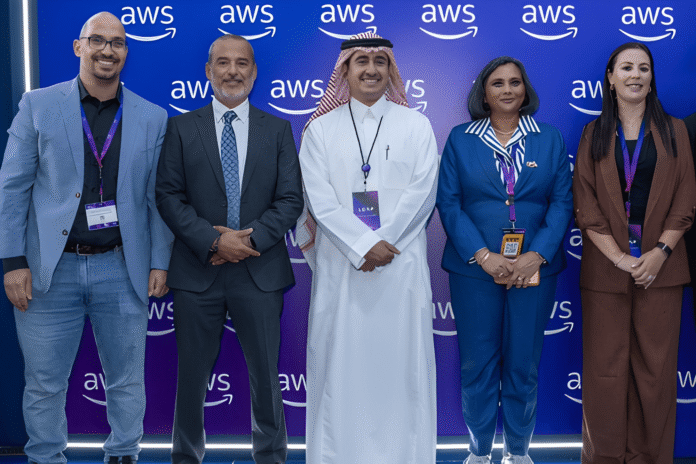
Riyadh, KSA – September 2, 2026: ZainTECH, the digital solutions arm of Zain Group, has signed a multi-year strategic collaboration agreement with Amazon Web Services (AWS) to support organizations across Saudi Arabia in accelerating cloud adoption, modernization and AI-led innovation.

The collaboration, which will help to accelerate customer engagement and adoption of AWS cloud and AI services across the Kingdom, comes at an important stage in Saudi Arabia’s digital transformation journey. Organizations across government, financial services, energy, and healthcare are modernizing their technology environments and increasing investment in cloud, data, and AI. Under the collaboration agreement, ZainTECH experts will support organizations in adopting AWS solutions, strengthening their security and compliance readiness, and exploring new AWS Cloud-enabled use cases and opportunities.

“Saudi Arabia is entering an important new phase of cloud adoption, with local cloud infrastructure creating new possibilities for organizations across the Kingdom,” said Andrew Hanna, Chief Executive Officer of ZainTECH. “Our multi-year strategic collaboration with AWS strengthens our ability to support customers at this pivotal stage. With ZainTECH’s regional expertise, we can help organizations prepare their environments, address security and data residency requirements, and accelerate the development of new solutions across cloud, data, and AI.”

The strategic collaboration builds on ZainTECH’s established cloud capabilities and regional presence across the Middle East, supporting its mission to enable organizations to become Digital, Intelligent and Resilient. The company serves more than 1,600 organizations across eight countries and has more than 850 technology professionals, with expertise spanning cloud, cybersecurity, data and AI, digital solutions, and managed services. This regional scale and technical expertise enable ZainTECH to help organizations modernize their environments, strengthen resilience, and build the capabilities needed to innovate in a rapidly evolving technology landscape.

The collaboration supports Saudi Arabia’s broader digital transformation agenda and Vision 2030 objectives by helping organizations use cloud technologies to enhance agility, strengthen resilience, and accelerate innovation. Through its collaboration with AWS, ZainTECH will continue working with organizations across the Kingdom to unlock new opportunities enabled by cloud, data, AI, and other emerging technologies.

More about ZainTECH

ZainTECH is the digital solutions arm of Zain Group, supporting organizations across the Middle East through its Digital, Intelligent, and Resilient framework.

The company is positioned to drive the transformation of organizations, modernizing operations, embedding intelligence, and building secure, compliant always-on environments across the region.

ZainTECH delivers this through centers of excellence and managed solutions spanning the ICT stack and emerging technologies, including cloud, cybersecurity, data, drones, and robotics, powered by responsible AI, local expertise, and global innovation.

Present across 8 countries, ZainTECH has grown through a series of strategic acquisitions, bringing together specialized capabilities and deep domain expertise under a unified delivery model. It combines strong regional depth, supporting alignment to regulatory requirements and industry-specific demands.

For more information, please visit: www.zaintech.com

Affirma Hospitality’s MaatriBhoomi eyes expansion across four major Indian cities

0

Affirma Hospitality’s premium regional Indian restaurant brand MaatriBhoomi plans to open four outlets across Delhi, Bengaluru, Hyderabad, and Mumbai by next year, following its launch in Noida.

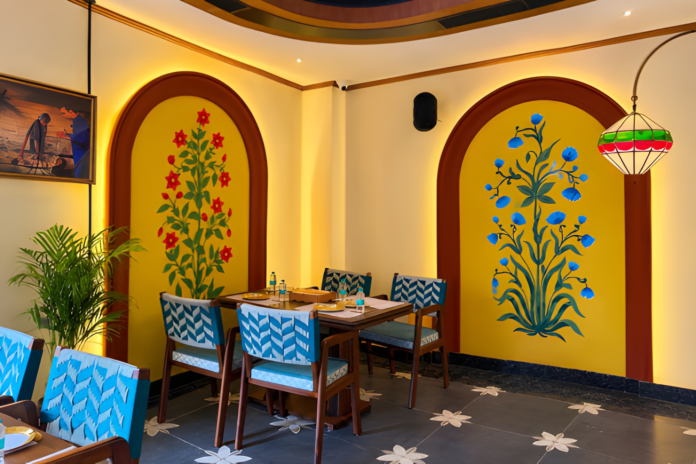
The brand will adopt a “one city, one outlet” model, positioning each restaurant as a single premium dining destination in its respective market. In Noida, MaatriBhoomi operates its first outlet at Botanical Garden Metro Station in Sector 38.

MaatriBhoomi developed its concept after undertaking a 14,000-km culinary journey across India. During the journey, its team explored regional recipes, indigenous ingredients, and traditional cooking techniques. Consequently, the brand has built its menu around regional Indian cuisine while presenting traditional flavours through a premium dining format.

“Our journey of over 14,000 km across the country gave us the opportunity to experience food at its source, meet communities that have preserved these traditions, and discover recipes that deserve to be celebrated,” said Priykant Gautam, founder, MaatriBhoomi. “With MaatriBhoomi, we want to bring these stories and flavours to the table while creating an elevated dining experience.”

Meanwhile, the expansion forms part of Affirma Hospitality’s broader strategy to develop experience-led food and beverage concepts. Through MaatriBhoomi, the company aims to combine regional cuisine with culinary storytelling and traditional food practices.

The Noida launch marks the first step in the brand’s planned expansion across Delhi, Bengaluru, Hyderabad, and Mumbai. As MaatriBhoomi enters these markets, its restaurants will continue to focus on regional Indian cuisine, culinary heritage, and an elevated dining experience.

County Group to develop Rs 4,500-Cr ultra-luxury housing project in Gurugram

0

NCR-based real estate developer County Group will develop an ultra-luxury residential project in Sector 88A, Gurugram, with an estimated Gross Development Value (GDV) of Rs 4,500 crore.

Spread across approximately 24 acres, the project will feature 844 residences across nine towers. The development will include three Gold Segment towers and offer 3 and 4 BHK configurations.

Located in New Gurugram’s emerging growth corridor, the project will provide connectivity to key destinations through the Dwarka Expressway and NH-48. Moreover, the developer has planned the project around a pedestrian-first approach, with vehicular movement largely restricted to the periphery. As a result, the inner landscape will offer a calmer, greener, and more pedestrian-friendly environment.

“The luxury housing market is evolving towards projects that offer not just larger homes, but a more sophisticated way of living. With this project, we have brought together thoughtful planning, expansive landscapes, biophilic design, and a strong focus on community,” said Amit Modi, Director, County Group.

The developer has planned the project across four phases. The first phase, The Center Court, spans 6.119 acres and comprises four towers. County Group has already completed and delivered this phase, while it is developing the remaining licensed land through three subsequent phases.

Construction across the project is scheduled to take place from July 1, 2026, to December 31, 2032. Furthermore, the acquisitions have provided the developer with approximately 2.6 million sq ft of saleable area.