Wednesday, April 22, 2026
Home Blog Page 18

Flipkart Minutes and Amazon now rapidly expand dark stores as quick commerce competition intensifies in India

0

Flipkart and Amazon are rapidly expanding their dark stores across India, while early quick commerce pioneers are slowing their growth to focus on profitability. At the same time, industry discussions around last-mile employment conditions continue to intensify, which adds another layer of complexity to the sector’s rapid expansion.

Flipkart, the Walmart-owned e-commerce giant, launched its quick commerce service, Minutes, in August 2024. Since then, the company has aggressively scaled its infrastructure to capture a larger share of India’s fast-growing instant delivery market.

Sources indicate the company has been adding roughly 100 dark stores per month this year, and it plans to reach around 1,200 stores by June, up from 750–800 currently. Meanwhile, Minutes already operates in 70–75 cities; however, the company aims to expand its presence to 220–250 cities by June, which highlights its aggressive growth strategy.

At the same time, Amazon has also accelerated the rollout of its Amazon Now quick commerce service since December. Consequently, Amazon Now is expected to reach approximately 500 dark stores in the near future as the company strengthens its last-mile delivery capabilities in India.

Meanwhile, Reliance JioMart is pursuing a different strategy to compete in the quick commerce market. Instead of building new dark stores, the company is leveraging its existing retail network to fulfill orders more efficiently. As a result, the company currently handles nearly 1.6 million orders daily, which brings it close to Blinkit’s 2 million daily orders and places it ahead of Swiggy Instamart and Zepto in daily order volume.

By utilizing its established supply chain strength—particularly in fruits and vegetables—Reliance claims contribution-margin positivity. In other words, the company earns money on each order after accounting for direct operational costs.

Meanwhile, other quick commerce players are actively seeking significant funding to sustain competition and growth. Swiggy and Zepto, for instance, are pursuing ₹215,000 crore from public markets as they prepare to scale operations while improving financial sustainability.

At the same time, quick commerce platforms are expanding beyond grocery deliveries to capture higher-margin product categories. Flipkart Minutes, for example, has started delivering mobiles and electronics within 15–20 minutes, which signals a major shift in the sector’s product mix.

Moreover, non-grocery items now contribute nearly 20% of average sales across quick commerce platforms. Because these products often carry higher margins, they offer companies a stronger path toward profitability.

Therefore, analysts believe that expanding into electronics and other high-value products could significantly improve margins while enabling platforms to scale their operations more efficiently in India’s competitive quick commerce landscape.

Flipkart and Amazon are aggressively scaling their dark-store infrastructure to dominate India’s rapidly evolving quick commerce market. Meanwhile, competitors are focusing on profitability, funding, and diversified product offerings. As companies expand into high-margin categories like electronics and strengthen supply chains, the sector will likely witness even fiercer competition and faster innovation in the coming years.

AI startup Rox hits $1.2 Bn valuation to expand autonomous AI sales agents

0
Ishan Mukherjee, Founder, Rox

AI startup Rox, which develops autonomous AI agents to improve sales productivity, has secured a new funding round that values the company at $1.2 billion, according to multiple sources. As a result, the startup has entered the unicorn club while strengthening its position in the rapidly expanding AI-driven sales technology market.

Moreover, the funding round included a lead investment from returning backer General Catalyst, according to two people familiar with the development. However, Rox and General Catalyst did not respond to requests for comment regarding the investment.

At the time of the fundraise, which closed last year, Rox projected that it would end 2025 with $8 million in annual recurring revenue (ARR), according to two sources familiar with the deal. Consequently, the company has continued to scale its operations while expanding its product capabilities.

Earlier, in November 2024, Rox announced that it had raised a total of $50 million across multiple funding rounds. The funding included a seed round led by Sequoia Capital and a Series A round led by General Catalyst, while GV also participated in the investment.

Ishan Mukherjee founded Rox in 2024 after previously serving as the chief growth officer of New Relic. Notably, Mukherjee joined New Relic after the company acquired Pixie Labs, a company he co-founded.

Furthermore, the startup positions itself as an intelligent revenue operating system that integrates with a company’s existing software tools, including platforms such as Salesforce and Zendesk. Through this integration, Rox deploys hundreds of AI agents that continuously support sales teams.

These AI agents monitor existing customer accounts, research potential prospects, and update CRM systems automatically. Therefore, Rox aims to consolidate several fragmented sales tools into one streamlined solution, allowing businesses to improve efficiency and reduce reliance on multiple software platforms.

“Rox’s unique system of AI agents levels up the CRM experience,” Dave Munichiello wrote in a 2024 blog post while announcing the Series A round. “These agents work constantly behind the scenes to monitor customer activity, identify potential risks and opportunities, and even suggest the best course of action.”

At the same time, Rox faces competition from multiple segments of the sales technology market. Established revenue intelligence companies such as Gong and Clari compete in the same space, while AI sales development platforms including 11x and Artisan also target similar enterprise customers.

Additionally, a growing number of AI-native CRM platforms continue to enter the market. For example, Monaco, founded by Sam Blond, the former president of corporate spending platform Brex, launched out of stealth last month.

Meanwhile, Rox has already attracted several well-known enterprise customers. According to the company’s website, its client base includes companies such as Ramp, MongoDB, and New Relic.

Rox’s latest funding round and $1.2 billion valuation highlight growing investor confidence in AI-powered sales automation platforms. As businesses increasingly adopt AI-driven tools to streamline revenue operations, Rox aims to strengthen its position by deploying autonomous AI agents that improve efficiency, enhance CRM insights, and transform how sales teams manage customer relationships.

Accel Leaders Fund eyes Rapido’s $600M funding round to boost India mobility expansion

0
Pavan Guntupalli, Aravind Sanka, and Rishikesh SR, co-founders, Rapido

Accel Leaders Fund is likely to participate in the ongoing USD 550 million–USD 600 million funding round of ride-hailing platform Rapido, according to people familiar with the development. Consequently, the potential investment could bring another global investor to Rapido’s cap table as the company seeks fresh capital to expand its mobility services and strengthen its presence in India’s competitive ride-hailing market.

Furthermore, the Accel-backed growth-stage vehicle typically invests in late-stage rounds of high-growth startups. Therefore, the fund often supports companies as they scale operations and prepare for larger institutional funding or potential public listings.

Meanwhile, Rapido, founded by Pavan Guntupalli, Aravind Sanka, and Rishikesh SR, initially built its business around bike-taxi services. Over time, the company expanded into auto-rickshaw and cab bookings, and as a result, it positioned itself as a strong competitor to larger ride-hailing platforms operating across India.

In addition, the company has explored adjacent services, including logistics and food delivery pilots in select cities. Through these initiatives, Rapido aims to evolve into a broader urban mobility and services platform that serves multiple transportation and convenience needs.

At the same time, Rapido has attracted backing from several prominent investors, including Prosus, WestBridge Capital, Nexus Venture Partners, and Shell Ventures.

Moreover, the proposed funding round highlights continued investor interest in India’s mobility sector. The sector is experiencing rapid expansion due to urbanisation, rising smartphone penetration, and increasing demand for affordable transport solutions.

However, details regarding the valuation of the round and the final investor mix were not immediately available.

Rapido’s ongoing funding round underscores strong investor confidence in India’s fast-growing mobility ecosystem. If Accel Leaders Fund joins the round, the investment could accelerate Rapido’s expansion strategy while strengthening its position in the increasingly competitive ride-hailing market.

Anthropic invests $100 Million into Claude AI program to expand enterprise AI ecosystem

0
Daniela Amodei & Dario Amodei, co-founders, Anthropic

Artificial intelligence lab Anthropic launched the Claude Partner Network, a program that enables partner firms to help enterprises adopt its Claude AI model. The initiative arrives as the company continues a dispute with the United States Department of Defense.

Through this program, Anthropic plans to collaborate closely with partner organizations so they can integrate and deploy the Claude AI model for enterprise clients more effectively. Consequently, the company aims to strengthen its enterprise ecosystem while expanding the practical use of its AI technologies.

Moreover, Anthropic has committed an initial $100 million for 2026 to support the partner network. The funding will provide training, technical support, and joint market development opportunities for participating organizations. In addition, the company indicated that it expects to increase this investment over time as the program grows.

Starting Thursday, partners that join the network will receive immediate access to a new technical certification program. Furthermore, eligible partners will gain access to investment opportunities under the initiative, which will help them scale AI deployment for enterprise customers.

At the same time, Anthropic plans to significantly strengthen its partner ecosystem by expanding its partner-focused team fivefold. The expansion will include hiring applied AI engineers, technical architects, and professionals dedicated to localized go-to-market support across international markets. As a result, the company expects to improve implementation support and accelerate global adoption of its AI solutions.

Importantly, membership in the Claude Partner Network will remain free. The program will stay open to any organization involved in bringing Claude to market, thereby encouraging a broader ecosystem of technology partners, consultants, and system integrators.

Through this initiative, Anthropic aims to position its Claude AI platform as a central enterprise solution while enabling partners to build, deploy, and scale AI-powered applications worldwide.

Anthropic’s launch of the Claude Partner Network signals a major push to expand the enterprise adoption of Claude AI. By committing significant funding, strengthening its technical partner team, and offering free membership to organizations globally, the company is building a collaborative ecosystem designed to accelerate AI implementation across industries.

Zomato parent Eternal infuses Rs 450-Cr into Blinkit via rights issue

0

Eternal, the parent company of Blinkit, has infused Rs 450 crore into its quick commerce subsidiary through a rights issue, reinforcing its financial support for the rapid-delivery business as competition intensifies in the sector. According to regulatory filings sourced via The Kredible, Blinkit’s board approved the allotment of 2,799 equity shares to Eternal at an issue price of Rs 16,07,161 per share, thereby raising fresh capital of Rs 450 crore.

This investment marks the first capital infusion into Blinkit in 2026. Previously, Eternal injected significant funds into the quick commerce unit during 2025 as it accelerated expansion plans. The company invested Rs 500 crore in January, followed by Rs 1,500 crore in February and Rs 600 crore in November, bringing the total investment in the subsidiary last year to Rs 2,600 crore.

The latest funding will primarily support Blinkit’s expansion strategy. Specifically, the company plans to increase the number of dark stores, strengthen working capital, and manage operational expenses while scaling its rapid delivery network across additional Indian cities.

Meanwhile, competition in India’s quick commerce sector continues to intensify as rivals secure large funding rounds to expand their market presence. For instance, Zepto raised $450 million in October last year in a round led by California Public Employees’ Retirement System. Similarly, Swiggy raised around Rs 10,000 crore through a qualified institutional placement in December to strengthen investments in its quick commerce division, Instamart.

Despite remaining in an investment phase, Blinkit’s business performance continues to show strong growth. In the December quarter (Q3FY25), the company recorded revenue of Rs 1,399 crore, reflecting a 117 percent year-on-year increase from Rs 644 crore in the same quarter last year. Additionally, this figure exceeded the Rs 1,156 crore reported in the previous quarter.

However, profitability challenges persist as the company expands its operations. Blinkit reported an adjusted EBITDA loss of Rs 103 crore in Q3FY25, compared with a loss of Rs 89 crore during the same period last year and Rs 8 crore in the previous quarter.

At the same time, demand for rapid delivery services continues to rise. Blinkit’s gross order value (GOV) reached Rs 7,798 crore in the December quarter, compared with Rs 3,542 crore in Q3FY24 and Rs 6,132 crore in the preceding quarter, demonstrating strong momentum in customer orders.

The latest capital infusion also arrives months after leadership changes within the company. Albinder Dhindsa recently assumed the role of Group CEO of Eternal, while Deepinder Goyal stepped down from the position earlier this year. Consequently, the move underscores the growing strategic significance of quick commerce within the group’s broader business operations.

Eternal’s continued investment in Blinkit reflects its commitment to strengthening its quick commerce strategy amid rising industry competition. By expanding infrastructure, scaling dark stores, and supporting operational growth, the company aims to capture increasing consumer demand for ultra-fast deliveries. As competition from major players intensifies, Blinkit’s growth trajectory and sustained funding support will remain crucial in shaping the future dynamics of India’s rapidly evolving quick commerce market.

Razorpay builds AI payment agents with Claude to automate payments

0

Razorpay has announced the development of AI-powered payment agents built using Claude, marking a significant step toward integrating artificial intelligence into digital payment operations. The company revealed that these intelligent agents can automate routine financial tasks such as recovering abandoned purchases, retrying failed subscription payments, resolving disputes, and forecasting cash flows.

Furthermore, the initiative reflects a broader transformation in the payments industry toward agentic commerce, where AI systems actively perform financial and operational tasks on behalf of businesses. As a result, payment companies are increasingly exploring ways to allow customers to complete transactions directly through AI assistants and conversational interfaces.

Several players across the payments ecosystem are also moving in this direction. Payment aggregators such as Cashfree and global card networks Visa and Mastercard, as well as merchant processors including PayU and Pine Labs, are working with advanced AI platforms such as ChatGPT and Claude to enable similar capabilities.

Razorpay integrated these AI agents through Anthropic’s Claude agent software development kit, enabling businesses to deploy intelligent systems that interact directly with customers. For example, the AI agents help merchants recover lost sales by contacting shoppers who abandon their online carts. The agents can send a message or voice notification to ask why the purchase remained incomplete and then offer reminders or small incentives to encourage customers to finish the transaction.

In addition, the fintech company has launched an agentic experience platform, which introduces an AI-native layer designed to simplify the way online businesses onboard to Razorpay, integrate payment infrastructure into their applications, and manage payment workflows more efficiently.

“Businesses don’t just need more software anymore, they need intelligence that can act,” Harshil Mathur, chief executive of Razorpay, said in the statement.

Moreover, the company stated that businesses can use these tools to create their own customized AI agents through simple language-based commands. These agents can integrate seamlessly with e-commerce platforms such as Shopify and logistics platforms like Shiprocket, while also connecting with messaging services such as WhatsApp.

Irina Ghose, managing director, India at Anthropic, said, “Razorpay’s work with Claude shows how AI agents can recover revenue, resolve disputes, and predict cash flow. It’s a great example of what AI can do when it is built into business operations.”

At the same time, Razorpay is experimenting with AI-led in-app commerce experiences across several consumer platforms. The company is currently testing these capabilities with partners including Zomato, Swiggy, PVR INOX, and Vodafone Idea.

Through these experiments, customers can discover products, evaluate options, and complete payments within the same AI-powered conversation. Consequently, the approach could significantly streamline digital commerce by reducing the steps required to finalize transactions.

Razorpay’s move to build AI-powered payment agents highlights the rapid evolution of fintech toward intelligent, automated commerce systems. By integrating conversational AI directly into payment operations, the company aims to help businesses recover lost revenue, simplify financial management, and enhance customer engagement. As AI-driven commerce gains traction across the payments ecosystem, innovations like these could reshape how businesses and consumers interact with digital transactions.

Entrepreneurs First raises $200M to back global startups

0

Entrepreneurs First has secured USD 200 million in fresh funding from a group of leading technology founders and investors to strengthen its mission of building the next generation of global startups while expanding its founder development programmes.

The funding round attracted participation from prominent technology leaders, including Reid Hoffman, Eric Schmidt, John Collison, and Patrick Collison. In addition, institutional investors such as Greylock also joined the round, highlighting strong confidence in the firm’s talent-first investment approach.

Entrepreneurs First operates a unique model that prioritizes talent before ideas. The firm identifies individuals with exceptional technical or entrepreneurial potential and then supports them in forming companies from the ground up through structured programmes and early-stage investment capital.

As a result of this strategy, the company has built a rapidly expanding global startup portfolio. Currently, the combined valuation of EF-backed startups exceeds USD 16 billion, a sharp rise from USD 3 billion in 2021, according to the company.

“We have raised this capital to double down on what we do best: identifying extraordinary individuals early and helping them build outlier companies from scratch,” said Alice Bentinck.

Bentinck co-founded Entrepreneurs First alongside Matt Clifford. Together, they established company-building programmes across Europe, India, and the United States, where EF selects participants from top academic institutions such as Stanford University, Massachusetts Institute of Technology, and University of California Berkeley.

In India, the organisation operates its programme from Bengaluru under the leadership of Rahul Samat. The initiative focuses on identifying early-stage technical founders and guiding them as they build companies from the idea stage to their first funding round.

Participants frequently enter the programme without a co-founder or even a defined startup concept. However, EF provides structured support in areas such as product development, team formation, and fundraising, enabling founders to transform early concepts into scalable businesses.

Currently, EF India manages a portfolio of more than 50 startups, including companies like Unbox Robotics, Unsiloed AI, Sidecar AI, and Aule Space. Many of these startups have successfully secured follow-on funding from major venture capital firms such as Nexus Venture Partners, Matrix Partners, SOSV, and Pi Ventures.

Since 2024, Entrepreneurs First has relocated all pre-seed-funded startups to the San Francisco Bay Area before their seed rounds. The company implemented this strategy to accelerate fundraising opportunities and improve access to global markets.

According to EF, this shift has already produced measurable results. The average time required for founders to raise funding has reduced significantly, while startup valuations have doubled.

“India continues to be one of the deepest pools of technical and entrepreneurial talent in the world,” Samat said, adding that the new capital will help the firm identify more early-stage founders and support them in building globally competitive startups.

The USD 200 million funding round strengthens Entrepreneurs First’s position as a leading global company builder focused on talent-driven innovation. By identifying promising individuals at an early stage and guiding them through structured startup development, the firm continues to create high-growth companies across global markets. Moreover, with strong investor backing and an expanding presence in India, the organisation is well positioned to nurture the next wave of globally competitive founders.

PropTech Pulse transforms India’s real estate with AI

0

India’s real estate sector is rapidly transitioning from traditional practices to a technology-driven ecosystem powered by artificial intelligence, and analysts expect the market to reach between USD 3.79 billion and USD 4.29 billion by 2030. Amid this transformation, PropTech Pulse is positioning itself as one of India’s most trusted all-in-one, knowledge-driven platforms within the property ecosystem. By placing knowledge at the center of its services, the platform addresses one of the industry’s most persistent challenges by enabling homebuyers and investors to access reliable, decision-ready insights for property transactions.

Furthermore, the platform serves developers, investors, lenders, and advisors by creating a unified ecosystem that supports every participant in the real estate value chain. As a result, stakeholders can access information, tools, and services from a single integrated environment.

For decades, India’s real estate sector has faced a credibility gap that has complicated property transactions. Buyers often encounter unclear property titles, undisclosed charges, inconsistent developer commitments, and complex regulatory frameworks. Consequently, industry estimates suggest that information gaps have historically contributed to project delays, financial losses, and widespread skepticism among homebuyers, which has weakened overall market confidence.

However, PropTech Pulse believes that trust develops through education, transparency, and empowerment rather than through transactions alone. Therefore, this philosophy drives the platform’s strategy to reshape the property ecosystem by prioritizing knowledge and informed decision-making.

At the core of the platform lies an extensive Knowledge Hub that democratizes access to real estate information. Through its “Pulse University,” users learn about property investment and homeownership while earning knowledge credentials. As a result, the platform transforms passive buyers into well-informed decision-makers who understand market dynamics.

Additionally, the platform delivers multiple information formats to meet diverse user preferences. Daily Pulse provides curated updates on market developments and regulatory changes, while Insight Pulse offers detailed blog analyses that break down complex industry topics. Meanwhile, Quick Pulse delivers property insights through engaging video content that appeals to digital-first audiences.

Moreover, the platform publishes detailed market reports, visually engaging infographics, and informative newsletters. Consequently, users gain access to critical real estate information in formats that match their learning style and decision-making needs.

At the same time, PropTech Pulse uses technology to introduce data-driven transparency into property transactions. The platform’s RERA Search tool allows buyers to instantly verify project registration details and confirm regulatory compliance before committing to a purchase. Therefore, this feature directly addresses years of buyer uncertainty regarding project legitimacy and developer credibility.

In addition, the Circle Rate Calculator and Stamp Duty Calculator simplify property taxation by helping buyers estimate their total financial commitment accurately. Previously, buyers had to rely on multiple consultations to calculate such costs; however, these digital tools now provide a fast and self-service solution that improves clarity and confidence during transactions.

For homebuyers evaluating financing options, the platform offers several financial tools that enhance transparency and control. A free CIBIL Score Tracker provides immediate credit score insights, while an Eligibility Calculator helps users determine their loan qualification. Furthermore, a Home Loan EMI Calculator enables buyers to estimate monthly repayment obligations before applying for a loan.

Meanwhile, the Loan Transfer Calculator helps existing borrowers identify opportunities to reduce their interest burden through refinancing. Consequently, these tools empower consumers to make informed financial decisions while maintaining full control over their borrowing strategies.

PropTech Pulse also integrates end-to-end services to streamline the homebuying journey. Verified property listings across major Indian cities connect buyers with genuine opportunities while filtering out fraudulent listings. As a result, the platform significantly reduces the risk associated with property discovery.

Additionally, through its AI-driven lending platform Aurum KuberX, PropTech Pulse helps users access home loans with competitive rates and expert guidance. The ecosystem also connects buyers with interior design services and trusted packers-and-movers partnerships. Therefore, the platform reduces the fragmentation that typically complicates real estate transactions and creates a smoother buying experience.

The company is also advancing artificial intelligence capabilities through Pulse AI, a 24/7 voice-based agent designed to handle property queries instantly. For developers, this system provides scalable customer service infrastructure that supports large volumes of inquiries. Meanwhile, buyers benefit from immediate information access regardless of time constraints, which reinforces the platform’s goal of eliminating accessibility barriers.

Beyond individual transactions, PropTech Pulse contributes to broader industry credibility and professional development. Through its Events platform, the company facilitates networking opportunities and knowledge exchange among real estate professionals. At the same time, the Company Insights section provides transparency into market participants, enabling buyers to evaluate developer credibility and historical performance.

These educational initiatives highlight the company’s understanding that trust grows through sustained education rather than aggressive sales tactics. By investing in buyer knowledge at every stage of the journey, PropTech Pulse is gradually raising customer engagement standards across the industry.

As India’s real estate market continues to digitize, platforms like PropTech Pulse demonstrate that technology delivers the greatest value when it strengthens human decision-making rather than replacing it. By making knowledge accessible, transparent, and actionable, the platform directly addresses the trust deficit that has historically limited the sector’s growth.

In positioning itself as India’s most trusted real estate advisor, PropTech Pulse acknowledges a fundamental reality of the property market. In an industry defined by high-value investments and long-term commitments, trust cannot exist as a marketing promise; instead, companies must deliver it through consistent transparency, education, and a strong commitment to empowering buyers.

Overall, PropTech Pulse is redefining how Indians approach property decisions by combining technology, knowledge, and transparency within a single ecosystem. As digital adoption accelerates in the real estate sector, platforms that prioritize informed decision-making will likely shape the future of property transactions. Consequently, PropTech Pulse’s knowledge-first model could serve as a blueprint for building long-term trust and efficiency across India’s rapidly evolving real estate market.

Eco Hotels And Resorts Limited Expands into India’s Spiritual Tourism Market with New Hotel in Ayodhya

0
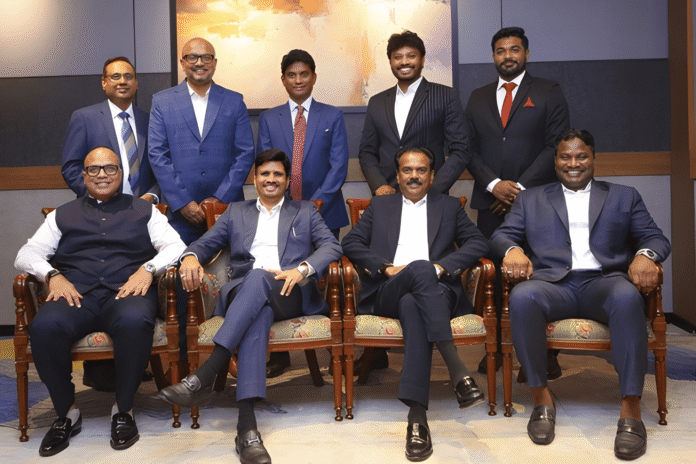
(L–R) Raju Das, Mahant, Hanuman Ghari, Ayodhya_ Ashutosh Pandey, IPS, Director General of Police, Telecom and Vinod Kumar Tripathi, Chairman of Eco Hotels and Resorts Limited at the launch of ‘The Eco Satva’ hotel

Eco Hotels and Resorts Limited (BSE: 514402), a sustainable hospitality company committed to responsible tourism, announced the launch of its newly completed hotel property in Ayodhya, marking a strategic expansion into one of India’s fastest-growing religious tourism markets.

Anchored by the iconic Shri Ram Janmabhoomi Temple, Ayodhya has rapidly emerged as a global pilgrimage hub, with visitor numbers rising from 57.5 million in 2023 to over 160 million in 2024, and more than 230 million devotees in the first half of 2025. Supported by enhanced infrastructure, pilgrim amenities, and strong connectivity, the city continues to attract domestic and international travelers. This growth is generating significant opportunities for local MSMEs, artisans, transport services, and employment, fostering a vibrant economic ecosystem around Ayodhya’s spiritual heritage.

The company’s new property is strategically positioned to serve this expanding market, offering 33 well-appointed rooms, a restaurant on the top floor, a landscaped lawn, and a swimming pool for a premium yet comfortable stay. Guests can enjoy satvik cuisine emphasizing fresh, vegetarian, and culturally authentic meals. “Sahar—Back to the Roots” restaurant serves food without onion and garlic and also offers Glutin free breakfast. Located just 5 kilometers from the Shri Ram Janmabhoomi Temple with direct highway access, the hotel ensures convenient connectivity for pilgrims and cultural travellers. Its sustainable practices, including efficient resource management and responsible energy use reflect the company’s ongoing commitment to environmentally conscious hospitality.

The launch also reflects the growing demand for quality hospitality infrastructure in emerging pilgrimage destinations across India. With Ayodhya witnessing unprecedented tourist inflow, the need for professionally managed hotels that combine comfort, accessibility, and responsible practices has become increasingly important. Eco Hotels & Resorts aims to address this gap by offering a thoughtfully designed property that caters to pilgrims, leisure travellers, and group tours while maintaining high standards of service, sustainability, and operational efficiency.

Speaking on the launch, Vinod Kumar Tripathi, Chairman of Eco Hotels And Resorts Limited, said: “Ayodhya represents one of India’s most dynamic tourism markets. Launching our hotel here is a strategic step in expanding our footprint in spiritual and cultural destinations. We aim to deliver a premium hospitality experience while implementing eco-conscious practices that respect both the environment and the city’s cultural heritage.”

With this property, the company strengthens its presence in Uttar Pradesh’s tourism economy and expands its portfolio of eco-friendly hospitality assets, including brands such as The Eco, The Eco Grand, EcoXpress, The Eco Boutique and EcoValue.

Chinese brain interface startup Gestala raises $21.6M to advance ultrasound-based BCI technology

0
Phoenix Peng, Founder and CEO, Gestala

Chinese brain interface startup Gestala has raised $21.6 million (CN¥150 million) just two months after launching, signaling growing momentum in the global brain–computer interface (BCI) sector. Founder and CEO Phoenix Peng revealed that the funding values the company between $100 million and $200 million, highlighting strong investor confidence in its non-invasive BCI technology.

Investors co-led the funding round through Guosheng Capital and Dalton Venture, while Tsing Song Capital, Gobi Ventures, Fourier Intelligence, Liepin, and Seas Capital also participated. The round attracted overwhelming demand, as investor commitments reached more than $58 million, Peng said.

Currently, this round represents the largest early-stage funding deal in China’s BCI industry. Therefore, Gestala plans to allocate the capital toward research and development, expand its team from 15 to about 35 employees by the end of the year, and establish a manufacturing facility in China. Moreover, the three-month-old startup aims to complete its first-generation prototype by year-end.

Meanwhile, the global BCI industry is witnessing a surge of investment in ultrasound-based technologies. Gestala has emerged as the first ultrasound BCI company in China, although it is not the first globally. In the United States, several companies already explore similar technologies, including Merge Labs, which ranks among the largest ultrasound BCI startups.

Peng believes ultrasound technology could shape the next generation of brain–computer interface systems because it enables broader access to brain activity. According to him, ultrasound technology may open new ways for humans to interact with neural signals.

The founder also emphasized that non-invasive ultrasound could overcome one of the biggest obstacles to BCI adoption: the risks linked to brain surgery. Compared with implanted electrode systems, ultrasound-based technology can monitor larger portions of the brain, including deep neural circuits. Furthermore, the system uses phased-array ultrasound to precisely stimulate or suppress neural activity without surgical procedures.

Despite growing geopolitical tensions, Peng still hopes that researchers in the United States and China will collaborate on deep-technology innovation.

“Both countries bring different strengths,” Peng said. “China offers large-scale clinical research capacity and efficient supply chains, while the U.S. has world-class scientific talent.”

He also suggested that joint initiatives could focus on building large clinical datasets to support global neuroscience research.

At present, Gestala is exploring several potential applications for its technology. The company has prioritized chronic pain management as its lead medical program because chronic pain affects large populations in both China and the United States. In addition, existing academic research suggests that ultrasound stimulation can significantly reduce pain levels, Peng explained.

Furthermore, the startup is studying potential uses for mental health conditions such as depression, PTSD, autism, and OCD. At the same time, researchers are examining stroke rehabilitation as another possible application.

Over the longer term, the company aims to investigate treatments for Alzheimer’s disease, essential tremor, and Parkinson’s disease. Overall, the startup is researching six to eight possible indications, although most of them remain in the early research phase rather than clinical trials.

Gestala believes it holds a competitive advantage over global rivals because of its development speed and production scale. By leveraging China’s integrated manufacturing ecosystem, the startup expects to move from development to production faster than many international competitors.

Additionally, the company is collaborating with major Chinese hospitals to accelerate clinical trials at significantly lower costs. According to the startup, these trials cost roughly 20% to 33% of comparable studies conducted in the United States or Europe.

At the same time, Gestala is building what it calls an “Ultrasound Brain Bank,” which will function as a large clinical dataset designed to train artificial intelligence models. These datasets will help decode brain signals and support future neurological diagnostics.

Overall, Gestala’s rapid funding round and ambitious research roadmap highlight the intensifying global race to develop advanced brain–computer interface technologies. As ultrasound-based BCIs gain traction, the company aims to combine China’s manufacturing strength with cutting-edge neuroscience research to accelerate innovation and unlock new possibilities in neurological treatment and human–machine interaction.