
Friday, May 8, 2026
Home Blog Page 129

Bessemer Venture Partners sees $1 Trillion digital opportunity in India, eyes quick commerce and D2C surge

0
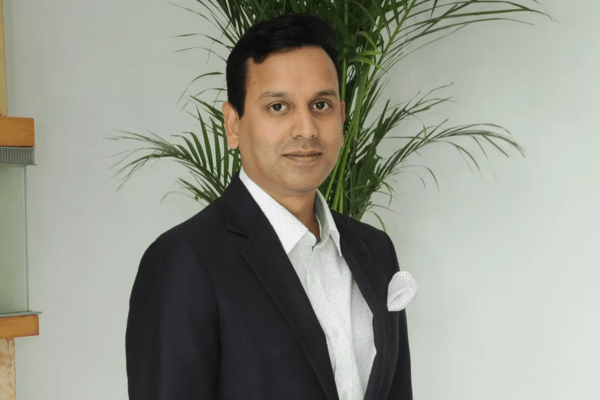
Anant Vidur Puri, Partner, Bessemer Venture Partners

Global VC firm Bessemer Venture Partners has forecasted that India’s digital economy could reach $1 trillion in the next ten years, driven by the intersection of commerce, content, and increasingly discerning consumers.

The firm projected in its report titled “Click, Watch, Shop: The Indian Consumer Opportunity” that the next wave of value creation in India’s consumer internet sector will be five times greater than that of the past decade. It expects much of this growth to come from startups building in areas like quick commerce, direct-to-consumer (D2C) brands, and mobile-first content platforms.

“Because of confluence of different sets of events, like smartphone penetration, improvement in the overall income levels of the country and the fact that there is a lot of favourable policy developments, we feel that India is well poised to be a trillion-dollar economy on the tech and digital side in the coming years,” said Anant Vidur Puri, partner, Bessemer Venture Partners.

Bessemer Venture Partners identified quick commerce as a major trend transforming the online retail landscape, with platforms like Zepto, Blinkit, and Swiggy Instamart accelerating consumer adoption of rapid delivery services.

The report also pointed to the emergence of verticalised quick commerce startups such as Snabbit, Swish, and Slikk.

In the consumer brand space, the firm observed that direct-to-consumer (D2C) startups across categories like fashion, fitness, personal care, appliances, and food—including Blissclub, Snitch, Mokobara, The Whole Truth, and Minimalist—are meeting the rising demand for aspirational, high-quality products from India’s young, digitally savvy consumers.

Bessemer’s report also highlighted strong investor momentum in emerging sectors such as micro-transactions, pet care brands, mobile gaming, and content platforms designed for short attention spans.

It further noted that with artificial intelligence (AI) now integrated across consumer touchpoints, brands are using the technology to address key challenges at scale.

Since launching its India operations in 2006, Bessemer Venture Partners has backed over 80 startups in the country, including BigBasket, PharmEasy, Urban Company, and Livspace. Nine of its portfolio companies have gone public, with notable names like Swiggy, Indian Energy Exchange, and Bharat Matrimony.

Earlier this year, the firm closed its second India-focused fund at $350 million, with plans to invest in startups across sectors such as AI, SaaS, fintech, digital health, consumer brands, and cybersecurity.

Kalshi raises $185M as Polymarket eyes $200M in fresh funding

0
Tarek Mansour and Luana Lopes Lara, Co-founders, Kalshi

Kalshi has raised $185 million in a funding round led by crypto-focused venture capital firm Paradigm, boosting the company’s post-money valuation to $2 billion, according to representatives from both Kalshi and Paradigm.

“Prediction markets remind me of crypto 15 years ago: a new asset class on a path to trillions,” Matt Huang, co-founder and managing partner at Paradigm, told in an emailed statement. “There’s no better team than Kalshi to scale prediction markets and reshape how people think about everything from elections and economic markets to weather and sports.”

This news follows reports that Polymarket, the company’s largest yet regulation-challenged rival, is raising $200 million at an estimated $1 billion pre-money valuation, with Founders Fund leading the round. Sources say the deal remains unfinished, and Founders Fund has declined to comment.

Prediction markets leverage blockchain technology to let users wager on outcomes ranging from pop culture moments to political events.

Assuming Polymarket’s deal closes as reported, investors are paying a higher premium to back Kalshi than they are to back Polymarket.

The latest funding activity highlights growing investor confidence in blockchain-based prediction markets, despite ongoing regulatory scrutiny. As competition intensifies between players like Kalshi and Polymarket, valuation gaps reflect differing market positions, compliance strategies, and investor outlooks.

Royal Orchid looking to triple hotels to over 300, room count to 20k in 5yrs: CMD

0
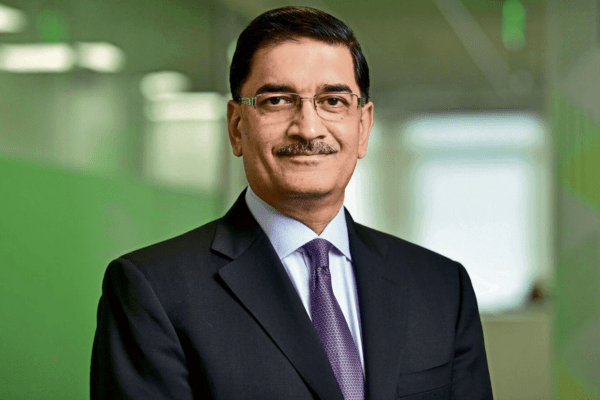
Chander K. Baljee, Chairman & Managing Director, ROHL

Royal Orchid Hotels Ltd. is looking forward to undergo a major expansion, aiming to increase its portfolio to more than 300 properties and over 20,000 rooms within the next five years, according to Chairman and Managing Director Chander K. Baljee.

In an interview, Baljee said the company has revamped its brand architecture, segmented its properties, and launched a new budget brand, ‘Regenta Z’ to attract younger and Gen Z customers. As part of its expansion strategy, Royal Orchid Hotels also plans to grow its workforce from around 9,000 to 20,000 employees.

“We are 115 hotels today. In the last one year, we’ve added 14 hotels. Looking forward, in the next one to one-and-a-half years…we will be adding 30 hotels… In the next five years, we are targeting to triple our room count and also the number of hotels,” he said.

He was responding to a query on the company’s expansion plans.

“In the next five years, we are targeting 300-plus hotels. Right now, we have about 7,000 rooms in operation and have already signed another 2,000-plus rooms. So by next year, we will have 10,000 rooms in operation. Our target is to reach about 20,000-plus rooms in five years,” Baljee said.

Baljee noted that the company added more than 960 rooms last year by launching 14 new hotels. Looking ahead, Royal Orchid Hotels plans to add over 2,000 rooms in the next 12 to 18 months by opening 30 additional properties.

Sharing the company’s work on its brand architecture, he said it is “one thing which we have been working on for the last one year, and that has been finalized.”

Baljee said the company is introducing a new 5-star brand, ‘Iconiqa’ and “all further absolute five-star hotels will be under the Iconiqa brand.”

Moreover, he said, “We are getting into the budget hotel segment with the brand ‘Regenta Z’ catering to the youngsters and Gen Z. It would be operated under a franchise model.”

There will be other hotels under the Regenta and Regenta Place brands, he said, adding, “Certain hotels that don’t fit into the normal brand standard but are boutique and nice will be housed under the ‘Crestoria’ brand.”

Baljee added that the company developed the brand architecture and property segmentation based on customer feedback. In line with its vision to offer a hotel for every market segment, Royal Orchid will now operate seven distinct brands—Iconiqa, Hotel Royal Orchid, Royal Orchid Central, Crestoria, Regenta, Regenta Place, and Regenta Z.

He also shared that the company is venturing into wellness and Ayurveda, introducing lifestyle treatments for conditions such as diabetes, weight loss, and hypertension. The first wellness center will launch at its Brindavan Garden property in Mysore, with plans to expand the concept to other resort locations.

Baljee also mentioned that the company has launched a loyalty program and is working on integrating artificial intelligence into its operations to cut costs and boost efficiency.

Xero to acquire US fintech Melio in $2.5 Bn deal

0
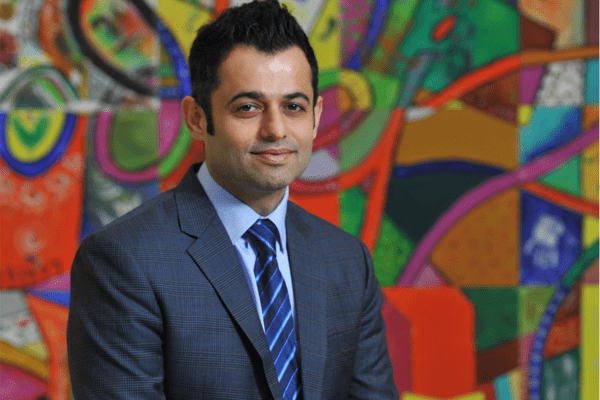
Sukhinder Singh Cassidy, CEO, Xero

New Zealand-based accounting software giant Xero has announced its agreement to acquire New York-based payments platform Melio for $2.5 billion, marking one of the largest outbound deals by a Kiwi company. The acquisition will significantly strengthen Xero’s presence in the U.S. market, both companies confirmed on Wednesday.

Moreover, the acquisition addresses a critical gap in Xero’s product suite by integrating payments capabilities into its accounting software. As a result, both companies will be able to scale their operations more effectively, enhancing their value proposition in a competitive market. While Xero dominates its home markets in Australia and New Zealand, it has been actively seeking to expand in the U.S. market, where it currently generates only about 7% of its total sales.

The deal “enables a step change in our North America scale and the potential to help millions of US (small-to-medium businesses) and their accountants better manage their cash flow and accounting on one platform,” said Xero CEO Sukhinder Singh Cassidy in a statement.

Xero forecast the buyout would double its 2025 financial sales by 2028.

Melio co-founder and CEO Matan Bar said he was “excited by our shared purpose to scale in the US and combine Xero’s accounting capabilities with Melio’s accounts payable and receivable solutions.”

As part of the acquisition process, Xero’s shares were temporarily suspended from trading on Wednesday. The A$30 billion ($19.5 billion) market cap company simultaneously launched an A$1.85 billion capital raise from institutional investors to help finance the deal.

While this move supports the strategic acquisition, it also prompted cautious responses from analysts, reflecting both the opportunity and the risks involved. While the deal marks a bold strategic move, analysts offered a cautious endorsement, highlighting both the growth potential and associated risks of the transaction.

“There is much to like in terms of bulking up US exposure with a leading, fast-growing payments player, and longer term, the proposed deal makes sense,” said RBC Capital Markets analyst Garry Sherriff in a client note.

“It will take time to process the intricacies of the deal and the pathway forward.”

E&P analyst Paul Mason said the buyout price “looks pretty full for the stand-alone business but works if you think the company can pull off strategic synergies around greater distribution.”

Defence tech startup Armory raises ₹13-Cr in funding round

0
Amardeep Singh, Founder and CEO, Armory

Defence tech startup Armory has secured ₹13 crore in funding, with growX Ventures leading the round and support from Industrial 47, Antler, AC Ventures, and Dexter Ventures. Armory will use the funds to accelerate research and development, scale up manufacturing, and expand the field deployment of its indigenous counter-drone technologies.

With the newly raised funds, Armory now plans to accelerate research and development, scale up manufacturing, and expand the field deployment of its indigenous counter-drone technologies. This strategic move will enable the startup to strengthen its product capabilities and meet the growing demand for advanced defence solutions.

Founded in 2024 by Amardeep Singh, an IIT Bombay alumnus and aerospace engineer, Armory focuses on developing Counter Unmanned Aircraft Systems (CUAS) aimed at detecting, denying, and neutralizing rogue drones—a rapidly escalating threat in modern warfare. Notably, the startup’s flagship solution, SURGE, advanced from concept to successful field trials with Army regiments in just six months, demonstrating its agility and innovation.

“It’s increasingly obvious that the future of warfare is autonomous drones and electronic warfare,” said Amardeep Singh, Founder and CEO. “The only way to deter them is to build advanced countermeasures. The foundation of India’s self-reliant defence is being built right now, and we aim to play a leading role in it.”

Armory’s systems operate on its proprietary Samaritan OS, an AI-first defence operating system. Importantly, it enables real-time adaptability and continuous learning—capabilities that are often lacking in traditional defence technologies. As a result, Armory delivers a smarter and more responsive solution to evolving threats.

Manish Gupta, General Partner at growX ventures, said, “India’s national security priorities are rapidly evolving, and Armory is one of the few startups addressing these changes at the pace of software. Their AI led, indigenous approach is exactly what India’s defence tech ecosystem needs.”

Rahul Seth, Founder and General Partner at Industrial 47, added, “Weaponised drones are the IEDs of our era. Counter drone systems will soon be as common as CCTV cameras. Armory is building the airspace security infrastructure that will become essential.”

Armory is also exploring international partnerships to expand its “Make in India, Made for the World” strategy, aligning closely with India’s growing role in global defence innovation.

Overall, Armory’s successful funding round marks a significant step forward in India’s evolving defence tech landscape. Strong investor confidence and a clear focus on innovation have positioned the startup to confidently scale its operations and make a meaningful contribution to national security.

Looking ahead, its AI-driven solutions and rapid deployment capabilities aims to play a pivotal role in combating the growing threat of rogue drones.

TGI Hotels Launches Trishvam Symphony in Krishnagiri—Ideal for Families, Wellness Seekers, and Team Retreats

0

Krishnagiri, 26th June 2025: Trishvam, a premium brand from TGI Hotels, has announced the opening of its latest resort—Trishvam Symphony Luxury Resorts & Spa in Krishnagiri, Tamil Nadu. Known for its natural beauty, open landscapes, and excellent road connectivity, Krishnagiri was chosen for its perfect blend of rural charm and easy access from nearby cities—making it an ideal destination for city dwellers seeking a peaceful escape.

Just a short drive from the city, the resort is set on 2 acres of lush greenery, surrounded by over 150 acres of farmland, and is located only 500 meters from the Hosur–Bangalore highway. It features 34 spacious rooms, including private pool villas and suites, making it ideal for both leisure holidays and corporate off-sites.

The resort offers everything guests need for a refreshing stay—including a spa and wellness center, multi-cuisine restaurant & bar, swimming pool, amphitheatre, conference hall, fitness center, and a variety of indoor and outdoor games. With ample open space and peaceful surroundings, it’s also an excellent destination for team-building activities and corporate retreats.

A special feature of the resort is its farm-to-table experience. Guests can stroll through orchards of mango, guava, and pomegranate, explore organic vegetable gardens, and enjoy fresh meals made from ingredients grown right on the farm. Activities such as farm tours, nature walks, and village-style experiences help guests relax and reconnect with nature.

“Trishvam Symphony is more than just a resort—it’s a thoughtfully curated space where guests can unwind, connect with nature, and create lasting memories. Whether it’s a weekend escape, a wellness retreat, or a corporate offsite, this is where comfort, experience, and purpose come together,” said Amit Kumar, Chief Marketing Officer, TGI Hotels.

Stock trading platform Sahi raises $10.5 Mn in a funding round

0
Dale Vaz and Manish Jain, Co-founders, Sahi

Stock trading platform Sahi, founded by former Swiggy CTO Dale Vaz and ex-Kotak Securities executive Manish Jain, has secured $10.5 million in funding, with Accel and Elevation Capital leading the round.

The Bengaluru-based startup will utilize the funds to drive product innovation, focusing particularly on automation, in response to Sebi’s move to enable algorithmic trading for retail investors.

Sahi also aims to grow its team and expand its footprint across India, targeting a broader base of active traders.

As part of its growth strategy, Sahi plans to introduce a suite of new automation tools, including visual no-code strategy builders and multi-leg options execution features. The company is also preparing to launch its trading website this week, extending its services beyond the current mobile and desktop platforms.

This expansion comes on the heels of a significant regulatory shift—Sebi recently approved algorithmic trading for retail investors, with the new rules set to take effect on August 1, 2025. Until now, only institutional investors were allowed to use algorithmic trading, which involves automated programs that execute trades based on predefined strategies.

“Sahi began with the intent of helping the individual investor. We focus on people interested in making their own financial decisions, both as investors and even as traders. The idea is to build this as a single, end-to-end product, which will cover the entire trader journey,” Vaz said.

Launched in December 2024, Sahi delivers a chart-first trading experience, equipped with features like real-time Greeks, open interest tracking, technical indicators, and one-click trade execution. It uses AI-powered insights to help individual traders make more data-driven decisions.

The stock trading platform has gained significant traction, with over 200,000 app downloads and a 50% month-on-month growth in active traders. According to the company, more than 20% of users have executed over 500 trades within just five months, and over half have placed more than 100 trades.

By operating with a lean team and leveraging AI-based infrastructure, the stock trading claims to offer brokerage rates nearly 50% lower than larger competitors—charging just Rs 10 per trade, according to co-founder Dale Vaz.

Manasi Shah, vice president at Accel, said, “The future of trading globally is going to be disrupted by AI, and Sahi is racing ahead to be the best-in-class AI-led trading platform. As Accel, we are excited to double down on Sahi as part of our thesis that AI will disrupt consumer experiences across verticals.”

While acknowledging some short-term impact from recent regulatory curbs on futures and options (F&O) trading, Vaz remains optimistic about long-term prospects. “We are extremely bullish about the larger financialization of the Indian wealth story that is playing out and which will continue to play out, in our belief, over the next 5-10 years at least,” he said.

“Existing tech-first brokers have solved customer access to markets really well, but as users and technology have both matured significantly, there is an opportunity to reimagine the entire experience from the ground up,” said Vaas Bhaskar, partner at Elevation Capital. “We believe that Dale and Manish are building with deep customer obsession and have built a never-before-seen broking experience, combining all parts of the trader’s journey—research, execution, and post-trade.”

Zostel launches first property in Madhya Pradesh with Zostel Indore

0

Zostel has officially entered Madhya Pradesh with the launch of its first property in the state, Zostel Indore. Marking its much-anticipated debut in central India, the brand now brings its signature blend of social travel, vibrant design, and youthful energy to the dynamic city of Indore. Furthermore, this expansion reinforces Zostel’s commitment to offering unique and community-driven experiences in emerging travel destinations.

Conveniently located in the bustling Vijay Nagar area, just 15 minutes from the iconic Chhappan Dukan, Zostel Indore offers an energizing stay experience for backpackers, solo adventurers, and digital nomads. Moreover, the hostel features a thoughtfully curated mix of stylish dormitories, private rooms, and quad rooms—ideal for groups of four—thereby catering to a wide range of travel preferences and group sizes.

Guests can enjoy vibrant common areas, rooftop hangouts, and curated local experiences that celebrate Indore’s cultural richness and modern energy. The property features an indoor swimming pool—a rare offering in the backpacker hostel scene—that fosters social interaction and elevates the overall travel experience.

The brand continues to expand its footprint across India’s emerging travel hotspots, championing a spirit of community and discovery. As the first Zostel in Madhya Pradesh, the Indore property aims to create a vibrant hub where like-minded travelers can enjoy comfort, build connections, and explore the region’s rich spiritual and cultural heritage.

Fabheads raises $10 Mn Series A led by Accel

0

Chennai-based composite manufacturing tech startup Fabheads has secured $10 million in Series A funding to advance the automation of composite fiber production. The funding round was led by Accel, with additional support from Trifecta Capital. This latest investment brings Fabheads’ total funding to $13 million, following its earlier seed and pre-seed rounds that raised $3 million in 2021.

With the fresh capital, the company plans to significantly scale its manufacturing capabilities. Additionally, it aims to expand its leadership team and further strengthen its client-facing engineering and R&D functions to support its growth strategy.

As part of its expansion strategy, Fabheads will set up a new manufacturing facility in Bengaluru focused on serving the aerospace industry and addressing rising international demand. Fabheads expects to have the facility up and running within the next six months.

Founded in 2015 by former ISRO engineers Dhinesh Kanagaraj and Abhijeet Rathore, Fabheads leverages robotic automation for processes like fiber placement and layering—helping manufacturers cut costs by up to 50% and reduce rejection rates by 20%. Its proprietary system also reduces material waste by 20% and shortens production cycles by up to 30%, offering a significant upgrade over traditional manual methods.

Dhinesh Kanagaraj, Co-founder and CEO at Fabheads, said, “This funding enables us to take a major step towards making composites accessible for aerospace, mobility, clean energy, and more. As the only company from India with this specialized technology, we are uniquely positioned to lead innovation in the composite manufacturing space both domestically and globally.”

Prayank Swaroop, Partner at Accel, said, “​​As composites become increasingly vital across aerospace, defense, mobility, and renewable energy, Fabheads is addressing the core manufacturing bottlenecks that have long hindered widespread adoption. We’re excited to back their journey of building world-class deeptech from India for the world.”

India’s composite materials market, valued at $1.8 billion in 2024, is projected to grow to $2.8 billion by 2030, with a compound annual growth rate (CAGR) of 7.8%. Supporting this growth, the Indian government is actively encouraging domestic manufacturing of advanced materials. Key initiatives include plans to begin carbon fiber production by 2025–26 and a target of $10 billion in technical textiles exports by 2030, under schemes such as the National Technical Textiles Mission and Production-Linked Incentive (PLI) programs.

Anardana launches first outlet in Faridabad, eyes regional growth

0

Anardana, celebrated for its innovative take on Indian cuisine, has launched its first outlet in Faridabad—its ninth location across India. The new restaurant is designed to deliver a distinctive dining experience that blends culinary tradition with modern creativity.

The menu showcases a bold fusion of Indian flavors, featuring unique dishes like Gulkand Paan Tikki, Quinoa Avocado Bhel, Pickled Chicken Fire Kulcha, and Hyderabadi Khatta Murgh. Signature items such as Makhani Soya Chaap and Mishti Doi Brulee reflect Anardana’s nostalgic yet contemporary approach to Indian dining.

Designed as a warm and immersive space, the restaurant combines earthy textures, metallic accents, and ambient lighting to enhance the dining experience. The layout features cozy corners, intimate seating pods, and a chic bar—each element carefully crafted to foster a welcoming and stylish atmosphere.

“The launch of Anardana in Faridabad is not merely an expansion—it is a cultural moment for the city,” says Dr Shruti Malik, Founder of Anardana. “This outlet continues our journey from Delhi to Chandigarh, Ranchi, and Gurugram, and now brings our vision into a new city with its own unique expression—one that stays true to the Anardana promise: a place where every detail matters, where food tells stories, and hospitality is heartfelt.”

With its Faridabad debut, Anardana continues to expand its footprint while staying true to its vision of reinventing Indian cuisine. Blending innovative flavors with thoughtfully designed spaces, the brand aims to offer diners a memorable experience that celebrates both tradition and modernity.