
Friday, May 8, 2026
Home Blog Page 128

OYO expands with Japanese-style SUNDAY Hotel in Gurugram

0

Gurugram’s New Golf Course Road Extension now hosts what is being promoted as India’s first Japanese-themed hotel, launched by SUNDAY Hotel, the premium hospitality brand under OYO’s parent company, Oravel Stays. Located within M3M SkyLoft and spread across 50,000 square feet, the property offers a range of authentic Japanese-inspired experiences.

The hotel features 217 rooms, including amenities like an Ofuro (traditional Japanese soaking bath), a Japanese Hammam, and a 20-seater restaurant serving classics such as ramen, sushi, udon, and donburi. It also includes Japanese-speaking staff and a dedicated 54-room wing tailored for long-term Japanese guests.

This marks SUNDAY Hotels’ largest property in India and is part of a strategic collaboration between Oravel Stays and M3M to develop premium hospitality projects in Gurgaon and NOIDA.

“Several Japanese companies have already chosen this SUNDAY Hotel as their preferred accommodation partner for visiting employees from Japan,” said Aditya Sharma, Country Head, SUNDAY Hotels. “We are collaborating with Japanese designers and incorporating traditional elements like tatami mats and minimalist interiors to ensure cultural familiarity.”

Gurgaon is home to one of India’s largest Japanese communities, fueled by the presence of companies in industries like automobiles, electronics, and manufacturing. SUNDAY’s move to open a Japanese-themed hotel aligns with the growing demand for culturally immersive and wellness-focused hospitality experiences, catering to both business travelers and long-term residents seeking familiar comforts.

India’s growing interest in Japanese food, fueled by exposure to anime, J-dramas, and global travel, is also driving the trend. “There’s a growing curiosity and appreciation for different food cultures—Japanese being one of the most refined and unique ones,” added Sharma.

Launched in May 2023, SUNDAY Hotels is a joint venture between Oravel Stays and SoftBank, aimed at offering premium stays in the four-star and five-star categories. The newly opened Japanese-themed property offers experiences inspired by Japanese aesthetics, wellness, and culture, catering to both expatriates and Indian travelers.

Schneider Electric Partners with Horizon Industrial Parks for a State-of-the-Art Manufacturing Facility in Hosur, Tamil Nadu

0
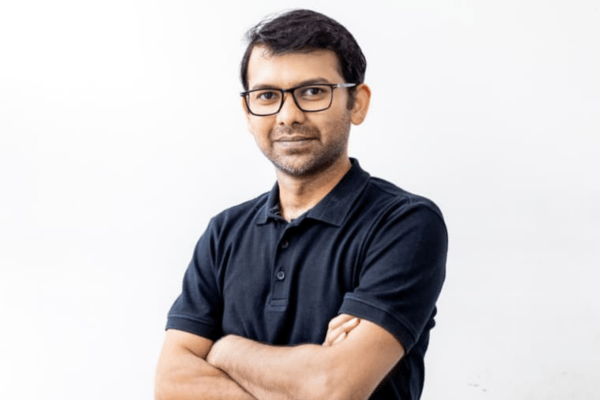
Mr. Urvish Rambhia, Director, Horizon Industrial Parks

Chennai, 27th June 2025: Schneider Electric, the leader in the digital transformation of energy management and automation, today announced its plan to develop a manufacturing facility for its Schneider Electric IT Business at Horizon Industrial Park Hosur, near Shoolagiri, Tamil Nadu.

Spread across 500K square feet, the new facility aims to enhance Schneider Electric’s capabilities in manufacturing, sales, and trading of Battery Management Products (BMS), including Uninterruptible Power Supply (UPS) systems, Power Distribution Units (PDU), cooling products, and other electronic accessories. Strategically located along the Bangalore–Chennai National Highway, the upcoming Grade A industrial facility offers seamless connectivity to both Bengaluru and Chennai markets, enabling enhanced distribution and operational efficiencies.

The development will be executed in two phases in collaboration with Horizon Industrial Parks, a leading integrated logistics and industrial infrastructure provider backed by Blackstone Real Estate funds. The first phase will be a dust-free facility featuring a modern office space and extensive tenant improvements. These enhancements include expanded industrial power capacity, advanced fire safety systems, and optimized workspace planning for an initial workforce of 1,500, encompassing both direct and indirect employment. The second phase will build a high-spec, custom facility tailored to Schneider Electric’s advanced operational needs and is expected to be completed in 7 months.

“We are happy to partner with Horizon Industrial Parks as we advance our commitment towards an ‘Atmanirbhar Bharat,’” said Deepak Sharma, Zone President, Greater India, MD, and CEO, Schneider Electric India. “This collaboration underscores our commitment to sustainability, efficiency, and operational excellence. The new facility will significantly enhance our manufacturing capabilities and allow us to incorporate cutting-edge technology and sustainable practices. With this investment, we aim to empower businesses, boost operational efficiency, and contribute meaningfully to the ‘Make in India’ initiative.”

Horizon Industrial Park Hosur is pre-certified ‘Platinum’ by the Indian Green Building Council (IGBC). Schneider Electric’s new facility will integrate multiple eco-friendly features, including roof insulation with glass wool, rooftop solar panels for enhanced thermal efficiency, a 12-meter clear height PEB design with skylights for natural lighting, and advanced ventilation systems.

In addition, EV charging stations, HVAC controls, and smart light sensors will be deployed as part of the facility’s integrated BMS. Solar rooftop panels are planned for the next phase of development, further boosting thermal efficiency and reducing carbon footprint.

Wakefit files DRHP for IPO to raise ₹468-Cr through fresh issue

0
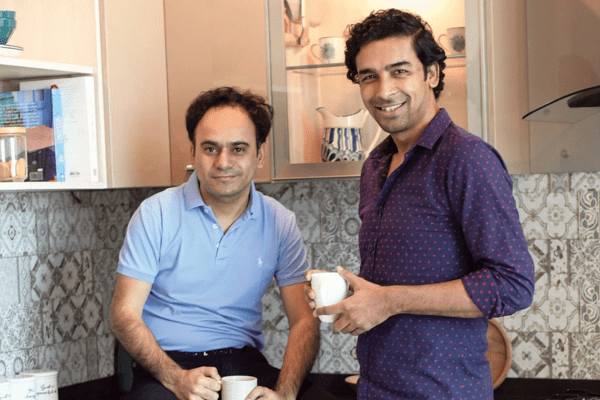
L-R: Ankit Garg and Chaitanya Ramalingegowda, Co-founders, Wakefit.co

Wakefit, a sleep and home solutions startup, submitted its draft red herring prospectus (DRHP) to the Securities and Exchange Board of India (SEBI) on June 27, aiming to raise ₹468.2 crore through a fresh issue of shares.

Wakefit’s draft red herring prospectus (DRHP) reveals that several of its investors—including Paramark, Investcorp, Verlinvest SA, Redwood Trust, and Peak XV Partners—plan to offload a portion of their holdings through an offer for sale (OFS). Founders Ankit Garg and Chaitanya Ramalingegowda will also participate in the OFS.

The company will offer a total of 5.8 crore shares, raising ₹468 crore through the fresh issue, while the remaining capital will come from the offer for sale (OFS) component. According to earlier reports, Wakefit aims to raise around ₹1,500–2,000 crore (approximately $200 million) through the IPO.

The company has appointed Axis Capital, IIFL Capital Services, and Nomura as its IPO advisors.

Wakefit, which has secured over $100 million (approximately ₹850 crore) in funding from investors such as Peak XV Partners, South Korea’s Paramark Ventures, Europe’s Verlinvest, and others, is now aiming to provide partial exits to some of its early backers.

Launched in 2016 by Ankit Garg and Chaitanya Ramalingegowda, Wakefit began as a mattress-focused brand and later expanded into related segments like cots, tables, chairs, and a wide range of home furnishing products to drive revenue growth.

The company has significantly scaled its revenue—from ₹199 crore in FY20 to ₹1,017 crore in FY24—while also reducing its losses from ₹146 crore in FY23 to just ₹15 crore in FY24, as per regulatory filings.

Wakefit’s IPO marks a major milestone in its growth journey, reflecting the company’s strong financial performance and successful diversification beyond mattresses. With backing from prominent investors and a sharp reduction in losses, the IPO will not only provide partial exits for early stakeholders but also position Wakefit for its next phase of expansion in the competitive home solutions market.

Google launches Doppl app for virtual dressing room experience

0

Google has announced the launch of Doppl, a new experimental app that uses AI to help users visualize how various outfits would look on them. Now available on iOS and Android in the U.S., the app enables virtual try-ons by creating a digital version of the user.

To get started, users upload a full-body photo of themselves. They can then use images or screenshots of outfits—whether from a thrift store, a friend’s wardrobe, or social media—to see how those clothes would appear on their virtual selves.

Once you choose an outfit to visualize, Doppl generates an image of a virtual version of you wearing it. The app goes a step further by turning these static images into AI-generated videos, giving you a more realistic sense of how the outfit would move and look on you in real life.

You can save your favorite looks, revisit previous virtual try-ons, and even share your outfit previews with others directly through the app.

According to Google, Doppl builds on the company’s earlier virtual try-on features introduced through Google Shopping. By launching this functionality as a stand-alone app, Google aims to make the experience more accessible while encouraging users to explore their personal style in a fun and engaging way. The app may also help the company gather valuable insights on how consumers interact with such tools, informing future developments in the space.

Previously, Google’s virtual try-on tools showcased outfits on a diverse range of model body types. With Doppl, however, the experience is personalized—allowing users to try on outfits using an animated version of their own body.

“We hope Doppl helps you explore your style in new and exciting ways,” Google said in a blog post. “As a Google Labs experiment, Doppl is in its early days and it might not always get things right. Fit, appearance and clothing details may not always be accurate.”

Google’s Doppl app marks a significant step forward in personalized fashion technology, offering users a more immersive and interactive way to explore their style. By combining AI with virtual try-on capabilities, Doppl allows you to see how outfits would look and move on your own digital avatar.

With features like animated previews, outfit saving, and easy sharing, the app not only enhances the shopping experience but also signals Google’s deeper interest in the future of AI-powered fashion.

DS Group expects Pulse Candy to become ₹1,000-Cr brand within 2 years

0
Mr Rajiv Kumar, the Vice Chairman of the DS Group

Homegrown FMCG company DS Group expects its Pulse candy brand to reach ₹1,000 crore in sales over the next two years, after surpassing the ₹750 crore mark in FY25, according to Vice-Chairman Rajiv Kumar.

Kumar added that the DS Group aims to transform Pulse into a multi-format, multi-occasion brand by expanding into adjacent product categories, exploring new formats, and launching region-specific flavors—building on its position as a leading Indian ethnic confectionery brand.

In the financial year 2024–25, Pulse candy sold 750 crore units, each priced at ₹1, generating total revenue of ₹750 crore.

“We are the largest player of hard-boiled candy in the country with a market share of 19 percent, growing at 15 percent CAGR in the last three years, at a time when the industry growth in the overall hard-boiled candy segment is 9 percent,” Kumar said.

Experts estimate the value of the Indian hard-boiled candy market at approximately ₹4,000 crore.

Asked when the group expects Pulse candy to become a Rs 1,000-crore brand, he said, “Very soon, in one and a half to two years… We have been growing at 15 percent, and with that sort of growth, we can reach the Rs 1,000-crore mark very soon…”

Kumar said Pulse has held its position as the largest hard-boiled candy brand in India since its launch in 2015, maintaining that lead for the past nine years.

Looking ahead, he shared that the group envisions transforming Pulse into a multi-format, multi-occasion offering.

“We plan to achieve this by strategically moving into adjacent product categories, exploring innovative new formats, and capitalizing on the rich tapestry of regional flavors,” he said.

The DS Group plans to maintain its leadership in the confectionery space by continuing to focus on strong brand building, deeper consumer engagement, and expanding its market reach.

“We’re aggressively pursuing both domestic and international markets for expansion,” Kumar said, adding that on the domestic front the group is “leveraging our robust distribution network that has a reach of over 35 lakh outlets across India.”

Signature Global to raise ₹875-Cr via debentures by August for debt refinancing and growth

0
Pradeep Aggarwal, Founder & Chairman, Signature Global

Real estate developer Signature Global is set to raise up to ₹875 crore by issuing non-convertible debentures (NCDs) to refinance its existing debt and support business expansion.

The company’s board has approved the fundraise through the issuance of Secured, Listed, Redeemable NCDs on a private placement basis, in one or more tranches.

When contacted, Signature Global Chairman Pradeep Kumar Aggarwal said, “We have taken the approval of board to raise funds. We will also seek shareholders approvals.”

He stated that the company will allocate ₹450 crore to refinance existing debt and use the remaining funds to support business expansion.

Aggarwal mentioned that the company aims to complete the fundraise by the end of August, pending shareholders’ approval.

Additionally, on Wednesday, the board approved a postal ballot notice to seek shareholder consent for issuing NCDs, increasing the borrowing limit, enhancing the limit for creating security, and amending the company’s Articles of Association.

Gurugram-based Signature Global ranks among the country’s leading real estate developers.

In the financial year 2024–25, it became the fifth-largest listed real estate company based on sales bookings. The company achieved property sales worth ₹10,290 crore in the previous fiscal and is now aiming for ₹12,500 crore in pre-sales for the current year.

Signature Global initially entered the market with a focus on affordable housing projects. However, due to the rising cost of land in Gurugram, the company has shifted its focus toward mid-income and premium residential segments.

ShopOS raises $20M from Binny Bansal to drive AI innovation for global online businesses

0

Flipkart cofounder Binny Bansal has invested $20 million in ShopOS, a startup developing an AI-powered operating system designed to streamline and scale e-commerce operations for brands. The funding round was led by Bansal’s investment firm, Three State Ventures.

ShopOS was founded by Sai Krishna V K and Ajay P. V., the creators of Scapic—an AI/AR commerce platform acquired by Flipkart in 2020. Following the acquisition, the duo led Flipkart Labs, which focused on deep tech innovation within the e-commerce giant. Karan Sonawala, another Flipkart alumnus, has joined the team after leading visual and immersive AI features at the Walmart-owned company.

The startup believes that global brands still face major challenges in launching and managing online storefronts. Content production is often time-consuming and manual, marketing lacks local personalization, and real-time user experiences remain limited.

ShopOS, meanwhile, is presenting a full-stack AI platform that functions as a virtual workforce. Through this system, brands can seamlessly generate product listings, images, and videos; launch targeted marketing campaigns; and automatically personalize storefronts based on consumer behavior—all powered by autonomous AI agents.

According to the company, it has already onboarded early customers across India, the UAE, and parts of Europe. Now, with the fresh funding in place, ShopOS plans to scale its engineering team and further expand its global customer footprint.

“This is about building ambient agents that don’t just assist but execute core commerce workflows in the background,” said Sai. “We’re betting on generative commerce as the next paradigm.”

Bansal said ShopOS was “building the commerce stack of the future” and that AI-native operating systems will be critical for brands expanding across borders.

The startup is actively hiring for engineering and product roles, with plans to integrate hundreds of brands into its platform over the next 12 months.

Chalet Hotels ranks 11th among India’s top mid-size workplaces in 2025

0
Dr. Sanjay Sethi, MD and CEO of Chalet Hotels Limited

Chalet Hotels Limited (CHL), a prominent name in the hospitality sector, has once again been recognized by Great Place To Work® India for its exemplary workplace culture—for the sixth consecutive year. In 2025, CHL has earned the 11th position among India’s Great Mid-Size Workplaces and has also been named among India’s Best Workplaces in Hotels & Resorts.

This recognition once again highlights CHL’s unwavering dedication to cultivating a workplace rooted in trust, pride, and camaraderie. Moreover, the repeated accolades reinforce the company’s strong and consistent efforts to build a high-trust, high-performance culture that empowers and supports its workforce.

Commenting on this achievement, Dr. Sanjay Sethi, MD and CEO of Chalet Hotels Limited, said, “Chalet Hotels is incredibly proud to be ranked 11th in India’s Great Mid-Size Workplaces. We have long championed diversity, inclusion, and a people-first culture—alongside our steadfast focus on sustainable practices and the empowerment of women in the workplace. These values are not only embedded in our internal culture but are also reflected in the experiences and services we provide. Being recognized for the sixth consecutive year is a powerful validation of the environment we’ve worked hard to create. This honor reflects the collective spirit of our teams, the trust we’ve built together, and our ongoing commitment to shaping a workplace where everyone can thrive.”

The award ceremony in Mumbai brought together CEOs and CHROs from India’s top 100 workplaces, offering a platform to celebrate and honor exceptional workplace cultures from across the country.

These recognitions reaffirm Chalet Hotels Limited’s commitment to employee well-being and organizational excellence, placing it among the top employers in India’s hospitality and mid-size business sectors. With a strong focus on trust, innovation, and people-first values, CHL continues to set a benchmark for workplace culture in the industry.

Reimagining Budget Travel in India: An Exclusive Interview with NAPTAPGO Founder Nitin Malhotra

0
Reimagining India’s Budget Travel Landscape: An Inspiring, Unfiltered Interview with Visionary NAPTAPGO Founder Nitin Malhotra
Nitin Malhotra, Founder & CEO, NAPTAPGO

In a nation where affordable travel often compromises comfort, hygiene, and flexibility, one visionary is rewriting the rules. Meet Nitin Malhotra, founder of NAPTAPGO — a revolutionary pod hotel startup incubated by IIM Lucknow and purpose-built for India’s transit-heavy, digitally-savvy, and budget-conscious travelers. In this exclusive interview with Business Review Live, Nitin opens up about the gaps in India’s hospitality sector, the evolving mindset of Tier 2 and Tier 3 travelers, and how tech-first, space-optimized accommodation is shaping the future of short-stay travel.

1. What pivotal personal insight or experience catalyzed the inception of NAPTAPGO? Was there a defining moment that reframed your understanding of India’s budget travel segment?

The concept behind NAPTAPGO wasn’t born from a single experience but from years of observing a recurring problem across over 100 cities I traveled to in India. One pattern stood out — in India, price and cleanliness are inseparable. For budget-conscious travelers, comfort and hygiene are often treated as luxuries.

Another major friction point was hotel check-in rigidity. Arriving early after a night journey often meant either pleading for early access or paying for two days to use a room for a few hours. Even luxury hotels couldn’t bridge this gap.

Moreover, transit zones like railway stations and pilgrim towns lacked clean, accessible, and affordable rest options. People sleeping on benches wasn’t a poverty issue — it was a systems failure.

That’s when the idea crystallized: India doesn’t just need cheaper stays — it needs smarter, space-efficient, and tech-enabled micro-stay solutions. And that’s exactly what NAPTAPGO delivers.

2. In your assessment, what systemic inefficiencies or unmet traveler expectations did you identify in India’s legacy budget hospitality sector that NAPTAPGO set out to disrupt?

India’s traditional budget hospitality model is marred by multiple inefficiencies that ignore today’s traveler behavior:

  • Outdated Check-in Norms: The 12 PM rule is impractical for early arrivals, resulting in lost opportunities and traveler frustration.
  • No Hygiene Without High Prices: Affordability often means compromising on cleanliness, safety, or even basic comfort.
  • Lack of Hourly Stay Options: Many travelers only need a place for a few hours, not an overnight stay, yet hotels don’t accommodate this.
  • Underdeveloped Transit Infrastructure: Retiring rooms in stations and airports are overcrowded and poorly maintained, leaving travelers with no viable alternatives.
  • Neglected Needs of Pilgrims & Backpackers: In high-footfall religious or remote locations, clean and reliable short-stay options are nonexistent.
  • No Shower-Only Services: A large segment of travelers — especially businesspeople — need a quick refresh, not a full night’s stay.
  • Missing Work-Friendly Amenities: Budget rooms rarely support remote work, lacking good lighting, ergonomic spaces, or stable Wi-Fi.

NAPTAPGO bridges all these gaps through smart design, flexible pricing, and tech-led services that match the demands of modern travelers.

3. In a hyper-competitive, cost-sensitive travel market, how does NAPTAPGO carve out a differentiated value proposition while navigating rising consumer expectations and thin operational margins?

We focus on three pillars: cost-efficient operations, dynamic pricing, and process discipline.

  • By deploying technology across booking, housekeeping, and support, we reduce human resource dependency.
  • We utilize underused real estate in metro stations and city centers, drastically lowering rental costs.
  • Our hourly pricing, including “shower-only” plans, ensures customers pay only for what they use.
  • Finally, process standardization and team training ensure consistency — an essential ingredient in a low-margin segment.

This tri-fold strategy allows us to deliver premium-quality micro-stays at a fraction of the cost without sacrificing guest satisfaction.

4. How is NAPTAPGO architecting a tech-first approach to reimagine guest engagement, service delivery, and operational consistency in the budget accommodation ecosystem?

Tech isn’t just an enhancement — it’s our foundation. We’re building a guest-first, digitally native ecosystem.

  • Self-check-in, Bluetooth room access, and app-based controls reduce wait times and enhance autonomy.
  • On the backend, we use robotic vacuums, AI-based cleaning audits, and automated tracking to maintain high hygiene standards with lean staffing.
  • This approach not only enhances guest satisfaction but makes our business model scalable, cost-efficient, and future-proof.  

In short, NAPTAPGO is a tech-led disruptor in a traditionally analog space.

5. Could you walk us through the core product architecture and technological underpinnings of the NAPTAPGO platform? How do UX, automation, and backend efficiencies interplay in your design philosophy?

Our design philosophy revolves around “Minimal Friction, Maximum Functionality.”

  • The user journey is seamless — from app-based booking and Bluetooth-enabled access to digital concierge services.
  • In the background, smart systems manage predictive maintenance, real-time room turnover tracking, and guest support workflows.
  • This allows our team to focus on meaningful interactions while automation takes care of repetitive tasks.

We’re not just designing rooms — we’re designing an ecosystem where automation and guest delight coexist.

6. Affordability and quality often exist in tension—what strategic levers or innovations have you employed to harmonize both, especially in an infrastructure-challenged segment?

At NAPTAPGO, we harmonize cost-efficiency with high standards using:

  1. Flexible, Pay-as-You-Stay Pricing: Our hourly and micro-use pricing makes high-quality stays affordable for everyone.
  2. POD-Based Space Design: Our pods are compact but ergonomically optimized — offering comfort, privacy, and hygiene in limited square footage.

We’ve essentially reengineered the hospitality experience to maximize guest value per rupee.

7. What strategic advantages has the IIM Lucknow incubation platform provided—from capital access and mentorship to institutional credibility—in accelerating NAPTAPGO’s go-to-market journey?

IIM Lucknow’s backing proved to be a pivotal advantage for NAPTAPGO, providing the kind of credibility that opened doors to early investors, strategic partners, and our first wave of customers. Beyond capital, the incubation offered invaluable mentorship and market insights from seasoned industry experts. Most importantly, the association with such a prestigious institution lent us institutional trust—something often elusive for early-stage startups—and played a crucial role in accelerating our go-to-market journey.

8. How do you interpret the evolving travel behavior of aspirational consumers in India’s Tier 2 and Tier 3 cities, and what role do you envision NAPTAPGO playing in this next wave of travel democratization?

We’re witnessing a significant behavioral shift driven by increased digital access and rising aspirations among travelers from smaller towns. Solo travelers and digital nomads from Tier 2 and Tier 3 cities are now prioritizing flexibility, hygiene, and modern functionality, while families are challenging the outdated belief that budget travel must compromise on quality. NAPTAPGO aligns with this evolving mindset by offering smart, affordable micro-accommodations that democratize travel and deliver value without sacrificing comfort or expectations.

9. With India’s travel economy on track to reach $30 billion, what is NAPTAPGO’s addressable opportunity within that ecosystem, and what is your roadmap to achieving category leadership?

With budget accommodations accounting for nearly 65% of the market, this segment is precisely where NAPTAPGO thrives. Our growth roadmap focuses on expanding to over 50 high-footfall locations, particularly in key transit hubs, while also tapping into business and leisure corridors across Tier 1 and rapidly growing Tier 2 cities. To ensure scalable and consistent service delivery, we’re leveraging process automation and developing franchise-ready models. Our ultimate goal is to establish NAPTAPGO as the go-to brand for short-stay and transit hospitality across India.

10. As the hospitality sector transitions towards a more digitally-integrated and experience-driven model, what is your long-term vision for redefining budget travel—and how will NAPTAPGO be a catalyst in that transformation?

Our long-term vision is to evolve NAPTAPGO into a global benchmark for tech-driven, flexible travel stays. We’re developing a new model internally called “Nap&Go” — designed to disrupt how people perceive and use short-stay spaces, not just in India but globally. Think of it as the future of affordable, on-demand rest and recharge experiences. 

Bessemer Venture Partners sees $1 Trillion digital opportunity in India, eyes quick commerce and D2C surge

0
Anant Vidur Puri, Partner, Bessemer Venture Partners

Global VC firm Bessemer Venture Partners has forecasted that India’s digital economy could reach $1 trillion in the next ten years, driven by the intersection of commerce, content, and increasingly discerning consumers.

The firm projected in its report titled “Click, Watch, Shop: The Indian Consumer Opportunity” that the next wave of value creation in India’s consumer internet sector will be five times greater than that of the past decade. It expects much of this growth to come from startups building in areas like quick commerce, direct-to-consumer (D2C) brands, and mobile-first content platforms.

“Because of confluence of different sets of events, like smartphone penetration, improvement in the overall income levels of the country and the fact that there is a lot of favourable policy developments, we feel that India is well poised to be a trillion-dollar economy on the tech and digital side in the coming years,” said Anant Vidur Puri, partner, Bessemer Venture Partners.

Bessemer Venture Partners identified quick commerce as a major trend transforming the online retail landscape, with platforms like Zepto, Blinkit, and Swiggy Instamart accelerating consumer adoption of rapid delivery services.

The report also pointed to the emergence of verticalised quick commerce startups such as Snabbit, Swish, and Slikk.

In the consumer brand space, the firm observed that direct-to-consumer (D2C) startups across categories like fashion, fitness, personal care, appliances, and food—including Blissclub, Snitch, Mokobara, The Whole Truth, and Minimalist—are meeting the rising demand for aspirational, high-quality products from India’s young, digitally savvy consumers.

Bessemer’s report also highlighted strong investor momentum in emerging sectors such as micro-transactions, pet care brands, mobile gaming, and content platforms designed for short attention spans.

It further noted that with artificial intelligence (AI) now integrated across consumer touchpoints, brands are using the technology to address key challenges at scale.

Since launching its India operations in 2006, Bessemer Venture Partners has backed over 80 startups in the country, including BigBasket, PharmEasy, Urban Company, and Livspace. Nine of its portfolio companies have gone public, with notable names like Swiggy, Indian Energy Exchange, and Bharat Matrimony.

Earlier this year, the firm closed its second India-focused fund at $350 million, with plans to invest in startups across sectors such as AI, SaaS, fintech, digital health, consumer brands, and cybersecurity.