




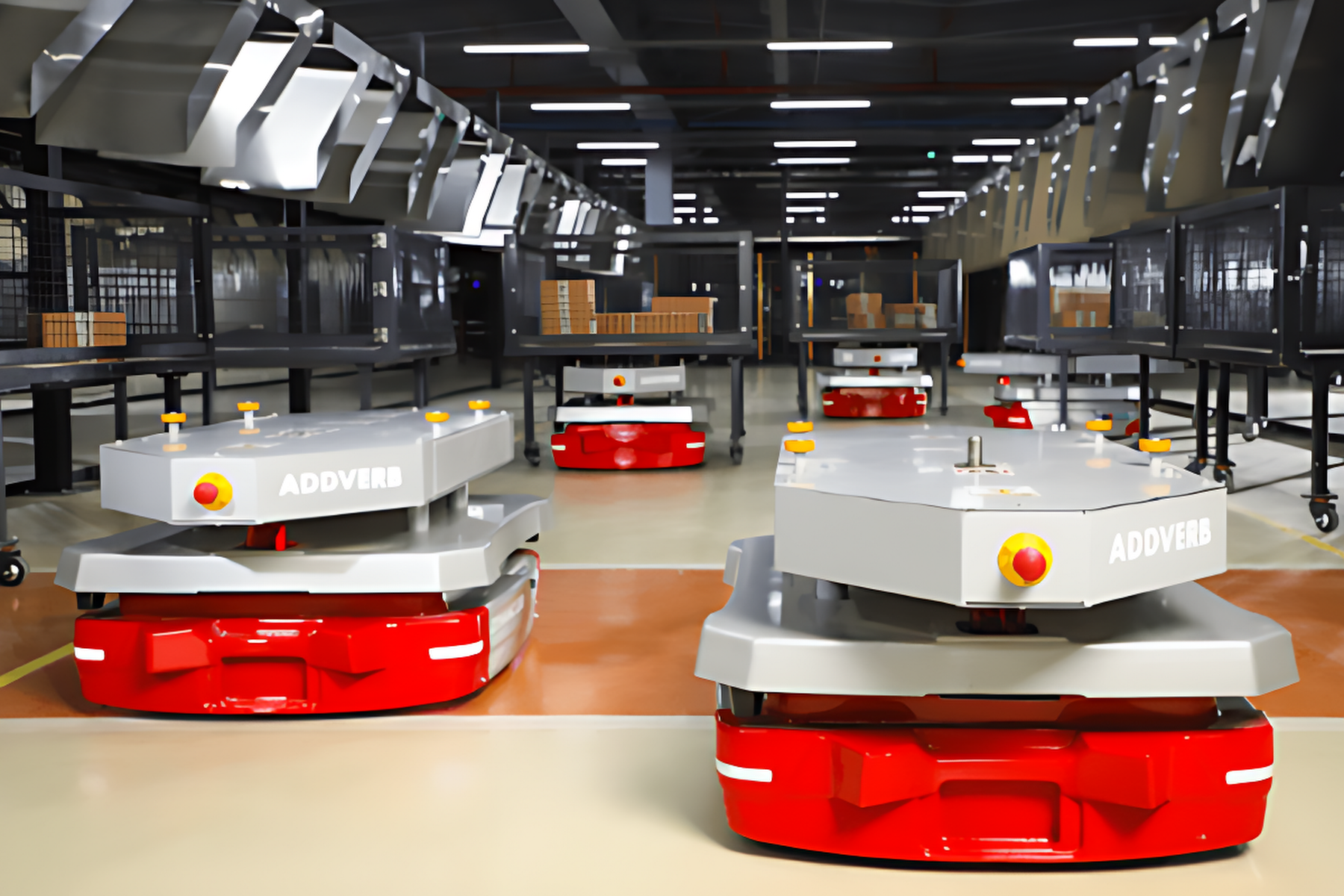
Indian robotics startup Addverb Technologies Ltd. is seeking to raise more than $100 million as it accelerates its ambitions to become one of the world’s leading robotics companies. The fundraising initiative comes as the company expands its international footprint and invests heavily in next-generation technologies, including humanoid robots, artificial intelligence, and advanced automation systems.
Addverb, which develops robots for sorting, material handling and warehouse automation, is actively exploring new funding opportunities following its expansion into key international markets such as the United States, the Netherlands and Australia. According to Chief Executive Officer Sangeet Kumar, the company plans to use the fresh capital to strengthen research and development efforts while laying the groundwork for a future stock market listing.
The company currently serves logistics providers, warehouses, electronics manufacturers, and industrial enterprises through a diverse portfolio of robotic automation solutions. As global demand for automation continues to rise, Addverb aims to establish itself as a significant player in the highly competitive robotics industry.
“We want to be in the top 10 in the next 5 years and top 5 in the next 10 years,” Kumar, 46, said during an interview at one of Addverb’s manufacturing facilities on the outskirts of New Delhi.
The company estimates that it currently ranks just outside the world’s top 30 robotics companies by market share based on revenue.
The proposed fundraising marks Addverb’s first major capital-raising exercise since 2021, when it secured $132 million from Reliance Industries. Following that investment, Reliance acquired a controlling stake in the company, while the founders and employees continue to own approximately 20% of the business.
Addverb intends to deploy the new capital primarily toward developing advanced technologies such as humanoid robots, quadruped robots, proprietary artificial intelligence systems, and data infrastructure required to train sophisticated robotic platforms.
The startup sees substantial growth potential in the emerging humanoid robotics market, where global companies such as Tesla and Unitree Robotics are competing aggressively for leadership. Despite strong competition from China, Japan, and the United States, Kumar believes Indian robotics companies can build sustainable competitive advantages through innovation and technological independence.
To strengthen its position, Addverb is focusing on developing proprietary technologies while reducing dependence on imported components. As part of this strategy, the company plans to launch its own lidar sensors after more than two years of development, a move expected to enhance product capabilities while lowering reliance on overseas suppliers.
Founded in 2016 by four engineers who previously worked at Asian Paints, Addverb initially focused on warehouse automation solutions. Although the company’s asset-intensive business model struggled to attract traditional venture capital investors during its early years, support from an investor associated with Asian Paints helped fuel its growth.
Over the years, Addverb has significantly diversified its business. Today, the company provides robotics solutions for factory automation, electronics manufacturing, healthcare, defence and research applications. Its customer portfolio includes leading Indian enterprises such as Lenskart, Hindustan Unilever, and Reliance.
The company now generates nearly half of its revenue from international markets and employs approximately 1,100 people across more than two dozen countries. After reporting losses during its aggressive global expansion over the past two years, Addverb expects to return to profitability on an adjusted basis during the fiscal year ending March 2027. Kumar also anticipates the company will achieve net profitability in the following financial year.
Addverb projects revenue of Rs 13 billion (approximately $136 million) during the current fiscal year, supported by an order book valued at nearly $200 million. The strong pipeline reflects growing demand for robotics and automation solutions across industries worldwide.
While the company views an initial public offering as an important future growth avenue, Kumar believes Addverb is not yet ready to enter public markets.
“At this stage, we think we are too small to go for an IPO,” Kumar said. “Probably when we are more than 40 billion rupees or 50 billion rupees in revenue, that is when we would go for an IPO.”
According to Kumar, Addverb could potentially achieve that revenue milestone within the next two years if it maintains its current growth trajectory.
As automation, artificial intelligence and robotics continue to transform industries globally, Addverb is positioning itself as one of India’s most ambitious technology companies. With strong backing from Reliance Industries, expanding international operations and growing investments in cutting-edge robotics technologies, the company aims to compete with established global players while driving innovation from India.
Addverb Technologies’ plans to raise over $100 million highlight its determination to become a global force in robotics and automation. By investing in humanoid robots, AI systems, and proprietary technologies, the Reliance-backed startup is building a foundation for long-term growth and international competitiveness. As demand for intelligent automation continues to accelerate, Addverb’s expansion strategy, strong order pipeline, and future IPO ambitions could help position it among the world’s leading robotics companies in the coming years.