




Even Realities, a Shenzhen-headquartered wearable technology startup, has raised $150 million in a pre-Series B funding round led by Meituan, with participation from existing investor Tencent. The latest investment values the company at $1 billion, making it one of the newest unicorns in the rapidly growing AI wearables sector.
The funding comes as global technology companies such as Meta and Snap continue to introduce next-generation smart glasses equipped with cameras and artificial intelligence assistants. However, Even Realities has adopted a different strategy by focusing on display-first smart glasses that prioritize privacy while delivering information directly into the user’s field of vision.
Will Wang, Founder & CEO, Even Realities, said the company believes display technology offers a better long-term user experience than camera-focused wearable devices.
Founded in 2023 by former Apple engineers, Even Realities has rapidly emerged as a key player in the smart eyewear industry. Wang previously worked on the Apple Watch and iPhone, while the founding team also includes technology professionals and executives from luxury eyewear brands, including Lindberg.
Furthermore, the startup attracted early backing from several prominent Chinese investors, including Sequoia China, before securing its latest funding round.
The company launched its first product, Even G1, in 2024, which Wang described as the lightest waveguide smart glasses available at the time. Moreover, the product significantly outperformed internal expectations by becoming the first company in its category to sell more than 10,000 pairs, exceeding its original sales target of 10,000 units.
Consequently, Even Realities accelerated both its fundraising efforts and workforce expansion. The company increased its employee count from 30–40 people in 2024 to 300–400 employees today as it scaled product development and global operations.
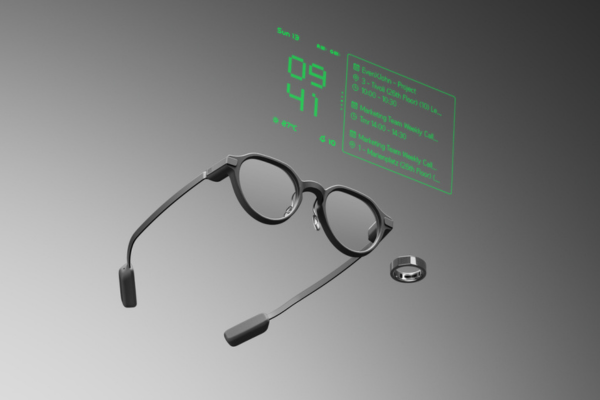
Meanwhile, Even Realities introduced its flagship Even G2 smart glasses in November last year. Unlike many competing products, the device does not include a camera. Instead, it features a heads-up display integrated into the frame that delivers real-time information directly within the user’s line of sight. Users control the device through the Even R1 companion ring, which supports tap and swipe gestures for navigation.
According to Wang, removing the camera forms a core part of the company’s privacy-first philosophy. He explained that smart glasses represent one of the most personal computing devices consumers will wear because they remain on users’ faces throughout the day. Therefore, the company designed both its hardware and software to protect user privacy while ensuring the device remains socially acceptable.
Additionally, Even Realities developed its voice translation capabilities to convert speech directly into text instead of storing voice recordings. The company also encrypts user data and has built its infrastructure to comply with Europe’s stringent privacy standards, reinforcing its commitment to secure AI-powered wearable technology.
Moreover, the company’s most active users frequently rely on Conversate, its AI copilot, which analyzes conversations in real time, explains unfamiliar terminology, suggests contextual follow-up responses, and generates conversation summaries that automatically synchronize with users’ smartphones.
Despite the growing focus on artificial intelligence, Even Realities continues to prioritize optical engineering as its primary competitive advantage. Wang emphasized that smart glasses require an entirely different technology stack than smartphones or smartwatches because engineers must simultaneously develop the display microchip, optics, and waveguide system to achieve a seamless viewing experience.
As the AI wearables, augmented reality (AR), and smart glasses markets continue to expand, Even Realities aims to differentiate itself by combining advanced optical technology with privacy-focused design. The latest funding will likely support continued product innovation, international expansion, and research into next-generation wearable computing solutions.