




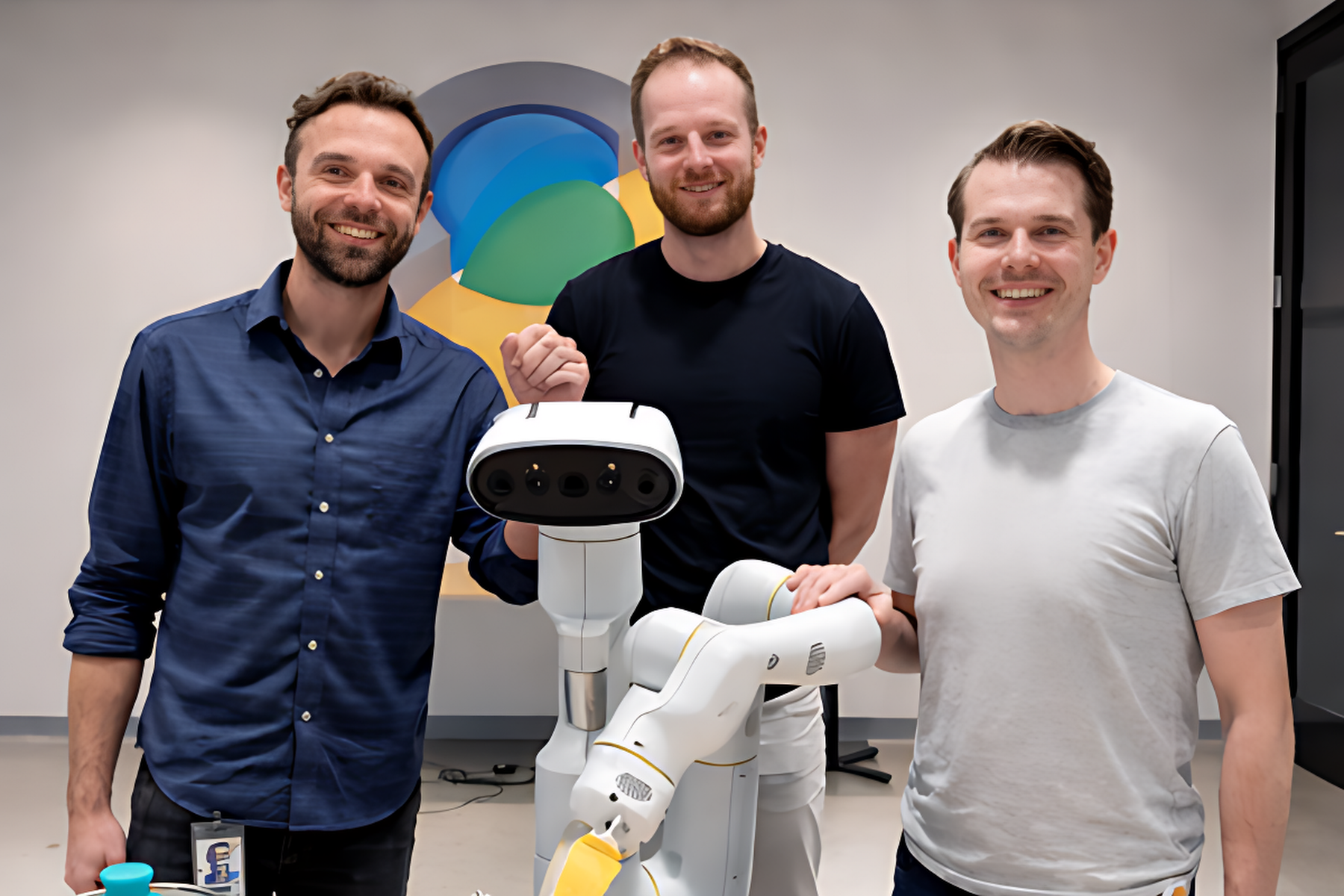
Physical Intelligence, a two-year-old robotics startup based in San Francisco, is currently in discussions to raise approximately $1 billion in fresh funding at a valuation exceeding $11 billion. Notably, this potential deal would nearly double the company’s valuation from $5.6 billion in just four months, signaling strong investor confidence in its long-term vision.
Meanwhile, prominent investors are lining up to participate in the round. Founders Fund is expected to join the funding, while Lightspeed Venture Partners is also in talks to invest alongside existing backers Thrive Capital and Lux Capital. However, since the deal remains in its early stages, terms may evolve as discussions progress.
Earlier this year, during a visit to the company’s headquarters, co-founder Sergey Levine outlined the startup’s core ambition, stating, “Think of it like ChatGPT, but for robots.” At that time, Physical Intelligence had already raised over $1 billion and built a team of around 80 employees. The company actively develops general-purpose AI models that enable robots to perform a wide range of tasks, including folding laundry and peeling vegetables.
In addition, co-founder Lachy Groom emphasized the company’s unconventional approach to commercialization. He confirmed that Physical Intelligence is not operating on a fixed timeline to bring products to market—an approach that has not deterred investor interest. “There’s no limit to how much money we can really put to work,” Groom said. “There’s always more compute you can throw at the problem.”
As a result, Physical Intelligence continues to position itself at the forefront of next-generation robotics by focusing on scalable AI infrastructure rather than immediate revenue generation. This strategy reflects a broader trend in deep tech, where long-term innovation often takes precedence over short-term commercialization.
The company’s aggressive fundraising efforts and rapidly increasing valuation underscore the growing momentum in the AI-powered robotics sector. If the deal materializes as expected, Physical Intelligence could significantly accelerate the development of general-purpose robotic intelligence, potentially reshaping industries ranging from household automation to manufacturing in the years ahead.