




Deepinder Goyal, founder of Zomato, is reportedly in advanced discussions to invest around $1 million (approximately Rs 9 crore) in space technology startup Kalam Labs, according to people familiar with the matter.
The proposed investment will form part of a broader funding round worth $5–7 million. In addition, other investors such as Globaz Technologies are expected to participate in the round, sources indicated.
Based in Lucknow, Kalam Labs focuses on developing near-space drones, also known as unmanned aerial vehicles (UAVs), that can operate in the stratosphere. These drones can fly significantly higher than most conventional drone systems currently in operation.
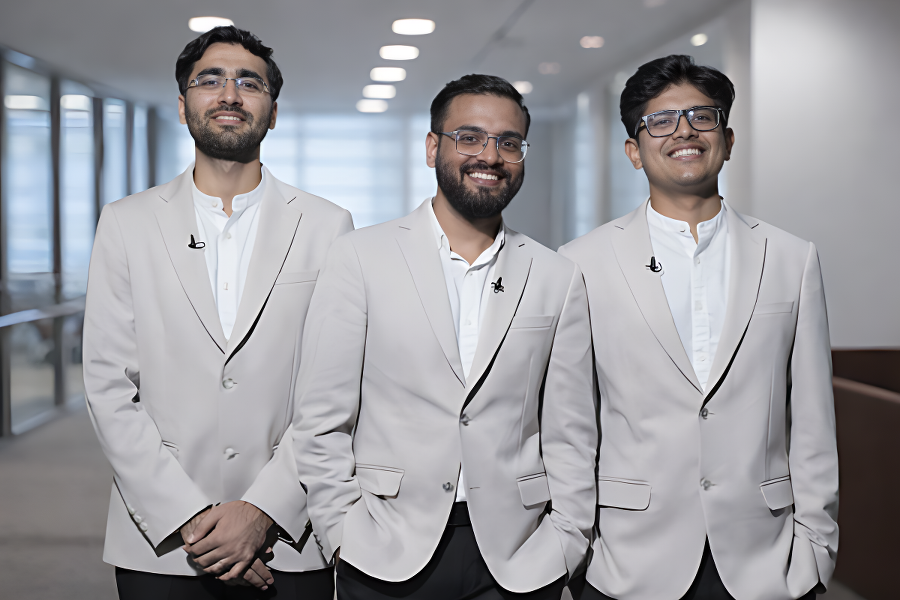
The startup began its journey in 2018 and operates under the leadership of founders Harshit Awasthi, Sashakt Tripathi, and Ahmad Faraaz. All three founders graduated from Birla Institute of Technology and Science, Pilani, around 2022.
Initially, Kalam Labs launched as an edutainment platform that streamed live science classes for children. However, the company later pivoted toward developing advanced drones capable of operating at near-space altitudes while maintaining minimal thermal signatures.
According to the founders, these characteristics allow the drones to remain difficult for radar systems to detect or intercept.
The founders also explained that the company builds its aerial vehicles at a cost similar to standard drone manufacturing. However, they claim the drones deliver capabilities closer to those of mini fighter jets. The founders presented this concept while pitching the startup on the television reality show Shark Tank India, where Aman Gupta, co-founder of boAt, invested in the company.
Kalam Labs also gained public visibility through its involvement in the Indian film Fighter, which featured actors Hrithik Roshan and Deepika Padukone. Furthermore, the startup counts venture investors such as Lightspeed and Y Combinator among its backers.
Investor interest in drone technology startups has grown significantly in India over the past year, particularly following Operation Sindoor. Drones increasingly play a critical role in modern warfare and defence applications, which has accelerated investment in the sector.
The potential Kalam Labs investment would represent one of Goyal’s smaller bets in the startup ecosystem. Nevertheless, the move highlights his growing interest in frontier technologies and deeptech ventures.
Recently, Goyal has invested in several advanced technology initiatives, including space technology startup Pixxel, wearable technology company Temple, aviation venture LAT Aerospace, and Continue, a longevity-focused research initiative.
Reports previously indicated that Goyal was also in discussions to invest $25–30 million (approximately Rs 220–270 crore) of his personal wealth into Pixxel.
Separately, Temple recently raised $54 million (around Rs 490 crore) from investors, including Steadview Capital, Vy Capital, Peak XV Partners, and Info Edge.
Earlier this year, while announcing his decision to step down as chief executive officer of Eternal, Goyal explained his motivations for exploring new ventures. He stated, “This transition allows Eternal to remain sharply focused while giving me the space to explore ideas that do not fit Eternal’s risk profile.”
Deepinder Goyal’s potential investment in Kalam Labs highlights a growing trend among prominent entrepreneurs to back deeptech and frontier innovation. As drone technology becomes increasingly critical in sectors such as defence, aerospace, and surveillance, startups like Kalam Labs are attracting attention from influential investors who aim to support the next generation of advanced technology companies.