




AI dictation startup Wispr has raised a new funding round led by Menlo Ventures, with participation from a mix of new and existing investors as the company expands its AI-powered voice interface products and speech technology.
The latest round brings Wispr’s total fundraise to $361 million to date, strengthening the company’s position as competition intensifies in the AI-powered dictation and human-AI interface market.
The round was led by Menlo Ventures, with participation from new investors Peak XV, Activate, Girish Mathrubootham’s Together Fund, Acrew, Forerunner, and Goodwater.
Existing investors Notable Capital, NEA, Neo Ventures, 8VC, and MVP Ventures also participated in the round.
The funding also attracted a group of artists, athletes, and cultural leaders, including Livvy Dunne, Shaun White, Dak Prescott, DK Metcalf, Joe Burrow, Kyle Hamilton, Aaron Gordon, Alex Caruso, Domantas Sabonis, Klay Thompson, Paul George, and Trae Young.
The latest capital comes as Wispr expands its product portfolio beyond AI dictation and invests in proprietary speech technology and new interfaces for human-AI interaction.
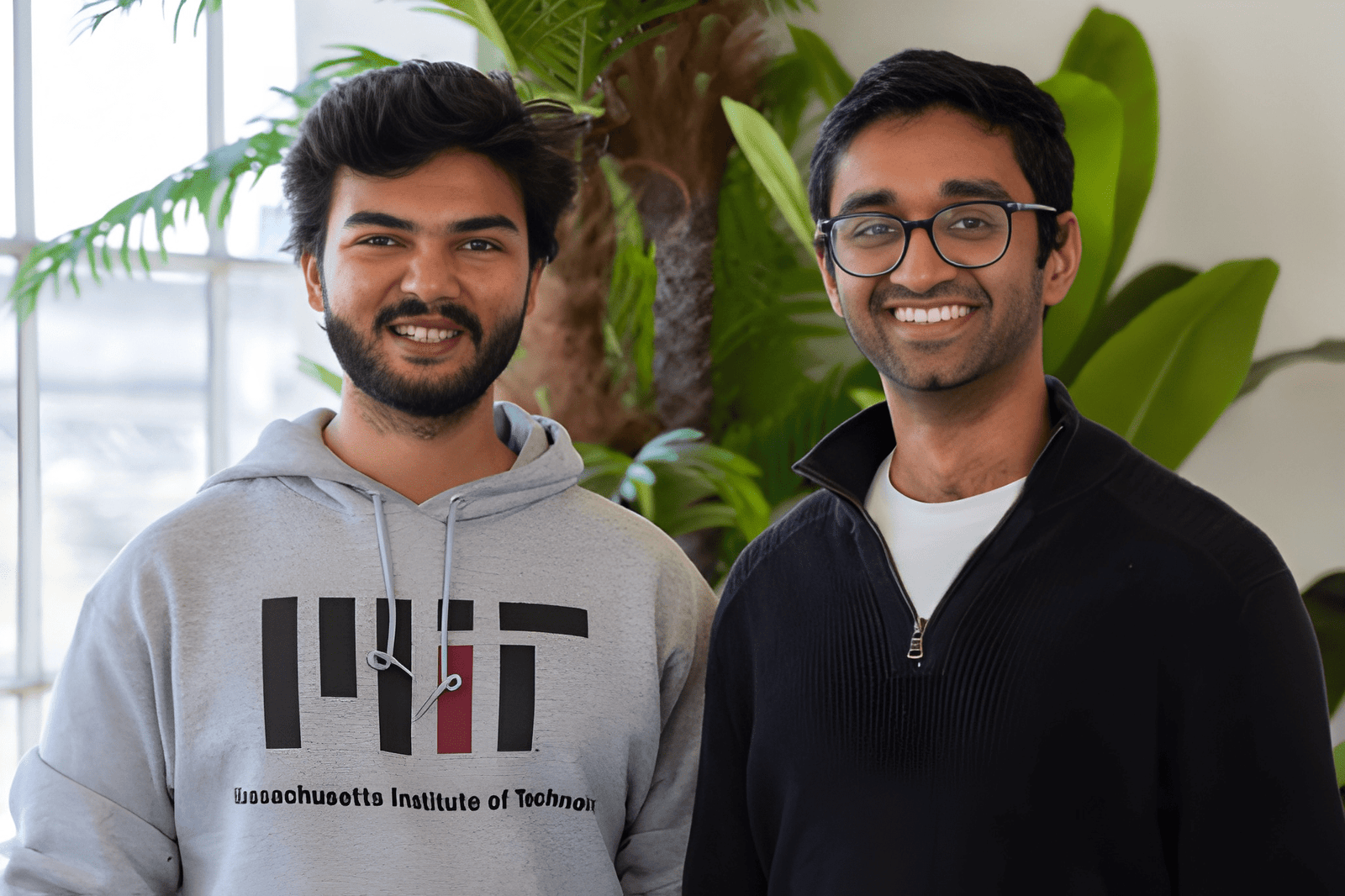
Founded in 2021 by Tanay Kothari and his batchmate Sahaj Garg, Wispr’s flagship product is the AI dictation app Wispr Flow.
The application works across applications, allowing users to speak naturally while the software handles transcription, correction, and formatting in real time.
According to Kothari in a blog post, Wispr Flow is now used by people at nearly all Fortune 500 companies and over 10,000 enterprises. Users have written more than 60 billion words with Flow.
The scale of adoption highlights the growing demand for AI tools that can convert natural speech into structured written content without requiring users to manually type, format, or correct every sentence.
Earlier this month, Wispr launched an AI-powered meeting notetaker, entering a market that includes players such as Granola and Otter.
The product is currently available on Mac, with support for Windows soon.
Wispr is also expanding its presence in India, which has become Wispr Flow’s second-largest market. The company has made local hires in recent months and has added support for Hinglish, a mix of Hindi and English.
The India expansion is particularly relevant to Wispr’s speech technology strategy because users frequently switch between languages while speaking, creating additional challenges for conventional speech recognition systems.
Alongside the funding announcement, Wispr previewed its first proprietary speech model, Canto, which is designed to improve speech recognition in noisy environments.
According to Kothari, Canto reduced error rates from more than 30 percent of words to between 5 percent and 10 percent.
“Across everyday use, we expect it to reduce the number of dictations you need to edit by 30 to 35 percent,” he said.
The model is also designed to better handle the way people naturally speak, particularly when they switch between languages such as Hinglish.
“Roughly half the world moves between languages during a normal day, often inside a single sentence, and models trained on one language at a time handle that badly.
For instance, with Hinglish, Hindi speakers usually write in Devanagari, but when they’re speaking Hinglish, they expect it back in romanized script, so hearing every word correctly still isn’t enough to give someone something they can send, he said.
The focus on multilingual and code-switched speech could give Wispr an opportunity to address use cases that require more than conventional single-language transcription.
Last month, Wispr introduced the Wispr Advanced Interfaces Lab, led by Ariya Rastrow, a founding member of the team behind Amazon Alexa.
The lab aims to explore the next generation of interfaces for human-AI interaction, starting with voice and expanding to other modalities.
“The future interface layer will combine voice, vision, memory, context, and generative UI to help users express intent naturally and achieve outcomes with minimal friction,” the company said at the time.
The initiative reflects Wispr’s broader ambition to move beyond dictation and develop interface technologies that allow people to interact with AI more naturally.
Wispr’s expansion comes as competition in AI-powered dictation continues to increase.
Google recently launched Rambler, an AI-powered dictation feature in its keyboard app Gboard.
Rambler turns natural, spoken thought into clean, well-structured written text. It automatically removes filler words, formats grammar and punctuation, and allows users to edit and rewrite text using natural voice commands.
The feature also enables users to switch between multiple languages in a single message, putting greater emphasis on the multilingual voice interaction capabilities that Wispr is also developing.
With $361 million raised to date, growing enterprise adoption, expansion in India, a new AI meeting notetaker, and its proprietary Canto speech model, Wispr is broadening its focus from AI dictation toward a wider human-AI interface platform.
The company’s next phase will centre on improving speech recognition, expanding its product footprint, and exploring voice, vision, memory, context, and generative UI through its Advanced Interfaces Lab. As competition grows from established technology companies and specialised AI startups, Wispr’s ability to translate natural speech into accurate, usable, and context-aware interactions will remain central to its growth strategy.