

For many travellers today, a hotel is no longer just a place to stay—it is an experience to remember. From quiet mountain retreats to thoughtfully designed boutique spaces, the expectations from hospitality have shifted far beyond comfort and convenience. This transformation is not accidental; it reflects a deeper change in how people choose to travel, unwind, and connect with places.
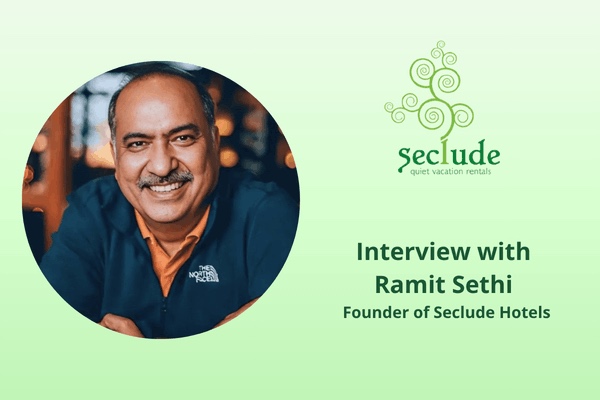
At the centre of this evolving landscape are operators who are rethinking hospitality from the ground up. One such voice is Mr. Ramit Sethi, Founder of Seclude Hotels, whose journey from the corporate world into boutique hospitality offers a unique perspective on building experience-led brands.
In this exclusive interview with Business Review Live, Ramit Sethi shares insights into the rise of experiential travel in India, the realities of scaling boutique hospitality, and the strategic thinking behind Seclude’s growth journey.
Q1. What was the precise industry gap in India’s boutique, nature-led hospitality that convinced you Seclude Homes could be more than just another property brand?
After a fulfilling career in Corporate Finance at KPMG, Banking at Standard Chartered, and BFSI at Wipro, I discovered my passion for the startup ecosystem as an angel investor and mentor, supporting ventures with genuine potential. That’s when Rohit Sethi introduced me to his venture, Seclude—and I eagerly joined because I instantly recognized a clear market gap and substantial long-term prospects in India’s boutique resort sector.
We faced large, uniform hotels on one end and charming yet variable independent accommodations on the other. What lacked was a robust middle tier: design-driven, nature-centric boutique resorts offering distinctive character alongside reliable hospitality. Seclude was already creating precisely that via its villas—cozy retreats emphasizing a profound sense of place, privacy, and emotional ease, all while upholding top-tier service. Its dedication to food, design, and immersive experiences positioned it as a complete offering—and crucially, a brand poised for trust and recognition beyond mere properties.
Post-Covid, this void grew more apparent as travelers increasingly valued space, reliability, and a home-like feel over mere facilities. Since coming onboard, I’ve spearheaded Seclude’s growth into the boutique resort arena—typically featuring 6 to 20 rooms—repositioning the brand as a destination crafted not only for lodging but also for significant gatherings and shared moments. This evolution has further solidified my conviction that we’re not merely following a fad but actively defining an enduring category within Indian hospitality.
Q2. Your corporate background spans banking, consulting, and global operations. When you first encountered Seclude’s business model, what were the top organizational or operational assumptions you had to rethink?
I honed my expertise over years in banking, consulting, and global operations before immersing myself further in the startup world as an investor and mentor. Upon joining Seclude, I pinpointed exactly what required transformation to realize its maximum potential—it represented the seamless extension of all my prior experience, tailored to a distinctive, experience-driven enterprise.
A key initial focus was maintaining cash positivity and avoiding the pitfall of equating growth with true advancement. We refined unit economics, implemented stricter criteria for expansion, and instilled rigorous financial oversight into our decision-making. Simultaneously, we shifted from a fragmented “mom-and-pop” approach, establishing scalable processes in sales, operations, and finance—eliminating disarray while safeguarding the unique culture and warmth that embody Seclude.
The objective remained straightforward: professionalize the operation without diminishing its vibrancy, and cultivate a scalable enterprise that balances discipline with personality. Today, Seclude operates with enhanced clarity and command, positioning us to elevate the brand to new pinnacles.
Q3. Seclude has properties across multiple geographies (Himachal, Uttarakhand, Kerala, Karnataka, and Goa). What performance metrics or demand indicators do you rely on to decide where to invest next?
We employ a strategic two-tier evaluation process. The primary criterion focuses on the product itself: we seek distinctive homes and boutique resorts possessing genuine character, a profound sense of place, or cultural significance—unique assets that resist easy replication. If a property fails to deliver this, we typically decline, irrespective of its promising tourism potential.
The secondary criterion assesses core fundamentals and accessibility. We analyze unit economics, the balance between operational costs and guest experience quality, and the ease of reaching the destination—preferably within five hours of a major hub. Additionally, we monitor search and inquiry trends within our network to identify emerging demand hotspots.
On the strategic front, having established a solid foothold in the hills, we ventured into Kerala due to its consistent year-round appeal, robust connectivity, and alignment with unhurried, experience-rich travel. Likewise, we entered Hampi to capitalize on rising interest in cultural and spiritual journeys. This defines our growth philosophy: prioritizing select, enduring locations over sheer expansion.
Q4. Seasonality can significantly impact hill and heritage stays. How do you measure, forecast, and mitigate demand fluctuations across your portfolio?
Our portfolio inherently accounts for seasonality through a diverse blend of hill, heritage, and beach destinations, allowing us to manage it at the portfolio level rather than on a property-by-property basis. When hills experience peak demand, beaches typically see lighter occupancy, and vice versa, which effectively balances cash flows and operational demands throughout the year.
We assess and predict demand by analyzing historical booking data, lead times, and pickup patterns for each property, then aggregate these insights into a comprehensive portfolio overview. This enables proactive planning for staffing, pricing, and inventory management.
Operationally, we intentionally avoid squandering downtime. During off-peak periods, we prioritize revamps, thorough maintenance, team training, and experience enhancements, ensuring properties emerge stronger for the high season.
Meanwhile, India’s rich diversity plays to our advantage—travel opportunities abound year-round. From Shimla’s snow season to Hampi Utsav, Palampur’s tulip festival, and Thrissur’s Pooram, there’s perpetually an event to drive demand. Our aim isn’t to eradicate seasonality but to harmonize it, sustaining a cycle of selling, refining, and readying the business.
Q5. Quality consistency is difficult in decentralised properties. What internal KPIs or frameworks do you use to ensure guest experience standards are met across different homes?
Although our properties span diverse locations, we maintain highly centralized operations. Experience standards originate from our Delhi headquarters and get implemented on-site. Our foundational framework emphasizes people and processes: we recruit individuals with a genuine seva-bhav mindset, provide structured training, and enforce clear SOPs, reinforced by spot checks and secret guest audits. Essentials like cleanliness, comfort, responsiveness, and warmth remain absolute priorities.
We monitor operational excellence through straightforward yet vital metrics, such as Wi-Fi uptime and CCTV oversight, ensuring guest satisfaction and ground-level discipline. Meanwhile, our Guest Relations team serves as the central hub for the entire guest journey—from pre-arrival to post-stay follow-ups—enabling swift and uniform issue resolution.
Regarding KPIs, guest feedback guides us: property-level review scores, direct input, repeat visits, and referrals. The objective isn’t identical spaces but reliable care—so the Seclude experience delivers consistency, whether in Palampur or Kerala.
Q6. From a financial perspective, how do you balance capital deployment between restoration of heritage homes and performance maximisation of existing properties?
We view restoration and performance not as conflicting goals but as complementary elements of our partnership model. We partner exclusively with boutique property owners committed to investing in restorations and enhancements, ensuring shared accountability for creating high-caliber assets right from the outset. On extended leases, we allocate our own capital toward strategic upgrades—such as technology, infrastructure, or even a pickleball court—whenever they elevate both guest experiences and financial returns. This approach enables selectivity and guarantees each property launches with a robust foundation.
From that point, we prioritize achieving stable performance across every property swiftly. Most reach cash positivity within roughly six months, after which profits get reinvested to fortify current assets or support the next acquisition. This establishes a disciplined, self-sustaining growth cycle, distinct from capital-intensive expansion strategies.
Technology proves essential here, powering revenue management, distribution, and operational oversight to optimize results without inflating expenses. Consequently, we maintain a measured pace: growth occurs sustainably, harmonizing restoration excellence, operational strength, and steady cash flows.
Ultimately, this yields superior assets, enhanced performance, and expansion that finances itself.
Q7. What guest data or feedback signals have you seen that most reliably predict higher loyalty, repeat bookings, or stronger referrals?
We prioritize behavioral indicators over mere ratings as the truest measures of success. When guests shift from booking through an OTA to direct reservations on subsequent trips, it signals they’re selecting Seclude specifically, beyond just the destination.
We monitor repeat patterns meticulously—tracking return frequency, whether they explore another Seclude property, and if they return with bigger groups or for varied occasions. Such cross-property and group repeat behaviors serve as robust predictors of enduring loyalty.
On feedback, specific and emotional responses carry the most weight. When guests name team members, describe their emotional experience during the stay, recommend us spontaneously, or even inquire about a loyalty program, it confirms a genuine bond. This resonance appears externally too, evidenced by our nomination for MakeMyTrip’s India’s Favourite Homestay Awards.
In essence, we focus not only on guests’ words but also on their actions following departure.
8. You mentor companies on growth and capital raising. What is one strategic shift at Seclude that you believe significantly improved unit economics or investor confidence?
A pivotal strategic pivot involved transitioning from villas to boutique resorts (8 to 20 rooms) with a defined vision, rather than merely expanding our home portfolio, alongside implementing centralized operations. We recognized early that scaling without uniqueness and robust systems fails to enhance unit economics.
By pledging to excel iconically in aesthetics and service, reinforced by standardized processes, we crafted properties capable of securing premium rates, drawing direct demand, and cultivating genuine brand affinity. This boosted unit economics through word-of-mouth demand, minimizing reliance on perpetual discounting.
As a bootstrapped entity, this approach also bolstered trust among partners and owners. We evolved beyond mere occupancy assurances, delivering distinctive, efficiently managed assets with lasting value. Prioritizing select, superior, and iconic properties—underpinned by potent central operations—has rendered the business more resilient and financially sound than pursuing scale indiscriminately.
And that changed everything.
Q9. Sustainable tourism and local community impact are increasingly important for travellers. What measurable initiatives has Seclude undertaken to ensure positive community engagement and responsible operations?
Sustainability forms the core of our daily operations rather than serving as an isolated initiative. Many properties feature kitchen gardens, and we monitor local and on-site sourcing to minimize supply-chain footprints. We’ve implemented balti baths at select homes as a water-efficient option and include water usage in our regular reviews. Portfolio-wide, we’ve banned single-use plastics, substituting them with refillable or reusable alternatives and verifying adherence during property inspections.
From a design standpoint, we emphasize upcycling and adaptive reuse, incorporating restored furniture and reclaimed materials whenever feasible. In fact, Seclude Palampur earned a nomination for an Eco-Friendly Villa award, demonstrating this philosophy in action. Combined with local hiring and sourcing, these tangible, trackable measures ensure our expansion stays accountable and deeply connected to the communities we serve.
Q10. Looking forward, what’s the biggest structural change you expect in India’s boutique/homestay hospitality sector in the next 3–5 years, and how is Seclude positioning itself for that shift?
I anticipate the most significant structural shift will divide scale-first platforms from experience-first brands. As AI and automation proliferate in travel, efficiency will become the baseline—and genuine human connection, trust, and experiential consistency will emerge as true differentiators. Guests will gravitate toward brands that feel authentically personal, beyond mere convenience.
Meanwhile, India’s domestic travel market surges rapidly, with many competitors expanding beyond their capacity to uphold standards, widening the consistency gap across the sector. We’ve intentionally pursued steady, controlled growth, bolstered by centralized operations and a robust direct Guest Relations team, ensuring the experience remains undiluted amid expansion.
We also observe accelerating momentum in cultural and experience-driven tourism—travelers crave narratives, context, and a profound sense of place, rather than just comfortable accommodations. Complementing this is a growing appetite for “bite-sized luxury”: compact, memorable indulgences at approachable prices, such as a hot tub amid tea gardens, a royal candlelit evening, or truly personalized service free from five-star rigidity.
Seclude positions itself precisely at this nexus: technology-powered backstage, yet profoundly human, design-centric, and experience-led upfront.