Saturday, June 6, 2026
Home Blog Page 8

Zostel expands European footprint through Safestay partnership

0

Zostel has announced a strategic partnership with Safestay, enabling access to 24 hostel properties across more than 20 cities in Europe and the United Kingdom through Zostel’s digital platform.

Under the partnership, Safestay’s 24 hostels will be listed on Zostel.com, while 82 Zostel properties across India, Nepal, and Thailand will be featured on safestay.com. Together, the combined network will cover more than 8,000 beds across Europe, the UK, India, Nepal, and Thailand. Both companies will continue operating independently while leveraging cross-listing capabilities to strengthen international travel access and booking convenience.

The collaboration comes at a time when India-to-Europe travel has grown by 17% year-on-year in 2025, driven by increasing demand from Indian travellers combining European and Asian destinations within a single itinerary. The partnership is aimed at simplifying multi-stop travel planning and direct bookings without relying heavily on third-party travel aggregators.

According to the companies, nearly 20 properties are expected to go live during the first phase within the coming week, while the complete rollout is targeted for completion by June 2026. The partnership is also supported by a common framework of minimum service standards focused on guest safety, security, fire safety, in-room quality, safeguarding policies, equality measures, and data protection protocols.

Aviral Gupta added: “We believe the best way to travel anywhere is to have a local friend. With Safestay, that’s what our community of nearly 3 million travellers now has across 22 European cities. Zostel unlocks 100+ destinations across India, Nepal and Thailand. We see strong alignment between the two brands on quality, safety and guest experience, and are excited to build on this together. One global community, not just one global brand.”

Larry Lipman commented: “This partnership with Zostel represents an exciting strategic development in extending Safestay’s international reach through a scalable, capital-light model. By aligning with a leading hostel operator in India with aligned values, we will access new customer segments and strengthen our position in key long-haul travel markets. We believe it is a strong commercial fit between two complementary hostel networks with a shared focus on quality, value, safety and guest experience.”

With access to Safestay’s European network, the collaboration is expected to significantly strengthen Zostel’s international business. The company projects 40–50% growth in international bookings over the next 12 months. The cross-listing model is also expected to generate an additional ₹8–10 crore in revenue by 2027 while reducing dependence on online travel agency commissions through stronger direct booking volumes.

The partnership reflects a broader trend within the travel industry where hospitality brands are increasingly leveraging digital transformation, direct-to-consumer strategies, and global collaborations to expand customer reach and improve booking efficiency. As international travel rebounds and travellers prioritise experience-driven journeys, partnerships that combine regional strength with global accessibility are expected to play a larger role in shaping the future of travel and hostel ecosystems.

Nivasa Finance raises $3Mn to expand Affordable Housing Credit Access

0

India’s fintech and housing finance ecosystem continues to attract investor interest as startups focus on improving access to formal credit for underserved borrowers across rural and semi-urban markets. In the latest development, Nivasa Finance has secured ₹25 crore, approximately $2.6 million, in a seed funding round backed by Prime Venture Partners, Blume Ventures, Whiteboard Capital, along with a group of undisclosed angel investors.

The Bengaluru-based startup plans to utilise the newly raised capital to expand its geographical footprint over the next 12 months, strengthen its distribution network, and deepen partnerships with banks, NBFCs, and housing finance companies. The company also intends to accelerate the expansion of its field execution network as it scales operations across underserved regions.

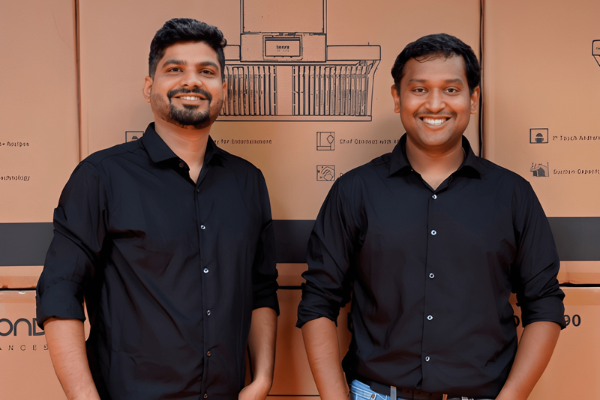
Founded in 2025 by Samit Shetty and Hitesh Saraf, Nivasa Finance operates as a technology-enabled home loan distribution platform connecting borrowers with banks and non-banking financial institutions to facilitate affordable housing finance. The platform focuses on enabling access to formal credit for borrowers seeking to build homes in rural and semi-urban areas, segments that often remain underserved by traditional lending systems.

The startup currently works with more than 10 lending partners, including banks, small finance banks, housing finance companies, and NBFCs. According to the company, loans worth over ₹20 crore have already been disbursed through pilot operations across the Mysore and Mandya districts of Karnataka.

In addition to expanding its lending ecosystem, Nivasa Finance is also working towards securing an NBFC licence to strengthen its long-term role within India’s secured lending market. The move aligns with the broader shift towards digital-first financial infrastructure and technology-led credit accessibility.

Unlike conventional loan distribution models, the platform combines remote onboarding, borrower assessment, and lender matchmaking with doorstep services to improve conversion efficiency and enhance the experience for both borrowers and financial institutions. The company has also developed customer-facing digital interfaces, including WhatsApp-led and app-based journeys, aimed at simplifying onboarding and improving accessibility in non-metro markets.

The funding round comes amid growing momentum within India’s digital lending and affordable housing finance sector, where startups and NBFCs are increasingly leveraging technology, data-driven decision-making, and digital transformation to formalise access to credit for underserved populations. Investors are showing heightened interest in this space as the formalisation of India’s informal credit ecosystem continues to create significant market opportunities.

The trend is reflected across the broader fintech landscape. Earlier this year, Finfinity raised $2.4 million in seed funding to strengthen its technology platform with a focus on personalisation and risk intelligence. Similarly, Easy Home Finance secured $30 million in a Series C funding round in January to accelerate expansion into new markets across India.

UAE-Based Indian Artists Reimagine Historic UN Peace Hymn “Maithreem Bhajata” for a Divided World

0

Dubai, UAE | 12th May 2026: In a compelling artistic tribute to global unity, Indian performing artists based in the United Arab Emirates have come together to present “Mission Global Peace – Maithreem Bhajata”, a soulful recreation of the iconic hymn that once moved the United Nations to a standing ovation.

Originally composed by Chandrasekarendra Saraswati and rendered at the UN in 1966 by Bharat Ratna M. S. Subbulakshmi, the hymn carries a timeless message: cultivate friendship and conquer hearts, not nations.

Reimagined for today’s world, the production brings together more than 30 artists – leading Indian classical dancers, musicians, and vocalists from across the UAE in a unified expression of peace and harmony.

The initiative has been:

Presented by the Global Indian Performing Arts & Music Society (GIPAMS), In partnership with IPF UAE

Conceptualized and directed by Guru. Iswarya Bharadwaj

With Music direction by Renuka Parameswar

Production done By Varathraj Kumar from Ameeraga Valai Oli / AVO Studio, Dubai

Featuring a diverse ensemble of artists across classical disciplines, the production reflects the UAE’s multicultural fabric and its role as a global hub for coexistence and dialogue.

Already crossed a total of 15K+ views, 1.5K+ likes and shared widely across all platforms.

The Fern Hotels expands Maharashtra presence with two new signings

0
Suhail Kannampilly, Managing Director, The Fern Hotels & Resorts

India’s hospitality industry continues to witness expansion across spiritual, leisure, and emerging business destinations as hotel operators strengthen their regional footprints to meet rising travel demand. In the latest development, The Fern Hotels & Resorts has announced the signing of two new properties in Maharashtra: The Fern Residency Shirdi, Series by Marriott and The Fern Elysia Resort Dahanu, Boisar, Series by Marriott.

With these additions, the hospitality group has expanded its Maharashtra portfolio to 45 operational and upcoming properties, reinforcing its strategy of deepening presence across high-potential travel markets within the state. The dual signings reflect the company’s continued focus on strengthening its position across pilgrimage destinations, leisure-driven travel locations, and growing business hubs.

Sharing his thoughts on the expansion, Suhail Kannampilly said: “Maharashtra continues to be a strategically important market for us, given its strong tourism potential and growing demand for quality hospitality offerings. Through these signings in Shirdi and Boisar, we aim to strengthen our presence across diverse travel destinations from prominent pilgrimage hubs to emerging leisure and business markets.”

Located in Shirdi, The Fern Residency Shirdi, Series by Marriott will feature 72 rooms and suites designed to cater to both business and leisure travellers. The property will also include an all-day dining restaurant and is expected to open in 2028, further supporting the city’s growing hospitality infrastructure driven by year-round pilgrimage tourism.

Commenting on the association, Nitin Kote said: “With the city welcoming visitors from across the country throughout the year, we are confident this partnership will offer guests a comfortable and dependable stay experience backed by quality hospitality standards.”

Meanwhile, The Fern Elysia Resort Dahanu, Boisar, Series by Marriott is set to feature 76 rooms and suites along with an all-day dining restaurant and bar. Scheduled to open in 2029, the resort is expected to cater to a mix of leisure and business travellers as Boisar and surrounding regions continue to evolve as emerging hospitality and tourism markets.

Commenting on the partnership, Aniket Save said: “Our association with The Fern Hotels & Resorts marks an exciting step for this upcoming resort in Boisar. We look forward to creating a destination that blends leisure, comfort and thoughtful hospitality, catering to the evolving needs of travellers visiting the region.”

The expansion comes at a time when hospitality brands are increasingly investing in regional markets driven by spiritual tourism, experiential travel, and improving infrastructure connectivity. As demand for premium and branded hospitality experiences continues to rise across India, operators are accelerating expansion into destinations that offer long-term tourism and business growth potential.

AI Voice startup Vapi reaches $500 Mn valuation after Amazon Ring partnership

0

The rapid adoption of AI-powered customer support technologies is driving significant momentum across the enterprise software and voice automation market. In one of the latest developments within the AI infrastructure space, an AI voice startup Vapi has reached a valuation of approximately $500 million. The funding comes after the startup secured a major enterprise deployment with Amazon Ring, which now routes all inbound customer support calls through Vapi’s platform.

According to the report, Amazon Ring evaluated more than 40 AI voice vendors while managing a surge in customer support demand during the previous holiday season. The company ultimately selected Vapi after assessing options that included expanding call-centre capacity, relying on traditional automated phone systems, or implementing AI-driven voice agents capable of more natural customer interactions.

Jordan Dearsley stated that Ring chose the platform largely because it offered engineers granular control over how AI agents behaved during live customer interactions. The platform’s infrastructure-focused approach enabled greater flexibility in configuring voice agents to align with enterprise requirements around customer experience, reliability, and operational control.

Jason Mitura said Ring’s customer satisfaction metrics improved after deploying the platform, while internal teams were able to refine AI agent experiences without engineering dependency. “A lot of AI tools promise great outcomes — Vapi has delivered on them,” he said.

Founded by Jordan Dearsley and Nikhil Gupta, both former classmates at the University of Waterloo, the company originated from an AI therapist project developed in 2023. While the original product saw limited traction, demand quickly emerged for the low-latency voice infrastructure powering the application. This shift led the founders to pivot towards Vapi and officially launch the platform in 2024.

The company now provides tools that allow businesses to build, deploy, and manage AI-powered voice agents across customer support, appointment scheduling, lead qualification, and outbound sales operations. As enterprises continue integrating AI systems into customer engagement workflows, demand for scalable voice infrastructure platforms has accelerated significantly.

According to the company, Vapi has processed more than one billion calls through its platform to date, with current daily call volumes ranging between one million and five million interactions. Enterprise clients account for the majority of this activity, reflecting growing adoption among large-scale organisations seeking AI-led automation solutions.

Alongside Amazon Ring, Vapi’s enterprise customer base includes Kavak, Instawork, New York Life, Intuit, UnityAI, and Cherry. The startup also operates a self-serve developer platform that has reportedly been used by more than one million developers.

“Because we started from self-serve and had such a wide developer footprint, we were already battle-tested at significant scale before we signed our first major enterprise customer,” Dearsley said.

Additional participants in the Series B funding round included M12, Kleiner Perkins, and Bessemer Venture Partners, bringing the company’s total funding to $72 million. According to the report, Vapi is currently operating at an annual recurring revenue run rate within the healthy eight-figure range.

The startup is part of a rapidly growing segment of AI voice companies competing to transform customer interactions through automation. Industry players in this space include Sierra, Decagon, PolyAI, Bland, Retell, and ElevenLabs. Vapi differentiates itself by focusing less on packaged applications and more on the infrastructure and orchestration layer behind enterprise voice agents, particularly for organisations prioritising compliance, reliability, and behavioural control.

The company currently employs around 100 people and plans to utilise the new funding to strengthen its engineering capabilities, infrastructure, and go-to-market operations.

“The golden problem is taking this indeterminate beast that is a model and taming it,” Dearsley said. “If you can do that, then you can provide value to the world.”

HealthQuad Backs LifeSigns to Expand AI-Powered Patient Monitoring

0
Hari Subramaniam, Founder and CEO of LifeSigns

HealthQuad, the growth venture arm of Quadria Group, has invested in LifeSigns, a Bengaluru-based startup focused on continuous AI-powered patient monitoring. While the financial details of the transaction remain undisclosed, the investment marks HealthQuad’s first institutional backing of the company.

Founded by Hari Subramaniam, LifeSigns has developed a predictive patient monitoring platform designed to address one of healthcare’s most persistent gaps: the inability of traditional periodic observation systems to detect rapidly changing patient risks in real time. The platform has already been deployed across more than 50 hospitals in India, particularly in tier 2 cities where healthcare infrastructure and staffing challenges remain significant.

The company’s US-FDA approved platform combines a medical-grade wearable device, a cloud-based monitoring dashboard, and a predictive AI engine capable of continuously tracking key patient vitals. These include ECG, heart rate, respiration, temperature, blood pressure, and oxygen saturation. By integrating real-time patient data into an AI-led analytics system, the platform can identify early signs of patient deterioration up to 26 hours in advance and flag critical risks within a four-hour window.

The technology is designed to function across the full healthcare continuum, including ambulances, emergency rooms, intensive care units, general wards, and home-care environments. In addition, a central monitoring command centre enables hospital staff to remotely oversee multiple patients simultaneously, helping healthcare providers address the ongoing shortage of nursing and clinical personnel, particularly in non-metro regions.

According to the company, the platform has generated more than 87,000 life-saving alerts to date, reduced code blue incidents by nearly 90%, and lowered ICU readmissions by close to 78%. These outcomes reflect the growing role of AI, predictive analytics, and digital transformation in reshaping healthcare delivery and improving patient safety.

LifeSigns also operates on a frugal, occupancy-based pricing model, allowing hospitals to pay based on patient volumes rather than fixed subscription costs. This approach is aimed at making advanced patient monitoring technology more accessible to smaller hospitals and healthcare facilities across emerging markets and underserved regions.

The investment comes amid a broader surge in demand for AI-enabled healthcare infrastructure, as providers increasingly prioritise data-driven decision-making, operational scalability, and preventive care models. With predictive monitoring gaining traction globally, healthtech startups leveraging AI and cloud-based systems are expected to play a larger role in the future of connected healthcare.

“No patient should deteriorate silently because systems are not designed to continuously monitor them. That belief built LifeSigns. Our platform has demonstrated both clinical impact and scalability in India. With HealthQuad and Quadria, we now have the strategic depth to take this model global and make predictive care the standard,” said Hari Subramaniam, Founder and CEO of LifeSigns.

Rahul Agarwal, Partner at HealthQuad, said, “Healthcare today is built on periodic observation while risk is real time. The future lies in continuous monitoring led predictive intelligence. LifeSigns is building that layer to detect deterioration early and enable timely intervention which can significantly improve outcomes and reduce healthcare costs at scale. This is a globally relevant model and where the next wave of healthcare will be built. With access to Quadria’s ecosystem, we are well positioned to help Hari and LifeSigns team to scale across global markets.”

Courtyard by Marriott Expands Gujarat Presence With New Somnath Hotel

0

India’s hospitality sector continues to witness strong expansion across spiritual and leisure tourism destinations as travel demand rises steadily across the country. Strengthening this momentum, NILE Hospitality has announced the signing of Courtyard by Marriott Somnath, marking another strategic addition to its growing portfolio of globally branded hotels in Gujarat.

The upcoming property will feature 120 rooms and suites designed to cater to the evolving preferences of domestic travellers seeking comfort-driven hospitality experiences in key pilgrimage and tourism hubs. The hotel will also include banquet facilities and a swimming pool, positioning it to serve both leisure guests and event-based travel demand.

Located in Somnath, one of India’s most significant spiritual destinations, the hotel is expected to benefit from the increasing flow of domestic tourism and pilgrimage travel. With spiritual tourism continuing to gain momentum in India, hospitality brands are increasingly focusing on destinations that combine cultural significance with long-term tourism potential.

Speaking on the signing, Vikram Singh Chauhan, Founder & CEO, NILE Hospitality, said: “We are delighted that this signing solidifies our reputation for bringing world class hotels to sectors markets where destination-lead hospitality is much anticipated. At NILE, we are guided by a clear principle : to grow with purpose, to create enduring value, and to bring and deliver transformative properties and experiences that resonate with our guests. As we bring our hotels to the country’s most extraordinary destinations, our commitment remains focused on attention, quality and the sustainable success of our hotels. I am excited to bring the brand Courtyard By Marriott to Somnath and the opportunity to gently redefine hospitality standards in this route.”

Hitesh Mohandas Ramchandani, Partner, Somnath Synergy Resorts LLP, added: “Somnath’s prominence as a year-round pilgrimage hub presents a compelling opportunity for quality hospitality development. Recognising the growing demand for internationally benchmarked accommodation and event infrastructure, we envisioned a project that elevates the city’s hospitality offering. Aligning with the global standards of Marriott International, along with our partnership with NILE Hospitality positions us strongly to deliver a differentiated, high-value asset for this market.”

The signing further strengthens NILE Hospitality’s footprint in Gujarat, where the company already operates across destinations such as Gir and Dwarka. The company’s broader strategy remains centred on expanding its presence in high-growth leisure and spiritual tourism markets through partnerships with globally recognised hospitality brands.

As India’s tourism and hospitality industry evolves, destinations driven by religious, cultural, and experiential travel are emerging as key growth engines for hotel operators. The expansion of internationally branded properties into these markets reflects growing confidence in the long-term demand for premium accommodation and organised hospitality infrastructure across regional travel destinations.

Flo Mobility Secures $2.5 Mn to Scale Construction Robotics Business

0

India’s construction technology sector is witnessing increased momentum as automation and AI-driven infrastructure solutions continue to attract investor interest. In the latest development, Bengaluru-based construction robotics startup Flo Mobility has raised $2.5 million in a pre-Series A funding round co-led by Mela Ventures and Arali Ventures. The investment highlights growing confidence in the role of robotics, physical AI, and autonomous systems within India’s rapidly evolving construction ecosystem.

The newly secured capital will support the company’s next phase of growth, including scaling manufacturing capabilities, strengthening its AI and autonomy technology stack, expanding deployments across India, and entering international markets with a particular focus on the Middle East. As global construction firms increasingly seek productivity improvements and safer site operations, demand for automation-led solutions continues to rise.

Founded in 2021 by Manesh Jain and Pratik Patel, Flo Mobility focuses on developing Physical AI and robotics solutions tailored for the construction sector. The startup specialises in autonomous robots designed to streamline material movement and support construction workflows across large-scale project sites.

Its flagship product, Flo Hauler, is a battery-powered autonomous mobile robot capable of transporting loads of up to 1.5 tonnes across construction environments, including multi-floor operations. Designed for unstructured and dynamic conditions, the robot can operate efficiently in changing site layouts and challenging weather environments, addressing some of the industry’s most persistent operational challenges.

The company stated that more than 60 robots have already been deployed across 10 Indian states, with clients including Larsen & Toubro, Godrej Properties, Embassy Group, Sobha Limited, and Capacite Infraprojects. According to the startup, these deployments have enabled clients to achieve nearly 45% cost savings, accelerate material movement by 50%, and reduce workplace accidents by 67%.

The funding round comes at a time when the adoption of AI, robotics, and automation technologies is accelerating across infrastructure and industrial sectors. With construction companies under increasing pressure to improve efficiency, safety, and operational scalability, startups operating at the intersection of AI and robotics are expected to play a larger role in shaping the future of smart construction and infrastructure development.

Opulent Oasis Hospitality announces luxury experiential retreat wild calm in Gujarat

0

Hospitality entrepreneur Bhavik Sheth has announced the launch of Opulent Oasis Hospitality Pvt. Ltd., marking his entry into the fast-growing experiential hospitality segment in India. The company’s debut project, Wild Calm, will come up in Sasan Gir and aims to deliver immersive luxury experiences inspired by nature, wellness, and local culture.

The upcoming hospitality retreat will feature 53 keys, including private pool villas and immersive stay formats designed to cater to modern leisure travellers seeking personalised and experience-driven vacations. In addition, the property will include a clubhouse, swimming pool, multicuisine restaurant, kitchen garden, and an activity arena to enhance the guest experience.

Furthermore, the project will integrate several outdoor and recreational amenities such as pickleball courts, box cricket facilities, and a Miyawaki forest, reflecting the company’s focus on eco-conscious and sustainable hospitality experiences.

According to the company, Wild Calm will focus on experience-led hospitality by blending local traditions, nature-based activities, and flexible guest engagement formats. Guests will also gain access to curated experiences, including botanical walks, storytelling sessions, pottery workshops, and specially designed evening programmes aimed at creating deeper emotional connections with the destination.

Speaking on the launch, Bhavik Sheth, Founder & CEO of Opulent Oasis Hospitality, said, “Over the years, hospitality has become extremely efficient but also increasingly predictable. You can follow every operating manual and still miss what actually matters to a guest. People don’t remember processes; they remember how a place made them feel. With Opulent Oasis Hospitality, the idea is to build destinations that feel intuitive, rooted, and genuinely engaging, rather than assembled through formats.”

Before launching Opulent Oasis Hospitality, Sheth worked with Evoke Experiences and played a key role in the development of Rann Utsav, one of Gujarat’s most recognised tourism and cultural attractions.

Going forward, the company plans to expand its footprint across wildlife destinations, eco-tourism circuits, and culturally significant travel markets across India. Simultaneously, it is exploring opportunities in Tier 2 and Tier 3 cities, where demand for boutique luxury resorts, wellness tourism, and experiential travel continues to rise steadily.

With experiential tourism gaining momentum among domestic and international travellers, Opulent Oasis Hospitality aims to position itself within the premium nature-based hospitality sector by offering immersive stays that combine luxury, sustainability, and authentic local experiences.

Startup Science acquires Sphere to expand structured startup mentorship for founders worldwide

0
Colin Christensen, Head of Advisory at Startup Science

Startup mentorship platform Startup Science has announced the acquisition of Sphere, the mentorship methodology and technology created by Colin Christensen. Simultaneously, the company launched its new Advisors module, a system designed to provide structured and phase-appropriate mentorship to founders across the platform.

The development comes at a time when startup mentorship and accelerator access continue to remain highly competitive. While mentored startups survive at twice the rate of non-mentored companies, nearly 97% of founders who apply to accelerator programs fail to secure entry. As a result, many early-stage entrepreneurs struggle to access experienced guidance during critical growth phases.

Through the acquisition, Startup Science aims to address this challenge by creating a scalable mentorship infrastructure for startup founders, entrepreneurs, venture-backed companies, and innovation-driven businesses. The company stated that the advisory ecosystem for startups remains massive yet largely unstructured. Currently, an estimated 200,000 to 500,000 mentors and advisors actively support startups across the United States through informal networks and introductions, which many founders cannot easily access.

Moreover, while platforms such as Fiverr connect businesses with freelancers and contractors, Startup Science believes the startup ecosystem lacks a dedicated infrastructure specifically built for founder mentorship and advisory services. Consequently, the Startup Science Advisors system seeks to bridge that gap by introducing structure, accountability, and intelligent matching into the mentorship process.

Colin Christensen developed Sphere after mentoring more than 2,500 entrepreneurs across five continents. Throughout his work, he trained mentors through translators in communities where entrepreneurship serves as a key pathway out of poverty. In addition, he collaborated with tier 1 VC firms in Riyadh, helping venture-backed founders scale deep tech businesses.

Importantly, Christensen identified a recurring issue within the startup ecosystem: founders need immediate guidance for the problems directly impacting their businesses instead of generalized courses that fail to address urgent operational challenges.

“The mentor-entrepreneur relationship is the most sacred, the most important one in this ecosystem,” said Christensen, now Head of Advisory at Startup Science. “Whether a founder is selling salsa in Honduras or scaling AI in the Middle East, the fundamentals are the same. The difference is whether they have a system to work through those fundamentals with a mentor or whether they are doing it alone.”

The newly launched Advisors module matches startup founders with mentors based on their startup lifecycle phase, business expertise, and operational goals. Furthermore, mentors can monitor founder progress between sessions, track deliverables and outcomes, and manage larger advisory practices without losing continuity or context.

At the same time, founders remain engaged between mentorship sessions through structured check-ins, reducing the communication gaps that often emerge in traditional advisory relationships. Startup Science designed the platform to scale startup mentorship similarly to how Upwork transformed freelance work by introducing infrastructure, matching systems, workflow management, and accountability into a previously fragmented market.

“Colin has experience in startup advisory that is distinct and deeper than anyone on our team, including me,” said Gregory Shepard, founder and CEO of Startup Science. “That is exactly the kind of expertise you acquire, not replicate.”

The Advisors module is currently live on the company’s official platform at Startup Science Advisors.

However, the companies did not disclose the financial terms of the acquisition.

As startup ecosystems continue to expand globally, structured mentorship and founder support systems are becoming increasingly critical for entrepreneurial success. With the acquisition of Sphere and the launch of the Advisors module, Startup Science is positioning itself to strengthen startup mentorship infrastructure and improve access to expert guidance for founders worldwide.