

Thursday, April 30, 2026
Home Blog Page 67

ASPHL unveils Zone by The Park in New Market, Kolkata

0
Vikas Ahluwalia, General Manager and National Head, Zone by The Park Hotels

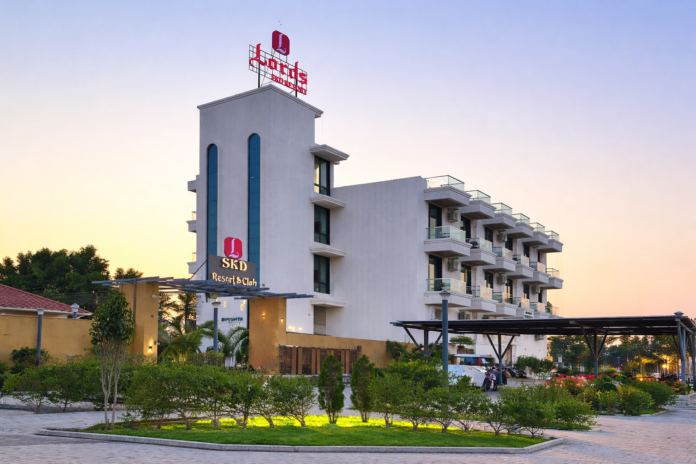
Apeejay Surrendra Park Hotels Limited has launched Zone by The Park, New Market, Kolkata, offering a stylish urban escape in the centre of the city. With this opening, the Group further expands its footprint in West Bengal, adding to its existing properties—THE Park Kolkata, The Denmark Tavern in Serampore, Zone by The Park near Biswa Bangla Convention Centre, and Zone by The Park Digha.

The hotel sits close to key attractions, including the Indian Museum, Howrah Bridge, Victoria Memorial, and Kolkata’s busy shopping districts. As a result, its central location allows guests easy access to the spirit of the city while still providing a modern place to relax.

Zone by The Park, New Market, features 42 well-designed rooms, the signature all-day dining restaurant Bazaar, which serves global cuisine, and the iconic Flurys in the lobby. The hotel blends comfort and style with lively interiors, smart amenities, and cozy corners that match Kolkata’s vibrant personality. The soon-to-open Townhall event space, which can host up to 100 guests, will be suitable for business meetings and social events.

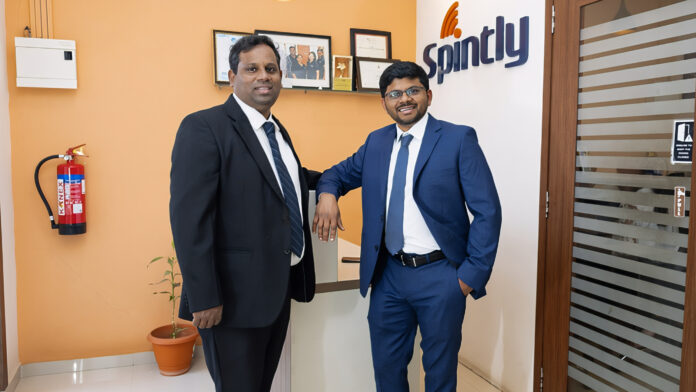
Speaking about the launch, Vikas Ahluwalia, General Manager and National Head of Zone by The Park Hotels, stated, “We are delighted to launch Zone by The Park in New Market, Kolkata. This marks our second Zone by The Park hotel for price-conscious, design-conscious travellers in the city. It underscores our commitment to expanding our presence in high-demand micro-markets and delivering differentiated experiences that blend social-by-design, connectivity, and collaboration. This hotel will serve as a hub for official meetings, social gatherings, and events in the city. We would also like to thank our partners—Sandhu Group—for developing the hotel and trusting us.”

Inder Pal Singh Sandhu, Director, Sandhu Group, added, “We are delighted with this launch and happy to be forging a bond with one of the oldest hospitality companies in India. By associating with Apeejay Surrendra Park Hotels Limited, we are confident of creating opportunities for growth and value for all the stakeholders.”

Zone by The Park, New Market, Kolkata seamlessly blends location, comfort, and contemporary design, and ultimately, it offers travellers an inviting space to experience the vibrant energy of the city while enjoying a relaxing and modern stay.

LaRiSa Hotels & Resorts strengthens portfolio with debut in Punjab

0

LaRiSa Hotels & Resorts has announced the signing of Nabha Haveli by LaRiSa, marking its first hotel in Punjab. This heritage resort, located in the historic town of Nabha near Patiala, highlights the brand’s ongoing growth across North India and confirms its entry into the state.

Nabha Haveli by LaRiSa Hotels & Resorts is a short drive from Patiala and will give guests a nostalgic retreat into Punjab’s royal landscape, known for its history, architecture, and cinematic charm. Filmmakers have long drawn inspiration from the region’s grand palaces, old forts, and shaded roads, and they shot scenes for well-known films such as Jab We Met, Veer-Zaara, and Patiala House in and around this area, highlighting its timeless appeal.

“The signing of Nabha Haveli by LaRiSa marks an important step in our North India and is a significant milestone in our growth story,” said Randhir Narayan, Director, LaRiSa Hotels and Resorts. “As we expand, we remain committed to creating places and crafting stays that capture the true essence of every destination. Punjab’s legendary warm hospitality, combined with our professional management skills, will offer travellers to this heritage resort an exceptional, luxurious stay that immerses them in the region’s heritage. With this addition, the LaRiSa Resorts brand portfolio now stands at ten properties.”

The resort features 20 rooms, arched verandas, carved details, and peaceful courtyards that reflect the elegance of another era. Nabha Haveli by LaRiSa blends this historic charm with LaRiSa’s signature approach to quiet, thoughtful luxury. Guests will be able to enjoy experiences that highlight the region’s traditions, including heritage tours, farm visits, and classic Punjabi cuisine prepared using cherished family recipes.

Patiala, Jind, and Nabha have long showcased their royal buildings and scenic countryside, creating a relaxed yet cinematic beauty. Moreover, Nabha Haveli by LaRiSa Hotels & Resorts honors this heritage and offers visitors a chance to experience Punjab’s living culture, making it the perfect choice for travelers seeking meaningful and immersive stays.

Defence startup Quantum Systems triples valuation to €3 Bn

0
Florian Seibel, Co-Founder & Co-CEO, Quantum Systems

Quantum Systems, a German drone manufacturer supported by investor Peter Thiel, has lifted its valuation to €3 billion (US$3.5 billion) after a new funding round. The defence startup aims to expand its production of unmanned aerial systems.

The company secured €180 million from investors such as Balderton Capital, tripling its valuation since May, according to co-chief executive Sven Kruck, who spoke with journalists on Thursday. Quantum Systems builds surveillance drones that Ukraine is using in its war with Russia. The firm’s revenue has risen sharply since Russia’s full-scale invasion in 2022.

The fresh capital will help the company increase manufacturing capacity and support the creation of counter-drone technology, which it expects to begin selling next year, Kruck said.

Quantum Systems joins a growing group of German drone startups—including Helsing and Stark Defence—that actively supply European militaries with modern systems now essential to the conflict in Ukraine. Drone makers in Ukraine are also seeking customers beyond their home country.

Former German army pilot Florian Seibel co-founded the company in 2015, and it now develops dual-use unmanned aerial vehicles with backing from investors such as Thiel, Porsche Automobil Holding SE, and Notion Capital.


Meesho to launch IPO on Dec 3; plans ₹4,250-Cr fundraise

0
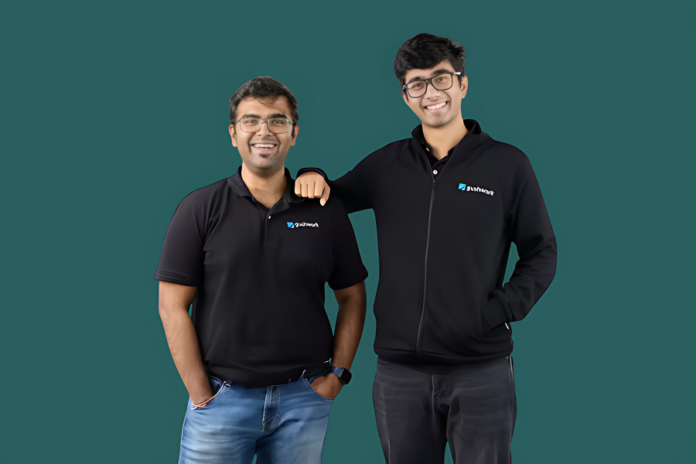
Sanjeev Barnwal & Vidit Aatrey, co-founders, Meesho

SoftBank-backed ecommerce platform Meesho will launch its initial public offering (IPO) on December 3, featuring a fresh issue of shares worth Rs 4,250 crore.

The public issue will close on December 5, and anchor investors will receive their share allocation on December 2, as stated in the red herring prospectus (RHP) filed on Thursday.

Besides the fresh issue, the IPO also includes an offer-for-sale of 10.55 crore shares from existing investors.

The offer-for-sale will involve share sales by early backers such as Elevation, Peak XV, Venture Highway, and Y Combinator, among others.

Meesho plans to use the raised capital for cloud infrastructure, marketing and brand development, and inorganic expansion through acquisitions and other strategic moves. A part of the funds will also go toward general corporate purposes.

The company’s valuation and the final IPO size will be set after the price band is announced on Friday.

In FY25, Meesho enabled over 500,000 transacting sellers and 199 million annual transacting users, handling 1.8 billion orders in total.

Its net merchandise value (NMV) rose 29% year-on-year to Rs 29,988 crore in FY25, after growing 21% in FY24. NMV shows the full checkout value of delivered orders, including taxes. It helps measure platform performance because it captures user adoption and repeat behavior.

For FY25, Meesho reported a net loss of Rs 3,942 crore, mainly due to one-time exceptional costs such as reverse flip tax and perquisite tax, which were part of its shift to a public company structure.

Need to shift towards green fuel-based technologies in agriculture in 5-10 years: Secretary, Ministry of Agriculture & Farmers

0

New Delhi, 27 November 2025: Dr. Devesh Chaturvedi, Secretary, Ministry of Agriculture & Farmers Welfare, today called upon industry to play a pivotal role in shaping the Indian agriculture sector’s vision of 2047 by prioritizing green-fuel-based mechanization and reducing the drudgery of women farmers by making gender-neutral farm equipment to reduce workload.

Addressing the 9th International Exhibition & Conference on Agri-Machinery, Equipment & Agri-tech Solutions at EIMA ‘Agrimach India 2025’ organized jointly by FICCI and the Italian agriculture industry body FEDERUNACOMA in association with the Ministry of Agriculture & Farmers Welfare, Dr. Chaturvedi said, “Over the next 5–10 years, we should shift our technologies towards green fuels—whether electrically operated tractors or machines running on CBG (compressed biogas) available for rural CBG plants. This transition will bring down both maintenance and operational costs for farmers. Our schemes will increasingly prioritize green-fuel-based technologies. I would urge our Italian industry counterparts to collaborate in this area.”

Terming women farmers vital for achieving the Vision 2047, the Secretary drew the attention of the industry towards gender budgeting and exhorted them to focus on the production of gender-friendly equipment.

He further stated that the United Nations has declared 2026 as the International Year of Women Farmers. Therefore, equipment must be designed to reduce the drudgery of women. “Often policy makers assume that ‘gender budgeting’ simply means giving ownership of machinery to women, but that alone does not reduce drudgery. “Most difficult agricultural tasks are performed by women, and hence we need more gender-friendly equipment, whether manual or motorized, that genuinely reduces their workload,” emphasized Dr. Chatuvedi.

Mr. Antonio Bartoli, Ambassador of Italy in India, hoped to have an agriculture attaché in the Italian Embassy in India soon to boost bilateral cooperation in the agriculture field between both countries.

“We already have around 20 companies with production facilities here. We want to increase these numbers. Just three days ago, the Prime Ministers of both nations met on the sidelines of the G20 in Rome, where Mr Premier Meloni proposed a new benchmark to reach EUR 20 billion in trade volume by the end of our Joint Strategic Action Plan. We must work towards that,” Ambassador Bartoli said.

Mr. T. R. Kesavan, Chairman, Organizing Committee—EIMA Agrimach India & Board Director and Group President, TAFE, underlined the need to promote agriculture as services, as farmer will find it unaffordable to buy a seeder that is used just for a couple of days. But Seeder as an agriculture service can help. So, we need to create a new area of agriculture as a service. Industry has discussed this with the Ministry of Agriculture, and some progress has happened on this front.

Upbeat over the future of India-Italy collaboration in the agriculture space, Ms. Simona Rapastella, Director General, FEDERUNACOMA, said that as per the Italian Trade Agency (ICE) report on India, the sector was worth a total of USD 13.7 billion in 2023 and is expected to grow significantly over the next ten years, reaching USD 31.6 billion in 2033, with an annual growth rate of about 9%. In this process, Italian and Indian cooperation will play a key role in terms of Italian production facilities in India and trade & industrial partnership between the two countries. Federunacoma’s export planning forecast expects a significant increase in both imports and exports, she added.

The FICCI-PwC report ‘Farm Mechanisation: The Path Towards a Future-Ready India’ was released during the event. While highlighting the report, Mr. Shashi Kant Singh, Partner, PwC, advocated a shift from individual ownership to a pay-per-use model in order to accelerate adoption of farm mechanization.

Ms. Sabrina Mangialavori, Deputy Trade Commissioner, Italian Trade Agency, noted increasing adoption of modern mechanical solutions, such as tillage, sowing, irrigation, crop protection, and threshing, by Indian farmers.

Mr. Subroto Geed, Co-Chairman, FICCI National Agriculture Committee, and President, South Asia, Corteva Agriscience, emphasized the urgent need of mechanization in the farm sector in the wake of feeding an estimated worldwide population of 1000 crore by 2050, in which India will be contributing the largest share.

Being organized from 27th to 29th November 2025, the 9th edition of EIMA Agrimach India 2025 at IARI, PUSA, New Delhi, is showcasing the best and the latest agri machineries, besides providing excellent opportunities to both Indian and overseas players catering to the entire value chain of the agriculture sector.

The exhibition, which is supported by the Ministry of Agriculture & Farmers Welfare, Government of India, is likely to attract thousands of visitors, including thousands of farmers, to its fold. Several sessions are being organized for creating awareness among farmers on the latest farm technologies and innovations. Launched in 2009, the 9th edition is witnessing participation of over 175 exhibitors and international participation from countries such as Italy, Poland, Japan, and the Netherlands, alongside business visitors from more than 40 countries.

Generative AI in Retail Market Poised for Explosive Growth, Reaching $19.7 Billion by 2033

0
Generative AI

MarketIntelo releases comprehensive research report revealing transformative potential of artificial intelligence technologies revolutionizing the global retail landscape with unprecedented growth projections and strategic market insights. The global Generative AI in Retail market is experiencing remarkable momentum, with MarketIntelo’s latest comprehensive research report revealing a market valuation of $2.1 billion in 2024 that is projected to surge to $19.7 billion by 2033, representing an extraordinary compound annual growth rate (CAGR) of 28.4%

This explosive growth trajectory underscores the transformative impact that generative artificial intelligence technologies are having across the retail ecosystem, fundamentally reshaping how businesses engage with customers, optimize operations, and drive innovation.

Market size growth projection for Generative AI in Retail from 2024 to 2033, showing rapid expansion at 28.4% CAGR

Revolutionary Market Transformation Driving Unprecedented Growth

The retail industry is undergoing a profound digital transformation, with generative AI emerging as the catalyst for next-generation customer experiences and operational excellence. MarketIntelo’s research indicates that retailers across all segments are rapidly adopting AI-driven solutions to enhance customer experiences, streamline operations, and gain competitive advantages in an increasingly digital marketplace. The proliferation of advanced AI technologies, coupled with the retail industry’s aggressive push towards digital transformation, is creating unprecedented opportunities for innovation and efficiency gains that extend far beyond traditional retail boundaries.

Rep AI chatbot interface demonstrating smart retail AI-powered customer engagement with metrics showing increased conversion, average order value, and reduced support tickets.

Generative AI solutions are being integrated into core business processes, enabling retailers to leverage data-driven insights for better understanding consumer behavior, predicting market trends, and tailoring offerings to individual preferences. This technological revolution is not only enhancing operational efficiency but also delivering superior customer experiences that drive loyalty, increase conversion rates, and generate sustainable revenue growth across multiple retail channels and touchpoints.

Regional Market Leadership and Growth Dynamics

North America currently dominates the global generative AI in retail market, accounting for 38% of total market share in 2024. The region’s leadership position is attributed to the presence of major technology providers, high levels of digital adoption among retailers, and a robust ecosystem of innovation that includes leading retail chains, technology companies, and research institutions. Major retail operations in the United States and Canada are positioning themselves at the forefront of AI-driven transformation, leveraging generative AI to enhance customer engagement, optimize supply chains, and drive operational efficiency through advanced technological implementations.

Generative AI chatbot use cases in eCommerce including personalized recommendations, price matching, and AI personal shoppers.

Asia Pacific emerges as the fastest-growing region, with growth rates projected to exceed 32% through 2033. Rapid urbanization, expanding middle-class populations, and the proliferation of e-commerce platforms are fueling demand for advanced AI solutions across countries including China, India, Japan, and South Korea. The region’s vibrant startup ecosystem, coupled with significant investments in AI research and digital infrastructure, is driving innovation and enabling local players to compete effectively on a global scale while addressing unique regional market requirements.

Comprehensive Application Portfolio Transforming Retail Operations

The generative AI in retail market encompasses diverse applications that are revolutionizing every aspect of retail operations. Personalized recommendations represent the most prominent application, leveraging sophisticated AI algorithms to analyze customer data and deliver tailored product suggestions that drive higher conversion rates and enhance customer satisfaction. These recommendation engines are becomingincreasingly sophisticated, incorporating real-time behavior analysis, purchase history, and preference learning to create hyper-personalized shopping experiences.

Person browsing women’s accessories on an online retail platform showcasing various hats and sunglasses.

Inventory management and supply chain optimization are emerging as critical applications, with generative AI enabling retailers to forecast demand more accurately, optimize stock levels, and reduce operational costs through predictive analytics and automated decision-making processes. Customer service applications, including AI-powered chatbots and virtual assistants, are transforming retailer-customer interactions by providing instant support, resolving queries in real-time, and delivering consistent service quality across multiple touchpoints and communication channels.

Marketing and advertising applications are leveraging generative AI to create dynamic, engaging content that resonates with target audiences and drives brand loyalty through personalized campaigns, automated content generation, and real-time optimization strategies. Visual merchandising applications are utilizing AI to create immersive shopping experiences, while supply chain optimization tools are enabling retailers to operate with greater agility, precision, and cost-effectiveness across complex global operations.

Technology Infrastructure and Deployment Strategies

Cloud deployment has emerged as the preferred choice for most retailers implementing generative AI solutions. Cloud-based platforms offer scalability, flexibility, and cost-effectiveness that enable retailers to access cutting-edge technologies without significant upfront infrastructure investments. The cloud segment is experiencing rapid growth driven by increasing adoption of Software as a Service (SaaS) models and the availability of robust cloud platforms from leading technology providers that offer comprehensive AI capabilities.

Retail inventory management dashboard showing sales, inventory levels, lead times, and product returns by category.

On-premises deployment continues to be favored by large enterprises and retailers with stringent data security and compliance requirements, offering greater control over data and infrastructure for organizations operating in highly regulated environments. However, the industry is witnessing a growing trend towards hybrid deployment models as retailers seek to balance the benefits of cloud scalability with the security and control offered by on-premises solutions.

Competitive Landscape and Market Leadership

The generative AI in retail market features a diverse ecosystem of technology leaders and innovative companies driving technological advancement. Leading players include IBM Corporation, Google LLC, Microsoft Corporation, Amazon Web Services (AWS), Salesforce, Oracle Corporation, SAP SE, NVIDIA Corporation, and Alibaba Cloud, among others. These companies are investing heavily in research and development, forming strategic partnerships, and developing comprehensive AI solutions tailored specifically to retail industry requirements and challenges.

IBM Corporation stands out for its comprehensive suite of AI-powered solutions integrating generative AI with advanced analytics, cloud computing, and IoT technologies to deliver end-to-end solutions addressing critical business challenges. Google LLC leverages its expertise in machine learning, cloud computing, and data analytics to offer cutting-edge generative AI solutions including recommendation engines, visual search tools, and personalized marketing platforms.

Microsoft Corporation has established itself as a leading provider through Azure AI services that are widely adopted by retailers seeking scalable, reliable, and secure AI solutions customizable to specific business needs. Amazon Web Services (AWS) offers a comprehensive suite of AI and machine learning services enabling retailers to automate processes, personalize experiences, and optimize operations across multiple business functions.

Strategic Opportunities and Market Challenges

The generative AI in retail market presents significant opportunities for digital transformation, innovation, and value creation across the entire retail ecosystem. The integration of generative AI with emerging technologies such as IoT, blockchain, and augmented reality is opening new avenues for innovation and differentiation that enable retailers to create unique competitive advantages. Retailers investing in robust AI capabilities and fostering cultures of experimentation are positioning themselves to capitalize on these opportunities while gaining sustainable competitive edges in dynamic marketplaces.

Unmet demand in niche segments, including personalized healthcare products, sustainable fashion, and local sourcing, offers additional opportunities for generative AI applications that can identify emerging consumer trends, customize offerings, and deliver hyper-personalized experiences. Cross-industry collaborations and partnerships with technology providers, startups, and research institutions are enabling retailers to accelerate innovation and bring cutting-edge AI solutions to market more efficiently.

Despite significant opportunities, the market faces several challenges including data privacy and security concerns, slow adoption rates among certain segments, talent shortages, and rising input costs that can hinder market growth. Retailers must navigate complex regulatory landscapes and invest in building necessary capabilities to ensure responsible and ethical AI deployment while addressing these fundamental challenges to unlock the full potential of generative AI technologies.

Future Market Outlook and Industry Transformation

The regulatory landscape for generative AI in retail is evolving rapidly as governments and industry bodies seek to balance innovation benefits with consumer protection and ethical AI deployment requirements. Key regulatory priorities include data privacy, security, transparency, and accountability, with growing emphasis on developing frameworks that promote responsible AI use across retail operations. Compliance with evolving regulations is becoming critical for retailers seeking to build customer trust and avoid legal and reputational risks.

MarketIntelo’s research indicates that the generative AI in retail market is positioned for sustained growth through 2033, with significant opportunities for value creation across the entire retail value chain. As the technology ecosystem continues to evolve, retailers adopting proactive, forward-looking approaches will be best positioned to seize emerging opportunities and drive long-term success in an increasingly AI-powered retail landscape.

About MarketIntelo

MarketIntelo is a leading provider of market research and business intelligence solutions, delivering comprehensive insights across diverse industries and market segments. Our research methodologies combine primary and secondary research techniques to provide accurate, actionable intelligence that enables informed business decision-making.

Mt. K Kapital launches $450 Mn real estate fund for India’s top cities

0
Boman Irani, CMD, Rustomjee Group

Mt. K Kapital on Thursday launched its second real estate fund with a corpus of $450 million, and moreover, the company plans to invest in projects across major Indian cities.

Boman Irani, CMD, Rustomjee Group, said, “The first fund, which is a ₹790 crore MMR-focused fund, has been a landmark strategy in terms of underwriting, project monitoring, and investor support.”

In a statement, Mt. K Kapital said it has initiated the second fund with a target size of $450 million, and the firm emphasized that the fund has backing from both General Partners (GPs) and Limited Partners (LPs).

With this new fund, Mt. K Kapital will partner with developers in key markets such as Mumbai, Delhi-NCR, Pune, and Bengaluru, and furthermore, the company is already evaluating multiple projects, with the first deployment expected in early 2026.

Binitha Dalal, Founder & Managing Partner of Mt. K Kapital, said the platform is built to prioritize the interests of all stakeholders in the development value chain. She added, “With our second fund, we look forward to expanding this proposition across the country as we enter the markets of Pune, Bangalore, and NCR. The continued support of our investors has been a significant encouragement, and the confidence they placed in us during the first fund has helped shape our expansion strategy.”

Realty firm Rustomjee Group backs Mt. K Kapital, and moreover, this association continues to strengthen its investment approach. The first fund, which the company launched in 2022 with a corpus of ₹790 crore, focused on projects within the Rustomjee Group across the Mumbai Metropolitan Region (MMR), and additionally, it helped build the platform’s early investment track record.

Mt. K Kapital operates as a real estate–focused fund management company, and furthermore, it holds a SEBI-approved Category II Alternative Investment Fund license to invest in real estate projects.


Treebo Hospitality launches nationwide platform to simplify venue bookings

0
Hardik Goyal, Founding Partner and Chief, Commercial- Treebo Hospitality Ventures

Treebo Hospitality Ventures has introduced Venues by Treebo Club, a digital platform that centralizes event-ready spaces across Treebo, Treebo Premium, Medalio, and partner hotels, and moreover, the platform aims to give enterprises and consumers a transparent and structured way to find and book venues for corporate and social events.

Venues by Treebo Club operates on six core features that tackle common event-planning hurdles, and these include GST-compliant billing with full financial documentation, loyalty rewards for repeat corporate users, professionally managed and media-ready event spaces, trained operational teams, clear pricing without hidden fees, and combined stay-and-event packages for multi-day programs.

The platform also provides standardized details on layouts, capacities, audio-visual support, food and beverage choices, and accommodation options, and it supports training sessions, workshops, offsites, meetings, media events, and social gatherings. With demand rising for long-format programs, Treebo Hospitality Ventures now offers businesses a single access point to event-ready spaces across more than 800 hotels in over 120 cities.

Hardik Goyal, Founding Partner and Chief, Commercial-Treebo Hospitality Ventures, said, “Venues by Treebo Club is a natural extension of our strategy across both B2B and B2C segments. Over the years, we’ve seen strong demand not only from enterprises but also from consumers planning social events, weddings, and MICE requirements. Customers want reliable, professionally managed venues with transparent pricing and assured service standards. This platform brings that structure, commercial consistency, and a unified experience across cities, something the market has long been missing.”

Tata Realty secures Rs 1,280-Cr loan from DBS Bank for Gurugram project

0
Sanjay Dutt, CEO of Tata Realty & Infrastructure Ltd.

Tata Realty and Infrastructure Ltd has secured a Rs 1,280 crore loan from DBS Bank India for a sustainable commercial development in Gurugram, a statement said, and furthermore, the deal strengthens the company’s focus on green real estate.

DBS Bank India acted as the sole advisor and green loan coordinator for the transaction, and the bank structured the financing to support projects that offer clear environmental benefits. Tata Realty’s special purpose vehicle (SPV) has taken the loan facility, developed the commercial project ‘Intellion Park’ in Gurugram, and built this Grade A office campus with 2.1 million sq ft of office space.

The company deploys the funds toward certified green assets that meet globally recognized sustainability standards, and moreover, this move reinforces its commitment to eco-friendly construction.

Santanu Mitra, Head of Large Corporate Banking at DBS Bank India, said, “Real estate and infrastructure is a key focus for DBS Bank India, and we have supported several innovative, sustainable projects being developed across the country.”

Sanjay Dutt, CEO of Tata Realty & Infrastructure Ltd., said the loan facility highlights the Tata Group’s legacy of social and environmental responsibility and arrives at a time when India’s commercial real estate market and the GCC ecosystem continue to expand.

Tata Realty and Infrastructure Ltd, a wholly owned subsidiary of Tata Sons, holds a 19.6 million sq ft commercial portfolio under the Intellion brand, and the portfolio includes 9.4 million sq ft of operational Grade A office spaces along with 10.2 million sq ft under development. Additionally, Tata Realty’s residential arm, Tata Housing, manages more than 34 projects across major Indian cities and the Maldives, and it continues to add new developments to its pipeline.

Perplexity launches AI assistants equipped with memory for personalised responses

0
Aravind Srinivas, co‑founder and CEO, Perplexity

Perplexity has introduced a new memory-driven personalisation layer for its AI assistants, and it now remembers user preferences, interests, and key details from earlier chats to give faster and more personalised answers. The feature forms part of the company’s wider shift toward agentic AI through its Comet Assistant, and it helps the system use past context with greater accuracy.

The company said its assistants now pull together important details automatically—such as favorite brands, dietary needs, and common keywords—and they preload this context when they respond to new questions. Instead of treating old chats like broad training data, Perplexity retrieves exact details from a user’s private memory store to offer better precision and flow across sessions.

Perplexity, led by co-founder and CEO Aravind Srinivas, described this update as a step toward assistants that act like a “second brain” and an operator for daily tasks and research. The company said the memory feature works across models, and users can switch between slower reasoning models, faster models, or more specialised models without losing their personal context.

Perplexity refers to this as “context portability”, and it allows a user’s work to move forward even as models change. The system pre-loads important details from earlier chats so users do not need to repeat information when they return to a topic. It retrieves exact items from a private memory store rather than making broad guesses from the past. It can also handle prompts such as product suggestions that match fitness needs or injury history, travel reading ideas based on taste, and holiday gift picks shaped by earlier conversations.

Perplexity has also stressed privacy and user control. Users can turn memories off, and incognito mode disables both memory and search history by default. The company said all data is encrypted, and users can opt out of model improvement through the AI Data Retention option.

A Help Centre note explains that memories and past searches may appear in personalised answers, and users can view or clear them in Settings. Perplexity’s launch arrives as rivals roll out long-term memory features as well. Anthropic has added memory for Claude across its Team and Enterprise plans and later to Pro and Max, with fine-grained controls and incognito chats.

Microsoft has added long-term memory and updated controls in Copilot, with clear documentation on storage and admin rules. OpenAI has also updated ChatGPT with project-scoped memory and a daily Pulse preview that uses memory and chat history.