
Wednesday, April 29, 2026
Home Blog Page 65

Marvell Technology acquires Celestial AI for $3.25 Bn

0
Matthew Murphy, CEO of Marvell Technology Group

Chipmaker Marvell Technology (MRVL) said on Tuesday that it will acquire semiconductor startup Celestial AI in a $3.25 billion deal and also issued a bullish outlook for its next fiscal year.

Marvell’s shares rose nearly 10% in premarket trading on Wednesday following its quarterly earnings report released after market close. Moreover, the generative AI boom has accelerated chipmakers’ development cycles as they race to build the fastest and most energy-efficient hardware for advanced data centers.

Marvell and rival Broadcom (AVGO) support cloud-computing companies by designing custom chips tailored to their specific data center needs, and that demand has expanded into a significant business for both firms. Marvell expects to generate approximately $10 billion in total revenue next fiscal year, including a 25% increase in data center revenue, CEO Matthew Murphy said. It does not foresee any major quarterly fluctuations in its custom chip revenue next year.

Additionally, Murphy said in a conference call that Marvell expects its revenue from its custom chip business to grow 20% next year. The Santa Clara, California-based company helps Amazon (AMZN) and Microsoft (MSFT) develop their in-house AI chips, according to JP Morgan analyst Harlan Sur.

The Celestial acquisition will allow Marvell to leverage the startup’s work in photonics, which uses light instead of electrical signals to link AI chips and memory chips—an area where it competes with Broadcom and Nvidia, the world’s most valuable company. Murphy told that Marvell will integrate Celestial’s technology into its next-generation photonics infrastructure products, enabling the company to enter a new $10 billion market.

“We’re going to have a silicon photonics powerhouse at Marvell when this is ‌all done,” he said.

Murphy said big cloud computing companies will begin adopting photonics technology in 2027 or 2028 for large-scale applications. Eventually, he said, the technology will become widely used.

Under the terms of the deal, Celestial AI will receive $1 billion in cash and 27.2 million shares of Marvell common stock valued at $2.25 billion.

Marvell said it expects Celestial AI to contribute meaningful revenue beginning in the second half of fiscal 2028, reaching a $500 million annualized run rate in the fourth quarter of fiscal 2028 and doubling to a $1 billion run rate by the fourth quarter of fiscal 2029. The company expects the transaction to close in the first quarter of calendar year 2026.

Yoodli raises $40 Mn in Series B funding

0
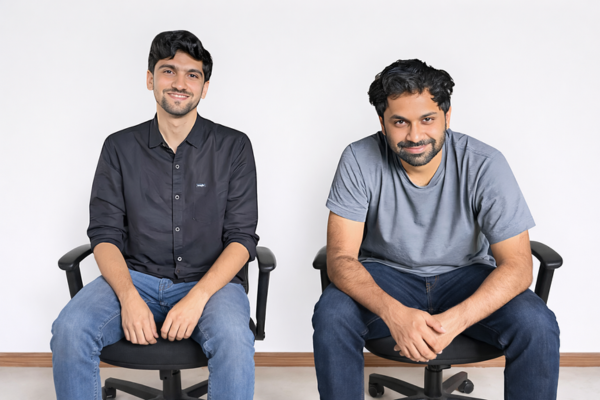
Esha Joshi and Varun Puri, co-founders, Yoodli

AI-powered learning platform Yoodli has raised $40 million in a Series B round led by WestBridge Capital, while Neotribe and Madrona also participated.

The Seattle-based startup offers an AI-driven platform that delivers communication practice through role-play simulations. Moreover, this new funding brings Yoodli’s total capital raised to nearly $60 million.

The company said in a statement that the Series B round will accelerate its investments in AI coaching, analytics, and personalization, and it will also help the platform expand into enterprise learning, GTM enablement, and professional development. Additionally, Yoodli plans to grow its product, AI research, and customer success teams as it scales globally.

Varun Puri and Esha Joshi founded Yoodli in 2021 because they wanted to make communication training more practical and accessible instead of depending on classroom-style workshops or occasional coaching hours. The platform enables users to rehearse scenarios such as customer calls, leadership conversations, interviews, and feedback discussions.

“This round helps us scale our team and serve more enterprises on a true end-to-end experiential learning platform,” said Varun Puri, co-founder and CEO of Yoodli.

“We’re reducing the time it takes to acquire real skills, ensuring employees are ready for game time, and saving organizations countless hours lost to passive coaching. The future of learning isn’t about consuming content—it’s about adaptive, real-world practice that drives behavioral change.” According to him, communication practice—done repeatedly and privately—can help professionals feel more prepared before high-stakes interactions.

“In a world where so much is being automated by AI, we’re helping people strengthen what makes them uniquely human,” he said.

Leading enterprises such as Google, Snowflake, Databricks, RingCentral, and Sandler Sales currently use the Yoodli platform. Furthermore, adoption has increased because workplaces are shifting toward experiential learning, where employees improve through guided practice instead of consuming training content.

“We see Yoodli defining a new category of AI-native learning tools for the enterprise, as companies today seek scalable, AI-driven solutions to train and upskill their workforces. The Yoodli team has built a platform that brings a high level of precision and scalability to skill development, and we’re excited to partner with them as they scale,” said Manthan Shah, Principal at WestBridge Capital.

Kalshi raises $1 Bn at $11 Bn valuation in rapid growth surge

0
Luana Lopes Lara & Tarek Mansour, Co-founders, Kalshi

Prediction market Kalshi, which allows people to bet on future events, announced on Tuesday that it raised a $1 billion funding round at an $11 billion valuation.

The round was led by returning investor Paradigm, and Sequoia Capital, Andreessen Horowitz, Capital G, and other existing backers also participated. Moreover, this latest funding arrives less than two months after the trading platform announced that it raised $300 million at a $5 billion valuation.

Although people drove the trading platform’s popularity last year by using it to predict the outcome of the 2024 U.S. presidential elections, reports indicate that traders now tie a large portion of Kalshi’s activity to sports.

The company expects future growth from businesses that aim to use Kalshi to hedge against specific operational risks, such as government shutdowns or adverse weather conditions.

Polymarket, Kalshi’s main rival, was reportedly in talks to raise another round at a $12 billion to $15 billion valuation in October, according to industry sources.

Lightspeed enters race to invest in cloud infra startup Neysa

0
L-R: Sharad Sanghi and Anindya Das, co-founders, Neysa

Venture capital firm Lightspeed has now entered the race to acquire a stake in cloud infrastructure startup Neysa, joining Japanese investor SoftBank and private equity firm Blackstone, which have already initiated discussions, according to people familiar with the matter.

Blackstone is negotiating to buy out Neysa, while Lightspeed, similar to SoftBank, is exploring a $40–50 million minority investment in the Z47 and Nexus Venture Partners-backed company.

“Blackstone wants to buy a majority stake in Neysa, while SoftBank and Lightspeed are discussing a minority investment that is expected to value the company at around $250-300 million,” said one of the persons, who did not wish to be identified. “These are all early-stage negotiations.”

This potential $250–300 million valuation represents a major jump for the startup, which previously held a valuation of around $76 million during its October 2024 funding round.

Neysa marks the second entrepreneurial venture of Sharad Sanghi, who earlier founded Netmagic, one of India’s oldest data centre services providers.

Mumbai-based Neysa, founded in 2023 by Sanghi and former senior Netmagic executive Anindya Das, delivers compute power and software tools that help businesses—from large enterprises to startups and even governments—build, run, and manage artificial intelligence (AI) applications. The company secured $50 million across two funding rounds in 2024 from Nexus Venture Partners, Z47, Blume Ventures, and NTTVC.

“Indian founders are going all-in on the application layer of AI, but very few are taking on the infrastructure layer because of its capital-intensive nature… It needs land, power, and deep technical talent, and that’s not an easy mix for most startups,” said a technology investor. “That’s why we’re seeing many entrepreneurs from India building software and enterprise tools instead. Neysa’s founding team, though, has already built at that scale with Netmagic, which makes them stand out in the sense that they actually know how to pull off AI infrastructure in India.”

Neysa did not respond to queries until press time. Emails sent to Lightspeed and SoftBank also went unanswered. Blackstone declined to comment.

Nevertheless, ongoing negotiations for a stake in Neysa highlight rising investor interest in Indian alternatives to hyperscalers.

Earlier, reports noted that global hyperscalers and domestic conglomerates plan to invest more than $50 billion over the next five to seven years in India’s data centre sector, raising capacity to about 9 GW from around 1.5 GW currently. Moreover, a CBRE report indicated that India’s operational data centre capacity reached 1.5 GW as of September, with nearly 260 MW added between January and September.

This growth includes planned investments from Google, Amazon Web Services, Microsoft Azure, and Meta, along with major Indian players such as Adani, Bharti Airtel, Reliance Industries, TCS, and L&T.

If the Neysa transaction materializes, it will mark Masayoshi Son-led SoftBank’s first India investment under its renewed strategy of supporting large AI-driven IT and infrastructure services companies.

For Blackstone, which manages approximately $50 billion in India, a buyout would further strengthen its expansion in the country’s data-centre infrastructure space. The firm launched Lumina Cloudinfra in 2022, and the platform has continued to scale rapidly in India’s fast-growing data centre and digital infrastructure sector. Additionally, Australian data centre operator AirTrunk, also owned by Blackstone, recently announced plans to build its next facility in India to serve accelerating AI-driven demand.

Fireside Ventures closes fourth fund at Rs 2,265-Cr

0
L-R: Kannan Sitaram, Vinay Singh, Kanwaljit Singh & Dipanjan Basu, co-founders, Fireside Ventures

Fireside Ventures, an early-stage consumer-focused VC firm, announced on Tuesday that it has closed its fourth fund with a corpus of Rs 2,265 crore (approximately $253 million), as it doubles down on India’s fast-growing consumption economy.

The firm has already begun deploying the fund and plans to make about 10–12 early-stage investments each year. Fireside, which primarily backs seed and pre-Series A startups, is also increasing its follow-on participation in Series A rounds as part of its founder-first strategy to help companies scale from the ground up.

“There will be companies that find the right product-market fit in deep markets, and these are emerging fund after fund, so it is not a one-off for us. In those cases, we can see returns of 10x, 15x, and 20x. But for the bulk of our portfolio, we are modelling for a five-to-seven- or eight-times type of return. And that really drives the overall success of the strategy,” shared Kanwaljit Singh, founder & managing partner, Fireside Ventures, at a press briefing.

The firm’s first fund, still in the process of completing its exits, achieved a Distributed to Paid-In Capital of 3.6x, meaning it has already returned more than three times its value to investors.

Fireside’s current portfolio of around 60 brands now carries a combined valuation of over $7 billion and has generated $1.6 billion in revenue across companies. Additionally, about half of its portfolio startups have crossed the Rs 100 crore ARR milestone.

The Bengaluru-based fund secured commitments from a mix of global and domestic investors, including US university endowments, sovereign wealth funds from Abu Dhabi and Dubai, and major financial institutions such as HarbourVest, Waterfield, and Fidelity International. Several consumer-focused corporates—including Sharrp Ventures, Mirabilis, and Emami Limited—also participated in the fundraise.

Launched in 2017, Fireside Ventures now manages approximately $650 million in assets across its four consumer-focused funds.

Automoto unveils Inspekt AI to build buyer-first trust layer in India’s $36B used-car market

0

Automoto, the Bengaluru-based mobility startup known for customer-first innovation, has announced the launch of Inspekt AI, an AI-driven and buyer-focused vehicle inspection platform that aims to bring greater transparency, trust, and intelligence to India’s rapidly expanding used-car ecosystem.

India’s used-car market, valued at more than USD 36 billion and projected to reach USD 70–100 billion in the coming years, now surpasses new-car sales and continues to grow at a strong double-digit CAGR. However, buyers still encounter major trust issues, ranging from incomplete vehicle histories to unclear mechanical conditions and inconsistent inspection standards.

Large players such as Spinny and Cars24 have streamlined processes for sellers, yet the buyer’s side of the transaction remains largely underserved. The platform combines AI-assisted diagnostics with expert physical inspections to deliver unbiased and platform-agnostic assessments, regardless of whether buyers source vehicles from marketplaces, dealerships, or individual sellers.

Its core capabilities include AI-enhanced damage and anomaly detection, detailed mechanical and structural health reports, simplified risk summaries with purchase recommendations, and a fully independent non-inventory model that eliminates conflicts of interest.

“From day one, Automoto was built to eliminate customer compromise,” said Sreeraj PV, founder & CEO of Automoto. “With Inspekt AI, we’re bringing a neutral, AI-backed trust layer to the buyer, something the market has needed for years. Our goal is simple: empower buyers with clarity, confidence, and control.”

Inspekt AI is now available for bookings in Bengaluru, and Automoto plans to expand the service to major metros in the upcoming quarters. The company is also evaluating partnerships with banks, NBFCs, insurers, and mobility platforms to integrate Inspekt AI as an underwriting and risk-assessment layer.

NVIDIA invests $2B in Synopsys to form multi-year AI partnership

0
Jensen Huang, Founder & CEO, Nvidia

NVIDIA and Synopsys have announced an expanded multi-year alliance that combines NVIDIA’s accelerated computing and AI platform with Synopsys’ engineering software suite spanning chips, systems, and multiphysics simulation. As part of this arrangement, NVIDIA invested $2 billion (about ₹16,700 crore) in Synopsys by purchasing common stock at $414.79 per share.

The companies structured the collaboration as non-exclusive, and they will work together on engineering and go-to-market programs designed to speed up simulation, verification, and product development across sectors, including semiconductors, aerospace, and automotive.

The partnership will accelerate Synopsys applications with NVIDIA CUDA-X libraries and AI physics to enhance compute-heavy workloads such as chip design, physical verification, and electromagnetic, optical, and molecular simulation. It will also advance agentic AI for design flows by connecting Synopsys AgentEngineer with NVIDIA’s agentic AI stack, which includes NIM microservices, the NeMo Agent Toolkit, and Nemotron models, enabling more autonomous EDA and analysis workflows.

Moreover, the companies will power next-generation digital twins through NVIDIA Omniverse and NVIDIA Cosmos so engineering teams can design, test, and validate complex systems virtually with greater precision. They will also offer cloud-ready access to GPU-accelerated engineering tools for organizations of varying sizes, backed by shared go-to-market programs.

Jensen Huang, founder and CEO of NVIDIA, said the collaboration will deliver “unprecedented speed and scale” to simulation from atomic-level modeling to full-system analysis. Meanwhile, Synopsys President and CEO Sassine Ghazi described it as a move towards AI-driven, holistic system design that merges electronics with physics.

India’s sizable semiconductor and systems R&D community already depends on Synopsys tools and NVIDIA GPU compute. Faster EDA runtimes and more accurate digital twins could shorten design cycles for domestic chip design centers, automotive engineering units, and industrial IoT firms, reducing iteration costs and advancing Make-in-India goals in electronics and mobility.

This announcement follows Synopsys’ acquisition of Ansys, which created a silicon-to-systems engineering powerhouse that spans EDA, IP, and multiphysics simulation, with initial integrated offerings expected in the first half of CY2026.

Additionally, Cadence recently expanded its collaboration with NVIDIA’s Grace Blackwell platform to accelerate engineering solvers and develop agentic AI for design, and it is adopting Omniverse blueprints for AI-factory digital twins. Siemens and NVIDIA also previewed an industrial technology stack that links Siemens Xcelerator with NVIDIA Omniverse to advance factory-scale digital twins.

Agentic AI startup GetReplies raises $1M to transform lifecycle engagement

0
Arjun V. Shenoy & Naveen Prabhu, co-founders, GetReplies

GetReplies is entering a global business software market valued at more than $200 billion, yet this market remains highly fragmented. As a result, marketing teams still combine numerous disconnected tools to manage their everyday operations. This fragmentation slows execution and makes it difficult to maintain consistent performance in a competitive environment.

The company aims to unify these scattered workflows through advanced artificial intelligence. It has introduced one of the industry’s earliest Agentic AI platforms, and it is built for Full Lifecycle Engagement so teams can handle all activities from a single centralized system.

To advance this vision, GetReplies has raised $1 million in a seed round led by the Patni Family Office. This round also brings in contributions from a focused group of individual investors and AI entrepreneurs who have previously scaled companies to successful exits.

The company’s strategic direction comes from co-founder and CEO Naveen Prabhu, a well-known pioneer in Enterprise AI and Auto ML. He developed one of the earliest Auto ML platforms for business problem-solving, and the Karnataka Digital Economy Mission featured him in the Karnataka Startup Champion Series.

Co-Founder and CPO Arjun V. Shenoy drives the product vision, and he is a respected industry leader recognized as a 40 under 40 Data Science professional. Together, the founders bring over a decade of expertise in Enterprise AI strategy consulting and product management for global enterprises.

Naveen Prabhu and Arjun V. Shenoy have built and scaled multimillion-dollar consulting and product businesses, and their combined expertise has resulted in four AI patent filings that are currently under review. They have also guided executive leadership teams at multiple Fortune 500 companies.

GetReplies promotes a major shift from simple task automation to full outcome orchestration. Many MarTech startups focus on automating isolated tasks, such as generating a single subject line or scraping small lead lists.

The company differentiates itself by offering a live system that functions as an intelligent layer across the entire marketing funnel. The platform goes beyond minor tasks and evaluates the entire customer journey from initial outreach to final conversion.

When teams want to generate new demand or recover lost customers, the platform leverages autonomous agents that execute workflows without constant human involvement. This autonomy allows marketing leaders to concentrate on strategic planning instead of spending time on repetitive data operations.

Technically, the platform runs on a natively agentic architecture that surpasses basic API wrappers. The system coordinates multiple Large Language Models from OpenAI, Google, Perplexity, and Anthropic to ensure it uses the most effective model for each workflow.

Additionally, the company continues to refine proprietary Model Context Protocols that let the platform adapt to industry-specific needs. This deep engineering enables the agents to understand each business context instead of producing generic or surface-level output.

The platform executes complex strategies across multiple communication channels simultaneously. GetReplies automates design and execution across Email, LinkedIn, Voice Calling, SMS, and WhatsApp, and it will later expand to Social Media Posts and Digital Ads for consistent cross-channel messaging.

To power these channels, the platform includes an expanding suite of more than 45 specialized agents. These include Lookalike Agents that identify prospects similar to a company’s best customers and Air Cover Agents that help teams support stalled deals by educating decision-makers.

GetReplies will use the $1 million funding to strengthen its technological foundation and accelerate its growth path. By enabling Super Agents to manage execution, the company is creating an environment where marketing teams can finally devote their time to strategy.

Sokin raises $50 Mn in fresh funding to boost international payments

0
Vroon Modgill, CEO and Founder of Sokin

Cross-border payments fintech Sokin has secured $50 million in a fresh funding round, which now values the UK-based firm at $300 million. Moreover, the UK-headquartered company says it will deploy the capital to accelerate its international expansion plans and advance product development.

The Series B round was led by US investment firm Prysm Capital, while Watershed Ventures also took part. Additionally, existing backers—including investment funds managed by Morgan Stanley Expansion Capital and Aurum Partners—joined the round.

Founded in 2019 and based in London, Sokin operates a B2B platform that streamlines cross-border accounts payable, accounts receivable, and treasury functions for enterprises. Furthermore, the fintech offers access to over 70 currencies for transfers and foreign exchange.

Over the coming year, Sokin says it will strengthen its infrastructure and pursue regional licenses and banking partnerships, as it aims to broaden its global footprint.

Vroon Modgill, CEO and founder of Sokin, said, “We’ve spent the past six years building a comprehensive financial infrastructure that makes global business faster and more efficient.”

“For too long, payments, treasury management, and international accounts have been fragmented and outdated. We’ve built the platform that brings it all together, and this funding lets us accelerate that vision globally.”

Wayve strengthens AI driving safety with acquisition of quality match

0
Alex Kendall, Co-founder and CEO of Wayve

Wayve, a global leader in embodied AI for autonomous driving, has announced its acquisition of Quality Match, a German startup recognized for its strong capabilities in data quality assurance for computer vision datasets and artificial intelligence.

Furthermore, this move demonstrates Wayve’s ongoing commitment to prioritizing data accuracy as a foundational element for safe and scalable autonomous driving.

Founded in 2019, the German based startup contributes extensive expertise in interpreting and analyzing data used to train AI models for advanced assisted and automated driving. Moreover, as Wayve continues progressing toward the commercial rollout of its AI Driver software, the integration of Quality Match enhances its ability to develop high-quality, auditable datasets more efficiently—datasets that are essential for creating reliable and explainable AI systems.

Quality Match’s team of 20 specialists, all based in Germany, will now join Wayve’s global operations. Additionally, the acquisition expands Wayve’s presence in Germany, building on the launch of its Testing and Development Hub near Stuttgart in early 2025 and strengthening the country’s role as a core engineering and AI innovation center for the company. Daniel Kondermann, CEO of Quality Match, will assume the role of Director of Data at Wayve.

Alex Kendall, co-founder and CEO of Wayve, said, “Bringing Quality Match into Wayve marks a strategic step forward in our commitment to deliver safe and trustworthy AI. Daniel and his team have built exceptional expertise in data quality and understanding for AI, which will strengthen the robustness, interpretability, and performance of our systems. We’re thrilled to welcome the Quality Match team as we continue building the Embodied AI foundation models that will power the next generation of intelligent mobility.”

Daniel Kondermann, Director of Data at Wayve and former CEO of Quality Match, said, “At Quality Match, our mission has been to enhance data quality through advanced quality assurance and annotation optimization. I’m incredibly proud of what our team has built. Joining Wayve is an exciting opportunity to apply our expertise to one of the most exciting domains: autonomous driving. Together with Wayve’s pioneering approach to embodied intelligence, we can accelerate the development of safe and scalable AI.”