



Saturday, June 6, 2026
Home Blog Page 505

Importance of workplace ethics in a business

0

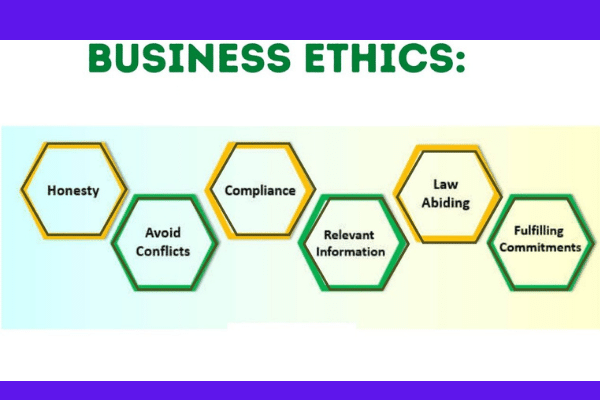
Not only do our actions have an impact on ourselves, but also on those around us. Many of our professional judgments are ethical. If we lie, we risk losing someone’s trust and jeopardizing our integrity. We can compromise the safety of others if we employ substandard products or quality on the job. Moral and ethical issues can be found at all levels of society. Ethical behaviour in the workplace is just as vital as it is in our personal lives. 

Ethics are essential in all aspects of a business. Employees, managers, executives, customers, suppliers, and even competitors all rely on the trust of others to run a successful firm.

Workplace ethics ensures a pleasant working environment

Workplace ethics results in happy and content employees who look forward to work rather than seeing it as a chore. Employees develop a sense of loyalty and devotion to the company as well. Individual performance is measured by organizations using foolproof systems. The appraisal system creates the employee’s performance for the year in mind and professional development. Reviewing one’s work regularly is critical. Superiors are required to be aware of their subordinates’ activities. One must determine who is on the correct course and who requires additional encouragement.

Workplace ethics guarantees that management provides excellent guidance and mentoring to its employees

Appraisals and wage increases should not be done solely for the sake of the name. Workplace ethics are crucial because it allows management to treat all employees equally and think about them from their point of view. Employees must have a say in how their performance is evaluated. Transparency is necessary. 

If an employee is not adequately acknowledged and compensated, they will leave within a year or so. When employees depart after being taught and move on, it is the organization’s loss. Employees switch jobs for two main reasons: career advancement and monetary benefits. Employees must feel safe in their jobs and careers, according to management. 

Extreme favouritism is unethical in the job. If the favouritism towards an employee is simply because they are a relation, the rest will become demotivated and begin looking for new chances. The productivity of an individual for a year should determine their raise.

Organizations must retain and nurture talent according to workplace ethics. When a corporation hires someone, they must train them and make them aware of its core responsibility areas, policies, regulations, and code of conduct. Employees must be well-inducted into the system. From the first day, they must be aware of the organization’s policies.

Workplace ethics also help to develop relationships between employees and, most significantly, their supervisors

According to research, organizations that are impartial to employees, listen sympathetically to their issues, and are employee friendly are less likely to have disgruntled employees and a high attrition rate.

Nestle’s Ethical Values and Business Ethics 

Nestle is a global leader in nutrition, health, and wellness. The corporation employs approximately 352,000 people and operates in practically every country in the world. People are more familiar with brands. The company’s portfolio includes market leaders such as Nestle, DRUMSTICK, NESCAFE, STOUFFER’S, KITKAT, Nestle GOOD START, Nestle PURE LIFE, and PURINA, to mention a few. Nestlé’s business procedures have been guided by integrity, honesty, fair dealings, and full compliance with all applicable laws since its inception. Since then, Nestlé employees worldwide have upheld and lived this dedication in their daily responsibilities, and Nestlé’s reputation has remained one of the company’s most valuable assets. Nestle’s Corporate Business Principles lay out a set of values and principles to which the company has remained committed worldwide.

Other MNCs’ Ethical Values and Business Ethics 

The Tata Group
has always aimed to be a value-driven business. These values still guide the Group’s growth and activities. Integrity, Understanding, Excellence, Unity, and Responsibility are the five key Tata values that guide our business practices.

SAIL’s (Steel Authority of India) mission is to be a respected world-class corporation and the industry leader in quality, productivity, profitability, and customer satisfaction in the Indian steel industry. 

Maruti Udyog: Customer passion; flexibility and first-mover; innovation and creativity; networking and partnership; openness and learning are some of our basic values.

ONGC’s vision is to be a world-class oil and gas company with a global footprint and dominant Indian leadership.

Wipro’s Spirit is the company’s soul. Spirit is grounded in the present, but it also embodies Wipro’s aspirations for the future, making it future-focused. The Spirit is an indivisible synthesis of all three statements: Manifesting intensity to win, Acting with sensitivity, Remaining unwavering in your commitment to integrity at all times.

Reliance Industries believes that corporate activity can only be ethical if founded on the nine core principles of honesty, integrity, respect, fairness, purposefulness, trust, responsibility, citizenship, and caring. Growth is a form of health maintenance. For Reliance Industries, growth entails a commitment to safety, the environment, conservation, belief in our people, and willingness to go outside the box.

Infosys Technologies is a globally respected company that delivers best-of-breed business solutions using technology provided by best-in-class people. It achieves its goals in an environment of fairness, honesty, and civility to our clients, employees, partners, and society. Customer Delight; Leadership; Integrity and Transparency, Fairness, and Pursuit of Excellence are among Infosys Technologies’ ethical values. 

Canon’s ethical ideals include: Fostering positive relationships with consumers and communities, Maintaining positive relationships with nations and the environment, taking responsibility for the influence of their actions on society.

Johnson & Johnson’s ethical values include: providing high-quality, timely service at a reasonable price to make a fair profit; respecting employees’ individuality while keeping in mind their job security and ability to fulfil family responsibilities; informal communication; just and ethical action; and encouraging community service.

Doing the right thing for the customer, people, environment, and society; Providing superior returns to our stockholders; and The customer is job one are among Ford Motor Company’s ethical beliefs.

Respect for individuals; IBM anthem; Devotion to customers; Lifetime employment; and Open door programme are all examples of IBM’s ethical ideals. Ethics is important to IBM because “doing the right thing” is good business. 

Furthermore, high business ethics leads to:

  • Attracting superior talent.
  • Retaining employees.
  • Attracting new customers.
  • Retaining customers.
  • A positive impact on corporate reputation.

World’s leading oil company, Saudi Aramco standing tall and bold

0

Fossil fuels, particularly oil, have been the driving force behind global industrialization and trade. As a result, oil has had a long-term impact on countries’ economic characteristics, political agendas, and even culture.

Because of its power to influence oil prices, the Kingdom of Saudi Arabia (KSA) has emerged as a key regional player and a significant worldwide player. With 18% of the world’s proven petroleum reserves, it is the world’s most powerful oil producer and exporter.

Profit and market-oriented management, which is autonomous in daily operations, maybe why such businesses succeed.


Saudi Aramco is Saudi Arabia’s largest state-owned oil corporation, and it has become a global leader in hydrocarbon exploration, production, refining, distribution, and marketing. The study examines the organization’s strategies, product lines, local and worldwide operations, critical performance, recent IPO activities, and position in the Kingdom’s economic development and politics in the global oil market context. Aramco manufactures refined products and high-value petrochemicals for domestic and foreign businesses through a combination of its facilities and partner ventures.

Over the last 80 years, Saudi Aramco has established itself as a global leader in hydrocarbon exploration, production, refining, distribution, and marketing, with average daily crude production of 10.5 million BPD and natural gas reserves of 298.7 trillion SCF. The Kingdom’s primary export locations are located at ports on the Arabian Gulf and the Red Sea. At the same time, domestic demand is satisfied by a network of strategically located refineries around the Kingdom. Aramco’s headquarters are in Dhahran, Saudi Arabia, and the company has activities all around the country. More than 65,000 people work for the company around the world. China, Egypt, Japan, India, the Netherlands, the Republic of Korea, Singapore, the United Kingdom, and the United States have subsidiaries and affiliates.

Aramco’s business approach is based on strategic collaboration. 

Saudi Aramco produces refined products and high-value petrochemicals for consumers and domestic and foreign industries through a combination of wholly-owned facilities and joint ventures.

  • In 2013, Saudi Aramco Total Refining and Petrochemicals Company (SATORP), a joint venture between Saudi Aramco and Total (France), finished its construction. The Saudization rate of the company is over 65%. In addition, the SATORP refinery is the Kingdom’s first producer of petroleum coke and paraxylene.
  • Yanbu Aramco Sinopec Refining Company (YASREF) is a Sinopec and Yanbu Aramco joint venture (China). Yanbu Industrial City is home to this world-class petroleum refinery with a daily capacity of 400,000 barrels.
  • The Rabigh Refining and Petrochemical Company (Petro Rabigh) is a joint venture between Saudi Aramco and Sumitomo Chemical (Japan). It also houses the Technical Learning Academy, which will train young operators and provide advanced skills to the Saudi workforce. Aramco has maintained its marketing and building cooperation with Sumitomo for the RabighPlus Tech Park, an industrial zone connected with Petro Rabigh. Manufacturers can establish factories to generate products using the latter’s petrochemical feedstock.
  • The Jazan Refinery and Terminal, with a capacity of 400,000 barrels per day, will serve as the project’s industrial centre. It’s also part of a larger strategy to promote the Kingdom’s long-term economic growth while also providing job possibilities for Saudis.
  • Sadara Chemical Company is a joint venture between Aramco and Dow Chemicals Company, and it is an integral part of Aramco’s plan to become the leader of a worldwide chemical. Sadara, which is based in Jubail Industrial City, has a production capacity of 3 million tonnes of performance plastics and high-value chemicals per year. In 2015, the company started producing. Sadara, with its integrated PlasChem value park, will serve as a hub for chemical conversion facilities, manufacturers, and related service businesses. The project is projected to improve Saudi Arabia’s ability to produce various chemical commodities and create direct and indirect jobs.

Why was people’s car rejected by the people?

0

Mr Ratan Tata’s most ambitious ambition was to give India the car it deserved amid all he has ever undertaken. The goal is to provide people with modern, safe mobility. It was taking the middle-class Indians off their scooters and placing them in a secure four-door vehicle. A modern-day, twenty-first-century “people’s automobile” was supposed to spark a revolution on par with Ford’s Model-T. The Tata Nano, to be precise.

The car’s name was Tata Nano, and it made its premiere at the 2008 Auto Expo in India. It’s a name that we’re all too acquainted with now for all the wrong reasons. The primary purpose was to provide a car for the masses, a “1 Lakh Rupee Car” that the general public could afford.

However, no sign of that ‘dream project’ can be found now, as Tata Motors discontinued the Nano during the 2018-19 fiscal year when sales began to decline. What went wrong with the Tata Nano is detailed here.

Tata Nano received a lot of praise when it first came out since it was something completely new. It was thought to be a fantastic idea at the time. Unfortunately, this technology was unable to become a ‘game-changer.’

The lack of a proper plan for a product like this was the reason for it. For starters, Tata Motors could not reach its target market because its dealer network was limited to metropolitan regions, whereas the target market was concentrated in towns and villages. The company was unable to bridge the gap between its target market and the car-buying experience.

The problem was made worse when the project was delayed for eighteen months due to relocating the production plant from Singur, West Bengal, to Sanand, Gujarat.

The Nano was touted as a “One lakh Rupee” automobile; however, Tata could not maintain that pricing over time. The on-road price for a base model Nano began to hover around 2.59 lakhs, defeating their marketing strategy.

Tata Nano was always a product that Tata Motors thought the customers needed, and it was never the result of a customer needs assessment exercise. This strategy did not bode well for Nano’s sales. 

The Tata Nano was promoted as the “world’s cheapest automobile.”

Unfortunately, the Nano’s strategy backfired, as it quickly earned a reputation as a “cheap car” among consumers who don’t want to be linked with a low-end vehicle, particularly in the urban sector. To avoid being connected with a “cheap automobile,” Indians were seen opting for a used car from a higher segment rather than purchasing a Nano.

The Tata Nano has excellent qualities such as a compact fuel-efficient engine, adequate space to seat four persons, high ground clearance comfortably, and solid and robust enough for lengthy trips.

However, the car encountered numerous mechanical faults throughout its initial manufacturing run, contributing to its downfall. Several Tata Nano automobiles caught fire owing to poor wiring within the first two years of production. Because of its small weight, the Nano suffered poor riding comfort and stability difficulties. Tata intended to make the automobile as inexpensive as possible, to the point where it affected the usage of cheap and insufficient materials, resulting in poor build quality.

The Tata Nano was a failure to be the creative automobile it was envisioned to be. It is still regarded as one of the biggest catastrophes in the Indian automotive industry’s history.

How did it all go wrong for Jet Airways?

0

Once the country’s largest, the first private airline in India, with unparalleled earnings, expansion, and demand, was none other than Jet Airways. Everything was going well for them until a terrible decision in 2007 caved their way towards diminishment.

In the early 1990s, India’s aviation market was deregulated. Naresh Goyal, an Indian travel entrepreneur, started Jet Airways in 1992. With Gulf Air’s help, which was the official airline of much of the Gulf, and Kuwait Airways. They didn’t start as an airline but rather as an air taxi service that used Boeing 737s to transport passengers on demand.

They were formally allowed to conduct scheduled passenger flights a few years later, in 1995. For the first time, Air India’s domestic subsidiary, Indian Airlines, had a competition. Jet Airways placed its first aircraft order with Boeing in 1996 for ten planes. They had already surpassed a 20% domestic market share that year. Unfortunately for Jet Airways, the government prohibited foreign airlines from investing in Indian airlines in 1997. Naresh Goyal, the airline’s founder, had to buy it back. The loss of experience from these international airlines may have played a role in Goyal’s poor decisions in the years that followed.

The airline experienced a lot of development in the following years; however, some years when it declared losses, which is to be anticipated of a rising airline. The airline began international flights in 2004 after receiving many major orders and improvements to Indian aviation legislation.

It was India’s largest domestic airline at the time. Then, in May 2005, they began flying to London, a giant stride for a young airline. Jet Airways was still India’s largest domestic airline in 2006, and their intention to buy Air- Sahara will only increase their size. Jet Airways presented a $500 million claim. Still, the government – unfamiliar with private airline mergers due to the market’s recent deregulation – took its time putting up new merger regulations, and the deal eventually fell through.

In 2006, air share was having financial difficulties due to unpaid leases on a number of planes. Some of them had been neglected to the point where they were no longer airworthy. They finally reached a new arrangement in 2007, for what appeared to be a better price of a few hundred million dollars rather than half a billion dollars.

Jet light was the new name for Air Sahara. Jet Airways grew in the years after that, eventually forming a co-chair arrangement with another full-service carrier, Kingfisher.

Both of these airlines were struggling financially at the time. This alliance aimed to gain greater economies of scale by integrating ground handling and other costs and reducing competition by working together to optimise scheduling.

Meanwhile, advertisements for low-cost airlines such as Indigo, Spice Jet, and GoAir began to sting. Jet Airways dropped ticket costs to compete with them. Forbes ranked Goyal as India’s 75th richest man in 2009, with a net worth of $700 million. This fueled an expansion drive, which ultimately led to Jet’s financial collapse. Jet has faced significant losses as a result of increased fuel costs and high taxes.

When the government approved foreign investment in the Indian air space in 2013, Naresh Goyal, the board of directors and chairman of Jet Airways, requested Etihad Airline, one of the world’s largest airline companies, to invest $380 million Jet Airways for the company’s future expansion.

Indigo continues its march amidst increased competition while Kingfisher is drowning, and Jet Airways is buried under a mountain of debt. Jet’s death was near as the debt burden became too great, and Indigo morphed into the long wolf, devouring all in its path. Throughout these years, the airline has operated at a far higher cost than its competitors, and it has paid higher salaries to its personnel. It pays more for almost all of the services it outsources than its competitors; it has greater sales and distribution costs than competitors; it has been paying commission to JetAir Pvt Ltd, owned by Naresh Goyal, continually.

The company’s operation structure becomes jumbled from 2013 to 2018, the reserves and net profit plummet and turn negative, and the general structure of the organisation deteriorates in 2018. Jet Airways experienced a major crisis at the start of 2019 when it could not pay its employees’ salaries. Jet also suffered a big loss of more than INR 32 billion.

Jet’s control over the company has come to an end. Goyal has been punished for his managerial style as well as his poor investment selections. Goyal was unable to address the company’s financial problems, and Jet could not find a major sponsor.

With nearly $4 billion in debt, Naresh Goyal and his wife both resigned from the company’s Board of Directors and decided to take over the problem to SBI Chairman Rajnish Kumar & Co. Both the ministry and Rajnish Kumar have vowed to provide more planes for Jet to save it from bankruptcy and that they will find someone to buy it.

Naresh Goyal has undoubtedly taught other airline businesses the importance of striking the right balance between short-term price cuts to attract customers and long-term investments and expansion ambitions. In the near term, capturing the market can put a company out of existence.

Ethical values over money, IKEA shows the way

0

If you’ve ever visited an IKEA shop, you know how difficult it is to depart promptly. You didn’t realize you needed five new dishtowels, but now you have them. All of this is the brainchild of the late Ingvar Kamprad, a Swedish businessman who dreamed up the concept of a store filled with practical, easy-to-assemble furniture.

IKEA started as a mail-order company in 1943 when Kamprad was 17 years old, sold pens, lighters, and binders to customers in Sweden. Five years down the line, Ikea got into the furniture business. IKEA’s mission became to provide a wide choice of well-designed and functional home furnishings at costs that most people could afford. Customers liked the catalogues, prices, and quality of IKEA furniture, as well as the chance to touch, feel, and view it in showrooms. IKEA had grown to become the world’s largest specialist furniture retailer by the mid-1990s, with over 98 locations in 17 countries. IKEA currently has 456 stores in 50 countries, according to its website.

When it comes to the company’s ethical code, IKEA strives to improve the lives of all of its stakeholders, including customers, employees, suppliers, and community members. It accomplishes this by implementing ten fundamental values, a compelling vision statement, and a supplier code of behaviour. IKEA’s values have guided the company’s actions. For example, the firm aims to avoid using materials from protected forests in its goods, aligning with IKEA’s responsibility principle.

IKEA has a sustainability policy that considers both people and the environment. By 2030, the strategy is to achieve a series of long-term strategic targets aimed at improving IKEA’s impact on communities and the environment. By 2030, the aim is to transform into a circular business and reusability to reduce future waste. For example, IVAR and BROR storage systems are built of wood and can be easily treated or repaired, with more pieces added as needed. As people’s lives and tastes evolve, they might enjoy things like these.

In 1992, however, a German newspaper and television company discovered that IKEA’s best-selling bookshelf series contained emissions that exceeded German law. Instead of disregarding the problems, it is clear that the organization is continually seeking methods to improve its business process. This was IKEA’s response to the social issue; the firm chose to deal directly with the suppliers. The corporation collaborated with many groups, including Greenpeace and the World Wide Fund for Nature, and even recruited inspectors to establish new supplier criteria. The corporation might have easily chosen to disregard the problems and keep making money. It was this time about the company’s use of high quantities of formaldehyde in its products.

The firm looked into ways to deal with the issue. This time, it was the lacquer on the bookshelves, and IKEA promptly halted manufacturing, costing the firm up to $7 million. Although this had a severe financial impact on the company, IKEA’s stakeholders prioritized ethical values before profits. Another issue arose for the international corporation in the early 1980s. Suppliers, however, continued to fall short of the company’s expectations.

Child labour can be considered a clever economic move for domestic and foreign firms; IKEA recognized the negative implications of child labour and how it creates more harm than good.

One year after IKEA began to address the issue of child labour, a German documentary maker uncovered underage children working at Rangan Exports, one of IKEA’s major suppliers.

IKEA also began collaborating with Swedish Save the Children and UNICEF to understand better the issue of child labour in countries such as India and Nepal, where many of their suppliers were situated.

Outsourcing production to other nations raises the likelihood of a company using child labour.

Child labour’s implications must be well understood by both domestic and multinational businesses and how to avoid it at all costs. Many local and foreign corporations, whether knowingly or unknowingly, use children as a significant source of labour. The corporation even hired a third-party monitoring organization to keep an eye on child labour violations at supplier locations. In 1994, a Swedish television program revealed that IKEA used child labour in Pakistan to weaving looms.

Big businesses will continue to face social, political, and economic challenges. IKEA is an excellent example of a multinational corporation whose business actions are influenced by its motivations. It is clear from IKEA’s actions that the corporation values both its customers and the process of producing things for them. The company combated competition corruption and implemented remedies to reduce the company’s environmental effect and unethical child labour practices. IKEA recognizes that consumer trust leads to positive growth, regularly improving its social, political, and economic impact.

IKEA’s ethical values serve as guidance for the company’s decisions. These beliefs seem to be shared by both staff and customers, as many of them are devoted to IKEA.

Empower Women – HCL does so perfectly

0

‘Women’s independence was suppressed all across the world by patriarchal societies. This agonising fact has existed for a long time. It has only been in the last few years that significant work has begun and continues to lift women out of the abyss of insignificance and powerlessness. Workplace inequality is prevalent and deeply rooted in all sorts of industries, especially towards women. As a result, businesses must help women advance in their careers. HCL is an example of a company that focuses on empowering women through a variety of programmes.

HCL Technologies aspires to be a leader in promoting diversity. It is a next-generation global technology firm that helps companies rethink their businesses for the digital age and is dedicated to advancing gender equality by promoting women into leadership roles.

HCL Enterprise’s Executive Director and CEO, Roshni Nadar Malhotra, has been named one of Forbes’ World’s 100 Most Powerful Women. She understands that diversity in the workplace brings about diverse perspectives that are a great asset to new dynamic workplace culture. “Diversity is embedded in HCL’s DNA, and we truly want women to become part of this journey.”

Only 10% of CEOs on the Fortune Global 500 list were women in 2015, and HCL believed it could help bridge the gap as a global technology leader. HCL recognised that equal participation would benefit women and communities, economies, and the world as a whole, and the Women Lead initiative was formed in 2015 to help achieve this goal.

So what exactly is HCL’s strategy in handling Gender Diversity?

HCL believes that there must be a firm commitment from the top and consistent campaigning to overcome unconscious bias in the workplace. They’ve done this by bringing on multiple stakeholders and driving the plan based on the unit’s diversity and inclusion goals. Since this framework is worldwide, the implementation is also global to meet the demands of various businesses and locations.
They have enabled two programs for women leadership development which are based on formal mentoring:

ASCEND – which calls for an increase in the number of women in senior management positions by various methods, including support programmes, peer mentorship and coaching at all levels, and venues for women leaders to learn and showcase transformational leadership.

STEPPING STONES – It is a targeted career development programme designed to help mid-level female employees realise their career objectives and potential while also assisting them in their professional development. It focuses on coaching new mothers who need assistance managing the unique demands at work and home.

HCL also operates a variety of other diversity-focused programmes to help them meet their gender diversity objectives, such as:

HCL Women Connect strives to engage and progress women through development programmes and advocate for a gender-neutral workplace by supporting relevant policies and promoting HCL as a preferred employer for women worldwide. The group also mentors and counsels aspiring young women professionals, discusses work/life priorities, and offers life coaching, on-site daycare, concierge services, and policies such as extended maternity leave, work from home, flexible jobs, and flexible jobs working hours.

Feminspiration is a forum supported by the HCL Women Connect Affinity Network. Successful female leaders are invited to speak to employees, share insights into successful leadership, and better understand gender issues.

Then there’s BlogHer, an internal forum where HCL and our employees can discuss gender-neutral policies in a constructive, non-hierarchical way, helping debunk workplace myths and preconceptions about gender, culture, and other topics.

As a result, the company’s overall gender ratio has held steady, while the middle management level has improved because of the varied gender diversity strategy and programs by HCL.

Women’s empowerment is a crucial component of HCL’s comprehensive diversity strategy, and they have proved to commit to making changes.

Human Relationships, not Human Resources, TCS mantra to keep their employees happy

0

Economists say that employee happiness can increase productivity by more than 10% at work. Employee engagement is linked to employee pleasure.

Understanding what motivates employees is critical, as is providing them control over their training and development. TCS’s training programmes are meant to be completed anywhere, at any time, allowing employees to finish them on their own time and without feeling rushed. TCS promotes lifelong learning and encourages its employees to participate in regular learning development courses to stay motivated and obtain skills applied in the workplace.

Another issue in such a massive, worldwide company is allowing employees to form meaningful relationships across geographically scattered teams. TCS has dealt with this in two ways: first, through leadership development. Global managers must comprehend the difficulties of managing teams across borders, building trust, encouraging honesty, and dealing with sensitive topics. TCS has its social network, Knome, open to all TCS workers for business or personal projects collaboration. Knome (pronounced “know me”) uses social networking and gamification features to enable users to interact with colleagues from different countries, share ideas, socialize, and learn – thereby converting each group into a true team.

TCS has cultivated a culture where employees are encouraged to bring their spouses, partners, and families to TCS social events, such as community picnics and festive celebrations. 

This not only brings individuals together but also shows the family that the company values them. Whether through children’s contests, family days, or cultural events like Diwali, ensuring that employees have more opportunities to spend meaningful time with their families is critical. It goes a long way toward helping employees understand their coworkers and superiors better since it allows them to see into their personal lives.

Like many other companies, TCS focuses on allowing workers to participate in the hobbies and pastimes they enjoy, whether joining a photographic society or participating in an inter-office sports league. Whether one is participating in the sport or simply watching it, it can bring people together. Most TCS offices have sports teams or leisure activities to encourage coworkers to interact with one another outside of the workplace and start a healthy competition.

Fit4Life, a unique software developed by TCS, aims to promote health and wellness through technology. Employees can use the app to log their physical activity, partake in charity contests, or compare themselves to their coworkers. 

Employees have reacted positively, with ‘virtual teams’ participating in competitions or raising funds for various causes.

As a technology company, it is natural that digital innovation plays a significant role in TCS’s training, the way it communicates as a global team, and the employees’ overall engagement. Their involved learning platform allows employees to take part in training courses anytime, anywhere. TCS has a record of training 120,000 employees across 400 different technologies. The ‘virtual teams’ that deliver client projects from multiple locations worldwide are also only possible because of digital technology.

Technology must, however, be matched with a healthy culture; otherwise, employee engagement will suffer. After all, a virtual team cannot have the same level of control and visibility as a physical team, posing a management challenge. As a result, TCS promotes a “trust on credit” strategy, in which team leaders trust their colleagues to complete their work, demonstrating faith and allowing them the freedom to work as they see fit. TCS has put technology at the heart of its business, from Knome to the Fit4Life app. 

In 2015, the company received an HR Distinction Award for Innovative Technology Use.

TCS has been named the #1 Most Powerful Brand by Brand Finance and the #1 Most Satisfied Customer by Whitelane. Employee culture is reflected in these awards and recognitions. Importantly, employee engagement efforts result in tangible company benefits. The majority of TCS’s revenue comes from repeat customers, which is a testament to the company’s excellent customer service. 

This, in turn, can only be accomplished if personnel are satisfied and driven to provide excellent service to clients.

Human relationships, not human resources, are what matter in the end. Whether one has a team of ten, a hundred, or a thousand people, the secret to success is nurturing those relationships and treating employees like people rather than machines.

Taking COVID-19 Pandemic into the picture, the way TCS has conducted business has transformed. The home-office boundaries have blurred in the new work order. A recent study by Linkedin shows that about 36% of the respondents struggled to balance their personal and professional lives. There seems to be a fundamental shift in the definition of satisfaction and happiness in the lives of TCS employees. Today, the role of the employer has become more critical than ever before. The uncertainty heightened by the pandemic has resulted in a significant increase in the sense of fear and anxiety, and providing safety mechanisms has become a critical imperative.

In today’s virtually connected work world with the dispersed employee setup, organizational engagement has gone much beyond collaborative tools and internal virtual events. Employee empathy has become an essential building block of the corporate culture. An empathetic organization will find its recipe to ensure employees feel Oneness while being distant physically.

TCS never waits for a crisis to put in place practices and policies to support employee well-being. It believes that customer centricity and employee empathy are two sides of the same coin.

The initiative – TCS Cares was put in place long before the pandemic, focuses on employees’ mental health and emotional well-being and encourages a culture of awareness, understanding, and acceptance. All employees have access to counselling sessions, self-help resources, self-assessments, and a host of initiatives focused on maintaining emotional and physical health.

By creating self-help networks of associates with similar interests, TCS has empowered associates to support and guide each other. TCS believes that continuous engagement and a lot of thoughtfulness help build a solid psychological contract between employees and the organization.

How hotels are diversifying their services to increase revenue, especially during pandemics?

0

With events and travel delayed last year, all hospitality industry segments have been forced to rethink their business strategies to stay afloat. While there are signs of recovery, such as increased hotel bookings, the pandemic has drastically altered consumer wants and expectations, necessitating businesses to adapt their offerings.

Hotels, in particular, have been forced to rethink their traditional business strategies and come up with innovative methods to utilise their available space. Hotels have begun to use their suites as coworking spaces, offer in-suite private dining packages, and offer a range of incentives to generate money throughout the pandemic. While COVID prompted the implementation of these new revenue techniques, guests will continue to seek unique experiences that are secure.

Day bookings for remote work are available. 

With remote work becoming the new normal and the chance of office lease renewals being low, many people are searching for a change of scenery, allowing hotels to provide them with a means to remove the “home” out of “work from home” and shift to “work from hotel.”

Taking advantage of enormous areas for small gatherings 

Despite how accustomed we have all become to virtual meetings, there is something to be said for meeting colleagues face to face. 

While corporations may have traditionally reserved huge meeting spaces for large conferences, hotels may now use these more extensive facilities to connect in person while maintaining a safe distance.

Providing incentives for more extended stays 

Going to a new destination for a longer-than-usual stay has proved appealing for those trying to scratch their “travel itch” during the pandemic due to quarantine limitations after visiting. Employees who have never worked remotely (many for the first time) have discovered a whole new world for those who have the flexibility to relocate and work from various locations for months at a time. Hotels can take advantage of this opportunity by giving discounts on prolonged stays to this demographic.

Private dining reimagined 

Developing a constant stream of recurring customers requires creating unique and memorable experiences for guests. Making use of hotel rooms as private dining rooms is a fantastic approach to create a memorable experience.

In addition, hotels with restaurants have collaborated with their staff to provide takeout meals for their guests or those in the surrounding neighbourhood who want to get a quick bite to eat. Hotels have offered grab-and-go markets, curbside pickup, meal kits, and collaborations with delivery apps to increase dining revenue.

Taking the initiative to move forward 

The hospitality business is regaining its footing. More people are getting the COVID-19 vaccine every day, and many feel optimistic about resuming their pre-pandemic lives. People are starting to feel more secure than they have in over a year. 

With spring and summer activities on the horizon, hotels can begin preparing to welcome guests back with open (six-foot distance) arms if they haven’t already. Finding innovative ways to provide unique visitor experiences while increasing revenue will be critical for hotels to continue their path to recovery.

Redefined marketing trends bring out version 2.0 of the Hospitality Industry

0

The hotel marketing trends for 2021 reflect that the hospitality business underwent significant changes last year. As a result, it’s easier to foresee what customers want in some aspects, starting with wellness, safety, and peace of mind. Meanwhile, social development has established new criteria for hospitality businesses, owing to shifting values in the aftermath of the pandemic’s most intense period and role to greater customer awareness of all things ecological and meaningful.


What is Hotel Marketing, and why is it so important?

Hotel marketing is an umbrella phrase that refers to the many marketing strategies and approaches hotels use to promote their business and leave a favourable impression on guests. It all comes down to making a hotel as appealing as possible to attract as many visitors as feasible. Hotel marketing takes place online and in-person in the digital age. Therefore, hotel businesses must maximize their visibility through website traffic, social media, email, and a range of other platforms.

Competition is one of the most significant issues that every hotel face in the hospitality industry. Hotel marketing is critical since it allows hotels to promote their properties, emphasize their distinctive qualities, set themselves apart from competitors, and define the benefits of being there. Staying updated with hotel marketing trends and engaging customers through marketing can assist hoteliers in increasing the number of bookings and income they earn.

For the hospitality industry, 2020 was a year unlike any other. While the downturn has substantially impacted the sector, it has also provided hoteliers with the opportunity to rethink and reset their sales and marketing strategy for 2021. The top ten hotel trends to watch in 2021 are as follows:

#1 – Staycations

Travel restrictions in 2020 have encouraged the rise of staycation. Some tourists prefer to stay closer to home for environmental or financial reasons, with a significant increase in holidays spent closer to home this year.

#2 – Digitalized guest experiences & Contactless Technology

Apps, in particular, are becoming increasingly crucial in how hoteliers manage the services they provide to their consumers, and they now influence many areas of the guest cycle and experience. In 2020, the trend toward digital and contactless services was expected to acquire even more traction. , The traditional customer-facing services are redesigned due to the increased usage of technology-assisted choices such as smartphone check-in, contactless payments, voice control, and biometrics. In addition, consumers who have grown accustomed to using facial and fingerprint recognition to open their smartphones and laptops will soon expect the same convenience in their hotel rooms, according to experts. However, these modifications may be costly to instal and maintain for the companies that want to accept them.

#3 – Personalization

Guests today have come to expect to be acknowledged and treated as individuals. While platforms like Mailchimp and Zoho have made customized email marketing accessible to the people, providing highly targeted audience-specific messaging, establishments go the extra mile to greet their guests personally. In addition, data provides insight into past purchase behaviours, allowing hotels to customize offers and promotions and automatically offer similar services to previous stays, much beyond merely adding the customer’s name to email pleasantries.

#4 – Experience economy & essentialism 

Customers expect tremendous personalization and one-of-a-kind experiences, among other things. This could lead to the demise of the travel agency and the growth of the self-guided traveller. 

There is such a thing as travel guilt. Minimalism has breathed new life into the tired adage “less is more.” As a result, travellers are less interested in displaying their money and prefer to spend carefully, meaningfully, and have a beneficial impact on the globe. As a result, niche properties, adventurous vacations, and relaxation retreats are in high demand, as unique experiences give back to local communities in meaningful ways.

#5 – New Hospitality skills & asset management

The asset-light strategy has gained popularity in the industry. The separation of operations and real-estate assets now allows hospitality organizations to concentrate on their primary business, increasing efficiency. 

However, it adds to the complexity and possibility for agency issues, which explains the creation of new types of employment like asset managers.

In addition, as the hospitality business has become more complicated, new job profiles have evolved. Simultaneously, the demand for quantitative skills (for forecasting, budgeting, and so on) has grown.

#6 – Solo Travelers

Many people have embraced the meditative advantages of spending time alone and venturing into the big wide world unafraid, mingling and finding acquaintances to whatever degree suits them in the age of mindfulness. As a result, barriers between hotel personnel and visitors are being removed, interior design decisions made to suggest a sense of homeliness, and an informal atmosphere fostered to help solo travellers feel at ease. This, combined with a less pronounced distinction between guests and locals, promotes a sense of hotel community.

#7 – Generations X and Y

In comparison to previous generations, these new generations have different requirements and needs. Hotels and automobile rentals come to mind for older generations. Airbnb and Uber come to mind for younger generations.

#8 – Sustainability

A modern hospitality trend has been a hallmark in recent years: “sustainability.” More far-reaching ethical and environmental considerations impact decisions made at the hotel management level, as a logical extension of avoiding disposable plastics, eliminating excessive paper consumption due to opt-in receipts, and decreasing food waste. When decisions concerning simple things like which towel rails to place during renovations are made at scale, they have huge ramifications. Replace small toiletries with larger, locally sourced dispensers, use ethically created bedsheets made from organic materials, and reduce energy consumption with smart bulbs, among other simple eco-friendly changes. Vegan and vegetarian choices have well-known environmental benefits. Environmental and social issues are becoming increasingly important to people.

#9 – Virtual & augmented reality 

Following the trend toward aesthetically appealing material, it seems only natural that businesses in the hospitality industry would want to capitalize on features like virtual tours, which allow customers to imagine themselves in a digital environment.

Videos of restaurant ambience, beautiful tiny café terraces surrounded by flora, or beachfront hotel sites, for example, are the ticket to make a business stand out this year.

As always, keeping the entry barrier low is critical to reaching the broadest potential audience with virtual reality content: making content accessible on a range of devices without using a VR headset. 

Once on-site, visitors should be able to use their trusty sidekick – their smartphone – to summon extra information by simply pointing it at real-world artefacts. Augmented reality enhances in-person environments with graphical or informative overlays. Guests can use the app to access restaurant opening times, reviews, interactive tourist information maps, and even produce user-generated content once they have downloaded the app.

#10 – Automation & technology

This comprehensive, overarching category encompasses technology advancements such as those that have reduced wait times, “outsourced” menial labour to robots, and used big data to enhance procedures, among other things. In addition, AI-powered chatbots have proven valuable customer support assets during the booking process and in response to frequently asked inquiries about COVID-19 safety measures.

The use of management systems to monitor and maximize revenues, customer interactions, property, channels, and reputation progressively shapes hotel operations. As a result, solutions that are mobile, cloud-based, and integrated are in high demand. The growing relevance of integrated messaging, predictive analytics, customer profiling, and middleware aims to link diverse systems together.

The hotel industry is incredibly competitive, which is why hotel marketing is so crucial.

Are you considering owning a hotel franchise but are unsure whether it is a sensible investment?

0

Purchasing a franchise allows you to own a business without having to create one from the ground up. Of course, it’s no secret that buying a hotel is costly, let alone the ongoing operating costs. A travel franchise or hotel business, on the other hand, can generate substantial earnings and potentially make you a millionaire if correctly managed.

The critical question is whether or not a hotel franchise is a good long-term investment?

To understand that, here are some of the benefits of having a franchise:


Not Taking The Road Less Traveled 

The biggest mistake a potential franchisee can make is to invest in a franchise without first researching its track record. The hotel franchise industry, thankfully, has a long history. In fact, for the past four decades or so, franchising has been the most common route for investors to acquire hotel ownership. 

Purchasing a hotel franchise will not be too foreign. Many mentors will be available for guidance, and one will follow in the footsteps of successful franchisees. One can improve their chances of success as a business owner by learning from their strengths, shortcomings, and failures.

Get Instant Identification 

When a person purchases a hotel franchise, they are given an immediate identity. The location quickly becomes known, and they begin to receive customers on the first day of operation. In a world where consumers seek unique experiences and brands, consider that brand identity is crucial.

Profitability is ensured with year-round support. 

In most hotel franchises, the franchisor or head office provides training, technical support, and customer service to franchisees. Even before that, the franchisor plays an essential role in determining a strategic location based on an extensive study. Being a franchisee allows one to study the franchise’s previous financials to estimate expenses and revenue.

Excellent Option 

When it comes to profitability and brand awareness, not all hotel chains are made equal. However, with so many hotel franchises to pick from, one may easily select the one that would provide the best return on investment in the target area. It all comes down to picking the correct franchise to make money as a franchisee.

Comparable Low-Starting-Costs 

While buying a hotel franchise isn’t inexpensive, the launch expenditures are much lower than starting from the ground up. There are no costs associated with hiring, outfitting, or even remodelling.

Financial Aid for Purchasing a Hotel Franchise 

Obtaining business financing to construct or operate a hotel can be a complex undertaking. As a franchisee, you must shoulder the responsibilities of the franchisor. Lenders are often more than eager to issue a line of credit as a result of this. Creditors, suppliers, and other business partners will be happy to extend the necessary financial credit.