



Friday, April 24, 2026
Home Blog Page 37

WorldHotels expands India portfolio with Resort Country Club Manesar

0

Resort Country Club Manesar has announced its association with WorldHotels™ Distinctive Collection, thereby becoming the first hotel in India to join the global brand of independent lifestyle hotels. As a result, the property now becomes part of an international portfolio recognised for its individual character, strong local relevance, and experience-driven hospitality.

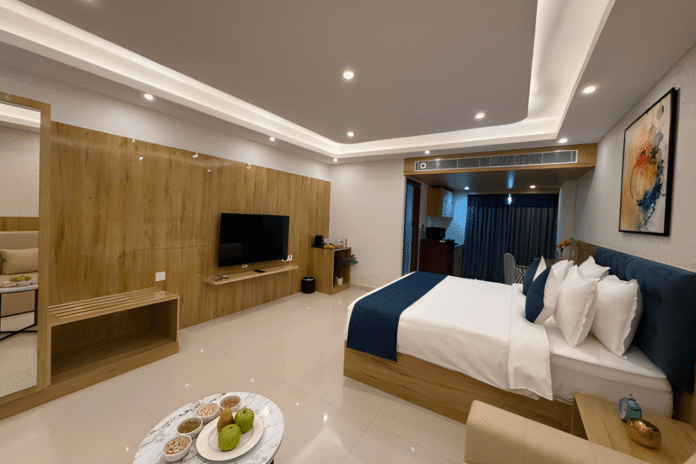
Located in Panchgaon, Manesar, the 115-key resort positions itself as a lifestyle destination for leisure travellers, business guests, and large-scale social events. Moreover, the property offers a combination of indoor and outdoor venues and enjoys convenient driving access from Delhi NCR. Recently, the resort completed a series of refurbishments, including upgraded rooms and suites, some of which feature private courtyards and plunge pools. In addition, the resort has redesigned its swimming pool and poolside food and beverage areas, while also enhancing multiple banquet and event spaces set amid landscaped surroundings.

At the same time, sustainability remains central to the resort’s operations. The property has implemented a 170 kW rooftop solar installation, along with rainwater harvesting systems and water management practices that support landscaping and groundwater recharge. Furthermore, the resort has planned its lighting design to minimize light pollution and has incorporated locally sourced materials throughout the property.

Looking ahead, the resort plans to introduce new dining concepts and a wellness facility that will offer spa therapies and fitness services, further strengthening its lifestyle positioning.

Commenting on the association, Usha Goel, Owner, Resort Country Club Manesar, said, “Joining the WorldHotels™ Distinctive Collection is a natural next step for us. Our focus has always been on creating places that feel grounded, personal, and thoughtfully designed. This partnership recognises that approach where luxury is defined by experience and genuine connection to place.”

Sharing similar views, Atul Jain, COO of BWH India & South Asia, said, “Resort Country Club Manesar perfectly embodies the ethos of WorldHotels™ Distinctive. Its induction marks a significant moment for India, highlighting our commitment to showcasing exceptional independent hotels on a global stage. What truly sets the resort apart is its strong focus on ESG-led practices, sustainability, and organic farming, creating a lifestyle destination rooted in responsible luxury. Together, we are building an experience that celebrates individuality, craftsmanship, and responsible, conscious living.”

Spacetech startup Digantara raises $50 Mn to scale global satellite capabilities

0
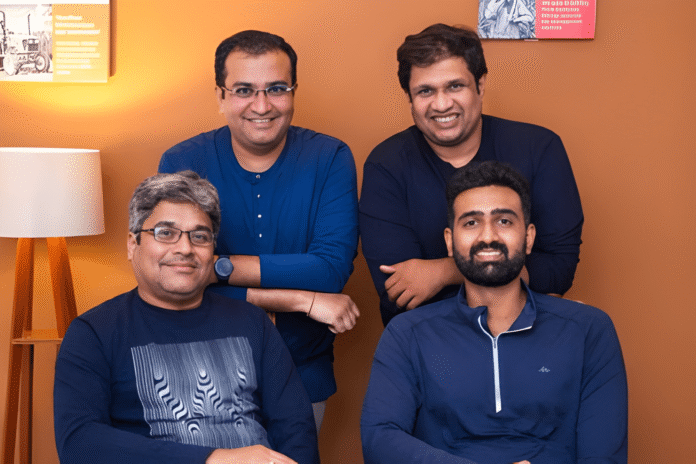
(From left) Rahul Rawat, Anirudh Sharma & Tanveer Ahmed, co-founders, Digantara

Reliance Industries has led a USD 50 million funding round in Bengaluru-based spacetech startup Digantara, according to a filing with the Registrar of Companies. As a result of this investment, the company now commands an approximate valuation of USD 200 million, marking a major milestone for India’s fast-evolving private space sector.

In addition, the Series B round attracted participation from 360 One Asset, Tokyo-based asset manager SBI Holdings, upGrad founder Ronnie Screwvala, and existing investors Peak XV Partners and Kalaari Capital. With this capital, Digantara plans to accelerate its global expansion, particularly in the United States, while also scaling its satellite manufacturing and production capabilities.

Meanwhile, Digantara, which originated as an incubatee at the Indian Institute of Science (IISc), focuses on developing advanced space situational awareness (SSA) technologies. Specifically, the company tracks satellites and space debris using proprietary systems such as its Space Camera for Object Tracking (SCOT), which delivers high-resolution tracking capabilities that exceed prevailing industry standards.

Currently, the startup operates multiple satellites in orbit. Going forward, Digantara intends to deploy the fresh funding to expand its surveillance offerings and deepen its engagement with defence, government, and commercial customers across India and international markets.

Founder Anirudh Sharma has outlined plans to extend the company’s geographical presence into Europe by mid-2026. At the same time, Digantara aims to integrate its technologies into multi-layered defence programmes, including initiatives such as India’s Golden Dome. Furthermore, the funding will help the company accelerate satellite manufacturing capacity and support broader deployment of its space-based sensing infrastructure.

More broadly, investor interest in India’s spacetech ecosystem continues to rise. In recent months, several startups, including Agnikul Cosmos and Ethereal Exploration Guild, have also secured substantial funding, underscoring growing confidence in India’s private space ambitions.

PropTurtle launches development-first fractional real estate platform targeting 18–22% IRR

0
Chandra Mouli Goddanti, Founder and CEO, PropTurtle

PropTurtle, a next-generation fractional real estate investment platform, has officially launched with a development-first model that allows investors to participate in institutional-grade hospitality and commercial assets at the builder stage, while targeting an indicative internal rate of return (IRR) of 18–22%.

Unlike traditional fractional ownership platforms that aggregate completed properties and focus largely on rental yields, PropTurtle operates around active value creation. Specifically, the platform emphasizes co-development, professional project execution, and clearly defined exit strategies. Consequently, PropTurtle caters to high-net-worth individuals (HNIs) and non-resident Indians (NRIs) who seek structured, transparent, and higher-return real estate investment opportunities in India.

In contrast, most existing fractional real estate platforms follow a passive aggregation model, where investors acquire small stakes in ready-to-lease assets and rely mainly on rental income. As a result, such investments typically generate annual yields of 8–10%. PropTurtle, however, challenges this approach by enabling investors to enter projects during the development phase, which is when the majority of real estate value creation takes place.

By investing at the “builder price,” investors gain exposure to both operational income and capital appreciation at exit. Moreover, this dual-engine return framework mirrors institutional investment strategies commonly used by private equity funds and large developers. Through structured ownership models, PropTurtle now extends these strategies to fractional investors.

PropTurtle is backed by a founding team that combines corporate strategy with hands-on real estate execution. Founder and Chief Executive Officer Chandra Mouli Goddanti brings extensive expertise in business strategy and capital structuring. Previously, he served as Chief Business Officer at EBG Group, where he worked across diversified portfolios spanning technology, manufacturing, and real estate.

Meanwhile, Co-Founder and Chief Operating Officer Raj Karan Puppala contributes deep operational experience from leadership roles at RK Builders & Developers and Sree Shrestam Apart Hotels. Additionally, he holds CREDAI membership and has completed formal business leadership training at IIM Bangalore. At PropTurtle, the founding team actively oversees construction progress, regulatory compliance, cost controls, and operational readiness, thereby significantly reducing execution risks commonly associated with development-stage investing.

Each investment opportunity on the platform operates through a dedicated Special Purpose Vehicle (SPV). Accordingly, every SPV outlines clear ownership rights, cash flow distribution mechanisms, and predefined exit pathways from the outset. Furthermore, PropTurtle places strong emphasis on RERA compliance, legal due diligence, and financial transparency.

Initially, the platform focuses on boutique hospitality and strategic commercial real estate located in high-growth corridors. Notably, one of its debut offerings includes The Garuda Gateway, a boutique airport hotel project in Tirupati, which stands to benefit from rising pilgrimage tourism and expanding regional air connectivity.

At the same time, PropTurtle is developing partnerships for commercial income-generating assets aligned with infrastructure-led growth zones. Through this approach, the platform aims to build resilient, cash-generating real estate businesses rather than standalone property investments.

With a minimum investment threshold of ₹25 lakhs, PropTurtle targets serious investors who look beyond traditional residential property or low-yield rental products. Accordingly, the company positions itself as an institutional gatekeeper, offering curated access to opportunities typically reserved for developers, private funds, and large family offices.

As fractional real estate investing in India continues to mature, PropTurtle seeks to establish itself as a compliance-driven, execution-focused platform that prioritizes governance, transparency, and sustainable wealth creation instead of short-term yield chasing.

JJG Aero secures $30 Mn in funding round to scale aerospace manufacturing

0
Anuj Jhunjhunwala, CEO, JJG Aero

JJG Aero has secured USD 30 million in a Series B funding round led by private equity firm Norwest, as the company moves to expand capacity and strengthen its position in global aircraft supply chains.

With this fresh capital, the company will primarily build and add capacity at its upcoming facility in North Bangalore. In addition, JJG Aero will focus on increasing vertical integration and supporting other strategic initiatives, the company said.

As a result of this round, JJG Aero’s total funding has reached USD 42 million, including a USD 12 million Series A round raised in April 2024 and led by CX Partners.

Founded in 2008, JJG Aero manufactures high-precision machined components for aircraft systems and engines, supported by in-house special process finishing capabilities. Moreover, the company operates a subsidiary that serves the auto component and industrial segments. Its customer base includes US and European original equipment manufacturers and Tier-1 suppliers such as Collins Aerospace, Safran, GE Aerospace, Pratt & Whitney, Woodward, and Liebherr.

According to Chief Executive Officer Anuj Jhunjhunwala, the company continues to benefit from strong global demand for aircraft and components, especially as established suppliers in Western markets struggle to keep pace.

“The aerospace supply chain is facing an all-time high demand from aircraft manufacturers,” Jhunjhunwala said, adding that India had emerged as an attractive sourcing destination for global aerospace majors.

Meanwhile, JJG Aero is developing its third manufacturing unit on a 10-acre site in North Bangalore, significantly larger than its existing two one-acre facilities. Furthermore, the site offers scope for expansion into adjacent segments.

Norwest highlighted that JJG Aero has grown at a compounded annual growth rate of around 35 percent over the past three years, driven by rising outsourcing by global aerospace companies and the firm’s focus on complex, value-added components.

“This investment will enable JJG Aero not only to continue its growth trajectory through capacity addition but also to upgrade the quality of earnings by focusing on higher value-added components,” said Shiv Chaudhary, Managing Director at Norwest.

Cleantech startup ReGrip secures Rs 20.25-Cr in funding to scale tyre recycling and circular economy operations

0
Tushar Suhalka, Founder, ReGrip

Cleantech startup ReGrip, India’s largest integrated tyre waste management company, has secured Rs 20.25 crore in fresh funding to accelerate its recycling and circular economy initiatives. Notably, the investment stands out as the largest cheque of the season on Bharat Ke Super Founders, thereby underscoring rising investor confidence in sustainability-driven and scalable business models.

Specifically, the funding round comprises Rs 15.25 crore in equity for a 13.2 percent stake, along with Rs 5 crore in debt financing. Leading the equity round, Red Bricks Capital invested Rs 8.9 crore, while Auxan followed with a Rs 2.5 crore commitment. Additionally, other investors such as Upaya/Chakra Rel, Binge/Aryan, and individual backers including Ankur Mittal, Velumani, Nitish M, and Arti G participated in the round.

Founded by Tushar Suhalka, ReGrip directly addresses India’s growing end-of-life tyre challenge through a technology-enabled waste management platform. To begin with, the company evaluates discarded tyres to determine whether reuse or recycling offers the most value. ReGrip refurbishes usable tyres and resells them at nearly 50 percent lower prices, while still offering up to 80 percent of usable life. Meanwhile, tyres that cannot be reused are processed into crumb rubber, which serves industries such as automotive, construction, footwear, fitness, and manufacturing.

Beyond recycling, ReGrip also strengthens its waste-to-energy capabilities. In particular, the company produces tyre-derived fuel and bio-crude oil as alternative industrial fuels, effectively positioning itself at the intersection of recycling, clean energy, and circular manufacturing.

At present, ReGrip operates across 24 locations and collaborates with more than 400 scrap dealers, making it the largest organised tyre waste collector in India. Furthermore, the company holds India’s largest licence to operate a tyre-to-fuel waste-to-energy plant, reinforcing its leadership in the sector.

Looking ahead, ReGrip plans to deploy the newly raised capital to expand processing capacity, strengthen collection infrastructure, and scale operations into new geographies. At the same time, the company aims to integrate informal scrap networks into a formal, compliant, and transparent value chain, thereby improving efficiency and traceability across the ecosystem.

Meanwhile, Bharat Ke Super Founders, hosted by Suniel Shetty, continues to play a pivotal role in supporting growth-stage startups. The platform enables founders to access structured equity and debt investments that prioritize scalability, sustainability, and long-term value creation.

IDeaS launches rate data advantage to strengthen hotel revenue intelligence

0

IDeaS, a SAS company and the global leader in AI-powered hospitality revenue management software, has announced the launch of IDeaS Rate Data Advantage, a new enhancement aimed at helping hospitality providers assess market performance with improved clarity and accuracy.

Importantly, the launch reflects rising demand for advanced travel technology solutions that enable operators to adapt to changing traveler behavior, increasing price sensitivity, and intensifying competitive pressures.

As global travel continues to rebound and transform, technology-led decision-making now plays a central role in achieving sustainable revenue growth. Against this backdrop, Rate Data Advantage positions itself as a strategic enhancement that enables hotels and hospitality providers to extract deeper value from market intelligence while strengthening profitability and operational confidence.

Built on IDeaS’ robust analytics foundation, Rate Data Advantage delivers detailed insights into market dynamics, thereby allowing operators to better understand individual revenue drivers within a competitive landscape. In addition, the solution analyzes real-time activity across multiple products, offerings, and room types, offering a clearer view of how demand shifts across segments and distribution channels.

Within the broader travel technology ecosystem, this enhancement directly addresses a long-standing industry challenge. Traditional rate comparison tools typically rely on limited data sets, which often produce an incomplete picture of market conditions. By contrast, Rate Data Advantage expands visibility beyond a narrow competitive set, thus enabling more informed, property-level strategic decisions.

Meanwhile, travelers continue to display increasingly price-conscious behavior, which requires hospitality providers to adopt smarter and more agile pricing strategies. Consequently, AI-driven revenue management solutions have become critical for maintaining competitiveness while protecting margins.

Rate Data Advantage draws on nearly 400 times more consumer rate shopping data than conventional approaches. As a result, the platform enables more accurate pricing decisions across room types, product offerings, lengths of stay, and distribution channels. This broader data scope allows hospitality providers to align revenue strategies with real-time market demand rather than relying on static assumptions.

From a travel technology standpoint, scalable pricing intelligence across multiple dimensions has become essential. Accordingly, Rate Data Advantage enhances precision by analyzing rate offerings, booking restrictions, keywords, and evolving rate trends across the marketplace. This deeper visibility allows revenue teams to respond more quickly to market changes and uncover opportunities that might otherwise go unnoticed.

Rather than depending on broad averages, operators can now evaluate performance at a highly granular level. This capability supports stronger yield management and improves a property’s ability to compete effectively within specialized market niches.

IDeaS’ forecasting capabilities have long stood out as a core strength in hospitality technology. When combined with Rate Data Advantage, these tools support more nuanced trend analysis and opportunity identification than traditional data models typically allow.

Simplified data sets often fail to capture subtle shifts in demand or emerging booking behaviors. In contrast, the expanded data coverage offered by Rate Data Advantage ensures that hospitality providers remain alert to revenue opportunities across all operational layers. As a result, teams can make proactive decisions rather than reactive adjustments.

One of the most significant benefits of Rate Data Advantage lies in its ability to deliver a more comprehensive view of the competitive landscape. Instead of focusing solely on a small group of comparable properties, revenue teams gain visibility into broader market activity.

This holistic approach enables earlier identification of trends and anomalies, thereby giving operators a meaningful strategic advantage. Within a travel technology framework, this capability aligns closely with the industry’s shift toward integrated, market-wide intelligence systems that minimize information gaps and improve strategic alignment.

High-quality data and advanced analytics remain essential for timely decision-making in fast-moving travel markets. Accordingly, Rate Data Advantage has been designed to highlight detailed market trends while isolating irregularities that could otherwise distort performance assessments.

By reducing uncertainty, the solution empowers operators to act with greater confidence. Faster response times contribute to improved pricing accuracy, stronger competitiveness, and enhanced revenue outcomes, all of which are now expected from modern hospitality technology platforms.

The launch of Rate Data Advantage represents part of a broader evolution in hospitality revenue management. Notably, the enhancement responds to growing recognition that deeper market insight can unlock previously untapped revenue potential.

With access to richer and more comprehensive data, hotels can optimize individual room performance and compete more effectively within targeted market segments. In this way, Rate Data Advantage reinforces IDeaS’ ongoing commitment to delivering tools that support smarter, more profitable commercial decision-making across hospitality.

The solution is currently being offered selectively to IDeaS clients, with early access available through a registration-based rollout. This phased approach allows hospitality providers to begin integrating enhanced market intelligence into existing revenue strategies while preparing for wider adoption.

From a travel technology perspective, Rate Data Advantage marks a meaningful step forward in AI-driven revenue management. By combining scale, automation, and precision, the enhancement supports a more resilient, adaptive, and data-driven approach to pricing and performance optimization.

Eco Hotels & Resorts to develop new hotel in Ayodhya under strategic partnership

0
Vinod Kumar Tripathi, Chairman of Eco Hotels & Resorts Limited

Eco Hotels & Resorts has entered into a strategic agreement to develop a new hotel in Ayodhya, thereby reinforcing its expansion strategy across high-potential religious and cultural tourism destinations.

Under this initiative, the upcoming property will offer 33 well-appointed rooms, along with a swimming pool, landscaped lawn, and a rooftop restaurant, thus ensuring a premium yet convenient stay experience for guests. Moreover, the hotel enjoys a strategic location with direct highway access and lies just 7 km from the Ram Janmabhoomi Temple, positioning it well to serve the steadily increasing flow of tourists and devotees visiting the city.

Commenting on the development, Vinod Kumar Tripathi, Chairman of Eco Hotels & Resorts Limited, said, “The Ayodhya property represents a key step in our strategy to expand into emerging hospitality markets driven by spiritual and cultural tourism. With visitor numbers in the region on a strong upward trajectory, there is significant demand for quality accommodation, and we are well-positioned to meet it.”

He further stated, “Forecasts suggest that approximately 10 million visitors are expected annually, highlighting the market potential. This property is designed to deliver both comfort and convenience, aligning with Eco Hotels’ broader vision for sustainable and scalable growth.”

The Ayodhya project marks a significant milestone for Eco Hotels & Resorts as it strengthens its presence in pilgrimage-driven destinations. By combining strategic location, thoughtful amenities, and a focus on sustainable growth, the company continues to position itself to capitalise on India’s evolving spiritual tourism landscape while delivering value-driven hospitality experiences.

Apple acquires Q.ai in move to advance AI-driven audio innovation

0
Aviad Maizels, Chief Executive Officer & co-Founder, Q.ai

Apple has announced that it has acquired Q.ai, an Israeli startup specialising in artificial intelligence technology for audio, thereby strengthening its capabilities in advanced machine learning.

Although Apple did not disclose the financial terms of the acquisition, Q.ai had backing from prominent venture capital firms, including Matter Venture Partners, Kleiner Perkins, Spark Capital, Exor, and GV, formerly known as Google Ventures. However, reports indicated that the deal value stood at nearly $2 billion.

While Apple did not specify how it plans to deploy Q.ai’s technology, the company confirmed that the startup has developed new machine-learning applications that help devices understand whispered speech and improve audio performance in challenging environments.

Notably, Q.ai filed a patent application last year that focuses on using “facial skin micromovements” to detect mouthed or spoken words, identify individuals, and assess emotions, heart rate, respiration rate, and other physiological indicators.

As part of the transaction, Q.ai’s 100 employees, including Chief Executive Officer Aviad Maizels and co-founders Yonatan Wexler and Avi Barliya, will join Apple, according to statements from both companies.

Importantly, Maizels previously founded PrimeSense, a three-dimensional sensing company that Apple acquired in 2013. That acquisition later enabled Apple to shift from fingerprint sensors to facial recognition technology across its iPhone lineup.

Commenting on the latest acquisition, Maizels said, “Joining Apple opens extraordinary possibilities for pushing boundaries and realizing the full potential of what we’ve created, and we’re thrilled to bring these experiences to people everywhere.”

Meanwhile, Apple has continued to integrate AI-driven features into its hardware portfolio, including AirPods, where it introduced speech-translation technology between languages last year.

Highlighting the strategic value of the deal, Johny Srouji, Apple’s senior vice president of hardware technologies, said in a statement, “Q.ai is a remarkable company that is pioneering new and creative ways to use imaging and machine learning.” He added, “We’re thrilled to acquire the company, with Aviad at the helm, and are even more excited for what’s to come.”

AI startup Perplexity signs $750 Mn agreement with Microsoft Corp. to use its Azure cloud platform

0

AI startup Perplexity has signed a $750 million agreement with Microsoft Corp. to use its Azure cloud platform, thereby expanding its operations beyond longtime cloud partner Amazon.com Inc.

Under this three-year commitment, Perplexity will deploy its AI models through Microsoft’s Foundry service, including models built by OpenAI, Anthropic, and xAI, according to people familiar with the agreement who requested anonymity because the matter remains private.

Commenting on the development, a Perplexity spokesperson said, “We are excited to partner with Microsoft for access to frontier models from X, OpenAI, and Anthropic.”

At the same time, the spokesperson clarified that the Microsoft partnership does not reduce Perplexity’s spending on Amazon Web Services (AWS), which has long served as the startup’s primary cloud provider.

Emphasising this continuity, the spokesperson added, “AWS remains Perplexity’s preferred cloud infrastructure provider, and we’re excited to announce expansions of that partnership in the coming weeks.”

Meanwhile, both Microsoft and Amazon declined to comment on the deal.

Although Perplexity ranks among the more richly valued AI startups, it continues to face intense competition from Alphabet Inc.’s Google and OpenAI in its effort to redefine how people search for information online. Additionally, Perplexity has raised significantly less capital than OpenAI and Anthropic, both of which have recently pursued a wave of large-scale infrastructure partnerships.

In general, large enterprises rely on multiple cloud providers to access specialised services while reducing dependence on any single vendor. Notably, this multi-cloud strategy has accelerated in the AI era as companies experiment with emerging tools and sign agreements with both model developers and the cloud platforms that support them.

Historically, the AI startup built much of its business on AWS, using Amazon’s Bedrock service to access Anthropic models for its AI-powered search engine. Perplexity Chief Executive Officer Aravind Srinivas has frequently spoken at AWS conferences and stated during a 2023 appearance that he chose to go “all-in” on Amazon’s cloud.” In turn, AWS has regularly showcased Perplexity as a leading-edge AI customer using its services.

However, in recent months, the relationship between the two companies has grown contentious. In November, Amazon sued Perplexity, seeking to prevent the startup from enabling consumers to use its AI tools to shop and purchase products from Amazon’s online marketplace. In response, Perplexity described Amazon as a bully and labeled the lawsuit “a threat to user choice.” Srinivas also said in November that Perplexity has made “hundreds of millions” of dollars in commitments to AWS.

For Microsoft, the Perplexity agreement strengthens its strategy to position Azure as a premier platform for building AI applications and deploying models from multiple vendors. While Microsoft has long offered models from its partner OpenAI, it further expanded its ecosystem by signing a deal with Anthropic in November.

Highlighting this approach, Microsoft Chief Executive Officer Satya Nadella said during an earnings call earlier this week, “Our customers expect to use multiple models as part of any workload,” adding, “And we offer the broadest selection of models of any hyperscaler.”

Nadella further noted that more than 1,500 Microsoft Foundry customers have already used both OpenAI and Anthropic models. Moreover, he said the number of customers spending over $1 million per quarter on Foundry rose nearly 80% in the quarter that ended in December.

Cygnett Hotels & Resorts strengthens spiritual tourism with second Cozzet in Ayodhya

0
Sarbendra Sarkar, Founder & Managing Director, Cygnett Hotels & Resorts

Cygnett Hotels & Resorts has announced the signing of its second hotel in Ayodhya, further reinforcing its footprint in the fast-growing pilgrim city, where it earlier became the first branded hotel operator. With this development, the group continues to strengthen its position in one of India’s most significant spiritual destinations. The upcoming property will operate under the Cozzet brand and will cater to the value hotel segment, addressing the rising need for organised accommodation.

Meanwhile, Cozzet Ayodhya will feature 70 well-appointed rooms, along with an all-day dining restaurant and essential guest facilities tailored for both leisure and corporate travellers. In addition, the hotel will house a spacious 8,000 sq ft banquet hall with an adjoining lawn, enabling it to host weddings, social celebrations, and large-scale gatherings. To further enhance guest experience, the property will also offer a gymnasium, multiple conference rooms, and technology-driven solutions designed specifically for business travellers.

Strategically, the hotel enjoys a prime location on the Gorakhpur–Lucknow Highway, ensuring convenient accessibility. The property sits approximately five kilometres from Maharishi Valmiki International Airport and just 1.5 kilometres from the Ram Mandir, making it highly attractive for pilgrims. Moreover, select rooms will provide direct views of the temple precinct, adding to the hotel’s appeal.

At the same time, Ayodhya continues to witness a surge in visitor traffic, driven by major infrastructure upgrades, improved road connectivity, and the commencement of operations at the new airport. Consequently, these developments have significantly boosted demand for professionally managed hotels, particularly within the economy and mid-scale segments.

Commenting on the signing, Sarbendra Sarkar, Founder and Managing Director, Cygnett Hotels & Resorts, said, “Ayodhya represents the kind of destination where organised economy hospitality has a clear and long-term role to play. With Cozzet Ayodhya, our focus is on offering dependable quality, efficient design, and strong value to guests visiting the city for faith, family events, and short leisure stays. This signing aligns with our strategy of expanding in high-growth pilgrimage and tier-two markets where demand visibility is strong.”

The signing of Cozzet Ayodhya marks another strategic step in Cygnett Hotels & Resorts’ expansion across high-potential pilgrimage and tier-two destinations. By combining a prime location, event-ready infrastructure, and value-focused hospitality, the upcoming hotel is well positioned to support Ayodhya’s evolving tourism ecosystem while meeting the growing expectations of modern travellers.