Sunday, June 7, 2026
Home Blog Page 28

Plum bags Rs 193-Cr in Series B funding to revolutionize employee health benefits

0
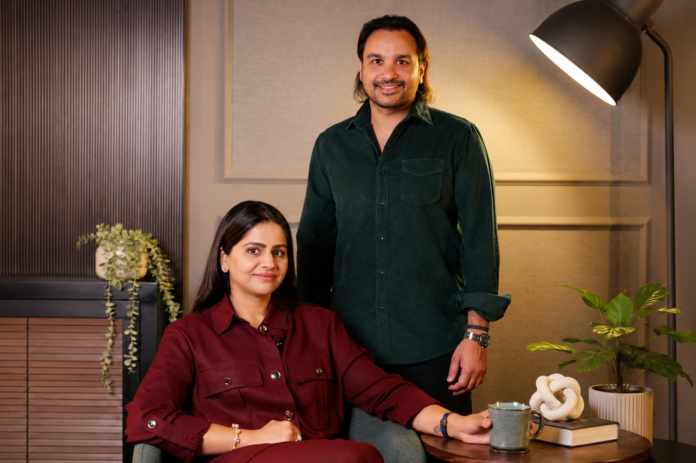
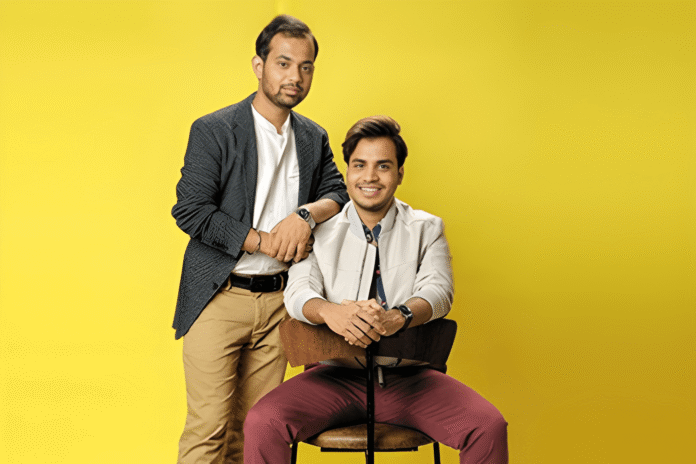
L-R: Abhishek Poddar & Saurabh Arora, co-founders, Plum

Plum, the Bengaluru-based employee health benefits platform, secured Rs 193 crore in a Series B funding round. Peak XV Partners led the investment, while existing backer Tanglin Venture Partners and new investor GMO Venture Partners joined in. This capital infusion empowers Plum to enhance its insurance infrastructure significantly.

The company will channel the fresh funds into bolstering technology, recruiting top talent, fortifying enterprise-grade security, and expanding AI-driven claims operations. Additionally, Plum aims to integrate seamlessly with HR and payroll systems. Meanwhile, it plans to widen its healthcare offerings, encompassing preventive care, primary care, mental wellness, and telehealth.

“We made a decision on day one that our north star would be the claims experience,” said Abhishek Poddar, co-founder and CEO, Plum. “This round gives us the capital to move faster on what we know works while expanding the platform across healthcare and employee benefits.”

Founded in 2019 by Poddar and Saurabh Arora, Plum delivers a robust employee health benefits platform. It enables companies to provide insurance and healthcare services effortlessly to their teams. Currently, Plum serves over 6,000 organizations—from nimble startups to giants like CRED, Meesho, PhonePe, and Swiggy—covering more than 600,000 employees.

Previously, the company raised $15 million in its Series A round in 2021, spearheaded by Tiger Global and supported by Peak XV’s Surge, Tanglin Venture Partners, Incubate Fund, and Gemba Capital. In FY25, Plum generated nearly Rs 70 crore in revenue and achieved six months of EBITDA profitability. This latest fundraise follows Plum’s milestone of its first full year of EBITDA and cash flow profitability, highlighting a promising shift toward sustainable growth in the insurtech landscape.

Since its launch, Plum has handled over 500,000 claims efficiently. It slashed median hospital discharge time to 47 minutes and shortened reimbursement turnaround to just 1.5 days. “Plum’s focus on claims and customer experience positions it strongly as enterprises increasingly prioritise employee wellbeing and efficient insurance delivery,” noted GV Ravishankar, managing director at Peak XV.

Plum’s strategic funding round not only fuels its technological edge but also cements its leadership in transforming employee health benefits. As businesses prioritize wellness and efficiency, the company stands poised for exponential growth, setting new benchmarks in India’s insurtech sector.

Agnikul Cosmos achieves breakthrough with 3D-printed rocket engine test

0
Srinath Ravichandran & Moin SPM, co-founders, Agnikul Cosmos

Agnikul Cosmos, an end-to-end space transportation company, has successfully completed a critical booster engine test of its Agnite engine, showcasing large-scale 3D printing of rocket engines at an unprecedented level. This milestone further strengthens the company’s position in advancing rapid, cost-efficient launch technologies.

“Unlike traditional engines that take seven months to manufacture, Agnikul’s engines can be fully 3D printed in just seven days. This dramatically reduces production complexity, turnaround time, and costs. The costs will be one-tenth of what they are now,” said Moin SPM, co-founder and chief operating officer of Agnikul Cosmos.

As a result, this breakthrough significantly enhances launch responsiveness, allowing Agnikul to support missions on much shorter timelines compared to industry standards. For satellite operators, this translates into access to secure launch schedules, customised orbital trajectories, and improved mission planning certainty—advantages that traditional shared launch systems often fail to deliver.

Notably, the tested engine is a full metre-long system that stands as the largest Inconel rocket engine ever built as a single piece. Additionally, it becomes the first engine of its scale to use electric motor-driven pumps, marking a major advancement in propulsion engineering. Agnikul validated the engine at its in-house facility in Chennai, reinforcing its focus on scalable, high-performance systems designed for faster launch readiness and consistent execution.

Furthermore, through this innovation, Agnikul now operates a fully integrated launch ecosystem, including mission control, dedicated ground stations, and flight-proven propulsion systems. This integrated approach simplifies the launch process by eliminating coordination challenges across multiple stakeholders.

For satellite operators in critical sectors such as defence and disaster response, where timing is crucial, Agnikul’s platform offers greater flexibility. Operators can plan missions around committed launch windows, ensure precise satellite placement, and even modify payloads up to 30 days before launch—capabilities that significantly improve control compared to conventional shared launch options.

“We chose single-piece Inconel construction and electric pump architecture specifically to solve our customers’ scheduling problems and enhance automation of engine manufacturing. Traditional engines take months to build because you’re machining, welding, and assembling dozens of parts. Ours prints in a few days, which means we can respond to launch demand faster than the industry standard,” said Srinath Ravichandran, co-founder and chief executive officer of Agnikul Cosmos.

“Electric pumps are simpler than gas generators, with fewer parts to refurbish between flights, which is critical for our reusability roadmap. These are not just technical choices but are the reasons why we can commit to low turnaround and actually deliver on it,” he added.

Traditionally, satellite launches require coordination between multiple stakeholders, including vehicle manufacturers, launch providers, and ground station networks, each introducing potential delays. However, Agnikul streamlines this process by offering an end-to-end platform where customers interact with a single team from contract signing to on-orbit deployment. This approach proves particularly valuable for constellation operators, government missions requiring sovereign launch capabilities, and enterprises working against tight regulatory or market deadlines.

“This engine test validates that our propulsion systems are ready to operate at the scale required for multiple launches per quarter. Our manufacturing capabilities are enabling us to produce engines in line with customer demand, rather than limiting it. With propulsion now largely de-risked, our focus is firmly on execution and demonstrating consistent launch cadence and mission reliability that can translate this pipeline into long-term partnerships and repeat business,” added Moin.

Importantly, this test marks one of Agnikul’s most significant propulsion milestones since its 2024 controlled ascent flight. It positions the company to support diverse mission profiles, including constellation deployments, technology demonstrations, government missions, and space-based compute applications. Additionally, Agnikul has commissioned India’s first large-format aerospace manufacturing facility, enabling rapid production of launch vehicles, while also securing commercial partnerships for space-based AI infrastructure.

Building on its progress, the company recently achieved another milestone by test-firing three semi-cryogenic engines simultaneously—an industry-first in India—demonstrating scalable engine configurations tailored to mission requirements. The latest booster engine test further strengthens this foundation and reinforces its technological leadership.

Currently valued at over $500 million, Agnikul has attracted investments from institutions such as HDFC Bank, Advenza Global Limited, and Artha Select Fund. More recently, TIDCO invested Rs 25 crore under the TIDCO Startup Investment Policy 2025, marking the first government equity investment of its kind in an Indian space-tech startup. Additionally, the company holds patents across the United States, Europe, and India covering propulsion systems, convertible upper-stage architectures, and orbital platform technologies.

Agnikul Cosmos is redefining space launch capabilities by combining advanced 3D printing, integrated infrastructure, and scalable propulsion systems. As demand for faster, flexible, and cost-effective satellite launches continues to rise, the company is positioning itself to lead India’s private space-tech ecosystem and compete on a global scale.

Nutrition startup Fullife Healthcare raises Rs 300-Cr in funding to fuel global expansion

0
Varun Khanna, co-founder & CEO of Fullife Healthcare

Mumbai-based Fullife Healthcare, the parent company of brands like Fast&Up and Chicnutrix, has raised Rs 300 crore from Elev8 Venture Partners. This fresh capital injection marks a significant step in the company’s growth trajectory as it continues to strengthen its position in the consumer health and wellness segment.

With this funding, Fullife Healthcare plans to expand into emerging categories such as digestive health, sleep support, and protein-based nutrition. At the same time, the company will continue to scale its existing portfolio across hydration, metabolic health, and beauty wellness, thereby reinforcing its multi-category strategy.

“This partnership will help us strengthen our brands, expand our product portfolio, and scale manufacturing capabilities as we enter the next phase of growth,” said Varun Khanna, co-founder & CEO of Fullife Healthcare, in a statement issued by the company.

Founded in 2011, Fullife Healthcare currently operates more than 100 SKUs across its brands, including Fast&Up, Chicnutrix, and NightOut. Moreover, the company has established a presence in over 40 countries. Looking ahead, it aims to expand further into key international markets such as the UK, GCC, and the US. Simultaneously, the company is focusing on strengthening its domestic distribution network and enhancing its digital channels to build a global fast-moving health and wellness goods (FMHG) platform.

In addition, Fullife Healthcare has attracted backing from several prominent investors, including Rakesh Jhunjhunwala, Sixth Sense Ventures, Kotak Securities, Akash Prakash, and Morgan Stanley Private Equity Asia, further underscoring investor confidence in its business model.

Meanwhile, Honagudi, managing partner at Elev8 Venture Partners, highlighted the broader industry shift. “Health and wellness is seeing a structural shift, with consumers proactively managing fitness and nutrition,” he said. Notably, Elev8 Venture Partners has also backed startups such as IDfy, Astrotalk, Smallcase, Porter, and Snapmint.

Fullife Healthcare’s latest funding round signals strong momentum in India’s health and wellness sector. By expanding into new categories, scaling globally, and strengthening its digital and manufacturing capabilities, the company is well-positioned to capitalize on the rising demand for proactive, lifestyle-driven nutrition solutions.

Mitsubishi Electric invests in Sakana AI to advance next-gen AI solutions

0
Ren Ito, Co-founder of Sakana AI Inc.

Mitsubishi Electric Corporation has announced that it has invested in Sakana AI Inc., a company focused on developing next-generation AI foundation models. Through this strategic collaboration, Mitsubishi Electric aims to create new solutions and expand its Serendie™ digital platform by leveraging Sakana AI’s expertise in optimizing complex, tacit-knowledge-driven, and highly challenging business operations using advanced AI technologies.

As generative AI continues to evolve rapidly and social challenges grow increasingly complex, many companies are actively exploring its potential for transformational initiatives. For instance, businesses are using generative AI to launch new ventures while also automating and enhancing existing operations. In this context, Sakana AI brings a differentiated approach by integrating techniques that optimally combine multiple foundation models for inference, while also enabling AI systems to learn and apply tacit domain knowledge and accumulated expertise.

Consequently, Mitsubishi Electric expects to deliver solutions that support precise decision-making in complex business environments where traditional, general-purpose AI models have struggled. To achieve this, the company plans to combine its core strengths—including advanced components, extensive customer assets, and deep domain expertise across industries—with Sakana AI’s cutting-edge AI foundation model capabilities.

Furthermore, Mitsubishi Electric intends to develop solutions across a wide range of sectors, including manufacturing and infrastructure. By doing so, the company aims to expand its Serendie-related businesses and accelerate its transition into an innovation-driven enterprise through digitalisation. Ultimately, this initiative is expected to contribute to addressing various real-world social challenges.

Ren Ito, Co-founder of Sakana AI Inc., said, “We will position AI use in the manufacturing domain, including physical AI, as our third strategic pillar, following our initiatives in the financial and defense sectors, striving to create innovative solutions that leverage Japan’s strengths. By combining Mitsubishi Electric’s manufacturing knowledge and extensive datasets with our next-generation AI technologies, we will collaborate to bring AI into practical implementation across society.”

Echoing this vision, Satoshi Takeda, Senior Vice President, CDO, and Group President, Digital Innovation at Mitsubishi Electric Corporation, said, “By strengthening our Serendie digital platform and leveraging generative AI, we are creating new business value and enhancing our competitive position. We are confident this investment will be an important step toward broadening AI’s capacity to address concrete, real-world challenges.”

This investment highlights Mitsubishi Electric’s strategic push to integrate advanced AI into real-world applications. By partnering with Sakana AI, the company is positioning itself at the forefront of AI-driven innovation, aiming to unlock new efficiencies, enhance decision-making, and drive meaningful impact across industries.

Accel and Prosus launch India Cohort with bold bets on space, health, and climate startups

0
(L) Pratik Agarwal, Partner at Accel & (R) Ashutosh Sharma, Head of India Ecosystem at Prosus

Accel and Prosus have selected six startups for their first joint cohort in India, backing what they describe as “off-the-map” ideas—ventures tackling problems where markets remain undefined and progress is inherently hard to measure.

Notably, the inaugural cohort spans healthcare, climate, space, and longevity. This breadth underscores a deliberate focus on science-led themes that typically involve long development timelines and uncertain commercial pathways. The firms chose these six startups from a highly competitive pool of more than 2,000 applications.

Among the selected companies, Praan is developing advanced air infrastructure systems designed to improve indoor air quality through purification, sensing, and automated controls. Based in Mumbai, the startup has already secured backing from investors such as Social Impact Capital, Aera VC, and Avaana Capital, along with strategic investors and family offices.

Meanwhile, QOSMIC is building optical communication systems to enable high-speed data transfer between satellites and Earth. The Bengaluru-based company is working to significantly increase bandwidth while reducing latency in space-based networks.

In the space-tech segment, Ethereal Exploration Guild (EtherealX) is developing reusable orbital launch vehicles aimed at lowering the cost of accessing space. The startup recently raised $20.5 million in a Series A round led by TDK Ventures and BIG Capital, achieving a valuation of $80.5 million.

Additionally, Dognosis is innovating in cancer diagnostics by detecting multiple cancers through breath analysis. Its product, BreatheEasy, leverages dogs’ olfactory capabilities combined with robotics and AI. Patients breathe into a mask, and the system later analyzes samples in a lab to identify cancer-linked markers.

Further expanding into longevity, Ferra is developing a home-based strength-training system that helps individuals maintain mobility as they age.The system dynamically adjusts resistance levels based on a user’s performance.

In parallel, a sixth startup—currently operating in stealth—is working on brain-computer interfaces to enable direct communication between the human brain and external systems, signaling a bold step toward next-generation human-machine interaction.

Importantly, Accel and Prosus announced the program in October with the intention of backing startups that fall outside the traditional venture capital playbook. Instead of prioritizing ideas that are easiest to fund, the firms are focusing on high-risk, high-impact innovations.

As part of the initiative, Accel and Prosus are co-investing in each startup, with Prosus matching Accel’s contribution. Investment checks range from $500,000 to $2 million. Moreover, the firms structure the funding model to reduce early dilution for founders by deferring a portion of the capital, allowing founders to give up equity at a later stage.

According to Pratik Agarwal, partner at Accel, the model aligns with the needs of deep-tech startups. “More than capital, they require time to make those breakthroughs,” he said.

Similarly, Ashutosh Sharma highlighted the unique growth trajectory of such ventures. These companies often follow a non-linear path, where progress depends on achieving critical technical breakthroughs rather than steady, predictable growth.

Consequently, this cohort reflects a broader shift in venture investing toward long-horizon innovation, where patient capital and technical milestones take precedence over rapid scalability.

Accel and Prosus are not only redefining early-stage investing in India but also signaling strong confidence in deep-tech innovation. By backing unconventional ideas and restructuring capital deployment, they are enabling founders to pursue breakthrough technologies that could shape the future across industries.

jüSTa Hotels expands Uttarakhand portfolio with jüSTa Nature’s Nest

0
Mr. Ashish Vohra, Founder & CEO, Onora Hospitality

Onora Hospitality, the parent company of jüSTa Hotels & Resorts, has announced the signing of a new riverfront resort in Dehradun, thereby reinforcing its expansion strategy in Uttarakhand. The upcoming property, jüSTa Nature’s Nest will open in April 2026 and aims to tap into the region’s growing demand for destination weddings and experiential travel.

Strategically located just 12 minutes from Jolly Grant Airport, the resort also offers convenient access to key spiritual and tourism hubs such as Haridwar and Rishikesh. As a result, the property is well-positioned to attract both leisure travelers and event-driven guests. Moreover, the development will feature landscaped surroundings along with three dedicated banqueting lawns designed to host weddings, corporate functions, and social gatherings.

“Dehradun is emerging as a premier destination for weddings and experiential travel due to its scenic charm and strong connectivity. With its riverfront setting, expansive lawns, and thoughtfully planned leisure infrastructure, jüSTa Nature’s Nest reflects our vision of creating distinctive destinations that combine celebration, nature, and hospitality. We see strong potential for the property to become a preferred venue for weddings and lifestyle events in Uttarakhand,” said Ashish Vohra, Founder and CEO, Onora Hospitality.

In addition, the resort will offer a comprehensive range of amenities to enhance guest experience. These include a multi-cuisine restaurant, a bistro and bar, a swim-up bar, a fully equipped gymnasium, indoor gaming zones, and outdoor sports facilities. Consequently, the property aims to deliver a balanced mix of leisure, wellness, and entertainment for diverse guest segments.

Importantly, this signing further strengthens Onora Hospitality’s footprint in Uttarakhand, where it already operates properties in Corbett, Mukteshwar, Mussoorie, Nainital, and Rishikesh. Therefore, the addition of jüSTa Nature’s Nest aligns with the group’s broader vision of building a strong presence in high-potential leisure destinations across India.

As Uttarakhand continues to emerge as a hotspot for weddings and experiential tourism, Onora Hospitality’s latest signing positions it to capitalize on this trend. By combining scenic locations with thoughtfully designed hospitality experiences, the group is steadily strengthening its appeal among modern travelers and event planners.

Kerten Hospitality enters India with ambitious 1,000-key expansion plan

0
Marloes Knippenberg, CEO, Kerten Hospitality

Kerten Hospitality, the Ireland-headquartered lifestyle hospitality group, has officially announced its entry into the Indian market, thereby marking a significant milestone in its global expansion strategy. As part of its initial phase, the company aims to develop 1,000 keys across India, introducing its signature blend of bespoke lifestyle and community-driven hospitality to the country for the first time.

This strategic move follows a strong performance in 2025, during which Kerten Hospitality recorded a 55% increase in operating revenues, while its gross operating profit (GOP) rose by 69% and management fees grew by 44% year-on-year. Furthermore, in January 2026, the group signed 1,000 new keys across the Middle East, Africa, and other high-growth markets. At present, it boasts a robust pipeline of 60 projects spanning three continents and operates 12 proprietary lifestyle brands, with India emerging as its latest key market.

At the core of Kerten Hospitality’s strategy is its owner-first philosophy, which differentiates it from traditional hospitality operators. Instead of rigid brand standards, the group adopts flexible guidelines that empower asset owners to shape their projects while benefiting from Kerten’s expertise in operations, recruitment, and marketing. In the Indian market, developers will have access to three of its flagship brands—The House Hotel, Cloud7 Hotels, and HOSME—each designed to cater to evolving lifestyle and experiential travel preferences.

To accelerate its India expansion, Kerten Hospitality has already established a dedicated local office and is actively collaborating with asset owners across key destinations. Consequently, the group aims to rapidly scale its presence by bringing its diverse portfolio of lifestyle hotel brands to major travel hubs across the country.

Highlighting the company’s focus on India, Marloes Knippenberg stated, “It’s well known that India is one of the most dynamic travel markets in the world, with robust tourism fundamentals and an increasing appetite for lifestyle-driven hospitality experiences. As travellers increasingly seek destinations that combine culture, design, and community, we see significant potential for innovative hospitality concepts that reflect the spirit and diversity of the country. At Kerten Hospitality, our business model is based on developing destinations that go beyond the realm of traditional hospitality, bringing together culture, creativity, and meaningful guest experiences. We are already seeing a strong demand from developers and owners and will soon be able to cater to the vast diaspora of Indian consumers with Kerten-managed properties across the country.”

Overall, Kerten Hospitality’s India entry underscores the growing attractiveness of the country’s hospitality sector, particularly in the lifestyle and experiential segments.

Araiya Hotels strengthens boutique hospitality presence with Amaraya Resort near Nainital

0

Araiya Hotels & Resorts has announced the signing of Amaraya Resort into its Araiya Anthology collection, thereby marking a significant milestone in the brand’s strategic expansion across India’s top leisure destinations. With this move, the company continues to strengthen its presence in experiential boutique hospitality while focusing on unique, design-led properties.

Nestled in the tranquil Himalayan foothills near Nainital, Amaraya Resort offers a serene and intimate escape spread across 2.5 acres of beautifully terraced orchards. Moreover, the retreat aligns with the Araiya Anthology philosophy by offering just 11 thoughtfully designed suites. Each suite integrates seamlessly with the surrounding natural landscape, providing panoramic mountain views, ample natural light, and a fluid connection between refined interiors and the outdoors. As a result, guests can experience both luxury and tranquility in equal measure.

In addition, the resort curates immersive and sensory-rich experiences for its guests. From bespoke culinary offerings at signature dining venues to wellness rituals such as sunrise yoga and guided meditation, Amaraya ensures a holistic retreat. Furthermore, adventure seekers can explore the rugged Himalayan terrain through private guided treks and authentic local interactions. Whether guests choose to enjoy a peaceful morning tea overlooking the mountains or celebrate under a starlit sky, the resort consistently delivers on Araiya’s experiential luxury promise.

“Quote from the founder of Araiya Hotels and Resorts—At Araiya, we are drawn to places that evoke something deeper, where landscape and emotion intersect. As part of the Araiya Anthology—a collection of stories shaped by place—Amaraya near Tagore Top, Nainital, reflects our belief in creating spaces that are not just destinations but experiences of pause, reflection, and connection. The design is intentionally understated, with thoughtful interventions, natural light filtering through skylights, warmth underfoot, and materials that respond to the mountain climate, coming together to create a sense of effortless comfort.”

Ultimately, this signing reinforces Araiya’s commitment to expanding its footprint through distinctive properties that prioritize design, location, and meaningful guest experiences.

Araiya Hotels & Resorts continues to elevate India’s boutique hospitality landscape by blending curated experiences with thoughtfully designed spaces. With Amaraya Resort joining its Anthology collection, the brand takes another step toward redefining leisure travel through immersive and emotionally resonant destinations.

OZi raises $6.2M Series A to transform baby & kids shopping experience

0
Amit Sah, founder and CEO, OZi

OZi, a quick commerce platform focused on baby and kids’ products, has raised $6.2 million in a Series A funding round, thereby strengthening its mission to simplify shopping for modern parents.

The round was led by RTP Global, while existing investors Blume Ventures, Huddle Ventures, and Zeropearl VC also participated. In addition, the round attracted prominent angel investors, including Kishore Biyani and founders from leading startups such as Unacademy, Mosaic Wellness, Livspace, Vetic, Magicpin, Spinny, Pristyn Care, and Handpicked.

Notably, this Series A round follows OZi’s $3.3 million seed funding raised in October 2025, which Blume Ventures led with participation from Huddle Ventures, Zeropearl VC, and Untitled Ventures. As a result, the early capital enabled the company to launch operations in Gurugram, build a strong cross-functional leadership team, and validate its core thesis that convenience for modern parents remains significantly underserved.

Founded in 2025 by Amit Sah, OZi addresses a problem the founder observed closely within his own family. Today, parents have more choices than ever; however, they have far less time. Consequently, completing a single shopping basket often requires switching across multiple platforms, while many essential products still take days to arrive. Moreover, dual-income households increasingly manage both careers and childcare without extended family support. Therefore, OZi aims to eliminate this friction by offering a curated product selection, trusted brands, product demos, reliable delivery, and seamless returns—all within a single platform.

Importantly, Amit Sah, a second-time founder, brings extensive operational experience to the venture. Earlier, at Zoplar, a B2B healthcare technology startup, he made the strategic decision to return capital to investors after regulatory changes restricted the import of refurbished medical devices, which fundamentally altered the business model. Furthermore, as a graduate of BIT Mesra and IIM Bangalore, he contributed to the national launch of Ola Auto; led international expansion for OYO across Mexico, the United States, Brazil, and Canada; and joined Pristyn Care early in its growth journey toward unicorn status.

With the fresh capital infusion, OZi plans to deepen its footprint across Gurugram and the broader NCR region. At the same time, the company will invest in strengthening brand trust, enhancing technology and operational capabilities, and expanding its curated product assortment.

“I’ve seen how parents today move across platforms just to complete one basket,” said Amit Sah, founder and CEO, OZi. “Convenience is not just about a ten-minute delivery. It is about finding the right product, at the right time, from a trusted brand, without compromise, all in one place. Scale will be the natural outcome of solving convenience consistently for young parents. We’re grateful for the continued support of our investors who believe in this vision and our model.”

Additionally, Madhur Makkar, principal at RTP Global, highlighted the company’s strategic approach and long-term potential. “Amit brings strong, hands-on operational experience and a clear understanding of how modern parenting behaviour is evolving—from search-led transactions to trust-led, convenience-driven platforms. The discipline and clarity with which he is building OZi, investing early in leadership, systems, and capability, are creating a strong foundation for scale. We’re excited to partner with him as he builds a focused platform in a category that requires both deep consumer insight and operational rigor.”

OZi’s successful Series A round underscores growing investor confidence in niche quick-commerce platforms tailored to specific consumer needs. While the company focuses on solving real-world convenience challenges for modern parents, its long-term success will depend on consistent execution, trust-building, and scalability in a highly competitive market in the kids segment.

Food delivery startup Swish raises $38M to scale 10-minute food delivery model in India

0
Aniket Shah, Ujjwal Sukheja, and Saran S. co-founders, Swish

Swish, a Bengaluru-based food delivery startup, has secured $38 million in a fresh funding round, thereby reinforcing investor confidence in its ultra-fast 10-minute fresh food delivery model. Notably, the 18-month-old startup continues to gain traction in a segment where scalability and sustainability remain key challenges.

The Series B round, led by Hara Global and Bain Capital Ventures, also attracted participation from Accel, Stride Ventures, and Alteria Capital. As a result, the round values Swish at $139 million post-money—more than double its valuation from a year ago—and pushes its total funding to $54 million. Meanwhile, the investment comes at a time when ultra-fast food delivery continues to face operational and financial hurdles in India. In fact, larger platforms such as Swiggy, Zepto, and Zomato have recently scaled back or shut down their rapid-delivery experiments, citing cost pressures and execution complexities.

Founded in 2024, Swish operates a full-stack business model; in other words, it owns its kitchens, supply chain, and delivery network. Consequently, the company focuses on dense, hyperlocal clusters with delivery radii of approximately 1 kilometer. According to the startup, this approach enables stronger unit economics compared to marketplace models that depend on third-party restaurant commissions.

At present, Swish delivers nearly 20,000 orders daily, a significant jump from around 5,000 orders just four months ago, as it steadily expands across 10 micro-markets in Bengaluru. Additionally, the company has prioritized automation in kitchen operations to enhance speed and maintain consistency. Co-founder and CEO Aniket Shah emphasized this strategy during an interview.

“We are very dense, very close to the customer, ensuring that we are able to almost act like a restaurant kitchen, bringing food to your table,” he said.

Furthermore, Swish offers a diverse menu of over 200 items spanning meals, snacks, and beverages, with an average order value ranging between ₹200 and ₹250 (approximately $2–$3). Importantly, the platform reports strong repeat usage, with its most active users placing more than 10 orders per month. This trend is especially visible among urban consumers aged 20 to 35, as the company targets multiple daily consumption occasions—from breakfast and teatime to late-night cravings. Moreover, Shah noted that older kitchen clusters have already reached profitability, although he did not disclose per-order margins.

Looking ahead, Swish plans to deepen its presence in Bengaluru while simultaneously expanding into major markets such as Delhi-NCR and Mumbai. However, its growth trajectory remains closely tied to maintaining high order volumes within densely populated urban clusters. Therefore, while investor enthusiasm remains strong, the long-term viability of the model will depend on whether Swish can sustain its operational efficiency in a segment where even established players have pulled back.

Swish’s rapid growth and fresh capital infusion highlight a renewed push toward ultra-fast food delivery in India. Nevertheless, the food delivery startup must continue balancing speed, cost efficiency, and scalability to justify investor confidence and carve out a durable position in an increasingly competitive market.