Thursday, April 23, 2026
Home Blog Page 27

Fintech SaaS startup Roopya raises ₹4-Cr in funding to scale AI lending platform

0
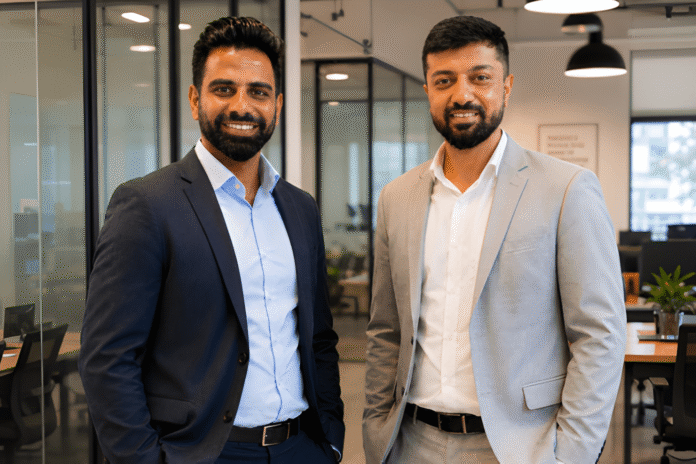
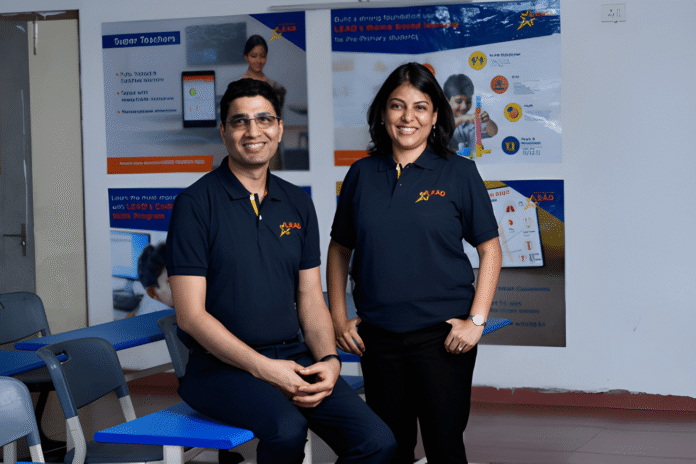
Sudipta Kumar Ghosh and Raman Vig, co-founders, Roopya

Roopya, a fintech SaaS startup headquartered in Kolkata and Gurugram, has raised ₹4 crore in a seed funding round led by Inflection Point Ventures as it looks to strengthen its lending infrastructure and expand its embedded finance capabilities across India.

Through this funding, Roopya aims to accelerate product development and scale its cloud-native lending stack at a time when financial institutions increasingly seek faster, more flexible alternatives to legacy systems. The startup operates a no-code, AI-powered Lending-as-a-Service platform that allows banks, NBFCs, and fintech companies to launch fully customised loan products within four to six days, thereby dramatically reducing the time, cost, and operational complexity of traditional lending workflows.

Roopya’s fully automated Loan Origination System digitises the entire credit lifecycle. As a result, the platform manages processes such as e-KYC, underwriting, disbursement, and collections while ensuring adherence to regulatory requirements. Consequently, lenders can deploy credit products faster while maintaining compliance and risk discipline.

Commenting on the investment, Ankur Mittal, Co-founder of Inflection Point Ventures, said Roopya has developed a technologically advanced platform that empowers institutions with limited access to sophisticated lending solutions. He added that in a volatile market where seamless access to credit remains critical, Roopya’s integrated approach has the potential to make lending more accessible and affordable across India. Therefore, Inflection Point Ventures sees strong long-term value in backing the company as it scales and responsibly reshapes the credit ecosystem.

At the same time, Roopya has achieved a key regulatory milestone by becoming one of the first Indian fintech firms designated as a “Specified User” under the RBI’s CICRA framework. This status allows the company to access credit bureau data for advanced analytics and underwriting, which further strengthens its risk assessment capabilities. Currently, the platform works with more than 20 lending partners, processes over 30,000 loans every month, and records consistent month-on-month growth of 15 to 20 percent.

Raman Vig, Co-founder of Roopya, said the Indian lending landscape now prioritises speed of execution and precision in risk assessment rather than capital alone. He explained that the company is witnessing strong adoption among mid-market NBFCs that are moving away from heavy CAPEX-driven models toward Roopya’s flexible, pay-per-use infrastructure. Moreover, by enabling embedded finance directly at the point of sale, Roopya helps its customers expand their reach and serve underserved segments with significantly higher efficiency.

Founded by Sudipta Kumar Ghosh and Raman Vig, Roopya has processed loans worth more than ₹100 crore in the current financial year. Meanwhile, the company operates across 10 states and supports over 1,100 point-of-sale terminals nationwide. According to the startup, its technology helps lenders cut operational costs by up to 30 percent, reduce default rates by 25 percent, and slash loan processing time by more than half.

The fresh capital arrives amid rapid expansion in India’s digital lending market, where financial institutions increasingly migrate from legacy systems to cloud-native infrastructure. Looking ahead, Roopya plans to deploy the funds to deepen its technology stack, onboard additional financial institutions, and scale embedded finance solutions aimed at underserved borrowers across the country.

General Catalyst to invest $5B in India startups

0
Hemant Taneja, CEO, General Catalyst

General Catalyst, a Silicon Valley–based venture capital firm managing more than $43 billion in assets, has announced plans to invest $5 billion in India over the next five years, significantly scaling up its presence in the country’s startup ecosystem. The announcement marks a sharp expansion of its India strategy less than two years after it merged with local venture firm Venture Highway.

The firm revealed the investment commitment at the India AI Impact Summit in New Delhi on Friday. Through this plan, General Catalyst will back startups operating across artificial intelligence, healthcare, defense technology, fintech, and consumer technology. Notably, the new commitment represents a substantial increase from the $500 million to $1 billion that the firm had earlier allocated for India.

Meanwhile, India continues to position itself as a global destination for AI investment, supported by its population scale and digital adoption. With more than a billion internet users, the country is actively courting large-scale capital inflows. As part of this push, New Delhi aims to attract over $200 billion in AI infrastructure investment over the next two years while hosting the India AI Impact Summit with participation from global technology leaders such as OpenAI, Anthropic, and Google.

Commenting on the opportunity, General Catalyst CEO Hemant Taneja said India will build the next generation of global platform companies. He added that the firm views Indian founders as uniquely positioned to create technology for markets that serve massive populations, both domestically and globally.

General Catalyst also emphasized that it sees India’s largest AI opportunity in real-world deployment rather than in building frontier foundation models. According to the firm, India’s government-built digital public infrastructure, large domestic demand, and deep services talent pool create ideal conditions for scaling applied AI solutions across sectors.

This investment push arrives as India’s AI ambitions accelerate rapidly. At the summit, major conglomerates, including Adani Group and Reliance Industries, led by billionaire Mukesh Ambani, announced combined plans exceeding $200 billion to build AI data center infrastructure across the country. Separately, OpenAI has partnered with the Tata Consultancy Services to develop a 100-megawatt AI data center as part of its Stargate infrastructure expansion. In parallel, global cloud providers such as Amazon, Google, and Microsoft have outlined tens of billions of dollars in additional AI and cloud investments in India.

At the same time, General Catalyst has steadily expanded its India portfolio across fast-delivery commerce, health tech, and deep tech. The firm’s investments in the country include Zepto, PB Health, Raphe, Jeh Aerospace, Pronto, and Ayr Energy. Neeraj Arora, CEO of General Catalyst for India, the Middle East, and North Africa, said the expanded capital base allows the firm to operate at a different scale in India and support companies from the earliest stages through to public market listings.

Looking ahead, General Catalyst confirmed that it is building a framework to accelerate large-scale AI adoption across priority sectors in India. Through this effort, the firm aims to help startups convert pilot AI projects into full commercial deployments. Additionally, the General Catalyst Institute continues to work on strengthening government–industry collaboration in India, reinforcing the country’s broader push to turn AI ambition into real economic impact.

Nvidia partners with Activate to build India’s next generation of AI startups

0
Aakrit Vaish, Founder, Activate

Nvidia has entered a multi-year collaboration with Activate to identify and support India’s next wave of artificial intelligence startups. Through this partnership, Nvidia aims to strengthen a local innovation pipeline that anchors founders directly to its accelerated computing ecosystem.

The companies unveiled the collaboration at the India AI Impact Summit 2026 in New Delhi. Notably, the partnership combines Nvidia’s global startup ecosystem with Activate’s early-stage investing model that supports founders even before a company formally exists.

Under the collaboration, Nvidia will integrate its global NVIDIA Inception program with Activate’s “pre-company” venture approach. As a result, the partnership will focus on idea-to-product incubation, where founders receive support from day zero rather than after incorporation.

Aakrit Vaish, Founder of Activate, explained that the firm designs its model specifically for deeply technical founders at the idea stage. Moreover, he stated that Activate involves partners and advisors early to co-create companies from inception. Consequently, the collaboration extends this philosophy through Nvidia’s global AI startup ecosystem.

Through the tie-up, Activate-backed startups will gain direct access to Nvidia’s developer stack. Specifically, founders will receive technical training, compute resources, reference workflows, and deployment support. Additionally, startups will leverage the Nemotron family of open AI models and Nvidia NIM microservices to accelerate product development and scaling.

Tobias Halloran, Director of EMEAI Startups and Venture Capital at Nvidia, emphasized that Nvidia accelerates founder momentum by offering access to accelerated computing and scalable AI infrastructure. Furthermore, he highlighted programs such as Nvidia Inception and the Nvidia VC Alliance, which help startups build for global markets from India.

The partnership builds on Nvidia’s expanding engagement with India’s AI ecosystem. Previously, Nvidia has worked closely with venture capital firms such as Peak XV, Accel, Nexus Venture Partners, and Elevation Capital to identify and support emerging AI startups.

As a result, these efforts signal a strategic shift for Nvidia. Rather than acting solely as a hardware supplier, Nvidia now plays an active role in shaping India’s AI startup pipeline by connecting capital, infrastructure, and developer enablement.

At the same time, the collaboration reflects a broader shift in investor behavior across India’s AI ecosystem. Currently, AI funding concentrates heavily at the earliest stages, where founders test use cases and build technical depth before scaling revenue.

Activate has positioned itself as a pre-company venture platform that works with founders from inception. According to Vaish, investors now prioritize proof of progress, such as working prototypes and customer validation, over near-term monetization.

By aligning Activate’s founder-first model with Nvidia’s advanced tooling and compute infrastructure, the partnership aims to close a critical gap in India’s AI journey. Specifically, the collaboration pairs strong technical talent with access to high-performance computing and global deployment pathways.

Going forward, both companies will jointly identify high-potential founders across India. Additionally, they will run developer enablement and community programs to help teams prototype, optimize, and scale AI applications on Nvidia GPUs.

The move comes as global technology providers and domestic investors increasingly view India as a key hub for applied AI innovation. Importantly, much of the value creation now occurs at the application layer rather than in building large foundational models.

For Nvidia, the collaboration reinforces its long-term strategy to seed demand for accelerated computing. As India ramps up public and private investment under the IndiaAI Mission, Nvidia aims to ensure that the next generation of AI startups builds natively on its platform.

Eden Realty Group unveils ‘Eden Devprayag’ with ₹5,000-Cr riverfront investment plan

0

Eden Realty Group today announced the launch of Eden Devprayag, its first premium river-crafted luxury living project in Kolkata, while simultaneously revealing a ₹5,000 crore multi-sector investment roadmap aimed at transforming the city’s riverfront landscape. Through this long-term plan, the Group will develop high-end residential, retail, hospitality, and commercial projects along Kolkata’s riverside corridors.

Speaking at the launch, Arya Sumant, Managing Director of Eden Realty Group, reaffirmed the company’s long-term vision for Eastern India. He stated that the Group has earmarked ₹5,000 crore exclusively for premium riverside developments that will include luxury residential towers, bungalow and row-housing formats, five-star hospitality assets, and Grade-A commercial buildings.

He added that Eden Devprayag will anchor this investment roadmap and emerge as Kolkata’s most luxurious riverfront township. Moreover, he confirmed that the Group will introduce Kolkata’s first riverside five-star hotel, complete with an exclusive Ganga ghat designed for both spiritual and experiential tourism.

Beyond riverfront developments, the Group will also diversify its portfolio across the city. Consequently, Eden Realty will launch a G+18 mass housing project on Kona Expressway and a bungalow development in South Kolkata later this year. At the same time, the company continues active engagement with regulatory authorities to unlock the riverfront’s untapped tourism and commercial potential.

Explaining the project’s conceptual foundation, Kumar Satyaki, Joint Managing Director, said the site’s natural setting inspired a deeper architectural response. He explained that when the team first visited the land overlooking the Ganga and the Acharya Jagadish Chandra Bose Indian Botanic Garden, they felt the location deserved more than conventional development.

He noted that Eden Devprayag stands apart as the only residential project in Kolkata with the Ganga flowing to its south. Additionally, the development features a 1.85 lakh sq ft river-inspired landscaped podium, a professionally managed 75,000 sq ft podium club, and an elevated terrace club with an infinity swimming pool. Residents will also enjoy access to a Banaras-style Ganga ghat and expansive 270-degree views of the river and city skyline.

Furthermore, the project offers double- and quad-height terraces that elevate spatial luxury, while multi-level greenery improves air quality and moderates ambient temperatures. Importantly, the location ensures seamless access, placing residents just 12 minutes from the Victoria Memorial.

Sharing insights into the architectural philosophy, principal architect Malay Ghosh explained that the towers follow a graceful arc formation to maximize panoramic river and skyline views. As a result, residents can experience both sunrise and sunset from the same terrace.

He added that climate-responsive fins shape the façade to mirror the rhythm of flowing water while simultaneously channeling cool Ganga breezes into the homes. Additionally, the apartments maximize natural light and cross ventilation, while lightweight internal walls allow residents to customize interior layouts. At the terrace level, the design integrates sunrise and sunset decks, an infinity pool with a waterfall feature, yoga lawns, meditation decks, social lounges, and dedicated senior seating areas.

The project’s 4.5-acre landscaped podium remains central to Eden Devprayag’s identity. Landscape architect Dwaipayan Bhattacharya explained that viewing Kolkata from across the river reshaped the design approach. Therefore, the landscape unfolds as a symbolic journey inspired by the origin and movement of the Ganga.

He described a central water spine that represents the river’s flow through cascading waterfalls, reflective pools, and gentle streams. Additionally, pine-inspired plantations, meadow lawns, and undulating pathways recreate a Himalayan terrain, delivering immersive green spaces within an urban setting. The swimming pool anchors the landscape, while themed gardens and activity zones enhance everyday living.

Highlighting the brand ethos, Biswadeep Gupta, Director of Marketing, said the development embodies the Group’s philosophy of being Simply Serene, Simply Connected, and Simply Better. He explained that fluid architecture, calming water features, and community-centric spaces come together to elevate daily living.

He emphasized that Eden Devprayag offers more than just homes. Instead, the project creates a sanctuary where life slows down, relationships deepen, and each day feels lighter, ultimately delivering a simply happier way of life.

Magure Becomes One of the Few UAE AI Companies Certified Across ISO 9001, ISO/IEC 27001, and ISO/IEC 42001

0

19/02/2026, Dubai, UAE: As enterprises accelerate the adoption of AI from experimentation to mission-critical operations, trust has become the defining factor of success. Quality, security, and responsible governance are now foundational requirements for enterprise AI deployment.

Magure, a UAE-based enterprise AI company, today announced that it has achieved ISO 9001:2015, ISO/IEC 27001:2022, and ISO/IEC 42001 certifications, marking a significant milestone in its commitment to building enterprise-ready AI systems that are reliable, secure, and responsibly managed.

With these certifications, Magure joins a top few organizations globally and is among the early enterprises in the UAE to demonstrate compliance across quality management, information security, and AI management systems, reinforcing its position as a trusted partner for enterprises deploying AI at scale.

Building Enterprise AI on Quality, Security, and Responsibility

As AI becomes embedded into core business operations, enterprises face growing challenges around operational reliability, data security, regulatory compliance, and ethical oversight. Magure’s certifications reflect a deliberate, systems-level approach to addressing these challenges across the entire AI lifecycle.

ISO 9001:2015 for Quality Management Systems validates Magure’s quality management practices, ensuring AI solutions are designed, delivered, and continuously improved through consistent, repeatable processes that support reliable, production-grade enterprise deployments.

ISO/IEC 27001:2022 for Information Security Management Systems confirms that information security, privacy protection, and operational resilience are embedded across Magure’s platforms and services, safeguarding enterprise data and AI operations throughout the AI lifecycle.

ISO/IEC 42001:2023 for AI Management Systems, the world’s first international standard for Artificial Intelligence Management Systems, recognizes Magure’s structured approach to managing AI responsibly—embedding transparency, accountability, and oversight into how AI systems are governed, operated, and scaled.

Together, these standards form a unified foundation for enterprise AI that can be trusted in real-world, regulated, and high-impact environments.

Read more about how Magure operationalizes security, compliance, and responsible AI across the AI lifecycle: https://www.magureinc.com/security-and-trust

Aligning Global ISO Standards with the UAE’s Vision for Responsible AI

As a UAE-based AI company, Magure’s ISO certifications also align with the region’s broader vision for responsible and secure AI adoption. The principles embedded in ISO 9001, ISO/IEC 27001, and ISO/IEC 42001 closely reflect the expectations set by initiatives such as the UAE National AI Strategy 2031, DIFC’s data protection framework, and Dubai’s AI security policies, ensuring enterprise AI systems are built with trust, accountability, and resilience at their core.

Magure’s ISO certifications complement the principles outlined in key national and regional initiatives, including:

  • DIFC’s Data Protection and AI-related regulatory guidance, which emphasize transparency, accountability, and responsible handling of automated decision systems
  • Dubai Electronic Security Centre’s AI Security Policy, which calls for security-by-design, risk management, and resilience across AI-enabled systems
  • Abu Dhabi Government’s Digital Strategy, focused on trusted digital infrastructure, secure innovation, and responsible adoption of advanced technologies
  • The UAE National Strategy for Artificial Intelligence 2031, which promotes ethical AI development, strong governance, and global leadership in AI innovation

By aligning internationally recognized ISO standards with these regional frameworks, Magure enables enterprises operating in the UAE and beyond to adopt AI systems that are secure, well-governed, and designed for long-term trust.

How These Standards Power Magure’s Agentic AI Platform

At the core of Magure’s platform strategy is MagOneAI, a unified, end-to-end agentic AI platform designed to help enterprises build, deploy, and manage autonomous AI applications that integrate with enterprise data sources and operational workflows.

The three ISO standards are embedded directly into how MagOneAI operates:

  • Quality by design (ISO 9001): Standardized, lifecycle-wide processes govern how agentic AI applications are designed, deployed, monitored, and improved, ensuring predictable performance from experimentation through production.
  • Security by default (ISO/IEC 27001): Role-based access controls, encrypted data handling, environment segregation, continuous monitoring, and audit-ready logging protect sensitive enterprise data as AI agents operate autonomously.
  • Responsible AI management (ISO/IEC 42001): Clear accountability, transparency into agent behaviour, policy-driven controls, risk management, and lifecycle governance ensure AI systems remain observable, controllable, and compliant as they scale.

This integrated approach enables enterprises to move beyond isolated AI pilots and deploy autonomous, production-grade AI systems with confidence.

Extending the Same Standards Across the Magure AI Ecosystem

The same ISO-aligned principles extend across Magure’s broader AI ecosystem. MagLabs, Magure’s use-case discovery and AI workflow environment, applies these standards from early experimentation through operational readiness, while MagVisionIQ, its computer vision platform, operates under the same disciplined quality, security, and responsible AI practices for real-world deployments.

Together, these platforms provide enterprises with a consistent, governed foundation for scaling AI, without fragmentation as use cases grow in complexity and impact.

 A UAE-Based AI Tech Company, Built for Global Enterprise Standards

As a company headquartered in the UAE, Magure’s achievement reflects the region’s growing role in shaping the future of enterprise AI. By aligning with globally recognized ISO standards, Magure enables organizations across industries like technology, financial services, healthcare, manufacturing, retail, and government – to adopt AI in a way that meets international expectations for quality, security, and responsibility.

Looking Ahead

While the certifications mark an important milestone, Magure views responsible, secure, and high-quality AI as an ongoing commitment.

“As AI systems become more autonomous and deeply integrated into business operations, enterprises need more than innovation-they need assurance,” said Akhil Koka, CEO of Magure. “These certifications validate the way Magure builds and manages AI systems and reinforce our mission to help enterprises scale AI with confidence, accountability, and long-term trust.”

About Magure

Magure is a UAE-based enterprise AI company specializing in agentic AI platforms, AI lifecycle management, and real-world AI deployment. Through platforms such as MagOneAI, MagLabs, and MagVisionIQ, Magure helps organizations design, deploy, and scale AI systems that are secure, reliable, and responsibly managed.

For more information, visit: http://www.magureinc.com/

CoinDCX announces ₹111-Cr ESOP buyback, offers liquidity to 500+ employees

0

CoinDCX has rolled out its largest-ever employee stock ownership plan (ESOP) liquidity event, committing ₹111 crore to create tangible wealth for more than 500 current and former employees. Through this move, the company aims to reward long-term contributors while reinforcing an ownership-driven culture.

Moreover, the Bengaluru-based crypto exchange said the buyback reflects its commitment to recognising employees who supported the company’s growth during a period marked by regulatory uncertainty and market volatility. By offering liquidity, CoinDCX seeks to turn employee equity into real financial value rather than long-term paper gains.

Commenting on the development, Co-founder Sumit Gupta said the Indian crypto industry has navigated a challenging phase while moving steadily toward regulatory clarity. However, he noted that CoinDCX has emerged stronger due to sustained investor confidence and the trust of over 2 crore users across India and the UAE.

Importantly, the company has extended the ESOP buyback to former employees as well. Through this inclusion, CoinDCX has acknowledged the role early team members played in building the organisation’s foundation and scaling its operations.

Founded in 2018 by a five-member team operating out of a small apartment in Mumbai, CoinDCX has since grown into one of India’s leading digital asset platforms. Today, the company serves more than 2 crore users and has expanded its global footprint through the acquisition of BitOasis in the Middle East and North Africa region.

Additionally, the ESOP buyback highlights CoinDCX’s financial stability and signals its transition from a fast-growing startup into a scaled enterprise within the digital asset ecosystem. As the company enters its next growth phase, CoinDCX said it will continue to focus on building a compliant, transparent, and trusted crypto ecosystem while adapting to an evolving regulatory environment.

IIT Madras–incubated startup The ePlane Company partners with Nvidia to build India’s first electric air taxi

0
Satya Chakravarthy, Founder and Chief Technology Officer of The ePlane Company

The ePlane Company, a Bengaluru-based developer of electric vertical take-off and landing (eVTOL) aircraft, has announced a strategic collaboration with Nvidia to build India’s first electric air taxi, the e200x.

Notably, the partnership does not involve any financial investment and instead focuses entirely on technical collaboration and knowledge exchange. Through this alliance, ePlane aims to accelerate the development, validation, and certification of its next-generation aircraft.

Under the agreement, ePlane will use Nvidia Omniverse libraries to create a high-fidelity digital twin of the e200x aircraft. This virtual replica will allow the company to validate flight physics, autonomy algorithms, sensor fusion, and complex mission scenarios that remain difficult, expensive, and risky to test in real-world conditions.

In addition, the company will deploy Nvidia’s IGX platform as the onboard computing system to host mission-critical aviation applications. As a result, The ePlane Company will significantly enhance its real-time computing and autonomy capabilities.

Because physical testing under extreme weather, sensor failures, or collision scenarios carries high costs and safety risks, the digital twin will enable the aircraft to fly millions of kilometres virtually. Consequently, the company can train and stress-test its algorithms across complex real-world scenarios long before the aircraft undertakes actual flight operations.

Commenting on the collaboration, Satya Chakravarthy, Founder and Chief Technology Officer of The ePlane Company, said the partnership strengthens the startup’s aerospace ambitions. “We are not just building an aircraft; instead, we are building an ecosystem,” he said. “By validating our flight operations suite in Nvidia Omniverse, we can push the aircraft to its limits thousands of times in simulation so that we never have to do so in reality.”

Providing an update, Bakthakolahalan Shyamsundar, Principal Engineer – Avionics Systems and Autonomy, confirmed that the first prototype is already complete. He added that the company plans to begin ground testing within the next few months.

“We will build two additional prototypes and then move into the certification phase with the DGCA,” he said. “We already have DGCA members working closely with us in Chennai.”

Incubated at IIT Madras, the startup aims to address urban mobility challenges in densely populated cities. Once testing and regulatory approvals conclude, ePlane plans to launch air taxi operations in major metros, including Bengaluru, Mumbai, and Chennai.

Separately, Nvidia has also announced a collaboration with AI Grants India, an AI-focused non-profit organisation, under the NVIDIA Inception programme. Through this initiative, the partners aim to support up to 500 early-stage AI startups in India over the next 12 months by providing access to advanced AI tools, models, and technical training to accelerate product development.

UrbanVault Appoints Ex-Yahoo & Microsoft Leader Ashish Ambast as CTO to Accelerate In-House Technology Innovation

0
Ashish Ambast, CTO, UrbanVault

Bengaluru, February 19, 2025: UrbanVault, one of India’s fastest-growing new-age managed and flexible workspace providers, has announced the appointment of Ashish Ambast as its Chief Technology Officer (CTO), marking a significant step in the company’s technology-led growth journey.

With over 15 years of global technology experience and a proven track record in building scalable, high-performance systems, Ashish will spearhead UrbanVault’s next phase of innovation and digital transformation.

An alumnus of IIT Guwahati, Ashish has previously held key technology roles at global giants such as Yahoo and Microsoft, where he contributed to developing robust and scalable technology platforms. His deep expertise in backend architecture, system scalability, and product development will play a crucial role in strengthening UrbanVault’s technology infrastructure as the company continues to expand rapidly across India.

The appointment underscores UrbanVault’s commitment to building a strong in-house technology ecosystem designed to drive operational excellence, enhance customer experience, and deliver differentiated products within the managed workspace segment. Over the past year, UrbanVault has already rolled out several proprietary technology solutions, including an in-house Visitor Management System (VMS), a custom-built Customer Review and Feedback System, and multiple internal tools aimed at streamlining workspace operations and improving efficiency across locations.

With Ashish at the helm of technology, UrbanVault plans to accelerate the development of its backend infrastructure and launch multiple in-house technology products tailored specifically for the managed workspace ecosystem. The company’s technology roadmap will focus on strengthening backend systems across all centers, building data-driven decision-making tools, enabling seamless tenant experience platforms, automating operational workflows, and creating scalable product infrastructure to support its aggressive expansion plans.

Commenting on the appointment, Mr. Amal Mishra, Founder & CEO, UrbanVault, said, “I have known Ashish for the last 15 years—not only as a technologist with exceptional depth, but also as a trusted friend and a strong builder. His journey from IIT Guwahati to companies like Yahoo and Microsoft reflects both world-class engineering exposure and a consistent ability to execute at scale. With Ashish joining as CTO, our focus on building UrbanVault’s technology in-house has become even sharper. We strongly believe the future of managed workspaces will be driven by intelligent systems, seamless experiences, and strong backend platforms.”

UrbanVault’s continued investment in technology reflects its broader vision of redefining managed workspaces through innovation, efficiency, and scalable digital infrastructure, positioning the company at the forefront of India’s rapidly evolving flexible office sector.

Over the years, UrbanVault has expanded its national portfolio to over 2.80 million sq. ft., managing 70,000+ seats across 80+ locations in Bengaluru, Pune, Gurugram, Mumbai, and other major cities. The company continues to demonstrate strong performance, with an expected turnover of over ₹200 crore in FY2025-26, 70%+ year-on-year growth, and 18% PAT.

ABOUT URBAN VAULT

Founded in 2018, UrbanVault is a bootstrapped managed office space provider headquartered in Bengaluru, achieving impressive growth and profitability without external funding. The company recorded a ₹120 crore turnover in FY 2024–25, with 18% profit after tax and consistent year-on-year growth, reflecting strong financial discipline and sustainable business practices.

UrbanVault’s decision to self-fund its expansion has enabled it to maintain full control over operations and strategic direction. Since inception, the company has grown from a modest 40 seats to more than 70,000 seats across its network. Spanning over 2.80 million square feet across multiple cities, UrbanVault’s portfolio demonstrates its commitment to delivering value-driven, high-quality workspace solutions for a diverse set of enterprises.

Shodh AI launches Project Skanda, marking India’s entry into physical AI race

0
Dr. Arastu Sharma, CEO of Shodh AI

Shodh AI, one of the twelve foundational model companies selected under the Government of India’s flagship IndiaAI Mission, has announced the launch of Project Skanda, a breakthrough initiative that positions India firmly in the global Physical AI race.

As an AI-for-Science company focused on advanced material discovery, Shodh AI developed Project Skanda in collaboration with NVIDIA. Through this partnership, the company aims to redefine how batteries and energy storage systems are designed, tested, and manufactured.

During the India AI Impact Summit, Shodh AI unveiled the Alpha Release of Project Skanda, one of the world’s first Mesoscale Foundation Models built specifically for energy storage. Unlike conventional AI models that concentrate on atomic-level chemistry, Skanda focuses on the mesoscale—the internal structural architecture within battery cells that directly determines lifespan, safety, and charging speed.

Moreover, the model trains exclusively for battery manufacturers, enabling them to dramatically accelerate material discovery timelines. According to Arastu Sharma, Project Skanda uses NVIDIA Hopper GPUs and the PhysicsNeMo framework to bridge the long-standing gap between theoretical research and real-world manufacturing.

“Today, users can upload an SEM image and receive accurate predictions of a battery’s life cycle,” Dr. Sharma said. “However, within a year, we will allow users to request an entirely new battery chemistry, and Skanda will deliver the complete methodology to manufacture it.”

Currently, battery innovation takes nearly a decade and costs millions of dollars. In contrast, Shodh AI aims to compress this process to just six months while keeping costs under $1 million, fundamentally transforming industrial R&D economics.

Highlighting the broader impact of the collaboration, Tim Costa, General Manager at NVIDIA, said that AI is rapidly accelerating scientific discovery. He added that Shodh AI’s use of NVIDIA’s technology creates a strong foundation for sovereign AI models capable of transforming India’s energy and technology ecosystems.

By combining advanced artificial intelligence with robotic automation, Shodh AI continues to position itself as a cornerstone of India’s scientific future. At the center of this ambition lies a national vision championed by Narendra Modi—that India must create foundational technologies rather than rely on innovation developed elsewhere.

“Our interaction with the Hon’ble Prime Minister reinforced a clear mandate,” Dr. Sharma said. “India must move from consuming technology to inventing it.” As a result, Shodh AI has received direct recognition for its leadership in building the nation’s scientific and technological backbone.

Meanwhile, the company is shifting its focus from Large Language Models to Large Science Models. Powered by its collaboration with NVIDIA, the same core platform is now extending into healthcare, biotechnology, and quantum material research.

Through India’s first Autonomous Robotic Material Foundry, Shodh AI enables AI systems to not only predict next-generation materials but also synthesize them autonomously. Consequently, this approach bridges theory and reality at an unprecedented scale.

Ultimately, Project Skanda represents a decisive transition from “Make in India” to “Invent in India,” ensuring that India does not merely participate in the future of science and AI but actively builds it for the world.

EV charging startup Statiq secures $18M funding to scale India EV infrastructure

0
Raghav Arora & Akshit Bansal, co-founders, Statiq

Electric vehicle charging network Statiq has raised $18 million in a fresh funding round led by Tenacity Ventures, marking a major milestone in the company’s growth journey. Meanwhile, existing investors Y Combinator and Shell Ventures, along with RCD Holdings, also participated in the round.

With the new capital, Statiq plans to rapidly scale its charging infrastructure and expand its footprint across Tier I and Tier II cities in India. Additionally, the company will deploy a significant portion of the funds to roll out more DC fast chargers along key national highways, thereby strengthening long-distance EV travel.

At the same time, Statiq will channel part of the investment toward pilot export projects in the UAE, signaling its intent to enter international markets. Furthermore, the company will invest in improving hardware lifecycle management and deploying advanced telematics to support large-scale network expansion.

Calling the funding a long-term validation, Akshit Bansal, Co-Founder and CEO of Statiq, said the milestone reflects decades of perseverance. “This is not just a funding announcement; instead, it validates a 20-year mission,” said Akshit Bansal. “We navigated multiple cycles in this sector, yet we stayed focused on execution and unit economics. Moreover, we built infrastructure that performs reliably from the heat of Rajasthan to the humidity of Kerala. Now, this capital enables us to move beyond India and compete on a global stage.”

Founded in 2020 in New Delhi by Akshit Bansal and Raghav Arora, Statiq currently operates a franchise-owned, company-operated model. Under this structure, partners own the charging hardware while Statiq manages technology, operations, and network optimization. Notably, the company plans to install nearly 20,000 charging points across India by the end of this year.

From an investor perspective, Tenacity Ventures highlighted the strategic importance of Statiq’s platform. “At Tenacity, we back founders who are building the backbone of future industries,” said Rohit Razdan, Managing Director at Tenacity Ventures. “Statiq operates as a full-stack deep-tech platform that blends intelligent software with purpose-built hardware. As a result, we believe the company will emerge as critical infrastructure for India’s electric mobility future and beyond.”

By scaling infrastructure across cities and highways, investing in advanced technology, and testing international markets, the company continues to build critical backbone infrastructure for the future of electric mobility.