Thursday, July 2, 2026
Home Blog Page 258

Upstox forays into insurance distribution business

0
Kavitha Subramanian, cofounder of Upstox

Upstox, a wealth management startup, has ventured into insurance distribution. They announced their initiation with term life insurance on Monday and intend to introduce products in health, motor, and travel segments shortly.

According to Upstox’s statement, HDFC Life is one of the first insurers to collaborate with the Mumbai-based company. They will showcase their term insurance plans on the Upstox platform.

“We are constantly working towards making our platform simple, secure, fast, and intuitive. With the launch of insurance on our platform, we will remain steadfast in our endeavour of helping our users manage their wealth effectively for a secure financial future,” Kavitha Subramanian, cofounder of Upstox, said in the statement. 

Upstox provides various financial instruments such as stocks, IPOs, futures and options (F&O), commodities, currencies, fixed deposits, peer-to-peer (P2P) lending, government bonds, non-convertible debentures (NCDs), gold, and insurance.

Previously, the company announced achieving breakeven in FY23, with total revenue surpassing Rs 1,000 crore. They aim for a tenfold increase in the client base over the next five years.

This expansion occurs amidst investments by fintech firms like PhonePe in their insurance sectors.

As per Upstox’s statement, insurance penetration in India is at 4.2%, with many people still relying on traditional and agent-driven methods to buy policies.

Upstox faces competition from wealth management platforms such as Zerodha and Groww.

Jupiter Money launches new savings feature for millennial users

0
Jitendra Gupta, founder of Jupiter Money

Jupiter Money, a fintech startup, introduced ‘Magic Spends’, a feature to motivate millennials to save and invest actively.

According to a statement from the Bengaluru-based company, users can begin using Magic Spends by choosing an amount (at least Rs 10) to invest with each transaction.

Young buyers increasingly opt for online shopping on e-commerce sites, food delivery apps, and quick commerce platforms. Jupiter Money’s latest feature enables them to invest a set sum whenever they transact via the company’s mobile app. These investments are directed towards digital gold and mutual funds.

Additionally, users can establish a monthly investment goal by setting a maximum limit and can pause, cancel, or redeem their Magic Spends investments anytime they wish.

Magic Spends operates seamlessly with UPI (United Payments Interface) and debit cards connected to users’ Federal Bank accounts within the Jupiter app.

“Jupiter has always been committed to improving the financial wellness of our customers through innovative features that create healthy habits. Magic Spends takes this mission a step forward,” said Jitendra Gupta, founder of Jupiter Money.

Gupta, formerly the managing director at PayU India, founded Jupiter in 2019. He secured $165 million in equity funding from investors like Tiger Global and Peak XV Partners.

The company enables users to open savings accounts with Federal Bank and facilitates UPI-based payments through its app.

According to data from the National Payments Corporation of India (NPCI), approximately 6 million transactions were initiated via the Jupiter app in April 2024. Additionally, in May of the previous year, the company obtained a license for non-banking financing.

Varthana raises Rs 27-Cr from Triodos Investment Management

0
Steve Hardgrave, Co-Founder and CEO of Varthana

Varthana, a leading NBFC in affordable education, has secured 3 million Euros (INR 27 crores) from Triodos Investment Management through Non-Convertible Debentures (NCD). This funding marks a major step in Varthana’s mission to support India’s education sector.

Triodos Investment Management, based in the Netherlands and known for sustainable and impactful investments, recognizes Varthana’s efforts in providing accessible financing to educational institutions across India. The funding from the Triodos Fair Share Fund will help Varthana expand its reach and assist more schools and students in improving their infrastructure, facilities, and educational foundations.

Commenting on this round of funding, Mr. Steve Hardgrave, Co-Founder and CEO of Varthana, stated, “We are thrilled to have Triodos Investment Management on board as a partner in our journey to transform education financing in India. The funding provided to Varthana reflects a shared vision of driving positive social impact and the importance of innovative financing solutions in addressing the challenges faced by the education sector. This investment reaffirms our commitment to making quality education accessible to all and will fuel our efforts to empower more educational institutions across the country.”

Since its inception, Varthana has been a leader in revolutionizing education financing in India. It has financed over 11,000 affordable private schools and facilitated more than 16,500 loans for school expansion and renovation. Operating in 16 states and union territories with 40 branches, Varthana also serves Tier III and Tier IV cities, significantly enhancing access to education in India.

Dorian Marquer, Head of Corporate Debt Asia/ECCA Triodos Investment Management, stated, “We are very pleased to add Varthana to our financial inclusion portfolio. This investment shows that financial inclusion also plays a role in addressing other pressing issues, such as access to affordable quality education, which is seen as a key pillar to alleviate poverty. Education is an empowering force in the world and Varthana plays a very important role to equip children across India with the qualities and skills to shape and build their future.”

Beyond the Classroom: LifeLearn’s Journey Towards Educational Transformation 

0
Mr Nitesh Verma, CEO LifeLearn

Introducing Mr. Nitesh Verma, the visionary founder and CEO of LifeLearn, a pioneering educational platform committed to reshaping traditional learning paradigms. With a dedication to empowering young minds, Mr. Verma embarked on a journey in 2019 to revolutionize education in India. Armed with a diverse background in pharmacy and law, he brings a unique perspective to education, blending academic rigour with practical life skills and motivation. As the driving force behind LifeLearn, Mr. Verma assembles strategic initiatives and champions a holistic approach to learning. Join us as we delve into his inspiring insights on the transformative power of education and the profound impact of LifeLearn on shaping a brighter future for generations to come.

BRL: What inspired you to establish LifeLearn and focus on empowering education through life skills and motivation?

I think that every startup is an idea of something to achieve. The inspiration behind establishing LifeLearn and focusing on empowering education through life skills and motivation might have stemmed from recognizing the limitations of traditional education systems. At the early stage of my life, I found that it was very important to have good academic knowledge, but it was not necessary. Our education system is not preparing young people for the complexities of modern life. Our system needs a holistic approach to education that can teach students how to navigate the challenges of the real world. 

The establishment of LifeLearn and its focus on empowering education through life skills and motivation could have been driven by a passion for transforming lives and positively impacting society by providing young people with the tools they need to succeed in all aspects of their lives. Everyone has a story to tell or inspire you. How would you like to tell your story to the world? It inspired me to establish LifeLearn. 

BRL: How do you envision LifeLearn impacting education, particularly empowering young people?

When it comes to empowering the country’s young minds, I, Nitesh Verma, founder of LifeLearn, think that learning is an art and everyone is an artist. LifeLearn has the potential to empower young people by offering them personalized, accessible, and engaging educational experiences, equipping them with the knowledge, motivation, and life skills they need. 

When conducting educational workshops in any corner of India, we offer students Personalised Learning Paths, Accessibility, and Skill Development. This holistic approach to education could better prepare young people for the challenges they’ll face in the future job market and society.

BRL: Could you share some key strategies you employ as the founder and CEO to shape and communicate LifeLearn’s vision?

Certainly! As the founder and CEO of LifeLearn, here are some key strategies I might employ to shape and communicate the vision of the company:

Clear Vision Statement: I would articulate a clear and compelling vision statement that encapsulates LifeLearn’s purpose and goals.
Lead by Example: I would embody LifeLearn’s values and principles in my actions and decisions, leading by example to inspire others within the organization and beyond.

Effective Communication: I prioritize open and transparent communication with employees, investors, partners, and customers. I would share progress, challenges, and milestones with regular updates, town hall meetings, and newsletters.

Engage Stakeholders: I would actively engage with stakeholders to gather feedback, insights, and perspectives. By listening to the needs and concerns of employees, customers, and partners, we can ensure that our vision remains relevant and responsive to the evolving landscape.

Collaborative Decision-Making: I would foster a culture of collaboration and inclusivity, encouraging input from all team members in shaping LifeLearn’s vision and strategy. This approach promotes employee buy-in and ownership, leading to more significant alignment and commitment to the vision.

By employing these strategies, I would work to ensure that LifeLearn’s vision is compelling, inspiring, practical, and achievable, driving the company toward our shared goals.

BRL: Could you elaborate on the partnerships and collaborations you foster with schools, NGOs, and government agencies to expand LifeLearn’s reach and impact?

Certainly! Here’s how LifeLearn might collaborate with schools, NGOs, and government agencies to expand its reach and impact:

Partnerships with Schools: LifeLearn could partner with schools to integrate its platform and resources into their curriculum. This partnership could involve training educators to use LifeLearn effectively, providing students access to educational content and tools, and offering ongoing support and professional development opportunities.

Collaborations with NGOs: LifeLearn could collaborate with NGOs focusing on education, youth empowerment, and social impact. These partnerships could involve joint initiatives to provide educational resources and support to underserved communities, including refugees, disadvantaged youth, and those in remote areas.

Engagement with Government Agencies: By collaborating with these agencies, LifeLearn can advocate for the importance of life skills education and seek support for initiatives to integrate LifeLearn into national or regional education systems. Government partnerships can provide opportunities for scale, sustainability, and institutional support, enabling LifeLearn to reach a broader audience and have a lasting impact on education.

By fostering partnerships and collaborations with schools, NGOs, government agencies, and other stakeholders, LifeLearn can expand its reach and impact, accelerate progress towards its goals, and create lasting change in education.

BRL: Can you share any anecdotes or success stories that highlight the positive impact LifeLearn has had on its students or the community?

I was a very frightened student during my school days. Because of fear and hesitation, I could not communicate with my teacher. I found myself in a very strange place. Imagine a student named Maya who struggled with traditional classroom learning due to her learning style and individual pace. Maya often felt discouraged and left behind in class, leading to a lack of motivation and confidence in her academic abilities.

However, when Maya’s school adopted LifeLearn’s personalized learning platform, everything changed. With LifeLearn, Maya could learn independently, revisit challenging concepts as needed, and receive immediate feedback and support from her teachers and peers. As Maya progressed through the curriculum on LifeLearn, she discovered a passion for problem-solving and critical thinking, skills that were nurtured and encouraged through interactive activities, real-world simulations, and collaborative projects on the platform.

With the support of her teachers and the flexibility of LifeLearn, Maya’s confidence grew, and she began to excel academically. She no longer felt left behind or discouraged but instead felt empowered to take ownership of her learning journey and pursue her interests and goals with enthusiasm and determination. Beyond academic success, Maya’s experience with LifeLearn had a ripple effect on her community. Inspired by her newfound confidence and passion for learning, Maya became a mentor to other students struggling in school, offering encouragement, support, and guidance to help them overcome their challenges and thrive.

Maya’s story is just one example of the positive impact LifeLearn can have on students and communities. By providing personalized, engaging, and empowering educational experiences, LifeLearn can transform lives, unlock potential, and create a brighter future for learners worldwide.


Go Digit General Insurance IPO subscribed 9.6 times

0

The initial public offering (IPO) of Bengaluru-based insurtech startup Go Digit General Insurance Ltd has been subscribed 9.6 times at the end of the book building process on Friday, according to data from NSE.

The retail portion was subscribed 4.3 times, while qualified institutional buyers (QIBs) bid for 12.5 times the shares on offer.

The company aims to raise Rs 1,125 crore through a fresh issue of shares and an offer for the sale of 54 million equity shares. Most of these shares are being sold by its parent entity, Go Digit Infoworks, which owns an 80.5% stake. Some small individual shareholders are also reducing their holdings in the IPO.

The company reserved about 75% of the shares for qualified institutional investors, 15% for non-institutional investors, and 10% for retail investors.

Digit Insurance raised Rs 1,176.5 crore from anchor investors a day before its IPO.

International investors like Fidelity, Goldman Sachs, Abu Dhabi Investment Authority, and Steadview Capital participated in the funding. Large domestic mutual funds, including SBI Mutual Fund, ICICI Prudential Mutual Fund, and Axis Mutual Fund, also took part. In total, around 43.2 million equity shares were allocated to the anchor investors at Rs 272 each, Digit Insurance announced late Tuesday.

Reddit forges pact with OpenAI to bring content to ChatGPT

0

Reddit Inc. has partnered with OpenAI to bring its content to ChatGPT and other products. This collaboration will also help Reddit add new AI features to its forums.

Reddit’s shares, which debuted in an initial public offering in March, rose 13.7% on Friday morning in New York.

The agreement allows OpenAI’s AI tools to better understand and display Reddit content, especially recent topics, the companies said in a joint statement on Thursday. This deal permits OpenAI to use Reddit’s content and train its AI systems with partner data.

Reddit will introduce new AI-based tools for its users, built on OpenAI models, while OpenAI will place ads on Reddit’s site. The financial terms of the deal were not disclosed.

Reddit content has long been a popular source of training data for AI models, including those by OpenAI. Last week, Reddit implemented new policies on data usage, aiming to boost revenue through licensing agreements with AI developers and other companies.

“Our data is extremely valuable,” Chief Executive Officer Steve Huffman said at the Bloomberg Technology Summit earlier this month. “We’re seeing a ton of interest in it.”

Reddit aimed to find new revenue opportunities in the lead-up to its IPO. In January, the company signed a $60 million deal with Alphabet Inc.’s Google to help train large language models for generative AI.

CEO Steve Huffman didn’t discuss details of the Google deal but mentioned that terms might include how long a Reddit summary appears in a Google search or whether Reddit branding must be shown in AI-generated results. Based in San Francisco, Reddit has signed licensing deals worth a total of $203 million, with terms ranging from two to three years. The company is also negotiating additional licensing agreements.

Meanwhile, OpenAI is forming more partnerships with media companies to train its AI systems and provide more real-time content for its chatbot. This month, OpenAI made deals with Dotdash Meredith and the Financial Times to support these efforts.

Backed by Microsoft Corp., OpenAI has become a major player in AI development. Sam Altman, CEO of OpenAI, has a strong connection to Reddit. He was one of Reddit’s largest shareholders during its IPO earlier this year and briefly served as its interim CEO in 2014.

In their statement, the companies mentioned that OpenAI’s Chief Operating Officer Brad Lightcap led the partnership, which was approved by OpenAI’s independent directors.

Reddit’s shares, which had fallen 5.5% to $56.38 in regular New York trading on Thursday, surged to $64.75 after the partnership announcement. Since its IPO, the stock has increased by 66%.

Niyogin Fintech Limited acquires “Superscan” from Orbo.ai, set to accelerate digital transformation

0

Mumbai,17 May 2024: Niyogin Fintech Ltd., a leading player in the MSME-focused fintech space, today announced the successful acquisition of Superscan, an AI-powered document imaging, automation, and fraud detection platform, from Orbo.ai. This strategic move signifies Niyogin’s commitment to becoming an AI-first neo-banking infrastructure leader. This strategic acquisition showcases Niyogin’s commitment to spearheading digital transformation and encouraging the widespread adoption of cutting-edge technologies.

The proposed acquisition aligns with Niyogin’s vision to reach the unbanked, digitize fragmented value chains, and inject customer-centric automation into the global BFSI market. By acquiring “Superscan” from Orbo.ai, Niyogin pushes the brand towards innovation-driven growth. 

SuperScan’s core IPs allow for intelligent document processing, automation agents, and fraud detection tools. It automates traditionally manual processes to boost efficiency and accuracy. Its AI-driven Optical Character Recognition (OCR) technology operates entirely on the device, eliminating the need for heavy-duty Graphics Processing Units (GPUs). This streamlines processing and boasts an impressive accuracy rate exceeding 90% for data extraction. Additionally, features like On-Device Spoof Proofing for facial recognition and AI Object Removal automate repetitive tasks and save businesses time with a near-80% reduction in document processing costs. Where superscan stands apart from existing AI companies in delivering AI on devices, Edge computing will become the driving force behind everything SuperScan does.

“We are thrilled to further our relationship with SuperScan, a fintech platform of Orbo.ai,” said Tashwinder Singh, Niyogin’s MD&CEO, echoing the company’s excitement. “While SuperScan will help streamline our internal processes, the real opportunity lies in creating AI-based assisted and unassisted tools for our partners. This opens up several possibilities, empowering a network of players enabling faster onboarding, seamless document verification, and robust fraud protection – all accessible through an AI-powered umbrella”.

“The opportunity to house the ‘Superscan” platform with an established player like Niyogin gives us the confidence to deliver the impact that we believe our technology solutions can deliver,” remarked Manoj Shinde, CEO and Founder of Orbo.ai.

To acquire the AI platform ‘Superscan” Niyogin formed a wholly owned subsidiary named “Niyogin AI Private”, which was further approved by the Central Registration Centre and Ministry of Corporate Affairs, showcasing Niyogin’s commitment towards digital transformation.

About Niyogin Fintech Limited

Niyogin Fintech Limited is a leading provider of innovative financial technology solutions offering loans, finance, investment, lending, and allied activities to micro, small, and medium enterprises. The company caters to India’s underserved MSMEs and rural individuals and is engaged in diversified segments such as Rural Tech, Credit, and Wealth Tech. It further operates on a hybrid model wherein it provides technology solutions across its different segments to its partners, who handle the physical leg of customer servicing for a revenue share. 

For more information, visit their website: https://www.niyogin.com/

Snowflake is in talks to buy Reka AI for $1 Billion

0

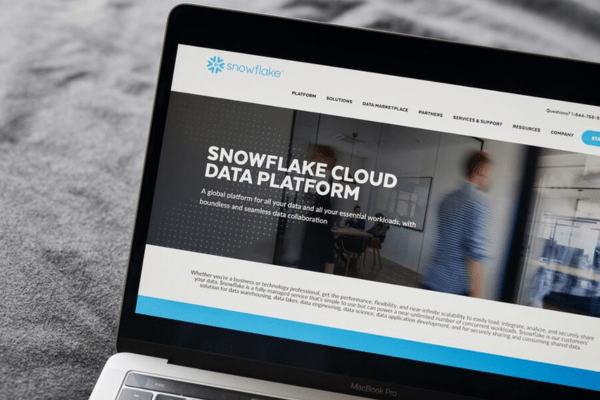
Snowflake Inc. is in talks to buy startup Reka AI for over $1 billion. This move aims to enhance Snowflake’s generative AI capabilities, according to sources.

Reka AI creates large language models. These models, trained on vast internet data, perform tasks like captioning images or serving as customer support chatbots. Founded in 2022 by researchers from Google and Meta, Reka was valued at around $300 million in a 2023 funding round that included Snowflake’s venture arm, as reported by Reuters.

Snowflake, which develops tools for organizing and analyzing cloud data, sees generative AI as a boost to its business. In April, the company released its own large language model, Arctic. Additionally, it allows customers to use third-party AI models, including those from Reka, on their data within Snowflake.

However, the discussions might not lead to a deal, according to sources who wished to remain anonymous due to the private nature of the talks. A Snowflake spokesperson declined to comment, and Reka could not be reached for comment.

Sridhar Ramaswamy, who spent 15 years at Google, became Snowflake’s CEO earlier this year. Previously, Ramaswamy was the firm’s Senior Vice President of AI. He joined the firm last year when the company acquired Neeva, an AI-powered search engine.

Snowflake’s shares have fallen 17% this year, underperforming the iShares Expanded Tech-Software Sector ETF, which has risen 3.3%. In 2023, the company experienced slower revenue growth as many businesses reduced their software purchases. This cost optimization trend also impacted cloud providers like Amazon and Microsoft.

Technology giants are eager to partner with or acquire startups in the competitive generative AI field. Microsoft has funded OpenAI’s projects and recently hired many staff from Inflection AI. Qualcomm Inc. is collaborating with semiconductor startup Ampere to develop AI-focused chips. Meanwhile, Salesforce Inc. has invested in several AI startups to integrate the technology into its customer-focused apps.

Databricks, often seen as Snowflake’s main competitor, has also launched its own open-source large language model. Last year, it acquired AI startup MosaicML for $1.3 billion. As of September, Databricks was valued at $43 billion, while Snowflake’s market value is around $55 billion.

92% of Indian knowledge workers use AI in the workplace, finds Microsoft and LinkedIn 2024 Work Trend Index

0

Microsoft and LinkedIn unveiled the India findings of the 2024 Work Trend Index about AI’s role at work. Titled “AI at work is here. Now comes the hard part,” the report reveals AI’s rapid influence on work dynamics, leadership, and hiring within just one year. It emphasizes employees’ strong desire for AI integration, career advancement opportunities, and the rise of AI-savvy individuals in shaping the future of work.

For the fourth Work Trend Index, Microsoft and LinkedIn collaborated for the first time to offer a detailed perspective on AI’s influence on work. The insights stem from a survey of 31,000 individuals across 31 nations, LinkedIn’s data on job trends, and analysis of trillions of Microsoft 365 productivity cues, along with input from Fortune 500 clients.

The report underlines crucial insights for leaders and professionals regarding AI’s impact on work dynamics, talent management, and hiring trends in the upcoming year:

Employees want AI at work—and won’t wait for companies to catch up:

In India, workers are highly optimistic about AI. A staggering 92% of knowledge workers here use AI at work, compared to the global average of 75%. This indicates their confidence in AI’s ability to save time, enhance creativity, and improve focus. Additionally, 91% of Indian leaders recognize the necessity for their companies to embrace AI to remain competitive. However, 54% of them express concern about the absence of a clear plan and vision for AI implementation.

While leaders feel the urgency to translate individual productivity gains into broader organizational benefits, employees are taking proactive steps. About 72% of Indian AI users are introducing their own AI tools at work, known as BYOAI. This trend underscores a clear pattern: people are turning to AI to boost productivity and foster creativity in the workplace. For every leader, the opportunity lies in harnessing this momentum to achieve a return on investment (ROI).

For employees, AI raises the bar and breaks the career ceiling:

In the realm of job hunting on LinkedIn, mentioning AI in job posts can lead to a significant 17% increase in response rates. This illustrates a reciprocal relationship: companies that equip their employees with AI tools and training will not only attract top talent but also professionals who enhance their AI skills will stand out.

For leaders in India, AI proficiency has become a top priority in hiring practices. A striking 75% emphasize the importance of AI skills when considering candidates, surpassing the global average of 66%. Surprisingly, AI skills carry more weight than experience, with 80% of Indian leaders preferring to hire a less experienced candidate with AI skills over a more experienced one lacking them.

Recent trends show a substantial surge in global LinkedIn members adding AI skills like Copilot and ChatGPT to their profiles, marking a 142x increase. Additionally, there has been a notable 160% rise in non-technical professionals utilizing LinkedIn Learning courses to enhance their AI expertise.

The rise of the AI power user—and what they reveal about the future:

The research identifies four distinct types of AI users: skeptics, novices, explorers, and power users. Among them, power users stand out for their extensive utilization of AI. Unlike skeptics, who seldom use AI, power users have integrated it deeply into their work routines. A striking 90% of Indian AI power users kickstart their day with AI assistance, and 91% rely on it to prepare for the following day. They are also significantly more inclined, by 37%, to seek input from colleagues for helpful prompts and 47% more likely to experiment with AI tools.

Furthermore, AI power users exhibit a stronger inclination towards receiving training, particularly focused on prompts and role-specific AI applications, compared to other employees. They are approximately 20% more likely to undergo such training. Additionally, they are more likely to receive communication regarding generative AI, with a 65% higher likelihood of communication from the CEO, 34% more likely from the function or department lead, and 44% more likely from their manager’s manager.

Irina Ghose, managing director, Microsoft India and South Asia said, “Data from the Work Trend Index shows that AI is now a reality at work, with India having one of the highest AI adoption rates among knowledge workers, at 92%. The rate of diffusion we’re seeing across sectors, from BFSI to healthcare to ITES and the public sector has been very encouraging. This AI optimism presents a tremendous opportunity for organizations to invest in the right tools and training, to unlock efficiencies for employees and ultimately drive long term business impact.”

Ruchee Anand, head of Talent & Learning Solutions at LinkedIn said, “AI is transforming the world of work, reshaping the talent landscape and nudging both individuals and organizations to embrace change. The demand for AI expertise has seen a remarkable 17% jump from last year, echoing LinkedIn platform insights and findings of the Work Trend Index. We’ve seen professionals in India over index on learning while also adding AI skills to their professional toolkit. As the workforce looks to tap into the benefits of AI, it’s crucial for leaders to boost their organization’s AI capabilities through thoughtful investment in both technology and talent.”

The use of generative AI in workplaces worldwide has nearly doubled over the past six months. LinkedIn has observed a notable uptick in professionals adding AI skills to their profiles. However, despite this surge, with every second leader in India expressing concern about their company lacking a clear AI vision and employees introducing their own AI tools, leaders are facing the challenging phase of any technological transformation: transitioning from experimentation to tangible business outcomes.

In conjunction with the report, Microsoft unveiled new features in Copilot for Microsoft 365, aimed at aiding individuals in getting started with AI. Additionally, LinkedIn announced the availability of over 50 learning courses, now offered for free, designed to empower professionals at all levels to enhance their AI proficiency.

  • Some of the new capabilities introduced in Copilot for Microsoft 365 include: Copilot will become more conversational by suggesting follow-up prompts or asking clarifying questions to provide the best response possible.
  • A new chat interface in Copilot will proactively offer timely recommendations based on recent activity, like “You missed Tuesday’s sales meeting. Here’s a quick summary” or flagging an important email for follow up.
  • The prompt box in Copilot will now have an auto complete experience, allowing users to get better results from their prompts. If you’ve already written the prompt, a new rewrite feature will turn basic prompts into rich ones, grounded in your work meetings, documents and emails.
  • Updates to Copilot Lab will allow employees to create, publish, and manage prompts that are expressly tailored to their team.

In addition to the 50 new AI learning courses available for free through July 8, LinkedIn offers:

  • AI-powered coaching with personalized content and conversational learning.
  • AI-powered personalized takeaways on LinkedIn Feed offering insights, ideas and actions.
  • AI-powered tools to assess fitment for a role based on experience and skills match, plus advice on how to stand out and suggestions for skill building.

Thomas Cook (India) posts net profit of Rs 58.17-Cr in Q4

0

Travel services provider Thomas Cook (India) Ltd reported a consolidated net profit of Rs 58.17 crore for the fourth quarter ended March 2024. This marks a significant turnaround from a consolidated net loss of Rs 10.22 crore in the same quarter a year ago, as stated in a regulatory filing.

During the quarter under review, the company’s consolidated total income rose to Rs 1,692.61 crore from Rs 1,323.94 crore in the corresponding period of the previous fiscal.

However, total expenses in the fourth quarter increased to Rs 1,631.92 crore compared to Rs 1,330.1 crore in the year-ago period.

For the fiscal year ended March 31, 2024, Thomas Cook (India) reported a consolidated net profit of Rs 271.11 crore, a significant improvement from Rs 10.37 crore in the previous year.

Moreover, in FY24, the company’s consolidated total income surged to Rs 7,435.65 crore from Rs 5,111.2 crore in FY23.

The company’s board of directors has recommended a dividend of 60 paisa per equity share of face value Re 1, including a special dividend of 20 paisa per share due to improved financial performance.

“Thomas Cook India Group has delivered record profits for both the quarter and FY24,” Thomas Cook (India) Executive Chairman Madhavan Menon said.

Every business and geography has contributed to the profitability, he added.

The group’s results reflect the buoyancy in the Indian and global travel services sector and therefore, he said, adding “our robust forward bookings, reflecting an 18 per cent growth versus last year ‘is very encouraging”.