



Saturday, October 24, 2026
Home Blog Page 23

PayPal lays off around 600 employees in India amid global restructuring

0

PayPal Holdings has reportedly laid off hundreds of employees across multiple teams in India as the American fintech giant restructures its global workforce to reduce costs, people familiar with the matter said.

The job cuts have affected teams across technology, engineering, operations, payments, and finance, among other functions, at PayPal’s offices in Chennai, Bengaluru, and Hyderabad, according to multiple sources.

PayPal India employs more than 6,000 people, which means the reported layoffs could represent a significant reduction in its overall workforce.

However, a PayPal spokesperson, responding to queries on Thursday, said the company reduced its India headcount by approximately 220 employees on August 31. “This is a 4 percent reduction of our India employee headcount,” the spokesperson said.

“We didn’t get any prior notice. We got an invite to join a call on Monday morning (August 31), and there were many employees on it from across offices in India. We were informed that we would be let go. Right after the call, our access was immediately revoked,” one of the impacted employees said.

The employee added, “After that we only got an off-boarding email informing us about the further process. We are getting some job assistance and were promised one month’s salary as severance pay. But we are yet to hear back on that and the full and final settlement.”

Meanwhile, another employee said they received a direct email on Monday morning informing them that the company had terminated their employment.

The PayPal spokesperson stated, “The recent staffing changes are part of our previously announced multi-year transformation to simplify our global operations, strengthen execution, and position the company for long-term growth. Decisions like these are never easy. We recognize the impact they have on our employees and are committed to supporting them through this transition.”

According to several media reports, PayPal has been carrying out the layoffs in phases. The process reportedly began in the Asia-Pacific region, including India, before the company held meetings with affected employees across the US, Europe, the Middle East, and Africa on Monday.

In Ireland, PayPal reportedly laid off around 164 employees on the same day, affecting approximately 12 percent of its workforce in the country.

The latest job cuts follow the company’s management announcement in May 2026, when PayPal revealed plans to reduce its global workforce by 20 percent over the next two to three years. Through the restructuring initiative, the company aims to generate at least $1.5 billion in gross run-rate savings during the same period.

As of the end of 2025, PayPal employed around 23,800 people globally. Therefore, a 20 percent workforce reduction could potentially impact approximately 4,760 roles.

PayPal opened its first development centre in Chennai in 2008. The centre serves as the company’s largest technology hub outside the United States and focuses on core payment platforms, cloud infrastructure, mobile experiences, and distributed computing.

The company later opened its second centre in Bengaluru, which operates as an innovation lab and works on advanced technologies, including machine learning, artificial intelligence, computer vision, and data science.

In addition, PayPal opened its third technology hub in Hyderabad in 2019. The facility focuses on risk management, fraud prevention, and data science to support small and medium-sized businesses.

PayPal’s layoffs have also added to concerns surrounding India’s distressed GCC workforce. Earlier this week, Oracle reportedly started another round of job cuts that could impact nearly 3,000 employees in India.

India’s GCC sector witnessed a significant wave of restructuring in 2025, with global parent companies cutting more than 6,000 jobs. Companies have increasingly responded to macroeconomic pressures and accelerated their shift towards AI-led efficiency instead of traditional headcount-driven growth.


SLH adds Dharana at Shillim and 6 global retreats to its wellbeing collection

0

Small Luxury Hotels of the World (SLH) has expanded its Wellbeing Collection by adding seven new properties, taking the portfolio to 21 independently operated hotels worldwide. The expansion comes one year after SLH launched the collection.

Introduced in 2025, the Wellbeing Collection brings together hotels that offer wellness experiences beyond conventional spa treatments. Instead, these properties focus on physical, mental, and emotional wellbeing while integrating nature, nutrition, local culture, thoughtful design, and destination-specific wellness practices into the overall guest experience.

The latest additions span India, Indonesia, Romania, Panama, Finland, Italy, and Costa Rica. Consequently, each property offers a distinct approach to wellness influenced by the culture, landscape, and traditions of its respective destination.

Among the latest additions is Dharana at Shillim in Pune, which combines modern diagnostics with Ayurveda, therapeutic nutrition, yoga, and breathwork. Located within the UNESCO-listed Sahyadri Mountains, the wellness retreat offers an immersive experience surrounded by forests, lakes, and hills.

Dharana at Shillim develops personalised wellness programmes based on detailed assessments of sleep, nutrition, movement, recovery, and metabolic health. The property features 99 villas and follows an earth-to-table philosophy through its dining programme.

Green Table offers personalised wellness-focused menus, while Ojas serves local and international cuisine. Meanwhile, Vyoma provides lighter dining options using produce sourced from the retreat’s gardens and neighbouring farms.

SLH has also added REVĪVŌ Wellness Resort in Bali, which combines functional fitness, hydrotherapy, and mindfulness with traditional Balinese healing practices. Similarly, Zabola Estate in Transylvania offers wellness experiences through woodland walks, horse riding, and wildlife encounters.

Sansara Surf & Yoga Resort in Panama focuses on surfing, yoga, and curated dining experiences. Meanwhile, Skýra Retreat in Finland incorporates traditional sauna rituals, cold-water immersion, and forest bathing into its wellness offerings.

In South Tyrol, Hotel Saltus combines its alpine setting with a Forest Spa, panoramic Sky Pools, and nature-focused experiences. Additionally, The Retreat Costa Rica, located on a crystal-quartz mountain, offers yoga, sound healing, wellness-focused cuisine, and mountain hiking experiences.

The seven new properties join existing members of the SLH Wellbeing Collection, including Acro Suites in Crete, Namia River Retreat in Hoi An, Bhutan Spirit Sanctuary, and Rio Perdido in Costa Rica.

Through the expanded Wellbeing Collection, SLH aims to highlight diverse approaches to wellness tourism. Moreover, the collection focuses on experiences that draw inspiration from the culture, natural landscapes, and traditional practices of individual destinations.

VAHDAM India’s net profit soars over 6X to Rs 32-Cr in FY26

0

VAHDAM India, a direct-to-consumer wellness brand, delivered a strong financial performance in FY26 and significantly improved its profitability after achieving profitability for the first time in FY25. The company reported a more than sixfold increase in net profit during the fiscal year, driven by robust growth in international sales, particularly in its key overseas market, the United States.

VAHDAM India’s revenue from operations grew 31 percent year-on-year to Rs 349.6 crore in FY26 from Rs 267.5 crore in FY25. The company continued to benefit from rising demand for its wellness products across domestic and international markets.

Founded as a global wellness brand, VAHDAM India offers a diverse range of teas, herbal infusions, and nutritional supplements. The company directly sources its products from farms across India and sells them in domestic and international markets, including the United States, Canada, and several European countries. Moreover, revenue from product sales remained the company’s primary source of income during the fiscal year.

International markets continued to serve as VAHDAM India’s largest revenue driver, contributing nearly 96 percent of its total operating revenue. Overseas sales generated Rs 335.3 crore in FY26, highlighting the company’s strong presence across global markets. Additionally, VAHDAM India recorded Rs 10.2 crore in non-operating revenue, taking its total income for the year to Rs 359.8 crore.

As the company continued to invest in expansion and customer acquisition, advertising and promotional activities emerged as its largest expense category. VAHDAM India spent Rs 95.9 crore on marketing and promotional initiatives during FY26, marking a 65 percent increase from the previous fiscal year. Meanwhile, transportation also remained a major cost component, with logistics expenses reaching Rs 70 crore.

The cost of materials consumed increased 32 percent year-on-year to Rs 63.4 crore, primarily due to higher sales volumes and continued business expansion. Furthermore, employee benefit expenses rose 30 percent to Rs 35 crore, including Rs 3.76 crore towards employee stock ownership plan (ESOP) costs. The company also spent Rs 28.9 crore on commissions paid to selling agents.

Despite higher operating expenses, VAHDAM India leveraged strong revenue growth to significantly improve its profitability. Net profit surged to Rs 32.2 crore in FY26 from Rs 5.2 crore in the previous fiscal year, largely supported by increasing demand across international markets.

The company also strengthened several key financial indicators during the year. Return on Capital Employed (ROCE) increased to 9.5 percent, while its EBITDA margin reached 5 percent. In addition, EBITDA grew 2.7 times year-on-year to Rs 17.5 crore, reflecting stronger operating performance and improved scale efficiencies.

From an operational perspective, VAHDAM India spent Rs 0.96 to generate every rupee of operating revenue during FY26. This performance indicates improved cost management despite the company’s continued investments in marketing, customer acquisition, and business expansion.

As of March 2026, VAHDAM India reported current assets worth Rs 154 crore, including approximately Rs 42 crore in cash and bank balances. Consequently, the company maintained a healthy liquidity position to support its future growth and expansion initiatives.

VAHDAM India has raised more than $40 million in funding since its inception. The company also secured an additional $3 million investment last year in a funding round led by SIDBI Venture. Its investor base includes prominent venture capital firms such as Fireside Ventures, Sixth Sense Ventures, and IIFL Asset Management.

DocPharma raises $2 Mn to scale prescription-compliant quick commerce network across India

0
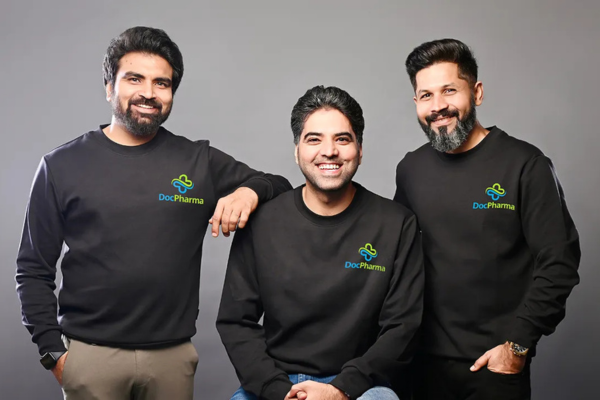
Saquib Ali, Shashank Rai, and Sagar Chauhan, cofounders, DocPharma

DocPharma, a prescription-compliant quick commerce supply chain platform for the healthcare sector, has raised $2 million in a pre-Series A funding round led by Equentis. Meanwhile, existing investors 100Unicorns, Vinners, and a consortium of strategic angel investors also participated in the round.

The company will use the fresh capital to establish 100 new compliant and licensed dark stores as it expands its presence from more than 12 cities to over 50 cities. Consequently, this expansion will strengthen the infrastructure that currently supports more than 30 health and wellness platforms across India, DocPharma said in a press release.

Founded in 2023 by Saquib Ali, Shashank Rai, and Sagar Chauhan, DocPharma operates as a backend supply chain platform for healthcare businesses. In addition, its network of licensed dark stores, DocPharma One SaaS platform, AI-powered inventory management system, and prescription-compliant fulfilment infrastructure support more than 30 healthcare and wellness platforms.

Furthermore, the company serves businesses across several categories, including e-pharmacies, health insurers, corporate wellness providers, hospitals, D2C wellness and nutraceutical brands, and pet care companies. Through its infrastructure, DocPharma enables these platforms to deliver medicines and healthcare products to consumers without requiring them to develop and manage their own supply chains.

The Bengaluru-based startup currently operates across more than 12 cities and has fulfilled over 800,000 orders, achieving a fulfilment rate of more than 95%. Moreover, DocPharma said its operations have impacted more than 500,000 lives across India.

DocPharma also said its proprietary SaaS platform combines warehouse management, inventory intelligence, order management, and fulfilment through a single operating system. As a result, the platform offers real-time inventory visibility, directs orders to the nearest compliant fulfilment centre, and supports prescription-compliant processing.

The funding arrives as healthcare supply chain and quick commerce companies continue to expand across India. At the same time, these businesses increasingly focus on delivering medicines faster while meeting the regulatory requirements associated with pharmaceutical fulfilment.

Meanwhile, Bengaluru-based pharmacy-first quick commerce startup Plazza raised $15 million in a Series A funding round in July. Accel, Elevation Capital, and Nexus Venture Partners co-led the round. The company plans to deploy the funding to strengthen its AI-driven inventory intelligence, supply chain capabilities, and pharmacy network. Additionally, Plazza aims to offer medicine deliveries within 15 to 30 minutes.

BRIKitt acquires Ulhas Vilas in Chail, expands premium holiday home portfolio

0

BRIKitt, a holiday home ownership and management platform, has announced the acquisition of a residential project at Ulhas Vilas in Chail, Himachal Pradesh. The acquisition strengthens the company’s presence and marks another step in its expansion into India’s growing premium real estate market.

The residential development brings together premium residences, hospitality, wellness, recreation, and professionally managed services at a single destination while offering a five-star wellness resort ecosystem.

Through this acquisition, BRIKitt has introduced its vision for a new generation of branded holiday homes. The company aims to address the challenges associated with owning a second home and managing a property located hundreds of kilometres away from an owner’s primary residence.

The Ulhas Vilas portfolio offers spacious 1 BHK and 2 BHK residences, along with premium 3 BHK duplex villas and apartments. These properties cater to buyers seeking an expertly managed Himalayan second home instead of a conventional standalone apartment.

Sharing her thoughts with regard to the newly acquired property, Founder and COO of BRIKitt, Swati Raj Kapoor, said, “At BRIKitt, we aim to make holiday home ownership feel more like a hospitality experience and create a model that appeals to the urban crowd. In addition to curating a space that makes home-ownership easier, our offerings also make ownership hassle-free. The setup enables them to enjoy their second homes without worrying about property maintenance, housekeeping, guest management, and other hospitality needs.”

Mrs. Kapoor further added, “Holiday-home ownership should feel like a holiday. It should not be an extra burden. Our vision with Ulhas Vilas is to make a branded holiday-home ecosystem where the owner can visit and enjoy the destination as well as the residence, leaving the full operational responsibility to a professional hospitality and property management platform.”

Moreover, the Ulhas Vilas acquisition reflects BRIKitt’s broader vision for India’s holiday home market. The company expects India to gradually move towards branded and professionally managed holiday residences, a trend already visible in several international markets.

Under this model, buyers do not simply purchase four walls and a scenic view. Instead, they invest in a complete ecosystem that includes the residence, hospitality standards, property management, wellness, food and beverage services, curated experiences, and rental management capabilities.

“The future of holiday homes will not be about owning a singular property. It will be more about owning an experience. Our plan is to make BRIKitt into a platform where branded holiday homes combine the emotional value of ownership with service standards of five-star hospitality,” said Mayur Raj Kapoor, co-founder & CEO.

Wellness forms a crucial part of the Ulhas Vilas proposition. The destination centres around a five-star wellness resort ecosystem and offers experiences such as spa and wellness treatments, meditation, fitness, swimming, and recreational facilities. Additionally, the development provides food and beverage options, including fine dining, a coffee shop, a bar, and in-room dining.

India’s wellness real estate market has grown from roughly $6 billion in 2019 to around $13 billion by 2024. As a result, Indian buyers increasingly prioritise properties and environments that support both physical and mental well-being. With lifestyle-driven and experience-oriented property ownership gaining popularity, BRIKitt aims to contribute significantly to India’s expanding second-home market.

Professionally managed rental monetisation forms another key pillar of BRIKitt’s business model. When owners do not personally use their holiday homes, eligible properties can become available for rental through BRIKitt’s hospitality and property management ecosystem, subject to applicable ownership and rental management terms.

“For most second-home owners, the property remains unused for most of the year. We want to change that situation through the professional ecosystem that looks after the residence for the owner and also can bring in guests when it is not being personally used,” added Swati Raj Kapoor.

BRIKitt selected Chail and its surrounding areas as an important destination for premium holiday homes because of the region’s natural surroundings, privacy, wellness tourism potential, and access to leisure destinations across Himachal Pradesh. Furthermore, compared with mainstream hill destinations, Chail offers opportunities for larger, lower-density, and experience-focused developments.

With Ulhas Vilas, BRIKitt aims to combine Chail’s natural setting with larger residential formats, wellness infrastructure, and professionally managed hospitality services. Through this approach, the company seeks to strengthen its position in India’s premium branded holiday home and second-home real estate market.

Palo Alto Networks beats Q4 estimates, acquires AI-native platform Console

0
Nikesh Arora, Chairman and Chief Executive Officer, Palo Alto Networks

Palo Alto Networks exceeded fourth-quarter earnings estimates and announced the acquisition of AI-native platform Console, highlighting how rapid advances in artificial intelligence are pushing cybersecurity higher on the priority list for corporate technology leaders.

The cybersecurity company said it acquired Console, an AI-native platform designed to help organizations leverage AI-driven analysis and take action across enterprise operations. Through the acquisition, Palo Alto Networks aims to strengthen its AI capabilities and support businesses as they expand their use of artificial intelligence.

CEO Nikesh Arora said the acquisition will allow customers to “build ‌agentic workflows in natural ​language” that can automatically flag and remediate ⁠issues. Consequently, organizations could streamline security operations and respond more quickly to potential threats.

Meanwhile, the growing adoption of AI continues to increase cybersecurity requirements. As companies deploy AI at scale, they also face new and evolving security risks, prompting technology leaders to prioritize stronger cybersecurity infrastructure.

Palo Alto Networks reported fourth-quarter revenue of $3.41 billion, surpassing analysts’ average estimate of $3.35 billion, according to data compiled by LSEG. Additionally, the company posted adjusted profit per share of $1.02, exceeding analysts’ estimates of 98 cents.

Looking ahead, the company forecast fiscal 2027 revenue between $14.10 billion and $14.20 billion, above analysts’ estimate of $13.79 billion. Furthermore, Palo Alto Networks projected fiscal 2027 adjusted profit per share between $4.16 and $4.19, surpassing estimates of $4.11.

upGrad completes Unacademy acquisition for over $200 Million

0

Ronnie Screwvala-led upGrad has completed its acquisition of edtech platform Unacademy for just over $200 million, according to Unacademy co-founder and CEO Gaurav Munjal.

Announcing the development in a post on X on September 1, Munjal said that Unacademy, which once commanded a peak valuation of $3.44 billion, was eventually sold for a fraction of that amount.

The acquisition brings an end to months of negotiations between the two companies. Sources reported in November 2025 that upGrad was in discussions to acquire Unacademy in a deal valued between $300 million and $400 million. The talks reportedly stalled several times over valuation differences before resuming.

In March, it was reported that upGrad had signed a term sheet to acquire Unacademy through an all-stock transaction, with Munjal expected to continue leading the company as CEO. The Competition Commission of India approved the proposed combination in July, clearing a major regulatory hurdle.

Unacademy became a unicorn six years ago and witnessed rapid growth during the pandemic-driven edtech boom. However, as the sector faced challenges in the post-pandemic period, the company scaled back operations and shifted its focus towards building a more sustainable business.

Munjal said Unacademy currently generates around ₹400 crore in topline revenue, with most of its businesses either profitable or close to profitability. The company also has approximately ₹900 crore in cash reserves.

According to Munjal, Unacademy had sufficient resources to continue operating independently, and the decision to merge with upGrad was not driven by a shortage of capital. Instead, he described the combination as an opportunity to pursue a more exciting growth path.

The acquisition will help upGrad expand into the online test-preparation market, a segment where it previously had no presence. Unacademy brings established offerings across competitive examination categories, including UPSC, JEE, NEET, and GATE.

The addition complements upGrad’s existing portfolio, which spans higher education, professional upskilling, certification programmes and study-abroad services.

The deal comes shortly after upGrad raised ₹360 crore through an internal funding round, with Ronnie Screwvala contributing ₹300 crore. Temasek, IFC, and 360 One also participated in the funding round.

Niyo acquires RemitX’s Forex Business for ₹11.4-Cr

0
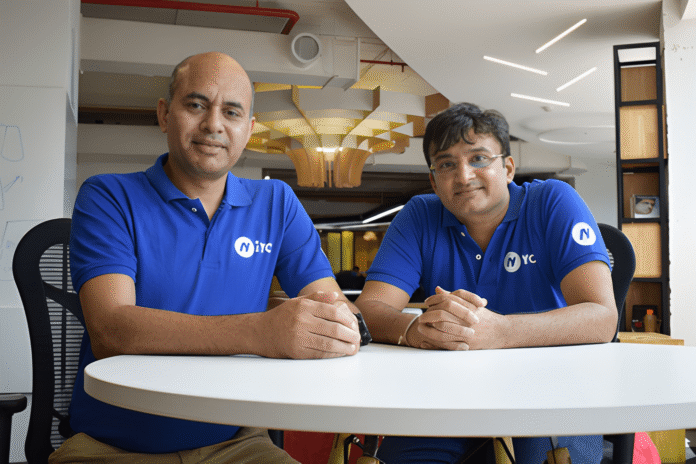
Vinay Bagri and Virender Bisht, co-founders, Niyo

Fintech soonicorn Niyo has signed a definitive agreement to acquire the forex and cross-border payments business of listed financial services company Capital India Finance, operated under the RemitX brand, for ₹11.4 crore.

Niyo will execute the transaction through its wholly owned subsidiary, Kanji Forex Pvt Ltd, which operates under a Reserve Bank of India (RBI) Authorised Dealer Category-II (AD-II) licence.

Capital India Finance’s board approved the transfer of RemitX-related assets to Kanji Forex. The companies expect to complete the transaction by October 31, 2026, subject to regulatory approvals and other closing conditions.

Following the completion of the deal, Capital India Finance will apply to surrender its AD-II licence, according to its exchange filing.

The financial services company said the divestment aligns with its long-term strategy to consolidate operations and focus on its NBFC platform and digital businesses under RapiPay.

Meanwhile, the acquisition will add RemitX’s 32 branches across 16 states and more than 30 cities to Niyo’s network. Consequently, the fintech startup will expand its physical presence to more than 40 locations across India.

RemitX also operates through more than 2,500 distribution partners, including travel agents, overseas education consultants, and corporates. Additionally, more than 200 RemitX employees, including members of the leadership team, are expected to join Kanji Forex after the transaction closes.

The deal will allow Niyo to combine its digital platform for international travel and cross-border payments with RemitX’s branch-led and partner-driven distribution network.

The combined business will offer foreign currency, forex cards, and outward remittance services through both physical branches and digital channels. Furthermore, Niyo expects the expanded network to help it reach customers in Tier II and Tier III cities as demand for overseas travel and education continues to grow.

RemitX contributed ₹24.9 crore to Capital India Finance’s consolidated turnover in FY26, accounting for 4.68% of the company’s total turnover. The forex business also reported net assets of ₹28.3 crore as of March 31, 2026.

Founded in 2015 by Vinay Bagri and Virender Bisht, Niyo provides digital banking and travel-related financial services to international travellers, students, and professionals.

Its portfolio includes international debit and credit cards, outward remittances, forex cash, flight bookings, visa assistance, travel insurance, and international eSIM services.

Niyo’s zero-forex-markup card allows users to load funds in Indian rupees and spend across more than 180 countries without paying an additional forex markup. The startup has partnered with DCB Bank, SBM Bank, and Visa to offer its card products.

Niyo has raised close to $180 million to date and counts Accel, Lightrock, Multiples, Tencent, and Prime Venture Partners among its investors.

In FY25, the startup reduced its net loss by around 46% to ₹77.8 crore from ₹143.5 crore in the previous financial year. At the same time, its operating revenue increased 32% year-on-year to ₹123.4 crore.

The RemitX acquisition marks another step in Niyo’s expansion into regulated forex services and cross-border payments.

Niyo entered the regulated forex market in 2025 when it acquired Mumbai-based Kanji Forex, gaining access to an AD-II licence.

Earlier this month, the RBI granted Kanji Forex a perpetual AD-II licence with an expanded scope. The licence allows the company to facilitate additional transactions, including trade and family-maintenance remittances.

Moreover, the expanded licence enables Kanji Forex to grow its branch network without seeking separate approval for every new location.

The development followed the RBI’s revision of the AD-II framework in May 2026, which expanded the scope of such licences to cover nearly all permissible non-trade current-account transactions.

Malaysia’s AI Reckoning: World AI Show Returns, Bigger Than Ever

0

Kuala Lumpur, 1 September 2026 – Malaysia’s artificial intelligence story is entering its most decisive chapter yet. Across every major industry, organisations are moving beyond cautious experimentation and racing into full-scale execution—chasing new levels of productivity, sharper digital resilience, and operations built for what comes next. As adoption accelerates at speed, one truth is becoming impossible to ignore: the organisations that win will be the ones that pair bold innovation with secure infrastructure, trusted data, and responsible AI frameworks.

Against this high-stakes backdrop, Trescon is bringing together the region’s most influential technology, business, and government leaders for the 48th Global Edition of World AI Show – Malaysia, taking place on 9–10 September 2026 at DoubleTree by Hilton Kuala Lumpur.

Over two power-packed days, the summit will put enterprise leaders, policymakers, technology innovators, and AI practitioners on one stage to tackle the questions defining Malaysia’s AI trajectory—cybersecurity, governance, infrastructure, data, and talent. This is an agenda built for impact: real enterprise use cases, sharp strategic insight, and proven playbooks for turning AI pilots into scalable, measurable business outcomes.

The stage will command a formidable line-up of voices from Malaysia’s government, financial services, technology, energy, telecommunications, retail, manufacturing, and other key sectors, including:

· Sr Jamie Tan – Managing Director, JLL Appraisal & Property Services Sdn Bhd

· Budiman Bujang – Deputy Chief Digital Officer, Johor Corporation

· TS Jackson Raao – Principal Assistant Secretary, MOSTI

· Ganeshbabu Nagarajan – Executive Director – Transformation Programmes, Standard Chartered Bank

· Chuan Boon Loo, Chief Operating Officer, Selangor Information Technology & Digital Economy Corporation

· Najib Masdan – Senior Vice President, Digital & Technology, Khazanah Nasional Berhad

· Victor Khor Eng Swee – Director of Business Technology Department, Bank Negara Malaysia

· Azlina Binti Ab Aziz – Principal Assistant Director, National Cyber Security Agency (NACSA)

· Ts. Mohd Shahril Bin Kamaruzzaman, Head of Technology, Engineering, and Data, Bank Islam

· Chua Yong Howe – Chief Digital Officer, UEM Edgenta

· Shahrin Oli Mohamed – Group Chief Technology Officer, Pos Malaysia Berhad

· Keeratpal Singh – Chief AI and Data Officer (APAC Financial Services), Worldline

· Dr. Sadesh Manikam – Executive Vice President, Enterprise Data Office & DPO, Bursa Malaysia

· Ts. Zairil Anuar Ahmad – Chief Technology Officer, Co-opbank Pertama

· Ahmad Faiz – Head – Data & AI, Global Technology Unit, BASF

· Raunak Mehta – CEO, Igloo

· Mohd Hanapi Bisri – Senior Digital Industry Leader – Oil & Gas

· Dr. Ong Hong Hoe – Director of Digital and Technology, Labuan Financial Services Authority

· Narayanan Chidambaram – Head Project Engineering Pod, Digital Project Management, PETRONAS

· Mohamed Aafrin – Director of Engineering, DKSH

· Sudeep Srivastava – Head – Kuala Lumpur IT Center, SLB

· Dario Bianchi – Chief Product Officer, Mind Valley

· G Saravanan – Chief Information Officer, National Cancer Society Malaysia

· Dr. Ahmad Khalid Khairi – Chief Technology and Innovation Officer, UZMA BERHAD

· Manminder Kaur Dhillon – CEO & Founder, Supernewsroom.ai

· Sabrina Yap – Head of Digital Transformation, Mr. DIY International

· Low Ngai Yuen – Managing Director, AEON360

· Alex Yap Chun Kiat – Head of Data Engineering, CelcomDigi

· Effendy Zulkifly – Chief Digital Officer, YAPEIM HOLDING

· Murugason R. Thangaratnam – Digital Expert Panel, Malaysia Digital Economy Corporation (MDEC)

· Ramana Ramakrishna – Advisor, Ministry of Digital

· Dr. Chua Wen-Shyan – Head of Malaysian Smart Factory 4.0, Selangor Human Resource Development Centre

· Goh Ser Yoong – Chief Information Security Officer, Ryt Bank

· Alex P’ng – Chief Technology Officer, MYNEWS RETAIL SDN. BHD.

· Rainer Althoff, Strategic Advisor, MyIoTA Malaysia

· Ts. Azrul Zafri Azmi, Deputy President | Chairman, Malaysia Cyber Consumer Association (MCCA) | Youth Council of DPMM

Speaking on the importance of embedding security into Malaysia’s AI journey, Azlina Binti Ab Aziz, Principal Assistant Director, National Cyber Security Agency (NACSA), said:

“AI will not simply transform Malaysia’s digital future—it will redefine our economic competitiveness, national resilience, and public trust. However, innovation at speed, without security at its core, creates risk at scale. Malaysia must lead not only in adopting AI but also in securing it. At NACSA, we are embedding cybersecurity across the entire AI lifecycle and protecting the data, models, infrastructure, and applications that power it. Through the AI Systems Cyber Security Framework (AISCF), cybersecurity becomes a strategic enabler of responsible innovation. Our vision is clear: an AI ecosystem that is secure by design, resilient by default, and trusted by all.”

Strengthening the summit’s focus on cybersecurity, digital transformation, and Malaysia’s wider technology landscape, the event is proudly supported by CyberSecurity Malaysia, Invest Penang, and Sidec. Its Association Partners—The AI Collective Kuala Lumpur, Malaysia-India Business Council (MIBC), MY IOTA, MAAI, and BeLuxCham Malaysia—bring together some of the region’s most influential business and technology communities to accelerate collaboration and AI adoption.

The event has also drawn strong backing from leading global technology and enterprise solution providers. Datadog joins as the Lead Sponsor, with Magure as Platinum Sponsor. Bitdeer AI, Blaize | NOKIA, Primary Guard | JumpCloud, Sangfor, and OGX come on board as Gold Sponsors, while Alibaba Cloud & UnisonTech join as Bronze Sponsor.

Exclusive CXO Boardroom sessions, powered by CXO Boardroom Partners Datadog and Zoom will drive high-level, invitation-only conversations among senior executives on AI adoption, digital transformation, cybersecurity, and emerging technology strategy.

On the exhibition floor, Cloudspace, Agora, OpenGreet.ai and Accomy will showcase cutting-edge technologies and solutions built to solve real-world enterprise challenges.

Datadog also joins as the event’s Coffee Partner, keeping conversations—and energy—flowing throughout the two-day summit.

With government representatives, C-suite executives, technology leaders, investors, and industry associations converging under one roof, World AI Show Malaysia promises two days of high-stakes dialogue, sharp insight, and genuine business opportunity – where organisations will benchmark their AI strategies, explore proven solutions, and forge the partnerships that define what comes next.

As Malaysia doubles down on its digital economy ambitions, World AI Show Malaysia 2026 arrives at exactly the right moment—helping the nation’s boldest organisations move from AI pilots to full-scale, secure, and commercially impactful transformation.

CLAIM YOUR DELEGATE PASS: Register now

For sponsorship opportunities, speaking engagements, or attendance information, please contact:

Shrikanth Prabhu

Commercial Director

Email: prabhu@tresconglobal.com

Mobile: +91 8660115892

About Trescon

Trescon is a global business events and consulting firm specialised in producing highly focused B2B events that connect businesses with opportunities through conferences, expos, and connect, and consulting services. For more information, visit: www.tresconglobal.com

Media Contact:

Reeha Haris

Media & PR Executive

Email: reeha@tresconglobal.com

Mobile: +91 8848655312

AI-focused logistics startup Shipsy launches ‘Shipsy Brain’ to transform global logistics operations

0
Soham Chokshi, Co-founder and CEO of Shipsy

Enterprise logistics software company Shipsy has launched Shipsy Brain in beta, a logistics-focused intelligence layer designed to help AI agents make and execute operational decisions. The Gurugram-based company announced the launch on September 1.

Shipsy Brain operates within the company’s AgentFleet platform and supports AI agents across several logistics functions, including document validation, address intelligence, anomaly detection, routing, and settlement management.

“The logistics systems are just systems of record. So, the human is taking the decision and recording it into the system. The intelligence is sitting outside somewhere,” Shipsy cofounder and chief executive Soham Chokshi told in an interview.

Previously, Shipsy’s existing agents relied on frontier AI models. However, Shipsy Brain now uses multiple fine-tuned open-source models tailored for different logistics applications. Chokshi did not disclose the names of the underlying models.

“AI in logistics must understand how shipments, drivers, documents, carriers, contracts, and many other variables interact with each other and then take the right action. Shipsy Brain brings this operational depth to global supply chains. It is built to help enterprises move beyond dashboards and copilots toward AI systems that can reason, recommend, and act within clearly defined business controls,” said Chokshi.

Chokshi explained that general-purpose AI models often struggle to understand industry-specific logistics terminology and documentation. “BOL could mean anything. But we know that it means bill of lading. POD could mean anything, but we know it’s proof of delivery,” Chokshi said.

According to Chokshi, Shipsy designed the specialised models to improve speed and accuracy while reducing operational costs. “Largely, the three points are speed, accuracy, and cost,” he added.

In one live deployment, a major quick-commerce retailer used a Shipsy-powered AI agent to manage orders containing incomplete or suspicious customer information. Previously, drivers could wait for nearly 45 minutes while employees contacted customers to verify whether an order was genuine.

Now, the AI agent contacts the customer, verifies the intent, updates the order, and informs the driver whether to proceed. As a result, Chokshi claimed that the system reduced resolution time to four minutes and helped recover around 30% of the revenue that companies previously lost due to cancelled delayed orders.

However, Chokshi noted that most enterprises still prefer a secure human-in-the-loop framework rather than allowing AI agents to make every decision independently. “Most enterprises today, they want a very secure human-in-the-loop framework,” he said.

Shipsy and its customers jointly establish confidence thresholds for AI-driven actions. Moreover, the company places financial decisions and critical actions, such as order cancellations, behind strict guardrails.

Shipsy said Shipsy Brain draws insights from data associated with more than five billion shipments. The dataset includes over 50 billion operational events, 1.5 billion automated and human decisions, 100 billion GPS pings, and more than 5,000 logistics workflows.

In its internal benchmark, Shipsy said Shipsy Brain achieved an overall field extraction score of 82.2%. The company compared this with 63.4% for Gemini 3.5, 62% for Gemini 3, and 62.4% for Gemini Pro.

Shipsy Brain also scored 92.4% in logistics-domain knowledge, compared with 45.9%, 38.6%, and 45.9%, respectively, for the three Gemini models, according to the company.

Chokshi said the company tested the models using real documents from field operations. The team provided each model with the same context and evaluated their responses against verified answers using an identical scoring script. However, he did not disclose the size of the test dataset.

Shipsy currently serves more than 150 enterprise customers. Looking ahead, Chokshi said the company aims to deploy at least four or five AI agents across half of its customer base by the end of the year.