Thursday, January 22, 2026
Home Blog Page 22

IHCL announces new Ginger Hotel at Mumbai Airport Terminal 2

0
Suma Venkatesh, Executive Vice President – Real Estate & Development, IHCL

Indian Hotels Company (IHCL) has signed a new hotel under its Ginger brand at Terminal 2 of Mumbai International Airport. Furthermore, the 200-key Ginger Mumbai Airport T2 will be part of a mixed-use development that features retail and commercial spaces, and it will offer travellers enhanced convenience within the airport complex.

Suma Venkatesh, Executive Vice President – Real Estate & Development, IHCL, said, “Mumbai International Airport stands as one of India’s busiest gateways, and the growing passenger traffic at Terminal 2 underscores the rising demand for hospitality across all segments. The signing of this new hotel gives the brand a dual presence at both terminals. With Ginger’s footprint across airports of Mumbai, Bengaluru, Kolkata, MOPA Goa and its proximity to the airports in cities of Nagpur and Coimbatore, the brand continues to reinforce its position in India’s most vital transit hubs. We are pleased to partner with Hazoor Multiprojects for this landmark development.”

The property will include Ginger’s all-day dining restaurant, Qmin, along with a bar, meeting rooms, and a fitness centre. The hotel will accommodate both business and leisure travellers who seek efficient stays with essential amenities.

Moreover, with this addition, IHCL will expand its presence in Mumbai to 14 hotels, including two under development, thereby strengthening the group’s footprint in one of India’s most active hospitality markets.

Tunviey Mopalwar of Hazoor Multiprojects Private Limited (HMPL) said, “We are happy to partner with IHCL for this project and enhance the hospitality offerings in this prime location.”

Disseqt AI partners with Tata Technologies and Infosys to advance agentic AI solutions in India

0

Agentic AI platform Disseqt AI today announced that it has entered into partnerships with Indian technology companies Tata Technologies and Infosys. Under these alliances, Disseqt will support both companies’ IT and DevOps teams in developing and accelerating the production of customized agentic AI applications for automotive and fintech enterprises worldwide.

The company stated that these partnerships will enable auto and fintech organizations to adopt tailored Agentic AI more quickly and securely.

With operations in Bangalore, San Francisco, and Dublin, Disseqt AI offers a lean, enterprise-grade platform for IT and DevOps teams that reduces their agentic AI testing and operational costs by 70% and boosts productivity by up to 80%.

The platform empowers these teams to test, simulate, and monitor their agentic AI systems across various industries. Moreover, it allows enterprises to deploy industry-specific Agentic AI efficiently and at scale, without compromising ethics, governance, or compliance.

“This is a landmark announcement for us as we further embed Disseqt into enterprise workflows for testing, simulation, monitoring, and auditability purposes. We are already working closely with both Tata and Infosys on several projects and are proud to be part of their innovation initiatives,” said Apoorva Kumar, founder and CEO of Disseqt AI.

Furthermore, Disseqt AI announced last month that it had formed a strategic collaboration with HCLTech and Microsoft to guide financial services organizations in adopting agentic AI.

InnKey joins hands with Marriott International to power series by Marriott Hotels in India

0

InnKey, India’s leading enterprise hospitality technology platform, has formed a partnership with Marriott International to support its new brand, Series by Marriott™, across India.

The collaboration will begin with a phased rollout that covers 84 operational hotels and 31 upcoming properties, and it will gradually expand into additional emerging markets. The new brand, Series by Marriott™, represents a global portfolio of independent regional brands created to deliver locally inspired stays with global consistency and high operational standards.

InnKey operates as a cloud-native enterprise platform that unifies front-of-house operations. As part of this partnership, the InnKey Property Management System (PMS), equipped with its mobile-first design, will extend the platform’s capabilities throughout the guest journey while connecting seamlessly with the Marriott Bonvoy loyalty program, the Central Reservation System (CRS), and other brand-level systems.

“This partnership is a powerful reflection of InnKey’s vision—to reimagine how hospitality and technology work together,” said Viral Shah, Founder & CEO of InnKey. “It reinforces our belief that Indian-built technology can power global hospitality at scale, delivering intelligence, reliability, and human warmth at every level of operation. This collaboration demonstrates that when innovation meets intent, borders disappear.”

Furthermore, Ashish Kale, Vice President IT – Asia Pacific (Excl. China) Global Technology, Marriott International, emphasized the operational impact. “Our collaboration with InnKey represents a significant step in enhancing the efficiency and intelligence of our hotel operations,” he said. “By integrating a seamless, cloud-based platform across our chain of Series by Marriott™ hotels, we are equipping our teams with smarter tools and real-time insights that ultimately elevate the guest experience. This partnership underscores our commitment to leveraging technology that complements our service philosophy of being efficient, intuitive, and deeply guest-centric.”

InnKey’s platform will deliver real-time data connectivity, operational flexibility, and chain-level intelligence to Series by Marriott™ hotels, ensuring consistency across the brand while enabling every property to maintain its regional personality. Consequently, the partnership creates a unified ecosystem that simplifies decision-making and enhances the human touch behind every guest experience.

“Our collaboration with Marriott International has been truly defining,” said Rohan Shah, co-founder of InnKey. “Working closely with their teams helped us align precision with performance. Together, we built secure, fully encrypted integrations that meet global standards while keeping privacy at the core. This partnership reflects our vision to create intelligent and secure technology from India that’s ready for the world.”

For InnKey, this achievement signifies more than a partnership; it reinforces the company’s mission to develop globally trusted technology from India. Additionally, the company’s new brand identity, launched last month, represents this purpose—making every hotel smarter, every operation more efficient, and every guest journey more meaningful.

New unicorn Brevo raises $583M to take on global CRM leaders

0
Armand Thiberge, Founder & CEO at Brevo

Brevo, a Paris-based customer relationship management company, has now achieved unicorn status—a valuation of more than $1 billion. The startup has secured €500 million in fresh equity funding ($583 million), and it will use this capital to compete more aggressively with major CRM players like HubSpot and Salesforce not only across Europe but also in the U.S.

Formerly named Sendinblue, Brevo launched in 2012 as an email marketing tool for small businesses. The company later moved into the mid-market segment and rebranded to reflect its broader product portfolio. That strategy delivered strong results. Brevo now serves more than 600,000 customers, including small business owners as well as larger organizations such as Carrefour, eBay, and H&M. Additionally, the U.S. accounts for 15% of Brevo’s revenue, ranking as one of its three biggest markets alongside France and Germany. However, CEO Armand Thiberge intends to invest part of the new funding to fuel U.S. expansion.

“That’s 50% of the global market, so it should be 50% of our revenue,” the French entrepreneur said.

Although he expressed concerns about revenue distribution, the overall metrics continue to move upward.

After entering the centaur category in 2023 by surpassing $100 million in annual recurring revenue, Brevo has already exceeded its target of crossing €200 million in ARR in 2025 ahead of schedule, and it now aims to reach €1 billion by 2030, Thiberge revealed.

This growth still trails Salesforce, which has set its revenue goal at $41.55 billion for 2026. Nevertheless, the French company expects its unicorn status to elevate its visibility, supported by both the equity funding and previously secured debt. Additionally, Brevo reports maintaining a “double-digit EBITDA margin.” These financial resources have already backed its plans to invest €50 million in AI over a five-year period and to pursue acquisitions—11 so far—as a key driver of growth. The 1,000-employee company now plans to use the new capital to accelerate these initiatives and allocate more than €100 million toward its U.S. push, according to a press release.

Brevo did not reveal the precise valuation from its latest raise, but it shared more information about its updated cap table.

Although rumors suggested Brevo might be acquired, Thiberge clarified that its management and employees still control the largest stake at 26%, while new investors General Atlantic and Oakley Capital each acquired 25%. Existing investors Bpifrance and Bridgepoint kept 24% each, and Series A leader Partech fully exited. This global cap table reflects Brevo’s ambition to “build a global European CRM leader capable of competing with U.S. players through product excellence,” rather than relying on an argument centered around European sovereignty.

For Thiberge, “whoever has the best product wins, and it’s a race to see who can make the product that is both the most complete and the easiest to use.” He acknowledges the challenge of balancing the needs of both mid-market organizations and very small businesses. “I’m not saying it’s easy every day […] but for us, this combination has been incredibly successful.”

To support this wide customer base, Brevo has expanded far beyond its origins in email marketing. While it continues to compete with Mailchimp in that category, the company now provides a comprehensive platform that includes marketing automation, CRM, customer data management, and communication tools across email, SMS, WhatsApp, live chat, push notifications, and integrated sales calls.

AI increasingly enhances these capabilities, whether through in-house features or integrations. Expanding AI functionality drives part of Brevo’s acquisition strategy, while the other focus involves inorganic growth by acquiring competitors in key markets. Since the company expects acquisitions to contribute 45% of its €1 billion revenue target for 2030, its future M&A activity is likely to be substantial.

Enterprise software startup CoreOps.AI raises $3.5 Mn in pre-Series A funding

0
Rajiv Srivastava, CEO, CoreOps.AI

Enterprise software startup CoreOps.AI has secured $3.5 million in a pre-Series A funding round led by Siana Capital Management, while Kettlebrough, Aroa Venture Partners, and several individual investors also participated.

The company will use the new funding to grow its engineering team, enhance product development, and scale its AI-driven modernization platform for large enterprises.

Founded in 2024, the startup develops tools that help organisations modernize legacy technology systems, consolidate data, and automate operational workflows. Moreover, its platform currently delivers more than 20 AI use cases across industries such as manufacturing, financial services, retail, and healthcare. The company is founded by former tech CEOs—Rajesh Janey, Ankur Sharma, Rajnish Gupta, and Rajiv Srivastava.

CoreOps.AI’s CEO Rajiv Srivastava said the funding will help accelerate deployments that reduce operational costs and improve the speed of digital transformation for enterprises. Additionally, investors cited the company’s early customer traction and rising demand for automation-led modernization as key reasons for supporting the round.

Furthermore, the company positions its strategy as an alternative to consulting-heavy digital transformation projects, emphasizing platform-driven automation and data integration to shorten implementation timelines.

Embassy REIT to acquire Bengaluru office asset for Rs 8,520 Mn

0
Amit Shetty, Chief Executive Officer of Embassy REIT

Embassy REIT, India’s first listed REIT and the largest office REIT in Asia by area, announced that it has signed definitive agreements to acquire a 0.3 million square foot (msf) marquee office asset located within Embassy GolfLinks Business Park, one of Bengaluru’s most sought-after office hubs.

The transaction, valued at Rs. 8,520 million, supports Embassy REIT’s strategy of disciplined and accretive expansion. Located at the core of Embassy GolfLinks, this high-quality Grade-A property remains fully leased to a leading global investment firm. Furthermore, this acquisition enhances Embassy REIT’s scale and ownership in a micro-market that continues to experience robust leasing demand and premium rental growth.

Amit Shetty, Chief Executive Officer of Embassy REIT, said, “We are pleased to announce this third-party acquisition, which underscores Embassy REIT’s strategy of driving growth through high-quality, yield-accretive investments in India’s most dynamic office markets. Bengaluru continues to be India’s office capital, and Embassy GolfLinks is home to some of the world’s most influential technology and GCC occupiers. With a 100% leased, long-tenured asset anchored by a leading global investment firm, this acquisition further strengthens our presence in this premier micro-market. As India’s leading office REIT, we remain focused on disciplined expansion that delivers stronger cash flows and enhances value for our unitholders, while continuing to offer occupiers a truly world-class workplace experience.”

The total enterprise valuation of Rs. 8,520 million comes at a discount to the average of two independent valuations. Additionally, the DPU and NOI accretive nature of the transaction further reinforces Embassy REIT’s position as a global office REIT leader.

The acquisition also delivers an NOI yield of approximately 7.9%, which compares favorably to the REIT’s trading cap rate of 7.4% in Q2 FY2026, and the property remains fully leased to a leading global investment firm with strong long-term tenancy visibility. The acquisition remains subject to the completion of customary and agreed conditions precedent along with pre-closing actions.

PwC advised Embassy REIT on financial and tax due diligence, while Trilegal managed title diligence, and S&R Associates acted as the legal advisor to Embassy REIT.

Marvell Technology acquires Celestial AI for $3.25 Bn

0
Matthew Murphy, CEO of Marvell Technology Group

Chipmaker Marvell Technology (MRVL) said on Tuesday that it will acquire semiconductor startup Celestial AI in a $3.25 billion deal and also issued a bullish outlook for its next fiscal year.

Marvell’s shares rose nearly 10% in premarket trading on Wednesday following its quarterly earnings report released after market close. Moreover, the generative AI boom has accelerated chipmakers’ development cycles as they race to build the fastest and most energy-efficient hardware for advanced data centers.

Marvell and rival Broadcom (AVGO) support cloud-computing companies by designing custom chips tailored to their specific data center needs, and that demand has expanded into a significant business for both firms. Marvell expects to generate approximately $10 billion in total revenue next fiscal year, including a 25% increase in data center revenue, CEO Matthew Murphy said. It does not foresee any major quarterly fluctuations in its custom chip revenue next year.

Additionally, Murphy said in a conference call that Marvell expects its revenue from its custom chip business to grow 20% next year. The Santa Clara, California-based company helps Amazon (AMZN) and Microsoft (MSFT) develop their in-house AI chips, according to JP Morgan analyst Harlan Sur.

The Celestial acquisition will allow Marvell to leverage the startup’s work in photonics, which uses light instead of electrical signals to link AI chips and memory chips—an area where it competes with Broadcom and Nvidia, the world’s most valuable company. Murphy told that Marvell will integrate Celestial’s technology into its next-generation photonics infrastructure products, enabling the company to enter a new $10 billion market.

“We’re going to have a silicon photonics powerhouse at Marvell when this is ‌all done,” he said.

Murphy said big cloud computing companies will begin adopting photonics technology in 2027 or 2028 for large-scale applications. Eventually, he said, the technology will become widely used.

Under the terms of the deal, Celestial AI will receive $1 billion in cash and 27.2 million shares of Marvell common stock valued at $2.25 billion.

Marvell said it expects Celestial AI to contribute meaningful revenue beginning in the second half of fiscal 2028, reaching a $500 million annualized run rate in the fourth quarter of fiscal 2028 and doubling to a $1 billion run rate by the fourth quarter of fiscal 2029. The company expects the transaction to close in the first quarter of calendar year 2026.

Yoodli raises $40 Mn in Series B funding

0
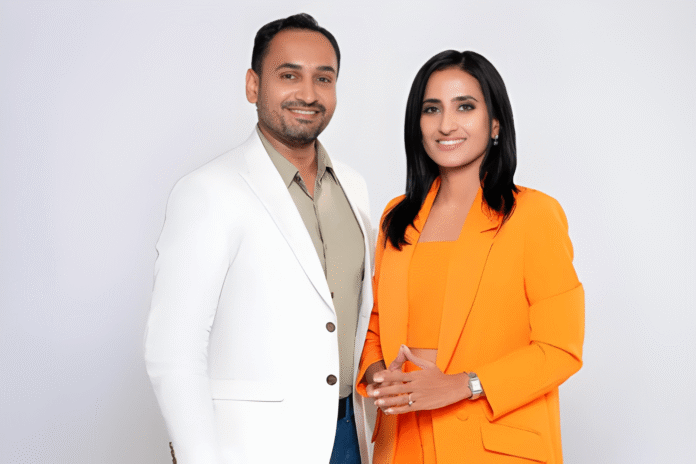
Esha Joshi and Varun Puri, co-founders, Yoodli

AI-powered learning platform Yoodli has raised $40 million in a Series B round led by WestBridge Capital, while Neotribe and Madrona also participated.

The Seattle-based startup offers an AI-driven platform that delivers communication practice through role-play simulations. Moreover, this new funding brings Yoodli’s total capital raised to nearly $60 million.

The company said in a statement that the Series B round will accelerate its investments in AI coaching, analytics, and personalization, and it will also help the platform expand into enterprise learning, GTM enablement, and professional development. Additionally, Yoodli plans to grow its product, AI research, and customer success teams as it scales globally.

Varun Puri and Esha Joshi founded Yoodli in 2021 because they wanted to make communication training more practical and accessible instead of depending on classroom-style workshops or occasional coaching hours. The platform enables users to rehearse scenarios such as customer calls, leadership conversations, interviews, and feedback discussions.

“This round helps us scale our team and serve more enterprises on a true end-to-end experiential learning platform,” said Varun Puri, co-founder and CEO of Yoodli.

“We’re reducing the time it takes to acquire real skills, ensuring employees are ready for game time, and saving organizations countless hours lost to passive coaching. The future of learning isn’t about consuming content—it’s about adaptive, real-world practice that drives behavioral change.” According to him, communication practice—done repeatedly and privately—can help professionals feel more prepared before high-stakes interactions.

“In a world where so much is being automated by AI, we’re helping people strengthen what makes them uniquely human,” he said.

Leading enterprises such as Google, Snowflake, Databricks, RingCentral, and Sandler Sales currently use the Yoodli platform. Furthermore, adoption has increased because workplaces are shifting toward experiential learning, where employees improve through guided practice instead of consuming training content.

“We see Yoodli defining a new category of AI-native learning tools for the enterprise, as companies today seek scalable, AI-driven solutions to train and upskill their workforces. The Yoodli team has built a platform that brings a high level of precision and scalability to skill development, and we’re excited to partner with them as they scale,” said Manthan Shah, Principal at WestBridge Capital.

Kalshi raises $1 Bn at $11 Bn valuation in rapid growth surge

0
Luana Lopes Lara & Tarek Mansour, Co-founders, Kalshi

Prediction market Kalshi, which allows people to bet on future events, announced on Tuesday that it raised a $1 billion funding round at an $11 billion valuation.

The round was led by returning investor Paradigm, and Sequoia Capital, Andreessen Horowitz, Capital G, and other existing backers also participated. Moreover, this latest funding arrives less than two months after the trading platform announced that it raised $300 million at a $5 billion valuation.

Although people drove the trading platform’s popularity last year by using it to predict the outcome of the 2024 U.S. presidential elections, reports indicate that traders now tie a large portion of Kalshi’s activity to sports.

The company expects future growth from businesses that aim to use Kalshi to hedge against specific operational risks, such as government shutdowns or adverse weather conditions.

Polymarket, Kalshi’s main rival, was reportedly in talks to raise another round at a $12 billion to $15 billion valuation in October, according to industry sources.

Lightspeed enters race to invest in cloud infra startup Neysa

0
L-R: Sharad Sanghi and Anindya Das, co-founders, Neysa

Venture capital firm Lightspeed has now entered the race to acquire a stake in cloud infrastructure startup Neysa, joining Japanese investor SoftBank and private equity firm Blackstone, which have already initiated discussions, according to people familiar with the matter.

Blackstone is negotiating to buy out Neysa, while Lightspeed, similar to SoftBank, is exploring a $40–50 million minority investment in the Z47 and Nexus Venture Partners-backed company.

“Blackstone wants to buy a majority stake in Neysa, while SoftBank and Lightspeed are discussing a minority investment that is expected to value the company at around $250-300 million,” said one of the persons, who did not wish to be identified. “These are all early-stage negotiations.”

This potential $250–300 million valuation represents a major jump for the startup, which previously held a valuation of around $76 million during its October 2024 funding round.

Neysa marks the second entrepreneurial venture of Sharad Sanghi, who earlier founded Netmagic, one of India’s oldest data centre services providers.

Mumbai-based Neysa, founded in 2023 by Sanghi and former senior Netmagic executive Anindya Das, delivers compute power and software tools that help businesses—from large enterprises to startups and even governments—build, run, and manage artificial intelligence (AI) applications. The company secured $50 million across two funding rounds in 2024 from Nexus Venture Partners, Z47, Blume Ventures, and NTTVC.

“Indian founders are going all-in on the application layer of AI, but very few are taking on the infrastructure layer because of its capital-intensive nature… It needs land, power, and deep technical talent, and that’s not an easy mix for most startups,” said a technology investor. “That’s why we’re seeing many entrepreneurs from India building software and enterprise tools instead. Neysa’s founding team, though, has already built at that scale with Netmagic, which makes them stand out in the sense that they actually know how to pull off AI infrastructure in India.”

Neysa did not respond to queries until press time. Emails sent to Lightspeed and SoftBank also went unanswered. Blackstone declined to comment.

Nevertheless, ongoing negotiations for a stake in Neysa highlight rising investor interest in Indian alternatives to hyperscalers.

Earlier, reports noted that global hyperscalers and domestic conglomerates plan to invest more than $50 billion over the next five to seven years in India’s data centre sector, raising capacity to about 9 GW from around 1.5 GW currently. Moreover, a CBRE report indicated that India’s operational data centre capacity reached 1.5 GW as of September, with nearly 260 MW added between January and September.

This growth includes planned investments from Google, Amazon Web Services, Microsoft Azure, and Meta, along with major Indian players such as Adani, Bharti Airtel, Reliance Industries, TCS, and L&T.

If the Neysa transaction materializes, it will mark Masayoshi Son-led SoftBank’s first India investment under its renewed strategy of supporting large AI-driven IT and infrastructure services companies.

For Blackstone, which manages approximately $50 billion in India, a buyout would further strengthen its expansion in the country’s data-centre infrastructure space. The firm launched Lumina Cloudinfra in 2022, and the platform has continued to scale rapidly in India’s fast-growing data centre and digital infrastructure sector. Additionally, Australian data centre operator AirTrunk, also owned by Blackstone, recently announced plans to build its next facility in India to serve accelerating AI-driven demand.