


Monday, June 22, 2026
Home Blog Page 183

Quest Global partners with Rapidus to develop 2-nanometer AI chip solutions

0
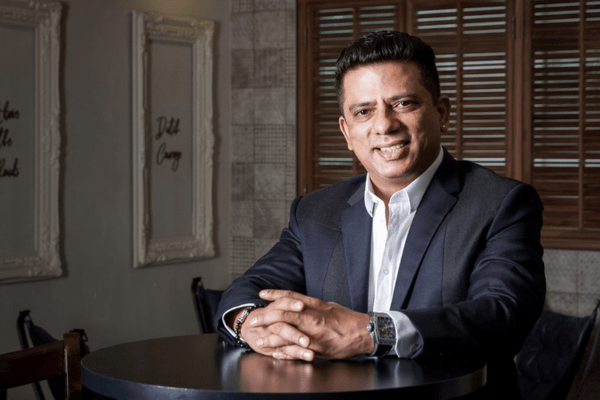
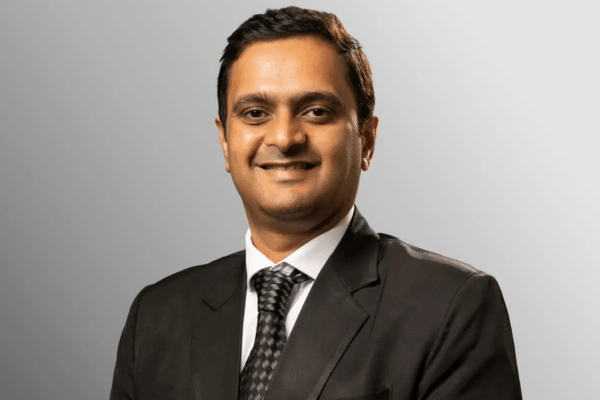
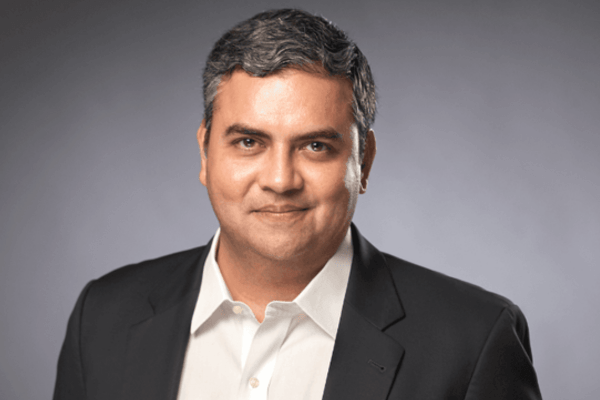
(L-R) Dr. Atsuyoshi Koike, CEO, Rapidus & Ajit Prabhu, Co-founder & CEO, Quest Global

Quest Global, a leader in product engineering services, has signed a Memorandum of Cooperation with Rapidus Corporation, a top Japanese manufacturer of 2-nanometer semiconductor solutions. This partnership will position Quest Global as a key design partner for Rapidus, offering expertise in advanced 2-nanometer AI chip solutions, ideal for high-performance AI semiconductor solutions.

For Rapidus, the collaboration provides access to Quest Global’s extensive global client base, enabling both companies to deliver innovative AI products and silicon solutions to new and existing clients. Quest Global, known for its cutting-edge AI chips, powers products like AR/VR glasses, smart helmets, wearables, and software-defined vehicles, integrating advanced AI technologies like neural processing and AR/VR.

Together, the partnership will support automotive, IoT, telecommunications, and more industries, using Rapidus’ manufacturing capabilities and Quest Global’s design services. Their joint efforts will offer AI-driven solutions and accelerate time-to-market for clients through Rapidus’ Rapid Unified Manufacturing Service (RUMS) model.

“As we enter the transformational era of gen AI, the semiconductor industry must establish a new framework for the stable and seamless design, development, and manufacturing of AI-driven advanced-node chips,” said Ajit Prabhu, Co-founder & CEO of Quest Global. “This partnership, based on the virtual IDM model, provides the silicon solution that companies worldwide seek. We are honoured to support the realization of this groundbreaking initiative in Japan, where the public and private sectors are working together to achieve advanced semiconductor technologies.”

“Quest Global has shown a strong affinity for our short turnaround time manufacturing services, specifically with RUMS,” said Dr. Atsuyoshi Koike, CEO of Rapidus. “Additionally, receiving evaluation and feedback from Quest Global will provide a solid foundation for customer acquisitions and products. Furthermore, becoming one of Quest Global’s foundry partners will provide us access to the company’s customer network. For Rapidus, securing a track record of design is vital, so this partnership will benefit both companies.”

Firefly Diamonds raises $3-Mn to expand lab-grown diamonds

0
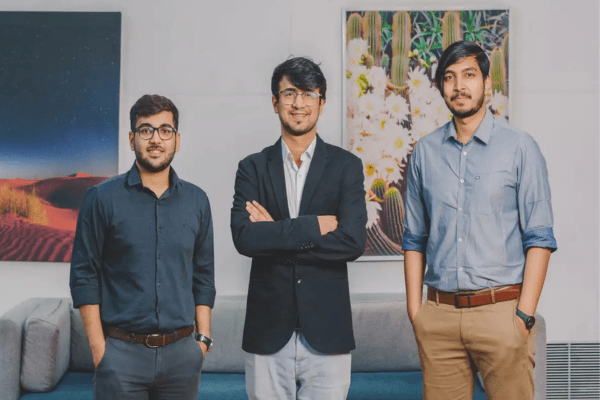
(L-R) Aayush Bhansali and Adit Bhansali, Co-founders, Firefly Diamonds

Firefly Diamonds, a startup specializing in lab-grown diamonds, has secured $3 million in a seed funding round led by WestBridge Capital.

The company plans to use the new funds to expand its retail footprint and enhance research and development for upcoming jewellery collections. Firefly operates stores in Mumbai, Pune, Bengaluru, and Hyderabad, with plans to expand to over 20 locations within the next two years. This investment comes as competition intensifies in India’s growing $2.6 billion lab-grown diamond market, where several startups have recently raised capital or are nearing investments from major backers.

“Our brand is built on a legacy of trust, innovation, and craftsmanship. With over 60 years of jewellery manufacturing and design expertise, we ensure that every piece reflects unparalleled quality and excellence… With this funding, we wish to usher in a new era of Indian luxury that celebrates beauty, individuality, and the art of fine craftsmanship,” said Adit Bhansali, co-founder of Firefly Diamonds.

Founded in December 2023, Firefly specializes in lab-grown diamonds jewelry crafted from 14K and 18K gold. The company also offers a variety of customer-focused services, including Firefly Try at Home, the Firefly Sparkle Plan—a savings program with instalments for purchasing the ideal jewellery piece, an Old Gold Exchange program, and Firefly Reserve—an exclusive line of personalized, high-end bespoke jewellery.

Firefly’s funding comes as India’s emerging lab-grown diamond (LGD) market experiences rapid growth. The market was valued at $2.61 billion in 2023 and aims to reach $8.31 billion by 2032, growing at a compound annual growth rate (CAGR) of 13.73%, according to the management consulting firm Technopak.

Zepto in negotiations for a $250-Mn secondary sale before IPO launch

0
(L-R) Founders Kaivalya Vohra and Aadit Palicha, Zepto

Online grocery startup Zepto in negotiations for a $250 million secondary sale, allowing current shareholders to sell part of their equity ahead of its planned IPO later this year. This move will increase the stake of Indian investors in the company.

The discussions are reportedly with the private equity divisions of Motilal Oswal Financial Services Ltd. and Edelweiss Financial Services Ltd., who want to purchase shares in the secondary sale, according to sources familiar with the matter.

Zepto won’t be raising any additional funds in the process. Instead, employees and existing investors will have the opportunity to sell their shares for cash. The startup expects to execute the sale at around $5 billion, matching its valuation from the last funding round held late last year.

Zepto wants to increase Indian investor ownership before its upcoming IPO, either later this year or early 2026. Indian shareholders hold around 33% of Zepto’s equity, with founders Aadit Palicha and Kaivalya Vohra owning roughly 20%. The goal is to raise the Indian shareholder stake to approximately 50%, according to sources familiar with the matter.

Zepto, Motilal Oswal, and Edelweiss have not yet responded to requests for comment.

Secondary stock sales have traditionally been controversial, as they allow managers and employees to cash out before an IPO, potentially diminishing their motivation to grow the company. However, these sales have become more common in recent years, with companies using them to reward employees and allow investors to exit, helping to boost morale.

Zepto operates in India’s highly competitive and low-margin grocery delivery market, facing stiff competition from players like Amazon India, SoftBank-backed Swiggy, publicly listed Zomato, and Tata Group’s BigBasket.

Founders Aadit Palicha and Kaivalya Vohra, both 22, are childhood friends who left Stanford University’s computer science program to return to India and launch the startup in 2021 when they were still teenagers.

Zepto’s $250 million secondary sale will increase the shareholding of Indian investors ahead of its anticipated IPO. By providing a cash-out opportunity for employees and existing shareholders, the company seeks to boost local ownership and position itself for future growth in India’s competitive grocery delivery market.

Augustine Therapeutics Secures €77.7Mn for neuromuscular and cardio-metabolic treatments

0
Gerhard Koenig, Augustine Therapeutics CEO

Augustine Therapeutics, a Belgium-based biotech firm focused on therapies for neuromuscular and cardio-metabolic treatments, raised €77.7 million in Series A funding. The round was co-led by Novo Holdings and Jeito Capital, with continued support from existing investors like Asabys Partners, which previously led to €17.5 million in initial funding in 2024. Other participants include Eli Lilly and Company, AdBio Partners, V-Bio Ventures, PMV, VIB, Gemma Frisius Fund, the CMT Research Foundation, and Newton Biocapital.

The raised capital will drive Augustine’s lead candidate, AGT-100216, into Phase I/II clinical trials for Charcot-Marie-Tooth (CMT) disease. Augustine also plans to advance two discovery-stage programs targeting HDAC6 inhibitors. One inhibitor is peripheral-restricted, and the other penetrates the blood-brain barrier, addressing undisclosed neurodegenerative and cardio-metabolic conditions.

Founded by Prof. Ludo Van Den Bosch from the VIB-KU Leuven Center for Brain and Disease Research, Augustine built a strong scientific foundation on his research on HDAC6 inhibition. In January 2025, Gerhard Koenig, PhD, became CEO after serving as Executive Chairman since June 2024. Koenig’s leadership will guide the company through clinical milestones and strategic growth.

Augustine focuses on selectively inhibiting HDAC6, an enzyme linked to neurodegeneration and tissue ageing. Unlike previous HDAC6 inhibitors, Augustine’s next-generation molecules use a non-hydroxamate, non-hydrazine mechanism, minimizing toxic effects and preserving beneficial functions. This approach offers the potential to treat CMT, a genetic disorder affecting around three million people globally.

AGT-100216, Augustine’s lead HDAC6 inhibitor, is ready for Phase I/II trials. Preclinical data suggests it has a superior safety profile and enhanced efficacy compared to traditional HDAC6 inhibitors. The trial will assess its ability to improve motor function and slow disease progression in CMT patients, showing promise for CMT and broader neurodegenerative and cardio-metabolic diseases.

With strong financial backing, a solid clinical pipeline, and experienced leadership, Augustine Therapeutics aims to reshape the treatment landscape for CMT and other complex diseases. Its innovative approach to HDAC6 inhibition holds great potential to deliver life-changing therapies to millions of patients worldwide.

NeuralGarage wins SXSW Pitch Competition with VisualDub Technology

0
(L-R)Subhashish Saha,Anjan Banerjee,Mandar Natekar,Subhabrata Debnath, Co-founders, NeuralGarage

GenAI startup NeuralGarage has made history as the first Indian startup to win the SXSW Pitch Competition at the globally renowned SXSW conference and festival. Held annually in Austin, Texas, this prestigious event celebrates the intersection of tech, film, music, education, and culture. Chosen from a global pool of thousands of startups, NeuralGarage secured victory in the “Entertainment, Media, Sports & Content” category for its innovative technology, “VisualDub.” This solution addresses visual discord in dubbed content by synchronizing actors’ expressions and lip movements with the dubbed audio, delivering a more authentic and immersive viewing experience.

The SXSW Pitch competition, which has been running continuously for over 17 years, has seen startups that won raise more than $23 billion in investments over the years. The jury, consisting of experts from venture capital, entertainment, and content industries, made this win even more significant, as “VisualDub” addresses the last-mile content localization challenge that the entertainment industry has been grappling with for years.

SXSW, a key event for creative professionals in the entertainment and content industries worldwide, features film and television screenings, world-class exhibitions, and award ceremonies. Over time, it has become a major platform showcasing the best in entertainment and content. This year, some of Hollywood’s biggest stars, including Robert Downey Jr., Matt Damon, Matthew McConaughey, Ben Affleck, Nicole Kidman, Nicolas Cage, Blake Lively, Paul Rudd, Jenna Ortega, Aaron Paul, Pedro Pascal, Kevin Bacon, and more, presented their latest work. A key highlight of the event was a special fireside session with Michelle Obama and the screening of Michael Bay’s latest documentary, “We Are Storror.”

Speaking on the win, Mandar Natekar, NeuralGarage’s Co-Founder and CEO said, “The win is special because to win at SXSW means validation for our technology “VisualDub”  that has been built for the global entertainment industry. To be able to pitch our tech on this influential platform in front of a global community of the brightest minds in the entertainment & content business was a thrilling experience and this is a stepping stone for us to bring this technology to the world shortly.”

NeuralGarage, founded in 2021 by Mandar Natekar, Anjan Banerjee, Subhabrata Debnath, and Subhashish Saha, is developing proprietary AI models tailored to meet the high standards of the global entertainment industry. These models are set to revolutionize the way content is created, distributed, and consumed across theatrical releases, streaming platforms, and broadcast networks.

Poonawalla Fincorp unveils AI-powered underwriting solution

0
Arvind Kapil, MD & CEO, Poonawalla Fincorp

Poonawalla Fincorp Limited (PFL), a non-banking financial company (NBFC) under the Cyrus Poonawalla Group, has launched an AI-powered underwriting solution developed with IIT Bombay. The system blends artificial intelligence with human expertise to enhance credit evaluation and speed up decision-making processes.

At 11:02 am today, PFL’s shares were trading at ₹349, up by ₹14.20 or 4.24 per cent on the NSE. The solution leverages Large Language Models and Machine Learning to automate credit decisions while ensuring human oversight. PFL anticipates this technology will improve credit managers’ productivity by 40 per cent in retail lending.

“At Poonawalla Fincorp, we fully respect and understand the transformative impact of AI in reshaping the credit landscape,” said Arvind Kapil, Managing Director & CEO of Poonawalla Fincorp.

Dr. Pushpak Bhattacharyya from IIT Bombay highlighted that the collaboration showcases the potential of industry-academia partnerships in solving real-world business challenges.

PFL intends to develop the current AI system into a self-learning model, incorporating deep learning algorithms for autonomous decision-making and ongoing system enhancement.

The Pune-based company operates in 18 states and 2 Union Territories, with Assets Under Management (AUM) of ₹30,984 crore as of December 31, 2024. PFL provides various financial services, including pre-owned car financing and personal, consumer, and business loans.

Jack Ma-backed Ant Group leverages chinese chips for groundbreaking AI innovation

0

Jack Ma-backed Ant Group, has developed cost-cutting AI training techniques using Chinese-made semiconductors, reducing costs by 20%, according to sources familiar with the matter. The company utilized domestic chips, including those from Alibaba Group and Huawei Technologies, to train AI models using the Mixture of Experts machine learning method. These results were comparable to those achieved with Nvidia’s H800 chips, the sources revealed, requesting anonymity due to the confidential nature of the information. While Ant Group continues using Nvidia for AI development, it increasingly relies on alternatives, including chips from Advanced Micro Devices Inc. and various Chinese manufacturers, for its latest models.

The models signify Ant Group’s entry into the growing competition between Chinese and U.S. companies. This race has intensified since DeepSeek showcased how highly capable models can be trained at a fraction of the cost compared to the billions spent by OpenAI and Google’s Alphabet Inc. This highlights the efforts of Chinese firms to rely on local alternatives to Nvidia’s most advanced semiconductors. Although not the most cutting-edge, the H800 is a powerful processor currently prohibited from being shipped to China by the U.S. government.

This month, the company released a research paper claiming that its models have sometimes outperformed Meta Platforms Inc. in specific benchmarks, although Bloomberg News has not independently verified this. If the claims hold, Ant’s platforms could significantly advance Chinese AI development by drastically reducing the cost of inferencing and supporting AI services.

As companies invest heavily in AI, MoE models have gained popularity, with recognition for their use by Google and the Hangzhou-based startup DeepSeek, among others. This technique breaks tasks into smaller data sets, like having a team of specialists focus on different project parts, thus improving efficiency. Ant declined to provide further comments in an email statement.

Training MoE models usually depend on high-performance chips, such as the graphics processing units (GPUs) Nvidia sells. However, the high cost of these chips has been a barrier for many smaller companies, limiting widespread adoption. Ant has been focusing on methods to train large language models (LLMs) more efficiently, aiming to overcome this limitation. The title of its research paper reflects this goal, with the company seeking to scale models “without premium GPUs.”

Ant Group’s paper emphasizes the growing innovation and rapid technological advancements in China’s AI industry. If the company’s claim is verified, it would signal that China is making significant strides toward achieving AI self-sufficiency, as the country increasingly adopts lower-cost, computationally efficient models to bypass export restrictions on Nvidia chips.

StubHub files for IPO amid surge in companies going public

0
Jeff Fluhr, Co-founder, StubHub

StubHub, an online ticket resale marketplace, filed for an initial public offering (IPO) on Friday, aiming to go public on the New York Stock Exchange under the ticker symbol “STUB.”

According to its IPO prospectus, StubHub reported a net loss of $2.8 million on revenue of $1.77 billion for 2024. This marks a sharp contrast to 2023 when the company posted a $405 million profit on revenue of $1.37 billion.

Founded in 2000, StubHub has been a major player in the ticketing industry. In 2007, eBay acquired it for $310 million, but co-founder Eric Baker repurchased it in 2020 for $4 billion through his company Viagogo.

According to its prospectus, StubHub’s marketplace facilitated the sale of over 40 million tickets last year from approximately one million sellers.

As previously reported by CNBC, the company had initially considered an IPO last year but postponed its plans due to unfavorable market conditions.

As reported last year, the online ticketing space remains competitive, with SeatGeek exploring a potential IPO. Bloomberg noted in June that Citigroup and Wells Fargo were involved in SeatGeek’s planned listing. Other key competitors include Vivid Seats, which went public through a special purpose acquisition company (SPAC) in 2021, and industry giant Live Nation.

After a prolonged slowdown in IPO activity since early 2022, the market is beginning to show signs of recovery. AI infrastructure provider CoreWeave will debut next week, while Klarna, a buy now, pay later service, filed its IPO prospectus last Friday. Earlier in March, Hinge Health, a digital physical therapy provider, filed with the U.S. Securities and Exchange Commission.

IHCL launches Tree of Life Amara Resort & Spa in Udaipur

0
Puneet Chhatwal, MD & CEO, IHCL

Indian Hotels Company (IHCL) has announced the Tree of Life – Amara Resort & Spa launch in Udaipur. Surrounded by the breathtaking Aravalli Hills, this tranquil retreat combines comfort and personalized hospitality. True to the brand’s philosophy, it provides a serene escape from the hustle and bustle of city life.

Deepika Rao, executive vice president – Hotel Openings & New Businesses, IHCL, said, “IHCL has always been at the forefront of revolutionizing hospitality formats, pioneering destinations, and scaling brands that cater to evolving traveler preferences. Adding Tree of Life Resorts & Hotels to IHCL’s brandscape reflects our commitment to curating distinctive journeys that balance exclusivity with authenticity.

She added, “Catering to the growing demand for slow travel and experiential stays, Tree of Life has carved a niche in this evolving segment with 20 boutique properties and aims to reach a 100-hotel portfolio by 2030.”

Tree of Life Amara Resort & Spa, Udaipur, is a haven of refined luxury overlooking the serene Vikrani Lake. This secluded retreat features 33 spacious villas, each offering breathtaking views of the rolling hills, private balconies, and an infinity pool. Guests can savor a diverse culinary experience at Dawn, the signature dining venue, which serves a carefully curated menu of global flavors and authentic Rajasthani delicacies. Dusk, a treehouse-inspired lounge, offers handcrafted cocktails and enchanting sunset views for a more relaxed ambiance. The holistic spa ensures a perfect blend of tranquility and indulgence, making every stay a true escape.

Embracing authenticity, each Tree of Life resort and hotel serves as a destination in its own right, offering signature experiences that connect guests with nature and local culture. From witnessing breathtaking sunrises and sunsets to engaging in village tours and guided walks through local communities, visitors gain unique insights into rural life and traditions. Additionally, curated offerings such as Tree of Life Journeys and immersive culinary and artistic experiences further enrich the guest experience.

Yahoo sells TechCrunch to investment firm in strategic deal

0
(L-R) David Filo, Jerry Yang, Founders, Yahoo

Yahoo sells TechCrunch to media investment firm Regent in a finalized deal, the companies announced on Friday.

TechCrunch, known for its in-depth coverage of global tech companies, startups, and entrepreneurs, was previously part of Verizon Communications’ media assets, which were acquired by Apollo Global Management in 2021 for $5 billion. Following the acquisition, Apollo rebranded the combined media assets under the Yahoo name.

Regent, which has been expanding its portfolio of tech news sites, recently acquired Foundry, the parent company of well-known publications like PCWorld, Macworld, InfoWorld, CIO, and TechAdvisor.

“We believe this next chapter under Regent can help maintain TechCrunch’s influence and support its continued growth,” Yahoo said in a statement.

The financial details of the transaction, expected to close soon, were not disclosed. Yahoo continues to manage several major news platforms, including Yahoo Finance, Yahoo Sports, and Engadget, alongside its services like Yahoo Mail and Yahoo Search.