


Sunday, August 9, 2026
Home Blog Page 178

Labrys raises €17.5 Mn to revolutionize workforce management for humanitarian teams

0
L-R: Luke Wattam & August Lersten, co-founders, Labrys

UK-based startup Labrys, which is building a trust-based workforce management infrastructure for globally distributed teams, has raised €17.5 million in fresh funding. As a result, Labrys aims to strengthen its position in the secure workforce management space, enabling more efficient and trustworthy coordination of globally distributed teams.

The round was led by Plural, with AlbionVC and Superangel also participating. Existing investors — Project A, MDOne, Expeditions Fund, and Marque Ventures — joined the round as well, bringing the company’s total funding to €22.3 million.

August Lersten, co-founder and CEO of Labrys, said, “Being unable to verify if a person can be trusted, if a task has been completed, or how to pay them has been preventing successful humanitarian, aid, and military missions for too long. Yet solving the issues has historically been considered too complex and too difficult, leaving organizations stuck using disparate and insecure platforms.”

“We created Labrys to solve these tough workforce and team coordination problems in logistics, risk, and humanitarian crisis response, and we’ve built a talented team to tackle the hardest technical problems in this space. We’re delighted to be backed by investors who understand this mission and want to build the future of trusted infrastructure right alongside us,” he further added.

Founded in 2020, Labrys is a British tech startup behind Axiom—a secure, end-to-end workforce management platform designed to help organizations verify, support, and compensate globally distributed teams. By streamlining operations in remote or infrastructure-poor regions, Axiom aims to help clients save time, cut costs, and mitigate operational risks.

CEO August Lersten, a Royal Marines veteran, and COO Luke Wattam, a former Army Officer, co-founded the workforce management company, bringing with them over 20 years of combined frontline experience. Drawing on this background, they’ve developed what they call the world’s first military-grade command and control system, built to manage teams in the world’s most challenging and complex environments.

From humanitarian agencies and defense forces to crisis response units and logistics firms, many critical organizations operate in volatile and high-risk regions. Yet, according to Labrys, these teams often lack secure systems for coordination—relying instead on emails, spreadsheets, and consumer messaging apps, which are both insecure and unreliable.

This outdated approach has caused serious consequences—organizations have lost millions in aid funds and managed tens of thousands of security personnel through WhatsApp, exposing major vulnerabilities in mission-critical operations.

Sten Tamkivi, partner at Plural, said, “A lot of defense and resilience innovation focuses on hardware assets. Yet, there’s been a gap around a secure, reliable system for human coordination when it matters most—until now. August and Luke’s experience on the literal front lines means they know exactly the challenges experienced on the ground and are building Labrys to solve these challenges once and for all. This is exactly the kind of mission we want to support at Plural, and I look forward to working with them to grow Labrys.”

Axiom, the flagship product from Labrys, integrates HR, task management, encrypted communication, and global payment capabilities into a single secure platform. It leverages biometric identity verification, geo-tagged tasks, and built-in audit trails to monitor missions and workforce activities with precision and accountability.

One of Axiom’s standout features is its integrated, regulatory-compliant stablecoin disbursement system, enabling instant, borderless payments—even in regions with limited or no banking infrastructure. This capability removes intermediaries, reduces delays, and mitigates compliance risks, all while maintaining full control and auditability.

By enabling secure, verifiable operations from one unified platform, Axiom is already helping clients save up to €2.6 million in operational costs. It also boosts revenue potential and ensures compliance—a vital edge as global humanitarian efforts face increasing funding challenges and geopolitical instability reaches new heights.

Since closing its seed round in 2023, Labrys has achieved seven-figure annual revenues, winning contracts with government agencies and clients in logistics and disaster relief, including deployments in Ukraine. With its latest funding, Labrys will further enhance its identity verification system, multi-party access controls, and auditing tools.

Looking ahead, the company plans to strengthen its stablecoin infrastructure, enabling clients to execute reliable, programmable payments in fragile, disconnected, or sanctioned regions—where traditional banking systems often fail.
SoftBank invests $40 Mn in Ireland-based fintech Nomupay

0

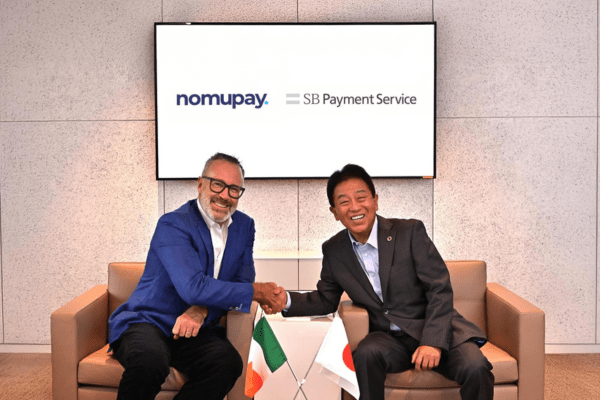
Irish fintech firm Nomupay announced on Tuesday that it has secured a $40 million investment from a SoftBank Corp subsidiary, valuing the company at $290 million. The funding will support Nomupay’s expansion into Asian markets, including Japan.

Founded in 2021, Nomupay began operations after acquiring licenses from the defunct payments company Wirecard, which was at the center of Germany’s largest post-war corporate fraud scandal.

With this latest investment, Nomupay has now raised a total of $120 million. Its previous funding round in January brought in $37 million and valued the company at $200 million.

“We will integrate the Japanese payment methods that are provided by SoftBank, which means the rest of the world can now access Japan, and then we will jointly expand into other markets,” Nomupay CEO Peter Burridge said.

Nomupay is a payment processing company specializing in both local and cross-border transactions. It operates within a highly competitive industry alongside major players such as Stripe and Adyen.

“We aim to be profitable by the end of the year,” Burridge said.

Nomupay’s latest $40 million investment from SoftBank marks a significant milestone in its growth journey, boosting its valuation to $290 million. As it expands into key Asian markets like Japan, the fintech firm aims to strengthen its position in the competitive payments space, dominated by giants such as Stripe and Adyen.

Royal Orchid expands footprint in Uttarakhand with new hotel launch

0
Chander K. Baljee, Chairman & Managing Director, ROHL

Royal Orchid Hotels Ltd has announced the signing of a new property under its Regenta brand in Dehradun, Uttarakhand. The upcoming hotel, named Regenta Resort Dehradun, aligns with the company’s asset-light growth model and will operate under a management contract. This addition will mark ROHL’s eighth hotel in Uttarakhand.

Set to open in June 2025, the 50-room resort will be located in Kulhan and, moreover, aims to offer a premium “urban retreat” experience for modern travelers. Additionally, spanning 5,050 square meters, the resort will feature stunning views of dense forests and the majestic Himalayas, thereby catering to guests seeking adventure, a stopover stay, or spiritual relaxation.

Commenting on the signing, Chander Baljee, Chairman & Managing Director, Royal Orchid Hotels Ltd, said, “Uttarakhand’s burgeoning tourism and thriving commercial landscape offers vast potential, and our steady penetration in this market underscores our commitment to capitalising on these opportunities. With this new hotel, we’re also making significant strides towards our vision to dominate India’s top leisure destinations and offer premium yet accessible luxury that resonates with the evolving preferences of new-age travellers. We’re thrilled to collaborate with Sanjeevani Luxury Clouds to bring this vision to life.”

Shrikant Sharma, MD said, “We are excited to partner with ROHL and make the shared vision of showcasing the unparalleled beauty and rich natural heritage of Uttarakhand to global travellers, a reality through this hotel.”

The resort will showcase a contemporary design complemented by a warm and inviting ambiance. Guests can enjoy a range of amenities, including an all-day dining restaurant, a rooftop eatery with panoramic views, a spa offering holistic wellness treatments, a state-of-the-art gym, and an infinity pool. Additionally, a dedicated play area for children is in the works.

To accommodate events and celebrations, Regenta Resort Dehradun will feature a spacious 12,300 sq ft banquet hall, a 1,506 sq ft open lawn, and a 1,636 sq ft pre-function area—making it an ideal venue for both private events and corporate gatherings.

With the launch of Regenta Resort Dehradun, Royal Orchid Hotels continues to strengthen its footprint in Uttarakhand, aligning with its asset-light expansion strategy. The upcoming resort promises a blend of modern luxury, natural beauty, and versatile event spaces—catering to leisure travelers and corporate guests alike.

Meenakshi Group to raise ₹700-Cr for real estate-focused AIF

0
Mahesh Katragadda, CEO of Meenakshi Alternates

Hyderabad-based real estate company Meenakshi Group has revealed plans to raise up to ₹700 crore for its real estate-focused alternative investment fund (AIF), named the Meenakshi Real Assets Fund. The firm has pledged 20% of the total fund size as sponsor capital, according to the company’s statement.

The fund, which has a total target corpus of ₹700 crore—including a ₹350 crore greenshoe option—will adopt a hybrid investment approach, allocating capital across both debt and equity instruments, the company stated.

The Meenakshi Real Assets Fund will strategically pursue 6 to 8 high-conviction opportunities over a six-year investment horizon. Specifically, it will focus on self-liquidating real estate assets that not only generate consistent cash flows but also offer potential for capital appreciation. Moreover, the fund plans to collaborate with Tier I developers operating in high-growth micro-markets across major urban centers. Each transaction, according to the company, could involve deal sizes of up to ₹70 crore.

“Securing the AIF license allows us to bring institutional-grade, well-structured investment products to the market. We’re already seeing strong early interest, and we have three deals currently under due diligence. We’ve also received soft commitments from the Meenakshi Group, its wider network, and early investors,” Mahesh Katragadda, CEO of Meenakshi Alternates, said.

“Our goal is to build long-term trust and deliver consistent returns by leveraging our strong track record in real estate. We are focused on creating value through disciplined capital deployment and high-quality investment opportunities,” he said.

With the launch of the ₹700 crore Meenakshi Real Assets Fund, Meenakshi Group is making a strategic push into the real estate investment space through a hybrid model of debt and equity. By targeting high-conviction, self-liquidating assets in partnership with top-tier developers, the fund aims to deliver not only stable returns but also long-term value. Furthermore, it seeks to capitalize on opportunities in key urban growth markets, reinforcing the group’s commitment to scalable and sustainable investments.

Snowflake to buy database startup Crunchy Data

0
Sridhar Ramaswamy, CEO, Snowflake

Data analytics software company Snowflake announced on Monday that it has reached an agreement to acquire Crunchy Data, a cloud-based database startup. While financial terms weren’t officially disclosed, a source familiar with the deal—who requested anonymity—revealed the purchase price to be around $250 million.

Crunchy Data offers a cloud-hosted version of the open-source PostgreSQL database, which overtook MySQL as the most popular database in Stack Overflow’s 2023 developer survey. The company’s solution includes enhancements in security and performance compared to the standard open-source version.

This move comes shortly after Snowflake competitor Databricks announced its intention to acquire Neon, another PostgreSQL-based software provider, for approximately $1 billion. Snowflake had previously explored acquiring Neon last year but opted not to proceed, according to another source. Crunchy Data currently generates more than $30 million in annual recurring revenue.

Neon has not commented on the matter.

Both Snowflake and Databricks aim to leverage these acquisitions to tap into increased enterprise investment in AI agents capable of performing tasks autonomously.

Following the acquisition, Snowflake will roll out early access to a PostgreSQL database service. According to Christian Kleinerman, Snowflake’s EVP of Product, the new offering will streamline the process of migrating data into the Snowflake ecosystem, enabling clients to run queries on a broader and more integrated dataset.

Snowflake’s shares have climbed approximately 36% year-to-date. In May, analysts at Stifel compared the company to elite golfer Scottie Scheffler, stating that Snowflake had posted a “Scheffler Like Quarter & Guide,” exceeding expectations with a 25% increase in revenue compared to the previous year. Stifel maintains a buy rating on the stock.

“We’re helping our customers build a strong foundation to lead in the era of agentic AI,” Snowflake CEO Sridhar Ramaswamy told analysts on a conference call in May. “We’re continuing on this momentum, and you’ll see even more from us in just a few weeks.”

Founded in 2012, Crunchy Data is headquartered in Charleston, South Carolina, and employs around 100 people. Its investors include Alsop Louie Partners, Gray Ventures, Harbert Growth Partners, and Heavybit. The company’s client roster features prominent names such as Kyndryl, Thales, UPS, and the U.S. Department of Homeland Security.

Snowflake’s acquisition of Crunchy Data marks a strategic move to strengthen its position in the cloud database and AI-driven analytics space. By integrating Crunchy Data’s enhanced PostgreSQL technology and tapping into its strong client base, Snowflake aims to simplify data migration and expand its capabilities. As competition with Databricks intensifies, this deal reinforces Snowflake’s commitment to innovation and long-term growth in the enterprise data market.

Wealthtech startup Stable Money raises $20 million in a funding round

0
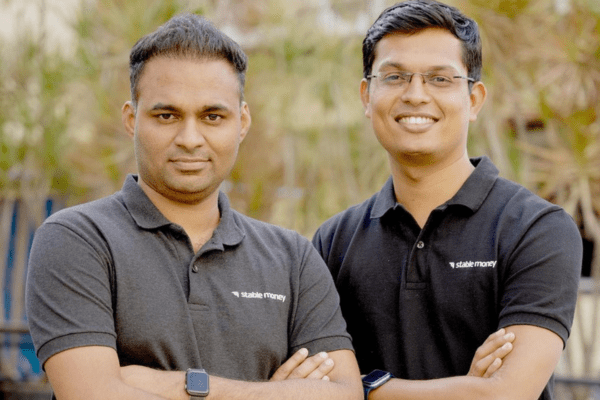
Harish Jain and Saurabh Jain, co-founders, Stable Money

Bengaluru-based wealthtech startup Stable Money has secured $20 million (approximately ₹173 crore) in a Series B funding round, led by Nandan Nilekani’s Fundamentum Partnership, with additional backing from Aditya Birla Ventures.

Current investors Z47, RTP Global, and Lightspeed also took part in the round.

This fresh capital — raised less than a year after its $15 million Series A round — will support the development of new products, the expansion of its distribution network (including offline sales), and the strengthening of its fixed-income partner ecosystem.

“We are experimenting with debt and gold mutual funds and loan against fixed deposits. Pilots are on. We have already launched curated short-term bonds and secured credit cards,” said Saurabh Jain, co-founder and CEO of Stable Money said. “These products help our customers move beyond FDs at their own pace — we’re building trust first, then expanding their wealth journey step by step.”

“And now we’re building other products on top of that comfort.” Per Jain, 80 percent of its customers availing these “curated” corporate bonds come from existing FD customers while the rest are new.

“We launched these (bonds) in October and have been growing, doubling our AUM every month,” Jain said.

The key differentiator, Jain noted, is the focus on short-term bonds. “People are trying with smaller amounts and then slowly scaling to bigger amounts,” he said. “We are offering two-month, three-month, six-month bonds — so they’re able to see the full cycle quickly.”

To enhance accessibility, Stable Money is now providing same-day liquidity and lifetime-free demat accounts for investors in bonds.

The fresh capital will also support pilot initiatives in adjacent wealth products. “We’ll start with debt mutual funds, arbitrage funds, liquid funds, and gold mutual funds— there are mutual funds beyond equity which we want to offer,” Jain said.

Jain added that the platform will eventually offer curated “DIY-style baskets” combining FDs, bonds, and mutual funds. “So far it’s very DIY — you come, you choose your FD or bond and go ahead,” he explained. “Now with mutual funds, we’re trying to create baskets. But we won’t do it like a Smallcase or offer recommendations — it will still be configuration templates that users control.”

While most fintech players chase digitally savvy urban users, Stable Money is focusing on tier-2 towns. “People in these cities have capital — often lying idle in savings accounts or cash — but not access to wealth managers,” said Jain. “They understand FDs, but not digital wealth. That’s where we come in.”

To build trust and drive adoption, the company is planning a physical distribution channel.

“We are trying to set up a very small two-three member team across different cities,” Jain said. “They’ll go talk to customers, explain our products, help them onboard.”

The company has also introduced a secured credit card backed by FDs — particularly useful for users without credit history. “We’ve already sold more than 3,200 cards, and it’s been only a month,” Jain said, adding that traction has been strongest in tier-2 cities. “These customers don’t get unsecured credit cards easily. An FD-backed card makes a lot more sense there.”

Next up, says Jain, is loan-against-FD products within the next quarter. “It will take another three months to go live,” he added.

Currently, the platform has 10 partner banks and NBFCs live, with eight more in the pipeline. “By next June, you should see 18,” Jain said.

Stable Money claims to have more than Rs 3,000 crore in assets under management and over 20 lakh customers. “There is a visible shift in mindset,” Jain said. “People are more open to using tech to manage their money. They’re moving money from savings accounts into investment products.”

Jain believes the company’s real competition isn’t other wealthtech platforms. “Our real competition today is still the LIC agent — the traditional advisor who visits homes in small towns,” he said. “We’re building a digital-first yet trust-led experience that speaks to that audience.”

Mayank Kachhwaha, Principal at Fundamentum, said in a statement: “They’ve blitzscaled from zero to Rs 3,000 crore in AUM and have demonstrated 40% growth in the last three months. With Saurabh and Harish at the helm, Stable Money is well on its way to becoming a full-stack safety net for how India saves.”

Z47’s Vikram Vaidyanathan added, “We are seeing a generational shift in how Indians approach wealth, with a cohort of investors prioritizing long-term compounding of savings over short-term gains. Stable Money has built deep-trust on fixed income products and rapidly emerged as market leaders in a category of the future.”

Aryaman Vikram Birla, Founder, Aditya Birla Ventures said the platform is “well-positioned to serve the evolving financial aspirations of rising ‘Middle India’.”

The fintech firm is expanding its leadership team, having hired senior talent across product and business. “Some key roles are hired, and some are still open,” Jain confirmed.

With its latest funding and investor-friendly features like same-day liquidity and free demat accounts, Stable Money is reinforcing its position in the wealthtech space. The company is actively expanding its product offerings and distribution network to make fixed-income investments more accessible to retail investors, positioning itself for rapid growth.

Pepperfry raises Rs 43-Cr from existing investors

0

Omnichannel furniture brand Pepperfry is raising ₹43.3 crore (approximately $5.1 million) from existing investors such as General Electric Pension Fund, Norwest Venture Partners, Goldman Sachs, Panthera Growth Partners, and others.

This funding round follows the $23 million raised in September 2023 from the same group of investors.

According to regulatory filings accessed from the Registrar of Companies (RoC), Pepperfry’s board has approved the issuance of 559,463 compulsory convertible preference shares at an issue price of ₹775 each to raise the stated amount.

General Electric will lead this round with ₹21.5 crore ($2.5 million), while Norwest Venture Partners and Panthera Growth Partners will invest ₹8.52 crore and ₹6.45 crore, respectively, to increase their stakes. Goldman Sachs, Erste WV Gutersloh GmbH, and Growth Equity Opportunity Fund Cayman Holdings Ltd. will contribute the remaining funds.

The company plans to use the proceeds for growth, expansion, and general corporate purposes.

Post-allotment, Pepperfry’s valuation stands at ₹3,120 crore (around $367 million).

Operating on a marketplace model across both online and offline channels, Pepperfry offers a catalog of over 10,000 products and partners with leading brands like Godrej, Springfit, and Spacewood. The company claims to have more than 200 retail studios across over 100 cities.

The company has raised over $270 million to date from investors including Norwest Venture Partners, General Electric, Broad Street Investment, and Pidilite.

For the fiscal year ending March 2024, Pepperfry’s operating revenue declined by 30% to ₹189 crore, while it narrowed losses by over 37% to ₹117.5 crore.

Pepperfry competes with other well-funded furniture brands such as Reliance-acquired Urban Ladder, which has raised over $100 million, and Wooden Street, which secured $77 million in funding.

Pepperfry’s latest funding round reinforces investor confidence in its growth potential despite recent revenue challenges. With a strong marketplace model, expanding retail presence, and a solid backing from prominent investors, the company is well-positioned to continue scaling and competing effectively in India’s competitive furniture market.

Pride Premier to debut in Dehradun as SeaHorse rebrands hotel solitaire

0

SeaHorse Hospitality Consulting has announced the successful rebranding and signing of Hotel Solitaire in Dehradun, which will now operate under the Pride Premier brand by Pride Group of Hotels. SeaHorse will open this 65-room resort-style property in June 2025, adding a significant milestone to its growing portfolio of hotel brand collaborations.

Located on the Haridwar Bypass Highway, the hotel covers two acres and caters to both leisure and business travelers. In addition to its strategic location, the hotel features a striking atrium-style lobby, fitness center, spa, outdoor swimming pool, a 12,000 sq. ft. event lawn, banquet halls, a multi-cuisine restaurant and bar, tea lounge, and EV charging stations—offering a comprehensive experience for both leisure and business guests.

Amid Dehradun’s rapid emergence as a key hospitality destination—fueled by its proximity to spiritual hubs like Haridwar and Rishikesh, and the soon-to-be-launched Delhi-Dehradun Expressway—SeaHorse and Pride Group of Hotels have strategically rebranded Hotel Solitaire under the Pride Premier banner. With the expressway expected to cut travel time from Delhi to just 2.5 hours, this move positions the hotel to effectively tap into the growing demand from tourists, corporate travelers, and the MICE (Meetings, Incentives, Conferences, and Exhibitions) segment.

“Rebranding an operating hotel demands more than a new sign; it requires aligning purpose, people, and place for tomorrow’s traveler,” said Sandeep Roy, Founder & CEO, SeaHorse Hospitality Consulting.

The rebranding of Hotel Solitaire as Pride Premier by SeaHorse Hospitality Consulting and Pride Group of Hotels marks a strategic move to capitalize on Dehradun’s growing appeal as a leisure and business destination.

Its prime location, modern amenities, and the upcoming Delhi-Dehradun Expressway—which will enhance connectivity—position the property to attract a diverse mix of travelers and help strengthen the region’s hospitality landscape.

Udaan raises $114 Mn in pre-IPO round from Lightspeed, M&G

0
Vaibhav Gupta, co-founder and CEO of Udaan

Udaan, India’s leading B2B e-commerce platform, has secured $114 million in fresh equity funding as part of its Series G round, the company announced on Monday.

The funding round was led by M&G Investments and Lightspeed, along with participation from both existing and new investors. While the company’s valuation remains steady at around $1.8 billion, the successful raise underscores growing investor confidence in Udaan’s long-term strategy and its path toward a public listing.

Udaan plans to utilize the new capital to strengthen its presence in key product categories and customer segments, with a strong focus on fast-moving consumer goods (FMCG) and the hotel, restaurant, and catering (HoReCa) segment. Additionally, the company aims to scale up its private-label offerings in the staples category—an important move to enhance profitability.

The latest funding round strengthens Udaan’s balance sheet and provides greater financial flexibility as the company prepares for its initial public offering (IPO).

“Over the last three years, we have transformed the business by building cost as a capability and a competitive advantage. We have reduced our EBITDA (earnings before interest, taxes, depreciation, and amortization) burn by 40 percent every year for the last three years and are on track to achieve full group EBITDA profitability in the next 18 months,” said Vaibhav Gupta, co-founder and CEO of Udaan. 

“Our hybrid model of a highly available e-commerce app plus new-gen tech-first sales is now established as the benchmark winning model for eB2B. It provides ROI-accretive customer wallet growth and a strong solution for brands and manufacturers to drive product mix,” he added.

As part of its long-term strategy, Udaan emphasized its focus on driving “consistent growth with profitability at scale” through a regional cluster-led operating model, underscoring its aim to build a sustainable and scalable business.

The company continues to show robust, contribution-margin-accretive growth, recording over 60% year-on-year (YoY) growth in calendar year 2024, along with a 300+ basis point improvement in contribution margin. This positive trend has extended into 2025, with an additional 100+ basis point gain so far. Udaan has also streamlined operations by cutting fixed costs by 20%, leading to a 40% reduction in EBITDA burn in CY2024 and a further 20% decrease in CY2025 to date.

Founded in 2016, Udaan operates a digital platform that connects small retailers with manufacturers and wholesalers, helping streamline India’s fragmented retail supply chain. According to data from Tracxn, the company has raised over $1.95 billion to date.

Udaan competes with major players like Amazon, Flipkart, and Reliance’s JioMart in the B2B e-commerce space—an industry projected to exceed $125 billion in sales by 2027, growing at a compound annual growth rate (CAGR) of 45%, as per a report by Avendus Capital.

In FY2023–24, Udaan generated revenue of ₹5,700 crore while significantly reducing its EBITDA burn by 36% year-on-year, bringing it down to ₹923 crore.

Leela Hotels IPO shares list at ₹406, a 6.7% discount to issue price

0

Luxury hospitality group Schloss Bangalore, which operates under the “The Leela” brand in India, saw a lukewarm debut on the stock market on Monday, June 2. Leela Hotels’ IPO shares opened at a discount of approximately 6.5% compared to their issue price.

On the NSE, the stock opened at ₹406, marking a 6.67% drop from the IPO price of ₹435. On the BSE, it opened slightly higher at ₹406.50, a 6.55% discount. The listing price also fell short of the IPO’s grey market premium (GMP), which stood at ₹2 per share earlier in the day.

Leela Hotels’ stock managed to recover some ground during the trading session, climbing over 4% above its listing price. However, it continued to trade nearly 2% below its IPO issue price.

As of 10:17 AM, Leela Hotels’ stock was trading at ₹425 on the BSE, reflecting a 4.55% gain over its listing price of ₹406.50. On the NSE, the stock stood at ₹424.65, marking a 4.6% rise from its opening level.

The company offered the Leela Hotels IPO for subscription from May 26 to May 28, with a price band of ₹413 to ₹435 per share.

The Leela Hotels IPO saw a moderate response, receiving an overall subscription of 4.72 times by the end of the three-day bidding window. Retail investors subscribed to 0.87 times their allotted portion, non-institutional investors subscribed 1.08 times, while qualified institutional buyers (QIBs) showed strong interest by subscribing 7.82 times.

Through this public issue, the company raised ₹3,500 crore. This included ₹2,500 crore from the issuance of 5.75 crore fresh equity shares and ₹1,000 crore via an offer for sale (OFS) of 2.30 crore shares.

The company intends to utilize the proceeds from the fresh issue primarily for the repayment or redemption, in full or in part, of certain outstanding borrowings taken by the company and its subsidiaries. A portion of the funds will also be allocated for general corporate purposes.

Leela Hotels made a subdued stock market debut, listing at a discount despite a moderately subscribed IPO. While the shares showed some recovery post-listing, they continued to trade below the issue price.

Backed by ₹3,500 crore in capital raised through a mix of fresh equity and offer for sale, the company aims to strengthen its financial position by repaying outstanding borrowings and supporting general corporate needs. The listing reflects cautious investor sentiment but also highlights long-term potential in the luxury hospitality space.