Sunday, August 9, 2026
Home Blog Page 174

Yogurt Factory partners with FranGlobal to launch in India and drive retail expansion

0
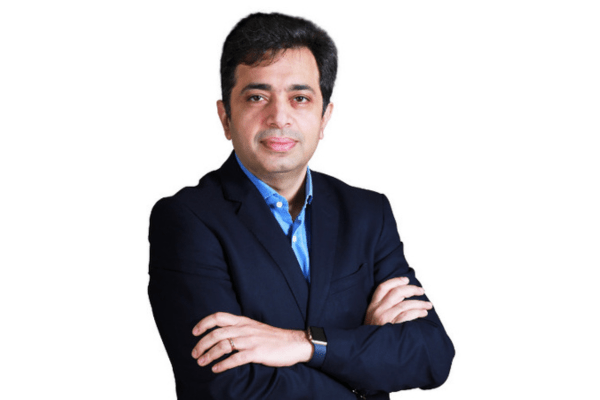
Gaurav Marya, Chairman of Franchise India Group

French frozen yogurt brand Yogurt Factory has made its foray into the Indian retail market through a partnership with FranGlobal, the international division of Franchise India. This collaboration aims to bring the brand’s low-fat frozen treats and diverse menu offerings to India’s rapidly growing community of health-conscious consumers.

Established in 2011 by HEC Paris graduates Ouriel Hodara and Emmanuel Tedesco, Yogurt Factory started with a single store in Paris and has since expanded to over 85 outlets across ten countries, including France, Belgium, Spain, Morocco, and Malaysia. The brand’s entry into India represents a key milestone in its broader global expansion strategy.

Gaurav Marya, Chairman of Franchise India Group, said, “As Indian consumers increasingly seek mindful indulgence, Yogurt Factory is the perfect brand that blends wellness with joy. With 0 percent fat, unlimited toppings, and a cheeky, fun format—it’s the dessert of the future. At FranGlobal, we’re proud to launch a brand that speaks to both foodies and franchisees alike.”

The Indian operations will showcase Yogurt Factory’s signature zero percent fat frozen yogurt, allowing customers to customize their desserts with unlimited toppings at a fixed price. Topping choices will range from fresh fruits, cereals, and sauces to indulgent add-ons like brownies, cookies, and popular global brands such as Oreo, Kinder, and Speculoos.

In addition to its flagship frozen yogurt, Yogurt Factory’s Indian menu will feature a variety of other indulgent yet health-conscious offerings. Customers can enjoy smoothies crafted from fresh fruit blends, thick milkshakes in a range of flavors, and Liège and bubble waffles with customizable toppings. The menu will also include refreshing bubble teas, iced teas, and freshly pressed juices, catering to diverse tastes and preferences across the Indian market.

FranGlobal is actively targeting aspiring entrepreneurs with investment opportunities ranging from ₹30 lakh to ₹60 lakh, offering flexible store formats including compact kiosks and larger flagship outlets. The franchise model offers a turnkey solution, with FranGlobal providing comprehensive support in key areas such as site selection, store design, staff training, marketing, and daily operations.

The first Yogurt Factory outlet in India is set to launch later this year, with the brand planning an ambitious rollout across major metropolitan cities and high-footfall shopping malls nationwide.

Fidelity raises Lenskart valuation to $6.1 Bn ahead of IPO

0
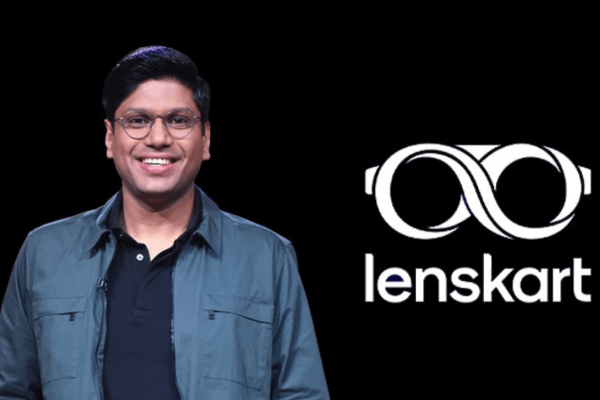
Peyush Bansal, CEO, Lenskart

Fidelity has increased the valuation of omnichannel eyewear brand Lenskart to $6.1 billion, according to its latest monthly portfolio update.

In November, Fidelity valued the Peyush Bansal-led company at $5.6 billion.

In June 2024, Lenskart secured $200 million through a secondary funding round, followed by a $20 million investment led by Bansal himself. To date, the company has raised close to $1 billion and reached a $5 billion valuation during the secondary deal, with Fidelity also participating in the round.

This valuation update comes as Lenskart gears up for its initial public offering (IPO), with plans to raise $1 billion at a target valuation of $10 billion. Just last week, it was reported that the company transitioned its parent entity from a private limited to a public limited company—a key step toward going public.

Reports also indicate that Lenskart intends to confidentially file its draft red herring prospectus (DRHP) with the market regulator by the end of this month.

Financially, Lenskart made significant progress in FY24, reducing its losses by 84% to ₹10 crore from ₹63 crore in FY23. Meanwhile, revenue from operations surged by 43% to ₹5,427.7 crore during the same period. FY25 results are still awaited.

Additionally, Lenskart is reportedly in talks to acquire location intelligence startup GeoIQ, a development first revealed earlier this week.

Clarks Hotels & Resorts launches new property in Sasan Gir, Gujarat

0

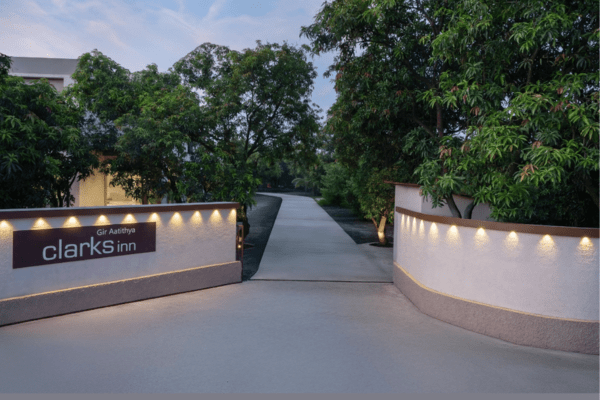
The Clarks Hotels & Resorts has introduced Gir Aatithya Clarks Inn, an upscale, nature-themed property nestled in the scenic wilderness of Sasan Gir. Spanning 16 acres and conveniently located just 25 km from the iconic Somnath Temple, the resort caters to wildlife enthusiasts, spiritual seekers, and families seeking immersive travel experiences.

The property features well-appointed Deluxe and Premium rooms, each offering private balconies overlooking lush orchards and designed to provide maximum guest comfort. Additionally, guests can enjoy a range of amenities, including a swimming pool, gym, and children’s play area. Notably, the resort’s standout feature is its floating breakfast experience served in the pool.

Rahul Deb Banerjee, COO of The Clarks Hotels & Resorts, expressed his enthusiasm, stating, “Expanding our presence to unique destinations like Sasan-Gir aligns perfectly with our corporate strategy of providing personalized experiences to our guests. Gir Aatithya Clarks Inn is crafted to reflect the beauty and tranquility of its surroundings. As domestic tourism continues to grow and travelers seek immersive getaways, we are confident that this property will offer unforgettable moments rooted in nature, culture, and heartfelt hospitality.”

Dining at Gir Aatithya Clarks Inn is a true celebration of flavors. Moreover, the on-site restaurant, The Bridge, offers a vegetarian-only, multi-cuisine menu with a strong emphasis on regional specialties. In addition, for special occasions and gatherings, the property features a sprawling 32,000-square-foot lawn and an 8,000-square-foot banquet hall—making it an ideal venue for weddings, retreats, and corporate events.

“Our vision is to create immersive stays that connect travelers with the region’s natural and cultural richness; from mango plucking in our private orchard to exploring Gir’s iconic safaris, we’re offering guests,” Gir Aatithya Clarks Inn said in a statement.

Thanks to its strategic location near popular attractions like Gir Jungle Safari, Devaliya Safari Park, and key pilgrimage sites, the hotel is an ideal choice for families, honeymooners, wildlife photographers, and NRIs looking to reconnect with their heritage. Furthermore, its serene setting and thoughtful amenities enhance the overall guest experience, making it a standout destination in the region.

Meta acquires stake in Scale AI, valuing startup at $29B

0
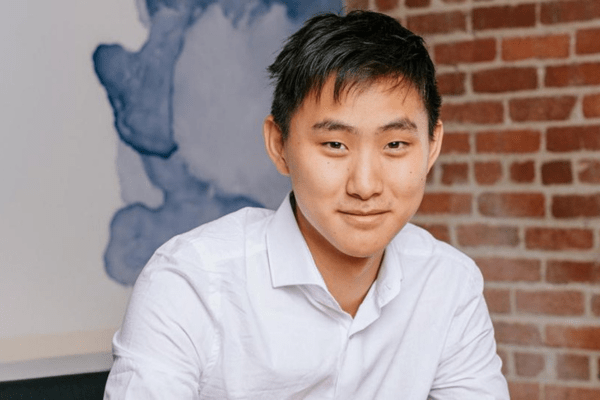
Alexandr Wang, CEO and Co-founder, Scale AI

Scale AI announced on Thursday that Meta Platforms has completed an investment deal valuing the startup at over $29 billion.

According to two sources with knowledge of the deal, Meta’s investment totals approximately $14.3 billion.

The sources revealed that Scale AI CEO and cofounder Alexandr Wang will join Meta’s newly formed “superintelligence” unit, which aims to develop artificial general intelligence (AGI)—machines capable of equaling or exceeding human intelligence.

Scale AI announced that its Chief Strategy Officer, Jason Droege, will take over as interim CEO following Alexandr Wang’s departure.

By bringing Wang on board—despite his lack of formal experience in frontier AI research—Meta CEO Mark Zuckerberg appears to be betting on a business-savvy leader akin to OpenAI’s Sam Altman, rather than following the model of research scientists leading most rival AI labs.

The investment deal marks Meta’s second-largest ever, trailing only its $19 billion acquisition of WhatsApp.

Notably, since many AI labs have relied on Scale for data services, Zuckerberg may also gain valuable insight into competitors’ data strategies—a crucial asset in training advanced AI models.

In May 2024, Scale AI raised $1 billion in funding from prominent backers including Nvidia, Amazon, and Meta, which brought the company’s valuation to nearly $14 billion.

Founded in 2016, Scale AI specializes in delivering large volumes of precisely labeled data—an essential resource for training advanced AI models like OpenAI’s ChatGPT.

To achieve this, the company established subsidiary platforms such as Remotasks and Outlier, which recruit and manage gig workers who manually annotate data.

Wang, the 28-year-old co-founder, has led the company through various high-growth tech phases, initially focusing on autonomous vehicles and now shifting toward the booming field of generative AI.

With Meta’s strategic investment and Alexandr Wang joining its superintelligence unit, Scale AI stands at the center of a pivotal shift in the AI landscape. The deal not only signals Meta’s aggressive push toward achieving artificial general intelligence but also highlights the growing importance of high-quality data in shaping next-generation AI models. As leadership transitions and new alliances form, Scale is well-positioned to influence the future trajectory of AI development.

Canary raises $80 Mn Series D to expand AI-powered hotel management platform

0
Harman Singh Narula & SJ Sawhney, Co-founders, Canary

Canary, a platform focused on hotel guest management, announced on Thursday that it has secured $80 million in Series D funding, with Brighton Park Capital leading the round.

Originally founded in 2018 by Harman Singh Narula and his childhood friend SJ Sawhney, the company aims to help hotels streamline and automate guest interactions. Since then, Canary has raised nearly $180 million in total funding, reflecting strong investor confidence in its long-term vision.

“Running a hotel is increasingly complex,” Singh Narula said. “Guest expectations are constantly evolving, and staffing shortages continue to strain operations. We felt the hotel market was underserved by technology and that modern solutions could help hoteliers elevate the guest experience, improve profitability, and operate more efficiently.” 

Singh Narula explained that Canary provides a comprehensive suite of products covering the entire guest journey—from booking to checkout. For example, the platform allows guests to check in via their mobile devices or contact the front desk through text messages. Moreover, he noted that the company is increasingly integrating AI into its services by leveraging a large language model (LLM) to deliver instant responses across voice, web, and text channels.

“The guest’s user experience is completely customized and branded for each hotel,” he continued. “So, as a guest, you may not know that Canary helped enable your travel experience. With that said, if you’ve stayed in hotels recently, odds are you’ve utilized Canary, as we now work with 20,000 hotels across 100-plus countries.” Companies that use Canary include the Rosewood Hotels, Marriott, Best Western, and Wyndham. 

However, Canary isn’t without competitors—according to PitchBook, other guest management software providers in the space include Cloudbeds and Revinate.

Furthermore, Singh Narula characterized the company’s fundraising approach as opportunistic.

“While we weren’t actively fundraising, the opportunity emerged to bring in the right partners with strong alignment on vision, values, and where we’re headed,” he said.

Other investors, including Y Combinator, Insight Partners, and Fidelity, participated in the round. 

Singh Narula said the company will use the capital to expand operations and hire additional employees.

“We see travel as one of the most powerful ways people connect with the world,” he said. “We believe Canary has an important role to play in making those experiences more personal, more memorable, and more meaningful.”

With this latest funding round, Canary plans to further enhance its AI-driven guest management solutions and expand its presence in the hospitality tech space. Despite facing competition from players like Cloudbeds and Revinate, the company’s comprehensive product suite and strategic fundraising efforts position it well for continued growth.

Multiverse Computing raises $217 Mn to shrink AI model sizes

0

Spanish AI company Multiverse Computing announced on Thursday that it has raised €189 million ($217 million) in funding from investors including Bullhound Capital, HP Inc., Forgepoint Capital, and Toshiba to advance its AI model compression technology.

The firm claims its innovation can shrink large language models (LLMs) by up to 95% without compromising performance while also cutting operational costs by as much as 80%.

Moreover, its approach blends concepts from quantum physics and machine learning to effectively simulate quantum systems—without requiring an actual quantum computer.

With this latest funding round, Multiverse has emerged as the largest AI startup in Spain. As a result, it now stands alongside Europe’s leading AI companies such as Mistral, Aleph Alpha, Synthesia, Poolside, and Owkin.

The company has already released compressed versions of LLMs, including Meta’s Llama, China’s DeepSeek, and France’s Mistral, and plans to launch additional models soon.

“We are focused just on compressing the most used open-source LLMs, the ones that the companies are already using,” Chief Executive Officer Enrique Lizaso Olmos said.

Per Roman, co-founder & managing partner, Bullhound Capital, said, “Multiverse’s CompactifAI introduces material changes to AI processing that address the global need for greater efficiency in AI, and their ingenuity is accelerating European sovereignty. Román Orús has convinced us that he and his team of engineers are developing truly world-class solutions in this highly complex and compute-intensive field. Enrique Lizaso is the perfect CEO for rapidly expanding the business in a global race for AI dominance.”

The compression tool developed by Multiverse is also accessible via the Amazon Web Services (AWS) AI Marketplace, making it easier for developers and enterprises to integrate the technology into their workflows.

Damien Henault, Managing Director, Forgepoint Capital International, added, “The Multiverse team has solved a deeply complex problem with sweeping implications. The company is well-positioned to be a foundational layer of the AI infrastructure stack. Multiverse represents a quantum leap for the global deployment and application of AI models, enabling smarter, cheaper, and greener AI. This is only just the beginning of a massive market opportunity.”

Multiverse Computing, backed by substantial funding and armed with groundbreaking compression technology, is actively working to make large language models more efficient and accessible. Its presence on the AWS Marketplace further amplifies its reach and impact. Its rise marks a significant milestone for Spain’s AI ecosystem and strengthens Europe’s position in the global AI innovation landscape.

Holiday Inn Express expands footprint in Kolkata’s New Town

0
Sudeep Jain, Managing Director, South West Asia, IHG Hotels & Resorts

IHG Hotels & Resorts has unveiled the launch of Holiday Inn Express Kolkata New Town, strengthening its footprint in India. Situated in Rajarhat’s New Town—a rapidly growing hub known for its IT parks and business centers—the new hotel aims to cater to modern travelers.

The property offers 113 contemporary rooms, thoughtfully designed to provide both comfort and functionality. Moreover, tailored to meet the needs of both business and leisure travelers, the hotel delivers a smart, no-fuss stay experience, complete with all the essential amenities.

Sudeep Jain, Managing Director, South West Asia, IHG Hotels & Resorts, said, “We’re excited to bring Holiday Inn Express to Kolkata’s New Town. This opening highlights our commitment to providing smart, seamless stays for today’s travelers. Being in the heart of a thriving business hub, we’re confident the hotel will cater perfectly to the needs of both corporate and leisure visitors.”

Guests at the Holiday Inn Express Kolkata New Town can start their day with a complimentary Express Start Breakfast, featuring a mix of healthy and hearty choices. For those on the go, a Grab & Go counter offers added convenience. The hotel also provides free high-speed Wi-Fi, a 24-hour fitness center, and well-equipped rooms with blackout curtains, plush bedding, and invigorating power showers for a restful stay.

Each room includes flat-screen TVs with content mirroring, flexible workspaces, and multiple USB ports, allowing guests to stay connected, productive, or simply relax. Conveniently situated near Eco Park and just a short drive from Kolkata’s city center, the hotel offers easy access to both business and leisure destinations.

Ashish Jakhanwala, Chairman, Managing Director & CEO of SAMHI Hotels Ltd., added, “We are proud to announce the opening of our latest hotel in Kolkata, a testament to our commitment to growing our portfolio of high-quality hotels in key markets. Our investment in the HIEX brand is driven by our vision to build a platform of high-quality and highly relevant products for key markets across India. This hotel also marks our first hotel in the eastern part of India and an established market like Kolkata.”

With its strategic location, modern amenities, and focus on comfort and convenience, Holiday Inn Express Kolkata New Town is set to cater seamlessly to the needs of both business and leisure travelers. The new opening reinforces IHG’s commitment to expanding its presence in key urban centers across India.

Vishnu Delight: The Future of Conscious Indian Snacking

0
Aditya Goyal, CEO, Vishnu Delight

In a market saturated with buzzwords like “healthy,” “guilt-free,” and “organic,” few brands truly bridge the gap between authentic Indian food heritage and modern wellness trends. But for Aditya Goyal, founder of Vishnu Delight, the goal was never just to launch another snack label—it was to spark a deeper movement. Drawing from his background in large-scale manufacturing and a deep understanding of evolving consumer needs, Aditya envisioned a brand that could make wholesome, culturally rooted snacking both accessible and aspirational. From foxnuts (makhana) and millet-based offerings to clean-label ingredients and globally inspired functional flavors, Vishnu Delight is a response to the growing demand for food that’s not just good to eat, but good in intent.

For Aditya, it’s more than a product—it’s a purpose-driven platform inviting consumers into a lifestyle rooted in better choices, ethical origins, and intentional living. In this exclusive interview with Business Review Live, he shares the story behind the brand and how Vishnu Delight is leading the future of conscious Indian snacking.

1. What inspired you to step into the healthy snacks segment and launch Vishnu Delight?

Coming from a background steeped in large-scale manufacturing, I had a front-row view of two powerful dynamics: the efficiency of production and the growing disconnect between traditional Indian food wisdom and today’s fast-paced lifestyle. That gap inspired me to act.

I saw an opportunity to reintroduce nutrient-rich Indian snacks like makhana—but in a way that speaks to the modern, health-conscious consumer. People today want snacks that are both guilt-free and rooted in culture, and that’s exactly where Vishnu Delight finds its purpose.

2. What gap in the market did you see, and how did you envision Vishnu Delight filling it?

Although the market had no shortage of “healthy” snack options, I found that most products were missing one or more essential elements—authenticity, clean-label ingredients, or a genuine emotional connection to Indian food culture. That’s where the idea for Vishnu Delight took shape.

We set out to create snacks that deliver functional nutrition without sacrificing flavor—products that could seamlessly become part of people’s daily lives. Our focus was clear: to combine traditional Indian ingredients like makhana and millets with formats that today’s consumers appreciate.

3. What does your product development process look like—from concept to shelf?

At Vishnu Delight, our product development begins with one core principle: market listening. We constantly track evolving flavor preferences, rising health and wellness trends, and consumer pain points—through a mix of retail analytics and direct feedback from our community.

Once we identify a market need, our food technology team gets to work:

  • Recipe development: We craft formulations that prioritize clean-label ingredients while ensuring they can be produced at scale.
  • Pilot testing: Small batches are created and sampled across focus groups to gather sensory feedback on taste, texture, and mouthfeel.
  • Optimization: Based on insights, we refine until we achieve the right balance of flavor, nutrition, and shelf stability.

Before any product reaches consumers, it undergoes:

  • Lab testing for nutritional accuracy and safety
  • Shelf-life studies to ensure longevity without artificial preservatives
  • Packaging and design reviews for brand consistency and consumer appeal

This end-to-end innovation pipeline ensures that every snack we launch meets the Vishnu Delight promise—functional, flavorful, and uncompromisingly clean.

4. How do you balance innovation with nutritional integrity? Any product you’re proud of?

At Vishnu Delight, we don’t chase trends for the sake of it. Every product we create must meet three non-negotiable criteria: Clean, recognizable ingredients, Minimal processing to preserve natural integrity and Nutritional relevance aligned with modern wellness goals.

This disciplined approach ensures that each snack serves a purpose—offering both health value and everyday appeal. One product I’m particularly proud of is our flavored makhana range. We’ve carefully preserved the Ayurvedic roots of makhana while layering on bold, global flavors like Peri-peri, Thai chilli, Mint and herbs, among others. Each serving is under 100 calories, making it a light yet satisfying snack that delivers both flavor and function. By merging traditional Indian superfoods with contemporary taste profiles, we’re redefining what guilt-free snacking looks like—without compromising on health or heritage.

5. How do you ensure quality sourcing, traceability, and clean-label compliance?

At Vishnu Delight, we believe great snacks start at the source. That’s why we’ve established direct sourcing partnerships with farmers and cooperatives, particularly in Bihar—India’s heartland for premium makhana.

To maintain consistency and trust, we implement multiple layers of quality control:

  • Batch testing: Every raw material batch is tested for purity and performance.
  • Vendor audits: We conduct regular, in-depth vendor audits to ensure compliance with our standards.
  • Certified facilities: Our production units are fully FSSAI-approved, ISO-certified, and export-compliant, enabling us to deliver both domestically and internationally.

Clean labeling isn’t just a trend—it’s a core value. Our ingredient lists are Short and transparent, Made with familiar, everyday ingredients and Free from artificial preservatives, flavors, or additives. This end-to-end control allows us to offer snacks that are not only nutritionally sound and safe but also ethically and sustainably sourced.

6. What was your branding vision for Vishnu Delight?

From the very beginning, our vision for Vishnu Delight was clear: to create a brand rooted in transparency, wellness, and positivity. We wanted consumers to feel confident not just in what they were eating, but in why they were choosing us. The name ‘Vishnu Delight’ carries a deeper meaning. It draws from the idea of abundance, balance, and divine nourishment—a reminder that food can be both purposeful and joyful when rooted in tradition and care. 

Every element of the brand—from packaging to palette—was carefully crafted to reflect our values:

  • Warm, earthy tones that evoke trust and approachability
  • Clean, modern design for shelf appeal and clarity
  • Story-driven branding that celebrates Indian heritage in a contemporary voice

7. What strategies helped you engage health-conscious consumers?

At Vishnu Delight, we’ve always believed that building a meaningful brand goes beyond product—it’s about educating and engaging. From the beginning, our focus has been on storytelling with purpose. We don’t just talk about what we make, but why we make it. This approach has shaped our marketing strategy across every touchpoint. We’ve leaned into founder-driven narratives, clean, informative packaging, and customer testimonials to build trust and transparency. Our digital content highlights the benefits of ingredients like makhana and millets in ways that resonate with today’s wellness-focused consumer. Beyond digital, we’ve invested in in-store demos, influencer sampling, and corporate wellness partnerships to bring the brand experience to life. These real-world interactions help us form deeper, lasting connections with our audience—turning first-time buyers into loyal brand advocates.

8. How do you stay ahead of trends like plant-based or mindful snacking?

At Vishnu Delight, we believe in listening before launching. Our product roadmap is shaped by a combination of global wellness insights and ongoing feedback from our consumer community. This dual approach ensures we stay both relevant and responsive. We closely track international dietary trends—like gluten-free, low-glycemic index (low-GI), and plant-based eating—and explore how traditional Indian superfoods such as millets and foxnuts (makhana) can naturally align with these preferences. By blending ancient wisdom with modern nutritional science, we create products that are both globally appealing and deeply rooted in Indian heritage.

9. Are you exploring personalization in health and nutrition?

Yes, we’re already experimenting with custom gifting formats tailored to specific dietary needs—such as diabetic-friendly options, protein-rich hampers, and other wellness-focused assortments. Looking ahead, we’re excited to dive deeper into D2C personalization, where consumers can build their own healthy snack mixes based on taste, lifestyle, and nutrition goals. We see personalization as the next big shift in the snacking space, and it aligns perfectly with our mission to offer functional, conscious choices that feel personal and purposeful. It’s not just about variety—it’s about giving people control over their health through food.

10. How is Vishnu Delight incorporating sustainability?

Sustainability is a key pillar of our growth strategy at Vishnu Delight. We’ve already transitioned to recyclable packaging and are actively developing biodegradable pouch alternatives to further reduce our environmental impact. On the sourcing front, we prioritize locally grown, climate-resilient crops like makhana and millet, both known for their low water footprint and high nutritional value. Additionally, we’re minimizing production waste through smarter inventory planning and batch-level traceability, ensuring efficiency across our supply chain. These efforts reflect our broader commitment to making sustainable snacking accessible, responsible, and future-ready.

11. Are you positioning Vishnu Delight in a larger wellness ecosystem?

Absolutely. We’re already engaging in early-stage collaborations with nutritionists, fitness platforms, and wellness communities to build value-driven partnerships that go beyond snacking. These include initiatives like curated snack boxes, co-branded wellness events, and even guided diet plans that integrate our products into broader health routines. At Vishnu Delight, we see ourselves as more than just a snack brand—we’re becoming a part of our consumers’ everyday wellness lifestyle. These strategic collaborations help us deliver holistic health experiences, aligning our clean-label offerings with the growing demand for personalized, functional nutrition.

12. How has your messaging evolved for the purpose-driven buyer?

Today’s consumers care deeply about the “why” behind the brand, not just the “what” on the label. At Vishnu Delight, we’ve made a deliberate shift from simply highlighting taste to sharing our deeper values—from ethical sourcing and founder-driven storytelling to farmer empowerment and sustainable practices. This transparency has helped us build genuine trust and connection. For us, it’s no longer just about selling snacks—it’s about inviting people to be part of a movement toward cleaner, culturally rooted, and consciously crafted food. We want every customer to feel they’re not just making a purchase—they’re making a difference.


Kisah Apparels raises Rs 13-Cr from Wow Momo founder & others

0
Yash Sarawagi, co-founder and CEO of Kisah Apparels

Men’s ethnicwear label Kisah Apparels has secured ₹13 crore (approximately $1.52 million) in a pre-Series A funding round, led by Wow! Momo founder Sagar Daryani, with additional backing from Apoorv Salarpuria, Rahul Todi, Vinod Dugar, and Inflection Point Ventures.

According to a press release, Kisah will use the funds to expand its offline footprint, scale its direct-to-consumer (D2C) operations, and boost brand visibility.

Founded in 2018 by Yash Sarawagi and Yashwi Ladasaria, the Kolkata-based brand offers stylish and affordable ethnicwear specifically tailored for Gen Z and millennial consumers.

Initially launched as a marketplace-first venture, Kisah has since begun transitioning into an omnichannel brand. Currently, it operates two physical retail stores; moreover, it plans to open three additional outlets soon in key Indian cities.

“E-commerce gave us pan-India reach and deep customer insights, which are now fueling our D2C and offline growth—backed by data, customer pull, and positive cash flow at the company level,” said Yash Sarawagi, co-founder and CEO of Kisah Apparels.

Kisah noted that it has developed internal systems to analyze data from both its marketplace and D2C channels. These insights help guide product design, sourcing strategies, supply chain optimization, and marketing efforts. The brand claims to have scaled from a revenue range of ₹40–45 crore to a current run rate exceeding ₹100 crore while maintaining positive operating cash flow and profitability (PAT).

Backed by strong financial growth, data-driven operations, and fresh capital, Kisah Apparels aims to accelerate its expansion and establish itself as a leading omnichannel ethnicwear brand for India’s Gen Z and millennial consumers.

Chime sets IPO price at $27 per share, aims to raise $864 Million

0
Chris Britt & Ryan King, Co-founders, Chime

Fintech firm Chime announced on Wednesday that it raised $864 million through its initial public offering by pricing its shares at $27 each.

The company had initially set the price range between $24 and $26 per share.

With this IPO, Chime’s valuation stands at approximately $11.6 billion on a fully diluted basis.

Chime’s IPO stands out as one of the largest public offerings by a U.S. fintech company in recent years. It comes after a market correction that saw valuations cool from the peaks reached during the post-pandemic surge in fintech and e-commerce investments.

Founded in 2012 by former Visa executive Chris Britt and Comcast alum Ryan King, Chime delivers its services in collaboration with traditional banks. Its offerings include branded checking accounts with customer-centric features like fee-free overdrafts.

Prominent investors such as Yuri Milner’s DST Global, General Atlantic, and ICONIQ Capital backed Chime, which held a $25 billion valuation during its last major funding round in 2021.

The company is scheduled to start trading on the Nasdaq Global Select Market on Thursday under the ticker symbol ‘CHYM.’

Chime’s IPO follows the successful market debut of stablecoin issuer Circle earlier in June, a move that has helped revive momentum in the U.S. IPO market, which had been sluggish due to uncertainty surrounding the Trump administration’s tariff policies.

Chime had originally planned to go public earlier this year but postponed its launch after Trump’s “Liberation Day” tariff announcement unsettled financial markets.

With a recent uptick in listings, more companies are reigniting their IPO plans, and June is emerging as a crucial window for going public before the typical summer slowdown sets in.

As of March 31, Chime reported 8.6 million active members. According to its IPO prospectus, the company generated an average revenue of $251 per active member in Q1. Members conducted an average of 54 transactions per month, with 75% of those being purchase transactions made using Chime-branded cards.

The company earns most of its revenue through interchange fees—a portion of the transaction fees that merchants pay to payment networks like Visa when customers use Chime’s debit or credit cards.

Chime’s financial performance has improved significantly, with its net loss narrowing to 39 cents per share for the year ending December 31, compared to $3.22 in 2023 and $8.12 in 2022.

Morgan Stanley, Goldman Sachs, and J.P. Morgan Chase are serving as the lead underwriters for the IPO.