




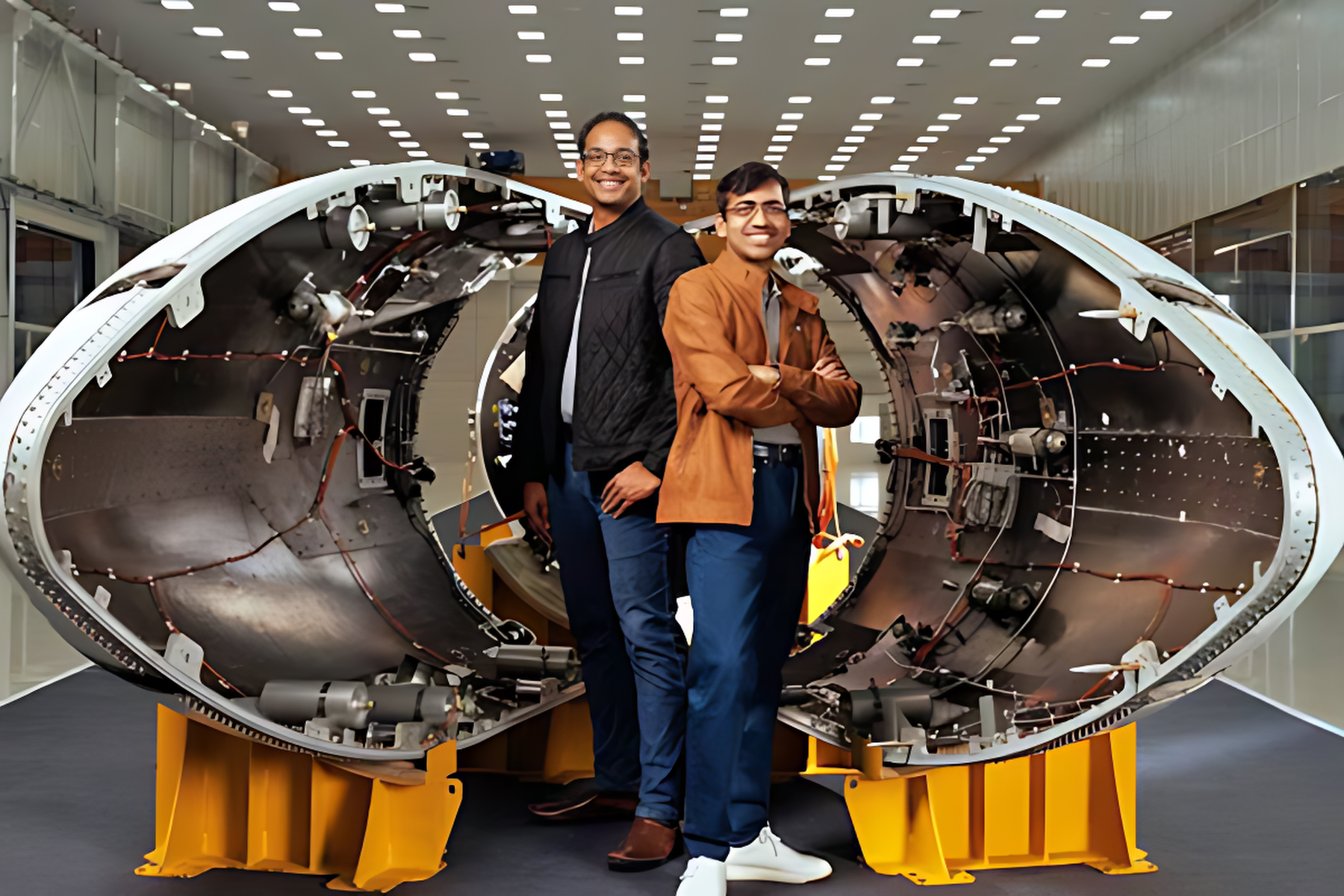
Hyderabad-based spacetech unicorn Skyroot Aerospace successfully launched Vikram-1 on Saturday, becoming the first private Indian company to place payloads into orbit and marking a major milestone for India’s commercial space industry.
The mission, named Aagaman, lifted off from the First Launch Pad at the Satish Dhawan Space Centre (SDSC-SHAR), Sriharikota, at 12:05 PM. Moreover, the launch vehicle successfully completed all four stages according to plan.
With this achievement, Skyroot completed India’s first privately developed orbital launch vehicle mission and took a significant step toward offering commercial, on-demand satellite launch services from the country.
Furthermore, the successful launch strengthens Skyroot’s position in the rapidly expanding global small satellite launch market, where customers increasingly seek faster, flexible, and dedicated launch solutions.
The four-stage Vikram-1 rocket carried six technology demonstration payloads to validate Skyroot’s launch systems while generating critical flight data for future commercial missions.
Prime Minister Narendra Modi congratulated the company and described the launch as a landmark achievement for India’s private space sector. Before the launch, he stated that Vikram-1 reflected the “talent, determination and entrepreneurial spirit” of India’s youth while highlighting how the country’s space-sector reforms have created new opportunities for innovation and entrepreneurship. He also encouraged Indians, especially young people, to follow the mission and support the Skyroot team.
“We have done everything that could be done to test Vikram-1 on the ground. This first test flight will give us valuable data and will be foundational to establishing launch cadence,” Pawan Kumar Chandana, cofounder and chief executive of Skyroot Aerospace, had said before the launch.
The rocket carried technology demonstration payloads from Grahaa Space, Cosmoserve, DCubed, and Skyroot’s own SCOPE payload. Additionally, it transported Cosmos Diamonds’ artwork Cosmic Bloom along with a micro-art payload.
Mission Aagaman follows Skyroot’s successful Vikram-S suborbital mission in November 2022, which became the first privately developed rocket to reach space from Indian soil.
Founded in 2018 by former ISRO scientists Pawan Kumar Chandana and Naga Bharath Daka, Skyroot became India’s first spacetech unicorn after raising $60 million earlier this year. To date, the startup has secured approximately $155 million in funding from investors, including GIC, Temasek, and Peak XV Partners.
The Vikram-1 launch vehicle can carry payloads weighing up to 300 kilograms into low-Earth orbit. Consequently, the company aims to capitalize on rising global demand for dedicated launches as governments and private organizations expand earth observation, communications, and defence satellite constellations.
“This test flight is the first step towards creating a reliable, on-demand launch company for the world from India,” cofounder and chief operating officer Naga Bharath Daka had said ahead of the launch.
The global space industry has closely monitored the mission because it represents India’s first privately built orbital launch vehicle following the government’s decision to open the country’s space sector to private participation in 2020. Moreover, the successful demonstration strengthens India’s potential to emerge as a preferred destination for customized launch services catering to startups and satellite operators worldwide.
Following the successful mission, Skyroot has joined an exclusive group of private companies capable of conducting regular orbital launches. The list currently includes industry leaders such as SpaceX in the United States, Rocket Lab in New Zealand, and Firefly.