




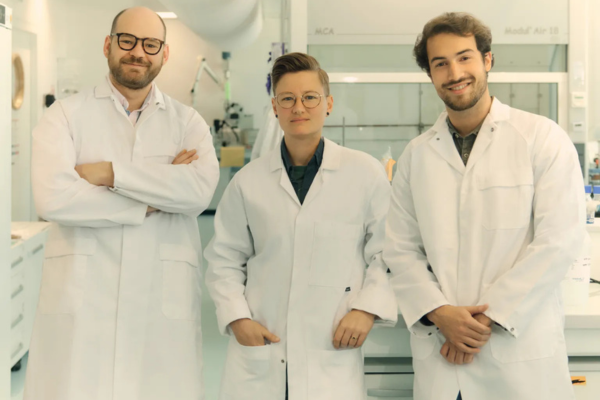
French textile recycling startup Syntetica has raised $30 million in a Series A funding round, with activewear brand Lululemon participating as an investor. The company will use the funding to scale its proprietary nylon recycling technology and strengthen partnerships across the global apparel supply chain.
Syntetica has developed a new recycling process capable of recovering both Nylon 6 and Nylon 6,6, two widely used materials that traditional recycling systems struggle to separate from mixed textile waste.
Chief Executive Officer Marco Bertone said that the company’s technology addresses one of the fashion industry’s biggest recycling challenges by enabling the recovery of mixed nylon fibres collected from consumers.
Growing concerns over textile waste continue to drive investment in circular fashion technologies, particularly among premium apparel brands seeking to improve sustainability and strengthen customer perception. At the same time, favourable regulations and recent volatility in nylon prices have further accelerated interest in alternative raw material solutions.
According to Bertone, geopolitical disruptions in the oil market have caused frequent fluctuations in nylon prices over the past six months, prompting fashion companies to reassess their dependence on petroleum-based synthetic materials.
“It’s been a wake-up call to many brands that have been relying on petrol-sourced nylon and petrol-sourced synthetics for pricing and convenience, and which today have seen massive shocks to their systems,” Bertone said.
He added that Syntetica has built its business around affordability and scalability rather than premium pricing.
“We have built the company with the clarity that there’s no green premium. That if you want to scale real solutions for a sustainable world, it needs to be cost-competitive and highly scalable, and you need to build partnerships from the very start,” Bertone said.
In addition to Lululemon, Syntetica has established partnerships with Victoria’s Secret, Etam, and apparel manufacturer MAS Holdings, which also participated in the funding round. The company expects one of its recycling projects to reach the commercial market early next year.
Before completing its Series A round, Syntetica also partnered with Michelin’s Centre for Sustainable Materials to establish a commercial demonstration facility in Clermont-Ferrand, France.
Unlike many companies developing alternative textiles, Syntetica will focus exclusively on producing recycled nylon pellets instead of manufacturing fabrics or garments. Textile manufacturers can then convert these pellets into yarn for use across the apparel industry.
“It’s a story of pragmatic industrial partnerships with the right players to get buy-in from the whole value chain,” Bertone said.
Bertone founded the company after meeting chemistry researcher Louis Monsigny through Entrepreneur First’s accelerator programme at Station F in Paris. The founders later expanded the leadership team by appointing Ash Ward, formerly of battery manufacturer Northvolt, as Chief Technology Officer.
Looking ahead, Syntetica plans to use the fresh capital to demonstrate its ability to produce hundreds of tonnes of recycled nylon pellets annually before expanding production globally.
“Syntetica will be building facilities around the world, close to waste sources and close to textile production,” Bertone said.
The company benefits from strong institutional support in France. The Ecotechnologies 2 Fund, managed by Bpifrance under the France 2030 initiative, led the funding round. Syntetica has also received equity funding, grants and accelerator support from the European Innovation Council (EIC). Additionally, private investors, including EQT Ventures, SWEN Capital Partners, and several family offices, backed the round.
Although Syntetica competes with companies developing enzymatic recycling technologies as well as chemical giant BASF, Bertone believes multiple solutions will be required to solve the global textile waste challenge.
“If everyone were to scale to tens of factories, we still wouldn’t solve this problem,” he said. “Everyone needs to succeed for us to succeed as a society.”
Lululemon has continued expanding its investments in sustainable textile innovation and has previously backed recycling startups, including Epoch Biodesign and Samsara Eco.