




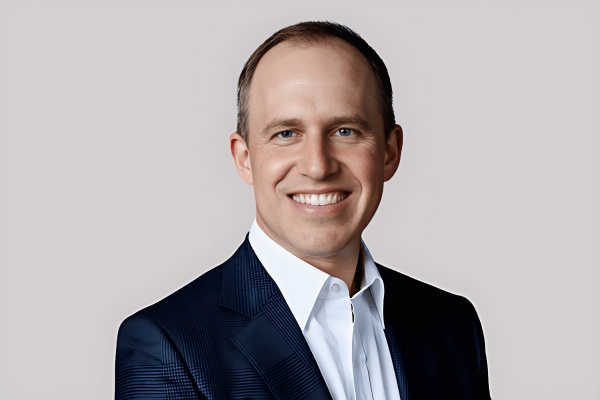
Sierra, the AI startup founded by Bret Taylor, has raised $950 million in a funding round led by Tiger Global and GV, the company said. As a result, the funding has pushed Sierra’s post-money valuation beyond $15 billion. Moreover, the company now holds more than $1 billion in capital, which it plans to deploy to become the “global standard” for AI-powered customer experiences.
In a highly competitive AI market, Sierra has actively highlighted its rapid growth trajectory. Initially, the company started with just four design partners a few years ago. However, it now claims that more than 40 percent of the Fortune 50 companies use its platform. Additionally, AI agents running on Sierra’s platform currently handle billions of interactions, including mortgage refinancing, insurance claims processing, product returns, and nonprofit fundraising campaigns.
Furthermore, the AI startup has demonstrated aggressive revenue expansion. The company reported reaching $100 million in annual recurring revenue (ARR) in late November, and shortly afterward, it announced that it had scaled to $150 million in ARR by early February. This rapid growth reflects both increasing enterprise demand for AI solutions and the significant investments required to implement them.
Bret Taylor, who also serves as chairman of OpenAI and previously worked as co-CEO of Salesforce, has emphasized that agentic AI can ultimately reduce costs and increase revenue for businesses. However, he has also acknowledged that companies often face high upfront costs during the initial deployment phase.
This trend recently surfaced during a discussion at one of the events. During the conversation, Praveen Neppalli Naga, CTO of Uber, explained how the company rapidly consumed its AI budget after adopting agentic AI tools late last year. At the same time, he noted that Uber has started to observe meaningful results from these investments.
Notably, Uber has already integrated AI deeply into its engineering workflows. Approximately 10 percent of all code produced across its 8,000 engineers and technical staff is now generated autonomously. He added that “10% at our scale is huge.” In a practical demonstration, Uber assigned one team to build a new hotel-booking integration entirely using agentic workflows. Consequently, the team completed a project that would typically take a year in just six months.
Meanwhile, Sierra continues to expand its product capabilities beyond customer-facing AI agents. In April, the company launched Ghostwriter, an “agent as a service” tool that enables users to build other AI agents. With this feature, users can describe their requirements in natural language, and Ghostwriter autonomously creates and deploys specialized agents to perform those tasks.
For Bret Taylor, this innovation supports a broader vision he shared at the HumanX conference in San Francisco. He argued that many enterprise software tools remain underutilized, as employees interact with platforms like Workday only during specific events such as onboarding or open enrollment. Therefore, the AI startup and its investors envision a future where users no longer need to navigate complex enterprise systems, as AI agents will handle tasks seamlessly in the background.