Wednesday, August 5, 2026
Home Blog Page 95

Titan expands jewellery portfolio with lab-grown diamond brand ‘beYon’

0

Titan Co., the country’s leading jewellery maker, on Friday announced its entry into the lab-grown diamond segment with the launch of a new brand called “beYon.” Consequently, the Tata Group-managed company expanded its jewellery portfolio into a fast-growing and affordable luxury category.

Focusing on the rising demand for accessible lab-grown diamonds in India, the company will open its first exclusive store in Mumbai on December 29, according to a regulatory filing. As a result, Titan will mark its formal retail debut in this emerging segment before scaling further.

“Titan will launch the brand name ‘beYon—from the House of Titan’ with an exclusive retail store in Mumbai on 29th December 2025 to cater to the adornment needs of women in lifestyle categories beyond watches, perfumes, sarees, and handbags,” the company said. Therefore, the brand aims to address broader lifestyle jewellery preferences among modern consumers.

The brand ‘beYon’ will offer a curated selection of lab-grown diamond (LGD) jewellery. Initially, Titan will enter the category with one store and subsequently plans to add a few more outlets in Mumbai and Delhi in the near term. Meanwhile, the company expects early traction as consumer awareness continues to rise.

Over the past two to three years, India’s lab-grown diamond market has expanded rapidly, driven by demand for affordable, sustainable, and ethically sourced alternatives to natural diamonds. However, according to consulting firm Wazir Advisors, diamonds still account for less than 10 per cent of the Indian jewellery market, thereby creating significant headroom for growth.

In recent years, studded jewellery has gained traction, as organised retailers increasingly focus on the segment due to its higher margins. Consequently, companies such as Titan continue to prioritise innovation and portfolio diversification.

The Indian diamond jewellery market currently stands at approximately USD 6.2 billion (Rs 55,674.54 crore) in 2025 and will grow to USD 8.6 billion (Rs 77,225.97 crore) by 2028, reflecting a CAGR of 12 per cent. Although lab-grown diamonds represent a smaller share of around USD 400 million, the segment is projected to grow at a 14 per cent CAGR over the next two years, reaching USD 600 million (Rs 5,387 crore) by FY28, according to Wazir Advisors.

Moreover, India has emerged as the world’s second-largest market for natural diamond jewellery, further strengthening its position in the global gems and jewellery ecosystem. Earlier this year, Titan also announced a long-term strategic collaboration with De Beers Group, the world’s leading diamond company, and its flagship jewellery brand Tanishq.

Furniture rental startup Rentomojo achieves robust FY25 growth with 92% jump in profit

0
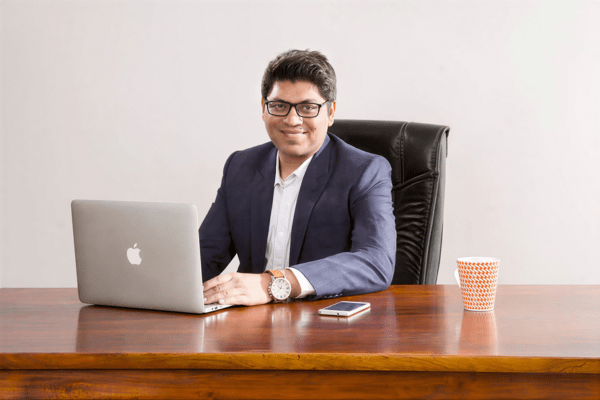
Geetansh Bamania, founder and CEO, Rentomojo

Furniture and appliances rental startup Rentomojo delivered a robust financial performance in FY25, as revenue climbed 38% year on year and profit surged 92%. Consequently, the company strengthened its profitability while scaling its subscription-led business.

According to media reports, revenue from operations increased to Rs 266 crore in FY25 from Rs 193 crore in FY24. Moreover, the growth benefited from higher subscriber additions, better asset utilization, and stricter cost discipline. During the same period, the company’s net rental revenue posted a compound annual growth rate of 48.24% between FY23 and FY25, underscoring consistent momentum.

Founded in 2014, Rentomojo operates a subscription-based model that enables consumers to rent furniture, appliances, and newer categories such as water purifiers. At present, the company serves more than 2.2 lakh live subscribers, manages over 7.7 lakh rental assets, and operates across 23 cities through 71 experience stores. As a result, it continues to expand its national footprint.

Meanwhile, earnings before interest, tax, depreciation, and amortization rose to Rs 118.41 crore in FY25 from Rs 78.23 crore in FY24. Additionally, return on capital employed reached 25.1% during the year, driven by reinvestments into refurbishment, automation, and capital efficiency initiatives. Furthermore, the company’s circular economy-led operating model, which emphasizes reuse and sustainability, improved asset utilization and strengthened long-term resilience.

Commenting on the performance, founder and CEO Geetansh Bamania credited disciplined execution and a refurbishment-focused strategy. “Rentomojo is a consumer tech company building a subscription-first model that has delivered sustained profitability while solving a major problem for its consumers,” he said.

To date, Rentomojo has raised over Rs 650 crore across multiple funding rounds. Most recently, it secured $25 million in a round led by Edelweiss. In addition, the company counts Accel, Chiratae Ventures, and Bain Capital among its investors, alongside Edelweiss Discovery Fund and ValueQuest S.C.A.L.E. Fund.

AI startup Reface raises €15.2 Mn in non-dilutive funding to scale AI consumer apps

0

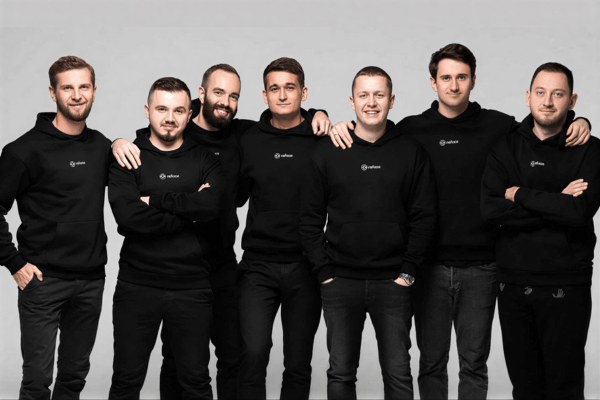
Kyiv-based AI startup Reface has secured €15.2 million ($18 million) in non-dilutive user acquisition funding from Singapore-based PvX Partners. Notably, the funding will support the company’s next growth phase without equity dilution.

PvX Partners operates as a financial services and data intelligence platform for consumer applications. Instead of taking equity, it co-invests directly in a company’s sales and marketing budgets. In return, PvX receives a predefined share of the revenue generated from newly acquired users, capped at an agreed limit. As a result, Reface can scale user acquisition efficiently while maintaining ownership control.

According to Anton Volovyk, co-CEO of Reface, the capital will directly support product expansion. Specifically, “the capital will be used to fuel the next phase of growth for its AI-powered consumer apps across creativity, wellbeing, and health.” Consequently, the company plans to strengthen its position across multiple AI-native consumer categories.

Founded in 2018, the startup develops AI-native tools focused on content creation and lifestyle use cases. Initially, the startup gained global visibility after Elon Musk shared a face-swap video featuring the “made with Reflect” watermark on X.com. Subsequently, the company launched the Reface app in 2022, which originally operated under the name Doublicat.

Today, Reface’s product portfolio includes several popular AI-powered apps. Reface enables users to swap faces in photos and videos, create voice-over content, and generate AI portraits using multiple selfies. Meanwhile, Revive allows instant animation and editing of photos, memes, and artistic portraits. Additionally, Restyle lets users transform the visual style of images and videos. Other products include unboring.ai, Ink AI, Letsy, and Memomet. Collectively, the company reports more than 300 million downloads across its apps.

Reface claims that global celebrities, including Britney Spears, Dua Lipa, Justin Bieber, and Snoop Dogg, have used its apps. Furthermore, the company has collaborated with major brands such as BMW, HALO, JBL, Prime Video, Toyota, and Universal.

On the investment front, Reface has attracted backing from Andreessen Horowitz, Supercell CEO Ilkka Paananen, Unity Technologies founder David Helgason, TQ Ventures managing partner Scooter Braun, and Adam Leber, known for managing Britney Spears and Miley Cyrus. In addition, Kyiv-based AI-focused investment group Roosh also supports the company.

Beyond commercial growth, the startup has maintained a strong humanitarian commitment. In May 2022, the company launched the Reface Fund to support Ukrainian citizens and defenders. Since then, it has donated €424.2k ($500k) toward humanitarian relief efforts.

Anicut Capital closes GAF-IV at Rs 1,275-Cr to expand private credit portfolio

0
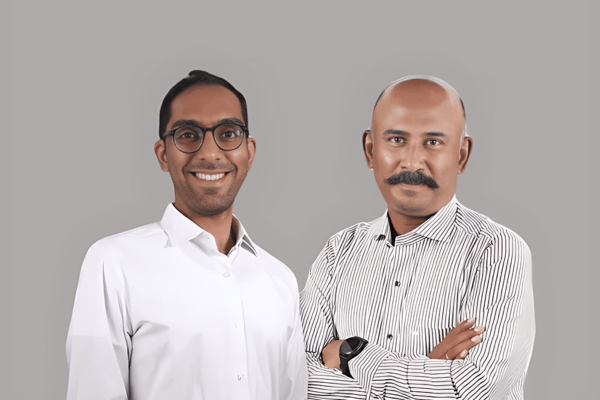
Ashvin Chadha and I A S Balamurugan, co-founders, Anicut Capital

Anicut Capital, the Chennai-headquartered investment firm, announced on Wednesday the final close of its third private credit vehicle, Grand Anicut Fund IV (GAF-IV), at Rs 1,275 crore, thereby exceeding its original target of Rs 1,000 crore. Through this milestone, the firm reinforced its growing presence in India’s private credit ecosystem while demonstrating strong investor confidence.

According to the company, the fund incorporates a GIFT City–based dollar feeder, which consequently enables global investors to access India’s expanding private credit opportunity. Additionally, Anicut Capital typically deploys close to Rs 80 crore per transaction while spreading investments across diverse sectors, including consumer businesses, engineering services, SaaS, manufacturing, hospitality, and shipbuilding.

Following the successful closure of GAF-IV, Anicut Capital’s assets under management have now reached approximately Rs 4,500 crore across both debt and equity strategies. As a result, the firm has further strengthened its position as a multi-asset investment platform with a balanced approach to credit and growth capital.

“We look for reliable promoters who have navigated cycles, reinvested cash flows back into the business, and built resilient operating systems that tend to stand out more than those optimising for short-term valuations,” said IAS Balamurugan, Co-founder and Managing Partner, Anicut Capital.

Moreover, the firm continues to prioritise cashflow quality, strong corporate governance practices, and clearly articulated exit pathways, while steadily expanding its institutional underwriting framework across successive fund cycles. Through this disciplined approach, Anicut Capital aims to deliver consistent risk-adjusted returns for its investors.

Currently, the venture capital firm manages six funds in total, evenly split between debt and equity strategies. Its portfolio features a broad mix of consumer, technology, and industrial brands, including Milky Mist, The Ayurveda Experience, Wow! Momo, Mistral, Blue Tokai, XYXX, ToneTag, GNRC Hospital, Neemans, and Agnikul.

Although funding activity in Indian startups declined in 2025 compared to 2024, the continued capital-raising efforts by several venture capital and private equity firms, including Anicut Capital, signal sustained liquidity in the ecosystem. Consequently, this trend indicates that capital availability for Indian startups is likely to remain healthy in the coming year.

Manglam Group expands portfolio with hospitality debut in Jaipur

0

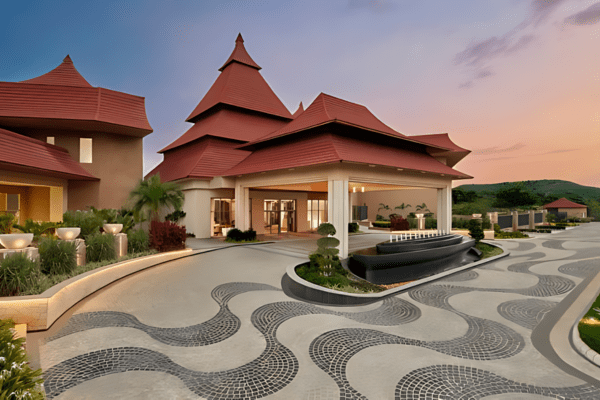
Manglam Group has entered the hospitality sector with the launch of The Westin Jaipur Kant Kalwar Resort & Spa, thereby unveiling its first hotel project and marking a strategic diversification for the Rajasthan-based real estate developer. Through this launch, the Group has formally initiated its hospitality vertical, Manglam Spa and Resorts, while signalling its long-term intent to build a meaningful presence in the sector.

Moreover, this hospitality foray aligns with Manglam Group’s planned investment of Rs 1,000 crore in the segment. The newly launched resort, developed at an approximate cost of Rs 300 crore, anchors the Group’s hospitality portfolio and underscores its ambition to scale across luxury, wellness-focused, and serviced accommodation formats. Situated at Kant Kalwar near the foothills of the Aravalli range, the nine-acre property features 135 rooms and seven dedicated venues for meetings and social events. Additionally, the development follows sustainability-driven planning, as it prioritizes energy efficiency, climate-responsive architecture, and the use of locally sourced materials.

Commenting on the launch, N. K. Gupta, Chairman, Manglam Group, said, “Having built a legacy of transforming real estate in Rajasthan through world-class infrastructure and disciplined delivery, stepping into hospitality was a natural progression for Manglam. The Westin Jaipur reflects our commitment to creating assets that elevate the city’s global standing. As Marriott International’s 200th property in India, this launch not only celebrates a milestone for the brand, but it also sets the tone for Manglam’s future in hospitality with projects that are premium, service-led, and internationally benchmarked.”

Meanwhile, Manglam Group continues to advance a broader hospitality roadmap beyond this flagship project. The Group is developing more than 200 serviced apart’otel units under the Fern Habitat brand at Pinkwalk, Jagatpura, and is simultaneously planning two additional hospitality developments, including a resort-centric project and an urban hotel. Consequently, these initiatives collectively support Manglam’s strategy to create a diversified hospitality portfolio while also reinforcing Jaipur’s evolution into a multi-format destination for leisure, wellness, and business travel.

Cygnett Hotels & Resorts strengthens North India presence with Cozzet Greater Noida signing

0
Sarbendra Sarkar, Founder & Managing Director, Cygnett Hotels & Resorts

Cygnett Hotels & Resorts has announced the signing of Cozzet Greater Noida, thereby reinforcing its expansion strategy across North India’s fast-emerging business and institutional corridor. Through this development, the group continues to strengthen its regional footprint, while the upcoming hotel will operate under its value-focused Cozzet brand and will cater primarily to business and short-stay travelers seeking efficiency and reliability.

Furthermore, Cozzzet Greater Noida will offer 50 well-planned rooms that combine comfort with functionality, in line with the brand’s core promise of ‘Smart, Safe & Sensible.’ In addition, the property will feature approximately 2,500 sq. ft. of banquet and meeting space, which will support corporate meetings, social gatherings, and small-scale events. Alongside this, the hotel will include an all-day dining restaurant serving Indian and international cuisine, as well as a fully equipped fitness centre, thereby enhancing the overall guest experience.

Moreover, the hotel enjoys a strategic location, as it sits just 10 minutes from Greater Noida Expo Mart and provides seamless connectivity to the Noida–Greater Noida Expressway and Knowledge Park I, II, and III. Consequently, this positioning is expected to attract corporate travelers, exhibitors, and professionals visiting the region for short- and mid-term assignments, while also supporting the area’s growing commercial activity.

Commenting on the signing, Sarbendra Sarkar, Founder & Managing Director, Cygnett Hotels & Resorts, said, “The economy and value hotel sector remains a major growth generator in the Indian hospitality industry. Cozzet, our value hotel brand in Cygnett, aims to capitalise on the growing demand for favourably located and efficiently run hotels that can provide assured branded services at reasonable prices. The opening of Cozzet Greater Noida marks our push to follow a planned development strategy in various major business centres.”

Meanwhile, Cygnett Hotels & Resorts continues to accelerate the expansion of its Cozzet portfolio, as the group plans multiple upcoming properties across key business and leisure destinations in India, thereby underscoring its long-term commitment to scalable, value-driven hospitality growth.

SeaHorse Hospitality Consulting expands footprint with Sayaji Group deal in Ranjangaon

0

SeaHorse Hospitality Consulting has secured its first branded hotel in Ranjangaon through a strategic partnership with the Sayaji Group, thereby marking a significant milestone in the region’s hospitality landscape. Effotel by Sayaji, Ranjangaon, will debut as the town’s first branded hotel and will become fully operational by March 2028, consequently addressing a long-standing gap in premium accommodation for corporate travelers.

“Ranjangaon is a critical, underserved industrial corridor. Securing the town’s first branded hotel with Sayaji ensures this asset is perfectly positioned to capture premium corporate demand and achieve market leadership from day one,” said Sandeep Roy, Founder & CEO, SeaHorse Hospitality Consulting.

Moreover, the hotel benefits from a highly strategic location, as it sits in close proximity to the five-star Ranjangaon MIDC, a major industrial hub that hosts several large corporate entities, and lies approximately 50 kilometers from Pune Airport. As a result, the property positions itself as the preferred destination for business travelers, corporate off-sites, and executive stays, while simultaneously strengthening Ranjangaon’s appeal as a corporate hub.

Meanwhile, the official signing ceremony on November 29, 2025, brought together key stakeholders, including Gahininath Narawade, Sachin Malgunde, and Tushar Kale, Partners at Ranjangaon Hotel LLP, alongside Pawandeep Singh, director of development at Sayaji Hotels LLP, and Sandeep Roy, CEO of SeaHorse Hospitality Consulting. Through this collaboration, the partners reinforced their shared commitment to unlocking value in high-potential industrial markets.

Furthermore, the transaction highlights SeaHorse Hospitality Consulting’s leadership as a hotel brand advisory firm that consistently identifies underserved locations with strong demand fundamentals. Through focused guidance on asset positioning, planning, and revenue optimization, SeaHorse ensures that the hotel maximizes profitability within the specialized corporate segment, while Sayaji’s established operational framework enhances execution and long-term performance.

Additionally, Effotel by Sayaji, Ranjangaon, will rise on a 36,000 sq ft land parcel and will cater specifically to the modern business traveler by blending efficiency with upscale amenities. The property will feature 50 contemporary rooms, including four suites, supported by an all-day dining restaurant that accommodates 80 guests. Complementing this, a spacious rooftop lounge bar with seating for 130 guests will offer scenic views and social engagement.

The hotel will also include robust MICE infrastructure, comprising a 3,000 sq ft banquet hall and a dedicated 500 sq ft conference hall, thereby enabling seamless corporate meetings and social events. To complete the experience, guests will access a full-service gym and spa, ensuring comfort, wellness, and productivity throughout their stay. Consequently, this integrated offering equips the hotel to meet the rigorous and evolving demands of the surrounding industrial corridor from day one.

How Personalisation Is Reshaping the Hospitality Industry

0
personalisation In Hopsitality

By 2026, a hotel room will no longer be the product. It will be the entry point. The real value of hospitality will come from how precisely and consistently a brand can personalise experiences across every guest interaction. The industry is entering a phase where personalisation is not a service upgrade but the core operating model.

For much of the past two decades, hospitality growth was driven by physical expansion. More rooms, more destinations, and more brand flags defined success. That model is now under pressure. Supply growth in key markets has reduced differentiation, while pricing power has become harder to sustain. At the same time, guest expectations have evolved far faster than traditional service models. Value is shifting away from square footage and towards relevance.

Those expectations are not being shaped by hotels. They are shaped by everyday digital platforms. Streaming services anticipate viewing preferences. Music platforms understand routines, moods, and moments. E commerce platforms predict intent before it is expressed. Consumers now expect systems to remember them, adapt to them, and respond instantly. Hospitality is no longer compared only to other hotels. It is compared to the best digital experiences in a guest’s life.

This shift places intelligent guest profiles at the center of future hotel strategy. The guest profile of 2026 will not resemble today’s static CRM records. It will function as a continuously evolving preference engine. Sleep habits, room temperature settings, pillow types, dining choices, wellness routines, mobility needs, and digital content preferences will be captured, refined, and reused across stays. According to industry research, hotels using advanced personalisation frameworks can increase direct booking conversion rates by more than 15 percent while significantly lifting ancillary revenue.

As guest intelligence improves, frictionless journeys become essential rather than optional. Mobile check in, digital keys, smart room controls, and automated service requests are rapidly becoming baseline expectations. These technologies are not designed to remove human service but to elevate it. When routine tasks disappear, staff time can be redirected toward meaningful and context aware interactions. Several global hotel groups already report that a majority of their guests prefer digital first touchpoints when the experience feels seamless and intuitive.

Wellness will be one of the most powerful expressions of personalisation in hospitality’s next phase. It is no longer positioned as an indulgence or a spa offering. It is becoming an integrated part of the stay. Sleep quality, air purification, circadian lighting, nutrition focused menus, mental well being tools, and fitness recovery experiences are moving into the core product. The global wellness tourism market is projected to cross 1.3 trillion dollars before the end of the decade, driven by repeat usage and measurable outcomes. Hotels that embed wellness data into guest profiles will unlock longer stays, higher spending, and stronger loyalty.

Personalisation also transforms pricing power. When experiences feel relevant and tailored, price sensitivity declines. Guests are less likely to compare rates when the offering reflects personal value. Data driven hospitality enables intelligent bundling and targeted upselling rather than discounting. Studies across travel and consumer sectors show that personalised experiences can increase repeat booking intent by over 40 percent, directly improving lifetime value and yield stability.

At the heart of this transformation lies data. In the coming decade, guest data will become hospitality’s most valuable long term asset. Yet many operators still treat data as an operational byproduct rather than a strategic resource. Brands that invest in secure, consent driven, and interoperable data systems will own the guest relationship across channels. Those that rely heavily on intermediaries and fragmented technology stacks will struggle to differentiate and will increasingly compete on price alone.

Technology adoption in hotels is accelerating, but maturity remains uneven. While global hotel technology investment continues to grow steadily, true personalisation capability is still limited to a relatively small group of early movers. This gap will widen. Properties that invest now in AI, data infrastructure, and integrated platforms are not simply upgrading systems. They are reshaping how value is created, captured, and sustained.

For investors and asset owners, the implications are clear. Personalisation capability will increasingly influence asset performance, brand resilience, and valuation. Hotels with strong data foundations and intelligent guest engagement will demonstrate more stable occupancy, stronger ancillary revenue, and lower acquisition costs. Those without it will face margin pressure and rising dependence on third party demand.

Ultra personalised travel is not a passing trend. It is a structural shift in how hospitality operates. By 2026, the winners will be those who treat personalisation as a core discipline, not a marketing feature. Brands that act early will define guest relationships, protect pricing power, and shape the next decade of hospitality economics. Those that delay will find themselves selling undifferentiated rooms in a market that increasingly rewards relevance over scale.


Hype Luxury strengthens its dominance with a $630 Billion global fleet

0
Raghav and Vijaya Belavadi, co-founders, Hype Luxury

Hype Luxury, India’s leading luxury mobility platform, has firmly established itself as a powerhouse in private aviation. Today, the company commands access to an aggregated asset value of nearly $630 billion, while enabling Ultra-High-Net-Worth Individuals (UHNWIs) to tap into one of the world’s largest virtual hangars. Through this expansive network, Hype Luxury seamlessly connects the global elite to more than 21,000 private jets worldwide.

Founded by siblings Raghav and Vijaya Belavadi and headquartered in Bengaluru with an expanding global footprint, Hype Luxury remains India’s first luxury mobility startup to seamlessly integrate cars, yachts, and private jets into one technology-led, experiential ecosystem.

As demand for tailored travel solutions accelerates, with private aviation requests rising by 500% in the post-pandemic era, Hype Luxury has strategically transformed beyond a conventional mobility app. Instead, it now operates as a full-scale global aviation concierge. Through its flagship “Luxury on Air” offering, the platform caters to sovereigns, industry leaders, and celebrities who prioritize time efficiency, privacy, and discretion above all else.

Unlike traditional charter operators constrained by owned fleets, Hype Luxury leverages an aggregator-led model to unlock unparalleled choice. Consequently, members gain access to over 21,000 private jets and helicopters across seven countries, including the UK, UAE, and the USA. Simultaneously, within India, the company deploys a dedicated fleet of more than 100 ultra-luxury aircraft to meet the growing domestic appetite among UHNWIs. Moreover, the inventory features aviation icons such as the Gulfstream G700, the Bombardier Global 7500, and the Embraer Lineage 1000, thereby allowing clients to precisely match aircraft to their range, comfort, and prestige requirements.

“The modern UHNWI does not just want a seat; they want a sanctuary,” says Raghav Belavadi, Founder & CEO of Hype Luxury. “With an average jet valuation ranging between $25 million to $90 million, our collective asset access stands at approximately $630 billion. We are not just selling flights; we are curating a ‘lifestyle in the sky’ that mirrors the comfort of a penthouse and the efficiency of a boardroom.” As a result, Hype Luxury positions itself not as a charter intermediary, but as a curator of elevated airborne living.

Beyond transportation, Hype Luxury delivers an end-to-end luxury ecosystem designed for individuals who demand invisibility and precision. Accordingly, the platform enables zero-footprint travel through discreet tarmac-to-city transfers, supported by a premium ground fleet that includes Rolls-Royce and Mercedes-Maybach vehicles. In addition, the service embraces pet-friendly aviation, offering dedicated cabins that allow pets to travel comfortably alongside their owners. Furthermore, whether clients depart from Mumbai, London, or Dubai, Hype Luxury maintains consistent, high-touch service standards across every geography.

As the Asia-Pacific charter aviation market targets a CAGR of 13.77% through 2029, Hype Luxury stands strategically poised to capture a significant share of this wealth-driven mobility shift. By placing a global “command center” for elite travel directly into a single digital platform, the company continues to redefine how the world’s wealthiest individuals move across borders.

PRISM expands experiential hospitality with ‘Insta Stays’ at OYO Hotels

0

Oravel Stays Limited (“PRISM”) has announced the launch of its new ‘Insta Stays’ program across all OYO properties in India, as last-minute holiday planning gathers pace ahead of the New Year. Through this initiative, travellers can make instant last-minute bookings via the OYO app or website by selecting the Insta Stays option directly from the home page.

At the same time, OYO continues to leverage its scale as a value-stay brand, with a network of more than 13,000 hotels across India. As part of the program, OYO Wizard members receive an additional 5% exclusive discount on Insta Stays bookings. With over 18 million members, OYO Wizard ranks among India’s largest hotel loyalty programs and highlights the growing preference for trusted brands and loyalty-led value among frequent and spontaneous travellers.

Moreover, OYO’s internal booking data from recent years indicates a sharp rise in last-minute hotel searches as the year-end holiday season approaches. This trend reflects increasing travel demand to popular leisure and religious destinations such as Goa, Manali, Jaipur, Rishikesh, Varanasi, Katra, Puri, Ayodhya, Ooty, and Pondicherry.

Commenting on the initiative, Varun Jain, Chief Operating Officer, PRISM Asia, said, “Guests can expect a seamless and hassle-free stay experience, powered by one of the fastest check-in processes in the category. With instant booking confirmation, digitally enabled check-ins, and fully verified properties, the program significantly reduces waiting time at hotels, allowing travelers to check in within minutes and focus on their stay. This guest-first approach is designed to deliver consistency, comfort, and convenience, particularly for last-minute and peak-season travelers.”