

Saturday, May 2, 2026
Home Blog Page 76

AI-powered hiring platform BlinkJob.ai targets $2 Million seed funding to redefine recruitment

0

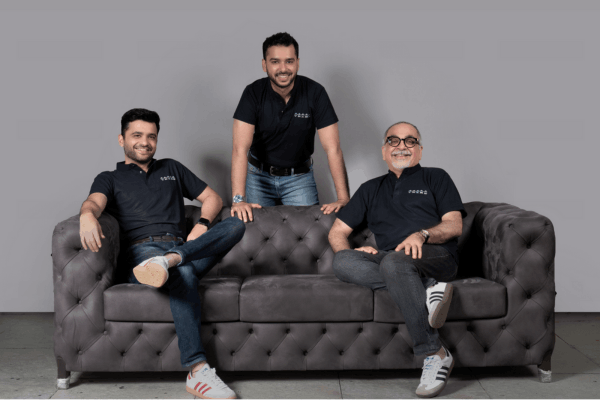
India’s job market is on the brink of a major transformation with the launch of BlinkJob.ai, the country’s first AI-powered job-hunting agent designed to help professionals secure jobs within just a week. The company has announced plans to raise $2 million in seed funding to scale its AI infrastructure, enhance product innovation, and expand across key employment hubs nationwide.

BlinkJob.ai is reinventing the job-hunting experience for the modern workforce. Unlike traditional job portals that simply list openings, BlinkJob.ai operates as a smart, autonomous career assistant that handles every stage of the job search process—from identifying relevant opportunities and customizing resumes to auto-applying across multiple platforms. Through a single intelligent dashboard, users can track their job applications in real time, monitor interview progress, and receive AI-powered insights to boost their chances of landing the right role.

For millions of job seekers in India, the process of finding employment remains slow, exhausting, and inefficient, often taking five to six months of browsing job portals, editing resumes, and repeatedly applying. BlinkJob.ai’s founders recognized this friction and built a solution to automate and simplify the journey from application to interview.

The platform caters to both fresh graduates and experienced professionals, addressing the diverse needs of India’s expanding workforce. For freshers, BlinkJob.ai identifies skill gaps, offers personalized improvement recommendations, and automatically applies to hundreds of relevant entry-level positions, creating equal opportunities for those without established networks or prior experience. For experienced professionals, the platform enables a completely hands-free job search—users set their preferences once, and the AI continuously applies to top-quality roles while they focus on work, interviews, or personal goals.

This approach saves time, enhances efficiency, and delivers tangible outcomes—more applications, more interviews, and faster job offers. Unlike platforms such as Naukri or LinkedIn, which rely on manual effort, BlinkJob.ai functions as a job execution engine that manages the process end-to-end. Its proprietary AI technology optimizes resumes for each position, ensures ATS compatibility, and streamlines tracking, ultimately improving the chances of securing interviews.

Israeli AI startup Wonderful raises $100 Million, hits $700 Million valuation

0
Roey Lalazar & Bar Winkler, co-founders, Wonderful

Israeli startup Wonderful, whose platform enables companies to manage AI agents serving customers across voice, chat, and email in any language, announced on Tuesday that it has raised another $100 million in a private funding round.

This marks the company’s second round of financing, following its $34 million initial raise in July, shortly after its launch earlier this year.

Founded and conducting R&D in Israel but headquartered in Amsterdam, Wonderful is now valued at $700 million and expects to reach around $10 million in annual recurring revenue by 2025. The company has seen rapid growth, expanding into new markets across Europe and the Middle East since July, and is preparing to launch in the Asia-Pacific region in early 2026.

“The scale of demand we’re seeing from enterprises is enormous,” said Bar Winkler, CEO and co-founder of Wonderful. He added that the funding will enable faster expansion through local hiring and increased investment in its platform technology.

The latest funding round was led by Index Ventures, with participation from Insight Partners, IVP, and existing investors Bessemer and Vine Ventures.

“The demand for locally designed AI agents has proven enormous,” said Hannah Seal, partner at Index Ventures.

AI startup GreenFi raises $2 Mn in funding from Transition VC

0
Barun Chandran, Founder, GreenFi

Kerala-based AI startup GreenFi has raised USD 2 million in its first funding round, led by Transition VC. The investment marks a significant milestone in GreenFi’s mission to revolutionize sustainability management through artificial intelligence.

GreenFi plans to utilize the fresh capital to expand its global distribution network, enhance its AI-powered product portfolio, and strengthen its presence across key international markets, including California, Europe, Southeast Asia, and the Middle East.

Founded in 2023 by Barun Chandran, GreenFi offers an AI-driven ESG (Environmental, Social, and Governance) risk management platform designed to help enterprises and financial institutions automate sustainability compliance, reporting, and risk assessment.

Its proprietary AI agents and sustainability intelligence engine empower organizations to track ESG performance in real time, significantly improving data accuracy while reducing manual workloads.

The company has already built partnerships with leading financial institutions and corporates across Singapore, India, Europe, and the United States.

Notably, its collaboration with United Overseas Bank (UOB) in Singapore has automated emissions reporting, delivering substantial cost savings.

Additionally, a major international bank uses GreenFi’s platform to digitize environmental risk assessments and ESG reporting for over 50,000 commercial clients spanning 19 countries. The startup has also assisted the Kerala Infrastructure Investment Fund Board (KIIFB) with green bond reporting and collaborated with renewable energy firms such as Wattsun Energy to improve sustainability tracking.

Operating with a 16-member team, the startup runs efficiently through AI systems that now manage over 60% of its operations. The company positions itself as a technology-first alternative to traditional consulting giants like McKinsey, KPMG, and PwC, offering smarter, data-driven sustainability solutions.

SoftBank exits Nvidia with $5.8 Bn profit as Masayoshi Son doubles down on AI ambitions

0

SoftBank Group Corp. has sold its entire stake in Nvidia Corp., securing a profit of $5.8 billion as founder Masayoshi Son prepares for a new wave of investments designed to build a global AI ecosystem.

The Tokyo-based conglomerate had boosted its Nvidia holdings to around $3 billion by March, and the windfall from the sale—combined with strong returns from its Vision Fund—helped SoftBank deliver a surprise ¥2.5 trillion ($16.2 billion) net income for the fiscal second quarter. This result far exceeded analyst projections of ¥418.2 billion. Reflecting confidence in its growth trajectory, SoftBank also announced a 4-for-1 stock split effective January 1, aimed at increasing participation among retail investors.

Now, at 68, Masayoshi Son is positioning SoftBank at the forefront of the AI revolution. The company’s portfolio includes major stakes in OpenAI and Oracle Corp., both of which have surged amid growing enterprise demand for AI solutions. Consequently, SoftBank’s shares climbed 78% in the three months ending in September—its strongest performance since 2005.

Analysts remain upbeat. Citigroup’s Keiichi Yoneshima raised his target price for SoftBank shares to ¥27,100, citing the soaring valuation of OpenAI, which he predicts could hit $500 billion to $1 trillion in the near future.

Son’s next major investments include a $30 billion commitment to OpenAI, a $20 billion AI data center project called Stargate, and discussions with TSMC to participate in a $1 trillion AI manufacturing hub in Arizona. Additionally, SoftBank has explored acquiring Marvell Technology and plans to spend $6.5 billion to acquire Ampere Computing. However, the company faces challenges in funding these massive ventures and managing risks tied to inflated AI valuations. Analysts warn that SoftBank’s impressive rally may have already priced in much of the potential upside.

As Finimize Research noted on Smartkarma, “SoftBank was once a cheap way to gain exposure to Arm and the AI boom—but with valuations stretched and the discount gone, it may be time to book profits.”

CEO Jensen Huang has pushed back against comparisons to the dot-com era, asserting that “artificial intelligence isn’t a bubble.” Nvidia has already secured $500 billion in AI chip orders over the next five quarters, underscoring its dominance. With a market capitalization of $4.83 trillion, Nvidia’s valuation now exceeds Germany’s 2024 GDP, fueling debate over how much higher it can climb.

Despite its massive scale, Nvidia continues to post startup-level growth. Fiscal second-quarter revenue jumped 56% year-on-year to $46.7 billion, driven largely by the company’s expanding data center business and its Blackwell AI chips. Nvidia’s gross margin of 72% even surpasses software giants like Microsoft, supported by its proprietary CUDA ecosystem, which locks developers into its hardware and software framework.

However, risks are beginning to surface. Big Tech companies, including Alphabet, Meta, Microsoft, and Amazon, collectively spent over $360 billion in the past year, much of it on Nvidia infrastructure. If the generative AI wave fails to yield profits, such aggressive spending could slow sharply. An MIT study found that 95% of AI projects fail to generate tangible value, while reports indicate that OpenAI lost over $11 billion due to high operating costs.

Analysts agree that Nvidia remains a growth powerhouse, but they caution that its valuation is increasingly stretched and heavily tied to the future of generative AI. Experts at Motley Fool Stock Advisor noted that while Nvidia’s valuation appears justified by its exceptional growth and profitability, its dependence on the AI spending boom introduces significant risk. If corporate investment slows or AI’s commercial promise weakens, Nvidia’s earnings could stagnate. Ultimately, while the company’s fundamentals remain robust, its performance now depends on sustained global AI demand. For cautious investors, analysts suggest it may be wiser to wait and watch rather than enter at current levels.

CYK Hospitalities launches ‘Thamel’ – A Western and Himalayan fine dining experience in Gurugram

0
Pulkit Arora (Left) & Simranjeet Singh (Right), Directors, CYK Hospitalities

CYK Hospitalities, a leading food and beverage consultancy firm, has announced the launch of Thamel, a new Western and Himalayan fine dining restaurant at AIPL Joy Central, Sector 65, Gurugram. The restaurant embodies the firm’s philosophy of crafting distinctive F&B destinations that seamlessly blend cultural authenticity, aesthetic design, and operational excellence.

Founded by Piyush Agrawal, Thamel seeks to unite the warmth of Himalayan culinary traditions with the sophistication of contemporary Western dining. CYK Hospitalities collaborated closely with Agrawal on every aspect of the project — from conceptualisation and menu development to design, staffing, training, and brand identity.

Piyush Agrawal, Founder of Thamel, shared, “Thamel is more than a mere dining establishment; it is a mirror of the emotions that are closely related to my origin and passion to offer irresistible. I intend to invite the world to a table where soft and comfortable tastes from the Himalayan cuisine are served with elegance. CYK Hospitalities was deeply involved in the process of making that dream happen, from concept creation to the development of a brand that feels both real and timeless.”

Pulkit Arora, Director & Culinary Expert at CYK Hospitalities, added, “Every brand is a narrative that is just waiting to be unveiled. At Thamel, we have put our effort into creating a place that is both very close and very high in the eye of the beholder, a place where genuineness meets flexibility. We intended to turn it into a spot that not only preserves the cuisines from the past but also embraces its future.”

Rooted in the use of locally sourced ingredients and a dedication to preserving authentic Himalayan flavours through modern techniques, Thamel’s menu features a thoughtful blend of Continental and Himalayan dishes. Guests can enjoy classics such as momos and laphing, alongside refined Continental creations, aromatic coffee, and an extensive selection of beverages.

Simran Jeet Singh, Director at CYK Hospitalities, remarked, “A project like Thamel demonstrates the changing F&B approach in India, where local identity mingles with global inquisitiveness. Our target was to locate a place with substantial footfalls, and a place like AIPL Joy Central in Gurugram was a great option for Thamel.”

With its inviting atmosphere, creative culinary approach, and focus on authenticity, Thamel promises to redefine fine dining in Gurugram — celebrating the harmony of Himalayan heart and global sophistication.

Lovable nears 8 Million users as AI coding platform accelerates global growth

0
Anton Osika, CEO, Lovable

Lovable, the Stockholm-based AI coding platform, is rapidly nearing 8 million users, CEO Anton Osika revealed during a sit-down on Monday—a significant increase from the 2.3 million active users the company reported in July. He noted that the company—founded nearly a year ago—now sees “100,000 new products built on Lovable every single day.”

This surge reflects remarkable growth for the startup, which has so far raised $228 million in total funding, including a $200 million round this summer that valued it at $1.8 billion. In recent weeks, rumors have circulated—reportedly sparked by some of its investors—that new backers are eyeing a $5 billion valuation.

Speaking at the Web Summit event in Lisbon, Osika refrained from disclosing Lovable’s current annual recurring revenue (ARR). The company, which operates on a mix of free and paid tiers, reached $100 million in ARR this June—a milestone it celebrated publicly. Still, questions have surfaced about whether the current “vibe coding” trend can sustain its momentum.

According to Barclays research and Google Trends data released this summer, traffic to several popular coding services, including Lovable and Vercel’s v0, has dropped since peaking earlier in the year. The Barclays analysts noted that Lovable’s traffic fell by 40% as of September, writing, “This waning traffic begs the question of whether app/site vibecoding has peaked out already or has just had a bit of a lull before interest ramps up.”

Nevertheless, Osika maintained that retention remains strong, pointing to a net dollar retention rate above 100%, meaning users are spending more over time. He also mentioned that the company recently crossed the 100-employee mark and is now bringing in leadership talent from San Francisco to strengthen its Stockholm headquarters.

Lovable originated from GPT Engineer, an open-source tool Osika built that quickly went viral among developers. He soon realized the larger opportunity lay with the 99% of people who don’t know how to code. “I woke up a few days after building GPT Engineer, and I realized, look, we’re going to reimagine how you build software,” Osika said. “I biked to my co-founder’s place, and I said, ‘I have this great idea. I woke him up.”

The platform has since attracted an incredibly diverse user base. According to Osika, more than half of Fortune 500 companies use Lovable to “supercharge creativity.” At the same time, an 11-year-old in Lisbon built a Facebook clone for his school, and a Swedish duo now earns $700,000 annually from a startup they launched just seven months ago using Lovable. “What I hear from people trying Lovable is, ‘It just works,’” Osika said, attributing this success to Swedish design sensibility.

However, security has emerged as a key concern for the vibe coding sector. When asked about a recent incident in which an app built with such tools leaked 72,000 images, including GPS data and user IDs, Osika acknowledged the seriousness of the issue.

“The part of the engineering organization where we’re moving the quickest on hiring is security engineers,” he said. His goal is to make development with Lovable “more secure than building with just human-written code.” He added that the platform now runs multiple security checks before deployment, although developers of sensitive apps—such as those in banking—are still required to engage their own security experts.

When questioned about competition from OpenAI and Anthropic—the AI giants powering Lovable’s models and building their own coding agents—Osika responded calmly, noting that there is room for multiple players. “If we can unlock more human creativity and human agency . . . and just drive the change so that anyone can create if they have good ideas and build businesses on top of that, that should be celebrated, regardless of whoever does that.”

Despite the competitive landscape—and occasional social media sparring with rivals like Amjad Masad of Replit—Osika said his focus is on creating “the most intuitive experience for humans” rather than obsessing over competitors.

He described Lovable’s mission as building “the last piece of software”—a platform where every aspect of product creation, from user understanding to feature deployment, happens through one simple interface. According to Osika, the platform enables teams to adopt the “demo, don’t memo” philosophy, allowing them to prototype and test ideas quickly instead of preparing lengthy presentations.

Despite the company’s hypergrowth and rising investor attention, Osika appeared calm and grounded. Dressed casually in a beige T-shirt and button-down, the former particle physicist—who was Sauna Labs’ first employee before founding Lovable—now finds himself a regular on major conference stages. Yet, he remains focused on culture and purpose rather than hype.

“What I care about is that everyone who’s at the company isreally cares about what they’re doing and how we as a team succeed,” he said, rejecting Silicon Valley’s intense hustle culture. “The best people in my team today, most of them, have kids, and they really, really care about what we’re doing. They’re not working 12 hours, six days a week.” He paused and added with a smile, “Although it’s a startup, so they’re probably working more than most jobs.”

Digital lending startup Finnable raises ₹250-Cr in fresh funding

0
L-R: Amit Arora, Nitin Gupta and Viraj Tyagi, co-founders, Finnable

Digital lending startup Finnable secured Rs 250 crore in funding this August in a round led by Z47 (formerly Matrix Partners) and TVS Capital. This marks the company’s second tranche, following a similar Rs 250 crore infusion by the same investors in November 2024.

Consequently, the Bengaluru-based lending startup’s total capital raised now stands at Rs 540 crore. The MEMG family office, led by Ranjan Pai, also participated in this round.

With the fresh funds, the firm aims to strengthen its technology capabilities, expand its branch network, and develop new product lines. It introduced loans against property (LAP) in April this year and is currently offering the product through 15 branches.

“The equity we have raised is primarily for lending,” said cofounder Nitin Gupta. “We will also invest some of it in AI and technology and expansion into more geographies.”

Founded in 2015 by ex-bankers Nitin Gupta, Amit Kumar, and Viraj Tyagi, Finnable provides personal loans to salaried professionals, with an average tenure of 42 months. The company operates an RBI-registered NBFC arm, Finnable Credit, whose assets under management (AUM) reached Rs 2,924 crore as of June 30, 2025—up significantly from Rs 370 crore in March 2022, according to a CareEdge rating released in September.

Expressing confidence in Finnable’s growth, Z47 managing director Vikram Vaidyanathan said, “We are proud to double down on our partnership with them as they continue scaling their business and introducing new loan products designed around customer life goals.”

Finnable actively engages in co-lending partnerships with Axis Bank, Utkarsh Small Finance Bank, Vivriti Capital, TVS Credit, and others alongside its core lending operations. Part of this co-lending business functions under a first loss default guarantee (FLDG) model, where Finnable covers a portion of loan defaults for its partner banks.

Currently, the company derives about 95% of its business from personal loans, while loans against property targeting micro, small, and medium enterprises contribute the remaining share. For FY25, Finnable reported a consolidated revenue of Rs 278.49 crore and a profit of Rs 6.74 crore.

Alivaa Hotels strengthens Rajasthan portfolio with The Hoften DiVi Hotel in Udaipur

0

Alivaa Hotels has announced the addition of The Hoften DiVi Hotel, Udaipur, to its rapidly growing portfolio, further solidifying its expansion in one of India’s most prominent leisure and cultural destinations. This partnership strengthens the company’s presence in a key market and reflects its continued commitment to strategic growth across India.

“We are absolutely thrilled to welcome The Hoften DiVi Hotel, Udaipur, into The Hoften family and the wider Alivaa Hotels & Resorts collection,” said Akash Bhatia, CEO of Alivaa Hotels & Resorts (Managed & Franchise Business). “This hotel perfectly embodies our brand ethos of delivering quality, efficient hospitality in premier locations. Its modern design, coupled with our signature smart service model, is designed to significantly enhance the experience of the contemporary traveller visiting the beautiful City of Lakes. Furthermore, this milestone addition is a strong testament to the trust our partners have in our operational capabilities, robust management platform, and our ambitious growth vision across high-potential markets in India.”

Inder Pal Batra, co-founder of Alivaa Hotels & Resorts, highlighted the strategic importance of the new property. “Udaipur is a vital cultural and leisure hub, and the addition of The Hoften is a strategic milestone in our expansion journey. This acquisition underscores Alivaa’s commitment to thoughtful growth in high-potential markets and sets a high benchmark for our brand standard across India.”

Sanjeev Tyagi, owner of DiVi Hotels, Udaipur, expressed confidence in the new collaboration. “Partnering with Alivaa Hotels & Resorts to operate The Hoften DiVi Hotel, Udaipur, was a clear choice. Their expertise in management and focus on efficiency perfectly align with our vision for this exceptional property, ensuring it delivers unparalleled value and a memorable stay for every guest.”

With this addition, Alivaa Hotels & Resorts continues to strengthen its presence in key destinations across India, combining strategic partnerships, operational excellence, and a commitment to providing high-quality, efficient hospitality experiences.

Kerala unveils AgriNext to bridge agriculture and startup ecosystem

0

The Kerala Startup Mission (KSUM) has announced the launch of AgriNext, a new initiative designed to integrate the state’s farming community into the startup ecosystem.

According to the Kerala Chief Minister Pinarayi Vijayan’s Office, the project will benefit farmers, startups, and Farmer Producer Organizations (FPOs) alike. AgriNext is a part of the Kerala Climate Resilient Agri Value Chain Modernisation Project (KERA)—a flagship program led by the Department of Agriculture, supported by the World Bank.

Officials stated that the objective of the initiative is to stimulate growth in Kerala’s agricultural sector while promoting climate-resilient and sustainable farming practices.

“Farmers, FPOs, agricultural experts, and entrepreneurs can identify key problems in the agriculture sector and share them with startups,” the Chief Minister’s Office (CMO) said in a Facebook post on Monday.

Moreover, the AgriNext platform will actively encourage startups to develop innovative solutions, while also enabling them to collaborate with research institutions, agricultural universities, and other organizations.

The government noted that only startups with unique ideas or technologies targeting farming-related problems can apply. These technologies should deliver value not only to farmers but also to entrepreneurs engaged in value-added agricultural products.

Startups can submit their applications through the KSUM online portal, and the KSUM Project Implementation Unit will incubate the selected ones, providing each with a grant of ₹25 lakh.

The startup component of KERA, which includes the creation of an Agri-Tech Incubation Facility in collaboration with KSUM, forms a crucial part of the project. Over the next five years, the program aims to identify 150 major agricultural challenges and enable startups to design innovative technologies, products, and solutions to address them.

“This initiative is expected to directly benefit around 40,000 farmers in Kerala,” the CMO added.

UrbanVault Strengthens its Footprint in Pune with Addition of 2,500 seats (~1 lakh sq. ft.) at Baner Central and Viman Nagar

0

Bengaluru, November 10, 2025: UrbanVault (UV), India’s fastest-growing managed workspace provider, has announced a major expansion in Pune with the addition of two new premium centers—Baner Central and Phoenix Fountainhead, Viman Nagar—adding 2,500 seats and close to 1 lakh sq. ft. of office space.

With this expansion, UrbanVault’s total footprint in Pune now stands at 3,500 seats across 1.40 lakh sq. ft., covering three high-demand locations—two in Baner and one in Viman Nagar. The move reinforces UrbanVault’s leadership in the city’s managed office segment, driven by surging demand from enterprises and mid-sized corporates seeking agile, fully serviced work environments.

UrbanVault has taken up 42,000 sq. ft. of Grade-A workspace at Phoenix Fountainhead, Viman Nagar, a premium location, adding 1,200 seats. The center has already secured marquee enterprise clients such as Flexisales and Premier Energies, reflecting strong traction among large occupiers for flexible, high-quality managed spaces.

The company has also expanded in the thriving Baner micro-market at VJ Indiworks, Baner Central, with a 50,000 sq. ft. center offering 1,300 seats. Designed for both startups and enterprises, the workspace features collaborative zones, premium meeting rooms, and customizable private suites.

With these strategic additions, UrbanVault’s Pune portfolio now includes three operational centers—two in Baner and one in Viman Nagar—serving a diverse clientele across sectors. The company’s average cost per seat ranges from ₹9,000 to ₹10,000, reflecting its commitment to delivering premium yet cost-efficient workspace solutions.

Speaking on the expansion, Mr. Amal Mishra, CEO of UrbanVault, said: “Pune continues to be one of India’s most dynamic and resilient office markets, driven by a strong base of IT, manufacturing, and startup ecosystems. Our expansion at Baner Central and Phoenix Fountainhead reinforces our commitment to providing flexible, high-quality workspaces that cater to the evolving needs of modern enterprises.”

He added, “With over 3,500 seats now operational across Pune, we are focused on deepening our presence in key business hubs and building long-term partnerships with enterprise clients looking for scalability, efficiency, and flexibility.”

With this launch, UrbanVault expands its national portfolio to over 2.60 million sq. ft., managing 45,000+ seats across Bengaluru, Pune, Gurgaon, and other major cities. The company continues to chart robust growth, backed by strong financials—including a turnover of ₹120 crore in FY25 with 70%+ YoY growth and 18% PAT.

UrbanVault’s expansion in Pune underscores its ambition to become the go-to managed office provider for enterprises seeking flexibility, scalability, and premium work environments across India.

ABOUT URBAN VAULT

Founded in 2018, UrbanVault is a bootstrapped managed office space provider based in Bangalore, achieving impressive growth and profitability without relying on external funding. The company has achieved Rs 120 crore turnover in FY 2024-25, with an 18% profit after tax (PAT) and consistent year-over-year growth, showcasing its strong financial discipline and commitment to sustainable business practices.

UrbanVault’s decision to self-fund its expansion has allowed it to maintain full control over its operations, ensuring that every step aligns with its vision for long-term success. Over the past five years, the company has expanded significantly, growing from a modest 40 seats to over 45,000 seats across its network of office spaces. Spanning over 2.60 million square feet and multiple cities, UrbanVault’s portfolio demonstrates its commitment to delivering value to a diverse range of clients.