
Thursday, April 30, 2026
Home Blog Page 70

AI startup Sierra reaches half-billion valuation milestone with explosive growth

0
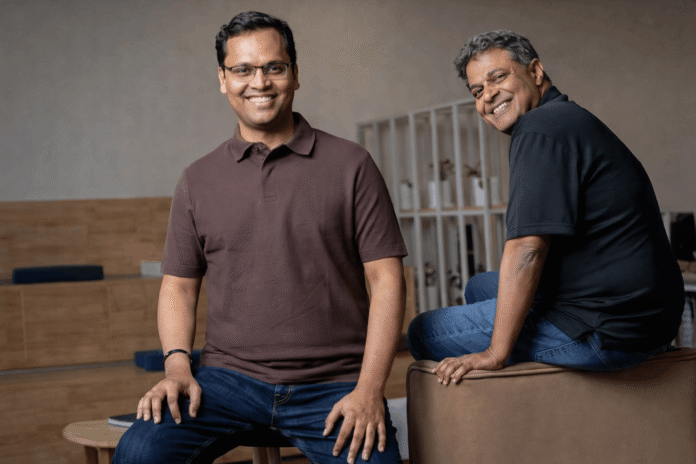
Bret Taylor, co-founder, Sierra

Sierra, a 21-month-old San Francisco–based startup that develops AI customer service agents for enterprises, announced on Friday that it has achieved a $100 million annual revenue run rate (ARR). This rapid rise indicates that companies across sectors are increasingly adopting AI agents.

The startup’s acceleration even surprised its experienced co-founders, former Salesforce co-CEO Bret Taylor and longtime Google veteran Clay Bavor, who wrote on their blog, “That’s a heck of a lot quicker than we expected.”

Sierra’s customer base includes tech companies such as Deliveroo, Discord, Ramp, Rivian, SoFi, and Tubi. Additionally, the list features established non-tech brands like ADT, Bissell, Vans, Cigna, and SiriusXM.

Taylor and Bavor said they initially believed tech companies would feel comfortable experimenting with AI customer service agents, but the fact that long-standing, traditional companies also chose Sierra as a provider astonished them.

The company says it builds AI agents capable of handling tasks such as authenticating patients for healthcare providers, processing returns, ordering replacement credit cards, and assisting customers with mortgage applications—essentially automating work that human customer service representatives previously managed.

Sierra competes with startups like Decagon and Intercom; however, the company maintains that it is the current leader in the AI customer service category.

The company also uses an outcomes-based pricing model, charging customers for completed tasks rather than flat subscription fees.

Taylor and Bavor met at Google in 2005, where Taylor hired Bavor as an associate product manager.

Investors last valued the startup at $10 billion when it raised $350 million in a September round led by Greenoaks Capital. Sequoia, Benchmark, ICONIQ, and Thrive Capital also invested in the company. Based on its $100 million ARR, this valuation gives Sierra a 100x revenue multiple, which remains substantial despite its exceptionally rapid growth.

A Stanford computer science graduate, Taylor co-created Google Maps before founding FriendFeed, which Facebook acquired. At Facebook, he served as CTO and helped develop the iconic “Like” button. He later founded Quip, a Google Docs competitor that Salesforce purchased for $750 million in 2016.

Taylor then served as Salesforce co-CEO alongside Marc Benioff for over a year. After Taylor departed Salesforce in 2023, Bavor—who spent 18 years at Google leading products like Gmail and Google Drive—invited him to lunch, where they decided to launch Sierra.

Agnikul Cosmos raises Rs 150-Cr to accelerate reusable rocket development

0
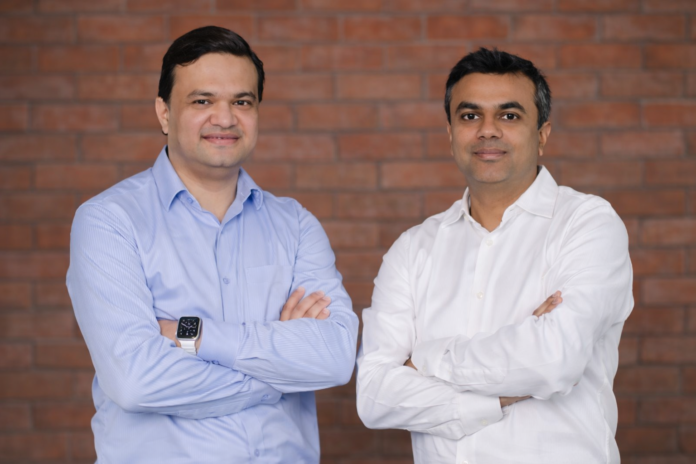
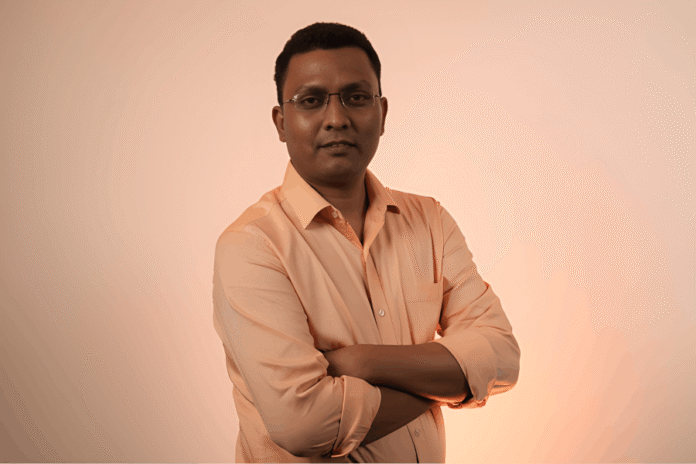
Srinath Ravichandran & Moin SPM, co-founders, Agnikul Cosmos

Space startup Agnikul Cosmos announced on Saturday that it has raised Rs 150 crore in a new funding round at a valuation of over half a billion dollars, and it will use the capital to build reusable launch vehicles.

Moreover, IIT-Chennai-incubated Agnikul demonstrated a suborbital rocket launch last year and plans to deploy its 3D-printed Agnibaan rocket next year to place small satellites into low Earth orbit.

The startup also continues working on recovering the lower stage of its launch vehicle, which it intends to reuse for future missions.

“This fundraiser allows us to work on such missions while also focusing on scaling launch frequency and building for the world, from India,” Srinath Ravichandran, CEO and co-founder of AgniKul Cosmos, said.

Additionally, the funding round attracted participation from family offices and institutional investors such as Advenza Global Limited, Atharva Green Ecotech LLP, HDFC Bank, Artha Select Fund, Prathithi Ventures, and 100X.VC.

The company will invest this capital in scaling production units for aerospace and rocket components and advancing its stage-recovery program.

Furthermore, the startup has earmarked a portion of the funds for developing its integrated space campus on the 350 acres allocated by the Tamil Nadu government, which will host end-to-end facilities for manufacturing and testing launch vehicle systems, according to a company statement.

Agnikul will also channel the new funds into strengthening its reusable launch architecture, building on its recently granted patent that extends the operational life of upper stages.

This innovation creates new opportunities for reusability and cost-effective orbital access, marking a major milestone toward developing the world’s first recoverable small-satellite launch vehicle.

“With growing demand and more than a dozen customers eager to launch with us, scaling our operational depth was the natural next step. The indigenous facility, which is planned near the new upcoming launchpad of India, will equip us to serve these missions on schedule and with the responsiveness the market expects,” Moin S P M, co-founder and COO of Agnikul, said.

Agnikul claims to serve customers in India, the Middle East, and Australia and aims to meet a globally distributed launch demand, reinforcing India’s rising leadership in the spacetech sector.

Recently, Agnikul also unveiled a new large-format metal additive manufacturing unit, which will enable it to use 3D printing for multiple subsystems beyond engines.

Hyperpure extends services to all food businesses across India

0
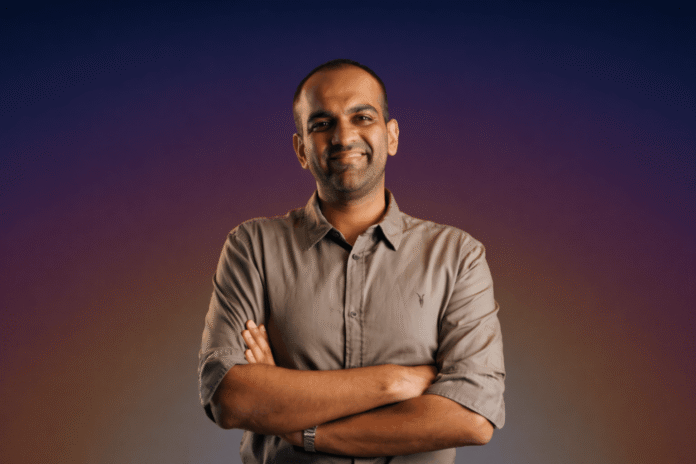
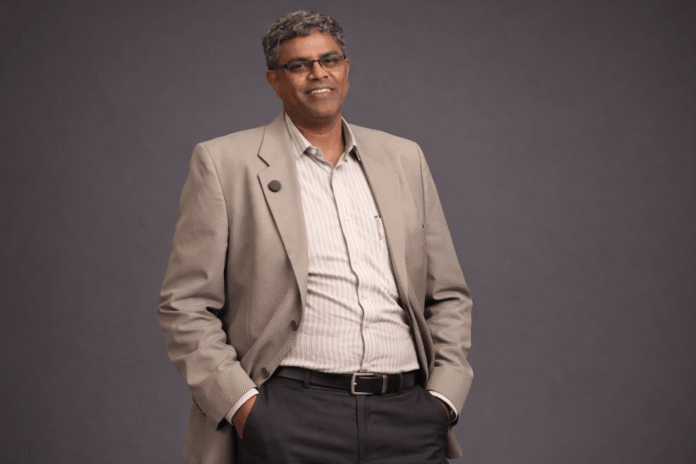
Rishi Arora, CEO, Hyperpure

Hyperpure, the B2B grocery supply unit of Zomato’s parent Eternal, has broadened its services beyond hotels and restaurants to include all types of food businesses.

Moreover, Hyperpure aims to target home bakers, caterers, street-food vendors, and small party-supply providers to expand its customer base beyond restaurants, hotels, cloud kitchens, and cafés. Now, these businesses can log in to Hyperpure with their phone numbers to place orders.

Launched in 2018, the platform has steadily expanded its offerings in recent years by introducing rapid grocery delivery and scaling its supply chain capabilities.

“For years, we focused on solving supply chain challenges for restaurants and commercial kitchens, but we knew the opportunity and responsibility was much larger,” said Rishi Arora, CEO, Hyperpure, in a statement. “By opening Hyperpure to all, we’re democratizing access to the infrastructure every food business needs to grow and succeed.”

However, this push comes as it faces a revenue decline after it stopped supplying groceries to sellers on Blinkit, which shifted to an inventory-led model from September 1. Consequently, for the second quarter of FY26, Hyperpure recorded a 31 percent year-on-year (YoY) drop in revenue to Rs 1,023 crore due to this transition in its quick-commerce model.

Additionally, in September, the platform leased around 2.5 lakh square feet of warehouse space for over five years in Bhiwandi near Mumbai to reinforce its supply operations. With this step, the platform now operates 11 warehouses across India.

In Q2FY26, Eternal’s operating revenue surged threefold to Rs 13,590 crore, largely driven by Blinkit’s move to an inventory-led model. Nevertheless, the company’s net profit fell 63 percent YoY to Rs 65 crore, as increased spending on Blinkit put pressure on margins.

Semiconductor startup Sophrosyne Technologies raises $2 Mn in funding

0
L-R: Jatin Gupta & Dr. Manish Srivastava, Co-founders, Sophrosyne Technologies

Semiconductor startup Sophrosyne Technologies has secured $2 Mn (approximately INR 17.7 Cr) in a seed funding round from early-stage venture capital firm Bluehill Capital. This investment comes soon after the company received a $1.2 Mn design-linked incentive (DLI) grant from the Ministry of Electronics and Information Technology (MeitY).

With this infusion of capital, Sophrosyne Technologies plans to speed up its shift from prototype silicon to full-scale commercial products, expand its silicon and firmware design teams, and scale early customer deployments in India and overseas.

Founded in 2022 by Manish Srivastava, Sophrosyne Technologies operates as a fabless semiconductor company working on multi-vital biosensing system-on-chip (SoC) solutions for digital health devices and wearables. The startup aims to integrate ECG, PPG, respiration, and temperature monitoring into a single, ultra-low-power silicon chip to enable compact and energy-efficient medical wearables.

The company’s flagship offering will serve as a semiconductor platform capable of high-precision, multi-vital tracking for medical-grade health monitoring applications.

Additionally, Sophrosyne is creating proprietary AI models for advanced signal processing, deep learning, and on-edge optimization to convert physiological data into actionable health insights.

Although Sophrosyne is still developing its technology, the company intends to supply its solutions to global original equipment manufacturers (OEMs) and device makers seeking integrated and cost-effective health monitoring technologies.

“We are moving toward production-grade silicon and early OEM rollouts. Having a deep-tech investor like Bluehill VC, backed by leaders such as Vinod Dham, Manu Iyer, and Sridhar Parthasarathi, gives us access to world-class semiconductor guidance that few startups can tap into,” Srivastava said.

The funding round arrives at a time when India’s semiconductor industry is rapidly expanding, driven by strong regulatory support.

A key driver of this momentum is the Indian Semiconductor Mission (ISM), which aims to support investments in chip design, display manufacturing, and semiconductor fabrication to strengthen India’s role in global electronics value chains.

Under the ISM, the government states that it has provided “design infrastructure support” to 278 academic institutions and 72 startups while training nearly 60,000 students in semiconductor fabrication.

Four years after launching the Indian Semiconductor Mission, Prime Minister Narendra Modi unveiled India’s first indigenous semiconductor chip—the Vikram 32-bit processor—developed by ISRO’s Semiconductor Laboratory (SCL) in collaboration with the Vikram Sarabhai Space Centre at Semicon India 2025.

Developers engineered the Vikram processor to operate reliably as a space-grade chip in extreme environmental conditions.

On the private sector side, the government has approved 10 semiconductor projects with a combined investment of INR 1.60 Lakh Cr, led by companies such as Micron, Kaynes, Tata Electronics, and SiCSem.

At the core of this activity lies India’s expanding semiconductor market, which will reach a $150 Bn opportunity by 2030.

Insurtech startup Pibit.AI raises $7 Mn to advance AI-driven underwriting

0

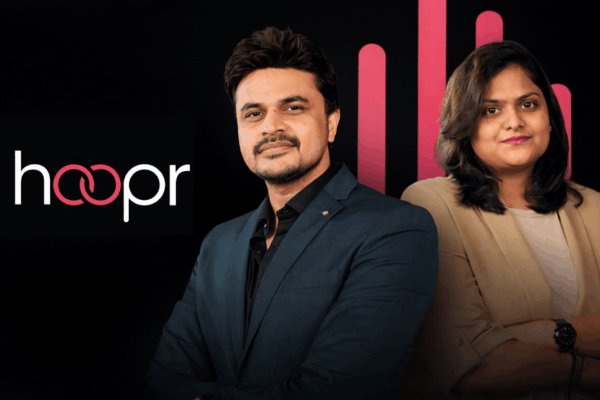
Pibit.AI, an insurtech startup developing AI-driven underwriting systems, has secured $7 million in a Series A round led by Stellaris Venture Partners, with continued support from existing investors Y Combinator and Arali Ventures.

The startup plans to use the new capital to enhance product development and accelerate the adoption of its flagship Centralized Underwriting Risk Environment (CURE) across the insurance sector.

Pibit.AI noted that while insurance revolves around assessing risk, industry tools have not evolved quickly enough to support underwriters. Many teams still spend up to a third of their time on manual data entry, triage, and data enrichment. With submission volumes rising and the underwriting talent pool shrinking, the company emphasized that efficiency has become essential. Pibit.AI aims to make underwriting faster, more accurate, and more dependable.

Akash Agarwal, founder and CEO of Pibit.AI, said, “Pibit.AI was built around one idea: that AI should empower underwriters, not replace them. Too many systems prioritize speed over trust. We’re building something that’s transparent, explainable, and decision-ready—a system that gives underwriters confidence in every output while helping them move faster than ever before.”

Furthermore, CURE operates as a comprehensive system that optimizes the underwriting process by managing submissions, parsing documents, conducting research, analyzing risk, and coordinating workflows within a single environment.

The platform’s modules—ClearCURE for triage, DocumentCURE for document intelligence, and ResearchCURE for real-time data enrichment—enable underwriters to transform raw submissions into actionable decisions more quickly. RiskCURE assesses each account using portfolio-specific indicators, while WorkflowCURE brings together tasks, insights, and team collaboration in one integrated workspace.

Alok Goyal, Partner at Stellaris Venture Partners, said, “Underwriting has long been constrained by manual reviews, inconsistent data, and tools that haven’t kept pace with rising submission volumes. With CURE, Pibit.AI automates and unifies these workflows, improving accuracy, reducing costs, and accelerating quote generation to drive higher revenue. We’re excited to partner with Akash and lead Pibit.AI’s Series A round as it scales.”

Over the next 12 to 18 months, Pibit.AI plans to broaden its advanced risk models, API frameworks, and data partnerships so the CURE platform can better adapt to new business lines and emerging risk categories.

Maruti Suzuki invests ₹2-Cr in connected mobility startup Ravity Software Solutions

0
Hisashi Takeuchi, Managing Director and CEO, Maruti Suzuki India Limited

Maruti Suzuki India Limited has invested nearly INR 2 crore in Ravity Software Solutions Private Limited, acquiring an equity stake of over 7.84 percent through the Maruti Suzuki Innovation Fund. Ravity Software Solutions operates as a technology-driven startup that delivers connected mobility insights.

Moreover, Maruti Suzuki channels its startup investments through the Maruti Suzuki Innovation Fund, an initiative created to strategically back high-potential startups that demonstrate innovation and the ability to develop solutions aligned with the company’s operational needs.

This investment marks the third funding under the Maruti Suzuki Innovation Fund. The company previously invested INR 2 crore each in Amlgo Labs Private Limited in March 2024 and Sociograph Solutions Private Limited in June 2022.

Hisashi Takeuchi, Managing Director and CEO of Maruti Suzuki India Limited, said, “Aligning to our core value of keeping the customer at the core of our business, we are focused on enhancing the vehicle ownership experience. In the age of open innovation, we strive to co-create business solutions with specialized entities operating in a particular field. Startups are ideal partners, as they bring agility, fresh thinking, and cutting-edge solutions to support our goal of ensuring customer delight. Our investment in Ravity Software Solutions Private Limited will enable us to elevate customer experience through data-driven insights. We have been associating with startups since 2019 under our Maruti Suzuki Innovation programs. Through this initiative, we are investing in a culture of innovation, building strategic partnerships, and unlocking new opportunities, in line with the government’s ‘Startup India’ initiative to promote entrepreneurship in the country.”

Vikas Rungta, Founder, Ravity Software Solutions Private Limited, said, “It is an honor to be associated with an industry leader like Maruti Suzuki, whose name is synonymous with bringing personal mobility to millions in India as well as across the globe. An automobile major like Maruti Suzuki partnering with a startup speaks volumes about its forward-thinking mindset, humility, and openness to learn and collaborate to explore new ideas. With our excellence and expertise in AI, analytics, and mobility, we are committed to upholding the trust Maruti Suzuki has placed in us. We believe that the high complementarity of our strengths—Maruti Suzuki’s scale of business and our agility and entrepreneurship—will further enhance customer experience and delight.”

Stamps by Eight Continents strengthens Rajasthan presence with new Pushkar boutique hotel

0
Haninder Sachdeva, CEO, Eight Continents Hotels & Resorts

Eight Continents Hotels and Resorts has expanded its Stamps portfolio by opening a new property in Pushkar on November 1, 2025. The company continues to pursue its strategy of strengthening its presence in major leisure destinations across India, especially in Tier 2 and Tier 3 cities.

Haninder Sachdeva, CEO, Eight Continents Hotels and Resorts, said, “With every new opening, we are strengthening a hospitality ecosystem that speaks to every kind of traveller India hosts today. Eight Continents has always believed that true scale comes from serving diverse needs with equal commitment, whether it’s a full-service experience, a lifestyle retreat, or a focused limited-service stay. Our expanding portfolio across segments reflects this philosophy in action. Pushkar marks another step in our journey to create meaningful, accessible, and distinctive stays across India’s most promising destinations. We are building a network that travellers can trust—no matter where their journey takes them.”

Recognizing Pushkar’s appeal to both domestic and international travellers—owing to the world’s only temple dedicated to Lord Brahma—the company identified the city as an ideal fit for the Stamps leisure business model.

Stamps Pushkar showcases a blend of modern comfort and traditional Rajasthani craftsmanship. The hotel offers contemporary rooms and amenities while incorporating regional artistic elements such as locally inspired paintings. Its culinary offerings highlight the flavors of Rajasthani cuisine, complemented by Israeli dishes that cater to Pushkar’s global visitor profile.

The Pushkar launch follows the brand’s recent opening in Jodhpur and strengthens Eight Continents’ expansion plans across Rajasthan. The company aims to position Stamps as a competitive player in high-potential destinations where cultural tourism and consistent demand create long-term growth opportunities.

SaffronStays strengthens portfolio with launch of Junglebrooke in Kolad

0
Devendra Parulekar, founder of SaffronStays

SaffronStays is putting compassion at the centre of travel with the launch of Junglebrooke, an animal-first getaway in Kolad, Maharashtra. Ganesh Nayak, founder of Animals Matter To Me, owns the retreat and envisions it as a cageless haven where stray animals receive the affection of pets, pets come first. A portion of the proceeds, as part of its sustainability initiative, supports the rescue, rehabilitation, and care of animals.

Located across an acre inside the verdant AMTM Kolad campus, Junglebrooke marks a pioneering offering for India’s conscious travellers. The retreat incorporates recycled furniture repurposed from Film City sets and elevated structures to maintain open green spaces, all guided by the philosophy “Pets Over People.”

The property features eight large cottages, an eco-friendly design ethos, and close proximity to an empathetic rescue ecosystem. Guests can engage in guided tours, interact with animals, practice yoga, or enjoy quiet reading sessions in nature. Each stay includes accommodation for two guests with one pet at no charge, along with complimentary pet meals, pool access, yoga classes, karaoke, and more.

From dogs and cats to cows, pigs, ducks, rabbits, and geese, the animals here now enjoy a peaceful and cared-for environment. A sprawling 10,000 sq. ft. cage-free cattery provides a sanctuary for cats, while the gaushala offers a safe grazing space for rescued cattle. Picture this: beginning your day by feeding a rescued calf, splashing in the infinity pool with your dog by noon, and unwinding at sunset with a drink while your pet relaxes beside you—ending the night under a starry sky, comforted by the knowledge that your stay contributes to meaningful change.

AMTM, home to more than 400 rescued animals, has long served as a refuge for dogs, cats, cows, pigs, ducks, and rabbits from Kolad and Mumbai. Philanthropists and industrialists such as Nawshir Mirza, Cyrus Mistry, and the Tata Group have bolstered the organisation’s mission, enabling it to expand its facilities and strengthen its rescue work.

“Junglebrooke is our way of giving a voice to the voiceless, those with paws, claws, wings, and whiskers. It’s built as a space where pets can truly be themselves, and humans are happy companions in their world. A place where dogs can run free, cats can nap under trees, and their people can unwind right alongside them. Every stay becomes a small step toward a kinder world for animals and for us,” says Devendra Parulekar, founder of SaffronStays.

Lords Hotels & Resorts Expands Presence in Gujarat with Signing of Lords SKD Resort, Salangpur

0

Lords Hotels & Resorts, one of India’s leading mid market hospitality chains, has signed a new property in Salangpur, Gujarat, marking its expansion into this historic pilgrimage destination.

The Property is well connected by road and air with major cities like Rajkot, Ahmedabad, and Vadodara.

Salangpur, renowned for the Shri Kashtabhanjan Hanumanji Temple and the BAPS Swaminarayan Mandir, is a sought-after destination for both spiritual and leisure travelers. The upcoming resort will feature 24 cottages and 23 rooms, along with premium amenities including a swimming pool, banquet hall, party lawn, restaurant, and spa.

Commenting on the signing, Pushpendra Bansal, COO, said, “Salangpur is a destination that blends spirituality with serenity, and we are excited to bring our true value hospitality here. This resort will offer guests comfort, luxury, and world-class service while being close to iconic pilgrimage sites.”

Sudhir Jena, VP Corporate, added, “This new property underscores our commitment to expanding our presence across Gujarat while offering unique experiences for both leisure and business travelers. We eagerly look forward to welcoming our guests soon.”

Lords Hotels & Resorts: elevating hospitality across 70 Hotels in 57 Destinations across 3 Nations

Minor Hotels unveils ambitious global expansion pipeline for 2026

0

Minor Hotels has revealed a robust pipeline of openings and relaunches slated for 2026, featuring projects across Asia, the Indian Ocean, Australia, the Middle East, Africa, and Europe.

This upcoming expansion underscores the group’s commitment to growing its presence in major gateway cities, rising leisure hotspots, and high-demand coastal destinations.

In Asia, the relaunch of Anantara Hua Hin Resort will follow a complete renovation of its “one hundred and 71 rooms and suites,” along with upgraded pools and refreshed dining experiences. Other developments in the region include enhancements at the Anantara Siam Bangkok Hotel, plus upcoming Avani properties in Kota Kinabalu and Vientiane.

Additionally, Anantara Xiling Snow Mountain Resort in Chengdu is expected to open toward the end of the year.

In Australia, Avani Mooloolaba Beach Hotel is on track to launch in mid-2026, offering “one hundred and eighty rooms” and sweeping coastline views from its 12th-floor dining spaces.

Across the Middle East and Africa, the relaunch of the Anantara Dubai Downtown Hotel will feature renovated rooms, upgraded suites, and a new signature dining venue. The region will also see the introduction of Anantara’s first tented camp in Zambia, the debut of the Tivoli La Vie Muscat Hotel, and a dual-brand Tivoli and Avani resort at Bilaj Al Jazayer in Bahrain.

In Europe, upcoming openings include NH Collection Paris Ponthieu Champs Élysées, Tivoli Palazzo Risorgimento Lecce in Italy, and NH Collection Sliema in Malta.

Minor Hotels anticipates steady growth into 2027, supported by its newly launched brands and an expanding global development pipeline.