

Wednesday, April 29, 2026
Home Blog Page 62

Cashew Research targets the $90B market research industry with AI

0
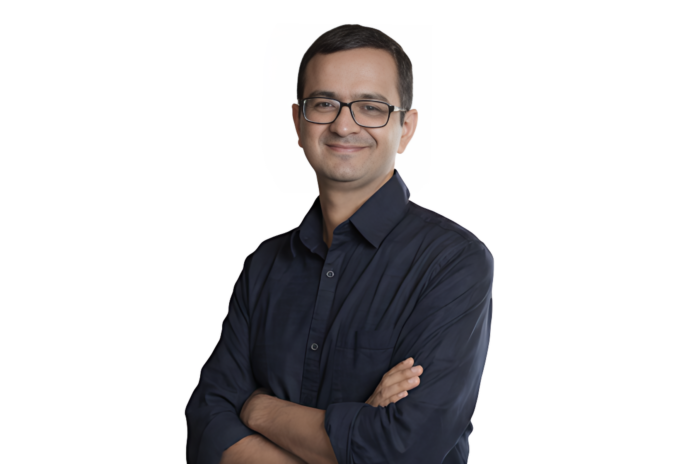
Addy Graves, co-founder and CEO of Cashew Research

Cashew Research operates in the $90 billion market research industry and aims to transform it using AI. The company identifies how brands can present themselves effectively to potential customers, yet traditional market insight remains costly and slow. Therefore, Cashew Research intends to change this by applying AI to the entire workflow.

Based in Calgary, Alberta, Cashew develops AI-driven market research plans and surveys for brands depending on the insights they need—such as measuring brand recognition among a defined group or determining how a marketing tagline resonates with consumers. Furthermore, the platform distributes surveys to real respondents and uses AI to summarize and interpret the results.

Cashew Research earned recognition as one of 200 startups selected for a major global startup competition and won the Enterprise Stage pitch track in 2025.

“You can use an LLM to try to do deep research and get answers to your questions, or you could use a firm that’s going to be really expensive,” Addy Graves, co-founder and CEO of Cashew, said while describing the current market research landscape. “Now there’s Cashew that exists in the middle. It creates custom, fresh data to answer your question instead of you just using an LLM that’s surfacing the same recycled pool of data that everybody’s finding on the internet.”

Graves brings more than a decade of market research experience, and she developed the idea for Cashew after facing a recurring challenge: Clients repeatedly asked her to deliver full research projects—complete with real human data—within just a few days.

For years, Graves considered that timeline impossible to meet while preserving research quality because the supporting technology simply did not exist. “That was definitely the aha moment,” Graves said. “And it wasn’t until the onset of AI that we were actually able to automate these processes that we use as researchers, best practices, these data science-backed methodologies, as well as the formatting of reports that we know that everybody wants.” Moreover, she noted that automation reduces cost, making Cashew accessible to small and medium-size brands that previously could not afford traditional market research services.

Graves founded Cashew in 2023 with Rose Wong, chief operating officer, initially focusing on consumer packaged goods, particularly food and beverage.

She believes Cashew will differentiate itself within the crowded AI marketing tools category because the platform does not rely on full automation. Cashew delivers fresh human data for each project, and that approach demands genuine market research expertise, Graves said.

Cashew’s competitive advantage may strengthen further as the company grows. The team anonymizes all collected real-world data and stores it in a proprietary database, which can add deeper insights to future research work.

The company has raised C$1.5 million in pre-seed funding and now prepares to launch a seed round in early 2026, targeting up to $5 million. Cashew will invest that capital in advancing its technology platform.

Heading into next year, Graves said the company will prioritize strengthening its U.S. presence and expanding its B2B customer base. “The people who are already buying research—that’s already a massive category—but that doesn’t even include all the people that could be buying research but just can’t afford it or can’t do it right now because they don’t have the timelines,” Graves said. “We’re actually creating this new category for marketers to gain access to answers to these questions that they’ve had.”

Cross-border payments platform Skydo raises $10Mn led by Susquehanna Asia VC to power India’s USD 2Tn export ambition

0
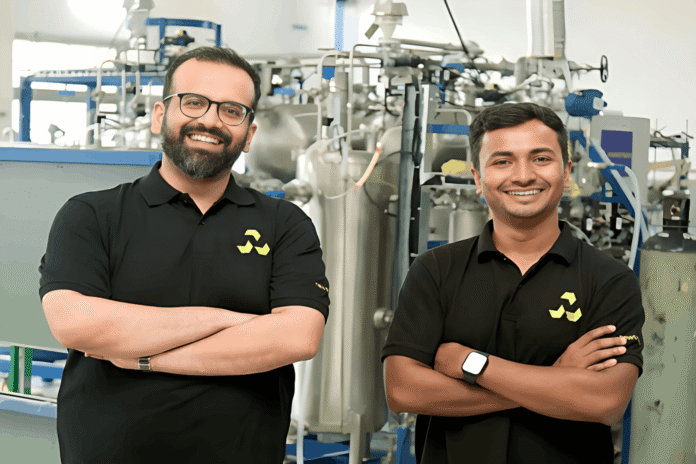
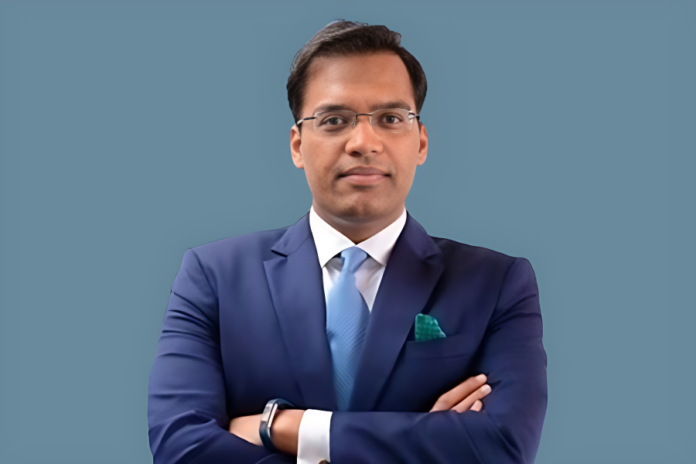
L-R: Srivatsan Sridhar and Movin Jain, co-founders, Skydo

Bengaluru, India | 10 December 2025: Skydo, India’s leading cross-border payments platform for exporters, has raised USD 10 million in Series A funding led by Susquehanna Asia Venture Capital, with participation from existing investor Elevation Capital.

The Bengaluru-based company serves over 30,000 Indian MSMEs, freelancers, and startups across 50+ cities, processing payments in 32+ currencies. Skydo was among the first to receive the Reserve Bank of India’s In-Principle authorization as a Payment Aggregator—Cross Border (PA-CB).

Rapidly Growing Exports, Broken Payments

India aspires to export services and goods worth USD 2 trillion by FY30, fuelled by hundreds of thousands of ambitious MSMEs, freelancers, and startups. Yet, these exporters often lose 3-7% of their revenue to hidden forex markups and opaque fees. Client payments take days, while subsequent documentation and compliance can extend into weeks and months.

Skydo is building the financial operating system for Indian exporters—Skydo customers can collect payments locally from clients across countries. These payments are then processed at zero forex fees, transparent flat-fee pricing, and 24-hour settlement. The platform instantly generates compliance documents like FIRA and provides a full suite of accounts receivable tools like invoicing, payment reminders, and accounting integration.

“Indian exporters are second to none in their global ambition. Skydo aims to enable them with world-class payment infrastructure built from India for the world,” said Srivatsan Sridhar, co-founder and CEO of Skydo. “This funding fuels our mission to build the financial operating system for global commerce—from collections, payouts, card acceptance, compliance automation, and accounting reconciliation.”

Until now, the only options for an Indian MSME exporter to receive payments have been traditional banks or global platforms like PayPal, Wise, or Payoneer. Banks charge opaque fees and have lengthy, manual processes for compliance, while global platforms deduct up to 10% of invoice values as fees and aren’t natively built for Indian exporters’ needs.

“Skydo has simplified our cross-border payments and cut our finance costs dramatically. Their fixed fees and mid-market rates give us full predictability and better value than any bank we’ve worked with,” said Sushant Yadav, founder of marketing agency Optimite.

“I started using Skydo shortly after their launch, and I’ve been a fan ever since. Skydo saved me from haggling with banks on FX rates every time I received a payment, and we’ve saved thousands of hard-earned dollars since switching,” said Abhishek Agarwalla, co-founder and CEO of AI interviewing company Fabric. “What really stands out, though, is how customer-obsessed they are. I still remember the entire Skydo team, including Movin and Srivatsan, showing up at our office to listen to our problems firsthand. Most products make money, but Skydo has earned something far rarer: customer trust.”

Scaling to USD 5 Bn and Beyond

Skydo grew 4X in the past year and is targeting USD 5 billion in annualized payment volume within two years.

“We’re demonstrating that India has the talent, compliance muscle, and regulatory clarity to build global financial infrastructure from here, for the world,” said Movin Jain, co-founder of Skydo. “With this round, we aim to expand our global footprint and secure payment licenses in key geographies.”

According to Bhavanipratap Rana, Investment Advisor to Susquehanna Asia VC, “India’s evolving cross-border payment landscape, with the introduction of the new PA-CB framework, demands high-quality, focused players with a technological edge. Skydo’s focus on solving the real costs of cross-border transactions—opacity, time, compliance risk, and working capital blockage—is a clear differentiator. We are excited to partner with a company that meets the high bar for technological and risk capabilities set by the regulator, and we believe their model is perfectly suited to capturing high-volume B2B business.”

Talking about the investment, Mridul Arora, Partner, Elevation Capital, said, “Since partnering with Skydo at their inception, we have been incredibly impressed by the team’s speed, execution, and unwavering product focus. They have done a stellar job scaling the platform 4X in the last year alone, building what is truly a customer-centric international payments powerhouse. We are thrilled to support this next phase of growth as Skydo continues to dismantle barriers and make global trade friction-free and seamless for Indian exporters.”

What This Round Unlocks

The new capital will unlock:

● Geographic expansion: Local collections across 20+ countries in Latin America, Africa, Southeast Asia, and the Middle East

● Global licensing: regulatory licenses in key international markets

● Card infrastructure: Scaling InstaLinks to enable card acceptance for more exporters at half the cost of legacy gateways

● Deeper compliance suite: Enhanced reconciliation and reporting tools to reduce back-office overhead

● Developer platform: APIs and webhooks for SaaS companies, marketplaces, and fintechs to embed Skydo’s global payment rails

About Skydo

Skydo is a Bengaluru-based cross-border payments platform that simplifies global money movement for businesses. Its unified stack spans global collections, payouts, card acceptance, compliance automation, and developer-first APIs. Skydo is an empanelled Amazon Global Selling PSP, one of the first to receive RBI’s in-principle PA-CB approval, and holds SOC 2 and ISO 27001 certifications.

About Susquehanna Asia VC

Susquehanna Asia VC is the Southeast Asian and Indian venture capital arm of the Susquehanna International Group of Companies, a global proprietary trading and investment firm founded in 1987. As part of SIG, we have access to flexible and patient capital to grow with our investments. We support founders from their early days through each stage of growth and, together with our China team, have achieved 70+ IPO/M&A and other exits among 350+ portfolio companies in enterprise and consumer technology over the last 18 years. These portfolio companies include Agora, Bytedance, Kumu, Inshorts, Lentra, Mobile Premier League, Wakefit, Musical.ly, Paidy, PayMaya, and RedDoorz. For more information about Susquehanna Asia VC, please visit www.sig-asiavc.com.

Edtech startup Uolo raises USD 7 Mn in funding

0
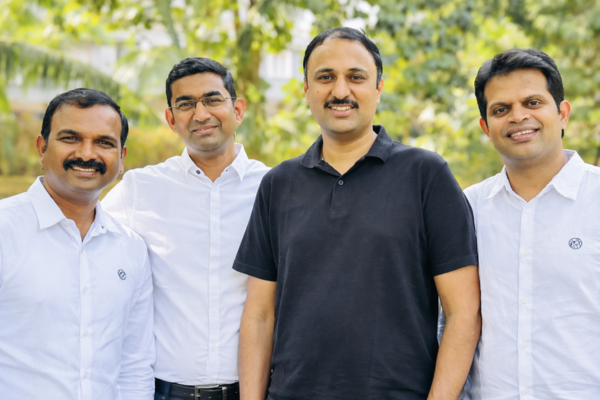
[L-R] Pallav Pandey and Ankur Pandey, Co-founders of Uolo

Edtech startup Uolo has secured USD 7 million (about INR 63 crore) in a funding round led by Australian venture capital firm Five Sigma. Moreover, existing investors, including Blume Ventures, Morphosis, and Alicorn, also joined the round.

Furthermore, the Gurugram-based startup intends to deploy the new capital to broaden its network of partner schools, build generative AI-driven learning companions, and enhance its overall product suite. Uolo, which Pallav Pandey, Ankur Pandey, and Badrish Agarwal founded in 2013 as a school communication platform, initially collaborated with 150 schools, according to the YS media platform.

By 2020, a new venture named Uolo Edtech acquired the business, repositioned the company, and appointed Pallav Pandey as co-founder and CEO. Under this renewed strategy, the startup now partners with schools to deliver textbooks across subjects such as English, mathematics, computer science, and general knowledge, while it also offers a home-practice app for students. At present, Uolo claims to serve over 2,500 schools across India and reports more than 1.1 million paying students.

Previously, Uolo had raised USD 22.5 million in a Series A round led by UAE-headquartered Winter Capital (along with Blume Ventures and Morphosis) in 2022, in addition to an earlier seed round in November 2020.

Additionally, the latest funding arrives at a moment when India’s edtech industry is displaying renewed momentum. For instance, Vedantu recently raised USD 11 million in a convertible equity round to accelerate expansion and strengthen its adaptive content and AI capabilities.

Meanwhile, PhysicsWallah has become the first large Indian edtech company to list publicly. In the domestic school-focused edtech ecosystem, Uolo competes with firms such as Unacademy, Toppr, Vedantu, and upGrad, all of which operate within overlapping categories of K–12 learning, online schooling, or test preparation.

DEI Symposium 2025 to Unveil India’s First Structured DEI Ranking: The DEI 100

0

Mumbai, December 2025: As Indian enterprises accelerate toward global leadership, Diversity, Equity & Inclusion (DEI) is emerging as a defining business priority. Far from being a compliance metric, DEI now shapes innovation, talent strength, and organizational resilience. Yet the gap between ambition and implementation persists across industries.

The DEI Symposium 2025, hosted by Team Marksmen Network on December 10 at Novotel Mumbai International Airport, aims to bridge this gap by convening 150+ CXOs and 35+ speakers for a day of strategic dialogue and actionable insights.

At the heart of the event is the launch of the DEI 100 – India’s Structured Ranking of Organisations Leading in Diversity, Equity & Inclusion Excellence, developed in collaboration with EY. This is India’s first-ever systematic, data-backed DEI benchmark, designed to evaluate organizations on policies, culture, representation, accessibility, and leadership accountability.

The DEI 100 methodology and evaluation process were developed and overseen by the EY team, led by Alpana Dutta, Partner – People Consulting, EY India.

At the symposium, leading CHROs, including Chetana Patnaik, CHRO, LTIMindtree; Renu Jethani, Global HR Leader – India & South Africa, Sutherland; Aditya Tiwari, Regional Head – HR, Asia Pacific, KeraKoll Group, and Trupti Patkar, Head – Human Resources, Eaton will join the forum to share best practices and frontline perspectives on translating DEI into measurable business impact.

The symposium will also feature high-impact conversations with prominent CEOs such as Vishal Sharma, Executive Director & CEO, Godrej Industries – Chemicals; Feroze Azeez, Joint CEO, Anand Rathi Wealth, Manish Jain, Founder & MD, Cilicant; Sachin Seth, Regional MD, CRIF, India & South Asia and Kartik Nagarajan, CEO, Datamatics Business Solutions, who will discuss how inclusive leadership strengthens brand equity, investor confidence, and long-term competitiveness.

Sessions will include a special “Voices from Bharat” segment led by Shri Kripashankar Singh, spotlighting the importance of regional inclusion, multilingual engagement, and skilling initiatives across Tier II and III India.

Rishi Kapoor, CEO, Team Marksmen Network, said: “Launching the DEI 100 is a landmark moment for India Inc. This is the country’s first structured, credible framework that quantifies inclusive excellence. It provides organisations with clarity, accountability, and a blueprint for meaningful progress. The DEI Symposium is not merely a gathering, it is a nationwide movement to convert inclusion into strategic advantage.”

As India positions itself for the next phase of economic growth, the organisations that operationalise inclusion will lead the way. The DEI Symposium 2025 and the debut of the DEI 100 mark a pivotal step toward a future where inclusion is measurable, actionable, and central to sustainable business success.

Centre Court Capital raises ₹410-Cr for first fund focused on sports and gaming

0
Mustafa Ghouse, General Partner, Centre Court Capital

Centre Court Capital on Tuesday raised Rs 410 crore for its maiden fund, surpassing its original target and activating a Rs 60 crore greenshoe option, and the firm now plans to back companies operating at the intersection of sports and gaming within the Indian ecosystem.

JSW Cement’s Managing Director, Parth Jindal, anchors the fund, while domestic institutional investors such as SIDBI and SRI, along with family offices including Premji Invest, SanRaj Group, and GMR Sports, have extended their support. It also attracted participation from sports and media personalities like Neeraj Chopra, Rishabh Pant, PV Sindhu, and Jemimah Rodrigues, as well as entrepreneurs including Binny Bansal, Mithun Sacheti, and Ankit Nagori.

The fund plans to write cheques ranging from Rs 8 crore to Rs 24 crore and aims to invest in 15 to 18 companies; moreover, it has already invested in six companies, including cricket fan engagement platform Fancraze Technologies, sports infrastructure firm Michezo Sports, aerial and broadcast tech startup Quidich Innovation Labs, and gaming studio Airoclip, among others.

Centre Court Capital intends to allocate around 30% to 40% of the fund for follow-on investments in its portfolio companies, and it expects to finish deploying capital in the next 12 to 18 months, Mustafa Ghouse, general partner at Centre Court Capital, said.

The firm is examining sub-sectors within the fitness ecosystem—such as nutrition and recovery—although its broader focus stays on tech-driven businesses that can scale within sports and gaming. Ghouse also clarified that despite the firm’s sector focus, it does not plan to invest in sports teams, leagues, or coaching academies because these businesses fall under the service sector.

“It is not a venture-type investment in our perspective where you can deliver within a six- to seven-year horizon. With teams and leagues, we don’t look at it because those are sectors that are looked at by private equity firms and need larger check sizes. You also need to stay invested in it for a much longer period of time,” said Ghouse.

The fund’s exit horizon remains a typical six- to seven-year window, and Ghouse added that although exit strategies vary by business, the firm is now seeing larger international funds becoming more active in India, which in turn provides stronger exit opportunities for VCs in this sector. Additionally, mergers and acquisitions continue to play a major role in shaping exits.

“For us, the type of exits one has already seen from Indian studios has been with acquisitions. That will continue to be the first kind of pathway for us, from an exit perspective. It’s either M&As or larger international funds looking to enter India or our segment.”

Nimbus Realty invests ₹10-Cr to elevate air quality at The Arista Luxe

0
Sahil Agarwal, CEO, Nimbus Realty

Nimbus Realty has taken a significant step by introducing the feel of mountain-fresh air inside its homes at the ultra-luxury residential complex, Nimbus The Arista Luxe.

This in-residence air system, developed by MeVaChi, uses hospital-grade filtration, and the company has invested nearly Rs 10 crore in the setup, which now stands at the core of how the project defines comfort and well-being.

“The idea is simple: the air inside a home should not merely circulate. It should be renewed, refreshed, and made as clean as the surroundings people often travel far to enjoy. At the moment, this technology is being offered only at Nimbus The Arista Luxe. Other projects are being studied for possible inclusion. The setup is more sustainable over time, both in terms of maintenance and energy use,” says Sahil Agarwal, CEO, Nimbus Realty.

The technology behind this system relies on multiple stages of filtration, and additionally, it incorporates a HEPA layer similar to those used in medical environments. This system also absorbs gases and odors, producing air that feels lighter, cleaner, and significantly less polluted. Moreover, it helps reduce gaseous impurities that typically originate from traffic corridors, drains, or even distant landfills, and removing them plays a major role in how fresh a home ultimately smells or feels.

Ultimately, Nimbus Realty’s investment in advanced clean-air technology at The Arista Luxe reflects a forward-looking commitment to healthier, more sustainable living. By integrating hospital-grade filtration directly into every residence, the company not only elevates everyday comfort but also redefines what luxury housing should offer in an urban environment. This initiative demonstrates how innovation, wellness, and premium real estate can come together to create homes that genuinely enhance the quality of life for modern residents.

United Hospitality Management strengthens leisure portfolio through Rosastays aquisition

0

United Hospitality Management (UHM) has officially made its entry into the Indian hospitality market by acquiring Rosastays, and this strategic step marks a significant milestone in UHM’s global expansion. The company now establishes a strong operational presence with 17 boutique properties across destinations such as Goa, Kasauli, Nainital, Pushkar, and Shimla, among others.

Additionally, select Rosastays assets will transition into the UHM brand between Q4 2025 and Q1 2026. Moreover, UHM continues to strengthen its development pipeline, which now includes over 700 keys and upcoming projects with IHG Hotels & Resorts under the Garner brand, reinforcing its long-term commitment to South Asia’s rapidly growing hospitality landscape.

Klaus Assmann, COO, United Hospitality Management – Middle East, India & Southeast Asia, said, “India is among the world’s most dynamic hospitality markets. Our expansion here is a long-term investment in a region of immense potential. With Deepika’s leadership and our proven global framework, we’re set to create hospitality experiences that combine operational excellence with cultural authenticity, delivering true value for owners and investors.”

Deepika Arora, a visionary entrepreneur with over two decades of global hospitality experience, assumes leadership as Managing Director for United Hospitality Management—India and will drive the company’s mission to build a differentiated, owner-focused platform.

Deepika added, “India is entering a transformative phase in travel and hospitality—one that values authenticity, design, and differentiated guest experiences. UHM’s entry will bring global systems, a strong owner-centric philosophy, and operational expertise that will accelerate growth for our partners.”

Rosastays also continues to support Dusit Hotels & Resorts in the Indian Subcontinent under Deepika’s leadership, which further enhances strategic synergies across the region. UHM, leveraging more than 30 years of luxury hospitality experience, manages a diverse international portfolio that spans Europe and the Middle East, including Hyatt Regency Lisbon, Sheraton Cascais Resort, Pine Cliffs Resort Algarve—a Luxury Collection Resort, Yotel Porto, Th8 Palm Dubai Beach Resort—a Vignette Collection by IHG, Wyndham Residences The Palm, Movenpick JLT, VOCO Bonnington JLT, The Creekside Hotel Dubai, Arabella Beach Hotel Kuwait—a Vignette Collection by IHG, Riva Beach Club Palm Jumeirah Dubai, and an extensive collection of bespoke holiday homes and residences in the UAE.

In addition, UHM operates more than 60 dining venues and offers signature wellness platforms such as Serenity—The Art of Wellbeing, Pure by Serenity, and the Active by Serenity gym brand. Furthermore, UHM’s “glocal” philosophy—blending global expertise with locally informed strategies—continues to establish the company as a trusted partner for major hospitality brands, including Marriott, Accor, Wyndham, Hyatt, Yotel, and IHG, while its India entry underscores its long-term strategic vision, owner-first systems, and strong leadership focus.

Google invests in vibe coding startup Emergent to accelerate AI adoption

0
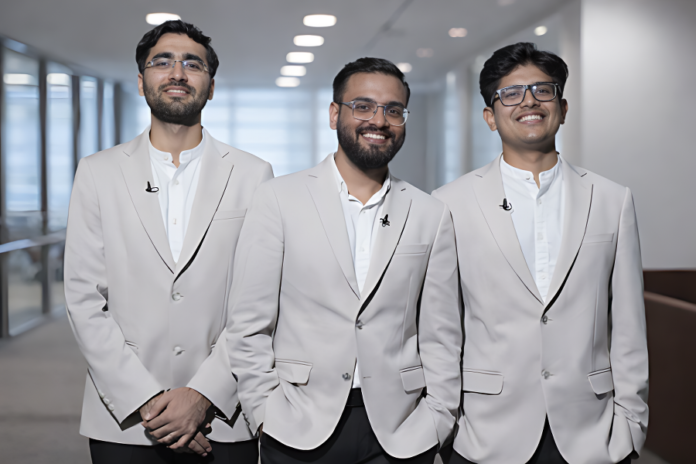
Mukund Jha and Madhav Jha, co-founders, Emergent

Vibe coding startup Emergent, which scaled to 2.5 million users and surpassed a $25 million ARR run rate within just five months of launch, announced on Tuesday that it has secured a strategic investment from Google’s AI Futures Fund. The investment also provides access to Google’s latest AI models and technical expertise.

The startup did not disclose the investment amount.

Founded in 2025 by Mukund and Madhav Jha, Emergent positions itself as an agentic vibe-coding platform that enables non-technical users to build full-stack, production-ready applications through autonomous AI agents. The platform eliminates the need for expensive engineering teams or technical cofounders, thus allowing small business owners, creators, and entrepreneurs to build software without writing code.

“We are partnering deeply across three to four areas [with Google]: Gemini models for our backend heavy workloads (we were a Gemini 3 launch partner), DeepMind research on app design, accuracy, and reinforcement learning; GCP for hosting small-footprint production apps; and distribution via Android, Search, and other properties,” said Mukund.

“Emergent’s work is helping people make their ideas a reality,” Jonathan Silber, cofounder and director of the AI Futures Fund at Google, said in a statement.

Emergent has attracted support from a range of investors, including Lightspeed, Prosus, Y Combinator, Together, and several angel backers.

In September, the company raised $23 million in a round led by Lightspeed, with participation from Together Fund, Y Combinator, Prosus Ventures, and angel investors such as Google veteran Jeff Dean, Devendra Chaplot, and Balaji Srinivasan.

Mukund said the company continues to seek additional capital to expand its user base. “Our capital strategy is simple. All the capital will go towards team building, research, improving the technology, and acquiring a lot of users.”

Security and safety remain key hurdles for Emergent, as much of the code gets generated by AI and serves users who lack the technical ability to audit it.

When apps are ready for deployment, Emergent runs them through its internal security scanners to detect common vulnerabilities such as exposed keys or unauthenticated APIs, Mukund explained. The apps deploy into cloud environments managed by Emergent, equipped with strict rate limits, firewalls, and several protective layers against attacks.

Tiger Global revives early strategy with new $2.2 Bn venture fund

0

Tiger Global Management’s venture capital arm is returning to an earlier playbook, rolling out smaller and more deliberate funds that it says deliver its strongest performance.

Chase Coleman’s firm plans to raise about $2.2 billion for its upcoming venture vehicle, keeping the new fund roughly in line with the previous one, according to a Monday letter sent to investors. This shift moves away from its two prior mega-funds, which collected $6.7 billion and $12.7 billion, the largest illiquid pools in its history.

Tiger achieved a 23% internal rate of return with its first 10 Private Investment Partners (PIP) funds—each managing under $3 billion and executing fewer than 50 deals—according to the firm.

The new PIP 17 fund will mirror those earlier funds and its immediate predecessor in terms of strategy, size, and structure, the firm said. Tiger insiders, including Coleman, will serve as the largest contributors to the vehicle, which plans to reach its first close on March 18.

The firm did not provide any comment.

Tiger aims to stage a comeback, especially after aggressively deploying venture capital in 2021 and 2022, right before the broader market slowdown. It initially targeted a larger raise for PIP 16 but ultimately closed at $2.2 billion.

Tiger exited more than 85 companies from the larger PIP 15 fund, generating over $1 billion, which it reinvested into winners such as ByteDance and fintech Revolut.

Over the past three years, Tiger Global allocated about two-thirds of PIP 16’s capital to artificial intelligence ventures, including autonomous driving leader Waymo, OpenAI, software platform Temporal, and AI infrastructure firm Cerebras.

That fund appears to show a “high hit rate” with “no known impairments today,” according to the letter.

“This is a unique moment in history,” Tiger wrote, referencing AI’s promise. “We also recognize the importance of approaching a technological shift of this magnitude with some humility, as there are many unknowns today and the rate of change is unprecedented.”

Chiratae Ventures launches Sonic Deeptech programme with funding up to $2 Mn

0
Sudhir Sethi, Founder & Chairman, Chiratae Ventures

Chiratae Ventures has launched Sonic DeepTech, a fast-track funding programme aimed at helping early-stage founders working in frontier technologies. The initiative will invest from seed to Series A and will offer up to $2 million to each startup.

Additionally, the firm said the programme is designed to reduce the gap between evaluation and capital deployment. Chiratae plans to take an investment decision within 48 hours. Moreover, along with funding, founders will receive access to domain experts and industry partners to help them take products from the lab stage to commercial rollout.

Sonic DeepTech will focus on sectors where India is pushing for global leadership. These sectors include energy and climate, quantum technologies, robotics and advanced manufacturing, space technologies, applied AI and ML, defence, bio and medtech, and the digital economy.

Furthermore, Chiratae said it has already deployed more than $200 million across over 50 deeptech startups. Its portfolio includes companies such as Pixis, Miko, Agnikul, Aether Biomedical, Pando.ai, Cavli Wireless, Sigtuple, HealthifyMe, and Metadome.ai. These startups work across AI, robotics, spacetech, medical devices, and supply chain systems. The portfolio has crossed 180 patent filings, with more than 130 patents granted.

In addition, the venture capital firm manages over $1.3 billion across funds and has backed more than 130 startups since inception. Its broader portfolio features companies such as Flipkart, Lenskart, Myntra, FirstCry, PolicyBazaar, Cult.fit, and AgroStar.

Saharsh Sharma, Vice President of Investments at Chiratae Ventures, said, “India’s next wave of category-defining companies will come from deeptech founders who pair research with strong product thinking.” He added that founders need capital that understands long timelines and partners who can open doors.

Finally, applications for the programme are now open for founders building in frontier technology areas.