Wednesday, April 29, 2026
Home Blog Page 60

Logistics startup Shiprocket moves ahead with Rs 2,342-Cr IPO plan

0
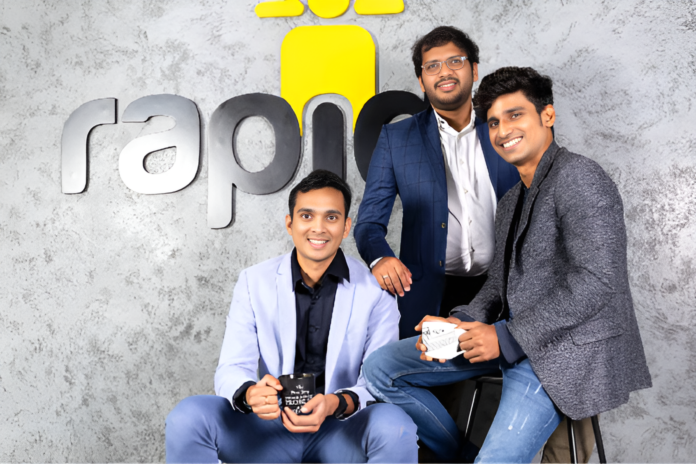
L-R: Akshay Ghulati, Vishesh Khurana, Saahil Goel and Gautam Kapoor, co-founders, Shiprocket

E-commerce enablement platform Shiprocket has submitted an updated draft red herring prospectus to the Securities and Exchange Board of India for its proposed Rs 2,342.35 crore initial public offering.

According to the filing, the IPO includes a fresh issue of equity shares worth Rs 1,100 crore, along with an offer for sale of Rs 1,242.35 crore by existing shareholders, including both investors and founders. Earlier, the Gurugram-based startup had approached SEBI in May 2025 through the confidential filing route and subsequently received regulatory observations in the last week of October.

Founded in 2012 by Saahil Goel, Gautam Kapoor, Vishesh Khurana, and Akshay Ghulati, Shiprocket operates as a horizontal e-commerce enablement platform with a strong focus on direct-to-consumer and merchant-led online commerce. The company provides services such as courier integrations, real-time shipment tracking, and automated logistics solutions for merchants selling through their own websites, mobile applications, and social media platforms.

As outlined in the UDRHP, Lightrock will anchor the offer for sale and plans to divest shares worth Rs 258.49 crore. In addition, Arvind Ltd and Tribe Capital will sell shares valued at Rs 161 crore and Rs 120 crore, respectively. March Capital and Bertelsmann will also offload shares worth Rs 95 crore and Rs 85.43 crore, respectively. Furthermore, other selling shareholders include 500 Startups, Agility Global, AFOS Group, Moore Strategic Ventures, and boAt co-founder Sameer Mehta, among others. Co-founders Gautam Kapoor and Saahil Goel will each sell shares worth Rs 144 crore, while Vishesh Khurana will divest shares valued at Rs 36.93 crore. Notably, Eternal, formerly known as Zomato, will not participate in the offer for sale.

In terms of shareholding, Bertelsmann Nederland remains the largest shareholder with a 21.32% stake. Tribe Capital holds 14.14%, while Eternal and Temasek, through its subsidiary MacRitchie Investments, own 6.85% and 5.29% stakes, respectively. Meanwhile, the company’s ESOP pool represents 8.48% of the total shareholding.

Looking ahead, Shiprocket plans to utilise Rs 505 crore from the IPO proceeds to scale its platforms. This allocation includes Rs 294 crore towards marketing and customer acquisition and Rs 211 crore for strengthening its technology infrastructure. Additionally, the company will deploy Rs 210 crore for debt repayment. As of September 2025, Shiprocket’s total borrowings stood at Rs 233.8 crore. The remaining proceeds will support inorganic growth through acquisitions and meet general corporate requirements. The company may also explore a pre-IPO placement of up to Rs 220 crore as part of the fresh issue.

On the financial performance front, Shiprocket recorded a 15% year-on-year rise in operating revenue to Rs 942.7 crore during the six months ended September 2025. During the same period, the company reduced its losses to Rs 38.3 crore from Rs 42.3 crore a year earlier. For FY25, Shiprocket reported revenue of Rs 1,632 crore, reflecting a 24% increase over the previous year, while its net loss narrowed significantly to Rs 74.4 crore from Rs 595.1 crore in FY24.

Axis Capital, BofA Securities India, JM Financial, and Kotak Mahindra Capital Company are managing the IPO, while KFin Technologies has been appointed as the registrar.

India is now home to 2 lakh recognised startups: Piyush Goyal

0
Piyush Goyal, Union Commerce and Industry Minister

India has crossed the milestone of more than two lakh government-recognised startups, with over 44,000 new entities added during the current year alone, marking the highest annual increase since the Startup India initiative was launched in 2016, Union Commerce and Industry Minister Piyush Goyal said on Friday.

Sharing the update in a post on X, Goyal underlined the expanding role of startups in driving employment generation, fostering innovation, and supporting inclusive economic growth across the country.

Highlighting key trends within the ecosystem, he said, “What makes this success sweeter is that nearly 48% of these startups have at least one woman director/partner. These startups have also helped generate over 21 lakh direct jobs.” Notably, the growing participation of women entrepreneurs has emerged as a defining aspect of India’s startup expansion, with almost half of all recognised startups now including at least one woman director or partner.

At the same time, sustained government-backed funding and credit support have played a crucial role in maintaining this momentum. Under the Fund of Funds for Startups, Alternative Investment Funds have invested more than Rs 25,320 crore across over 1,350 startups, thereby catalyzing additional private venture capital participation. In parallel, the Credit Guarantee Scheme for Startups has provided guarantees exceeding Rs 775 crore, significantly improving access to debt financing for early-stage ventures.

Moreover, early-stage capital support has continued to scale through the Startup India Seed Fund Scheme. Through incubators, the government has approved over Rs 585 crore for more than 3,200 startup applications, enabling founders to advance proof-of-concept development, enter markets, and begin initial scaling.

Beyond funding, recognised startups have increasingly integrated with government platforms and innovation ecosystems. Collectively, they have filed more than 16,400 patent applications, reflecting a growing emphasis on formal intellectual property creation. In addition, over 34,800 startups have onboarded onto the Government e-Marketplace, thereby gaining access to public procurement opportunities. Under the Startup India framework, eligible startups can also avail income tax benefits and regulatory relaxations, as well as mentorship and networking support.

Overall, the rapid rise in recognised startups aligns closely with the government’s broader vision of building an Aatmanirbhar and Viksit Bharat economy.

Looking ahead, Goyal said, “As we prepare to enter a new year, this spirit of innovation and entrepreneurship will continue to drive growth, opportunities, and prosperity for all.”

Lemon Tree Hotels strengthens footprint with Gurugram opening and Punjab signing

0
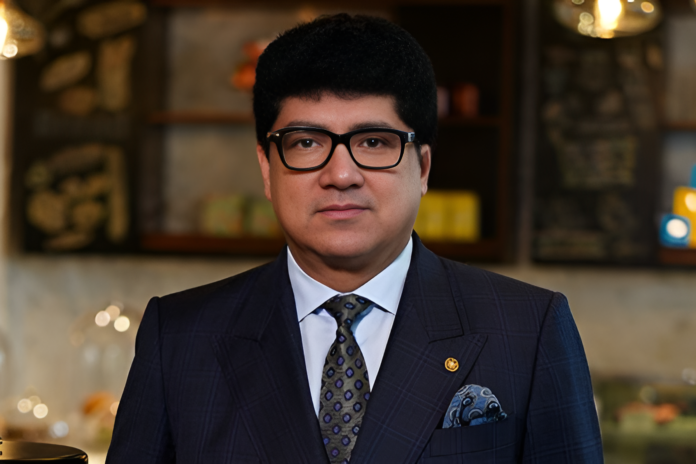
Vishvapreet Singh Cheema, President, Lemon Tree Hotels

Lemon Tree Hotels Limited has announced the opening of Lemon Tree Suites, Gurugram, marking the launch of its newest managed property in Haryana. With this addition, the company has further consolidated its footprint in the state, taking its total number of operational hotels in Haryana to ten.

Situated in Gurugram, within the National Capital Region, the hotel occupies a prime location in one of India’s leading business and commercial corridors. The property has an inventory of 246 rooms and suites, of which 151 rooms have become operational in the first phase. The company expects to open the remaining rooms in the second phase.

In addition, Lemon Tree Suites, Gurugram, offers multiple dining options, including Citrus Café, a multi-cuisine restaurant, and Slounge, the brand’s recreation bar. The hotel also provides a range of guest amenities such as the Fresco spa, a fitness centre, a recreation room, and a swimming pool, thereby catering to both corporate and leisure travellers.

Commenting on the launch, Vishvapreet Singh Cheema, President, Lemon Tree Hotels, said, “With the opening of Lemon Tree Suites, Gurugram, we are delighted to strengthen our presence in the city, which already has eight hotels, including the first one from the brand at Udyog Vihar. Located in a key business hub, this hotel is perfectly suited for both corporate and leisure travellers seeking comfort, convenience, and an elevated stay experience.”

Meanwhile, the company has also announced the signing of Keys Lite by Lemon Tree Hotels, Kartarpur, Punjab. This property will operate under a franchise model and will further expand the group’s presence in the state. Keys Lite by Lemon Tree Hotels, Kartarpur, will feature 47 rooms, along with a restaurant, banquet and conference facilities, and a fitness centre. The hotel enjoys a strategic location near Kartarpur’s furniture market and lies close to Radha Soami Satsang Beas. Adampur Airport in Jalandhar is located approximately 31 kilometres away, while Kartarpur Railway Station is about four kilometres from the property.

Speaking on the development, Vilas Pawar, CEO of Managed & Franchise Business, Lemon Tree Hotels, said, “With this signing, we are pleased to extend our pilgrimage portfolio in a place that holds deep spiritual resonance. Moreover, the vibrant tourism, rich cuisine, and growing hotel infrastructure make Punjab a magnet for travellers seeking unforgettable experiences. The state has two operational and nine upcoming hotels.”

Currently, Lemon Tree Hotels Limited operates more than 120 hotels across India and international markets. At the same time, the company continues to expand aggressively, with over 120 additional properties under development.

IHCL strengthens presence in Gujarat with launch of Ginger Ahmedabad, Kristar

0
Deepika Rao, executive vice president, New Businesses and Hotel Openings, IHCL

Indian Hotels Company (IHCL) has announced the opening of Ginger Ahmedabad, Kristar, located in the lively neighbourhood of Thaltej, further strengthening its presence in the city.

Commenting on the launch, Deepika Rao, Executive Vice President – New Businesses & Hotel Openings, IHCL, said, “Ahmedabad is one of India’s fastest-growing urban centres, driven by its thriving industrial and entrepreneurial ecosystem. Ginger’s lean luxe offering resonates with the city’s evolving preference for smart, contemporary stays. With five Ginger hotels present in multiple micromarkets of the city, the opening of Ginger Ahmedabad, Kristar, reaffirms our commitment to cater to its increasing demand for quality hospitality.”

At the same time, Ginger Ahmedabad, Kristar, combines comfort with convenience to serve both business and leisure travellers. The hotel offers thoughtfully designed rooms, a global cuisine restaurant, Soulinaire, and flexible meeting spaces. Moreover, guests benefit from easy connectivity to key destinations across Ahmedabad while enjoying Ginger’s signature mix of modern design and functional efficiency.

Intel in talks to acquire AI startup SambaNova in $1.6 Bn deal: Report

0
Intel CEO Lip-Bu Tan

Intel is holding advanced discussions to acquire artificial intelligence startup SambaNova Systems in a deal valued at $1.6 billion, including debt, as reported on Saturday.

According to the report, the companies have not yet disclosed the transaction, and Intel could initiate the deal as early as next month. However, the structure and timing remain subject to change. In parallel, SambaNova has signed term sheets with other potential financial investors and could still opt for an alternative course.

Based in Palo Alto, SambaNova develops custom AI chips and reached a $5 billion valuation in 2021 after raising $676 million in a funding round led by SoftBank Group’s Vision Fund II. Through this acquisition, Intel would significantly bolster its AI portfolio while gaining access to a long-sought platform at a steep discount to the startup’s previous valuation.

Notably, Intel chief executive officer Lip-Bu Tan also serves as chairman of SambaNova. In addition, his venture capital firm, Walden International, was among the startup’s founding backers and led its $56 million Series A funding round in 2018.

Meanwhile, during his first visit to India, Tan met Prime Minister Narendra Modi on Thursday. During the meeting, he said that India’s long-term success in artificial intelligence and chipmaking will depend on scale, strong domestic leadership, and deep engineering capability.

Separately, on Monday, Intel and Tata Group signed a Memorandum of Understanding to explore the manufacturing and packaging of Intel products at upcoming fab and OSAT facilities. These components will, in turn, support the production of AI-powered PCs built in India.

Moustache Group of Hotels strengthens portfolio with new Gangtok property

0
(L to R) Abhishek Khandelwal and Deepak Agarwal, co-founders of Moustache Escapes

Moustache Group of Hotels has launched its latest backpacker hostel in Gangtok, marking the brand’s official entry into the Northeast and further strengthening its position in India’s youth-travel segment.

Moreover, the new property supports the company’s broader expansion strategy to add more than 40 hostels by FY 2028 across Himachal Pradesh, Uttarakhand, Kerala, Tamil Nadu, and Karnataka, in addition to its current portfolio of 18 properties.

The Northeast continues to witness rising tourism momentum, driven by enhanced connectivity and increasing global visibility. Furthermore, industry data indicates that the region welcomed 12.781 million domestic tourists and 0.244 million foreign visitors in 2024, while air traffic reached 11.2 million passengers. These developments have reinforced the region’s emergence as a high-potential market for experiential, social, and community-oriented accommodations.

Explaining the rationale behind the Gangtok launch, Abhishek Khandelwal, Founder and Director of the Moustache Group of Hotels, said, “Gangtok is one of the most visited destinations in the Northeast, with over 1.6 million domestic travelers arriving in 2023. For Moustache, Gangtok offered the right launchpad for this region because it brings culture, community, and adventure into one place. We see a thriving traveler base here, and this hostel is built to serve that energy.”

Additionally, outlining the company’s regional pipeline, Founder and Director Deepak Agarwal said, “The Northeast is core to our long-term strategy. We are actively exploring Shillong and Cherrapunji in Meghalaya, Pelling and Yuksom in Sikkim, Tawang in Assam, Dimapur in Nagaland, and Ziro in Arunachal as our next potential destinations. These locations have a growing backpacker culture, which makes them a natural fit for Moustache Hostels. Our hostel vertical will continue to lead this push since it is designed to be accessible, social, and traveler-first.”

Moustache Group currently operates across three verticals—Luxuria by Moustache, Moustache Select, and Moustache Hostels. Furthermore, the company aims to surpass 100 properties by 2028, with projected revenues expected to exceed Rs 200 crore.

AI startup Rivesa AI secures $1.2 Mn valuation for business automation platform

0
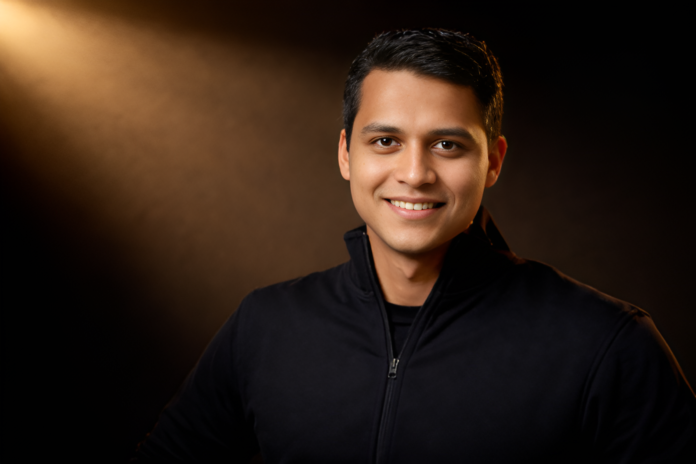
Raj Jobalia, co-founder, Rivesa AI

Rivesa AI, one of India’s fastest-growing deep-tech startups, has reached a valuation of USD 1.2 million, firmly establishing itself as an emerging contender in the global AI automation landscape.

This achievement comes at a time when markets are increasingly selective, and it demonstrates investors’ strong confidence in Rivesa’s differentiated vision: an AI system that sees, interprets, and acts across digital workflows with human-like intelligence but at machine-level speed.

Raj Jobalia and Hirdesh Mehta founded Rivesa AI, and the company is developing what many describe as the next major leap in automation—an advanced visual search and execution engine that eliminates the need for complex integrations, engineering-heavy implementations, or lengthy onboarding.

The company maintains a clear and ambitious mission to help businesses operate at 10x the speed with only 10% of the effort. “This is just the beginning,” says co-founder Raj Jobalia. “In the next decade, businesses will not just use AI; they will work with AI. Rivesa is built to be that layer: an AI that can see your tools, understand your workflows, and operate at a fundamentally different speed.”

Although visual data now surpasses text data by a ratio of 100-to-1, most AI technologies continue to be optimized for language. Rivesa aims to bridge this disparity by positioning itself as the operating system for the visual-first enterprise.

With this valuation milestone secured, the company is now preparing to accelerate its next phase of growth. Moreover, it plans to strengthen its core visual AI capabilities, launch expanded workflow libraries, build a global brand presence, partner with businesses pursuing long-term automation strategies, and expand into finance, logistics, SaaS, and enterprise operations.

As India rapidly advances as a global AI innovation hub, Rivesa demonstrates how high-impact technology can emerge from real-world operational challenges. Meanwhile, with Raj Jobalia leading product and technology and Hirdesh Mehta overseeing operations and investor strategy, the company is not merely creating another automation product. Instead, it is defining a new category—the visual AI operating system for modern enterprises.

Ultimately, Rivesa AI’s momentum signals a broader shift toward AI systems that can see, understand, and act, and moreover, the company intends to lead this next wave of intelligent automation.

Third Wave Coffee reaches 200-Café milestone with new Chembur outlet

0
From L: Rajat Luthra (CEO) and Sushant Goel (cofounder) at Third Wave Coffee

Third Wave Coffee announced that it has opened its 200th café in Sindhi Society, Chembur, Mumbai, marking a major milestone in the brand’s nationwide expansion and demonstrating its steady growth since 2016.

The new outlet strengthens the company’s presence in Mumbai, where it now operates 40 cafés. Furthermore, the brand continues to pursue its strategic expansion plan and aims to add 100 new cafés by 2026.

Speaking about the achievement, Rajat Luthra, CEO, Third Wave Coffee, said, “Crossing 200 cafés is not just a numeric milestone; it reflects the trust of our community and the disciplined growth engine we have built over the years. Our focus has remained constant: build a sustainably scalable business and deliver a high-quality, consistent café experience across formats and geographies. With our roastery’s 8× automation capability, we are now equipped to support up to 700 cafes, setting a strong foundation for the next phase of expansion. In Mumbai, this will be our 40th cafe, and we plan to strengthen our presence in the region in the coming year as well. By next year, we aim to add 100 more cafés as we deepen our presence in both existing and new markets.”

The company chose Chembur for its milestone café because the neighborhood has a rapidly growing café-going culture, a high concentration of young professionals and students, and a strong base of consumers who appreciate premium, experience-forward coffee spaces. This opening represents the brand’s second outlet in Chembur and reinforces the strong traction it continues to build in the locality.

Additionally, Third Wave Coffee is expanding its omnichannel strategy. With the upgraded roastery and innovation lab in Bengaluru, the brand is enhancing its retail offerings through easy-to-brew coffee bags, signature blends, brewing equipment, and curated merchandise, enabling customers to engage with the brand both in-store and at home.

The launch of the 200th café underscores Third Wave Coffee’s robust growth trajectory, expanding national footprint, and commitment to delivering a consistent, high-quality coffee experience across markets.

Cygnett Hotels and Wyndham partner to launch two luxury Anamore Resorts

0

Cygnett Hotels & Resorts today announced that it has signed two major luxury resorts under the Anamore Registry Collection by Wyndham brand, marking a notable expansion of its premium homegrown label, Anamore, while further strengthening its partnership with Wyndham Hotels & Resorts.

Anamore Registry Collection by Wyndham Pushkar will span 18 acres and include 288 rooms, positioning it as one of Rajasthan’s largest luxury destination wedding and events resorts. Additionally, the property will offer 20,000 square feet of banquet space, spacious lawns, multiple dining options, a bar, wellness facilities in a dedicated zone called Blum Mudra by Ayurvayaas, and various recreation areas. The resort aims to elevate experiential travel in the region and expects to open by the end of 2026.

Meanwhile, the developers will build Anamore Registry Collection by Wyndham Kukas Jaipur as a 25-acre greenfield luxury resort. It will feature 150 rooms, 30,000 square feet of banquet facilities, curated dining concepts, wellness offerings, and premium outdoor event spaces.

Moreover, the developers will situate it in one of Jaipur’s most prominent hospitality corridors, aiming to attract both domestic and international luxury travellers seeking culturally inspired yet modern experiences. They expect to open the resort in early 2029.

Sarbendra Sarkar, Founder and Managing Director, Cygnett Hotels & Resorts, said, “The Anamore brand represents Cygnett’s evolution into the luxury space, an aspiration to create soulful, contemporary, and culturally rich hospitality experiences. Signing these two exceptional resorts under the Anamore Registry Collection by Wyndham marks a pivotal milestone in taking Indian luxury to a global stage. Our collaboration with Wyndham brings together Cygnett’s local expertise with world-class systems, reach, and brand strength, enabling us to build destinations that celebrate Indian artistry and design while delivering internationally benchmarked service.”

Rahool Macarius, Market Managing Director Eurasia, Wyndham Hotels & Resorts, said, “These signings mark an important step in Wyndham’s strategic expansion of our upper-upscale and luxury portfolio in India and underscore the growing significance of Rajasthan within our development plans. The addition of Anamore Pushkar and Kukas strengthens the Registry Collection’s presence in the market and reflects our commitment to delivering distinctive, culturally immersive luxury experiences. Central to this momentum is our ability to bring these developments to life with the right strategic partners, and together with our partner Cygnett Hotels & Resorts, we are combining global standards, operational excellence, and locally inspired design to create exceptional experiences for travellers.”

The two new Anamore resorts signify a substantial advancement in India’s luxury hospitality landscape, reinforcing the rising demand for culturally grounded, experience-driven destinations and highlighting the continued collaboration between Cygnett and Wyndham in shaping premium travel experiences.

AI startup Serval reaches $1 Bn valuation after Sequoia-led funding round

0
L-R: Jake Stauch and Alex McLeod, co-founders, Serval

AI-powered IT support startup Serval has secured $75 million in a Series B round led by Sequoia, pushing its valuation to $1 billion just three months after its previous raise, the company said.

The new capital increases Serval’s total funding to $127 million. The San Francisco-based company held a valuation of $232 million in August, according to PitchBook data. The sharp rise in valuation over the past quarter highlights growing investor confidence in AI-driven platforms challenging incumbents such as ServiceNow and demonstrating strong market traction.

Serval stated that it has increased revenue by 500% since August, although it did not provide detailed figures. Moreover, previous backers, including Redpoint, Meritech, and General Catalyst, participated in the latest round.

Founded in 2024, Serval initially launched as an AI-powered tech support assistant designed to manage routine IT tasks for employees, including fixing computer issues and granting software access. Since then, it has expanded into human resources, legal, and finance functions.

With the fresh capital, Serval plans to accelerate hiring across its go-to-market and engineering teams. The company currently employs just under 30 people but expects to grow to more than 100 next year.

AI startups such as Perplexity and Together AI already rely on Serval’s platform to automate tasks like resolving help desk queries and onboarding employees. Additionally, Serval reported that its technology automates more than 50% of IT tickets for customers.

The company’s go-to-market strategy enables it to fully replace a customer’s existing systems or serve as an “AI layer” on top of legacy setups, an approach designed to accommodate clients tied to long-term contracts.

CEO Jake Stauch stated that Serval is building a comprehensive IT service management platform powered by AI-driven automation. “We’re seeing that thesis play out as customers rip and replace incumbent systems of record,” Stauch said.

Serval’s platform operates with a two-part AI system: an AI agent that interacts with employees to interpret support requests and a tool that lets administrators create complex automations by describing them in natural language—a process the CEO refers to as “vibe coding.”

This method generates code in the background, which provides more flexibility and capability than traditional drag-and-drop workflow tools. It also reinforces security, as the employee-facing AI can only activate automations pre-approved by administrators.

“When we heard customer feedback this strong was 16 years ago when we partnered with ServiceNow,” said Anas Biad, partner at Sequoia. “When we heard it again, we couldn’t help ourselves but just go and preempt.”