



Friday, April 24, 2026
Home Blog Page 35

Interior decor startup Material Depot raises $10 Mn to expand its product portfolio & collections

0
Manish Reddy, co-founder, Material Depot

Interior design and home décor startup Material Depot has secured $10 million in fresh funding in a round co-led by Accel and Stellaris Venture Partners, marking a major milestone in its growth journey.

In addition, the funding round attracted participation from Whiteboard Capital, DeVC, Soma Capital, and MyAsiaVC, along with several prominent angel investors. These include Livspace founder Ramakant Sharma, Curefoods founder Ankit Nagori, BharatPe cofounder Shashvat Nakrani, Spinny founder Niraj Singh, and Tracxn founder Abhishek Goyal, among others.

Founded in 2022 by Manish Reddy and Sarthak Agrawal, Material Depot operates a consumer-facing platform that offers a wide range of decorative interior materials. These include tiles, laminates, wallpapers, wall panels, quartz, and wooden flooring, catering to both modern and functional home design needs.

Moreover, the company follows a distinct omnichannel model that blends digital discovery with physical retail. Customers can explore products online and then visit experience centres to touch, feel, and compare materials before making purchase decisions.

Unlike larger incumbents such as Livspace or HomeLane, which provide end-to-end design and execution services, Material Depot maintains a sharp focus on materials alone, covering curation, pricing, and supply without entering design-build workflows.

“About 60-70% of our customers are end consumers, people buying materials for their own homes, while about 30-40% are professionals such as architects, interior designers, and contractors,” Reddy said.

Furthermore, the company is tapping into a structural shift in consumer behaviour driven by digital inspiration platforms. “Post-Covid there has been a new wave of awareness with Pinterest, YouTube, and Instagram, where people are much more aware of the trends in interior materials. They want to have much more say in choosing the final finishes. That is the new trend that we are looking at,” he added.

Going forward, Material Depot plans to deploy the fresh capital to strengthen its technology backbone, particularly across supply chain management, inventory planning, and assisted in-store selling tools. At the same time, the company will expand its product portfolio and curated collections.

Additionally, the startup will channel a portion of the funds into scaling its offline footprint by opening new experience centres across key urban markets.

“Today, customers are totally dependent on designers. Even when they discover ideas online, they don’t know whether those materials are actually available because the market is highly fragmented,” said Rahul Chowdhri, partner at Stellaris Venture Partners. “That is the opportunity Material Depot is addressing. In our estimate, this is a roughly $14 billion market.”

Currently, Material Depot operates three experience centres in Bengaluru. However, over the next 12 to 18 months, the company aims to expand to more than 30 experience centres across multiple cities. Simultaneously, it plans to grow its customer base to over 50,000, up from approximately 15,000 customers today.

“Home materials in India remain a low-trust, supplier-led market, even as homeowners have evolved into informed, design-driven decision makers. Material Depot is flipping this model by anchoring the category in design intelligence, supply chain control, and a trusted physical experience,” said Pratik Agarwal, partner at Accel.

Material Depot is positioning itself as a category-defining player in India’s fragmented interior materials market. By combining design-led discovery, supply chain transparency, and experiential retail, the company is addressing a massive market opportunity while aligning with the evolving expectations of modern homeowners. With strong investor backing and an aggressive expansion strategy, Material Depot appears well placed to reshape how Indians discover and buy interior materials.

Nila Spaces acquires minority stake in fintech startup Alt DRX to strengthen digital financial capabilities

0

Nila Spaces, a design-led real estate developer, has invested Rs 6 crore to acquire an approximately 1.4% minority stake in Alt DRX, a fintech startup that leads asset and real estate tokenization efforts in India.

According to Nila Spaces, this investment marks a decisive move toward accelerating the shift of real estate tokenization from early-stage adoption to scaled growth. At the same time, the ongoing funding round has attracted participation from global institutions and Indian family offices, underscoring growing confidence in the sector.

Furthermore, the Ahmedabad-based developer stated that its partnership with Alt DRX strengthens its long-term commitment to financial innovation that promotes broader access, greater transparency, and sustainable value creation in housing.

As part of the collaboration, both companies will focus on building regulatory-compliant and investor-friendly tokenized housing products. These offerings will enable fractional ownership, reduce entry barriers for a wider demographic, and simultaneously maintain institutional-grade governance and transparency.

Led by Deep Vadodaria, Nila Spaces operates as part of the Sambhaav Group. The company develops residential and commercial real estate projects with a focus on affordable housing, luxury apartments, and developments within GIFT City. In addition, it holds a significant land bank in Gujarat, which supports its long-term growth strategy.

Meanwhile, Alt DRX, founded in 2021 by Anand Narayanan KB, operates as a Bengaluru-based fintech–proptech startup. The platform enables fractional ownership of residential real estate, allowing users to buy and sell property in increments as small as one square foot. Moreover, Alt DRX leverages blockchain technology through Ripple’s XRPL to ensure secure and transparent transactions, while also offering rental income alongside potential capital appreciation.

Canary Technologies acquires OpenKey to accelerate adoption of guest engagement strategies

0
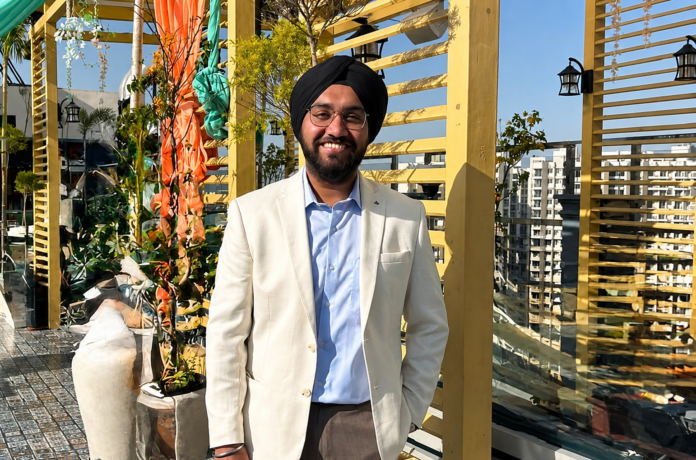
Harman Singh Narula & SJ Sawhney, Co-founders, Canary Technologies

Canary Technologies has announced the acquisition of OpenKey’s assets as part of its strategy to expand and strengthen its hotel mobile key technology offerings. Through this move, the company aims to broaden the capabilities of its existing Mobile Key platform and support a wider range of door lock manufacturers and models across hotels worldwide.

As a result, the integration of OpenKey’s solutions and partnerships will expand global access to Canary’s AI-driven Guest Management System. In turn, hoteliers will be able to deliver more seamless and connected digital experiences throughout the guest journey.

Moreover, the enhanced platform will continue to offer a comprehensive suite of tools, including AI Guest Messaging, Mobile Check-In, Dynamic Upsells, and Digital Tipping. Together, these solutions enable hotels to manage guest interactions more efficiently while improving overall satisfaction.

In addition, the inclusion of OpenKey’s technology is expected to accelerate industry-wide adoption of digital-first guest engagement strategies, all powered by Canary’s unified platform.

Commenting on the acquisition, Canary Technologies co-founder and CEO Harman Singh Narula said, “This acquisition expands our Mobile Key offerings to be the most comprehensive on the market. We’re investing in this technology to help hoteliers meet guests’ rising expectations for mobile-first guest room access. Together, we’re accelerating the transition to frictionless arrivals and a delightful hotel stay with our extensive solution set.”

Echoing this sentiment, OpenKey CEO Stephen Bodnar said, “We’ve long admired Canary’s innovation and leadership in the hotel technology industry. We’re excited to come together to enable even more hotels to deliver a seamless, end-to-end digital guest journey experience.”

Looking ahead, Canary expects the integration of OpenKey to further strengthen its product portfolio as demand continues to rise for contactless and keyless hotel experiences. Consequently, hotels can better respond to evolving guest preferences for convenience and speed.

Currently, Canary’s AI-powered Guest Management Platform serves more than 20,000 hotels across over 100 countries. Furthermore, the company digitises guest touchpoints for leading global brands, including Intercontinental Hotel Group, Four Seasons, Wyndham Hotels & Resorts, Marriott International, BWH Hotels, and others.

Clean-label food brand The Whole Truth closes $51 Mn in funding to expand in-house manufacturing

0
Shashank Mehta, Founder, The Whole Truth

Clean-label food startup The Whole Truth has raised approximately $51 million in a funding round led by Sofina and Sauce.vc. Through this round, which includes both primary and secondary capital, the company also attracted participation from existing investors Peak XV Partners and Rainmatter Health, along with Ayra Ventures. In addition, early supporters of the brand include Z47 (formerly Matrix Partners).

Founded by former Unilever executive Shashank Mehta, The Whole Truth builds its business around “clean-label” packaged foods that avoid hidden sugars, artificial flavours, and preservatives. As a result, the company has developed a focused yet diverse product portfolio that includes protein bars, protein powders, nut butters, and dark chocolates. Meanwhile, cofounder Rachna Aggarwal leads product development and drives formulation innovation.

According to the startup, this fundraise marks the formal beginning of its IPO journey, with profitability emerging as the next major milestone. Going forward, the company will deploy the fresh capital to expand in-house manufacturing, strengthen working capital, and build internal systems required for public market readiness.

Since closing its Series C round in January 2025, The Whole Truth has grown threefold and now claims strong market positions across several core categories. This momentum stems from its proprietary R&D and manufacturing capabilities, which continue to support product quality and scale. Additionally, the brand has built a loyal and engaged community of over 400,000 followers, further reinforcing its direct-to-consumer strength.

Overall, The Whole Truth’s latest funding round underscores growing investor confidence in clean-label nutrition brands that combine transparency, scalability, and long-term public market ambition.

How Findbhk.com Is Rethinking Online Property Search for Indian Homebuyers

0

For many Indians, the search for a home begins with excitement. There’s a sense of possibility in opening a property portal for the first time, imagining a new neighbourhood, a better commute, or a space that finally feels like one’s own. But that optimism doesn’t always last.

India’s online property search ecosystem has long been built around volume. Buyers are presented with thousands of listings and left to navigate them on their own, scrolling endlessly in the hope that something will eventually click. What often follows is not clarity, but fatigue—hours spent filtering options that look promising at first glance, only to fall short on closer inspection.

As more people depend on digital platforms to guide one of the most important financial decisions of their lives, the gap between what is available and what is actually useful has become hard to ignore.

Where Findbhk.com entered the picture

Findbhk.com, an AI-driven property discovery platform, was developed in response to this growing disconnect between how people search for homes and how listings are traditionally presented online. Instead of assuming that more listings lead to better outcomes, the platform focuses on interpreting buyer intent as a way to reduce friction in the search process.

The approach reflects a broader shift in proptech thinking, away from rigid filters and toward systems that better reflect how real decisions are made.

The quiet frustration of too much choice

The property search journey usually starts with energy. Over time, that energy gives way to frustration. Buyers encounter page after page of listings that technically meet their criteria but fail to reflect what they actually want.

The problem isn’t a lack of information. It’s an excess of it, presented without enough context. Most platforms require users to translate lived needs into predefined categories such as configuration, locality, or price range, even though real preferences are often shaped by trade-offs and comparisons rather than fixed labels.

A buyer may be weighing the pros and cons of a specific apartment project against the option of purchasing a plot within a similar budget. Conventional search tools struggle to process this kind of nuance, returning results that miss the intent behind the query.

Why Traditional Filters Fall Short

When searching for a home in Chennai, buyer requirements are rarely simple or linear. A prospective buyer may be evaluating the pros and cons of purchasing a flat in Iyra The Spire, Velachery—considering factors such as connectivity to IT corridors, neighbourhood density, resale potential, and pricing—while simultaneously comparing it with the option of buying residential plots along OMR priced below ₹3,000 per sq. ft. These decisions are rooted in trade-offs, long-term considerations, and locality-specific realities rather than fixed search parameters.

Most traditional property platforms are not designed to handle this level of nuance. Their reliance on rigid filters and exact keyword matching often results in pages of listings that only partially reflect the buyer’s intent. This leads to wasted hours spent reviewing unsuitable properties, phone calls and site visits that fail to progress meaningfully, and marketing budgets being directed toward enquiries that were never well-aligned or serious.

Findbhk AI was built to address this gap by focusing on what buyers are actually trying to evaluate—interpreting intent within the context of Chennai’s property market, rather than responding only to the literal words typed into a search bar.

Moving toward intent-based discovery

This is where Findbhk.com’s intent-led discovery model comes into focus. Instead of treating search inputs as exact commands, the platform reads them as expressions of intent.

For example, a buyer looking for a gated community near a major employment hub does not need listings to include identical phrasing. The system evaluates surrounding corridors, proximity, and contextual details to surface options that align with the broader requirement. It also accounts for inconsistently labeled listings by drawing insights from descriptions and related project information rather than relying solely on tags.

The emphasis is on narrowing choices rather than expanding them, presenting a smaller, more relevant set of options along with clear reasoning for their inclusion.

What this changes for developers and sellers

This shift also influences how developers connect with potential buyers. In models such as the one adopted by Findbhk.com, enquiries tend to come from users who have already clarified their preferences and constraints through intent-based discovery.

As a result, conversations often begin further along in the decision-making process. The gap between initial enquiry and on-the-ground engagement becomes shorter, reducing friction on both sides.

Rethinking what success looks like

In real estate, where decisions carry long-term financial and personal implications, success is not defined by the number of listings a platform can host. It is reflected in how effectively buyers can navigate complexity and arrive at choices they feel confident about.

The growing emphasis on intent-led discovery signals a broader reassessment of digital property platforms, one that places relevance, clarity, and trust above sheer scale.

Climate-tech startup Varaha secures $45 Mn in Series B funding to strengthen its scientific and MRV capabilities

0
Madhur Jain, Ankita Garg and Vishal Kuchanur, Founders, Varaha

Climate-tech startup Varaha has raised $45 million, marking the close of an initial $20 million tranche led by WestBridge Capital. With this funding, the company continues to strengthen its position in the global carbon removal ecosystem.

According to the company, Varaha will deploy the fresh capital to accelerate geographic expansion, reinforce its scientific and Measurement, Reporting, and Verification (MRV) capabilities, and scale a new industrial partnership model. At the same time, the startup continues to build long-term momentum through carbon offtake agreements with U.S. technology giants Google and Microsoft, along with a major U.S.-based aviation company.

“In climate tech so far, while several investments have been made, very few companies have scaled to a level where they can absorb the kind of capital and opportunity we typically invest behind. Varaha is probably the first, or among the first, companies in India to reach that stage, where it can now attract large, mainstream capital,” Singhal said, explaining WestBridge’s decision to start investing in this space.

He further added, “What we are seeing now is a more direct, mainstream climate approach, where companies capture carbon from emissions and store it back in the ground. These are still early trends.”

Meanwhile, Varaha continues to develop carbon removal projects across four core pathways: Biochar; Afforestation, Reforestation and Revegetation (ARR); Regenerative Agriculture; and Enhanced Rock Weathering (ERW). Together, these pathways allow the company to address emissions across multiple ecosystems and geographies.

Singhal also highlighted the growing urgency of carbon removal solutions amid rising energy consumption driven by artificial intelligence and expanding digital infrastructure. “Climate solutions such as carbon removal will therefore gain relevance, not as a function of AI alone, but as part of ensuring sustainable long-term growth,” he said.

In addition, RTP Global, which led Varaha’s Series A, has joined the current round with a super pro-rata investment. Alongside RTP Global, Omnivore, one of Varaha’s early-stage investors, has also participated in the round.

“We believe carbon removal will increasingly become part of core climate infrastructure, much like digital and AI infrastructure today. Our investment in Varaha reflects that long-term view of building scalable, credible platforms,” he added.

Founded in 2022, Varaha is headquartered in Gurgaon, India, and currently operates over 20 carbon projects spanning India, Nepal, Bangladesh, Bhutan, and the Ivory Coast. Through this growing footprint, the company continues to scale its climate impact across emerging and developed markets.

Looking ahead, Varaha is entering its next phase of growth with the launch of the Varaha Industrial Partners Program (VIPP). This biochar-focused partnership model targets industrial operators worldwide. Through VIPP, partners with gasification capabilities and access to sustainable biomass can leverage Varaha’s advanced digital MRV expertise and carbon credit origination capabilities, thereby accelerating high-integrity carbon removal at scale.

Yellow.ai unveils Nexus, redefining enterprise automation with the world’s first universal agentic interface

0
L-R: Rashid Khan, Raghu Ravinutala & Jaya Kishore Gollareddy, Founders, Yellow.ai

Yellow.ai, a global leader in AI-powered customer and employee experience automation for enterprises, has announced the launch of Nexus, the industry’s first Universal Agentic Interface (UAI). With this release, Yellow.ai signals a decisive shift in how enterprises design, deploy, and manage customer experience automation. Instead of operating on tool-centric platforms where humans adapt to software, Nexus introduces an agent-centric model in which autonomous systems execute tasks while humans define strategy.

Unlike traditional AI copilots that merely recommend actions and then wait for humans to carry them out, Nexus functions as an intelligent control layer across the enterprise ecosystem. It continuously observes conversations, CRM systems, and workflows and then acts autonomously within enterprise-defined guardrails, calling for human involvement only when strategic approval is required.

“We are ushering in the end of the copilot era,” said Rashid Khan, CMO & Cofounder of Yellow.ai. “For decades, enterprises paid for the privilege of serving their software—clicking, configuring, and maintaining. Nexus inverts this model. You define the outcome. The software does the work. That’s what we mean by ‘Service as a Software.’”

At its core, Nexus differentiates itself from legacy automation platforms and AI assistants through three foundational capabilities.

First, Eyes (Understanding) enables Nexus to analyze hundreds of thousands of conversations across multiple channels, thereby uncovering patterns that often escape human analysis. As a result, it continuously builds a living business model that maps how processes interconnect, how customers behave, and how data relationships evolve.

Next, Hands (Execution) allows users to simply describe their objectives in natural language. In response, Nexus autonomously constructs workflows, generates user interfaces, and integrates systems—eliminating drag-and-drop configuration, engineering backlogs, and prolonged deployment cycles.

Finally, Autonomy (Authority for Action) empowers Nexus to validate itself through thousands of simulated user interactions. It proactively identifies vulnerabilities before attackers can exploit them and, when failures occur, diagnoses and fixes issues autonomously before seeking human approval for deployment.

Furthermore, Nexus operates on a robust multi-agent architecture, with specialized personas managing the entire automation lifecycle.

To begin with, The Strategist builds a comprehensive “World Model” of the business and produces Automation Heatmaps that highlight high-impact opportunities, effectively removing the blank-slate challenge that often delays adoption.

In parallel, The Architect translates user intent into execution. By using natural language input, it synthesizes logic, defines variables, maps decision branches, and dynamically generates UI components.

Meanwhile, The QA Engineer stress-tests every agent by deploying thousands of virtual users, including adversarial personas designed to attempt prompt injections. Consequently, enterprises can ensure that safeguards remain intact before launch.

In addition, The Mechanic continuously monitors performance. When issues arise, it conducts automated root-cause analysis and resolves problems such as expired API tokens without manual intervention.

Nexus is now available for enterprise customers. Notably, Yellow.ai runs on a multi-LLM architecture and supports rapid integration with more than 100 enterprise systems, helping organizations accelerate go-to-market timelines while delivering superior, relationship-driven experiences. Today, Yellow.ai powers interactions for over 1,300 enterprises worldwide, including Sony, Decathlon, Hindustan Unilever Ltd, Lulu Group, and Hyundai, among others.

Luxury villa brand Elivaas expands to 620 villas in two years, redefining luxury villa hospitality

0

Elivaas has expanded its operational portfolio to nearly 620 villas within just two years of launching, firmly establishing itself as one of the fastest-growing organised players in India’s villa hospitality market. As a result, the company has quickly gained scale in a segment traditionally dominated by fragmented operators.

Since inception, Elivaas has hosted more than three lakh guests, demonstrating strong market acceptance. Notably, guest volumes increased 2.7 times between December 2023 and December 2025, supported by rising demand from group travel, private celebrations, and corporate off-sites that prefer exclusive, experience-driven accommodation formats over conventional hotels.

Despite this rapid expansion, Elivaas has maintained high operational consistency across its portfolio. Around 95% of guest stays have received five-star ratings, highlighting reliable service standards, efficient property management, and a consistently strong guest experience even as the company scaled aggressively.

Reflecting on this growth journey, Ritwik Khare, Founder and CEO of Elivaas, said, “Scaling supply without compromising operations is the biggest challenge in villa hospitality. For a sustainable business, the three wheels of supply, demand, and guest experience and operations have to scale at the same pace. Guest feedback at this level gives us confidence as we move into the next phase of growth.”

Geographically, Elivaas has built a strong footprint across North and West India, which continue to contribute the majority of bookings. At the same time, the platform has broadened its experience-led offerings across its villa portfolio, with most properties now supporting private chefs, spa treatments, customised décor, live entertainment, and concierge-led services, further enhancing its appeal to premium travellers.

Elivaas’ rapid scale-up, coupled with sustained service quality and demand-led growth, positions the company well for its next phase of expansion in India’s evolving luxury villa hospitality landscape.

Brigade Hotel Ventures partners Tamil Nadu Government for 500+ key hospitality project

0

Brigade Hotel Ventures Limited has entered into a Memorandum of Understanding with the Government of Tamil Nadu at the Tamil Nadu Global Tourism Summit 2026. The signing took place in the presence of the Hon’ble Chief Minister of Tamil Nadu, M. K. Stalin, marking a significant step toward strengthening the state’s hospitality ecosystem.

Under the MoU, Brigade Hotel Ventures Limited has committed an investment of Rs 1,100 crore to enhance tourism and hospitality infrastructure across Tamil Nadu. As a result, the proposed investment is expected to create employment opportunities for more than 1,000 people. At the same time, the initiative aligns closely with the summit’s objective of attracting private capital into tourism, hospitality, and leisure developments across the state.

Commenting on the development, Vineet Verma, Director, BHVL, said, “This MoU is part of our commitment to bring the best of hospitality to Chennai and reflects our shared vision with the Government of Tamil Nadu to transform Chennai into a premium destination for global business and leisure travellers. By adding over 500 keys across three world-class brands, we are not only expanding our portfolio but also contributing to the state’s economic growth through the creation of substantial employment. Our goal is to set new benchmarks in hospitality while supporting the government’s mission to enhance tourism infrastructure and destination development across this vibrant state.”

Currently, the company operates Holiday Inn Chennai OMR IT Expressway through its subsidiary, SRP Hotel Ventures Limited. The hotel began operations in April 2017 and features 202 keys, establishing Brigade’s existing footprint in Chennai’s hospitality market.

Looking ahead, Brigade Hotel Ventures Limited plans to add more than 500 new keys across three upcoming properties in Chennai as part of its expansion strategy. These projects include Courtyard by Marriott at Chennai World Trade Centre, Grand Hyatt Chennai ECR, and JW Marriott Chennai OMR. Importantly, Brigade Group has already acquired land for all three developments.

Courtyard by Marriott at Chennai World Trade Center will feature around 45 guest rooms and will be located approximately 13 km from Chennai International Airport. Meanwhile, Grand Hyatt Chennai ECR will operate as a resort-style property with about 211 rooms. Additionally, JW Marriott Chennai OMR will comprise nearly 250 guest rooms and suites, further strengthening the city’s premium hospitality offerings.

Brigade Hotel Ventures Limited’s partnership with the Government of Tamil Nadu underscores a strong public–private collaboration aimed at accelerating tourism-led growth. With significant capital investment, large-scale job creation, and the addition of globally recognized hotel brands, the initiative is poised to elevate Chennai’s position as a leading destination for both business and leisure travel while contributing meaningfully to the state’s broader economic and tourism development goals.

Ventive Hospitality posts strong Q3 as revenue and profit surge

0
Ranjit Batra, Chief Executive Officer, Ventive Hospitality Ltd.

Ventive Hospitality Ltd. announced its consolidated financial results for Q3 FY 2026 for the quarter ended December 31, 2025. Overall, the company delivered a strong financial performance marked by robust growth across key metrics.

During Q3 FY 26, Ventive reported consolidated revenue of INR 722 crore, reflecting a 27% year-on-year (yoy) increase. At the same time, consolidated EBITDA stood at INR 348 crore, registering a 25% yoy growth, while the EBITDA margin remained strong at 48%. Importantly, profit after tax reached INR 141 crore, marking the company’s fifth consecutive quarter of positive PAT.

Driving this performance, Ventive’s hospitality business generated revenue of INR 565 crore, a sharp 35% yoy rise. The hospitality segment recorded EBITDA of INR 226 crore, up 54% yoy, while EBITDA margins expanded by 5 percentage points year on year to 40%.

Breaking this down further, revenue from the company’s Indian hotels grew by 22%, while EBITDA from this segment increased by 35% yoy. Meanwhile, Ventive’s international hospitality business delivered even stronger momentum, with revenue rising 46% and EBITDA surging 73% yoy. EBITDA margins stood at 41% for the India business and 39% for the international business, underscoring operational efficiency across geographies.

In addition, revenue from the company’s annuity portfolio—comprising prime commercial real estate and retail assets in Pune—reached INR 128 crore, while EBITDA from this portfolio amounted to INR 116 crore.

On operating metrics, Ventive’s Indian hotels achieved Average Daily Rate (ADR) growth of 17% alongside stable occupancy levels of 62%. As a result, RevPAR in the India hospitality business increased 15% yoy. Similarly, the international hospitality segment reported occupancy of 71%, while same-store occupancy reached 65%, representing a healthy 4 percentage point yoy expansion.

Furthermore, the company’s differentiated food and beverage offerings continued to play a key role in revenue expansion, as reflected in Total Revenue per Available Room (TRevPAR) performance. Indian hotels posted a same-store TRevPAR of INR 15,985, up 14% yoy, while Maldives resorts recorded a same-store TRevPAR of INR 81,936, a 17% increase compared with the same period last year.

Commenting on the performance, Ranjit Batra, Chief Executive Officer, Ventive Hospitality, said, “We completed one full year as a listed company, emerging as one of the strongest performers in our sector, reporting one of the highest revenue and profit growths, while expanding our portfolio in strategic assets and locations. This was made possible by our highly motivated teams staying focused on delivering memorable guest experiences and on operational excellence. With this strong Q3 and nine-month performance, we are heading for a robust finish in FY 2026 and entering the new year with good growth momentum.”

Ventive Hospitality’s Q3 FY 2026 performance highlights sustained growth momentum, disciplined cost management, and strong demand across both domestic and international markets. With improving operating metrics, expanding margins, and a diversified asset portfolio, the company appears well positioned to close FY 2026 on a high note while entering the next financial year with solid confidence.